How to Attract New Golf Club Members That Stay

Most advice about how to attract new golf club members starts in the wrong place. It tells you to run more adverts, promote an open day and generate more enquiries. That can leave a club with a busy inbox, a spreadsheet nobody trusts and the same membership problem at the end of the month.
The harder truth is that many clubs lose prospective members before anyone has properly spoken to them. A slow reply, an unclear next step or an enquiry that sits in a personal inbox can destroy momentum. Member acquisition is not only a marketing problem. It's a response, visibility and conversion problem.
A club needs a reliable pipeline that attracts the right golfers, captures every conversation, follows up promptly and makes the visit feel like the natural next step. More leads won't fix a process that leaks.
Why Most Golf Clubs Lose Members Before They Join
A prospective member rarely sees your internal processes. They see a website, a contact form and the time it takes for somebody to respond. If the club replies quickly and clearly, confidence grows. If the message disappears into an inbox, the golfer moves on, often without telling anyone why.
That's why enquiry volume is a poor measure of growth on its own. A committee may celebrate a rise in form submissions while the membership director is struggling to identify who has been contacted, who needs a call and who is waiting for information about fees or playing rights.
The invisible leakage inside a club
Manual handling creates predictable weaknesses:
- No clear owner: Several people assume somebody else will respond.
- Poor lead visibility: Enquiries sit across email accounts, website notifications and social media messages.
- Slow response time: A golfer who is ready to discuss membership receives an answer after the moment has passed.
- Weak conversion tracking: The club records enquiries but not whether they became visits, applications or joins.
- Inconsistent follow-up: One prospect receives a helpful call, while another receives a single generic email.
GolfRep's analysis of UK golf-club sales activity found an average membership-enquiry response time of 47 hours and 32 minutes. The same analysis reported that a lead answered within one hour was five times more likely to convert than one left for 24 hours. Those figures are cited in GolfRep's membership enquiry response analysis, and they point to a practical management issue rather than a vague marketing principle.
Practical rule: Treat every membership enquiry as a live sales conversation, not an admin task to clear when the office is quiet.
Effort isn't the same as a system
A committed membership secretary can still lose opportunities if the process relies on memory. Holidays, competitions, staff changes and committee handovers create gaps that no amount of goodwill can permanently close.
A proper system gives every enquiry a status, an owner and a next action. It records the source, membership interest, preferred contact method and stage in the journey. It also allows the club to see whether the problem is attracting golfers, booking visits or converting visits into applications.
The useful pipeline is simple: attract, qualify, nurture and convert. Advertising and content attract attention. A prompt conversation qualifies fit. Follow-up keeps the club relevant. A well-run visit and clear joining process convert interest into membership.
Clubs should stop asking only, “How many enquiries did we receive?” The better questions are, “How quickly did we respond?”, “How many visits did we book?” and “Where did each serious prospect go next?”
Diagnosing Your Market and Membership Opportunity
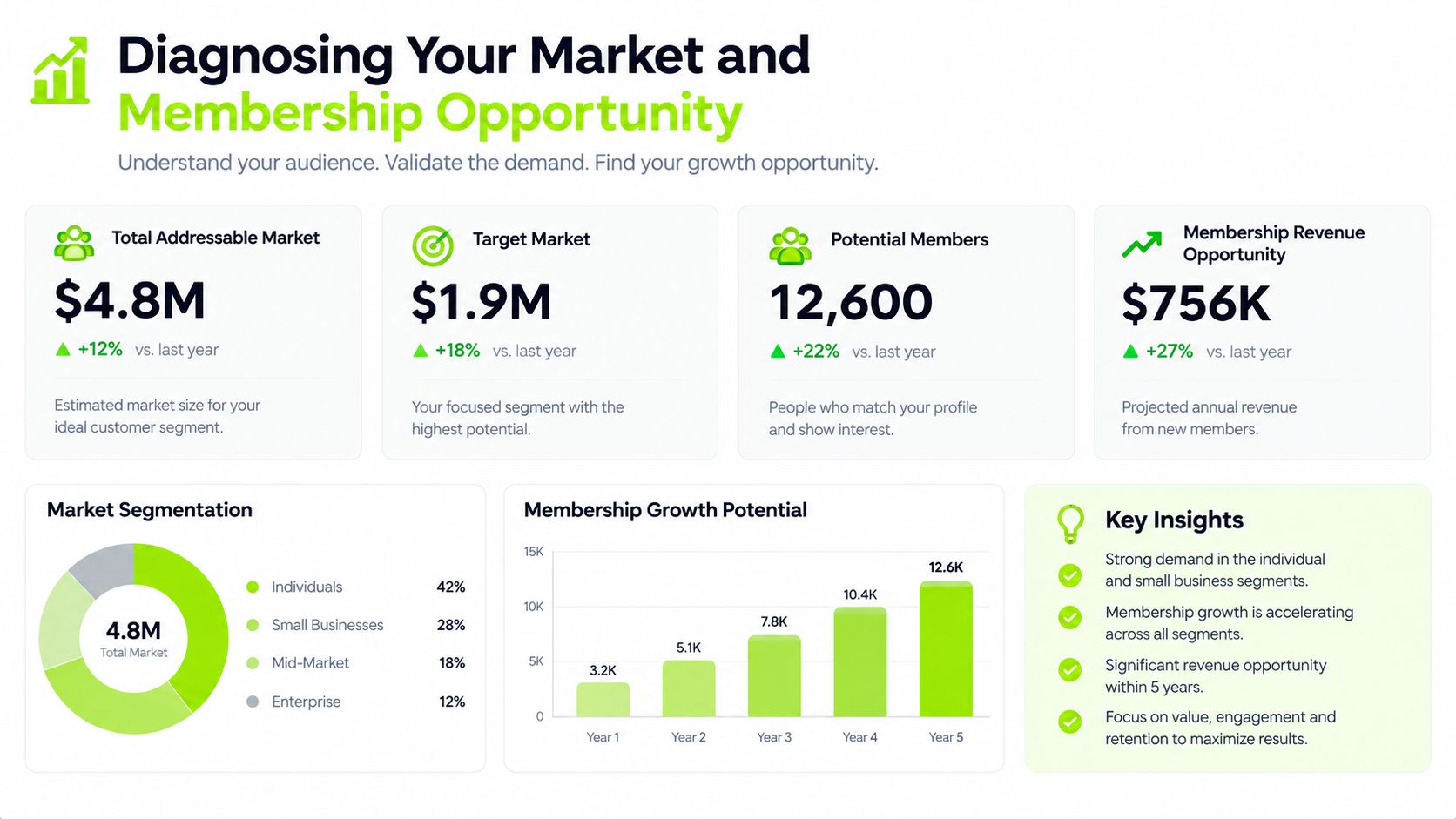
Before spending more on advertising, establish whether the club needs more demand, better targeting or stronger conversion. The UK participation market is much larger than the registered membership base, but that opportunity only matters if the club can identify the golfers most likely to join and provide a membership experience they'll value.
The R&A's 2023 Satellite Account for Golf in the UK estimated that 5.356 million UK adults play golf at least once a year, while 2.357 million play at least once every four weeks. Only 889,000 are registered club members. The difference is the acquisition opportunity, particularly among regular golfers who already have the habit and spending intent associated with joining.
England alone had about 1.919 million regular adult golfers, with 4.2% four-week participation, according to the same report. Clubs don't need to persuade the whole population to take up golf. They need to make their club a credible next step for golfers who already play.
Start with the club's actual position
National demand doesn't remove the need for local diagnosis. A club near capacity needs a different acquisition plan from a club with vacant tee times and weak awareness.
Use this guide to identifying market opportunities to structure the review, then answer four practical questions:
- Who already enquires? Separate adult, junior, family, returning and flexible golfers.
- Who joins? Compare the original enquiry with the membership category eventually selected.
- Who stays? Look for early exits, underused memberships and mismatched expectations.
- Where does the process fail? Track the journey from enquiry to visit, application and join.
Benchmarking matters because peer clubs are growing. Hillier Hopkins' 2024/25 Golf Clubs Report found that 75% of members' clubs reported growth, with average growth of 8% among clubs that grew, while 3% reported decline. Use that context to set an acquisition target based on comparable clubs, not on a vague hope that membership will remain stable.
Capacity signals also change the answer. In 2025, 74% of surveyed members' clubs charged an entrance fee, 53% more clubs had waiting lists than the previous year, and the average waiting list reached 122 people, compared with 53 in 2024, according to Golfshake's report on waiting lists and joining fees.
That evidence supports a firm position: don't buy volume when the club needs fit. A full club should market its culture, playing opportunities and standards. A club with capacity should still avoid attracting golfers who are unlikely to use or value the membership.
Finding and Attracting the Right Prospective Members
Targeting should follow the diagnosis. A club that wants regular adult golfers needs different messages from one building a junior and family pathway. A club with a waiting list should present belonging and fit, not a desperate price cut.
Regular players are the clearest starting audience because they already understand the value of access, competition and a golfing community. Your landing page should explain who the membership suits, how visitors experience the club, what playing rights apply and what happens after the first conversation. Don't make the golfer search through a PDF or guess which category fits.
Match the channel to intent
Use paid search for golfers actively looking for membership, joining options or local clubs. Use social advertising to reach people who may be interested but haven't yet searched, particularly families, juniors and golfers returning to the game.
Organic content should answer practical questions that stop prospects from enquiring:
- Membership fit: Explain categories, playing access, social options and likely commitments in plain English.
- Club experience: Show competitions, coaching, welcome events and the people who make the club feel accessible.
- Local relevance: Reference the catchment area and the reasons golfers choose your course over alternatives.
- Next action: Ask the reader to book a visit, speak to membership or request a clear joining pack.
Flexible, digital-first golfers need a low-friction route into the conversation. England Golf reported 85,483 additional non-member participants through iGolf subscribers and iPlay users, while more than 24,000 iGolf subscribers had progressed into club membership overall, including 9,600 in 2025 alone, as reported by Golf Business News. Those golfers may not respond to traditional “join now” messaging. Give them an easy way to understand the club before asking for a commitment.

Sell the decision, not just the offer
Juniors and families deserve their own pathway. England Golf reported 61,483 junior members in 2025, up 34% year on year, according to GolfRep's overview of the golf-club membership opportunity. That growth makes junior recruitment a serious acquisition channel, not a minor add-on to adult membership.
Build content around coaching, confidence, friendships, family access and progression. For adult golfers, show how the club helps them play regularly and meet people. For returning golfers, reduce embarrassment by explaining how the club welcomes players who haven't competed recently.
Referral pathways also work best when they make the introduction easy. Give members a simple message they can forward, a clear booking page, and a reason to invite someone who fits the club. Avoid turning referrals into indiscriminate lead collection.
Short-form video can help prospects understand the atmosphere before they visit. For practical guidance on planning videos that support lead generation, the Unfloppable founder video playbook is a useful resource. Keep the content honest, consistent with the club's standards and focused on the questions a prospective member is already asking.
Turning Enquiries Into Booked Visits With Systems That Follow Up
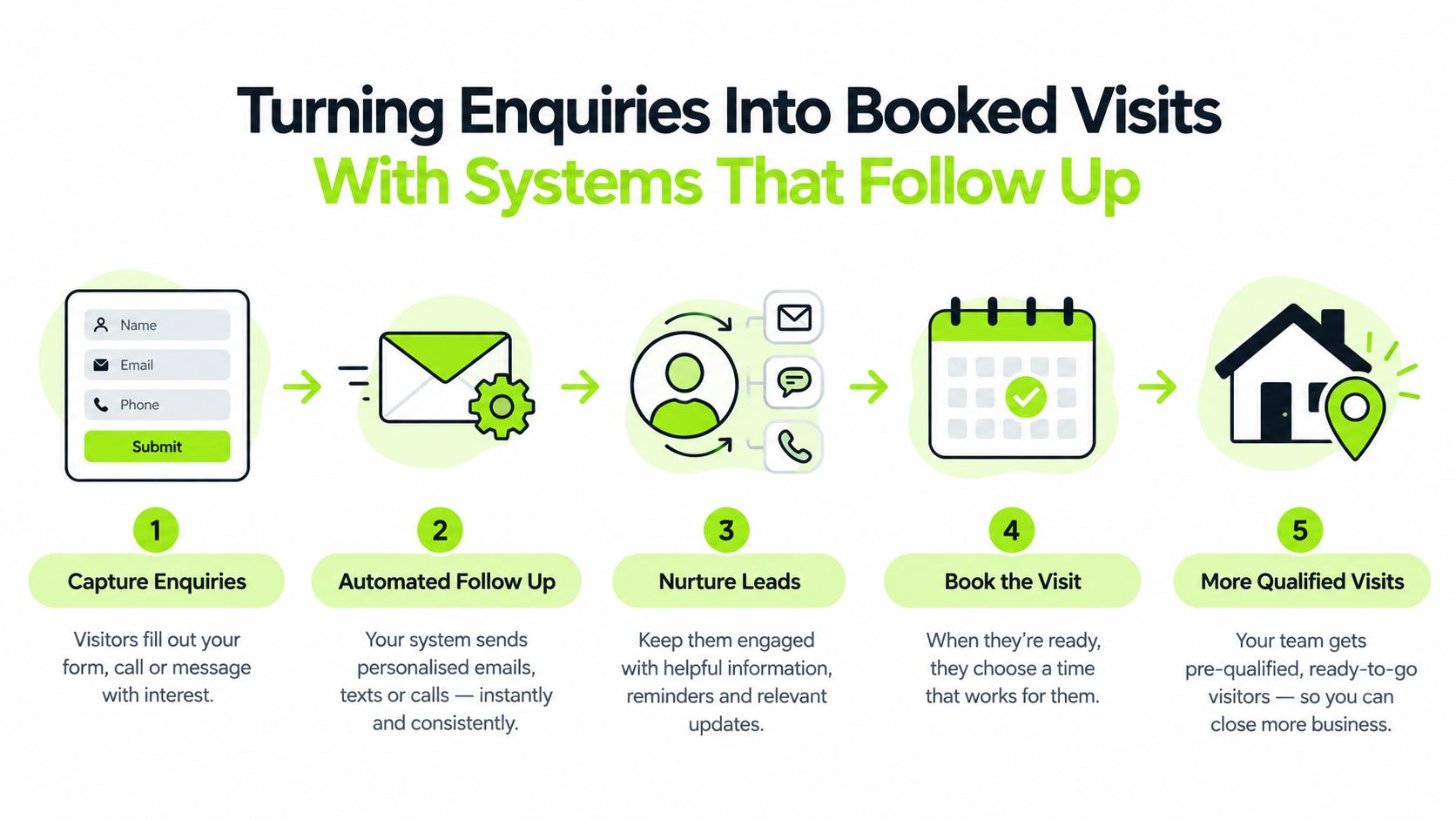
The enquiry should enter a system the moment it arrives. A form submission, phone call, social message or referral must create one visible record, not another task for someone to remember.
That record should include the golfer's name, contact details, source, membership interest, preferred contact method, urgency and next action. It should also show whether the club has responded, whether a visit is booked and what information the prospect still needs.
Build the response sequence before launching campaigns
GolfRep's golf club enquiry management guidance recommends a defined sequence: trigger an alert if nobody responds within five minutes, send a value-led email within two hours, make a same-day call, send an SMS nudge at 24 hours if there's no reply, and issue a final message on day seven.
The sequence should feel human, not robotic. The first email can confirm receipt, answer the most likely question and offer two visit options. The call should focus on fit, availability and what the golfer wants from membership. The SMS should be brief and useful, not a repeated sales pitch.
A CRM can automate reminders and messages while leaving the important conversation with a member of staff. GolfRep uses targeted lead generation, membership landing pages, automated follow-up and CRM-enabled nurture systems to connect those stages. Clubs can also build a similar process with tools such as a CRM, form notifications, calendar booking and SMS integration, provided somebody owns the workflow.
Non-negotiable standard: Every enquiry must have an owner, a current status and a scheduled next action.
Qualify without making the golfer feel screened
Qualification isn't a barrier. It helps the club recommend the right route and prevents a poor-fit visit.
Ask simple questions:
- Playing pattern: How often does the golfer currently play?
- Membership aim: Are they looking for full playing access, flexible use, social involvement or a junior pathway?
- Timing: Are they ready to visit now, or still comparing clubs?
- Fit: Are there access, category or capacity considerations the club needs to explain?
The system should distinguish an immediate booking from a nurture opportunity. Someone comparing options still deserves useful follow-up. Send relevant information about playing access, events, coaching and the joining process, then set a date to revisit the conversation.
The GolfRep follow-up system guide sets out the wider principle clearly: the club needs a repeatable process that keeps leads visible and moves each prospect towards a decision. Don't ask staff to remember every follow-up. Give them a dashboard that shows what needs attention today.
Offers Pricing and Onboarding That Convert Without Discounting
Discounting is often used to hide an unclear proposition. It may create urgency, but it can also attract golfers who are shopping only for the cheapest route and leave existing members questioning the value of their commitment.
A stronger offer explains what the golfer gets, who the membership suits and what happens next. Price remains important, but clarity does more work than a lower number.

Make the joining decision easy to understand
Show membership categories side by side. Explain playing rights, competition access, social benefits, coaching pathways, joining fees and any relevant restrictions before the visit. A prospect shouldn't need three calls to discover whether the membership fits their working pattern.
Use structured pathways where they help:
- Flexible route: Give occasional or time-limited golfers a clear way to experience the club without pretending it offers the same value as full membership.
- Family route: Explain how parents and children can participate, what support exists and how the club creates a welcoming environment.
- Junior route: Present coaching, progression and social connection as part of the membership journey, not a reduced fee.
- Returning golfer route: Offer a supportive re-entry conversation, coaching or a guided first visit where appropriate.
These options protect the club's standards because they match the offer to the golfer's actual needs. They also give the membership team something useful to discuss beyond price.
The GolfRep golf club pricing strategy guide is useful when a club needs to align categories, value communication and conversion goals. The principle is straightforward: price should express the membership proposition, not compensate for weak communication.
Onboarding starts before the first round
A new member can leave emotionally before they leave financially. If nobody explains how to book, where to meet other golfers or which events suit a newcomer, the member may feel like an outsider even if the joining paperwork was smooth.
Give each new member a clear welcome contact, a simple first-week guide and a reason to return. Introduce them to relevant playing groups, coaching, competitions or social events. A short orientation can answer practical questions and reduce the uncertainty that often prevents new members from using the club.
Clubs with waiting lists or entrance fees should be even clearer. The purpose isn't to apologise for the standard. It's to explain the value, the process and the expected next step without creating confusion.
A good joining journey makes the golfer feel that they're choosing the right community, not merely buying access to a course.
Measuring, Optimising and Building a Predictable Pipeline
Managers and committees need a monthly view of the full member journey, rather than disconnected figures. Track enquiries, responses, booked visits, attendance, applications and joins in sequence. This shows where interest becomes action, and where it stops.
The most useful measures are enquiry-to-visit conversion, visit-to-join conversion and net growth by segment. Break net growth into adult, junior and proprietary categories where relevant. Compare joiners with leavers, because gross recruitment can hide a retention problem.
Use the numbers to find the constraint
A high enquiry count with few visits usually points to slow responses, weak follow-up or unclear offers. Plenty of visits with few joins suggests problems with the visit experience, pricing or the match between advertising and reality. Strong joining numbers followed by weak retention puts onboarding and member integration under scrutiny.
Assign every stage to a named owner. The membership director should know which enquiries need contact today. The general manager should see conversion patterns, while the committee should receive a concise view of net growth, capacity and new-member quality.
Peer context helps set an honest standard. Hillier Hopkins reported growth among most surveyed members' clubs, with 75% reporting growth and average growth of 8% among those clubs, as noted in its 2024/25 Golf Clubs Report. Use that benchmark alongside your club's capacity, category mix and local conditions.
Growth becomes predictable when the club can explain every stage between first contact and membership.
Keep the review routine practical. Check response times, examine stalled enquiries, listen to a sample of calls, compare visits with joins and improve one weak stage at a time. Visibility only creates value when managers act on it.
GolfRep helps UK golf clubs attract local golfers, capture membership enquiries, respond through structured CRM and automation systems, and convert interest into booked visits and sign-ups. Visit GolfRep to discuss a practical growth pipeline built around your club's capacity, pricing and membership goals.
Ready to tap into our proven growth system?