Golf Club Newsletter Ideas That Fill Quiet Weekdays

It's Monday morning in the secretary's office, and the same three questions have already arrived. Can buggies go out today, how do members enter the captain's competition, and when do Christmas party tickets go on sale. None of those questions is difficult. The problem is that ten people will ask each one separately if the answer has no obvious home.
That's the test for good golf club newsletter ideas. Every slot should answer a question members are already asking, fill a gap you've identified on the tee sheet, or move a reader to one clear next step. If a section can't do one of those jobs, it's filler, however pleasant it sounds. A fixed structure also helps with avoiding a generic newsletter voice, because named sections force you to write for a specific reader rather than the whole membership at once.
Your audience isn't standing still either. Golf Business News reporting England Golf data puts the average age of members at 54.99 in 2024, down from 56.18 in 2023, across more than 730,000 paying members. So keep the fixtures, results and committee notices your established members expect, but add mobile friendly updates, flexible formats and coaching routes for newer golfers. The eight formats below each have a defined audience, cadence and measure. Pick one, run it properly, and judge it on what it changes.
1. Committee and Club News Update
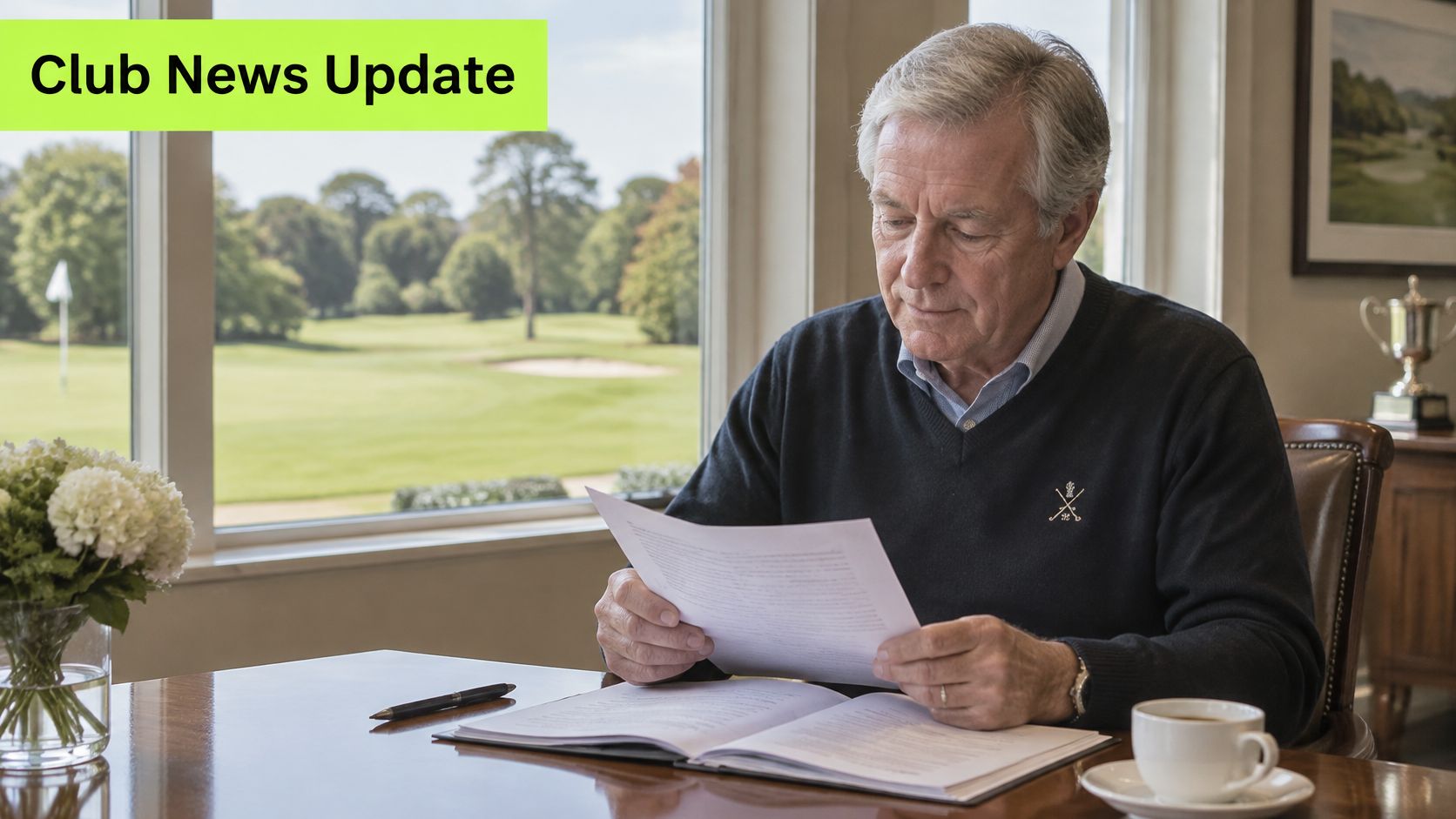
This is your fixed monthly slot for course maintenance, fixtures, committee decisions and policy changes, written in plain English. Its job is to cut repeated questions to the office and show members why decisions were made. Every item should end with one line on what it means in practice, such as a changed booking window, a revised buggy rule or a new dress code detail.
Members will read this if you lead with the course, not the committee. In the 2025 Crieff Golf Club member engagement survey reported by the GCMA, 216 of 252 respondents chose greenkeeper updates as a preferred newsletter topic, compared with 131 for forthcoming competitions and 97 for competition results. That doesn't mean results don't matter. It means course condition is the hook that earns attention for everything else.
What a Good Issue Looks Like
Say the 14th hole closes temporarily for drainage work. State the closure dates, the work being done, the reopening date and the temporary routing, in that order. Or say the buggy policy changes after a wet winter. Explain the new rule and the reason behind it once, clearly, and you'll field far fewer follow up emails to the secretary.
This slot is also where fee changes belong. The 2025 Golfshake Club Membership Survey reported by Glenmuir found 31% of members whose fees had increased said their club had not explained why, while 71% still considered membership good value. So don't sound defensive. Run a short recurring where your membership fee goes item, with before and after photos of work members can see.
- Keep it short: Stay under 300 words and cover no more than three topics.
- Fix the date: Set a publication date and a deadline for committee input, and hold both.
- Agree exclusions: Decide in advance what's never published, such as individual disciplinary matters.
- Give a route back: Include one line telling members how to respond or raise a concern.
2. Weekday Visitor and Tee-Time Offers
Start with your tee sheet, not your inbox. Find one specific gap, Tuesday mornings or early weekday afternoons, and build the slot around filling it. This is a tee sheet revenue tool first and a newsletter feature second, because its job is to sell underused capacity without weakening peak time pricing or member value.

Flexible formats belong here, because that's where growth is. National Club Golfer reporting England Golf's 2024 statistics recorded 10,213,894 scores submitted through the World Handicap System, with nine hole scores up 17.89% and general play scores up 13.67% on 2023. A nine hole weekday offer with lunch therefore isn't a compromise product. It's aimed at how an increasing number of golfers already want to play.
Say a club has empty Tuesday mornings. It offers a set green fee with lunch, names the tee times, price, validity period and conditions, and tracks bookings with a dedicated code. After eight weeks it reviews the redemption count and decides whether to continue, change or stop. A short follow up email then gives first time visitors a second invitation within 30 days, because one visit rarely creates a habit.
Practical rule: If you can't name the exact tee times you're trying to fill, you don't have an offer yet. You have a discount looking for a reason.
- Start with one gap: Use occupancy data from the tee sheet, not a general feeling that weekdays are quiet.
- Set a review point: Four to eight weeks, with a clear rule for continuing, changing or stopping.
- Protect member pricing: Check every offer against current membership benefits before it goes out.
- Track returns: Count how many visitors come back within 90 days. That's where the value sits.
3. Society and Group Booking Spotlight
Societies are usually booked a year ahead, which makes timing more important than volume. This slot exists to keep your club in an organiser's mind when they're planning next season, and to make rebooking feel easy. Send it to a separate organiser list, not your full membership database, because the reader wants package detail and dates, not club news.
Show organisers what a day looks like. Feature a recent spring society day with the number of golfers, the lunch format, the prize structure and the running order. Add a short quote from that organiser, with consent recorded on the day. That gives a prospective organiser a clearer picture than any general description of your course.
Timing the Rebooking Prompt
Say a club sends a November edition to society organisers opening next year's rebooking window, with a small early booking incentive such as a free nearest the pin prize pack. It states lead times and deposit terms in the same message, so there's no confusion later. One well timed issue like that will usually do more than monthly reminders.
Local relevance helps too. Highlight county fixtures, nearby club partnerships or a regional charity day your societies already support. Organisers choose venues they can picture their group enjoying, and a recognisable local setting makes that picture easier.
- Maintain the list: Update organiser contacts after every event, while details are fresh.
- Time one issue to rebooking: Send at least one edition a year when next season's window opens.
- State terms every time: Include lead time and deposit terms in each package description.
- Capture quotes on the day: Ask before the group leaves, and record consent there and then.
I'd measure this slot on rebooking rate and deposit dates, not opens. If organisers reply asking for next year's availability, it's working.
4. Events, Functions and Private Hire Showcase
Clubhouse income depends on people seeing the room in use. This feature covers weddings, Christmas parties, corporate functions, private dinners and wakes, and its job is to help a reader picture their own event in your space. It isn't a brochure. It's evidence that the venue is active, well run and available.
Use real events, with consent, and give planners the details they need to self qualify. Show the room set up, the menu served, your capacity and clear price bands. If a reader has to phone just to learn whether you can seat their party, many won't bother.
Say a member's wedding reception is featured with photographs of the set up and menu. Two further member enquiries follow, because members trust a room they've seen used by someone they know. Or say a club features its Christmas party package in October and November and tracks enquiries by month. It then knows which edition produced bookings and can plan next year's timing properly.
Making Enquiries Easy to Handle
Name one person responsible for event enquiries and set a response standard for them. A good feature followed by a slow reply wastes the work. Feature off season events deliberately too, because clubhouse utilisation in quieter golf months is where this slot earns its place.
- Show capacity and price bands: Let readers rule themselves in or out without a phone call.
- Feature winter as well as summer: Off season visibility supports income when golf demand drops.
- Track by issue: Record which feature produced each enquiry, so you can repeat what works.
- Use consent carefully: Get written permission before publishing photographs of private events.
5. New Member Welcome and First 90 Days

Retention is largely decided early. If a new member hasn't booked, met anyone or entered anything by month three, renewal becomes a hard conversation. So this slot has one job: getting each new joiner active before that point. Run a short welcome series triggered from the membership start date, with one clear action per issue rather than a single welcome email that is sent and forgotten.
Handicaps are the obvious first topic, because new members ask about them constantly. England Golf's 2024 handicapping guidance states a player must submit acceptable scores covering a minimum of 54 holes under Rule 4.5, made up of 18 hole or 9 hole rounds, and must pre register a general play score before starting the round. Turn that into a simple checklist covering registration, acceptable formats, attestation and submission.
Then explain the numbers they will use. England Golf's player reference guide sets the maximum Handicap Index at 54.0 and gives the full Course Handicap calculation: Handicap Index × Slope Rating ÷ 113 + (Course Rating − Par). Run it once for a typical member on your own tees and print the answer. Readers want their number, not the arithmetic, and that worked example alone will cut queries to the pro shop.
Cadence matters more than volume. Say a club sends issues in weeks one, four, eight and twelve. Week one covers booking, week four invites the member to a beginners' group, week eight introduces sections and leagues by level, and week twelve asks what is still unclear. Our guide to golf club new member onboarding sets out how to link those messages to the wider induction process.
Judge the series at the 90-day mark: has the member booked, played and entered something? The trade-off is the setup cost. Writing four issues takes staff time once, then the series runs for every new joiner without further effort.
Ask new members for feedback at 90 days, then change the series based on what they tell you. Guessing what confused them is slower than asking.
6. Lapsed Member Win-Back and Reactivation
A lapsed member list is warm inventory. These golfers already know the course, the clubhouse and the people, so the job is narrower than a general membership push: recover lost revenue, fill quieter tee times and learn why they drifted.
Audience first: members who left in the last 12 months, plus current members whose play has gone quiet. Cadence second: run a short sequence while one offer is open, not a one-off apology email. Say a club invites recent leavers to a complimentary round with the professional, then logs every reply as a reason for leaving. If most replies point to course access at peak times, the next issue explains the new booking arrangements directly.
That discipline matters more than the offer. Log lost reasons so you can tell whether price is a messaging problem, a weak tour experience is an operational problem, or inconsistent follow up is a process problem. Our breakdown of a golf club reactivation campaign covers how to structure that sequence.
Keep It Lawful and Low Pressure
Check that you have a lawful basis for emailing former members, and make it easy for them to opt out. Keep the route back simple, such as a trial round or a clear rejoining option, and avoid discounting in a way that undermines members who stayed.
- Ask one question: “What would make you return?” Record the answer in your CRM.
- Keep the offer simple: One route back, stated plainly, with a named contact.
- Measure properly: Track reply rate, reactivation rate and returning members still active at 90 days.
7. PGA Professional Coaching and Lessons Column
A column from your head professional works because it comes from someone members already trust. It gives readers a reason to open the newsletter, and it produces a steady flow of lesson, clinic and junior coaching bookings. Keep each edition to one idea a member can try in their next round.

Rules explainers sit naturally here too, especially before pairs events. England Golf's guidance on mixed and multi tee events states that in Foursomes each side's Playing Handicap is 50% of the combined Course Handicaps, while in Greensomes it's 60% of the lower plus 40% of the higher. A short pre competition guide with one worked example saves the competition committee a queue of questions on the day.
Say a monthly tip on wedge distance control ends with a link to a 30 minute lesson, tracked by a unique code. Or say a junior clinic is promoted in April, ahead of the school holidays, and the club records how many new junior families join. Members who'd rather give coaching as a present can also find vouchers for golf tuition, which makes a neat seasonal addition in November.
- One tip per issue: Specific, testable and short enough to read on a phone.
- One booking link: A single route to book makes the response measurable.
- Rotate the byline: Let assistant professionals and coaches write too, so members meet the whole team.
- Review monthly: Feed booking results into next season's coaching programme.
8. Indoor Golf Leagues and Off-Peak Bay Offers
Indoor golf runs on a different rhythm, with demand peaking in winter and in the evenings. Treat it as its own commercial category. This slot's job is to fill bays in quieter periods, grow league participation and give first time visitors a clear next step. Explaining what your simulator can do won't achieve that. Explaining what happens after a first session might.
Say a facility promotes a winter Thursday league and offers a first visit bay rate that leads into a league sign up at the second visit. That's a proper pathway, because the second visit is where a casual customer becomes a regular. In summer, the same facility sends an off peak bay offer to customers who booked in winter and tracks the seasonal repeat rate.
Our roundup of indoor golf league ideas covers formats that turn league night into a habit rather than a one off booking. Use league tables, results and team photographs in the newsletter itself. People return for the group as much as the golf.
The Numbers to Watch
Set a target for converting first visits into second visits and review it monthly. Compare winter and summer bay occupancy each year so your off peak calendar is built on your own trading pattern. Then keep simulator pricing consistent across your website, social channels and newsletter, because conflicting prices erode trust quickly.
- Make leagues the next step: Offer a team place, not a generic return discount.
- Plan around seasons: Build summer offers from your winter database.
- Track conversion by cohort: Separate first time, occasional and league customers in your reporting.
How the eight golf club newsletter formats compare
| Item | Main Audience | Primary Goal | Suggested Cadence | Best Measured By |
|---|---|---|---|---|
| Committee and Club News Update | Club members | Explain club decisions and keep members informed | Fixed monthly slot | Follow-up questions and member responses |
| Weekday Visitor and Tee-Time Offers | Visitors and local golfers | Fill underused weekday tee times | Seasonal or reviewed every four to eight weeks | Offer redemptions, tee-sheet occupancy, and 90-day return visits |
| Society and Group Booking Spotlight | Society organisers | Encourage repeat bookings and maintain organiser relationships | At least annually, timed to the rebooking window | Society rebookings and enquiries |
| Events, Functions and Private Hire Showcase | Members and event planners | Generate private-hire enquiries and increase clubhouse use | Recurring, with seasonal focus | Enquiries and bookings by newsletter issue |
| New Member Welcome and First 90 Days | Members who joined within the last three months | Encourage early engagement and make club life easier to navigate | Three to five issues during the first 90 days | Welcome-round bookings, section participation, and member feedback |
| Lapsed Member Win-Back and Reactivation | Former members and inactive members | Encourage a personal, low-pressure return to the club | Targeted sequence based on leaving date or last activity | Reactivation rate, reply rate, and returning members at 90 days |
| PGA Professional Coaching and Lessons Column | Club members, juniors, and prospective learners | Share useful coaching advice and generate lesson and programme bookings | Monthly | Coaching bookings by source and new junior enrolments |
| Indoor Golf Leagues and Off-Peak Bay Offers | Indoor golf customers and prospective players | Fill quiet bay times and build repeat visits and league participation | Seasonal, aligned with demand patterns | Bay occupancy, repeat bookings, and league sign-ups |
Choosing Your First Newsletter Slot to Build
You don't need all eight formats at once, and trying to launch them together is the surest way to produce a newsletter nobody maintains. Pick the one whose job matches your most pressing gap. Empty Tuesday tee times point to the visitor slot. New members who stop playing by month three point to the welcome series. Event enquiries that arrive but go nowhere point to the functions showcase and a named owner with a response standard.
Run your chosen slot for one season. Keep a simple sheet with one row per issue, recording the audience segment, send date, the single call to action, and the result you care about, whether that's bookings, rebookings, lesson sales, or returning members. Review it at 90 days before adding anything else. We recommend clubs review stage by stage conversion, speed to lead, visit to join performance, source level revenue, and retention at the 90 day mark, and the same discipline works for a newsletter.
Use realistic benchmarks when you judge performance. The UK Data and Marketing Association's Email Benchmarking Report 2025 puts 2024 delivery at 98%, open rate at 35.9% and unique click rate at 2.3% across seven UK email service providers. Treat opens cautiously, because Apple Mail Privacy Protection can inflate them. Clicks and downstream actions, such as a booked visitor round or a competition entry, tell you far more.
Specialist golf audiences can do better. Golf Empire's media pack reports more than 64,000 newsletter subscribers, a 45%+ average open rate and 65% mobile traffic. Treat that open rate as an upper range reference from a purpose built golf audience, not a target for a mixed club database. Do take the mobile lesson seriously though. Use a single column layout, large tap targets, compressed images and a booking button near the top.
Segment before you scale. Full members, flexible members, lapsed members, visitors, junior parents and society organisers want different things, and reporting by segment shows you which slot is earning its place. You can calculate your email marketing results issue by issue rather than relying on a blended average that hides the problem.
Different clubs have different bottlenecks, and a newsletter only helps if it's aimed at yours. Identify the current commercial constraint, build the slot that addresses it, measure the impact, then move to the next one. If you'd like help working out which gap comes first, the first call with GolfRep is an open, strategic conversation, not a sales pitch, where we look at your current setup, goals and challenges and map out what a growth system could look like.
If you'd like your newsletter to fill specific tee times, rebook societies and keep new members playing past month three, GolfRep can help you build segmented campaigns and automated nurture sequences around those goals. We work with UK clubs on acquisition, conversion, retention and revenue growth, using campaigns built around each club's brand, pricing and goals. Visit GolfRep to start an open conversation about where your biggest commercial constraint sits.
Ready to tap into our proven growth system?