Golf Club Business Consultant: A Practical Guide

The popular advice is predictable: spend more on Facebook ads, run another open day, print more leaflets, and wait for membership to rise. That advice is incomplete. Most UK golf clubs don't have a demand problem. They have a conversion problem.
England Golf reported 1,735 affiliated golf clubs and more than 730,000 club members in England in 2025, with an average county containing about 21,408 golfers. The average member age also fell from 56.18 to 54.99, suggesting clubs are broadening their appeal rather than relying on one traditional audience. GCMA's analysis of England Golf data gives useful context for managers assessing local opportunity.
The question isn't whether a golf club business consultant can create more enquiries. The ultimate test is whether they can show where enquiries disappear, install a reliable response process, and connect activity to joined and retained members. A consultant who only reports clicks and impressions is measuring attention, not growth.
Why Most UK Clubs Don't Need More Leads
Committee meetings often begin with the same diagnosis: “We need more enquiries.” That conclusion usually comes before anyone checks how quickly the last enquiry received a reply, whether a missed call was returned, or whether an old prospect was contacted again after an initial visit.
The national market doesn't support the idea that UK clubs are operating in an empty funnel. The R&A satellite account estimated that 5.356 million UK adults play golf at least once a year, while 2.357 million play at least once every four weeks and 889,000 are club members. Golfshake's report on UK golf club membership shows a substantial pool of casual and regular golfers who could enter a membership journey.
The first question isn't “How do we generate more demand?” It's “What happens to the demand we already have?”
Take a committee receiving 30 to 50 enquiries a month. If website forms go to one inbox, phone messages sit with the duty manager, social messages remain in a personal account, and Saturday enquiries wait until Monday, the club can have a respectable flow of interest and still finish the year with little movement. A full pipeline that nobody owns behaves like an empty pipeline.
A credible golf club business consultant should therefore audit every route into the club:
- Website forms: Are submissions recorded centrally, with an owner and next action?
- Phone calls: Does the team log missed calls and return them promptly?
- Walk-ins: Does reception capture contact details and the visitor's reason for enquiring?
- Social messages: Can the membership team see and follow up with direct enquiries?
- Referrals: Are reciprocal clubs, societies, professionals, and existing members part of one process?
The consultant earns their fee by fixing this middle of the funnel. That means defining response standards, routing enquiries, creating follow-up sequences, and giving managers visibility over every opportunity. The practical warning signs are also covered in why most golf club marketing fails, particularly when promotion runs ahead of operational capacity.
What a Golf Club Business Consultant Does
Most UK clubs do not need another lead-generation presentation. They need someone to find where existing demand stalls, then install the routines, ownership, and reporting that turn interest into revenue.
A consultant should inspect the club as an operating system. That means reviewing how staff handle enquiries, how membership categories fit actual playing habits, how prospects are followed up, and how managers measure commercial performance. A strategy document can identify an opportunity. It cannot answer a Sunday enquiry, train reception, reconcile duplicate records, or explain why visits fail to become memberships.

The core service areas
A credible consultant should connect each recommendation to a specific club problem:
- Enquiry handling and CRM setup: Centralises records, removes duplication, assigns ownership, and tracks source, category, status, next action, and outcome.
- Membership category and pricing review: Matches categories to how people play. Flexible, junior, family, and transitional options should guide members towards fuller participation rather than create a confusing tariff list.
- Lead nurture sequences: Keeps prospects engaged after the first conversation. Someone who is not ready today should remain visible and receive relevant follow-up.
- Retention diagnostics: Separates joiners and leavers by category, timing, and reason. Gross membership can rise while resignation patterns weaken the club.
- Committee reporting dashboards: Replaces anecdote with clear reporting on enquiries, visits, joins, leavers, and attributed revenue.
- Revenue mix analysis: Examines green fees, events, food and beverage, societies, lessons, and membership as connected commercial activities.
The advisor-operator distinction matters. A strategy-only advisor delivers findings and leaves implementation to stretched staff. An operator-level consultant works with the general manager, membership team, and front of house, then remains involved until agreed measures improve.
A fleet decision should stay separate from the commercial diagnosis. Guidance on electric vs gas golf carts for fleets can inform equipment planning, but buying vehicles will not repair a weak enquiry process.
GolfRep belongs in the evaluation as a system-focused provider, not as a marketing agency. Its golf marketing agency guidance is relevant when advertising, automated follow-up, CRM visibility, and revenue tracking operate as one pipeline. A consultant earns the fee by installing that connection and making its performance visible to the club.
The UK Golf Market Opportunity in Numbers
The UK funnel is wider than most membership discussions suggest. The challenge is that golf participation and club membership are not the same behaviour, so clubs need a deliberate conversion path rather than a single membership advert.
The R&A satellite account provides the clearest view of that gap: 5.356 million UK adults play at least annually, 2.357 million play at least every four weeks, and 889,000 are club members. Those figures show that regular play doesn't automatically produce formal membership. A club can therefore find opportunity among golfers already playing, even before it spends heavily on broad awareness.
England Golf reported 750,071 members in 2025, while junior membership reached 61,483, up 34%. The Golf Business report on England membership also points to flexible membership becoming more common. The direction is clear: demand is broadening across age groups and participation types, but clubs need different journeys for juniors, families, lapsed golfers, and pay-as-you-play visitors.
UK Golf Funnel From Intent to Membership
| Stage | Approx. UK Volume | Conversion Note |
|---|---|---|
| Annual golf participation | 5.356 million adults | A broad awareness and reactivation pool |
| Golf every four weeks | 2.357 million adults | A stronger audience for membership conversations |
| Club membership | 889,000 adults | The formal membership outcome |
| Junior membership in England | 61,483 members | A growing pathway that needs long-term development |
The table isn't a promise that every casual golfer is a viable member. Location, price, playing frequency, transport, family commitments, and club culture all affect fit. It does show why “there aren't enough golfers” is usually a weak diagnosis.
The funnel leaks when a range customer isn't invited to play, a society golfer isn't offered a structured next step, or a junior pathway has no family conversion plan. It also leaks when an interested visitor receives a brochure but no scheduled follow-up.
Clubs should connect participation data to practical journeys, then measure what happens. The commercial implications of that broader revenue base are discussed in how golf clubs make money, but the operating principle is simple: convert existing intent before buying more attention.
The Conversion Problem Behind Stalled Growth
A typical club spreads enquiries across website forms, several email addresses, phone calls, social messages, walk-ins, and third-party platforms. Aquarius Golf Club's contact structure illustrates the issue, with separate routes for membership, general enquiries, competitions, lessons, social enquiries, and golf development. Its membership contact page shows how easily lead visibility can fragment when every route has a different owner.
A prospect's journey usually contains five points where the club can lose momentum:
- Response: The club answers quickly, or the prospect moves to another option.
- Qualification: Someone identifies playing habits, expectations, budget fit, and preferred category.
- Visit: The prospect books and attends a tour, round, or conversation.
- Follow-up: The club records the next step instead of relying on memory.
- Reactivation: Older enquiries receive a relevant reason to return.
One UK lead-response summary reports that leads contacted within five minutes are 2.6 times more likely to convert, while the average business takes 47 hours to reply and 51% of leads are never contacted. The UK small-business lead-response summary makes the operational risk difficult to ignore.
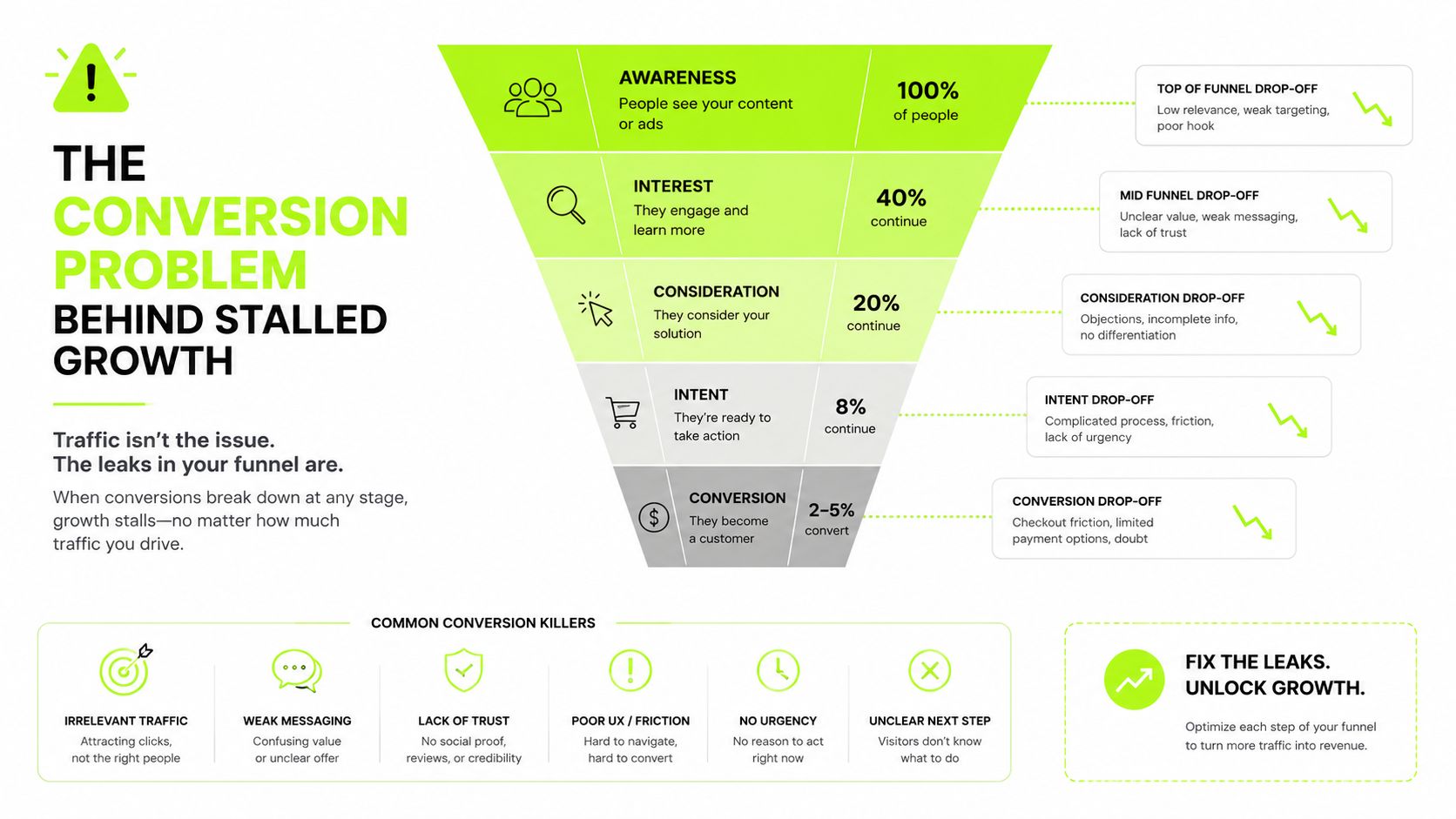
A missed Saturday call isn't an admin error. It's a commercial failure if nobody owns the recovery.
A CRM doesn't need to be complicated. It needs one record per prospect, a defined status, a named owner, a response timestamp, and a next action. A service-level agreement can require immediate acknowledgement, same-day human contact, and scheduled follow-up when the prospect isn't ready.
Lymm Golf Club's membership page shows the value of a structured next step. It asks prospects to make an enquiry and says the club will arrange a visit and a chat without obligation. That membership journey demonstrates the principle: the form is only the beginning, not the conversion mechanism.
More advertising won't repair a broken handover. The consultant's job is to install the process, train the people, monitor the response, and prove whether enquiries become visits, joins, or useful learning.
Service Models, Pricing and Contract Terms
Consulting contracts should make the work, ownership, and measurement unmistakable. If a proposal promises “growth support” without defining who responds to leads, what gets built, and when reporting begins, the club is buying ambiguity.
The three common models look different in risk and control:
| Model | Typical UK Price | Duration | Included | Watch Out For |
|---|---|---|---|---|
| Retainer | Not stated in the verified data | Ongoing | Strategic oversight, reporting, CRM and marketing optimisation as agreed | Vague deliverables, unclear notice terms, and meetings replacing implementation |
| Project | Not stated in the verified data | Fixed scope | A defined review, implementation, or refresh with agreed outputs | Assets left incomplete, weak handover, and no owner after launch |
| Performance-linked | Not stated in the verified data | Longer-term | A smaller base fee plus an agreed bonus tied to measurable outcomes | Disputes over attribution, net growth definitions, and data access |
The price ranges and contract periods often quoted in the market need to be tested against the actual scope. Do not accept precise commercial terms as a universal benchmark without a proposal that explains staffing, technology, implementation, and reporting.
What belongs in the contract
Clarify whether paid advertising, web development, tee-time platform fees, photography, software licences, and staff training are included or excluded. Confirm who owns CRM builds, automations, dashboards, creative assets, and member data if the relationship ends.
Require a reporting schedule that separates activity from outcomes. Enquiries, visits, joins, leavers, net movement, attributed revenue, and response times should have definitions that both sides approve.
Watch the clauses that committees often skim:
- Exclusivity: Does it prevent the club from using another specialist?
- Non-solicit: Does it restrict staff movement beyond a reasonable boundary?
- KPI wording: Can the consultant change the definition of success after launch?
- Notice period: Can the club leave if implementation stalls?
- Data access: Can the club export its own records without delay?
A short project can suit a club needing a defined CRM implementation. A retainer suits a team that wants ongoing operating support. Performance-linked terms can align incentives, but only when attribution is clean and the consultant can see the full commercial picture.
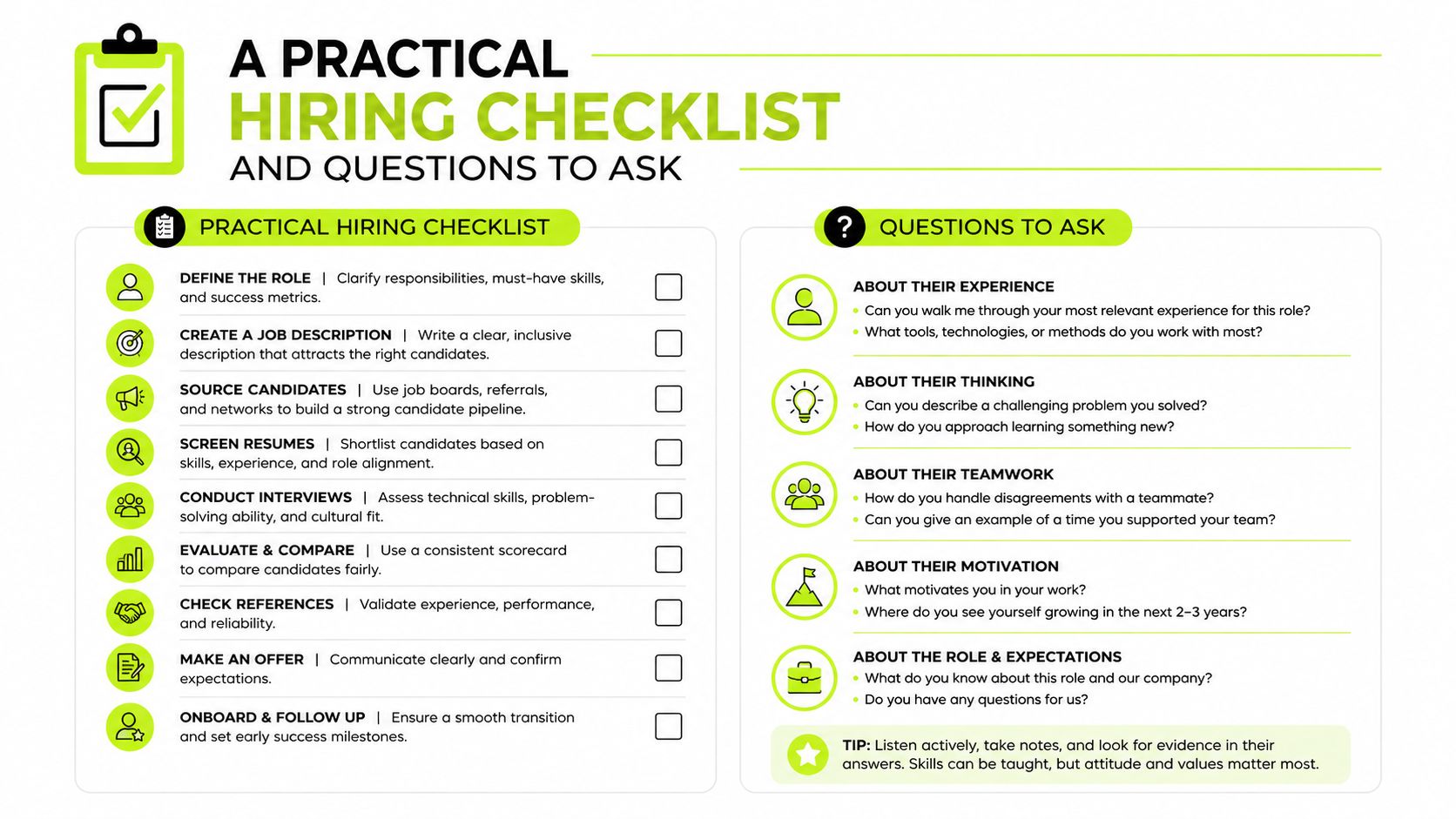
A Practical Hiring Checklist and Questions to Ask
A committee doesn't need consulting experience to run a disciplined selection process. It needs a written brief, comparable evidence, and the confidence to reject a polished presentation that avoids uncomfortable operational questions.
Build a sector-specific shortlist
Start with three to five consultants. Look for golf-sector work, relevant professional memberships, published thinking in golf management, named examples at comparable clubs, and verifiable CRM credentials. Generic agency awards tell you little about a membership operation.
Ask:
- “Which clubs have you worked with that resemble ours in size and ownership?”
- “Who carried out the implementation?”
- “Can we speak to a referee who saw the process after launch?”
- “Which part of the work did you decline to take on?”
Use the discovery call as a diagnostic test
The right questions force the consultant to investigate rather than pitch. Ask, “What would you inspect in our first 30 days?” Follow with, “Which data would you need on day one?”, “How would you trace a missed enquiry?”, and “What would make you advise us not to increase advertising spend?”
A useful general resource on how to ask the right questions to consultants can help a volunteer treasurer structure the conversation without getting lost in technical language.
Check references properly
Don't ask whether the consultant was “good”. Ask for evidence. “What changed in the enquiry process?”, “Which KPI improved?”, “What remained unresolved?”, and “What did the consultant expect your staff to do?”
Inspect the proposal and contract
The proposal should name deliverables, owners, meeting cadence, data requirements, software, exclusions, and exit terms. The contract should explain what happens to CRM assets and member data on termination.
A reference that only praises personality isn't a reference. Ask what the club can now do that it couldn't do before.
Sector Case Study Highlights
Real club work is rarely a clean before-and-after story. The useful lesson is not to copy another club's campaign, but to understand which operating constraint was addressed.
The following examples from GolfRep's sector experience illustrate different commercial problems. They should be treated as operating examples, not universal forecasts.
Bidston Golf Club
Bidston needed to rebuild its enquiry pipeline after a period of serious commercial pressure. The intervention centred on prompt lead response, structured follow-up, and a clearer visitor journey instead of increasing promotional activity.
GolfRep reports that Bidston moved from near-closure to more than double membership and six-figure recurring revenue. The transferable lesson is that a club in distress still needs a repeatable path from enquiry to visit to membership. Emergency promotion without process would have created more noise for an already stretched team.
Addington Palace
Addington Palace operates across a more complex venue environment, so a single membership message would have been too blunt. The work focused on pipeline growth, tiering, and flexible joining paths that could help prospects move from an initial relationship with the venue towards a fuller membership decision.
The lesson for multi-course and resort-style operators is to build routes around different levels of commitment. A consultant should show how each route is tracked, not merely rename the packages.
Downes Crediton
Downes Crediton demonstrates that a smaller members' club doesn't need to imitate a large commercial venue. Its focus was a rapid, profitable membership campaign, supported by attention to the broader member and event opportunity.
The operating point is important: retention and event revenue can matter as much as new joiners. Smaller clubs need a system that respects limited staff capacity and prioritises actions the team can complete.
Macdonald Hotels and Resorts
Macdonald's portfolio model highlights the challenge of multiple sites with different local markets. Centralised CRM standards and automated follow-up can create consistency without forcing every club to use identical messaging.
The lesson is governance. A group needs shared definitions, data visibility, and reporting rules, while each property retains local control over its offer.
| Club | Type | Primary Intervention | Headline Result |
|---|---|---|---|
| Bidston Golf Club | Members' club | Lead response and visitor journey | More than double membership and six-figure recurring revenue |
| Addington Palace | Multi-course venue | Tiering and flexible joining paths | Steady pipeline growth |
| Downes Crediton | Smaller members' club | Membership campaign and broader revenue focus | Rapid, profitable campaign |
| Macdonald Hotels and Resorts | Multi-site operator | Centralised CRM standards and follow-up | Scalable portfolio approach |
The common thread is not a particular advert. It's the installation of a process the club can run and measure.
KPIs, ROI and Your Next 90 Days
A committee can manage consultant performance without becoming a marketing department. Track the points where commercial intent changes state, then hold the supplier and the club team accountable for the actions each stage requires.
The five core measures are:
- Enquiry-to-visit conversion: Shows whether initial interest becomes a real club conversation.
- Visit-to-join conversion: Tests the quality of the tour, trial, offer, and follow-up.
- Cost per new member: Connects acquisition spending to actual joiners.
- First-year retention rate: Checks whether the club is attracting suitable members and delivering value after joining.
- Member lifetime value: Helps the board judge sustainable economics rather than a single joining event.
The ROI calculation can stay simple:
(Incremental joins × average joining fee, plus first-year subscription uplift, minus consulting and platform cost) ÷ consulting and platform cost
Use agreed definitions. Decide how the club attributes a join when several contacts, campaigns, or referrals influenced the decision. Don't allow a consultant to claim every new member while the club carries the cost of untracked activity.
The first 30 days
Audit every enquiry route, database field, membership category, response time, and follow-up handover. Fix obvious ownership gaps, create a single opportunity view, and contact suitable dormant prospects with a relevant reason to re-engage.
Days 31 to 60
Roll out the CRM workflow, response standards, qualification questions, visit booking process, and nurture messages. Train reception, professionals, membership staff, and managers together, because the prospect doesn't care which department owns the inbox.
Days 61 to 90
Run the first complete reporting cycle. Review enquiry sources, response performance, visits, joins, leavers, category movement, and attributed revenue. Remove steps that nobody completes and tighten the stages that lack evidence.
Print this checklist for the next management meeting:
- Every enquiry has a named owner.
- Every open opportunity has a next action.
- Missed calls are recorded and recovered.
- Visits are booked and followed up.
- Old enquiries have a reactivation route.
- Definitions for joins, leavers, and revenue are agreed.
- The board sees conversion, not just lead volume.
- CRM assets and data ownership are documented.
A supplier relationship needs attention when reporting stays focused on impressions, the team still can't see open enquiries, response standards aren't measured, deliverables keep moving, or the consultant refuses to define attribution. A golf club business consultant should make the operation clearer, not create another layer of dependence.
GolfRep helps UK golf clubs build predictable pipelines by combining lead generation with automated follow-up, CRM visibility, and revenue tracking. If your club needs to convert more of its existing demand into booked visits and retained members, visit GolfRep to discuss the systems behind sustainable growth.
Ready to tap into our proven growth system?