Golf Society Lead Generation: A 2026 Playbook for UK Clubs

The popular advice says golf clubs need more society enquiries. In practice, many clubs already have enough interest coming in, they just don't have a clean way to capture it, qualify it, and turn it into a booked visit. In the UK, that matters because the market is already broad, with 725,000 affiliated members across 1,783 clubs in England and more than 1,800 golf facilities in the wider system, so the job is converting repeated local interest into visible, trackable leads rather than chasing awareness alone. England Golf's 2024 membership and club base figures make the point clearly, the opportunity sits in conversion, not invention.
That's why golf society lead generation has become less about ad volume and more about response discipline. The same regional pool feeds society days, green-fee visits, coaching enquiries, and eventual membership conversations, so clubs that can't see where leads come from, who owns them, and what happens next are leaving revenue unmeasured. The practical problem is rarely an empty inbox. It's the gap between the first enquiry and a real booking conversation.
Why Most Golf Clubs Already Have Enough Society Enquiries
A quiet diary often gets blamed on weak marketing, but that usually misses the core problem. Many clubs already receive enough society interest, they just fail to capture it cleanly, qualify it fast, and route it to the right person before the organiser moves on. In the UK, that matters because the game already has a large established base, with 725,000 affiliated members across 1,783 clubs in England, while the wider market includes more than 1,800 golf facilities beyond that affiliated base. England Golf's 2024 figures make the point clearly, the opportunity sits in conversion, not invention.
The hidden leak is operational
The biggest leak is not the ad platform. It is the moment a form is submitted and nobody can say, with confidence, what happened next. If a society enquiry lands in a generic inbox, waits for a busy manager, and gets answered days later, the club has already weakened its own position.
Practical rule: if the organiser has to chase you, the club has already lost some of the momentum that made the enquiry valuable.
That is why GolfRep treats golf society lead generation as a conversion system first and a traffic exercise second. Clubs with incomplete enquiry tracking may still get a decent stream of interest, but they cannot tell which leads are serious, which channels are producing stronger organisers, or where drop-offs are happening. Staff then assume demand is thin when the core issue is that leads are not being handled visibly. The same pattern shows up in actionable growth tactics from MakeAutomation, where the strongest results come from faster routing, cleaner ownership, and fewer manual handoffs.
A mature market needs a clearer handoff
The market reality is simple. There is already a substantial base of golfers inside the UK game, and there is also a broader audience of visitors who never show up in member reports. That means clubs are competing for first-time society bookings, repeat organisers, and future membership intent at the same time. The larger ecosystem matters because affiliated club data and the wider number of golf facilities are related but not the same pool, so they should not be read as one combined total.
A club that wants a fuller diary needs a process that reveals intent early. That means knowing which enquiries are from genuine organisers, which are just browsing, and which deserve immediate human follow-up. Without that structure, the club may still be generating interest, it just cannot prove where the value is leaking.
Building a Three-Stage Society Enquiry Funnel
A society funnel works best when it is treated as a handling process, not just a lead capture form. First the club records the enquiry. Then it qualifies the organiser straight away. Then it pushes the lead into CRM-based nurture so no one is left waiting in an inbox. GolfRep's system guidance shows that strong lead nurturing is linked with better sales-qualified lead performance at lower cost as cited in GolfRep's system guidance, which is why source tagging and immediate routing matter from the start.
Capture only what helps the next step
The first form should stay short enough to complete on a phone without friction. Golf-club guidance recommends asking for name, email, phone, ideal date, and estimated player numbers at the enquiry stage, and little else. That keeps the form focused on the booking conversation rather than turning it into an interview before the organiser has seen whether the club fits.
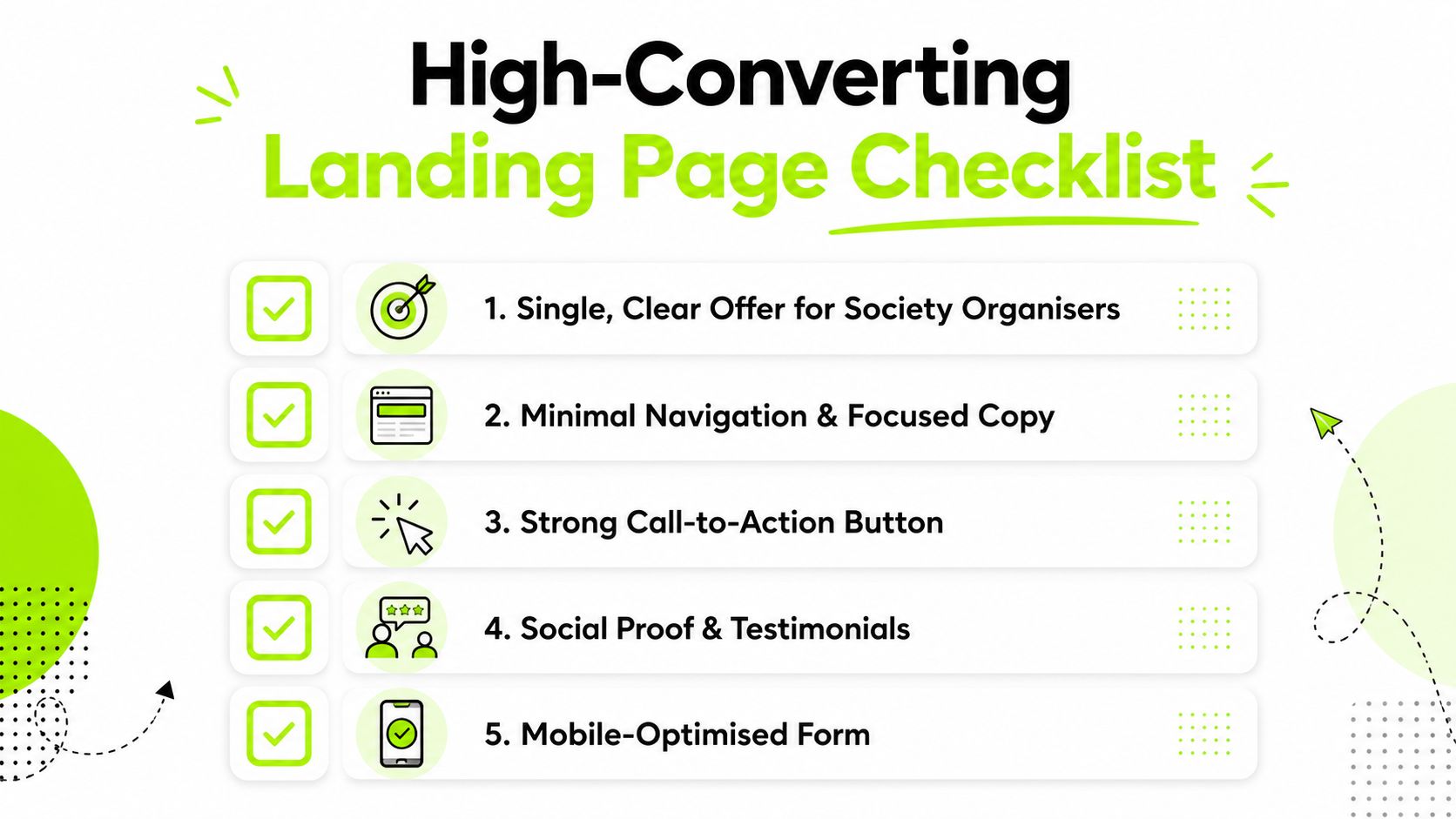
The page itself should do one job. It should confirm the offer, make the next step obvious, and avoid sending the visitor off to browse the rest of the site. If the club wants a tour request, a provisional hold, or a quote request, the form should point directly to that outcome.
Qualify fast, then route clearly
Once the enquiry arrives, the club needs a clear qualification layer. A good CRM setup tags the lead by source and intent, then assigns the next action, such as a call, a tour, or a booking task. That handoff matters because every dropped lead can then be traced to a stage, a person, or a channel instead of disappearing into general admin.
For clubs that want practical examples of lead capture and routing ideas, actionable growth tactics from MakeAutomation is a useful reference point for forms, qualification, and lead handling in a structured way.
Don't hide the source
Weak source attribution is a common technical failure. If a club cannot tell whether an enquiry came from paid social, referral, a society campaign, or ex-member reactivation, it cannot judge which channel deserves more attention. A spreadsheet may record volume, but it will not show whether the club is getting better organiser quality or just more noise.
Clubs that want a dependable process should treat source tracking as part of the booking workflow, not as a reporting afterthought. Once that is in place, the club can see where enquiries arrive, how quickly they are answered, and where the loss happens.
Paid traffic also needs to be routed to the right place from the start, and GolfRep's guidance on golf club paid advertising gives a practical benchmark for keeping that handoff tight.
Designing High-Converting Landing Pages and Paid Campaigns
Sending paid traffic to a homepage is one of the fastest ways to waste attention. A society organiser arrives with a specific need, so the page should answer that need at once with one offer, one message, and one clear next step. GolfRep's society guidance points clubs towards a dedicated landing page that repeats the ad promise, shows package pricing clearly, includes social proof, and gives the visitor a straightforward CTA. That is cleaner than asking them to browse the whole site. Receiver's guidance on landing page conversion is also useful here, because the same principle applies, relevance beats friction.
What the page has to do
A good landing page does not try to be a club brochure. It answers the organiser's practical questions quickly, such as what's included, what sort of group the offer suits, and how to enquire without a long back-and-forth. If the page cannot restate the ad promise in plain English, the paid click has probably been sent to the wrong destination.
The strongest pages also use social proof carefully. That does not need big claims or polished marketing language. It can show that other organisers have booked, that the club understands society days, and that there is a real person or team behind the offer.
The page also has to make the enquiry feel low risk. If the form asks for too much too early, some organisers will leave before they reach the final click. If it asks for too little, the club may receive enquiries that are hard to qualify and even harder to route.
Target locally, then segment by intent
For Facebook targeting, GolfRep's society lead-generation guidance recommends a local radius around the club and a short survey to expand the society database. GolfRep's society lead-generation guidance makes the logic clear, local warmth is more valuable than broad reach when the goal is to create bookings within a realistic travel area. The survey adds richer segmentation, so the club can separate larger groups from smaller ones and focus attention where likely spend is higher.
The club does not need more anonymous clicks. It needs identifiable organisers with enough detail to follow up properly.
Use paid traffic with discipline
If paid traffic is being used, the campaign must match the landing page tightly. A generic homepage is a poor fit because it forces the visitor to interpret the club, while the campaign page should confirm what the ad promised and make the enquiry path easy.
For clubs building out the traffic side, GolfRep's guide to golf club paid advertising is relevant because the channel only works properly when the creative, audience, and landing page are aligned. The same principle applies whether the club is promoting a society package, a group offer, or an organiser enquiry form. If the offer is vague, the response will be vague too.
Automating Follow-Up and Nurture Flows

The main failure point in society lead handling is what happens after the first enquiry lands. A club can spend money to generate interest, then lose the organiser because nobody replied quickly enough, or the reply failed to answer the question that mattered. GolfRep's system guidance recommends immediate tagging, and the reason is practical, warm leads need a response while intent is still active. website lead generation tips are useful here because clean capture and prompt follow-up still decide whether a lead gets handled or forgotten.
Build the first response around speed and relevance
The first automated reply should go out instantly by email, with SMS where appropriate, and it should confirm that the enquiry was received. It should also ask a small number of intent-based questions, such as whether the organiser needs a shotgun start or private dining, so the club can route the lead correctly. That does not replace personal service. It makes sure the first touch is relevant before a human has time to get involved.
The strongest nurture flows keep the tone practical. They acknowledge the organiser's enquiry, suggest the next step, and avoid sounding like a generic marketing blast. If the club's staff later pick up the conversation, they should already know enough to talk about the right package or the right type of day.
Use automation to protect staff time
Automation works when it protects the team from unqualified chasing. If every enquiry goes straight to a manager's inbox, the easiest leads get ignored while the hottest ones wait. A CRM flow should do the first round of sorting, then hand over the leads that are worth a call, a visit, or a booking discussion.
GolfRep's automated follow-up approach here is built around the idea that every lead should receive a timely response, but not every lead should receive the same amount of human effort. That distinction matters in a golf club, where one organised system often does more for revenue than a pile of ad hoc reminders.
Escalate with a simple sequence
A practical nurture sequence does not need to be complicated. The organiser receives the first reply, then a second message that helps narrow the brief, and then a human handoff once there is enough intent to justify a call. MakeAutomation's lead-generation examples show the same underlying pattern in a different setting, and the lesson still applies, systems work when they shorten the delay between interest and action. Clubs that want a more detailed setup can also use GolfRep's automated follow-up guidance to structure the handoff.
If a club gets this right, the team spends less time chasing cold leads and more time closing warm ones. That is a better use of staff energy, and it creates a more consistent experience for organisers as well.
Growing Your Society Database Through Partnerships and Outreach
A strong society pipeline rarely comes from one channel alone. Local businesses, offices, community groups, and previous organisers all create opportunities, but only if the club captures their details properly and keeps the database organised. GolfRep's business-focused guidance is relevant because the same structured approach that works for corporate relationships also works for society growth. Golf for business guidance is a good reminder that golf days are often relationship-led, not just ad-led.
Segment the database before you chase it
Not every organiser is worth the same amount of attention. Some will bring a small group once a year, while others can become repeat bookers with higher spend and better fit. The practical answer is to segment by society size, likely value, and recency of engagement, then prioritise follow-up accordingly.
That segmentation becomes more useful when it's built from active capture, not guesswork. GolfRep's society database guidance stresses the value of collecting more than just a name and email, then following up quickly while the lead is still warm. Sam Poole's write-up on society database capture reflects the same principle, richer data lets the club choose where to focus first.
Use outreach that matches the audience
Partnerships work best when the message fits the organiser. A local business owner, a PA booking a team day, and a community organiser all need slightly different reassurance, even if the underlying offer is similar. Clubs that treat all outreach the same tend to get generic replies and weak booking intent.
Ex-member reactivation also belongs in this mix. Past members already know the club, which shortens the trust gap, and some will be open to returning in a social or group context even if they're not ready to rejoin. The point isn't to blast the database with offers. It's to reconnect with the right people in a way that feels relevant.
Practical rule: the best society database is not the biggest one, it's the one the club can segment, contact, and convert without confusion.
That's why partnerships, referrals, and reactivation work best when they feed the same CRM. If they sit in separate inboxes or notebooks, the club loses visibility and can't tell which relationships are producing bookings.
Measuring What Matters and Optimising Continuously
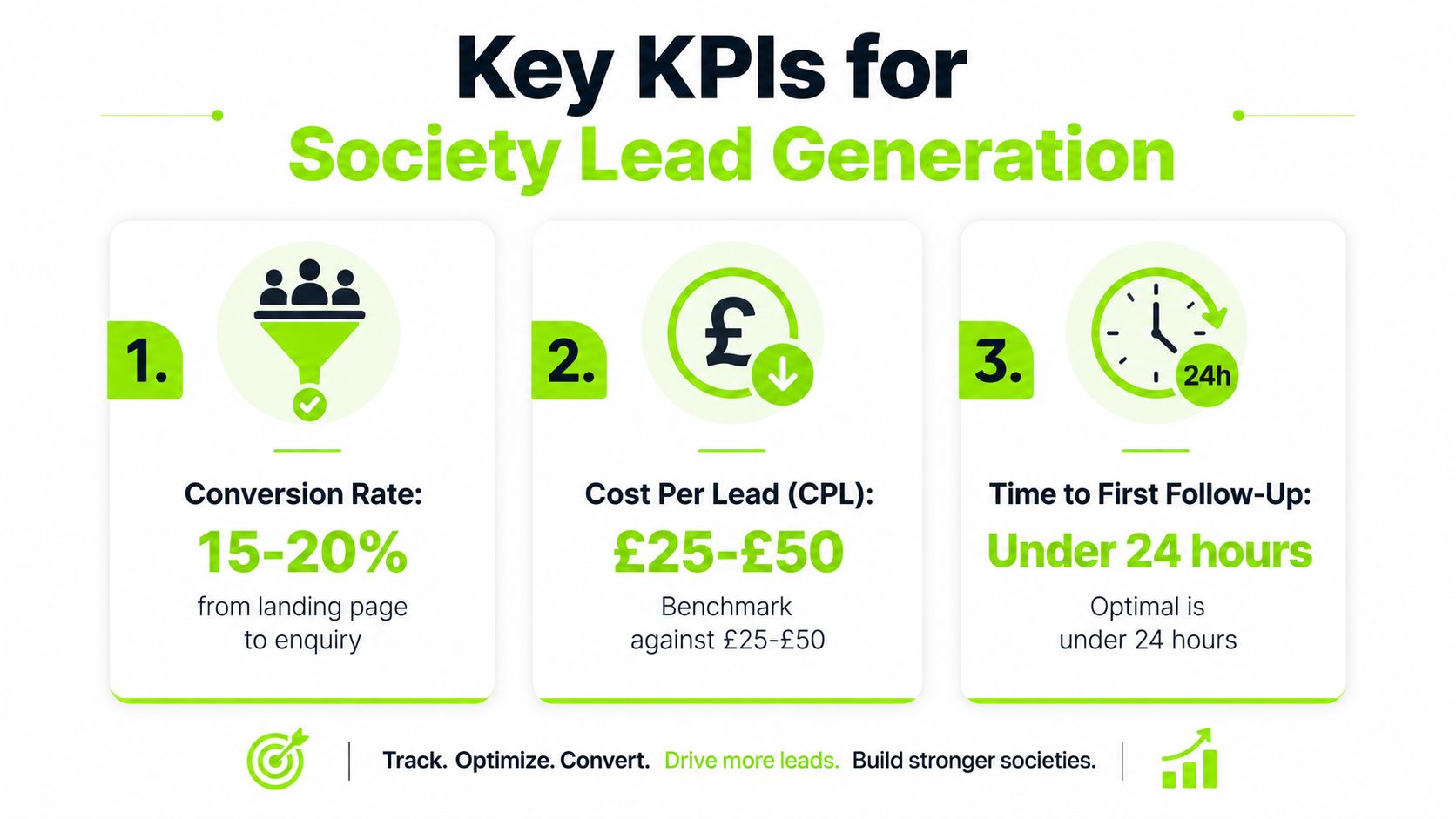
Clubs often talk about enquiry volume, but volume alone does not show whether society lead generation is working. The clearer view is source by source, with attention on response time, booked visit rate, and the quality of the follow-up process. GolfRep's benchmark guidance recommends weekly or monthly auditing, and that rhythm matters because clubs often lose prospects after the first enquiry when ownership is unclear. Structured booking, confirmation, and follow-up keep those leads from slipping away.
Track the right signals
The KPIs worth watching are the ones that show whether the pipeline is healthy. That means enquiry volume by source, time to first follow-up, conversion from enquiry to booked visit, and revenue per booking. If those numbers are hidden, the club is managing by instinct rather than evidence.
A short review rhythm works better than a long annual report. Weekly checks catch problems early, while monthly reviews show whether a channel is worth continuing, refining, or pausing. If one source produces enquiries that do not convert, the issue may sit with the traffic, the offer, or the handoff process, and the reporting should help separate those problems.
Assign ownership before the lead arrives
Ownership is where many clubs fall apart. A lead that lands in a shared inbox with no assigned next step can sit for hours or days because everyone assumes someone else has picked it up. The enquiry process should name a person or role responsible for the next action before the lead is ever sent.
A simple table can keep the team honest.
| Area | What to check | Why it matters |
|---|---|---|
| Source | Where the enquiry came from | Shows which channels attract the right organisers |
| Speed | Time to first reply | Measures how much intent you are losing |
| Outcome | Booked visit or not | Tells you whether the process is converting |
| Follow-up | Whether a task was completed | Prevents leads from disappearing after the first contact |
If those checks happen consistently, optimisation becomes practical rather than theoretical. The club can improve landing pages, retrain staff, or adjust targeting based on evidence instead of hunches.
A Practical 90-Day Society Campaign Timeline
The cleanest way to launch society lead generation is to avoid trying to do everything at once. In the first 30 days, the focus should be on capture infrastructure, landing page, form fields, CRM setup, and automated replies. If that base is weak, paid traffic and outreach will only expose the gaps faster.
Days 31 to 60 are where traffic and relationships start to layer in. Paid campaigns can go live alongside local outreach, partner introductions, and database reactivation, but only because the follow-up process is already in place. That sequencing matters, otherwise the club creates more enquiries than it can comfortably handle.
Days 61 to 90 should be about refinement. The club should review which sources produced real conversations, which page messages resonated, and where the handoff slowed down. Small adjustments at that stage are often more valuable than adding another channel.
A good 90-day plan looks less like a marketing burst and more like a disciplined rollout. The club builds the system first, adds traffic second, and then improves the process based on real lead behaviour. That's how society enquiries become booked visits instead of loose admin.
GolfRep helps clubs build society pipelines that are visible, trackable, and easier to convert, with structured follow-up and CRM-led systems at the centre. If you want a more predictable way to turn organisers into booked visits, visit GolfRep and see how the approach fits your club.
Ready to tap into our proven growth system?