Conversion Tracking Setup for Golf Clubs That Converts
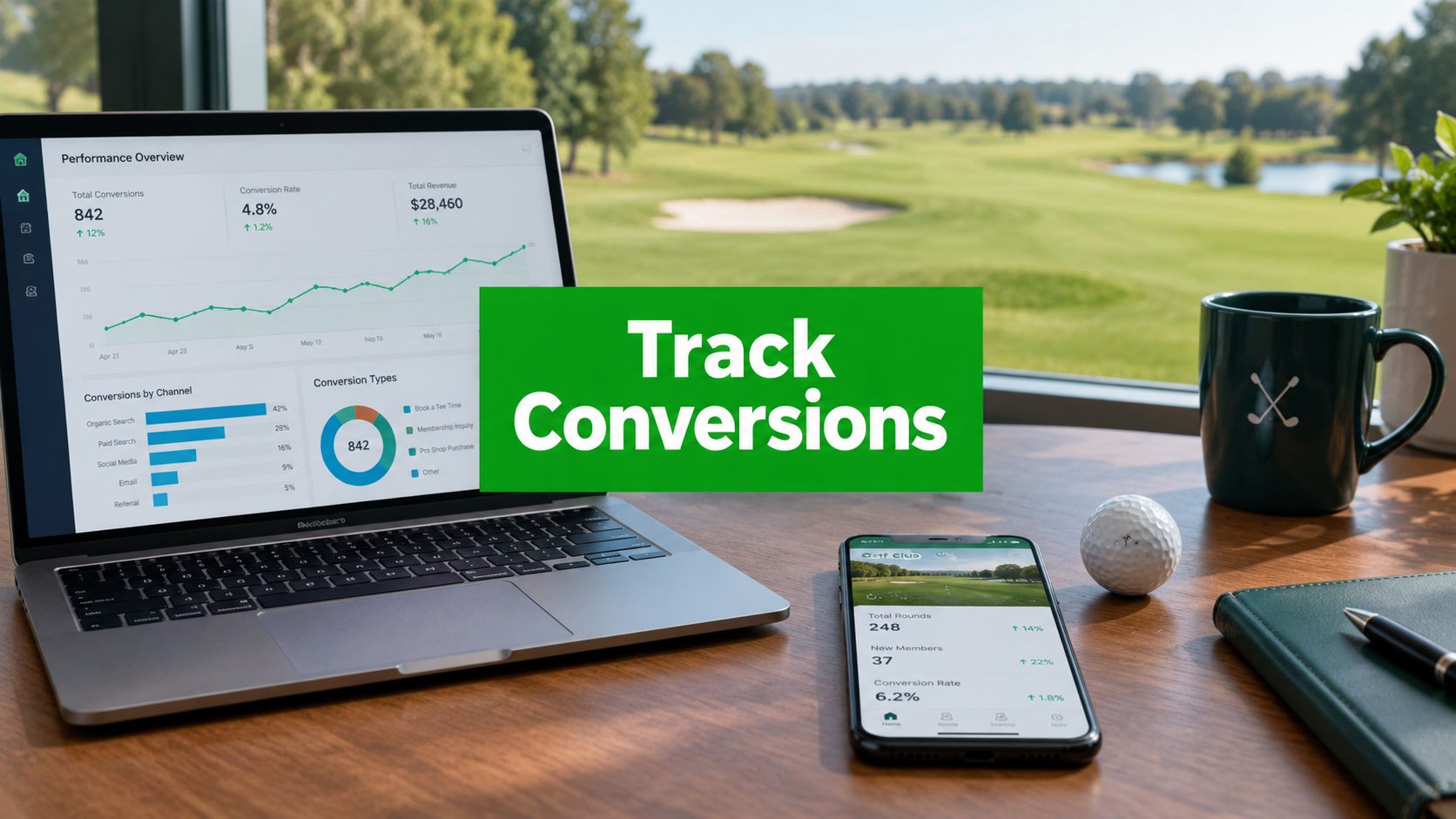
A prospective member fills in an enquiry form after seeing your club online. The form reaches a shared inbox, the phone rings while the team is busy, and the booking system sits separately from both. A week later, someone asks which campaign produced the new member, why several enquiries went quiet, and whether the advertising budget is working. Nobody has a complete answer.
That isn't mainly a traffic problem. It's a conversion tracking setup problem, combined with a follow-up problem. A golf club needs to know which first click produced an enquiry, whether that enquiry became a call or visit, how quickly the club responded, and whether the prospect eventually joined. Without that connected view, the club counts activity rather than revenue.
Why Conversion Tracking Matters More Than More Enquiries
Golf clubs often assume the next improvement must come from generating more leads. More enquiries can help, but only when the club can handle them consistently and identify which ones deserve attention first.
A form submission is only one stage in the membership journey. The commercially meaningful path may include an advert click, a landing-page visit, an enquiry, a telephone conversation, a course tour, a booking, a follow-up sequence, and a completed membership decision. If tracking stops at the form, the club can't see where interest is being lost.
That matters in the UK ecommerce market, where recent industry coverage reported an average conversion rate of 1.51% in January 2026, down from 1.75% a year earlier, with a market median of 1.45% and sector results ranging from 0.53% in electrical and commercial equipment to 4.82% in arts and crafts (IAB UK's Adspend research). Golf clubs shouldn't apply those ecommerce benchmarks directly to membership, but the principle is useful. When the final conversion rate is relatively low, a small tracking error can alter the apparent performance of a campaign and affect budget decisions.
The hidden cost of poor visibility
A club may believe an advert is producing weak leads when the issue is that staff respond late. It may pause a campaign that generates high-quality enquiries because visits and phone outcomes aren't fed back into the reporting system. Manual spreadsheets can help temporarily, but they rarely preserve source information, response times, follow-up history, and final outcomes in one place.
GolfRep's published analysis reports an average response time of 47 hours and 32 minutes for membership enquiries, and says that this delay often leaves the pipeline converting at 0% because the prospect has already joined another club (GolfRep's analysis of the golf club sales process). The exact operational lesson is more important than the number. A lead that isn't visible, assigned, and followed up promptly can disappear before the club gets a chance to sell its experience.
Practical rule: Track the handover from marketing to the club team as carefully as you track the advert click.
A reliable system records the campaign source, landing page, enquiry action, booking activity, call outcome, and CRM stage. GolfRep's guidance on lead generation tracking supports this wider view, using tagged links and CRM records rather than treating each form as an isolated event.
The result is a clearer management conversation. Instead of asking how many enquiries arrived, the club can ask which sources produce booked visits, which stages stall, how quickly staff respond, and which outcomes justify further investment. Conversion tracking becomes the measurement layer for a revenue pipeline, not a technical report about clicks.
Getting Consent Right Before You Track Anything
A tracking system can't be reliable if it isn't lawful. For UK websites, the setup is strongly shaped by PECR and the UK GDPR, so consent management needs to come before tag installation, campaign reporting, or CRM enrichment.
Non-essential analytics, advertising, and personalisation cookies generally require prior opt-in consent. The ICO approach described in UK compliance guidance requires consent to be freely given, specific, informed, and unambiguous. Users must also be able to withdraw consent as easily as they gave it (UK GDPR compliance guidance for consent management).
Design the consent layer first
A club's consent platform should control what happens before a visitor submits a form or books a visit. The practical requirements are straightforward:
- Block non-essential tags: Advertising and non-essential analytics tags shouldn't fire before the relevant consent is given.
- Record the decision: Store the consent status and enough information to demonstrate when and how it was obtained.
- Offer clear choices: Explain the purposes in plain English, without bundling unrelated uses into a single unclear option.
- Make withdrawal simple: A visitor should be able to change their mind without searching through the website.
- Pass signals consistently: Google Tag Manager, GA4, Google Ads, and other connected tools need to receive the same consent state.
The 2025 Data Use and Access Act introduced a limited change for analytics and optimisation cookies used strictly for statistical purposes. In certain low-risk cases, these may operate on an opt-out basis, provided a visible opt-out mechanism is always available and the cookies aren't used for advertising, profiling, or cross-site tracking. That exception doesn't turn all analytics into unrestricted tracking, and it doesn't remove the need to document the club's approach.
Keep consent separate from lead permission
A visitor may consent to advertising cookies but decline marketing contact. Another visitor may submit a membership enquiry and agree to be contacted, while refusing non-essential cookies. Those decisions serve different purposes and should be stored separately.
This distinction affects both reporting and follow-up. A club can still manage a direct enquiry through its agreed contact process, but it shouldn't assume that a form submission grants permission for every advertising or personalisation activity. The CRM should preserve the contact preference, while the tracking tools should respect the consent signal.
For UK clubs, consent is also a measurement issue. If tags are blocked inconsistently, campaign performance becomes difficult to interpret. A consent-aware setup protects the club, gives staff an auditable process, and creates a sound foundation for the website and advertising tags that follow.
Building Your Core Website and Ad Platform Tracking
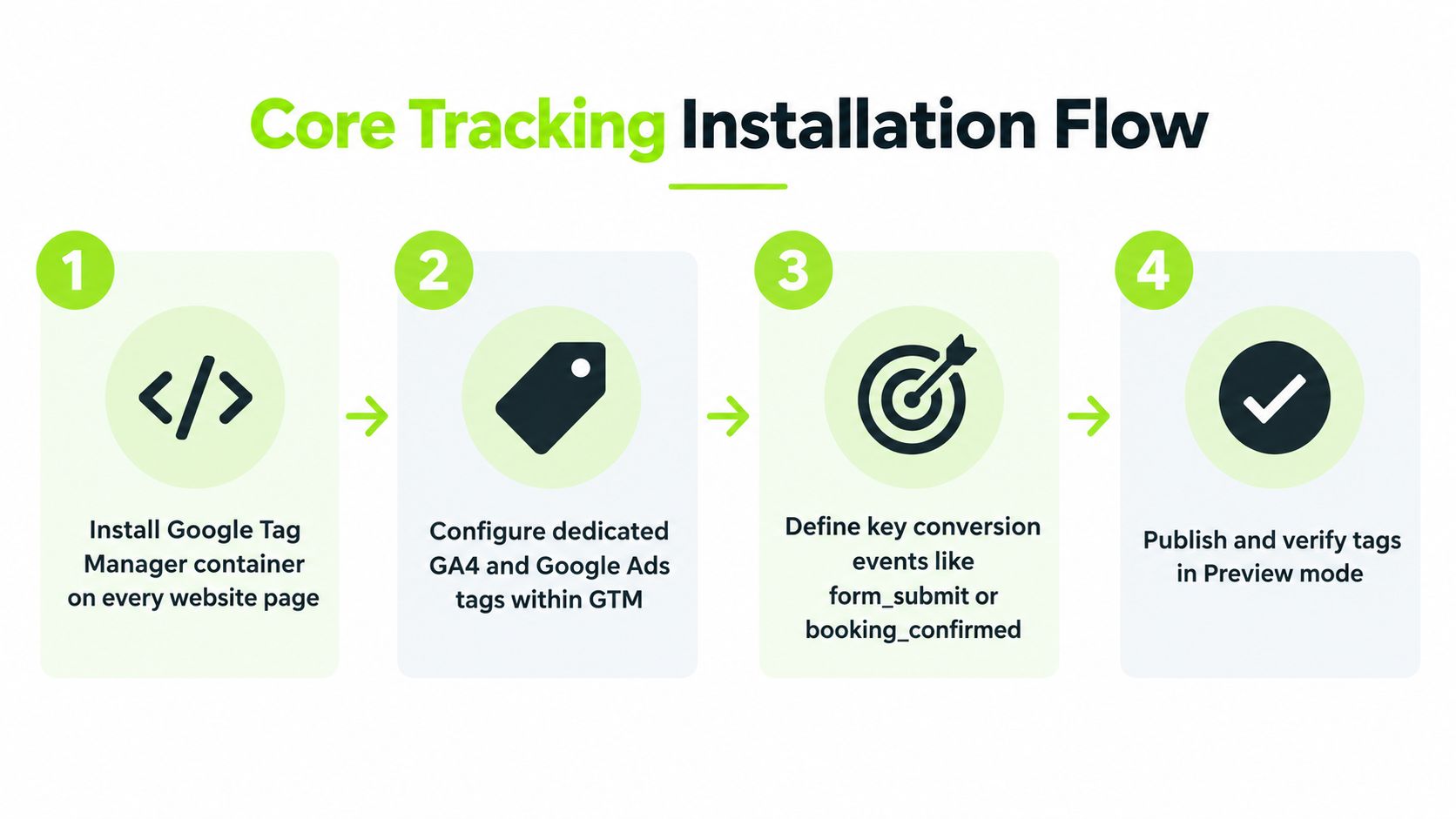
Once the consent layer is working, the technical installation should follow a deliberate sequence. The club doesn't need every possible tag. It needs a small set of dependable events that reflect genuine progress towards membership.
Start with Google Tag Manager or the Google tag across every page. The base tag gives the measurement tools a consistent presence, while Google Tag Manager provides a controlled place to configure events, triggers, consent settings, and testing. If the club uses multiple domains, such as a main website and a separate booking platform, the implementation needs to account for that journey from the start.
Establish the core event path
Create the relevant conversion action in Google Ads rather than relying on an automatically detected interaction that nobody has reviewed. Define what counts as a lead, a booking, or another meaningful action, then configure the website event to match the completed action, not merely a button click.
For a membership form, a thank-you-page URL can provide a clear trigger after successful submission. Where a form doesn't use a dedicated confirmation page, a properly defined form or data-layer event is preferable to tracking every click on the submit button. A click can happen without a successful submission. The conversion should represent the outcome the club wants.
Verify the event in GA4 Realtime before importing it into Google Ads. Then link the platforms and import the confirmed GA4 event as a conversion, assigning an appropriate lead category and an optional value. UK implementation guidance recommends allowing about 24 hours after linking or the first test conversion for status information to propagate, so a new setup shouldn't be judged immediately on an apparently inactive status (Google Ads conversion tracking guidance).
Prevent inflated lead counts
For lead forms, set the conversion count to One. This prevents repeat submissions from being treated as separate valuable leads when the club is trying to measure distinct prospects. It doesn't replace CRM deduplication, but it stops a basic reporting error at the advertising layer.
Phone calls need a quality rule as well. A minimum call length of 60 seconds is commonly used to filter out low-intent calls, though the club should review whether that threshold fits its own reception process and sales conversation.
Cross-domain journeys create another common failure point. If a visitor moves from the club website to a separate booking or membership platform, the Conversion Linker tag is important because it helps preserve the click identifier across domains. Without it, the booking may occur successfully while the original advertising attribution is lost. UK implementation guidance specifically flags the linker as especially important for cross-domain measurement (technical guidance for Google Ads conversion tracking setup).
The same discipline applies when a club compares Google Ads with other paid channels. A resource covering Meta Ads for NGOs and startups can provide useful context on platform-specific advertising, but the club should still define its own conversion events and CRM outcomes rather than accepting each platform's default reporting.
For a practical club-focused view of paid search, see Google Ads for golf clubs. The key principle is consistent across platforms: optimise towards actions that move a prospect closer to membership, not towards cheap clicks or duplicated form activity.
Connecting Bookings Phone Calls and CRM for Full Journey Visibility
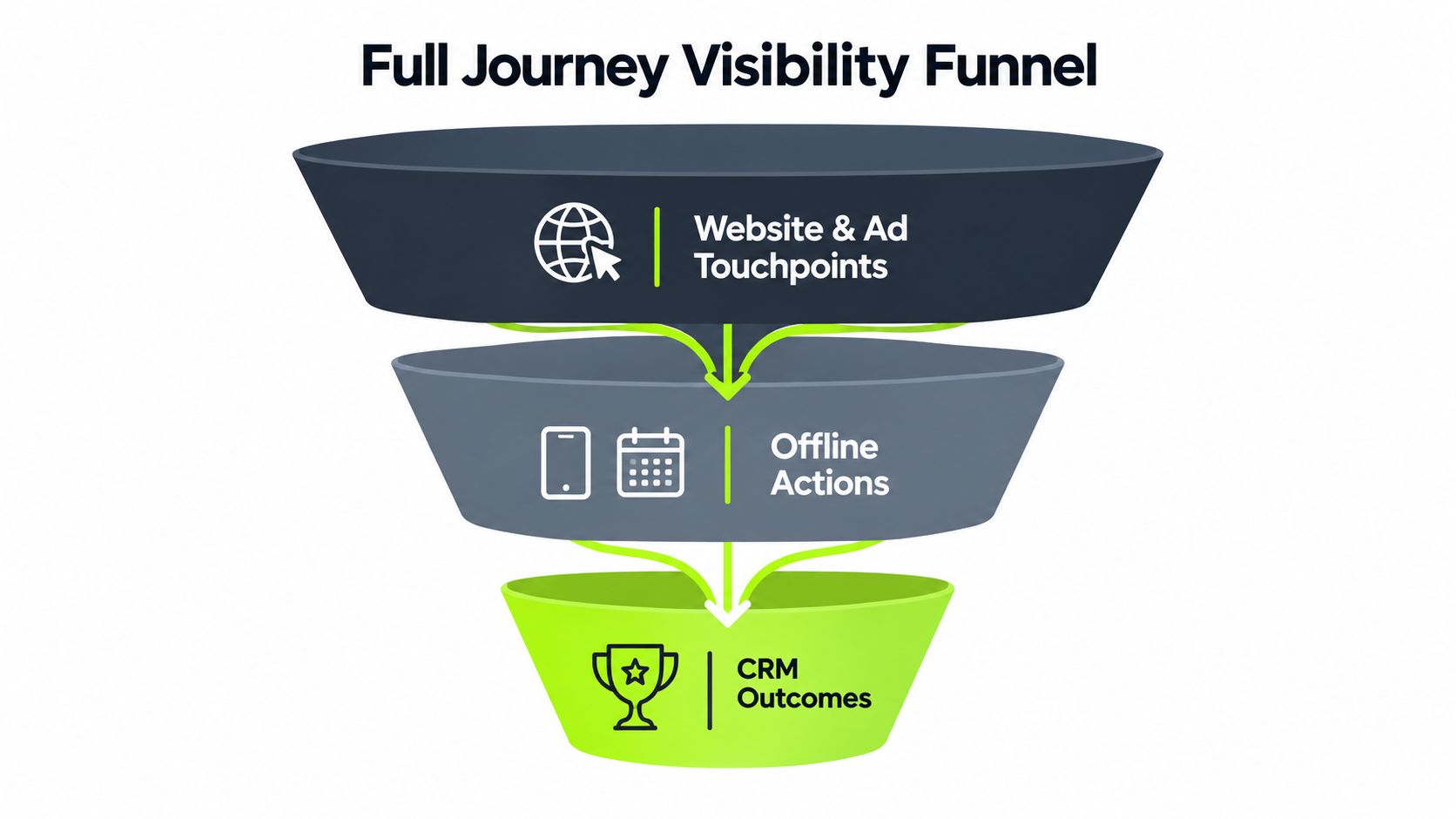
The most useful conversion tracking setup for a golf club usually combines browser events with offline outcomes. A website can record an enquiry, but it can't automatically know whether the prospect attended a tour, spoke with the membership secretary, received committee approval, or joined after a later conversation.
That gap is why browser-only reporting can mislead. A person may click an advert, submit a form, and then complete the sale by phone or at reception. If the final outcome never returns to the measurement system, the club sees a lead but not the value of the lead.
Map the actual membership journey
Begin with a simple shared data model. The exact field names can vary, but the stages need to be recognisable to both the marketing team and club staff:
| Journey stage | What the club should record |
|---|---|
| Enquiry | Source, campaign, landing page, contact details, consent preferences |
| Contact attempted | Date, channel, assigned staff member, outcome |
| Call or conversation | Qualified status, questions, objections, next action |
| Visit or tour booked | Booking date, attendance status, source continuity |
| Membership decision | Joined, deferred, declined, lost reason |
| Member outcome | Membership type and agreed value where appropriate |
A booking platform should pass confirmation events where possible. Phone tracking should connect calls to the original source when the visitor has provided the necessary permission and the system supports that connection. Reception staff need a simple method for recording offline outcomes, otherwise the cleanest digital attribution still ends with an incomplete CRM record.
Value quality over volume
Not every enquiry has equal commercial value. A form asking for a membership brochure is useful, but a confirmed tour or attended visit may indicate stronger intent. The club can map these stages to internal values for reporting, provided the values reflect a reasoned business assumption rather than an invented performance claim.
Offline conversion import can then send later outcomes back to the advertising platform or analytics environment. That helps the club compare campaigns by the quality of members they produce, not by the number of forms they generate. First-party CRM data becomes increasingly important when consent restrictions prevent some browser-based signals from being collected or used for remarketing and personalisation.
A CRM should also preserve the original campaign information. UTM-tagged links, source and medium fields, landing-page details, and event timestamps give staff a usable record when a membership decision happens weeks after the first visit.
The system doesn't need to be complicated to be effective. It needs clear ownership. Someone must decide who receives a new enquiry, who records the next action, who updates the outcome, and who checks that the advertising data matches the CRM. GolfRep's guidance on a golf club CRM focuses on this operational connection, because lead generation only becomes useful when staff can see and progress each opportunity.
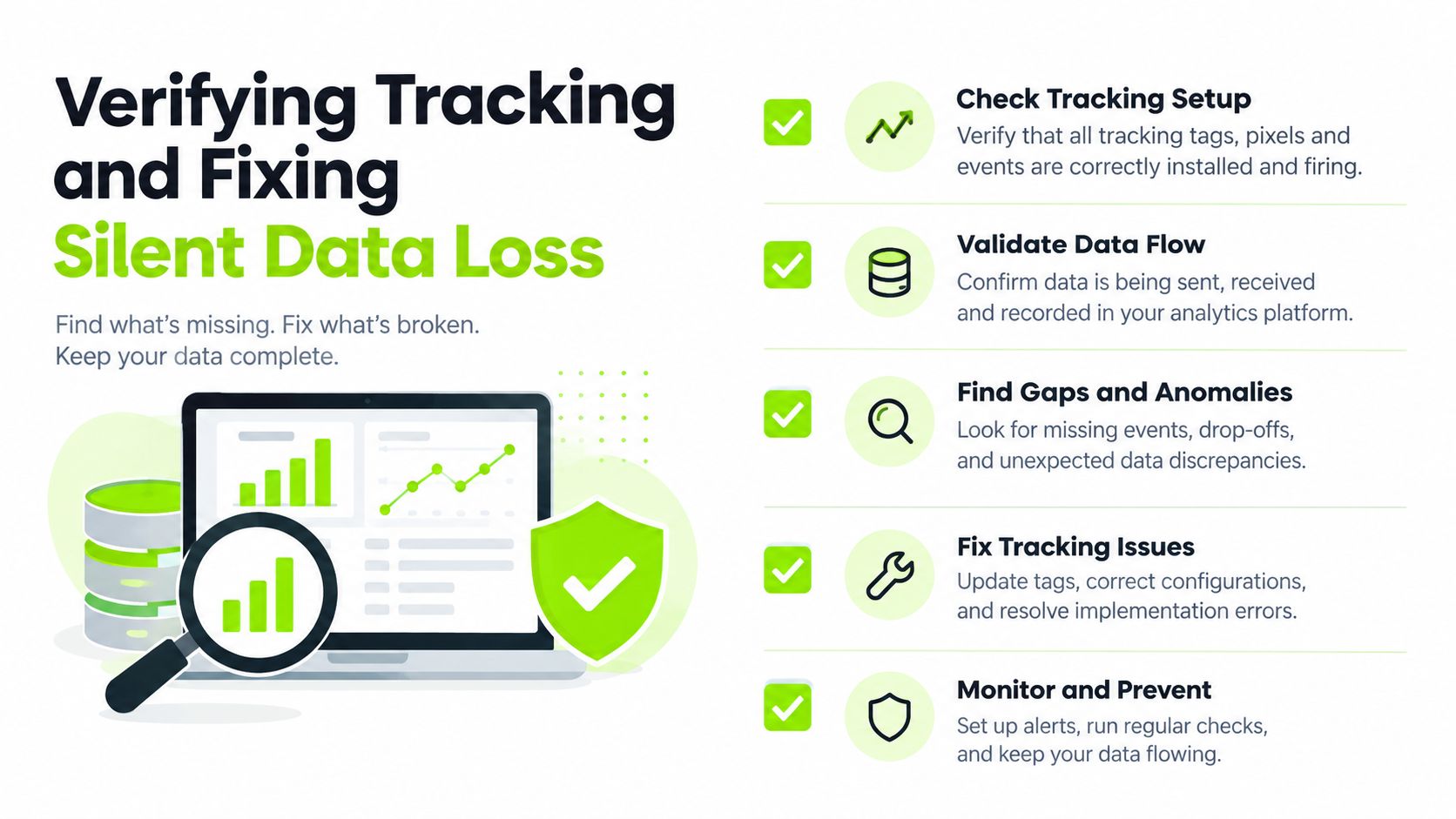
Verifying Tracking and Fixing Silent Data Loss
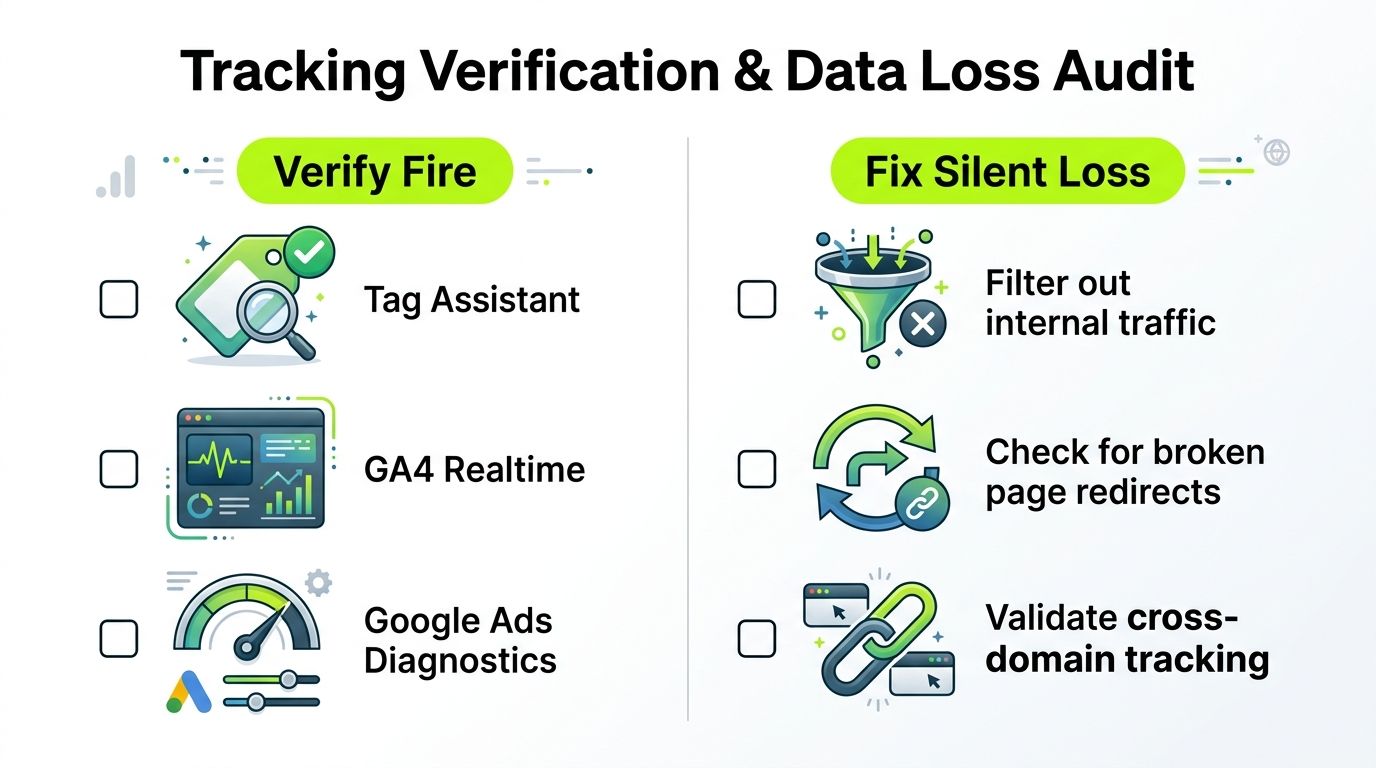
A tracking installation is unfinished until the club has tested it in realistic conditions. A green status in one platform isn't proof that every event, consent state, redirect, and cross-domain handover works correctly.
Use Google Tag Assistant or Google Tag Manager Preview to inspect whether the expected tags fire on the right interaction. Then check GA4 Realtime for the event, including its event name and relevant parameters. Google Ads diagnostics should confirm that the conversion action is receiving data, but each tool answers a different question. Tag Assistant checks implementation behaviour, GA4 shows event receipt, and Google Ads shows advertising-platform processing.
Test consent before the banner interaction
The most important consent check happens before a visitor makes a choice. Load the page in a clean browser session and inspect the default consent state before the banner is accepted. For Google advertising measurement, validate signals such as ad_storage and related consent parameters, then test what changes after acceptance and after rejection.
A tag that fires before consent can create a compliance problem. A tag that never receives the updated consent signal can create a measurement problem. Both failures may look like a campaign performance issue if the club only checks the final conversion count.
Google began actively turning off conversion tracking, remarketing, and demographic reporting for EEA and UK traffic in July 2025 when Consent Mode v2 wasn't implemented correctly (UK-focused guidance on Google Ads conversion tracking and Consent Mode). That makes post-installation diagnosis essential for UK advertisers.
Separate measured from modelled results
Consent Mode can support modelled reporting in some situations, but modelled conversions aren't the same as directly measured conversions. A club should document which figures are observed events and which are estimates produced by the platform. Otherwise, committee reports may present one blended number without explaining the level of certainty behind it.
When conversions drop, check the tracking path before changing adverts or targeting:
- Implementation: Did the event name, trigger, or thank-you page change?
- Consent: Are default and updated consent signals reaching the tags?
- Attribution: Did a redirect or separate booking domain remove the click identifier?
- Processing: Has the platform had enough time to process a new conversion action?
- Operations: Are staff recording calls, bookings, and membership decisions in the CRM?
Diagnostic principle: A fall in reported conversions doesn't prove that demand has fallen. First establish whether the club stopped measuring the demand.
Run these checks after website updates, booking-system changes, consent-banner changes, and CRM integrations. Keep a short test record with the date, browser state, event observed, consent action, and final platform status. That record turns troubleshooting from guesswork into a repeatable quality process.
Keeping Your Data Clean and Turning Insight Into Growth
A conversion tracking setup creates value only when the club keeps it accurate. Website templates change, forms are replaced, booking providers update their confirmation pages, and staff alter CRM fields. Without ownership and regular checks, a reliable setup slowly becomes a collection of partial signals.
Start with a naming convention that everyone understands. Use consistent event names for enquiries, booking confirmations, calls, and membership outcomes. Document what each event means, what triggers it, where it is reported, and who owns the next action. This prevents a button click from being mistaken for a completed enquiry or a duplicate form from being treated as a new prospect.
Make reporting useful to decisions
A club manager doesn't need a dashboard crowded with every available metric. The report should answer practical questions:
- Which sources produce genuine enquiries?
- How quickly does the team respond?
- Which enquiries become booked visits?
- Which visits become memberships?
- Where are prospects being lost?
- Which campaigns deserve more or less attention?
A clear reporting dashboard can help organise those questions, but the underlying data still needs consistent capture. The dashboard can't repair missing consent signals, duplicated leads, broken redirects, or unrecorded reception conversations.
Management habit: Review the pipeline and the tracking together. A campaign report without CRM outcomes is incomplete, and a CRM report without source data can't guide acquisition spend.
GolfRep approaches this as a connected growth system rather than a standalone advertising service. Its work can combine website conversion tracking for forms, calls, bookings, and key button clicks with structured follow-up and CRM-enabled nurture, so club teams can see the movement from first enquiry to booked visit and membership decision.
The practical next step is an audit, not another tag. Review the consent setup, event definitions, cross-domain journey, lead-counting rules, call handling, CRM stages, and reporting ownership. Then fix the gaps that prevent the club from seeing and acting on real opportunities.
GolfRep helps UK golf clubs connect lead generation, consent-aware conversion tracking, structured follow-up, and CRM outcomes into one practical membership pipeline. Visit GolfRep to discuss an audit of your current setup and identify where enquiries are being lost between the first click, the first response, and the final membership decision.
Ready to tap into our proven growth system?