GolfRepOS CRM: How UK Clubs Convert More Enquiries
More enquiries won't automatically produce more members. If those enquiries arrive in a shared inbox, wait for a manual reply, or disappear when the person responsible is off duty, increasing lead volume can create a larger backlog.
That's why GolfRep approaches GolfRepOS CRM as a response-time and follow-up discipline, not as another software purchase. The useful question isn't whether a club has a CRM. It's whether every enquiry receives a prompt acknowledgement, a named owner, a sensible next step, and a visible path towards a visit and membership decision.
The Bottleneck in Golf Club Growth
Golf clubs are often pushed towards more demand: another campaign, a stronger landing page, a promotional offer, or a larger contact list. Those tactics can help, but they leave the costly gap untouched. An enquiry still needs a prompt response, a named owner, and a sensible follow-up plan.
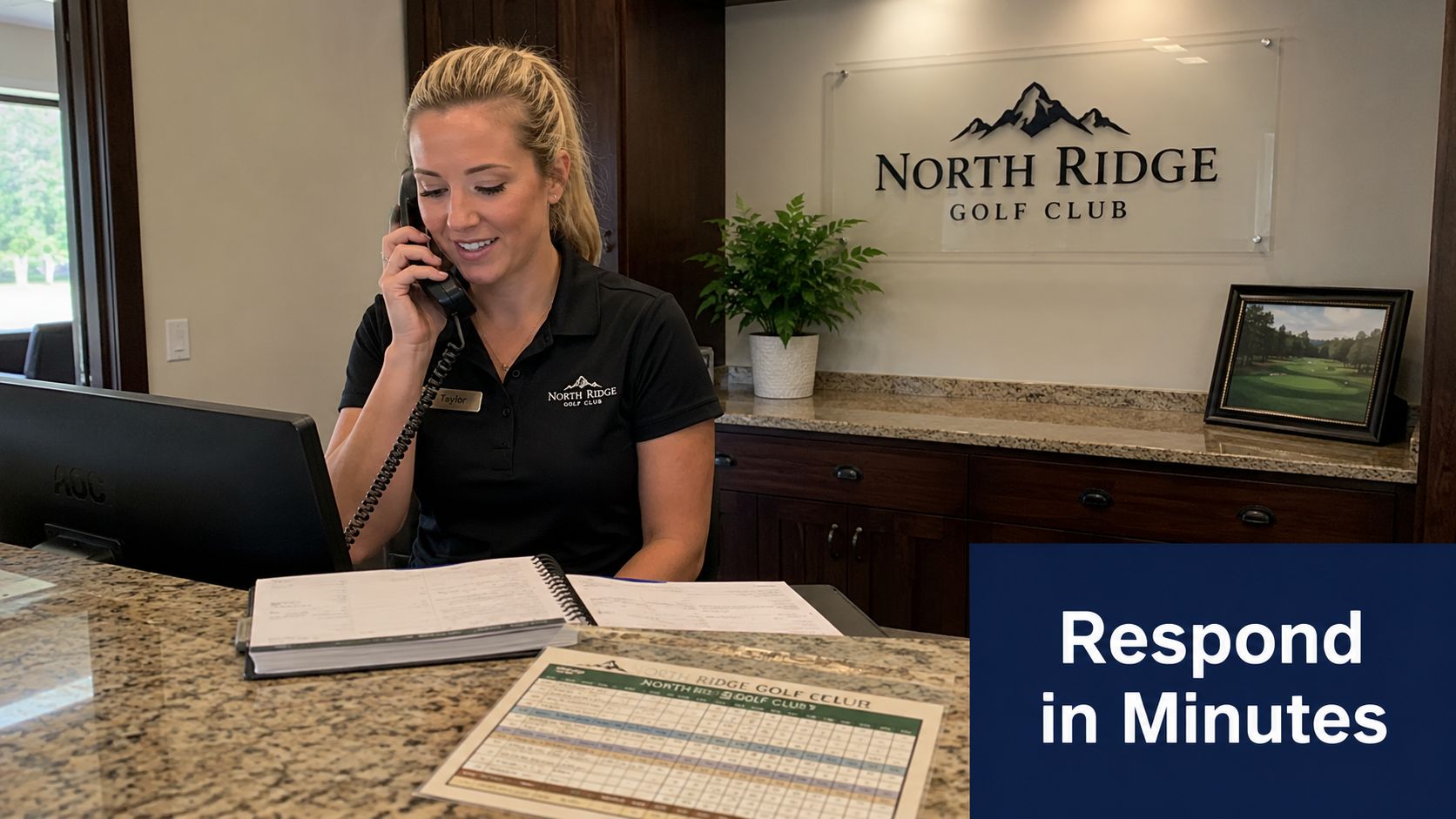
GolfRep's analysis found that UK golf clubs take an average of 47 hours and 32 minutes to respond to membership enquiries (GolfRep's analysis of golf club response times). By then, a serious prospect may be comparing another club, losing interest, or forgetting why they made contact.
Speed matters most at the start. A membership lead answered within one hour is five times more likely to convert than one left for 24 hours (GolfRep's research on enquiry conversion). GolfRep's lead-management guidance identifies the first five minutes as the golden window. It associates a response within five minutes with a 98% increase in conversion rates, while waiting 30 minutes can reduce conversion odds by up to 100 times compared with a five-minute response (GolfRep's guide to golf club lead management).
The demand is already substantial
The UK golfer pool gives clubs a substantial audience to work with. The R&A's 2023 UK golf satellite account records 5.356 million adults playing at least once a year and 2.357 million playing at least once every four weeks, with 889,000 members underpinning participation (The R&A's 2023 UK golf satellite account).
The commercial priority is therefore operational. Clubs need to identify regular players, respond while intent is fresh, and guide non-members towards a relevant membership conversation. More reach has limited value if follow-up remains slow or inconsistent.
Practical rule: Judge a CRM by the behaviour it changes in the club office, not by the number of features shown in a demonstration.
Track the outcomes that show whether the process is working: response time, lead visibility, contact rate, booked visits, pipeline movement, and membership conversion. GolfRep matters only when it helps staff make those behaviours consistent. A CRM is useful when managers can see where an enquiry sits, who owns it, what happens next, and whether the prospect reached a clear outcome.
What GolfRepOS CRM Actually Is
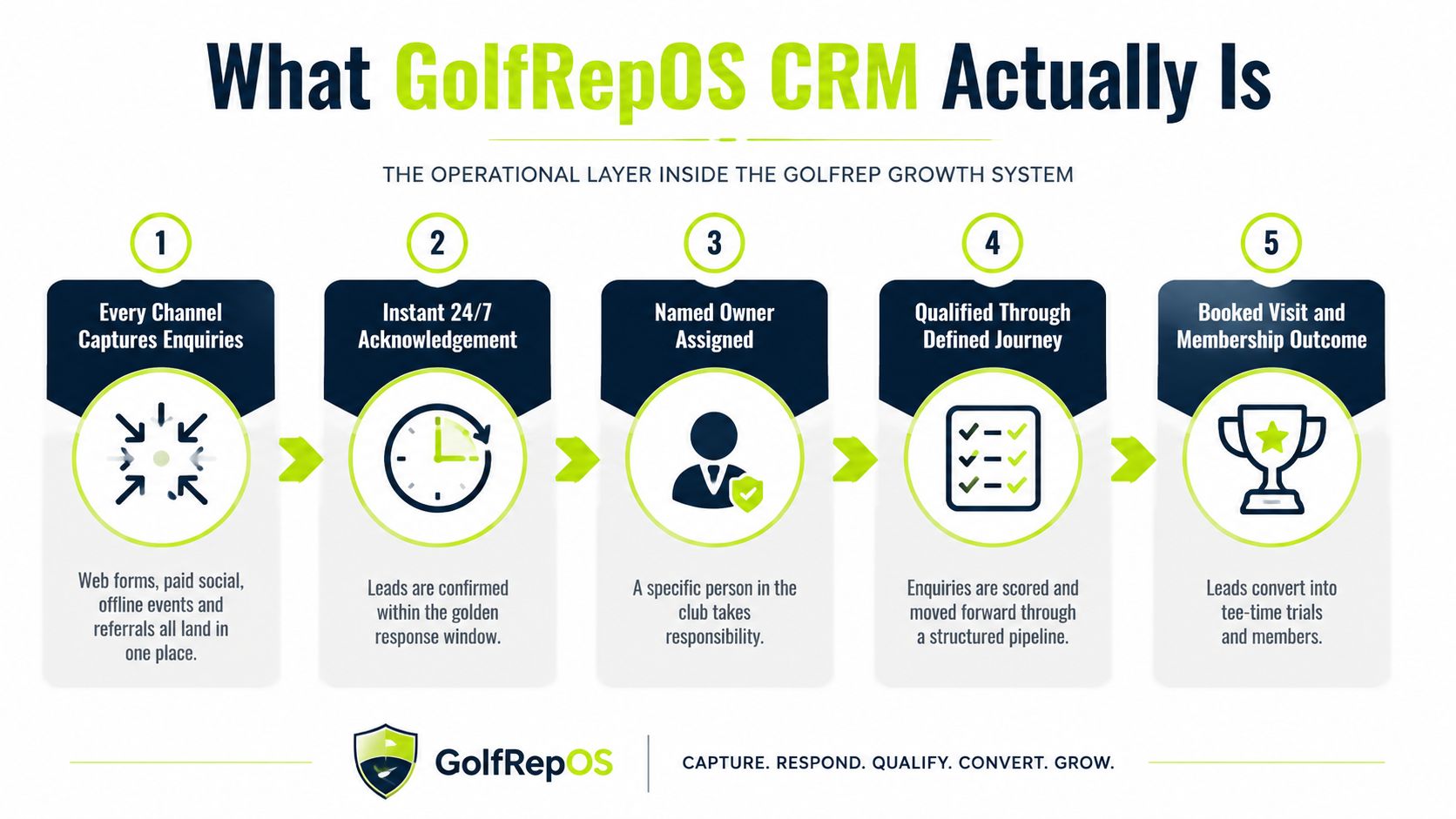
GolfRepOS CRM is the operational layer inside the wider GolfRep Growth System. In plain English, it gives a club one organised place to receive, qualify, assign, and progress membership enquiries from first contact to a booked visit and a membership outcome.
It isn't intended to sit apart from the people who manage the club. The general manager, membership lead, secretary, reception team, and selected sales or operations staff can use the same pipeline, with each person seeing what needs attention and who owns the next action. That visibility matters more than a polished marketing site because the site creates the opportunity, while the CRM protects it from being missed.
A typical journey works like this:
- Capture the enquiry. Web forms, paid social campaigns, referrals, open days, and offline events feed into the same operating process.
- Record the context. The system retains the source, contact details, playing interests, location, membership status, and relevant conversation history.
- Acknowledge promptly. An automated message confirms receipt, sets expectations, and keeps the prospect engaged while a member of staff prepares a personal reply.
- Assign ownership. One named person becomes responsible for contact, rather than leaving the lead in a general queue.
- Move the opportunity forward. The enquiry progresses through qualification, a visit or trial arrangement, follow-up, and an outcome.
This is the difference between a database and a working system. A database stores information. A working CRM tells people what happened, what happens next, and who must act.
For committee members comparing options, GolfRep's guide to golf club CRM software provides useful context on the role of lead visibility, communication history, pipeline management, and reporting in a club environment. A generic CRM may technically handle contacts and tasks, but it can still fail if staff have to design every golf-specific journey themselves.
GolfRepOS CRM also isn't a replacement for personal service. Automation handles acknowledgement, reminders, routing, and routine nurture. Club staff still provide the local knowledge, warmth, judgement, and relationship that make a membership decision feel credible.
Core Workflows Inside the System
A CRM becomes valuable when it changes the sequence of actions after an enquiry. GolfRepOS CRM is designed around that sequence, from capture to outcome.
Capture once, see everything
The first workflow brings enquiries from web forms, paid social, offline events, and referrals into one place. Without that consolidation, a membership lead can sit in a website notification, a social-media account, a spreadsheet, or a staff member's personal inbox.
A single record gives the club a clearer answer to basic questions. Where did the enquiry come from? Has anyone contacted the prospect? Are they interested in full membership, flexible membership, junior golf, or a trial visit? Has the person already spoken to reception?
That visibility prevents duplicate contact and makes source-level reporting possible.
Acknowledge immediately, then add the human touch
Instant acknowledgement isn't supposed to impersonate a membership manager. Its job is to confirm that the message arrived, provide useful next information, and create breathing space for a proper personal response.
The system can send email or SMS automation based on the enquiry source and intent. It can also create a task for the named owner, so the club doesn't confuse an automated confirmation with completed follow-up.
GolfRep's guide to automated follow-up for golf clubs sets out the practical principle. Automation should protect the early response window, while human follow-up handles questions, objections, and the relationship.
Qualify with purpose
Qualification doesn't need to feel like a call-centre script. It should help staff understand whether the person is local, how often they play, what type of membership may fit, and whether a visit is the right next step.
The pipeline can then separate a new enquiry from a contacted prospect, a booked visit, a no-show, a proposal, and a member. That distinction matters because a club can't improve conversion if every contact remains labelled as a lead.
Report the movement, not just the volume
The practical dashboard should show lead contact rate, pipeline velocity, visit bookings, and source gaps, as recommended in GolfRep's speed-to-lead guidance. A manager can then ask why a source produces enquiries but few visits, or why visits happen without a clear membership outcome.
That is a better management conversation than celebrating form submissions. The aim is to make the journey visible enough that staff can intervene before a promising enquiry goes quiet.
What Structured Follow-Up Looks Like in Practice
Structured follow-up doesn't look identical at every club. A near-closure situation, a premium private club, a fast membership campaign, and a multi-site hotel group need different messages and different ownership arrangements. The common thread is operational discipline.
GolfRep's case-study portfolio includes Bidston Golf Club, where the focus was revival and rebuilding a viable membership base; Addington Palace, where the system supported a steady pipeline; Downes Crediton, where a rapid membership campaign needed prompt handling; and Macdonald Hotels & Resorts, where the challenge involved multi-site integration.
These examples are useful because they point to a pattern rather than a magic campaign. A club facing decline needs visibility of dormant and at-risk contacts. A club with a steady flow of enquiries needs reliable progression from first conversation to visit. A rapid campaign needs speed, clear ownership, and a follow-up cadence that doesn't rely on one person remembering every lead. A multi-site operator needs central oversight without forcing every location into the same local conversation.
The repeatable pattern
The GolfRep follow-up system approach rests on three operational decisions.
- One owner: Every new enquiry has a named person responsible for the next contact.
- A defined cadence: The prospect receives timely, relevant follow-up instead of one unanswered message followed by silence.
- Visible reporting: Managers can see which enquiries were contacted, which moved forward, and which stalled.
The trade-off is important. A completely manual process can preserve a personal tone, but it depends on availability, memory, and consistent administration. A fully automated process can provide coverage, but it may sound generic or send the wrong message at the wrong stage.
GolfRepOS CRM works best when the two roles stay separate. Automation protects the process. Club staff provide the judgement.
A premium club might use automation to confirm an enquiry and offer suitable visit options, then move quickly to a personal call from the membership director. A volunteer-led club might use a simpler sequence, with reminders and task ownership doing more of the administrative work. The system should adapt to the club's capacity and brand, not force every club into an aggressive sales script.
Onboarding, Integrations and Metrics to Watch
A club shouldn't start by importing every historical contact and asking staff to learn a complicated platform. The sensible starting point is a clean membership enquiry journey, with clear ownership and a small set of reports.
A practical onboarding sequence
Begin with the current process. Map where enquiries arrive, who sees them, what information staff collect, and where the trail usually breaks. Include website forms, paid social leads, phone calls, open days, referrals, and walk-ins.
Next, agree the stages. A useful pipeline might include new enquiry, contacted, qualified, visit booked, visit completed, decision pending, joined, and not proceeding. The exact labels can vary, but everyone must understand when a lead moves from one stage to the next.
Then configure the handoffs. Connect the relevant booking system, email tools, advertising platforms, and communication channels where appropriate. Import only the data needed for the active process, check consent and data quality, and test the workflow with sample enquiries before going live.
Finally, train around actions rather than buttons. Staff need to know how to accept ownership, record a conversation, schedule the next task, and mark an outcome. They don't need a tour of every available feature.
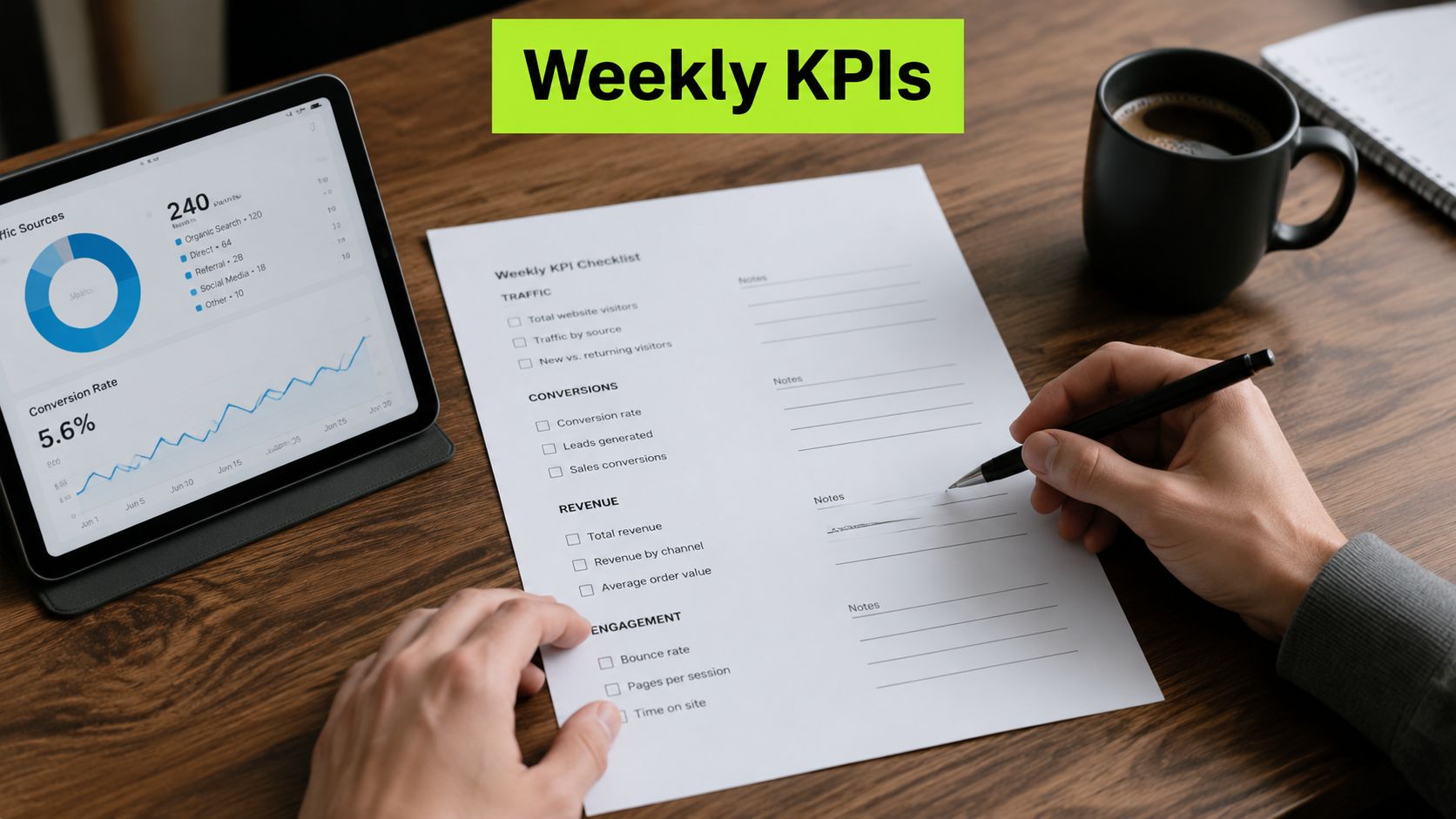
Keep the Monday dashboard small
The right person should review the right numbers at the start of each week. A committee doesn't need a wall of charts. It needs enough information to identify delays, ownership gaps, and weak points in the journey.
| Metric | What it measures | Why it matters |
|---|---|---|
| Lead contact rate | The share of enquiries that receive a recorded human contact | Shows whether the club is acting on demand rather than merely collecting it |
| Pipeline velocity | How quickly enquiries move between defined stages | Highlights delays in qualification, visits, or decision follow-up |
| Visit-to-sign-up rate | The proportion of completed visits that result in membership | Helps test the quality of the visit experience and follow-up |
| Source-level conversion gaps | Differences in outcomes by enquiry source | Shows which channels produce useful membership opportunities, not just volume |
The system should also record response time. If a club only measures the number of enquiries, it can miss the operational reason conversion is weak. For broader guidance on making reports useful to non-technical decision-makers, how Networking2000 handles analytics offers a helpful comparison point.
Pricing, Contracts and the Risk-Free Guarantee
A CRM partnership shouldn't be priced as though every club has the same brand, geography, membership structure, or growth objective. A private members' club with a small administrative team has different requirements from a resort group managing several sites, even if both want more predictable membership revenue.
GolfRep structures partnerships around the club's brand and ambitions. Pricing is based on the work involved, the systems that need connecting, the level of follow-up required, and the reporting the club needs to manage performance. That approach avoids pretending a fixed package can solve every operational problem.
The contract question matters just as much. Membership growth isn't a one-off advertising burst. Clubs need time to test sources, refine qualification, understand seasonal patterns, improve visit handling, and build habits in the office. A short campaign may generate useful learning, but a sustainable pipeline requires continuity.
That doesn't mean a club should accept an unsuitable arrangement just because growth takes time. A sensible agreement should define responsibilities, deliverables, reporting, review points, and the conditions under which either side can change direction.
Align the commercial risk
GolfRep's partnerships are long-term and performance-led, with a Risk-Free Guarantee that covers shortfalls. The purpose is to reduce exposure when the agreed outcome doesn't materialise, rather than asking a club to carry all the uncertainty while the process is being established.
The guarantee doesn't remove the need for accurate data, prompt club-side follow-up, or realistic objectives. No system can compensate for a club that doesn't provide visit availability, ignores assigned tasks, or changes its membership proposition without updating the process.
The commercial logic is straightforward. The provider should have a reason to build a working pipeline, and the club should have clear visibility of whether the work is producing progress. Good contracts align those incentives without locking a committee into work that no longer fits.
Common Objections Committees and Managers Raise
“Our secretary already handles enquiries”
A capable secretary may handle a healthy flow well, especially when the club receives enquiries during staffed hours. The risk appears when calls arrive during leave, forms land outside office hours, or several prospects need follow-up at once.
GolfRep's response-time evidence shows why a reliable first acknowledgement and named task can support, rather than replace, that person. The secretary still handles the relationship. The system makes it harder for a promising enquiry to vanish unnoticed.
“We've tried CRMs before and nobody used them”
That usually points to a process problem, not a staff problem. If the CRM requires duplicate data entry, has unclear stages, or produces reports nobody reads, staff will return to the inbox and spreadsheet that feel faster.
Start with the smallest useful workflow. Capture the enquiry, assign an owner, record the next action, and review the outcome. Add complexity only when the team can explain why it helps.
Automation should remove repetitive administration, not create another administrative job.
“We're volunteer-led and can't run automations”
Volunteer-led clubs need simpler systems, not no systems. A well-scoped workflow can acknowledge enquiries, create reminders, and route urgent opportunities without requiring volunteers to monitor several channels constantly.
The club still needs a person responsible for the relationship, but that responsibility can be shared through a clear rota or role-based ownership. Automation provides continuity when availability changes.
“Our brand is too premium for automated follow-up”
Poorly written automation can damage a premium brand. That objection is valid if the proposed workflow sends generic discounts, excessive messages, or language that doesn't reflect the club.
The answer isn't to abandon automation. It's to use it narrowly for confirmation, useful information, scheduling prompts, and quiet reminders, then hand the conversation to a knowledgeable person. Premium service depends on relevance and timing, not on leaving every first response to manual administration.
Next Steps, Demo Priorities and KPI Benchmarks
A productive GolfRepOS CRM demo should test response discipline, not showcase every feature. Bring examples of website enquiries, paid social leads, phone calls, open-day contacts, and referrals. Ask how each is captured, assigned, acknowledged, qualified, followed up, and reported.
Take this checklist to the committee:
- Response time: Set the expected time for an acknowledgement and named human follow-up.
- Ownership: Decide who takes responsibility when the usual contact is unavailable.
- Pipeline stages: Define contacted, qualified, booked, visited, joined, and lost.
- Reporting: Track contact rate, pipeline movement, visit-to-sign-up performance, and gaps by source.
- Pilot criteria: Agree evidence for continuing, including completed tasks, clearer lead visibility, and progress from enquiry to visit.
The demo should show the behaviour the club will measure after launch. Can staff see every open enquiry? Can managers identify overdue actions without searching inboxes? Can the club compare sources by movement through the pipeline, rather than by lead volume alone? Those answers matter more than the number of screens in the product.
Use the UK market context to prioritise regular players and local segments. The R&A's account records regional membership penetration at 2.0% in England, 3.3% in Scotland, 1.3% in Wales, and 1.1% in Northern Ireland. Regional campaigns and follow-up should reflect local conditions rather than one national assumption. Regional context is also available through the R&A's regional membership figures.
Book a discovery conversation, request a suitable trial or pilot, and agree success criteria before signing. GolfRep combines lead generation with structured follow-up, CRM visibility, and measurable membership journeys. Visit GolfRep to discuss how GolfRepOS CRM could fit the club's response process and growth plan.
Ready to tap into our proven growth system?