How Do I Get More Golf Club Members: A Growth Playbook

Most advice on getting more golf club members starts with advertising. That's often the wrong place to begin. A club can buy more traffic, generate more enquiries and still fail to grow if nobody responds quickly, nobody owns the follow-up and nobody can see which prospects are close to joining.
The practical question isn't, “How do I get more golf club members?” It's, “How many potential members are already asking about the club, and how many are being lost before they visit?” GolfRep works from that second question because predictable growth comes from combining relevant demand generation with disciplined handling, conversion and retention.
Why Most Clubs Are Solving the Wrong Problem
Golf clubs often treat membership growth as a volume problem. A committee approves a campaign, the club promotes an open day, enquiries arrive, and the team judges success by clicks, impressions or the number of names collected. Yet those measures say little about whether a golfer booked a visit, attended, joined or remained engaged.
The evidence points to a market with real demand. England Golf reported that affiliated club membership increased from 730,602 in 2024 to 750,071 in 2025, a rise of 19,469 members, or 2.66% year on year, reaching its highest level in at least 13 years. England Golf's membership figures show that growth is achievable in a mature market. They don't prove that more advertising alone creates it.
The same distinction appears in the Hillier Hopkins survey of UK golf clubs. Clubs welcomed an average of 94 new members in 2023, while only 24% reported more leavers than joiners during the survey period. The 2024/25 Hillier Hopkins Golf Clubs Report indicates that acquisition and churn are operational issues as much as marketing issues.
The leak usually sits between enquiry and visit
A golfer who completes a membership form is showing intent. That intent declines when the reply arrives days later, when the first response answers none of their questions or when they receive a generic email with no clear next step.
UK golf-club sales analysis found that the average response time to a membership enquiry was 47 hours and 32 minutes. It also reported that an enquiry answered within one hour was five times more likely to convert than one left for 24 hours. GolfRep's analysis of golf club lead generation makes the commercial point clearly: response speed belongs inside the membership strategy, not in an administrator's task list.
Practical rule: Don't increase lead volume until you know who responds, how quickly they respond and what happens when the prospect doesn't reply.
Many clubs still manage enquiries through shared inboxes, spreadsheets and informal messages between the secretary, professional and membership committee. That process can work when enquiry volume is low. It breaks when several campaigns, referrals and telephone calls arrive at the same time.
Visibility beats optimism
A healthy pipeline should show every prospect's current position, from new enquiry to contacted, visit booked, visit completed, application submitted and joined. UK-focused pipeline guidance identifies 90% or above as a healthy benchmark for the New to Contacted stage, while enquiry-to-membership conversion is often assessed in the range of 15% to 30%. GolfRep's golf club sales process guidance gives clubs a way to inspect the process rather than rely on anecdotal confidence.
Clubs should also challenge assumptions about their marketing activity and review why most golf club marketing fails. More spend won't repair an invisible pipeline. A structured system will often create more value from the enquiries a club already receives.
Identifying Your Realistic Growth Segments
Broad local awareness sounds sensible, but it's usually too blunt for a golf club with finite staff time and limited playing capacity. A club should define the reachable market by postcode radius, age, family status and playing frequency, then build a separate route into membership for each useful segment.
England's participation base is large. England Golf-linked data reported more than 730,000 golf club members, an average county total of 21,408 golfers, and regular golf participation of 4.2%, equivalent to 1,919,316 golfers. The Golf Business overview of golfers and golf clubs in England supports a local, segmented approach rather than indiscriminate national awareness activity.
Start with the golfers you can realistically reach
Build a working audience around the club, then separate it by behaviour:
- Regular non-members: Golfers already playing frequently may need a clear explanation of access, competition, handicaps and community rather than a basic introduction to the sport.
- Occasional players: These prospects may respond to flexible access, social benefits and an easy first visit.
- Families and juniors: Parents need confidence that the club is welcoming, organised and suitable for young players.
- Women and younger adults: These groups are often missed when campaigns are built around traditional senior male golfing audiences.
- Digitally engaged golfers: England Golf's 2025 figures included 72,921 iGolf subscribers and 12,562 iPlay users, alongside 750,071 club members. The Glenmuir report on England's golf membership figures shows that clubs are competing within an existing digital golf ecosystem, not starting with an audience that knows nothing about the game.
The average age of club members has fallen to 54.99, but the overall base remains older, with 64% aged 51 and over and 16% under 30. Women represented 18% of membership and juniors 9% in the Hillier Hopkins data cited by The Golf Business. These figures point to an obvious commercial gap. A club that markets only to established older men limits its future pipeline.
Give each segment a reason to act
Segmentation isn't about creating elaborate personas. It's about matching the offer and follow-up to the golfer's situation.
A junior pathway should show coaching, progression and how parents can become part of the club community. A women's campaign should show welcoming playing opportunities and visible representation, not just change the colour of an advert. A younger golfer may care about playing access around work, social connection and an understandable route from introductory membership to full membership.
Use market segmentation to decide which groups deserve dedicated landing pages, events, messages and follow-up. The strongest campaigns narrow the audience before they increase the budget.
Building a Lead Capture and Rapid Response System
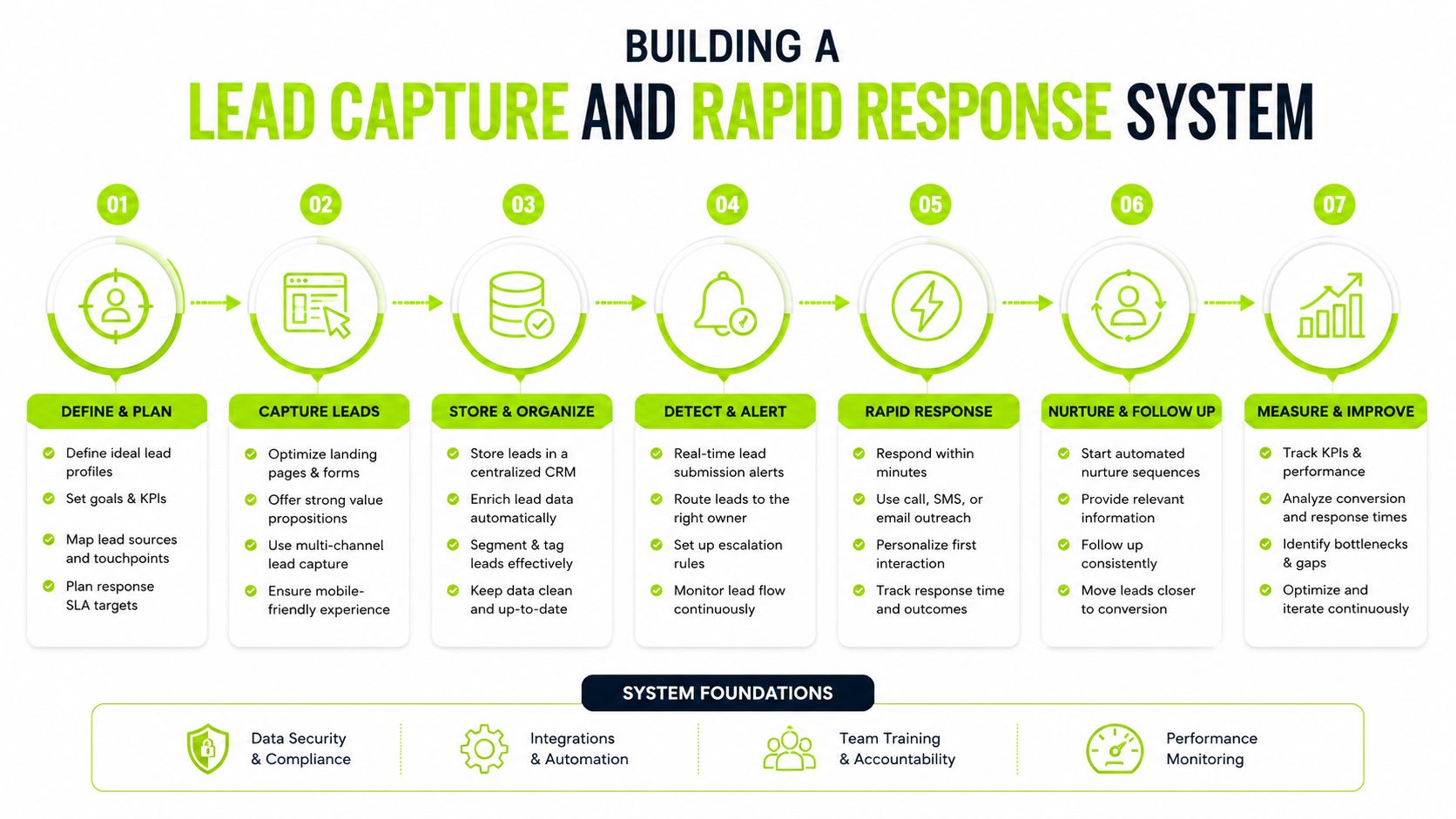
A membership pipeline needs one source of truth. Every enquiry should enter the same organised process, whether it comes from the club website, a social advert, an open day, a telephone call or a member referral.
The first step is to define the stages. Keep them simple enough for the team to use consistently:
- New enquiry: The prospect has submitted a form, called or made contact through an event.
- Contacted: A named person has responded and recorded the outcome.
- Qualified: The club understands the golfer's location, playing habits, family needs and likely membership fit.
- Visit booked: A tour, taster session or meeting has a confirmed date.
- Visit completed: The club records attendance, questions and objections.
- Application in progress: The prospect has received the relevant membership information and next action.
- Joined or nurtured: The golfer either becomes a member or enters a suitable follow-up sequence.
Make speed automatic, then make the conversation personal
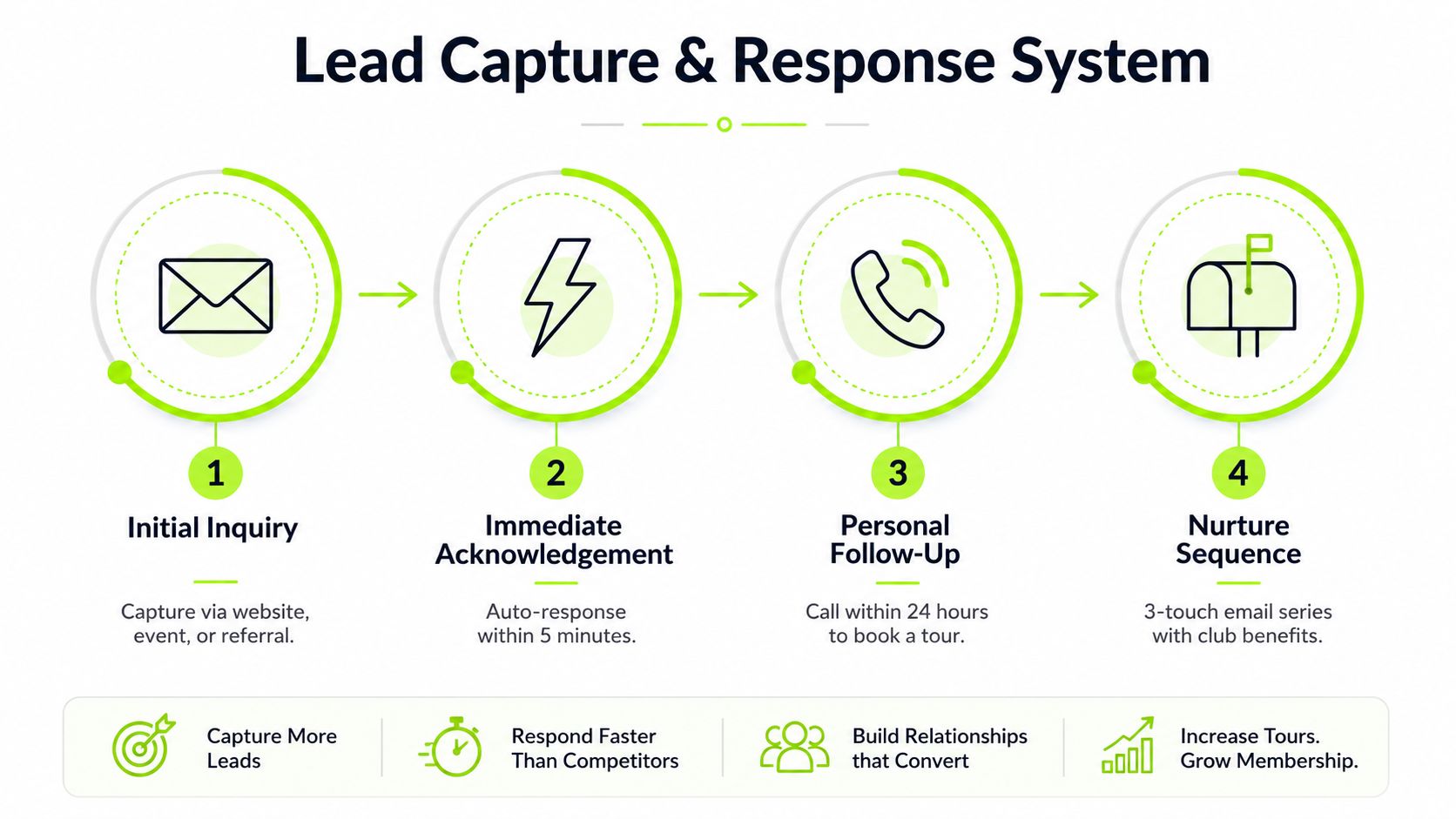
An automated acknowledgement should confirm that the enquiry arrived, set expectations and offer a useful next step. It shouldn't pretend to replace a person. Its job is to keep the prospect engaged until a membership lead, general manager or professional makes direct contact.
The human follow-up should happen quickly and refer to the prospect's reason for enquiring. A golfer asking about weekday access shouldn't receive the same message as a parent asking about junior golf. The CRM should show the source, segment, response history, owner and next task without forcing staff to search several systems.
Clubs reviewing their website forms and landing pages can use this guide to landing page CRO to improve clarity, reduce unnecessary friction and make the next action obvious. A form that asks for too much information can suppress enquiries, while a form that captures nothing useful makes follow-up less relevant.
The operating standard: Every enquiry needs an owner, a next action and a recorded outcome.
Measure the hand-offs
A pipeline report should answer practical questions at the weekly management meeting:
- Which enquiries arrived since the last meeting?
- Which have not received a personal response?
- How many prospects booked a visit?
- How many attended?
- Which objections appear repeatedly?
- How many applications are waiting for a decision?
- Which source produces members rather than just contacts?
The club should also inspect response time by channel and staff member. A system that captures leads but leaves them untouched is only a more efficient way to lose opportunities.
Golf clubs can review the specific mechanics of speed to lead for golf clubs, particularly where evening and weekend enquiries arrive outside office hours. GolfRep's own option, GolfRepOS, organises membership enquiries in one place and helps clubs receive, qualify, assign and progress them from first contact to booked visit and membership outcome. The value lies in visibility and consistent action, not in adding another dashboard for its own sake.
Conversion Tactics That Turn Interest Into Membership
A prospect rarely joins because a club sent one more brochure. They join when the club removes uncertainty. The visit needs to answer practical questions about the course, access, culture, playing partners, competitions, coaching and the experience of turning up on an ordinary week.
A tour should therefore be designed around the golfer, not around the club's preferred script. Ask what prompted the enquiry, what they currently play, when they expect to play and what might prevent them joining. Then show the parts of the club that resolve those concerns.

Make the first visit feel like membership
Taster sessions and open days work when they give prospects a credible experience of club life. They fail when visitors spend the whole time listening to a sales pitch or are left to work out where they belong.
Use a clear host for every prospect. Where possible, introduce a member ambassador whose playing habits and background resemble the visitor's. A newer golfer may need reassurance about etiquette and finding playing partners. An experienced golfer may want to discuss tee-time access, competitions and reciprocal arrangements.
The club should define the next step before the visitor leaves. That might be a second round, an application conversation, a coaching session or a call with the membership lead. Don't end with “let us know”. Give the prospect a specific route forward.
Handle objections without hiding the value
Price objections often indicate that the golfer hasn't understood the value or doesn't know which category fits. Ask whether the concern is the total cost, the commitment, the playing frequency or uncertainty about the social side. Each issue needs a different response.
A flexible entry route may solve a schedule problem. A trial experience may solve a confidence problem. An explanation of competitions, coaching and community may solve a value problem. Blanket discounting solves none of these reliably, and it can weaken the perceived value of the full membership.
Follow up after every visit while the conversation is fresh. The message should mention something specific from the meeting and answer one unresolved question. Prospects who aren't ready should enter a segmented nurture sequence rather than disappear into a general newsletter.
Useful messages might include a junior coaching update for a parent, a women's social playing opportunity, a weekday access explanation or an invitation to meet members. Clubs should test the clarity of these journeys, not just their open rates. The AdStellar AI CRO guide offers useful context on improving conversion experiences across digital journeys, but the club still needs to connect that experience to a real human conversation.
Packaging Memberships for Modern Golfers
Membership packaging is a growth decision, not merely a pricing exercise. The full membership should remain clear and desirable, while alternative categories remove barriers for golfers whose schedules, age or household circumstances don't fit the traditional model.
Hillier Hopkins found that flexible membership options were offered by 40% of members' clubs and 64% of proprietary clubs. The report's analysis of transformative trends in UK golf suggests that accessibility and packaging are becoming important parts of the membership proposition.
That doesn't mean every club needs a long menu of categories. Too many options confuse prospects, complicate administration and make it harder for staff to recommend the right fit. Start with local evidence. Ask when current members play, which enquiries fail to convert and which groups show interest but hesitate at the commitment.
Compare the routes into membership
| Membership Type | Best For | Growth Impact |
|---|---|---|
| Full playing membership | Regular golfers who want broad access, competitions and club involvement | Protects the core proposition and supports predictable recurring revenue |
| Weekday membership | Golfers with flexible schedules or limited weekend demand | Opens access for prospects who can't justify full playing rights |
| Off-peak membership | Occasional players and golfers with non-standard working patterns | Converts interest that would otherwise remain inactive |
| Junior membership | Young golfers and families building a long-term relationship with the club | Broadens the future pipeline and supports family retention |
| Young adult or age-banded membership | Younger golfers managing work, housing and changing schedules | Creates a staged route towards full membership |
| Family membership | Households seeking shared participation and social connection | Increases the value of the club across more than one golfer |
| Social or introductory membership | Prospects who want community before regular golf access | Provides a lower-friction first relationship with the club |
The right category depends on capacity as well as demand. If weekend tee times are constrained, a weekday route may generate revenue without worsening the busiest periods. If the club needs younger members, an age-banded offer can reduce the psychological barrier while providing a clear progression route.
Avoid the discount reflex
A discount treats every prospect as though the same objection exists. A well-designed category solves a specific access or commitment problem while preserving the value of the main product.
Explain eligibility, playing rights, upgrade routes and renewal expectations in plain language. Train the membership team to recommend one suitable option rather than presenting every category at once. Packaging works when it makes the decision easier for the golfer and the administration easier for the club.
Retention and Continuous Pipeline Optimisation
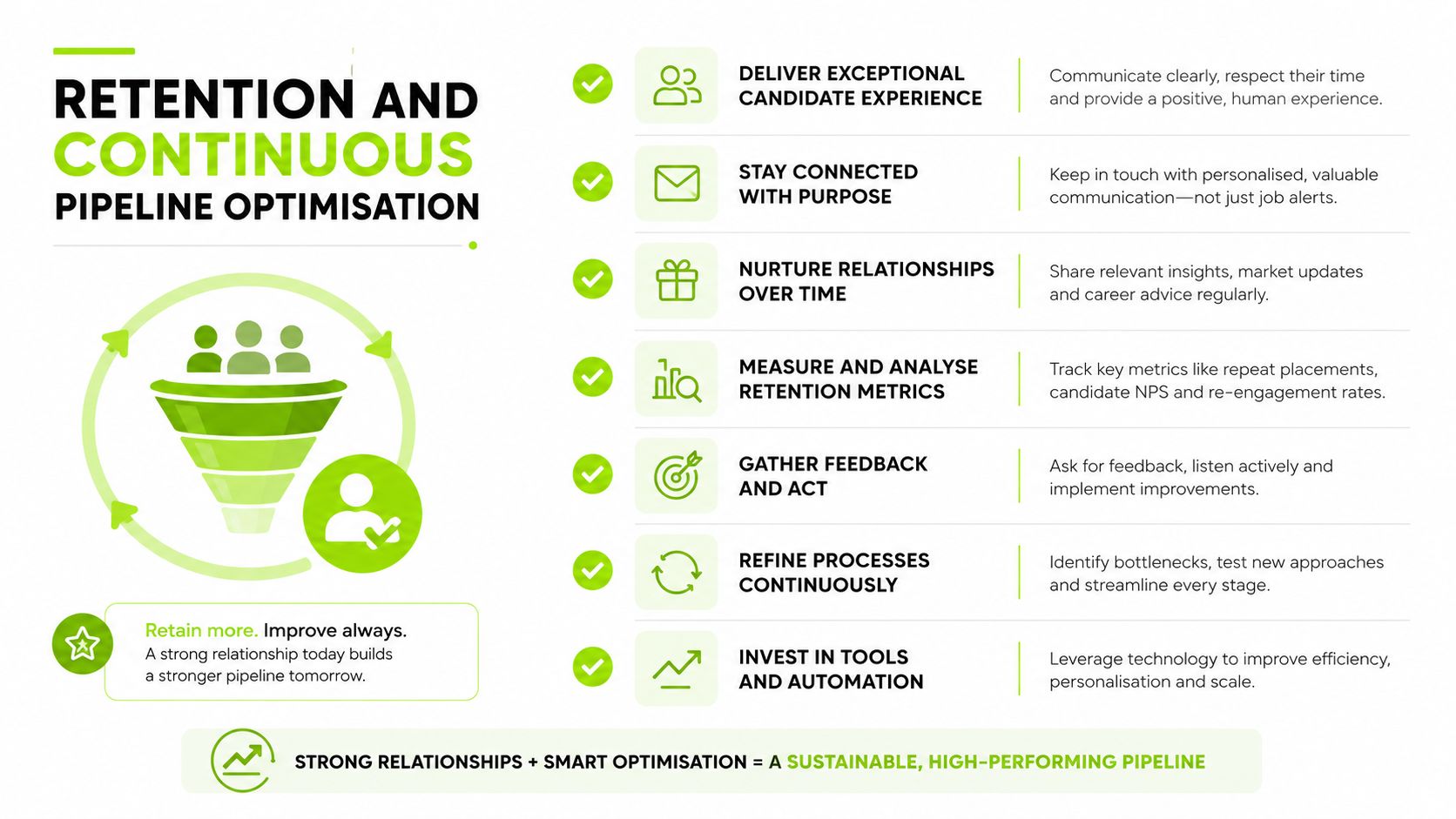
Membership growth becomes fragile when clubs measure only new joins. A club can acquire members successfully and still lose momentum if new joiners struggle to find playing partners, don't understand the calendar or fail to feel recognised during their first year.
The pipeline should therefore continue after payment. A new member needs a structured welcome, a named contact and timely invitations into the parts of club life that match their interests. The club should know whether the member has booked a round, met other members, attended an event or asked for help.
Track movement, not vanity
The most useful measures follow the member journey:
- Enquiry-to-contact: Shows whether staff respond and record the outcome.
- Contact-to-visit: Shows whether the conversation creates a credible reason to attend.
- Visit-to-application: Shows whether the experience and offer resolve the prospect's concerns.
- Application-to-join: Identifies administrative friction or unclear value.
- First-year retention: Shows whether onboarding and ongoing engagement support the original sale.
- Source by joined member: Distinguishes advertising that produces attention from activity that produces membership.
Golf clubs should review these measures by segment and source. A campaign aimed at juniors may need a different follow-up period from one aimed at experienced golfers. A referral may require less education but still needs the same ownership and tracking as a paid enquiry.
Improve the weakest stage first
A club shouldn't change five parts of the funnel at once. If enquiries are plentiful but visits are scarce, improve the response and booking conversation. If visits happen but applications don't follow, inspect the tour, the offer and the unresolved objections. If joins are healthy but first-year retention is weak, focus on onboarding and member involvement.
The Golfshake survey of more than 2,500 UK golfers found that 77.9% said they would renew, 18.3% were undecided and 3.8% would not renew. It also reported that 86% were already members in 2025, up from 84% in 2024. The survey findings on golf membership renewal show why clubs should work with undecided members before renewal becomes a resignation.
Use check-ins to identify friction early, then record the insight in the CRM. A member who can't find a regular playing group needs a different intervention from one who feels the category no longer fits their schedule. Clubs looking for practical retention ideas can also consult this guide from Recepta.ai on reducing churn, then adapt the principles to the realities of club life.
Sustainable growth comes from a loop: attract the right golfer, respond quickly, create a relevant visit, make joining straightforward, onboard properly and use retention feedback to improve the next campaign. GolfRep helps clubs build that loop through structured lead generation, automated follow-up and CRM visibility, so managers can see where membership opportunities are moving and where they're being lost.
If your club receives membership enquiries but can't reliably track response time, visits and outcomes, visit GolfRep to see how its systems can connect lead generation with follow-up and membership conversion. Start by reviewing the pipeline you already have, then identify the stage where better ownership and faster action can produce the next gain.
Ready to tap into our proven growth system?