Golf Course Advertising: A Playbook for UK Clubs

Most advice on golf course advertising starts in the wrong place. It tells clubs to post more on social media, launch a promotion, boost a green fee offer, or spend more on ads. That sounds practical, but it skips the part that usually determines whether any campaign pays off.
At GolfRep, we see the same pattern repeatedly. Clubs assume they need more enquiries when the underlying issue is that existing enquiries aren't handled with enough speed, visibility, or structure. Advertising creates attention. It doesn't create a reliable membership pipeline on its own.
That distinction matters because the UK golf market is substantial. The Golf Courses industry in the United Kingdom is projected to reach £2.8 billion in 2026, according to IBISWorld's UK Golf Courses industry data. There is money in the market. The question isn't whether demand exists. The question is whether your club can capture demand, follow it up properly, and turn it into recurring revenue.
The Real Problem with Golf Course Advertising
A lot of golf course advertising fails for a simple reason. The club treats it as a campaign, not a system.
One month it's a membership push. The next it's a summer offer. Then someone suggests a social media competition or a flyer drop. Each activity sits on its own, with no clear process for what happens after a prospect clicks, enquires, or visits. That creates bursts of interest without building consistency.
Most UK golf marketing advice still treats membership acquisition as isolated activity rather than a continuous, CRM-led process. That's one of the clearest gaps highlighted in UKPOS's guide to golf course marketing and promotions. Clubs are shown how to attract attention, but not how to convert local interest into long-term members without defaulting to discounts.
Why ads feel unpredictable
Advertising feels risky when managers can't answer basic questions:
- Where did this enquiry come from: Was it Google, Meta, local search, or a referral path after seeing an ad?
- Who owns the follow-up: Did a named person call, email, or invite the prospect in?
- What happened next: Did the enquiry become a visit, a trial, or nothing at all?
- Which audience converts: Are you attracting future members, occasional visitors, or price shoppers?
If those answers aren't visible in one place, the club doesn't have an advertising problem. It has an operating problem.
Practical rule: If your team can't see every live enquiry and its current stage, your ad budget is funding guesswork.
What clubs often get wrong
The most common mistakes aren't creative. They're process failures.
| Mistake | What it causes |
|---|---|
| Sending all traffic to the homepage | Mixed messaging and weak conversion |
| Running price-led offers | Lower-quality enquiries and brand dilution |
| Letting multiple staff handle leads informally | Slow replies and dropped follow-up |
| Judging campaigns by clicks alone | No visibility on actual membership revenue |
Good golf course advertising doesn't stop at lead generation. It starts there.
The clubs that grow more predictably usually build around a few essential elements. Clear audience targeting. A single enquiry path. Fast response ownership. Follow-up over time. Tracking from first click to signed member. Once those pieces are in place, advertising becomes easier to scale because each new enquiry enters a process that the club can manage.
Building Your Advertising Foundation
Before a club spends a pound on ads, it needs a clear commercial map. Without that, even decent campaigns pull in the wrong type of enquiry.
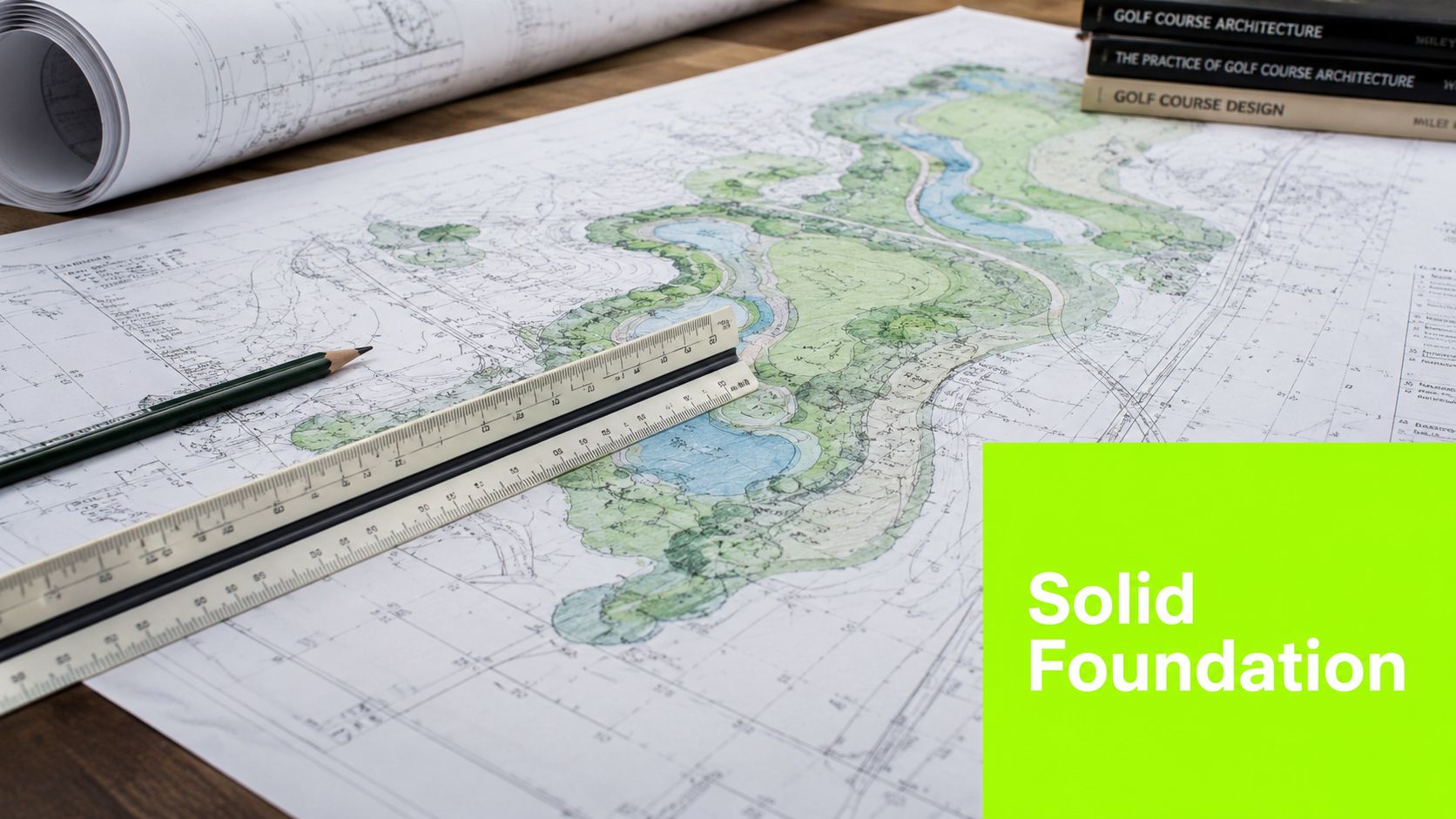
The starting point isn't "golfers in our area". That's too broad to guide creative, offers, or follow-up. Clubs need distinct audience groups with a specific commercial purpose behind each one.
Separate membership demand from visitor demand
A club looking for long-term members shouldn't advertise in the same way it sells a casual round. The motivations are different, so the message has to change too.
A useful planning split looks like this:
- Full membership prospects: People comparing clubs, culture, playing access, and long-term value.
- Flexible or points-based prospects: Golfers who want commitment without a traditional joining route.
- Society organisers: Buyers looking for reliability, food and beverage quality, and easy booking.
- Corporate clients: Decision-makers who care about hospitality, events, and relationship-building space.
If you blend these audiences together, the ad copy becomes generic. Generic ads usually attract generic enquiries.
Set goals that matter to the committee
Clicks and impressions don't help a committee make decisions. Clubs need measures tied to revenue movement.
Use a working scorecard that asks:
- Qualified enquiry cost: How much are you paying to generate a genuine prospect, not just traffic?
- Enquiry-to-visit rate: Are people coming in to see the club?
- Visit-to-member rate: Does the sales process convert interest into signed members?
- Lead ownership: Does every enquiry have a named staff member responsible for the next step?
The strongest clubs don't judge advertising by how busy the dashboard looks. They judge it by whether booked visits and signed members are increasing.
Build the offer before the ad
Many clubs reverse this. They create ads first, then scramble to decide what the prospect should do next.
A better sequence is:
- Choose the audience
- Define the desired action
- Decide the offer or invitation
- Prepare the landing page
- Assign follow-up ownership
- Only then launch ads
This is also the point where tools start to matter. Some clubs manage this with a mix of forms, inboxes, and spreadsheets. Others use a central system that ties ads, lead capture, and follow-up together. GolfRep is one option clubs use when they want advertising connected to CRM visibility and structured nurture rather than handled as a standalone campaign.
That foundation work isn't glamorous, but it's what stops golf course advertising from becoming a cycle of spend, hope, and confusion.
Choosing Your Channels and Setting a Budget
Most clubs don't need every channel. They need the right mix for intent, timing, and operational capacity.

In practice, UK golf advertising is usually led by search and supported by paid social. According to Golf Coach Websites on paid and organic golf course advertising, clubs typically split ad budgets with 60% on Google Search Ads and 40% on Meta platforms, aim for ROAS of 3:1 to 5:1, and work within £1,200 to £2,500 per month as a minimum learning budget, rising to £5,000 to £10,000 during peak seasons for larger operations. The same source notes branded keyword CPCs of £1.50 to £3.00, local commercial keyword CPCs of £2.50 to £4.50, cost per booking targets of £3 to £8, and click-to-booking conversion rates of 3% to 8%.
Google and Meta do different jobs
Google Search Ads capture existing demand. Someone is already looking for a club, a membership option, or a venue nearby. That's why search usually carries more of the budget. It picks up intent at the moment of action.
Meta works differently. Facebook and Instagram are useful for creating awareness, introducing the club to local golfers, and retargeting people who have shown interest but haven't yet enquired.
The mistake is expecting them to produce identical outcomes.
| Channel | Best use | Main strength | Main risk |
|---|---|---|---|
| Google Search Ads | Membership, society, corporate enquiries | High intent | Wasted spend if keywords are too broad |
| Meta platforms | Awareness, retargeting, event promotion | Strong creative reach | Weak lead quality if the offer is vague |
For a fuller comparison of how clubs use each platform, GolfRep's guide to Google Ads vs Facebook Ads for golf clubs is a useful reference.
Budget based on learning, not optimism
A small club often wants immediate certainty from a modest spend. That's understandable, but digital advertising needs enough budget to test audiences, offers, and messaging properly.
Think about budget in phases:
- Learning phase: Use the lower end of the benchmark range to find out which audience and message pull in qualified enquiries.
- Efficiency phase: Shift spend towards the campaigns producing booked visits, not just form fills.
- Peak season phase: Increase investment when local intent rises and the club has operational capacity to handle more leads.
Budgeting rule: Never scale ad spend faster than your team can respond to enquiries and book visits.
What committees should ask before approving spend
Good governance improves results. Before approving a golf course advertising budget, ask four direct questions:
- Which audience are we targeting first
- Which channel fits that audience's intent
- What happens after the enquiry arrives
- How will we judge success beyond clicks
Without those answers, channel discussions become political. With them, budget decisions become commercial.
Designing Ads and Offers That Convert
The wrong offer can fill your inbox and still damage your club.
A lot of golf course advertising leans on discounts because discounts are easy to explain. Twilight deals, limited-time rates, and low-entry promotions can create activity quickly. The problem is that they often attract people shopping on price rather than people looking for a club to join.
Stop selling cheap golf
If your goal is membership growth, a discount-first message often pulls in the wrong expectation. It teaches the prospect to compare on price before they've seen the course, the atmosphere, or the value of belonging.
Better offers usually feel more like an invitation than a sale.
Examples that tend to protect club value:
- Member for a day: Let a prospect experience the course and clubhouse properly.
- Club open day invitation: Useful when the club wants to show community and atmosphere.
- Group coaching taster: Good for newer golfers who are interested but hesitant.
- Hosted membership tour: Effective when the buying decision depends on seeing facilities and meeting staff.
These offers give the prospect a next step without forcing the club into a race to the bottom.
Write to a specific buyer
Most weak ads fail in the first line. They describe the club instead of speaking to what the buyer wants.
A better structure is simple:
- Headline: Name the outcome or audience
- Body copy: Explain why this offer is relevant now
- Call to action: Ask for one clear next step
For example, an ad aimed at a professional audience might focus on flexibility, weekday access, and a well-run club environment. An ad aimed at society organisers should talk about planning ease, hospitality, and smooth event delivery.
A beautiful photo of the 18th hole doesn't convert by itself. The prospect still needs a reason to enquire today.
Creative matters, but relevance matters more
Most clubs don't need flashy campaigns. They need clean visuals, a recognisable tone, and copy that matches the audience. That can include course photography, clubhouse imagery, member experience shots, or short-form video explaining what makes the joining process straightforward.
If your team needs help producing variations quickly, tools such as the ShortGenius AI ad creative tool can help create ad concepts and video assets faster, especially when testing different hooks for membership, society, or event campaigns.
The test for every advert is straightforward. Does it attract the kind of person you want to speak to, and does it make the next step obvious? If not, redesign the message before you increase the spend.
The Missing Link Landing Pages and Tracking
A click is not progress if the prospect lands on a page built for everyone.
That is where golf course advertising often breaks down. Clubs pay to attract the right person, then send them to a homepage split across membership, green fees, weddings, societies, and existing member updates. A prospect who clicked a membership advert should arrive on a page that continues the same message and asks for one clear next step.

A landing page should do one job
Each campaign needs its own page with one conversion goal. Book a tour. Request membership details. Register for an open day. Pick one.
Clubs often overcomplicate this stage. They add menu links, long club history, multiple calls to action, and forms that ask for more than the team will use. That lowers response rates before follow-up even starts.
A strong landing page usually includes:
- A clear headline: Match the promise in the advert
- A short value proposition: Explain why this offer fits this audience now
- Proof points: Photography, member comments, or trust signals that reduce hesitation
- A simple form: Ask only for the details needed to follow up properly
- One call to action: Keep the decision obvious
The trade-off is simple. A shorter form usually gets more enquiries. A slightly longer form can improve lead quality if the club has a process for acting on the extra detail. If no one uses budget, preferred membership type, or playing frequency in follow-up, do not ask for it.
Mobile friction kills intent fast
A large share of golf enquiries now starts on a phone. If the page loads slowly, the form feels awkward, or the enquiry path takes too many taps, response volume drops.
Test your own journey on mobile. Complete the form with one hand. Time it. If it feels clumsy to your team, it feels worse to a prospect who is half-distracted between meetings or scrolling in the evening.
Tracking has to reach past the form fill
Many clubs still judge advertising on clicks and cost per lead. That is a reporting habit, not a growth system.
The useful view is the full path from spend to enquiry to booked visit to joiner. If tracking stops at the form, the club cannot tell which campaign brought in serious buyers, which landing page produced weak enquiries, or which source generated members at an acceptable acquisition cost. That is why a clear golf club enquiry tracking process matters. It connects marketing activity to operational follow-up and revenue.
A simple tracking view might look like this:
| Stage | What to record |
|---|---|
| Spend | Campaign and channel cost |
| Enquiries | Qualified leads received |
| Booked visits | Tours, trial rounds, meetings |
| New members | Signed joiners by campaign |
| Revenue | Membership value attributed |
This structure works like a practical version of how to create a sales funnel, adapted to the way golf clubs sell. The point is not prettier reporting. The point is knowing where the breakdown sits, whether that is the advert, the page, the form, or the handover after the enquiry.
If a club cannot trace a new member back to the campaign, landing page, and source that produced them, budget decisions become guesswork. That is usually why advertising feels inconsistent. The lead generation gets the blame, but the underlying weakness sits in the system underneath it.
Turning Enquiries Into Members With a System
Advertising usually gets too much credit for success and too much blame for failure. At many clubs, the enquiry is not the hard part. The hard part is what happens in the next few hours and the next few follow-up steps.
By the time someone submits a membership enquiry, they have already shown buying intent. They have moved past casual interest. If that lead sits in a shared inbox until tomorrow, the club has handed momentum back to the prospect.

Slow follow-up is the primary leak in the pipeline
Analysts at GolfRep found the average time to respond to a membership enquiry in the UK golf sector was 47 hours and 32 minutes, according to GolfRep's analysis of golf club marketing agency performance. That delay has little to do with ad quality. It is a sales process failure.
GolfRep also reported an average response time of 30 hours across a network of 50+ UK golf clubs using HubSpot as a solutions partner, as outlined in GolfRep's golf club franchise article. Faster than the wider sector is still too slow if the prospect is comparing two or three clubs at once.
This is the part many committees and managers miss. A campaign can produce good enquiries and still look disappointing if nobody owns the next action.
What a proper follow-up system looks like
A workable system removes guesswork. It assigns ownership, sets response targets, and gives staff a sequence to follow instead of hoping someone remembers to chase.
CRM Golf's guide to response time and conversions for golf clubs recommends three to four touches over two to four weeks, notes that under 5 minutes is best practice, and says a realistic golf club target during business hours is two to four hours. The same source also references wider brand response behaviour, including an average email response time of 8.8 hours and the fact that 35% of brands never respond at all.
For golf clubs, that usually means:
- Immediate acknowledgement: confirm receipt and tell the prospect when they will hear from someone
- Personal contact: answer likely questions, qualify interest, and invite a visit or trial
- Structured reminder: follow up if no visit has been booked
- Final decision prompt: give a clear next step, deadline, or reason to act now
The sequence matters, but consistency matters more. Clubs do not need a fancy sales operation. They need one process that staff follow.
A useful outside reference is this guide on how to create a sales funnel. The principle applies neatly to golf membership sales because it treats conversion as a managed progression from enquiry to visit to joiner.
Visibility changes behaviour
Enquiries get lost when they live in personal inboxes, paper notes, and casual handovers at the front desk. Once the lead is centralised, the team can see status, owner, notes, and next task without asking around.
That is why clubs benefit from software built around membership workflows rather than generic contact storage. A well-set-up golf club CRM software platform helps the team record every enquiry, trigger follow-up tasks, and track which prospects are stalling before they disappear.
The operating standard should be plain:
| Stage | Owner | Required action |
|---|---|---|
| New enquiry | Named staff member | Respond and qualify |
| Interested prospect | Membership lead | Invite visit or trial |
| Visited club | Decision owner | Follow up on objections |
| Ready to join | Admin or manager | Complete onboarding |
Clubs rarely lose a joining decision because an advert was slightly off. They lose it because the enquiry had no owner, no timetable, and no follow-up sequence.
Golf course advertising performs far better when ads, landing pages, CRM, and follow-up sit inside one repeatable system. That is how clubs move from occasional joiners to a pipeline they can manage.
If your club is generating interest but struggling to turn enquiries into booked visits and new members, GolfRep helps build the underlying system. That includes lead generation, response workflows, CRM visibility, and structured follow-up so advertising supports predictable growth rather than isolated campaigns.
Ready to tap into our proven growth system?