Golf Club Winter Marketing: A Practical Playbook
February is when a golf club's commercial plan becomes visible. The course is soft, weekday tee times are difficult to fill, the clubhouse feels quiet and the bar team has fewer chances to turn a visit into wider revenue. Committees often respond with a quick winter promotion, but a cheaper tee time alone rarely solves the underlying problem.
The stronger approach treats golf club winter marketing as a conversion-efficiency exercise. The club must attract suitable visitors, identify who has genuine long-term potential, nurture interest without damaging its pricing position and give every promising prospect a realistic route towards membership, repeat visits or non-golf spend.
The Winter Revenue Challenge for Golf Clubs
A nearly empty clubhouse in February creates more than a disappointing daily takings report. It reduces food and beverage opportunities, leaves staff and facilities underused, and gives the management team less evidence that its commercial plan is working. If the club waits for spring, it loses the chance to build relationships before competitors start promoting their peak-season offers.
The seasonal pattern is structural. Industry reporting recorded an average of 1,385 rounds per course across England, Wales and Scotland from January to March 2024, which was 14% lower than the same quarter in 2023. The same report notes that summer rounds are typically two to three times higher than Q1, so a club can't judge winter activity by summer standards or assume that normal campaigns will perform in the same way. Hillier Hopkins' golf clubs report provides the relevant industry context.
Winter tests commercial resilience
A well-run winter plan doesn't try to recreate July demand. It decides which capacity should be filled, which customers are worth developing and which offers can create value when outdoor golf is less attractive.
That could mean promoting a visitor round on a suitable afternoon, a winter society package, a clubhouse event or a flexible membership that gives a prospective member a low-risk way to experience the club. It could also mean improving the presentation of the clubhouse and retail environment, including useful resources such as custom design catalog golf clubs for facilities that want to make their merchandise offer more relevant.
The commercial question is simple: what should this customer do next? A visitor might book again, bring a friend, attend an event, arrange a tour or enquire about membership. If the campaign doesn't define that next step, the club may generate activity without building a stronger revenue base.
For a practical view of how visitor demand contributes to the wider tee-sheet picture, see this guide to golf club green-fee revenue. Winter shouldn't be treated as dead time. It's the period when a club can test whether its acquisition, sales and retention processes work without the support of peak-season demand.
Why Generic Campaigns Fail in Winter
A generic “winter special” campaign usually asks too little of the club and says too little to the customer. It may contain a lower price, a stock photograph and a booking button, but it doesn't explain why the offer suits the recipient, what happens after the visit or why the club deserves a longer relationship.
Summer campaigns often benefit from natural urgency. Longer days, better ground conditions and established playing habits do much of the selling. Winter requires more context because the customer has to weigh weather, travel, course conditions and the value of spending time at the club.
The numbers point to a different plan
The wider market still offers reasons for confidence. Great Britain recorded around 90 million full rounds in 2025, described by BBC Sport as the highest volume across the previous five years. That evidence supports a demand-generation strategy, but it doesn't mean every club can rely on full-course play in poor conditions. The GolfRep analysis of indoor golf facilities discusses the opportunity to keep golfers active through alternative formats.
England's participation data also records 7.3 million people playing on a 9 or 18-hole course in the last year, alongside 5.3 million using off-course formats such as driving ranges, adventure golf and simulators. These figures show that winter demand can be captured through more than traditional green-fee rounds, provided the offer matches the customer's preferred format. The participation figures for on-course and off-course golf support a broader view of the winter audience.
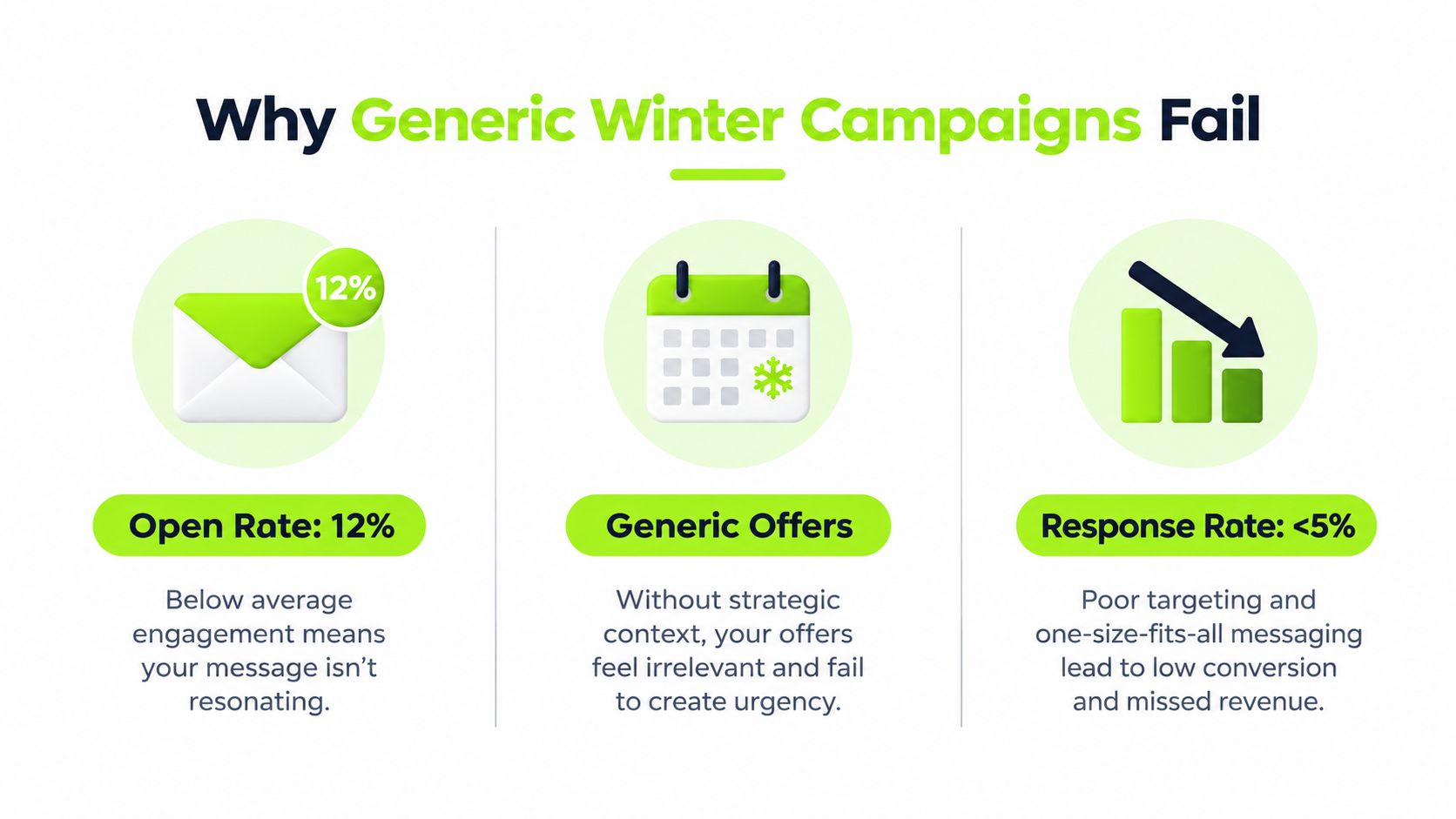
A single audience also creates weak messaging. A committed golfer who wants a regular local venue should not receive the same proposition as a casual player looking for an occasional winter activity. An indoor golfer, a society organiser, a lapsed member and a local business looking for a private event each has a different reason to respond.
Commercial rule: don't use a discount to compensate for an undefined customer and an undefined next step.
Separate occupancy from relationship value
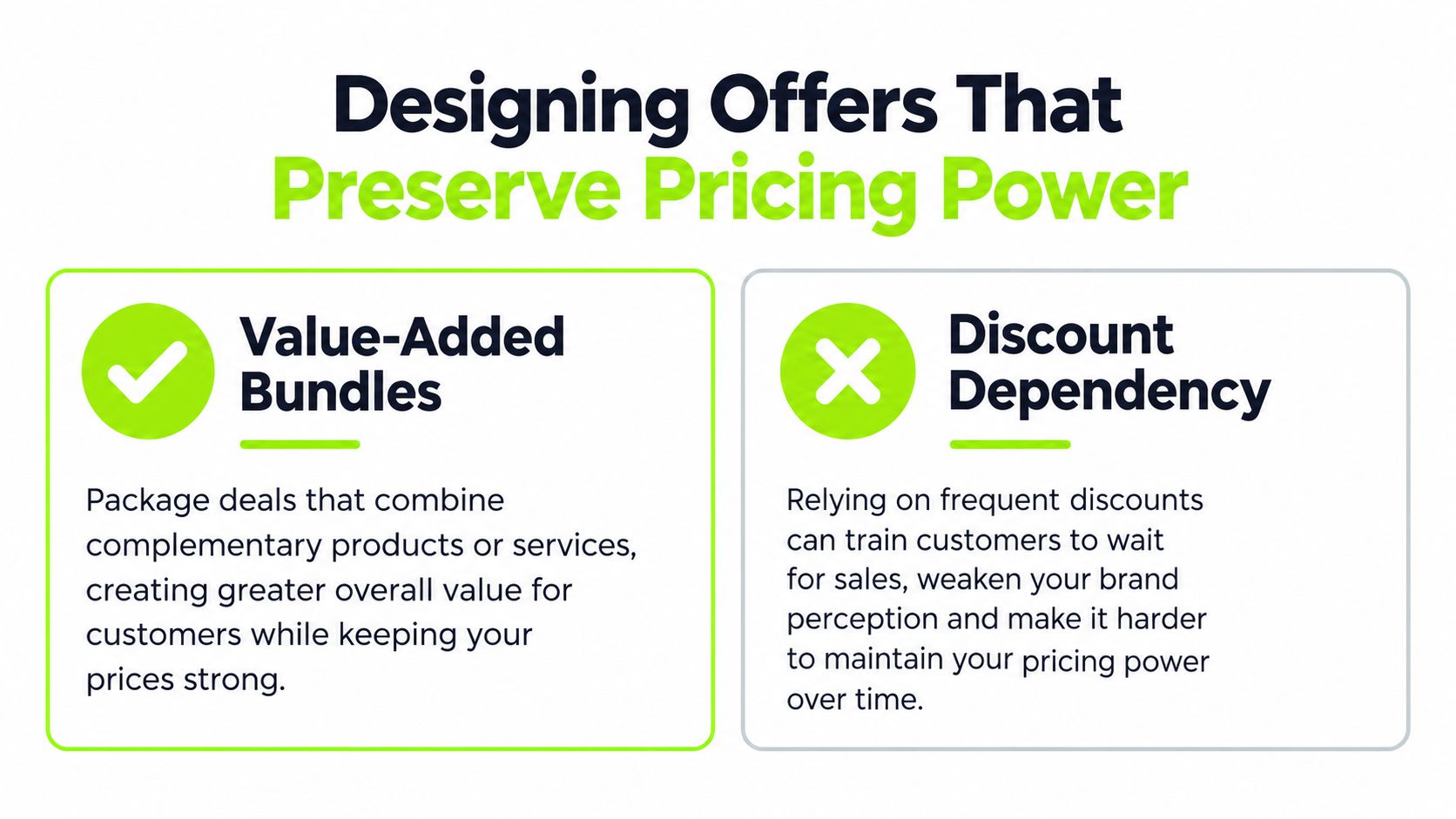
Discounting can fill a tee time while weakening future pricing power. If the club teaches local golfers to wait for the next offer, the campaign may produce short-term volume but make regular pricing harder to defend.
The better test is whether the campaign creates a useful customer signal. Record the format booked, the date, the number of players, the source of the enquiry and whether the customer accepts a follow-up conversation. That information helps the club distinguish a one-off bargain seeker from a visitor who could become a repeat player, event customer or member.
A PGA-commissioned survey reported that more than 16 million people in the UK and Ireland played some form of golf in the previous 12 months, representing around 30% of adults, while BBC reporting said 82% of traditional golfers had tried alternatives including simulators, pitch-and-putt and adventure golf. This overview of changing golf participation supports winter messaging that keeps people engaged with golf, even when a full outdoor round isn't the most appealing option.
Building a Multi-Channel Nurture Strategy
Winter campaigns work best when each channel performs a different job. Social media creates familiarity and shows the club in use, paid advertising reaches local golfers who haven't engaged before, email keeps the proposition visible and personal follow-up turns interest into a booking or visit.
The mistake is to run these channels as separate tasks. A prospect might see a video of a well-attended winter event, click an advert for a visitor package and then receive an email that explains the club's flexible membership route. Those messages should feel like parts of one conversation, not unrelated promotions.
Build the journey around intent
Start with a small number of useful audience groups. The exact labels will vary by club, but the commercial distinctions should be clear:
- Recent visitors: Invite them to return, ask about their experience and present the next suitable playing option.
- Membership prospects: Show the course, clubhouse, practice facilities and member experience, then offer a tour or conversation with a named person.
- Lapsed or inactive contacts: Reintroduce the club through a relevant reason to visit, rather than sending a broad sales message.
- Event and hospitality prospects: Lead with food, atmosphere, availability and ease of organisation, not a golf membership proposition.
- Indoor and alternative-format golfers: Offer a pathway into coaching, leagues, social play or selected outdoor experiences.
Social proof should answer, “Do people like me use this facility in winter?” Email should answer, “What would my next step look like?” A staff member or automation should answer, “Can I help you choose the right option?”
Keep the process manageable
A practical nurture sequence might begin with the original enquiry or booking confirmation, continue with useful preparation information, then follow with a relevant invitation after the visit. The message should change according to behaviour. Someone who books an event shouldn't receive the same sequence as someone who viewed membership information but didn't arrange a tour.
Use a shared record for source, audience, last contact, stated interest, next action and outcome. That doesn't require an elaborate technology project. A disciplined CRM process, clear ownership and a daily review of open opportunities are more valuable than a large number of disconnected tools.
The golf club lead nurture guide provides a useful reference for structuring follow-up without making every customer interaction feel automated. The principle is straightforward: social creates intent, email sustains attention and a visit or conversation creates the commercial opportunity.
Designing Offers That Preserve Pricing Power
A winter offer should give customers a reason to act without telling them that the club's normal price is excessive. The strongest propositions add relevance, convenience or experience. They do not merely remove value from the headline price.
Begin by identifying the capacity or revenue line that needs support. An empty weekday afternoon may justify a time-specific package, while a quiet clubhouse may need a food and beverage event. A membership team may need a low-commitment trial route rather than another green-fee promotion.
Start with the customer's reason to buy
A useful offer design process has four decisions.
Choose the customer first. A local golfer, a visiting group, a couple looking for a venue and a prospective member shouldn't receive the same package. Define the customer's situation before deciding the price.
Add value that supports the brand. A round paired with food, a coaching element, practice access or a social event can make the visit more appealing without reducing the value of the core tee time. The addition should be something the club can deliver consistently.
Set a boundary around availability. Use named days, suitable times, booking conditions or a defined event period. This creates a genuine reason to choose the offer now without manufacturing pressure.
Define the commercial next step. Invite the visitor to return, attend a tour, join a social event or discuss membership. The offer should create a pathway, not end at the payment confirmation.
Protect the long-term position
Flexible categories can work well when they reflect how people play. A member who travels frequently may value restricted access or off-peak use, while a new golfer may need an introductory route with coaching and social support. The club should be clear about what each category includes and what would prompt a move to a fuller membership.
Non-golf revenue deserves the same discipline. Themed evenings, private dining, Christmas functions, business gatherings and community events can use the clubhouse when the course is less attractive. Industry guidance from the Golf Club Managers Association on driving winter revenue points towards themed events, partnerships, pricing strategy and utilisation reporting, but managers still need to choose options that fit their audience and operational capacity.
Avoid offers that create work without a measurable return. A heavily reduced tee time that displaces a likely full-price booking is a poor trade, as is a package that requires staff, catering and administration without producing repeatable demand. The right question is not “How cheap can we make this?” It is “Which additional value can we deliver profitably and confidently?”
For ideas on structuring membership propositions without relying on blanket reductions, see golf club membership offers.
Converting Winter Visitors into Long-Term Members
A winter visitor becomes a membership prospect when the club learns something useful about their intentions. The booking itself is only the starting signal. A single player who asks about weekday access, brings the same group back or spends time discussing facilities may need a different follow-up from someone who books once through a price-led advert.
The club should capture those signals without making the customer feel interrogated. A short post-visit conversation, a feedback question or a well-timed email can reveal whether the visitor is local, how often they play, what they value and whether membership is a realistic option.
Compare the pathways, not just the prices
A full membership may be right for a golfer who wants regular access and social involvement. It may be the wrong first step for someone uncertain about the course, new to the area or unable to play at peak times.
| Visitor situation | More suitable pathway | Commercial purpose |
|---|---|---|
| Plays regularly and lives locally | Tour followed by full membership conversation | Establish long-term fit and explain the complete member experience |
| Plays mainly at selected times | Flexible or restricted category | Match access to behaviour without forcing an unsuitable commitment |
| Wants to improve and meet other golfers | Coaching, social golf or an introductory route | Build confidence and create reasons to return |
| Arrives through a group or society | Repeat booking and individual follow-up | Develop both group revenue and personal membership potential |
| Enjoys the clubhouse as much as golf | Events, hospitality and member activities | Demonstrate the wider value of belonging |
The best route depends on the club's categories, capacity and member experience. A flexible option shouldn't become a permanent holding position with no progression plan. The club should explain what each pathway offers, who it suits and what a visitor can do next.
Create a deliberate handoff
Marketing can identify and warm the audience, but a named person should own the commercial conversation. After a promising winter visit, that person can invite the customer for a course walk, informal coffee, member event or membership discussion. The timing should feel connected to the visit, not like a generic sales chase.
A practical record should include:
- Visit detail: Date, format, booking source and playing group.
- Intent signal: Questions asked, facilities viewed and stated plans.
- Next action: Tour, call, event invitation or follow-up date.
- Outcome: Returned, joined, deferred or declined, with a useful reason where available.
Recent industry commentary argues that winter rounds should begin a longer relationship rather than remain one-off revenue, and that converting winter green-fee visitors into members requires structured nurture. The discussion of converting winter green-fee visitors reflects the practical gap between attracting a visitor and building a membership pathway.
A club can also learn from premium, lifestyle-led membership models such as this premium golf lifestyle membership. The lesson isn't to copy another operator's proposition. It's to consider the complete experience a membership represents, including access, identity, social connection and reasons to stay engaged beyond the next round.
Measuring Winter Marketing Success with KPIs
Winter reporting should tell the committee whether the club is building commercial quality, not merely producing activity. Impressions, clicks and social engagement can help diagnose campaign reach, but they don't show whether the club filled useful capacity, created repeat demand or moved a prospect closer to membership.
Use a simple funnel that managers and staff can update consistently:
| Stage | KPI to monitor | Management question |
|---|---|---|
| Attract | Enquiries, bookings and source by audience | Which message and channel bring suitable people? |
| Nurture | Contact rate, response rate and booked visits | Are prospects receiving a relevant next step? |
| Convert | Enquiry-to-visit and visit-to-join conversion | Which pathway produces the strongest commercial result? |
| Retain | Repeat visits, member usage and renewals | Did winter activity create a relationship that continues? |
| Revenue | Revenue by customer type and offer | Did the campaign improve quality, not just volume? |
Measure decisions, not vanity
Compare winter performance with the club's own prior-year pattern and current capacity. Raw lead volume can rise while conversion quality falls, especially if a broad discount attracts people with little interest in returning. A smaller pipeline with clearer intent may be more valuable than a larger list that staff can't contact or qualify properly.
Track each channel separately from enquiry through to outcome. Social media may create awareness, email may produce return visits and local partnerships may generate event enquiries, but the club should test those roles rather than assume the last click deserves all the credit.
Useful management question: which winter activity produced the next valuable customer action, and how quickly did the club respond?
Review the numbers regularly enough to change the campaign while winter is still underway. Stop offers that displace profitable demand, improve messages that attract suitable visitors and give staff a clear process for the prospects most likely to become members. This is how a club turns a difficult season into evidence for better budgeting, better capacity planning and a more dependable annual revenue plan.
GolfRep works with golf clubs and facilities to improve acquisition, sales processes, CRM follow-up, conversion, retention and revenue growth across the winter period. If you want to identify the biggest constraint in your winter pipeline and build a measurable pathway from visitor demand to repeat revenue or membership, visit GolfRep.
Ready to tap into our proven growth system?