Golf Club Corporate Day Marketing: A Practical Playbook

41% of UK golf clubs already run corporate days, and this activity generates £1.2 billion annually. Corporate golf is mainstream club revenue, not a side project reserved for prestigious venues.
The commercial question is how to turn that demand into a product your team can sell consistently, price sensibly and rebook each year. Effective golf club corporate day marketing follows the buyer from the first enquiry through package selection, event delivery and repeat booking. It also gives committees a clearer basis for deciding which opportunities deserve attention, which discounts damage margin and which follow-up tasks should be automated.
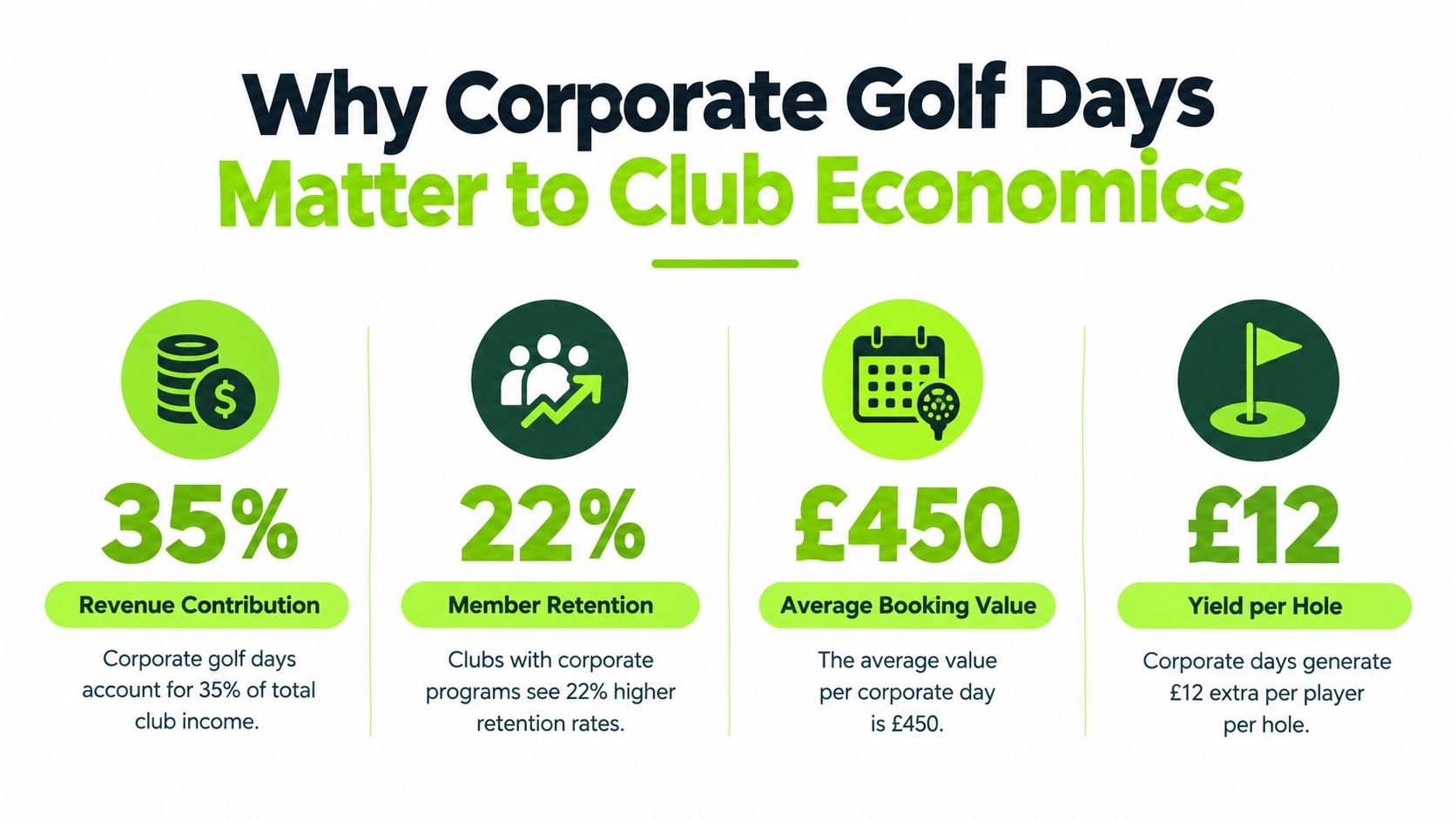
Why Corporate Golf Days Matter to Club Economics
UK golf clubs already operate in a market where corporate days can sit alongside membership, visitor golf, societies and functions. The UK golf industry contributed £4.8 billion directly to the national economy in 2023, while golfers paid £1.1 billion in membership fees in 2022, according to this UK golf industry summary. Corporate golf therefore deserves a defined sales process, not occasional handling by whichever staff member answers an enquiry.
The same source reports that 41% of UK golf clubs offer corporate golf days, generating £1.2 billion in annual revenue. Those figures do not justify accepting every booking. They give committees a reason to assess corporate demand against tee-sheet capacity, staffing, catering space and the contribution available from each buyer segment.
The product is broader than green fees
A corporate day may include tee time, room hire, breakfast, halfway refreshments, dinner, prizes, sponsorship and branded materials. The organiser is buying a managed hosting experience, not just access to the course. That distinction affects the enquiry response, the package price and the follow-up required after the event.
Charity events demonstrate how value can extend beyond playing fees. A 2026 Scottish event at Houghwood Golf Club involved 18 teams and raised nearly £6,500, while a 2025 event at The Dyke Golf Club in Brighton raised £12,510 through corporate donations, mulligan sales, a 50/50 raffle and auction activity. The Belfry's first Belfry Classic Golf Day raised £110,000 for charity. These examples are reported in the Standing Tall Foundation charity golf day account.
A club should not copy The Belfry's format automatically. It should decide which revenue belongs to the club, which money is raised for the charity, and which extras require staff time or supplier cost. Sponsorship inventory, catering quantities and fundraising mechanics need owners before the sales team promises them.
Committee question: Which parts of a corporate day create margin, and which parts merely create work?
Where the risk sits
Corporate golf can restrict member access, occupy staff and produce sharp catering peaks. Set operating rules before marketing begins: suitable weekdays, minimum group sizes, deposits, cancellation terms, catering limits and member communication.
Use quieter capacity where the tee sheet permits it, protect member-favoured periods and route every enquiry through the same qualification steps. An automated acknowledgement can confirm availability criteria, collect player numbers and event objectives, then alert the right manager when a booking meets the threshold.
Presentation also affects the hosted experience. Clubs can review elevate your caddie look with custom bibs when staff visibility is part of delivery. A committee can compare the commercial mechanics with GolfRep's golf club event revenue guidance. The decision should rest on contribution, capacity and repeatability, with a clear handoff from first enquiry to repeat-booking reminder.
Segmenting Corporate Buyers and Building Clear Pricing Packages
A corporate organiser doesn't necessarily want the most luxurious package. They want a format that matches the purpose of the day and makes internal approval straightforward. Start by separating buyers according to why they're booking, not merely how many players they bring.
Three useful buyer groups
SME marketers often need a manageable team or client event with clear costs, simple branding and a reliable point of contact. They may value a straightforward package more than a long list of optional extras.
Client-entertainment buyers are protecting relationships and reputation. They'll usually care about arrival experience, food quality, pace of play, presentation, privacy and the club's ability to handle guests professionally.
Charity-driven organisers need fundraising mechanics, sponsor visibility and participation support. Their commercial model may include donations, auctions, raffles, mulligans and hole sponsorship, so the club should separate venue revenue from money collected for the cause.
Build three packages that are easy to compare. Keep the inclusions precise. “Hospitality included” is weak. “Breakfast roll, halfway refreshments and post-round meal” gives the organiser something they can take to a director, client or committee.
A practical package matrix
| Tier | Typical inclusions | Best for |
|---|---|---|
| Essential | Course access, registration support, basic scoring and a defined food option | SME teams and straightforward staff days |
| Hosted | Course access, breakfast, halfway refreshments, meal, scoring and event coordination | Client entertainment and relationship-led events |
| Signature | Hosted format plus premium catering, branded presentation, prize support and sponsorship opportunities | Executive hospitality, major partners and charity-led events |
The tier names can change. The commercial principle shouldn't. Make the middle option operationally attractive, because it gives buyers a credible upgrade without forcing every enquiry into a premium negotiation. GolfRep's guidance on golf club package deals is relevant when a club is deciding which inclusions belong in the core offer and which should remain optional.
Set deposits according to the cost and risk of preparing the event. The written terms should cover the payment schedule, final player details, catering deadlines, weather arrangements and cancellation treatment. A deposit protects the date, but it also signals that the club has a structured commercial process.
Discount only when the club receives something valuable in return, such as an off-peak date, early confirmation, repeat commitment or reduced operational complexity. Do not discount a premium Saturday just because the organiser asks. Offer a different date, remove an optional element or create a lower-cost package instead.
Pricing rule: Never use a lower price to solve a packaging problem. First check whether the buyer understands what they're receiving.
Choosing the Right Marketing Channels for Corporate Bookings
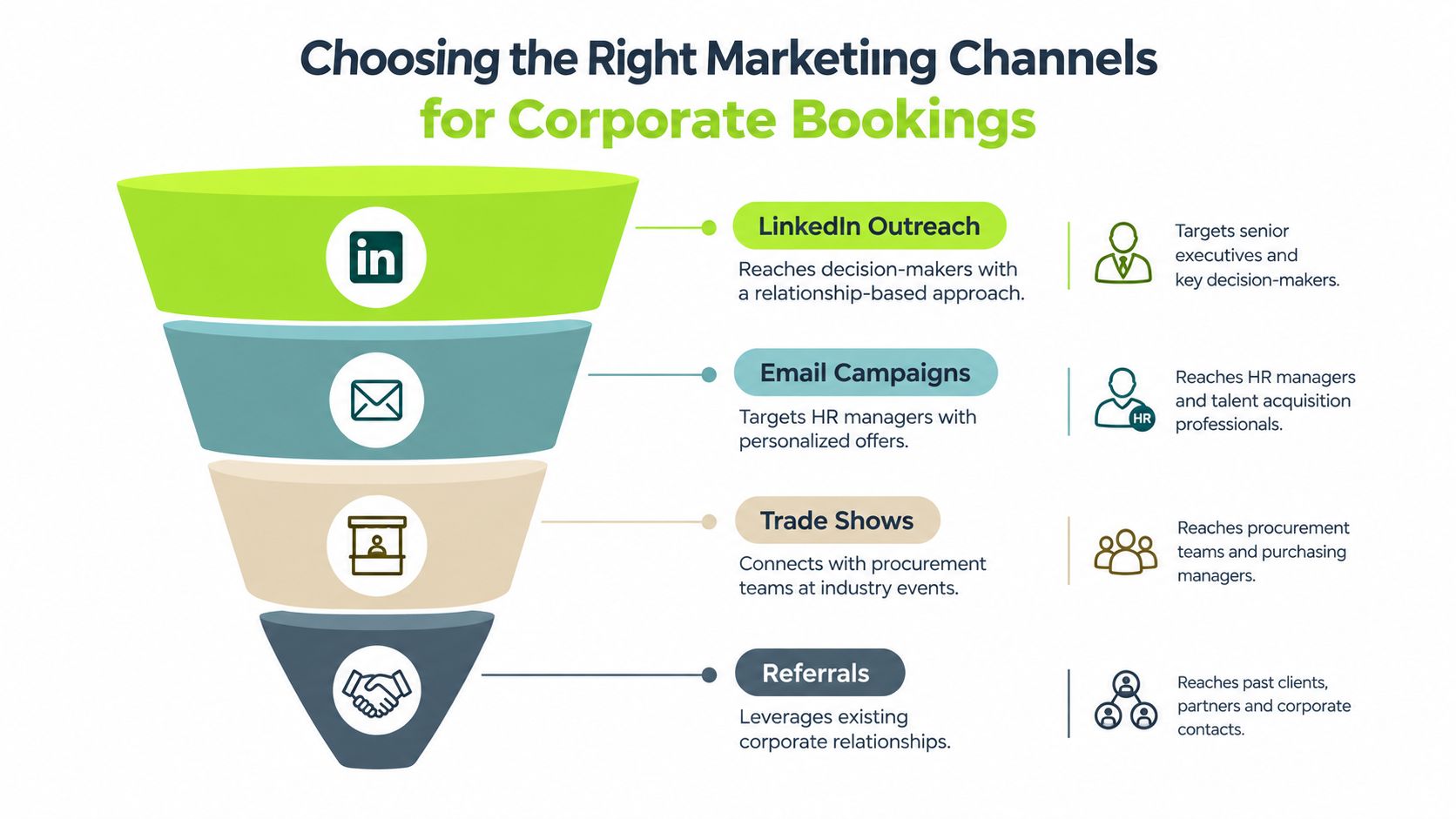
Channel choice should follow the buyer and the objective. LinkedIn, email, paid search and partnerships can all work, but they don't perform the same job and they shouldn't share one generic message.
Match the channel to the relationship
LinkedIn suits relationship-led prospecting. A commercial manager can identify local business owners, office managers, HR contacts, event organisers and client-service teams, then start with a relevant reason to talk. Direct promotion to a cold list usually underperforms thoughtful outreach because the buyer may not yet recognise the club or the event format as relevant.
Email is strongest when the club already has useful records. Segment previous organisers, lapsed corporate contacts, society organisers and members with business connections. UK club survey evidence found that only 14% of members' clubs used events in 2024, while direct mailings and corporate brochures were each used by 12%, according to the Hillier Hopkins golf clubs report. That suggests event-led outreach combined with cleaner database work may offer room to stand out.
Paid search captures active demand, particularly when someone is already looking for a venue, charity golf day or corporate golf package. It needs a dedicated landing page, clear availability guidance and a form that asks useful qualification questions. Sending paid traffic to a general home page makes the buyer do too much work.
Partnerships provide trust and access. Charities, chambers, business groups, local employers, sports networks and event planners can introduce organisers who value reliability over novelty. Agree the commercial arrangement in advance, including sponsor visibility, referral ownership and who handles the organiser relationship.
For clubs considering social advertising, a practical overview of Meta advertising for B2B marketers can help clarify where paid social fits, although the channel still needs a specific audience and offer.
Keep the test manageable
Choose one target segment, one package and one primary action. Track the source of every enquiry, the organiser type, the date requested and the eventual outcome. Don't commit the whole seasonal budget before you know which message attracts qualified organisers rather than casual interest.
A small team may be better served by a segmented email campaign and a referral programme than by trying to maintain several paid channels at once. The right mix depends on the club's database quality, sales capacity and available weekday inventory.
Crafting Messaging and Automating Follow-Up for Corporate Organisers
The buyer wants an answer to a practical question: will this day deliver enough value to justify the cost and effort? A message about “an unforgettable golfing experience” doesn't answer it. A useful message explains who the package suits, what happens on the day, what the organiser must provide and how the club will manage the details.
Write for the organiser's internal approval
A strong landing page should show:
- The event purpose: Explain whether the format suits team engagement, client entertainment, fundraising or sponsor hosting.
- The package contents: List golf, food, scoring, registration, prizes and branding separately.
- The operational reassurance: State who coordinates the day, how player changes are handled and when final information is needed.
- The next decision: Ask for a preferred date, expected group size, event type and budget range.
The same structure works in an email. Subject lines should identify the audience or use case rather than rely on vague excitement. A phone conversation should qualify the booking without turning into an interrogation. Ask what the organiser is trying to achieve, who will attend, when the event must happen and what has caused problems at previous venues.
Build simple checkpoints
Automation doesn't need to replace the club's personal service. It should protect the routine around it. Capture every enquiry in one CRM or structured register, then tag the record by source, buyer segment, preferred date, estimated group size and booking stage.
A workable sequence looks like this:
- Immediate acknowledgement: Confirm receipt and set a clear expectation for the next response.
- Human qualification: Call or reply with questions about purpose, date, format and decision process.
- Package follow-up: Send the relevant tier, availability and inclusions rather than the entire sales brochure.
- Decision reminder: Follow up when the organiser's stated decision window approaches.
- Event preparation: Trigger reminders for player lists, dietary requirements, deposits and branding.
- Post-event nurture: Thank the organiser, request feedback and ask about the next suitable date.
The GolfRep guide to automated follow-up provides a useful reference for building that routine. GolfRep can be used as one option for combining lead capture, qualification and nurture, but a well-maintained spreadsheet with ownership rules is better than an expensive system nobody updates.

Operational checkpoint: Every record should show the next action, the person responsible and the date it is due.
The organiser matters more than the attendee list because the organiser controls the budget, venue choice and likelihood of rebooking. After the event, store the actual format, revenue, margin, issues and feedback against that organiser. The next proposal can then reflect what worked instead of starting from a blank template.
Measuring Performance and Planning a Seasonal Campaign Timeline
Corporate day reporting should help a committee decide where to invest time and capacity. Avoid reporting reach or impressions in isolation. A useful dashboard follows the commercial path from enquiry to booked event, then adds the quality and profitability of delivery.
Track enquiries by source, qualified organiser rate, booking conversion, average booking value, average margin per event, cancellation rate, repeat-booking frequency and customer satisfaction. The figures only become useful when staff record them consistently and distinguish an organiser from an individual attendee.
Independent UK golf-event reporting found that 71% of clubs reported gross margins above 30% to 40% per event, while 85% reported margins of 20% to 30%, according to Golf Genius reporting on the value of open events. Those results reinforce a practical point. Corporate day economics depend on package design, yield management and operational control, not automatic discounting.
A campaign calendar a committee can understand
| Month | Key actions | Success metrics |
|---|---|---|
| January | Confirm capacity, target segments, package costs and booking rules | Approved offer, available dates and margin assumptions |
| March | Launch segmented email, LinkedIn outreach and partner conversations | Qualified enquiries by source |
| May | Review objections, package selection and response times | Conversion by segment and package |
| July | Deliver booked events and protect service standards | Average booking value, margin and satisfaction |
| September | Contact organisers about future dates and annual formats | Repeat-booking opportunities |
| November | Compare channels, segments and event profitability | Cost per qualified enquiry, conversion and repeat rate |
This timeline isn't a prescription for every club. A resort with conference demand may sell earlier than a private members' club. The point is to give each phase an owner and a decision.
Run lightweight tests. Present the same package with inclusions grouped by outcome in one version and by service component in another. Test a direct subject line against one focused on a specific event type. Keep the rest of the offer stable so the result tells you something.
Reporting rule: Put one commercial conclusion beside every KPI. “Email produced qualified organisers but needs a clearer charity package” is more useful than a table of opens and clicks.
A simple scenario can expose the value of process improvement without inventing a forecast. If the club receives the same number of enquiries, faster ownership can reduce avoidable drop-off. If segmentation directs previous organisers towards repeat-booking messages, the club may create more annual accounts without increasing advertising spend. Measure those outcomes from your own baseline rather than borrowing a benchmark from another venue.
Practical Next Steps and Answers to Common Corporate Day Questions
A corporate booking should have a clear owner from the first enquiry to the rebooking conversation. Confirm suitable dates, identify the organiser segment, recommend the right package and record the next action before the call or email ends. The process should be simple enough for a committee to approve without specialist marketing knowledge.
A short implementation checklist
- Refine the database: Separate previous organisers, lapsed contacts, society organisers and relevant business relationships. Tag each record by event type, likely group size and buying stage.
- Protect the margin: Cost catering, staffing, prizes, room use and optional extras before setting prices. A charity day may need sponsorship inventory and raffle support, while client entertainment may justify stronger hospitality and privacy.
- Publish clear packages: Show exact inclusions, exclusions and upgrade options. Use segment-level pricing where the service burden differs, rather than offering every buyer the same bundle.
- Create booking checkpoints: Record source, segment, preferred date, group size, stage, owner, next action and outcome. Automate acknowledgement emails and reminders, but keep qualification and pricing discussions personal.
- Plan the rebooking conversation: Ask about the next suitable period after the event, then schedule a reminder based on the organiser's likely planning cycle.
Common questions from club teams
How should a private members' club position corporate days?
Present them as controlled use of available capacity that supports the club's finances while protecting member access. Set protected member times, explain the operating rules and accept enquiries only for formats the team can deliver consistently.
When should the PGA professional be involved?
Involve them when the event includes coaching, a skills competition, player support or a need for golfing credibility. Keep one person responsible for the commercial offer, so the organiser does not receive conflicting prices or promises.
Should charity days be priced differently from client entertainment?
Yes, where the value and operating requirements differ. Charity events may need sponsorship inventory, raffle or auction support and clear donation handling. Client entertainment may place more value on hospitality, privacy and presentation. As noted earlier, these add-ons can increase fundraising outcomes beyond green fees.
What follow-up cadence is realistic for a small team?
Set a prompt acknowledgement, one personal qualification contact, a proposal follow-up, a decision reminder and a post-event rebooking message. Match the timing to the organiser's deadline. For conferences or presentations, audio visual production for conferences can help the club decide which production responsibilities belong with the venue or an external supplier.
Start with a shared enquiry record and a small set of approved packages. Review lost enquiries, margin by segment and repeat opportunities at a regular commercial meeting. GolfRep helps UK golf clubs map the corporate buyer journey and connect packages with CRM follow-up, conversion and repeat booking. Visit GolfRep to discuss a practical system built around club capacity and sales processes.
Ready to tap into our proven growth system?