How to Grow My Indoor Golf Facility: Pro Tips for 2026
The UK indoor golf opportunity is larger than most operators plan for. England's participation reporting found 12.6 million people played some form of golf in the last year, including 5.3 million using off-course formats such as driving ranges, adventure golf, simulators and Topgolf (National Club Golfer). Yet many facilities still market themselves mainly to existing club golfers and then wonder why bays remain quiet outside peak times.
The practical answer to how to grow my indoor golf facility isn't to buy more advertising. Growth comes from identifying the right audiences, responding to enquiries quickly, filling available capacity intelligently and giving first-time visitors a reason to return. GolfRep works from that commercial reality. The facility needs a predictable pipeline, not a larger pile of untracked enquiries.
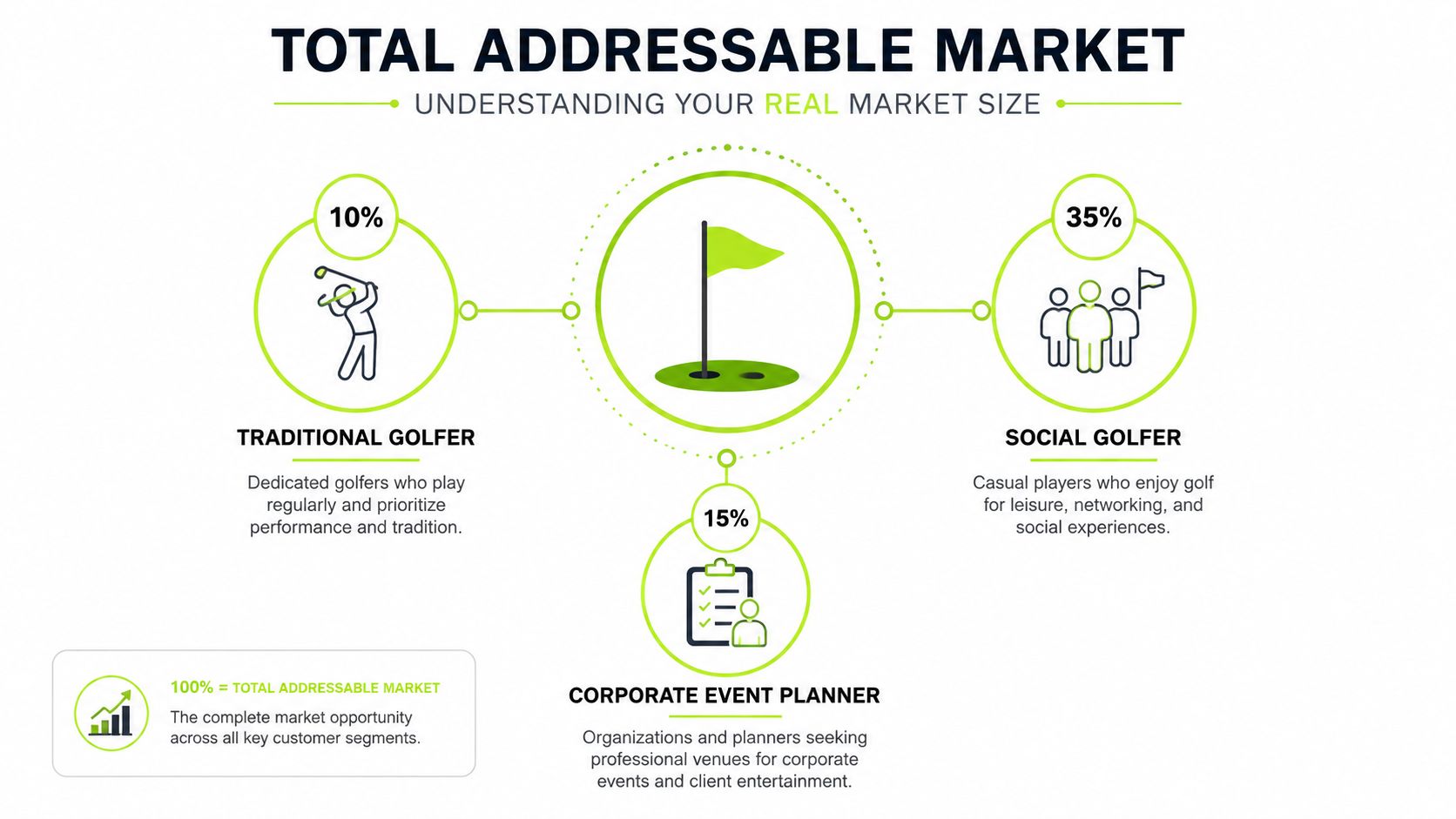
Understanding the Real Size of Your Indoor Golf Market
The traditional club golfer is only one part of the addressable market. A PGA-commissioned survey reported that more than 16 million people in the UK and Ireland played some form of golf during the previous 12 months, described as around 30% of adults across formats including driving ranges, pitch-and-putt, adventure golf, simulators and full courses (BBC Sport participation reporting).
That distinction matters. Someone who enjoys Topgolf, a simulator session or a casual range visit may not be ready for a full club membership, but they can still become a repeat indoor customer. They may book social sessions, attend coaching, join a league, bring colleagues or eventually consider membership. The commercial opportunity sits in building a path between those behaviours.
Separate market size from realistic demand
A large participation figure isn't a forecast for your venue. Your useful market is the portion within a practical travel distance, interested in your format, available at your operating hours and willing to pay for the experience you offer.
Start with three layers:
- Total participation: People already engaging with golf in any form.
- Local relevance: People who can reach your venue conveniently and understand what it offers.
- Commercial fit: People whose needs match your bays, coaching, food and beverage, events or membership pathway.
This approach prevents two common mistakes. The first is assuming every traditional golfer is a likely simulator customer. The second is ignoring non-members because they don't yet describe themselves as committed golfers.
UK behaviour is already moving towards alternative formats. BBC reporting using Sporting Insight data said 82% of traditional golfers in Britain and Ireland had tried alternatives such as simulators, pitch-and-putt and adventure golf, while UK range sites recorded more than 500 million shots (BBC Sport reporting on changing golf formats). These figures support a positioning decision: indoor golf should be presented as a convenient, social and weather-proof route into golf, not merely as a winter substitute for outdoor play.
Commercial rule: Treat awareness as the starting point. The stronger growth question is how many relevant enquiries become booked visits, repeat sessions and higher-value relationships.
Operators planning their local opportunity can also use this guide to identifying market opportunities alongside the broader Prometheus Agency growth playbook. The key is to turn broad participation into a local audience map, then build offers and follow-up around the groups most likely to visit repeatedly.
Defining Your Target Audience Segments and Offers
Generic messaging creates generic results. “Play golf indoors” doesn't tell a time-poor professional, a family or an experienced member why they should book your facility today.
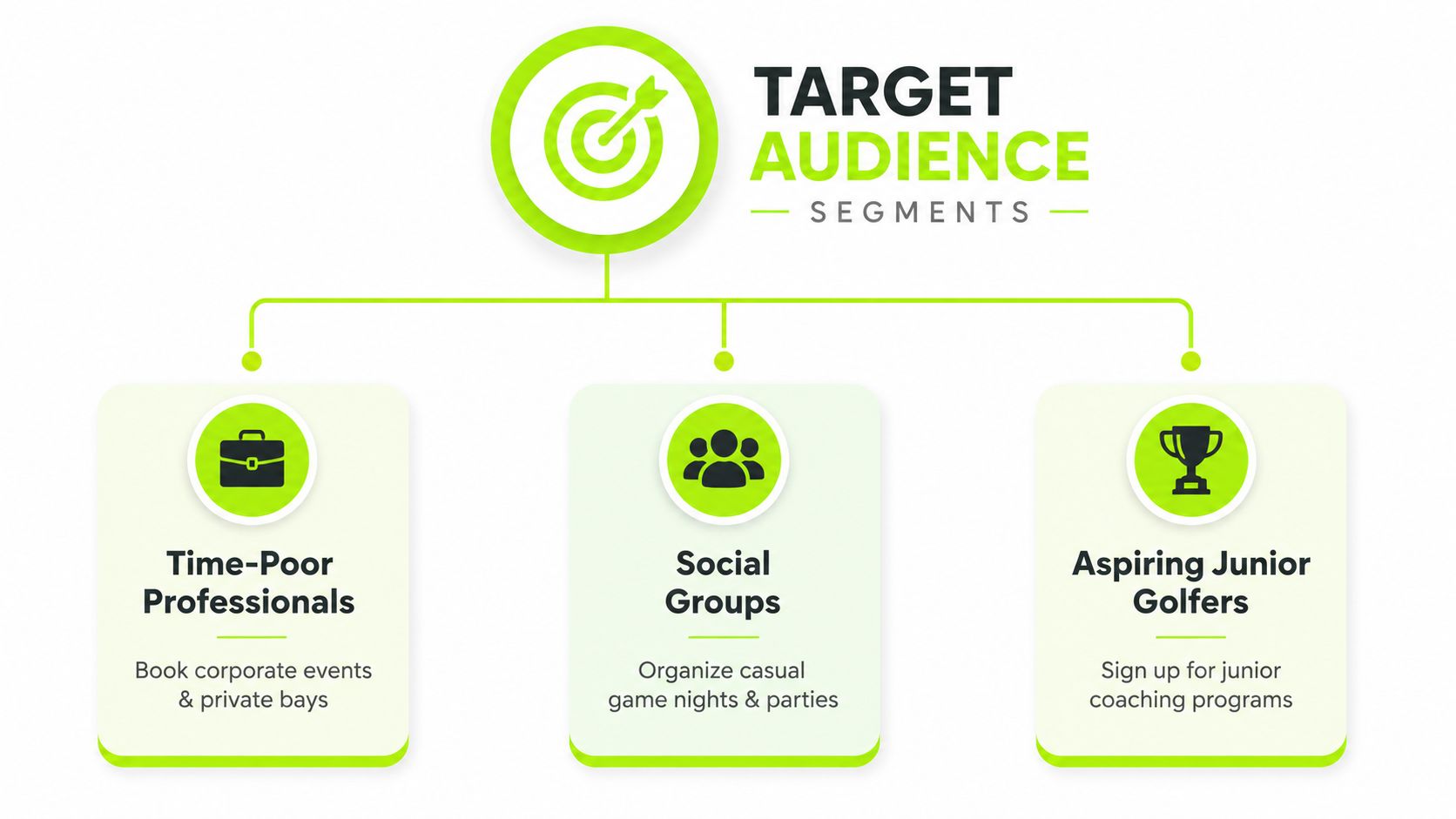
Segment by reason for visiting, not only by handicap. The same bay can serve several audiences, but each group needs a different promise, booking journey and follow-up message.
Match the offer to the behaviour
Time-poor professionals want convenience and a reliable experience. Their offer might centre on early morning or evening access, private bays, coaching that fits around work and corporate events that remove the organisational burden. The landing page should make booking simple and explain exactly what's included.
Social groups aren't necessarily looking for technical feedback. They want an enjoyable evening, a clear price, simple games and an environment where less experienced players won't feel uncomfortable. Packages can combine simulator time with food and drink, game formats or a recurring social night.
Families and juniors need reassurance. Parents want safe, organised sessions, while young players need visible progression and enthusiasm. Junior coaching, holiday activities and beginner-friendly game modes can create a first visit that feels accessible rather than intimidating.
Existing members have a different motivation. They may want practice, coaching, winter access or a way to maintain form between rounds. Member packages can reward usage without making the whole facility dependent on a discounted rate.
Avoid putting every audience into the same introductory promotion. A blanket discount may fill a few sessions, but it can also train customers to wait for cheaper prices and obscure which offer converts. Build a small number of clearly named packages, then track bookings by source, segment and offer.
Design the next step before launching the first offer
Every offer should answer three questions:
- Why this format? Practice, entertainment, coaching, social time or corporate hosting.
- Why now? A convenient slot, a scheduled league, a team event or a timely seasonal reason.
- What happens next? A follow-up booking, coaching recommendation, membership conversation or invitation to a relevant event.
This structure gives staff something useful to discuss after the first visit. It also creates better data than recording that someone used a discount code.
Building a Fast-Response Enquiry Pipeline
A slow reply can waste demand you've already paid to generate. UK lead-response research reports that 78% of customers buy from the first company to respond, while the average UK business response time is 47 hours and only 7% of firms respond within five minutes (Made Smarter lead-response research).
Indoor golf enquiries are particularly time-sensitive. A prospect may be comparing venues, planning a group booking or trying to fill an evening. If your facility replies tomorrow, another venue may already have confirmed the booking.
Build the pipeline before increasing spend
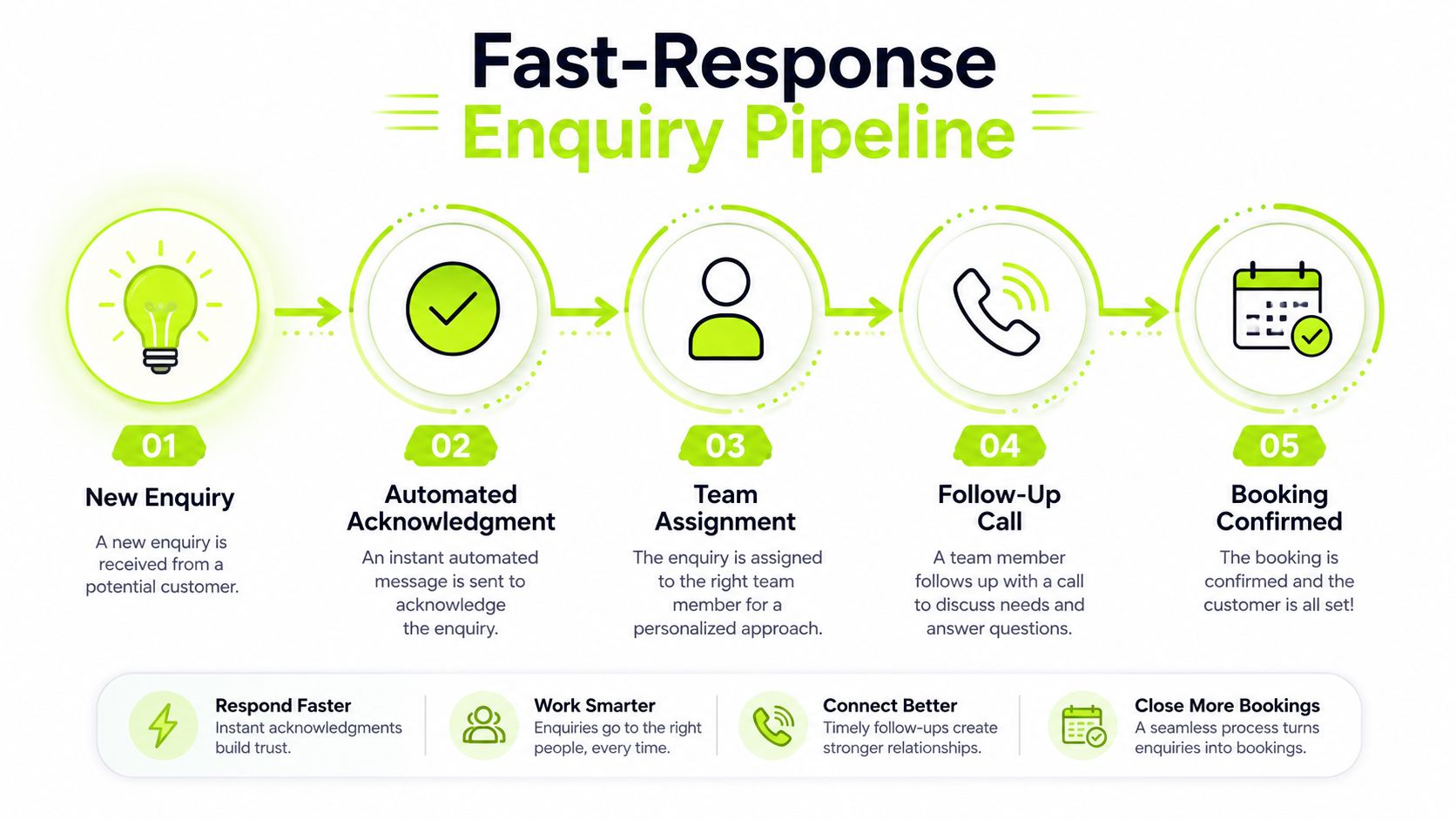
A workable system has five connected stages:
- Capture: Website forms, telephone enquiries, social messages and event requests should enter one visible record.
- Acknowledge: An immediate automated message confirms receipt, sets expectations and offers a direct booking route.
- Assign: A named team member owns the enquiry. “Someone will get back to you” isn't ownership.
- Follow up: Staff call or message promptly, then continue with scheduled reminders if the prospect hasn't booked.
- Confirm and nurture: After booking, send useful preparation details. After the visit, invite the customer towards the next relevant action.
The CRM record should show the source, audience type, offer, contact history, booking status and next action. That visibility matters because manual spreadsheets and inbox searches make it easy for enquiries to disappear without anyone realising.
Use automation for consistency, not impersonation
Automation should handle speed and routine. It can send an acknowledgement, route a corporate request to the events lead, remind a prospect about an incomplete booking and trigger a post-visit message. It shouldn't replace a helpful conversation when someone has questions about bay suitability, coaching or accessibility.
A sensible follow-up sequence might begin with an immediate acknowledgement, continue with a personal response during staffed hours, then use reminders tied to the enquiry type. A corporate organiser needs package information. A beginner may need reassurance. An existing member may need available practice options. The timing can be standardised, while the content remains relevant.
GolfRep's speed-to-lead guidance for golf clubs reflects the central operational point: lead generation and lead handling are separate jobs. Don't increase advertising until you can see every enquiry, identify its owner and measure whether it becomes a visit.
Optimising Bay Utilisation and Session Revenue
A simulator bay is a fixed capacity asset. An empty off-peak slot can't be recovered later, so marketing alone won't solve poor utilisation. The operator needs to understand when demand exists, which audiences can use quieter periods and what additional revenue a longer, better-structured visit can create.
BBC reporting found that adding games increased average range session duration by 12.3% to 54 minutes (BBC Sport reporting on alternative golf formats). The lesson for indoor venues isn't to copy one format blindly. It's to design sessions that encourage customers to stay engaged, add food and beverage or coaching naturally, and book again before leaving.
Use quieter hours as a product decision
Leagues can create recurring weekday demand. Coaching clinics can give professionals and beginners a reason to attend at a set time. Corporate packages can concentrate several bays into one booking, while junior sessions can use periods that are less attractive to evening social groups.
Avoid solving every quiet slot with a discount. A lower price may fill capacity, but structured programming can create stronger habits and protect the perceived value of the venue. Price should support the schedule, not compensate for a weak product.
Track the following measures consistently:
| Metric | Target Benchmark | Why It Matters |
|---|---|---|
| Hourly bay occupancy | Establish your own baseline by day and time | Shows where capacity is being lost and where demand is already strong |
| Average session duration | Compare by audience and booking type | Indicates potential for add-on revenue and better experience design |
| Repeat-booking rate | Review after each first visit cohort | Shows whether acquisition is creating a habit |
| Revenue per session | Separate bay, coaching, events and food and beverage | Reveals which offers improve commercial value |
| Off-peak booking share | Monitor by segment and campaign | Tests whether programming is smoothing demand |
For a wider view of how technology and data can support range operations, see GolfRep's digital driving range perspective. The same principle applies indoors: measure utilisation before investing in extra bays, and confirm that existing capacity is being used intelligently.
Positioning Indoor Golf as an Acquisition Channel
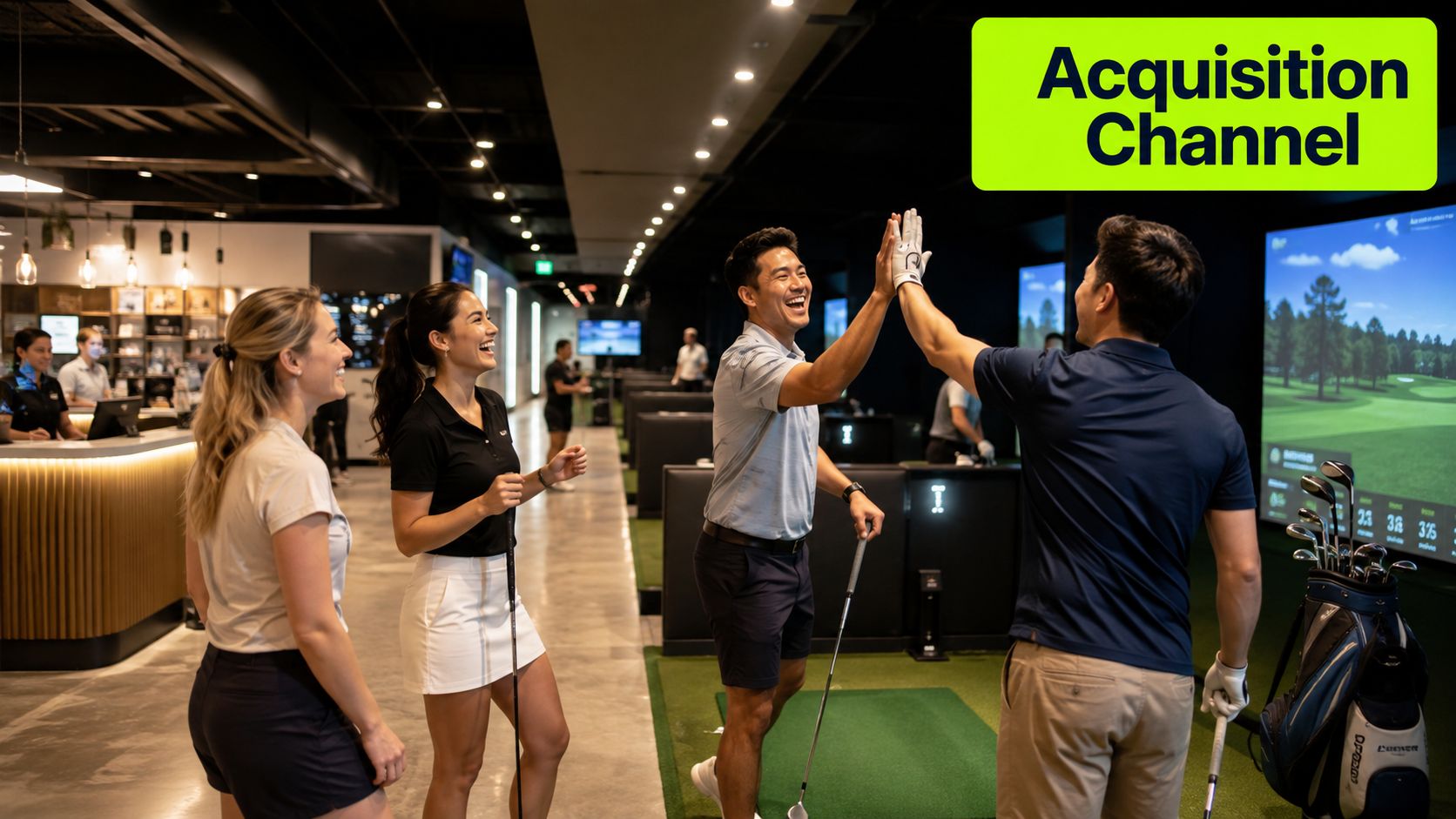
Marketing an indoor facility only to existing members limits the funnel. England's data shows 5.3 million people used off-course golf formats, compared with 7.3 million who played on a 9- or 18-hole course in the last year (National Club Golfer participation reporting). The off-course audience isn't a secondary market. It's a substantial pool of people already comfortable with accessible, flexible golf.
Make the first visit feel like progress
A casual visitor doesn't need a hard membership pitch. They need a good experience, clear guidance and a reason to return. Staff can ask what brought the group in, record whether they're beginners or regular players, and recommend a next step that fits their motivation.
For some, that next step is another social booking. For others, it's a coaching session, a league or an introduction to the wider club. The facility becomes an acquisition channel when the operator deliberately connects those experiences rather than treating each booking as an isolated transaction.
England Golf reported 59% of recreational players wanted to play more regularly, which supports a retention strategy based on helping people form a routine rather than relying on one-off visits (National Club Golfer participation reporting). A post-visit sequence can offer the next suitable session, explain recurring activities and invite customers to stay connected.
Give non-members a credible pathway
The pathway might look like this:
- First visit: Simple booking, welcoming host and beginner-friendly experience.
- Second visit: A relevant reason to return, such as a league, social night or coaching recommendation.
- Regular use: Membership or package conversation based on actual behaviour.
- Club relationship: Course access, wider facilities and the benefits of belonging.
That route is more persuasive than competing only on price or simulator specifications. Technical quality matters, but customers also return because the venue understands what they want to do next. For readers interested in home practice between visits, resources on how to perfect your short game at home can complement an indoor coaching and retention programme.
Measuring What Actually Drives Growth
Follower counts and website visits can look encouraging while bays remain empty. A useful dashboard starts with the commercial journey, from enquiry to visit, repeat use and revenue.
The first requirement is lead visibility. Every enquiry should have a source, audience segment, response time, booking outcome and next action. Without those fields, managers can't tell whether a campaign generated genuine demand or merely produced low-intent contacts.
Use a small operating dashboard
Review these measures weekly:
- Response time: Shows whether the team is handling demand while the prospect is still engaged.
- Enquiry-to-visit conversion: Separates interest from booked attendance.
- Cost per booked session: Connects advertising spend to an actual commercial outcome.
- Repeat-booking rate: Reveals whether the first experience created ongoing value.
- Revenue by segment: Compares professionals, social groups, juniors, members and corporate customers.
- Session revenue: Includes relevant coaching, events and food and beverage income.
- Membership or package conversion: Shows whether indoor usage is creating longer-term relationships.
Don't combine every audience into one average. A corporate booking and a junior coaching enquiry have different sales cycles, margins and follow-up needs. Segment reporting makes those differences visible.
Set a review rhythm that leads to action
The front-line team should check new enquiries and overdue follow-ups every day. Managers can review response performance, bookings and occupancy weekly. A monthly commercial review should decide which offers to continue, which time slots need programming and whether advertising spend matches available capacity.
England Golf reported that club membership reached 750,071 in 2025, up 2.66% year on year, alongside 11.83 million WHS scores, the highest since the system began (National Club Golfer membership reporting). That wider growth shouldn't encourage complacency. It should prompt better measurement of how your facility captures and retains demand.
GolfRep offers a growth system combining advertising, automated follow-up and CRM-based revenue tracking, so clubs can connect enquiries to booked visits and longer-term value. Visit GolfRep to assess whether your indoor operation has the pipeline visibility and follow-up structure needed for predictable growth.
If your facility is generating enquiries but losing them between the inbox and the booking calendar, GolfRep can help build the response, CRM and nurture systems around your bays. Visit GolfRep to discuss a practical plan for converting more interest into repeat indoor visits and sustainable club revenue.
Ready to tap into our proven growth system?