Golf Club Society Bookings: A Practical Playbook

Most advice on golf club society bookings starts in the wrong place. Clubs are told to get more enquiries, improve the website, or run another promotion, but the actual leak is usually after the enquiry arrives. If the club responds slowly, quotes loosely, or leaves follow-up in someone's head instead of a system, the booking stalls regardless of demand.
That matters because the booking environment is already busy. BRS Golf's 2023 Participation Report says it processed 13.6 million member rounds across the UK and Ireland in the first half of 2023, which shows how much organised play moves through club booking systems in a short period (BRS Golf and GolfNow report strong demand for tee bookings). In that context, society days are not a side activity. They sit inside a high-traffic operational process where speed, ownership, and clean handover decide whether revenue is captured or lost.
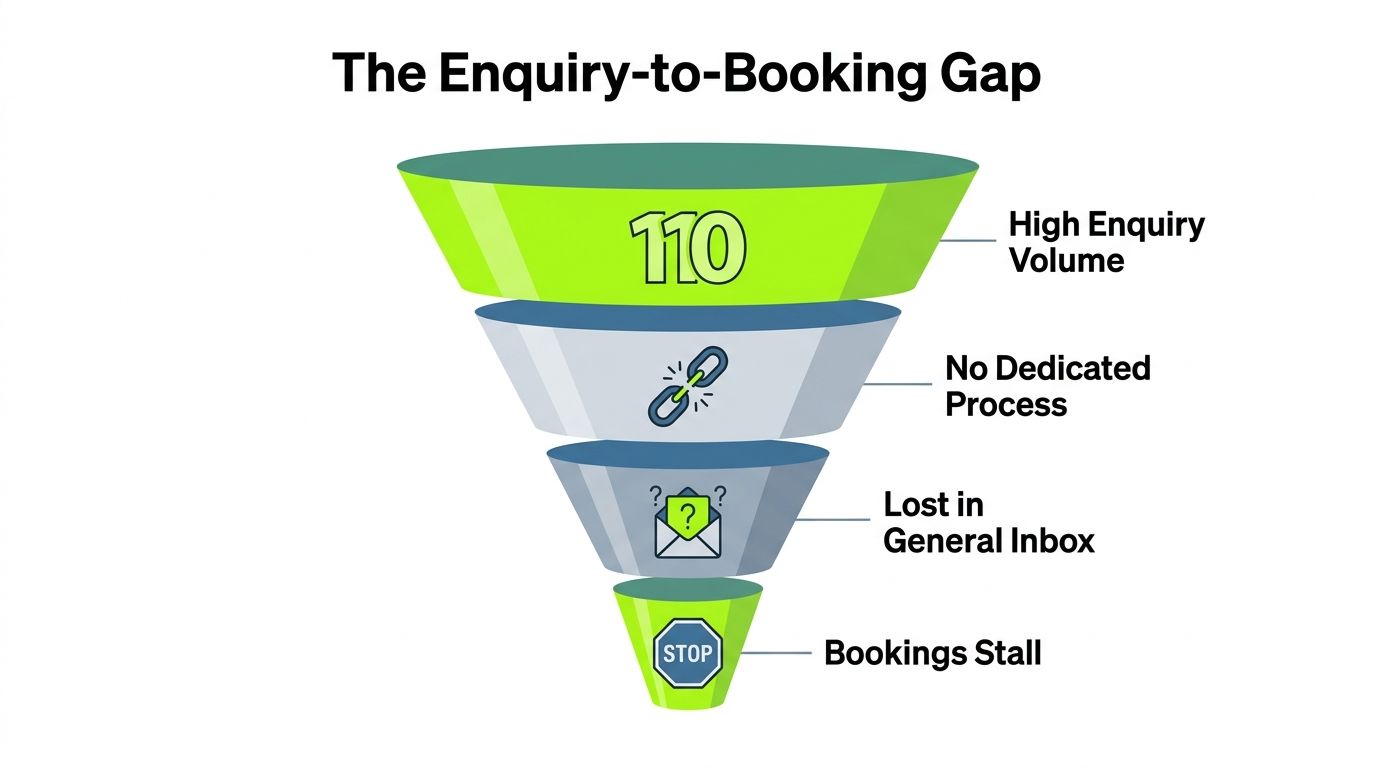
Why Society Bookings Stall Even When Enquiries Are Healthy
A healthy stream of society enquiries can still produce weak conversion if the club treats every lead like a one-off email. The organiser sends a message, the pro shop replies when it can, then pricing, availability, and catering questions get answered in fragments. By the time someone has stitched the conversation together, the organiser has usually compared another venue, booked elsewhere, or moved on.
The bottleneck is not demand
The mistake is assuming more traffic fixes the problem. Society bookings depend on response speed, clarity, and follow-up discipline, not just on interest. GolfNow's Consumer Insights Study found that 52% of all golfers check online ratings and reviews before booking a tee time, rising to 74% among GolfNow users, which shows how digitally led the decision process already is (GolfNow consumer insights). If organisers are comparing venues online before they even speak to a club, then slow handling after the enquiry only makes the club look harder to book.
Society days also carry more commercial value than a simple green fee. The same GolfNow source says nearly 56% of surveyed golfers buy food and beverages during their visit, rising to 66% among GolfNow users. That is why clubs should not treat a society enquiry as an inbox message to clear. It is a revenue event with hospitality attached.
Practical rule: if the enquiry is not logged, owned, and chased, it is not a lead, it is just activity.
The clubs that convert more are usually not sending more brochures. They are handling the same demand more cleanly, with fewer gaps between interest, quote, deposit, and event handover.
A useful example is the Cyndra lead follow up workflow, which shows how a structured handoff keeps the conversation moving instead of leaving it to memory or inbox habits. Clubs using a similar approach through Golf society lead generation can see where enquiries enter, where they stall, and which ones need a prompt follow-up before the organiser goes cold.
Capturing Every Society Enquiry in One Place
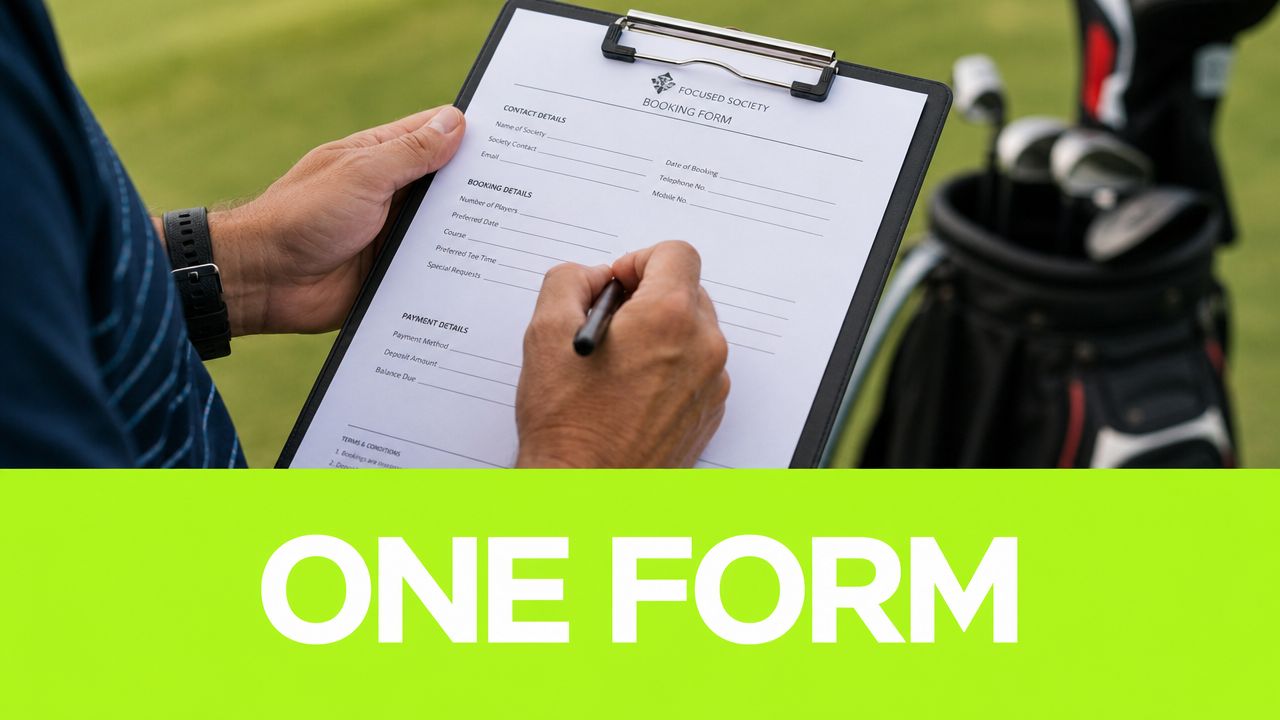
A club can't convert what it can't see. The first fix is to stop letting society enquiries land in different places depending on who picked up the phone, checked the inbox, or saw a Facebook message first. Every route should flow into one record, and that record should contain only the details needed to qualify the event properly.
Keep the form short and useful
A dedicated society form should ask for the basics that drive a quote: player count, preferred dates, format, and organiser contact details. Anything extra tends to reduce completion without helping the club price the event. The point is to qualify the booking, not to collect every possible detail on day one.
The same logic applies across channels. Website form, phone call, email, social message, and member referral should all land in the same place. If those routes split into separate inboxes, someone has to remember to reconcile them later, and that's where enquiries disappear. A structured intake flow is the simplest way to reduce leakage, and it's the same principle used in Golf society lead generation when clubs want reliable visibility from the first contact.
Use one record, not five threads
A single enquiry record should show who owns it, what the organiser asked for, and what has already been sent. That's where the operational value sits. GolfRep's own Cyndra lead follow up workflow is a useful example of how automated follow-up can sit behind a clean intake process without relying on staff memory.
Unlogged routes create invisible loss. If the club can't trace where the enquiry came from and who touched it last, it can't learn from missed bookings.
The goal is not a fancy form. It's clean routing, one owner, and a record that the whole team can trust.
Pricing Society Packages for Margin Not Just Occupancy
Discounting is the lazy answer to society demand. It can fill a tee sheet, but it often leaves the club with weak margin and no discipline around which bookings are worth taking. A better model is to segment inventory by tee sheet window, then build packages that match the commercial value of each period.
Build around peak, shoulder, and off-peak
Peak times should carry the strongest package structure and the least flexibility. Shoulder periods can absorb more value-add without cutting too deep into yield, while off-peak slots are where clubs can be more generous without damaging the main trading periods. The key is that each window should have a named package, a clear inclusion list, and one simple deposit rule so the front desk can quote without improvising.
| Society Package Tiers by Tee Sheet Window | |||
|---|---|---|---|
| Package | Best for | Includes | Deposit |
| Peak Society | Premium weekend or busy diary dates | Tee times, basic event coordination, clear catering options | Fixed deposit |
| Shoulder Society | Mid-demand weekday or quieter weekend edges | Tee times, coordination, modest hospitality choices | Fixed deposit |
| Off-Peak Society | Quieter weekday periods | Tee times, simpler package structure, limited extras | Fixed deposit |
A fixed deposit is often easier for organisers to understand than percentage logic. It also gives the club a simple threshold for commitment. Once the deposit is paid, the booking moves from speculative to real, which matters when staff are allocating tee-sheet space and catering resource.
A worked 80-player midweek booking
Take an 80-player midweek society. If the club has a structured shoulder or off-peak package ready, the organiser gets a fast quote with a clear list of what's included and what isn't. That beats building a bespoke price from scratch every time, because bespoke quoting slows the response and usually leads to concessions that were never necessary.
A practical pricing structure should protect yield in three places. First, don't bundle every possible extra into the base offer. Second, keep cancellation terms simple enough that the organiser can accept them without legal back-and-forth. Third, make the deposit meaningful enough that the booking is taken seriously. Golf club teams that want a wider model for this can also compare how wedding event tools manage packages and deposits, because the underlying booking logic is similar even if the event type differs.
For clubs looking at this commercially, the relevant internal reference is Golf club package deals, because the package library should be built for quoting speed, not just presentation.
Tracking Every Lead Through Seven CRM States
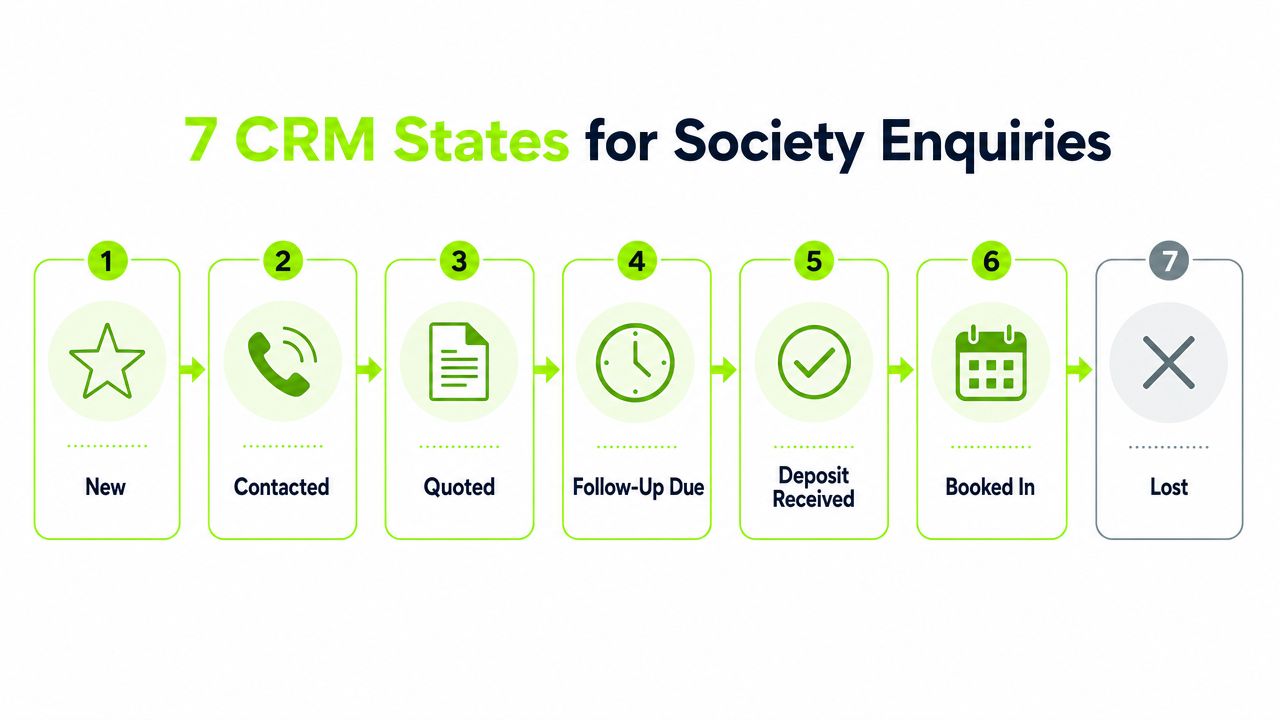
A society enquiry should never sit in a generic “open” bucket. Clubs can look busy while the pipeline leaks at every handoff. A status-based CRM keeps the work visible, because every enquiry has a named owner, a current stage, and a next action.
The seven states that matter
The practical states are new, contacted, quoted, follow-up due, deposit received, lost, and rebook next year. That sequence is simple enough for the whole team to use, but specific enough to support reporting and handover. golf club enquiry tracking guidance points clubs toward this kind of central record, with a single owner and tracked lead response time, because every unlogged route creates leakage in the funnel.
One person should own each transition. The person who receives the enquiry owns it in new. The person who sends the first reply owns it in contacted. The person who issues pricing owns it in quoted. If the organiser goes quiet, the lead moves to follow-up due and stays visible until someone makes contact again.
Statuses do more than organise names on a screen. They can trigger reminders, reports, and escalation inside Golf club CRM software, which is why the fields matter more than a neat spreadsheet. A spreadsheet can show a list. It cannot consistently push the team to act.
Keep the system honest
When enquiries build up in follow-up due, do not hide them. Review them with the team, ask which quotes are weak, and look at whether pricing, timing, or package clarity is causing the drag. If the same organiser has gone quiet twice, mark it as lost rather than leaving it unresolved. If the booking turns into a repeat opportunity, move it to rebook next year and give it an owner before the season slips away.
To compare AI agent deployment tools is useful here as a workflow check, because the club still needs clear rules for what each automated step can and cannot do. Automation can chase the process. Staff still need to decide when a lead has moved forward and when it has stalled.
Automating the Five-Step Society Conversion Sequence
Instant acknowledgement matters because organisers now expect a quick digital response, not a reply whenever somebody gets time. If a club waits until the end of the day to acknowledge a society enquiry, it starts the conversation behind the organiser's attention span. The workflow should handle the predictable work automatically, and leave staff to handle the judgement calls.
The sequence that actually closes bookings
- Capture centrally. The enquiry lands in one record, not in three inboxes.
- Acknowledge instantly. An auto-response confirms receipt and sets expectations.
- Qualify the organiser. A staff member checks player count, dates, and format, then confirms fit.
- Issue a relevant proposal. The quote reflects the right package, not a generic brochure.
- Secure the booking and hand over. Deposit request, confirmation, then operations receives the event details.
A practical SLA is to send the first acknowledgement within 10 minutes and the personal follow-up within 24 hours. Those timings are not about perfection, they're about showing the organiser that the club is organised and easy to deal with. Golf club society-day marketing guidance also recommends a short form, named owner, and a week-before-event confirmation, because these touchpoints stop the booking drifting after it has been won (Golf club society-day marketing).
Automate reminders, not judgement
If the organiser doesn't reply, the system should nudge the staff owner, not restart the whole process. One reminder after the proposal, another before deposit expiry, then a final check before the event date. That keeps the pipeline moving without making the club look pushy.
For clubs comparing tools that can support this kind of workflow, it's worth looking at compare AI agent deployment tools in the context of what each tool can automate and what still needs human oversight. The point is not to automate everything. It's to remove the repetitive admin that stops staff from selling.
KPIs That Change Club Behaviour
Most clubs report too much and learn too little. A monthly pack full of totals rarely changes how the front desk behaves on Tuesday morning. A small weekly dashboard does, because it shows whether enquiries are being handled properly while there is still time to correct the week.
Measure what the team can act on
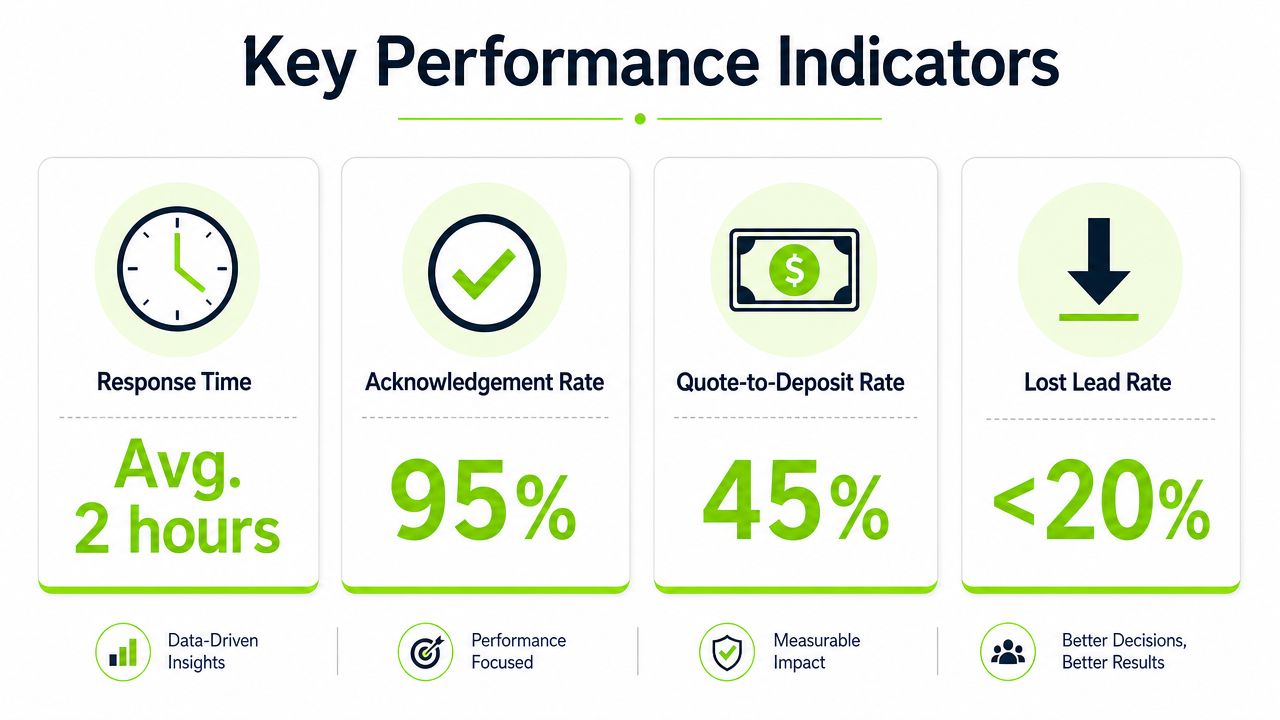
The numbers that matter are response time, acknowledgement rate, quote-to-deposit conversion, enquiry-to-visit rate, and repeat organiser rate. These are the figures that show whether interest is turning into booked society business or just sitting in the inbox. Clubs using a proper enquiry workflow usually find that the same small set of metrics reveals most of the leak points, long before the month-end report does.
The practical benchmark is consistency, not perfection. If a club is responding quickly, acknowledging almost every enquiry, and turning quotes into deposits at a healthy rate, the team will feel the difference in workload and forecastability. If those numbers slip, the cause is usually obvious once the owner looks at the status trail. Delayed replies, weak follow-up, and vague quote handling tend to show up before anything else.
Keep the dashboard simple
A weekly dashboard should fit on one screen and go to the GM or secretary every week. It should show how many enquiries came in, how many were acknowledged, how many quotes went out, how many deposits landed, and which leads were lost. Do not double count the same enquiry if it came in through two routes, and do not ignore the reason a deal was lost, because that is where pricing and process problems usually show up.
A useful club dashboard also needs clean definitions. If one staff member counts a phone call as acknowledged and another does not, the numbers stop meaning anything. The point is to create a common view of the pipeline, not a report that only makes sense to the person who built it.
The goal is one improvement target per quarter, not a dozen half-finished experiments. If the team can move response time, the rest of the funnel usually gets easier to manage.
A 90-Day Rollout for Clubs Starting From Scratch
A club secretary or membership director can get this moving without outside help if the work is split into three clean phases. The mistake is trying to rebuild pricing, CRM, and follow-up at the same time. Start with visibility, then conversion, then measurement.
Days 1 to 30
The first owner is the club secretary or operations lead. Their job is to launch the live society form on the homepage, route every enquiry into one record, and define the CRM states the team will use. The visible output should be a working intake process, not a strategy document.
Days 31 to 60
The second owner is the pro shop manager or events lead. They publish three named packages, agree the deposit rule, and set the acknowledgement and follow-up sequence. The visible output is a quote set that staff can use on the phone and by email.
Days 61 to 90
The third owner is the GM or club secretary. They review the weekly KPI email, check the lost-deal reasons, and decide one improvement target for the next quarter. The visible output is a simple rhythm of accountability, not a pile of reports.
A club does not need a one-off spike in bookings. It needs a predictable pipeline that keeps working after the initial project is forgotten. That's the advantage of building the process properly the first time, because the same system keeps paying back when staff change, demand shifts, or the season gets busy.
A CTA for GolfRep.
Ready to tap into our proven growth system?