CRM for Golf Clubs: Build Predictable Revenue
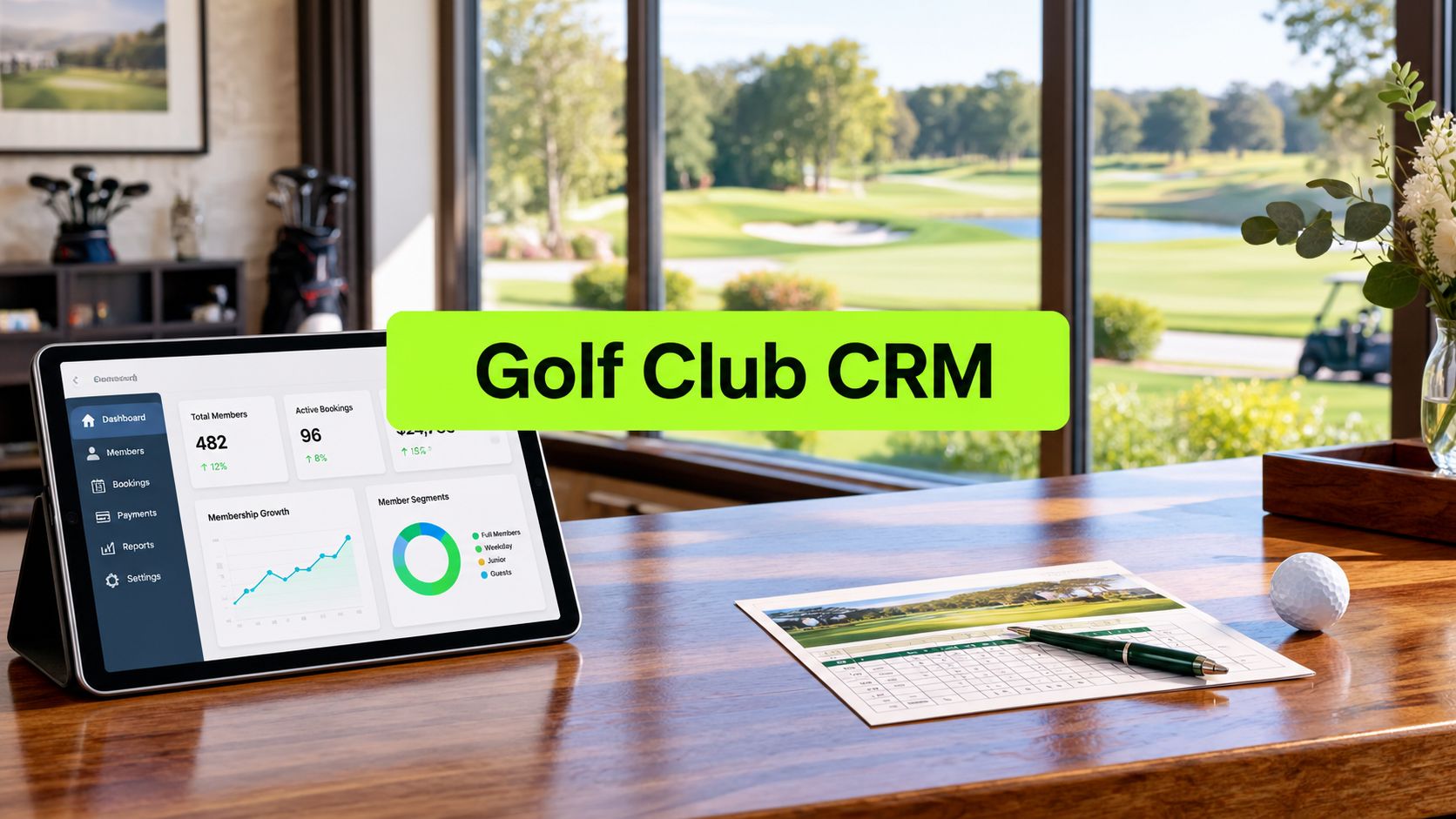
Great Britain recorded 14% more rounds in 2025 than in 2024, while England saw more than 5.75 million WHS scores submitted in the first half of 2025, up 29% year on year. A CRM for golf clubs is now the strategic operating layer many facilities need to manage that influx without sacrificing member experience.
A general manager can feel the pressure in several places at once. The waiting list grows, visitor demand arrives through the website and telephone, the membership secretary keeps a separate spreadsheet, and the professional team holds useful customer knowledge in personal inboxes. Meanwhile, existing members still expect prompt answers, smooth renewals and communication that reflects how they use the club.
That changes the commercial question. A club may not need another campaign to create interest. It may need a system that decides who should be contacted, when capacity is available, which waiting-list applicant is ready to progress, and which member is disengaging. CRM software won't solve those problems by itself, but a well-designed operating process can give staff the visibility and consistency that growth demands.
How UK Golf Demand Is Reshaping Club Operations
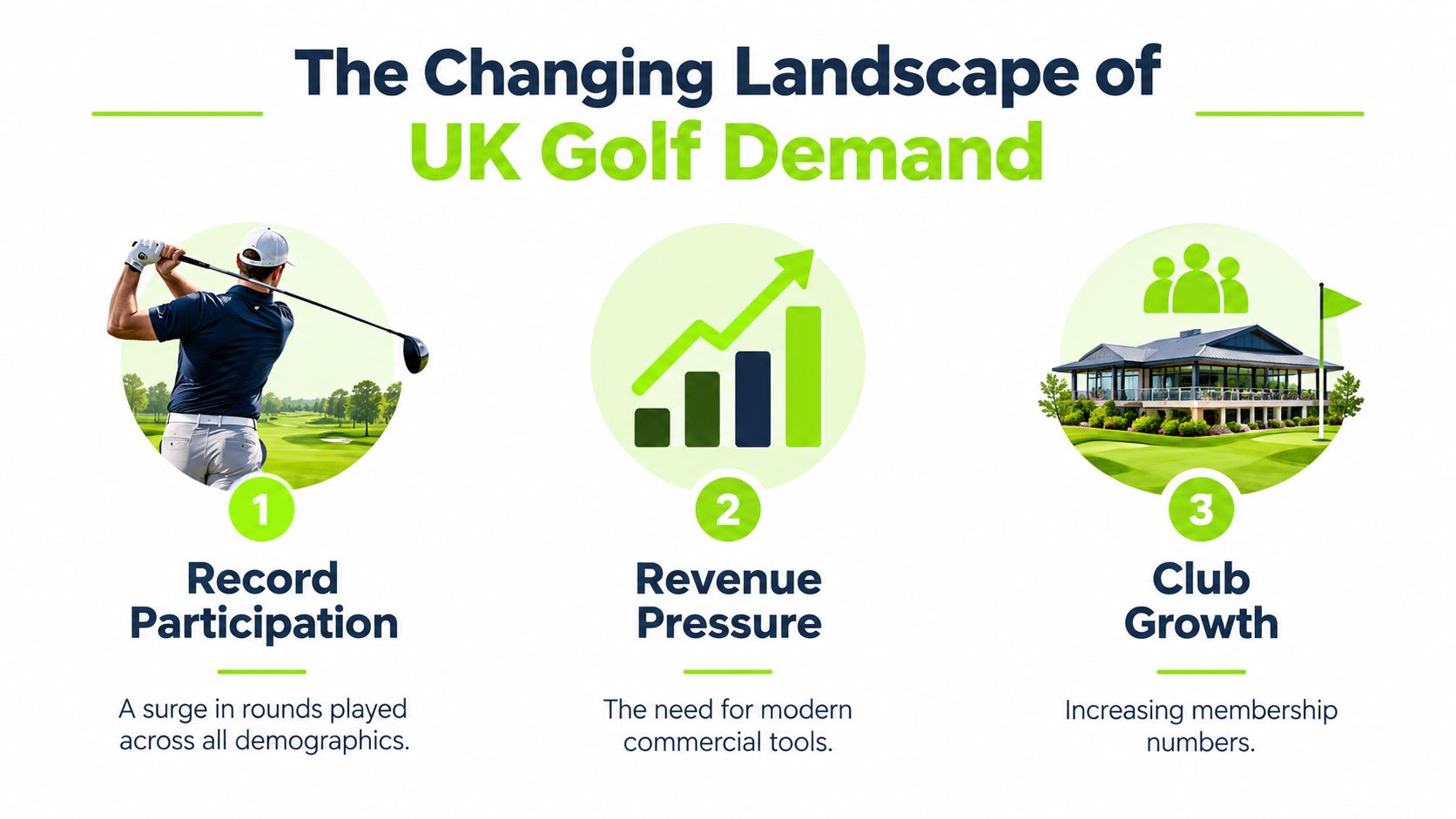
Great Britain recorded 14% more rounds in 2025 than in 2024, with England also reporting a sharp rise in submitted WHS scores, according to The Golf Business. The commercial problem for many UK clubs is no longer generating interest. It is handling demand without weakening member experience.
Consider a Saturday tee sheet running at 98% capacity. A new enquiry may still have commercial value, but accepting another member could worsen booking access for existing members. The membership team must decide whether to add the applicant to a waiting list, offer less popular playing times, or direct the enquiry towards a different membership category. That decision needs current capacity data, applicant preferences and a consistent priority rule.
The same pressure appears across the club. Visitors arrive through the website and telephone, applicants expect clear updates, and existing members want prompt answers and fair access. A club with spare capacity can use rising participation to increase visitor income and new memberships. A full club must protect retention while managing demand it cannot immediately accommodate.
Demand can expose weak operations
Manual systems often break between teams. A receptionist may record a telephone enquiry, a PGA professional may host the visit, and a committee member may approve an application. If those interactions remain in separate inboxes, notes or spreadsheets, staff cannot reliably see ownership, status or the applicant's history.
A CRM gives those handoffs one working record. It can distinguish a visitor seeking weekday golf from a family considering full membership, while preserving the context for a relevant conversation.
Commercial principle: Strong demand makes operational capacity and member experience growth constraints in their own right.
The practical test is whether the club can handle rising interest without longer response times, irrelevant messages or inconsistent treatment of applicants. If it cannot, CRM should be treated as infrastructure for controlled growth, not just marketing software.
Defining CRM as a Commercial Operating System
A contact database tells you who someone is. A commercial CRM tells the club what has happened, what matters now and who owns the next action.
That distinction affects every revenue stream. A membership enquiry may become a visit, an application, an approved joining decision and eventually a renewal. A visitor may book repeatedly without ever receiving a relevant membership invitation. A society organiser may be valuable because of repeat bookings and clubhouse spend, not just because they once filled in a form.

The operating system model connects those journeys. It gives the front desk, membership team, PGA professionals, commercial managers and committee a shared view of activity, ownership and outcomes. That doesn't mean every staff member needs access to every field. It means the club establishes one dependable source of commercial truth.
The difference between storage and control
A spreadsheet can store names. An email platform can send broadcasts. Booking software can manage tee times. Each tool may perform its own task well, but the club still needs to understand how the tasks connect.
A useful CRM should answer questions such as:
- Which waiting-list applicants have completed a visit?
- Which members are approaching renewal with declining engagement?
- Which visitor bookings came from a local campaign?
- Which society organisers need a rebooking conversation?
- Which team member owns the next action?
This is why CRM implementation is a management decision, not a software purchase. The club must agree how a lead moves, when a member changes segment and what counts as a completed action. Without those rules, the platform becomes another place to enter incomplete information.
The commercial benefit comes from consistency. Staff can work from the same stages, the same definitions and the same priorities instead of relying on personal memory. That makes performance visible, supports better handovers and helps committees discuss revenue with evidence rather than isolated anecdotes.
Essential Data Fields and Customer Intelligence
A golf club CRM should capture the decisions behind each relationship, not just names and email addresses. The record needs enquiry source, contact attempts, visit history, membership status, interests, complaints, feedback and the next action, as explained in this practical guide to golf-club retention marketing and this guide to structuring your golf club database.
Each field should change what the team does. Source data shows which channels produce serious enquiries. Visit history identifies people who have experienced the club in person. Interests separate full membership from flexible membership, junior golf, societies, lessons and visitor play.
Build the record around decisions
Use a defined set of fields:
- Identity and consent: Record contact details, communication preferences and the consent or lawful basis relevant to marketing.
- Commercial source: Capture website, referral, open day, visitor booking, telephone, social channel or staff referral.
- Lifecycle stage: Apply clear statuses such as new enquiry, contacted, visit booked, application submitted, waiting list, joined, renewed, lapsed or closed.
- Experience history: Log visits, conversations, complaints, feedback and meaningful interactions.
- Commercial fit: Record playing preferences, preferred times, relevant household details, society requirements and stated interests.
- Ownership and action: Assign one responsible person, a due date and a specific next step.
Example record: Jane Smith, source: visitor booking on 12 March, stage: visit booked, interest: flexible membership, next action: PGA professional to call on 14 March, owner: Membership Secretary. A record like this makes the next action visible and gives the team enough context to avoid a generic follow-up.
Create a field only when staff will use it to prioritise, personalise or report. Extra fields increase administration and encourage incomplete records.
Waiting lists need careful structure. Record application date, eligibility, communication history, preferred membership type, readiness to join and the reason for any delay. Staff can then manage limited capacity consistently, explain progress clearly and avoid contacting applicants in an arbitrary order.
Retention data should show member experience before renewal becomes urgent. Usage, event attendance, lesson activity, feedback and unresolved complaints can reveal members who need attention while there is still time to improve their experience. A renewal date alone cannot show that risk.
Critical Integrations and Automated Workflows
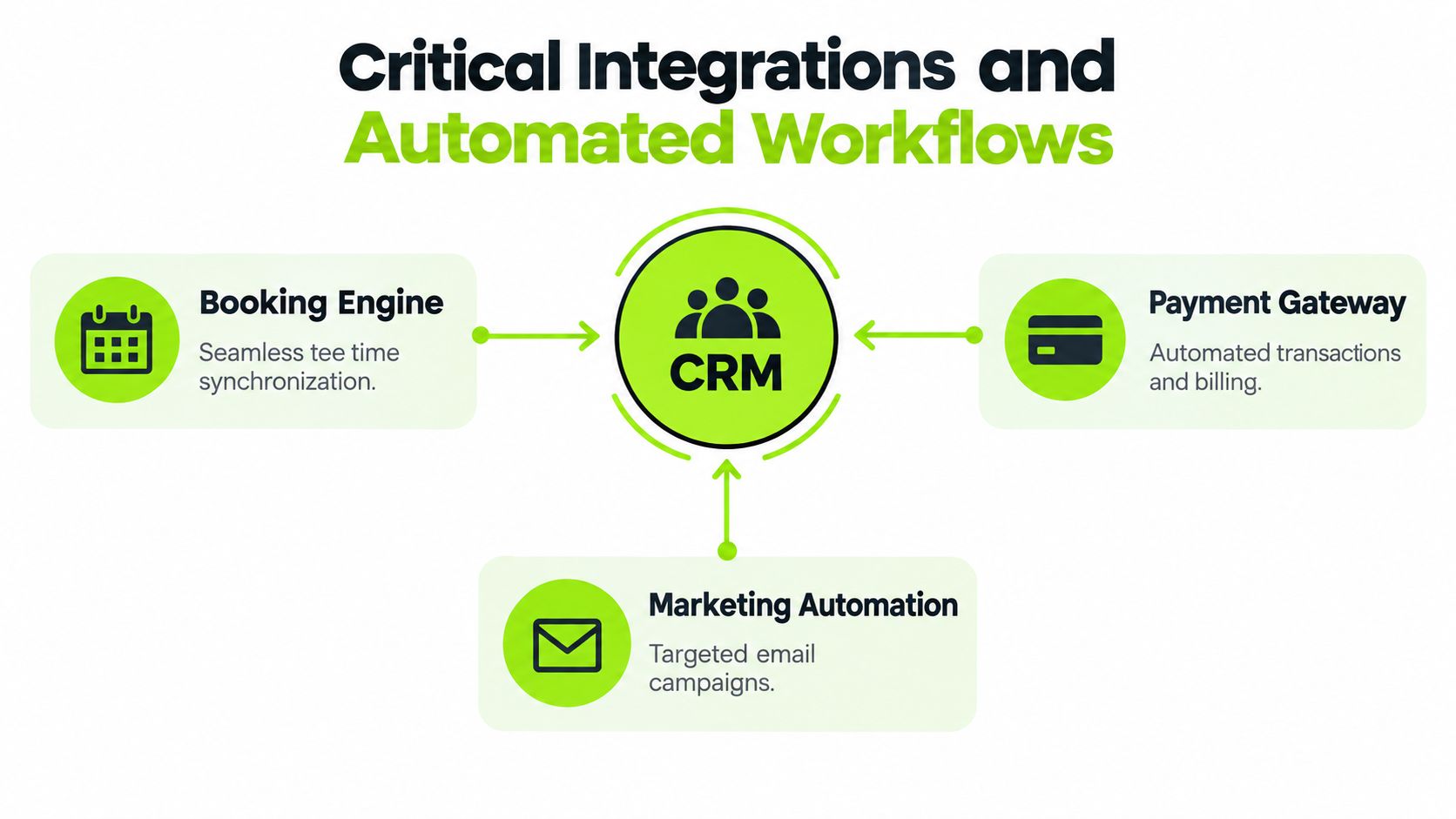
A club can have strong demand and still deliver a poor member experience if its systems do not share information. A booking engine, payment gateway and marketing platform should feed relevant events into the CRM, giving staff one working view of capacity, customer activity and the next action. The right level of integration depends on the club's size and operating discipline. A simpler system may be easier to maintain, while a connected setup reduces rekeying and exposes gaps that manual records hide.
A booking engine can add visitor tee times, repeat play, society reservations and cancellations to the customer record. Payment data can show whether an application, deposit, membership fee or event booking has progressed. Marketing automation can then respond to those events with communications matched to the customer's position, rather than sending the same promotion to everyone.
Choose integration around operational pressure
A standalone platform may suit a small club with limited products and a disciplined team. It can centralise enquiry notes and show the pipeline without creating a large technical project. The risk is that staff still need to check separate systems for bookings, payments and engagement.
Connected systems become more useful when a club serves different customer groups, operates across sites or manages restricted membership capacity. They allow staff to segment using actual behaviour, see whether communications lead to visits or bookings, and keep waiting-list updates consistent.
Practical workflows include:
- New member welcome: Send joining information, then assign personal contact to the appropriate team member.
- Waiting-list progression: Alert staff when capacity opens and provide applicants with clear updates.
- Visitor development: Identify repeat visitors for a relevant membership conversation.
- Society rebooking: Store organiser history, deposit status and preferred dates for timely renewal contact.
- At-risk member review: Flag low engagement, unresolved feedback or an approaching renewal for human follow-up.
Automation should remove predictable administration while leaving judgement with staff. Exclusion rules prevent irrelevant messages, ownership prevents tasks being abandoned, and handovers ensure sensitive cases reach a person. A club should test each workflow against real capacity limits before activating it. GolfRep's guide to golf-club automation offers further guidance on structuring these processes.
Key Performance Indicators for Golf Club CRM
A CRM earns its budget allocation when it improves commercial decisions and member experience. The dashboard should show where demand is building, where capacity is constrained and which customer journeys require staff attention.
Response time is a useful operational KPI. In the UK golf-club context, responding within 5 minutes can produce conversion rates 98% higher than replying later, while leads are reported to be 10 times less likely to respond after that window. Waiting 30 minutes can reduce conversion odds by up to 100 times compared with a 5-minute response, according to GolfRep's golf-club lead-conversion analysis.
The management question is practical: when do enquiries arrive, who owns them, which channels are monitored and where can an acknowledgement lead to a proper conversation? A club facing strong demand may need the dashboard to manage queue quality and service standards, not merely chase more leads.
Build a useful management dashboard
A focused dashboard should answer these questions:
| Area | Management question |
|---|---|
| Enquiries | How many new opportunities entered each source and stage? |
| Speed | How quickly did the club make the first meaningful response? |
| Progression | How many enquiries became visits, applications or bookings? |
| Waiting list | Which applicants are ready, active or no longer suitable? |
| Retention | Which members need attention before renewal? |
| Revenue | Which journeys produced membership, visitor, society or event income? |
For a broader framework on attribution and reporting, see how to measure marketing effectiveness. Reporting should connect activity with outcomes, while keeping capacity and member experience visible beside revenue.
Response delays need management attention. The average response time to membership enquiries has been reported as 47 hours and 32 minutes, with delays often leaving pipelines at 0% conversion because prospects have joined another club, as discussed in GolfRep's membership-marketing analysis. Treat that figure as a warning about ownership and process design, not as a target.
Retention belongs on the same dashboard. UK benchmarking cited by GolfRep reports annual retention rates of 92% to 94%, implying 6% to 8% churn each year. Its analysis also reports an average of 94 new members in 2023 and waiting lists at 46% of clubs, averaging 51 people, in its analysis of golf-member retention. A club can add members while losing valuable ones through weak onboarding or late intervention.
Use the dashboard in management meetings. Review exceptions, assign actions and test whether the workflow changed the result. Email volume and record count are activity measures, not proof of commercial progress.
Strategic Implementation and Vendor Selection
The safest CRM project starts with the club's operating reality, not a vendor demonstration. Before comparing platforms, map how an enquiry, waiting-list application, booking, payment, complaint and renewal currently move through the organisation.
A four-phase approach keeps the decision grounded.
Phase one, audit the commercial journey
Interview the people who handle customers every day. Follow a visitor from booking to check-in, a new member from application to welcome and a waiting-list applicant from initial contact to a place becoming available.
Mark every handover, duplicate entry and point where ownership becomes unclear. The output should be a short list of required workflows, not a long catalogue of software features.
Phase two, define the operating rules
Agree the stages, owners, service standards and required fields. Decide who can change a lifecycle stage, how staff record a next action and which communications need approval.
A vendor should be able to demonstrate golf-specific scenarios, including waiting-list management, society deposits, member renewals, visitor-to-member journeys and capacity-aware communications. Ask to see the workflow in practice rather than accepting a generic feature list.

Phase three, migrate and pilot
Clean the existing data before importing it. Remove duplicates, separate active members from prospects and preserve useful history. Then pilot one commercial journey, such as membership enquiries or waiting-list progression, with a small group of staff.
A phased rollout makes problems visible while they remain manageable. It also gives the team a reason to use the system every day.
Phase four, govern and improve
Assign a system owner, schedule regular data reviews and make dashboard usage part of management routines. Train staff on the process, not just the buttons.
GolfRepOS is one option that gives a club an organised place to receive, qualify, assign and progress membership enquiries from first contact to a booked visit and membership outcome. Other platforms may suit clubs with different budgets, integrations or internal capability. The decision should follow the workflow audit, not precede it.
Real-World Case Studies in UK Club Growth
A multi-site operator may need one commercial view across properties, while a single-site members' club may be dealing with a waiting list, limited staff time and uneven demand. The CRM requirement changes with that operating reality.
One UK example in The Revenue Club's golf-club CRM review describes a multi-site operator using HubSpot across 9 golf courses. The group managed 160,000 contacts, 5,500 members and more than £14 million in revenue, with 30 sales seats supporting nearly 4 million marketing emails sent in 2022.
The useful lesson is operational. A CRM can give a resort or hotel group shared visibility of demand, campaign history and customer relationships, while local teams retain responsibility for relevant conversations. The platform matters less than whether it gives staff a reliable view of who owns the next action.
Smaller clubs can apply the same discipline without copying the same scale. Start with connected records for:
- the person, household or organisation;
- the journey from enquiry to visit, application or booking;
- the relationship history, including activity, feedback, ownership and next action.
Retention provides another practical test. Research from Manchester Metropolitan University on retaining golf-club members describes clubs that improved retention processes with England Golf support. One club grew membership by more than 8% in two years, while another reduced its joining fee and increased membership by almost 6% from 2015 to 2017.
Those outcomes cannot be assigned to CRM alone. Pricing, onboarding, retention activity and the member experience all affect growth. The CRM makes those actions visible, repeatable and measurable, so managers can see whether a waiting-list contact, new member or renewal cohort has received the right attention.
The Hillier Hopkins Members' and Proprietary Golf Clubs Survey 2024/25 adds useful context. 71% of members' clubs used member referrals as a marketing method, and the average club saw 21 members move from waiting list to membership at the last renewal. The survey also reported that 59% of members' clubs had more than 600 playing members.
For a UK club, referral source, waiting-list status and renewal cohort therefore belong in the CRM. They support decisions about follow-up, capacity and member experience rather than serving as administrative decoration.
Integrating CRM into the GolfRep Growth System
CRM sits inside a wider commercial system. At GolfRep, the working model is ATTRACT → NURTURE → CONVERT → RETAIN, and each stage requires different decisions.
Attracting demand means reaching the golfers, organisers, visitors and event prospects who fit the club. Nurture means giving each group relevant information based on its intent and timing. Convert means moving a qualified opportunity towards a visit, booking, application or payment. Retain means protecting the relationship after the transaction through onboarding, engagement, feedback and renewal planning.
The CRM connects those stages without flattening them into one generic mailing list. A visitor shouldn't receive the same message as a waiting-list applicant. A new member shouldn't be treated like a long-standing member approaching renewal. A society organiser needs a different process from a golfer considering a flexible membership.
Capacity must shape the workflow
The right commercial action depends on the club's current constraint. If weekday tee times are underused, the CRM can support targeted visitor and society activity. If the course is full, the focus may shift towards waiting-list communication, member experience and identifying the most appropriate route into membership.
That is why predictable revenue doesn't come from automation alone. It comes from making capacity, customer behaviour and team responsibility visible enough to guide action. A CRM can help the club decide when to nurture, when to prioritise, when to pause promotion and when to intervene personally.
The practical starting point is a review of the current pipeline and member journey. Find where information disappears, where staff lack ownership and where customers receive inconsistent treatment. Then improve one constraint, measure the outcome and move to the next.
The commercial lesson is straightforward: CRM for golf clubs is not an address book with email features. It is the shared operating layer that helps a club manage demand, capacity, waiting lists, member experience and revenue as one connected system.
GolfRep helps golf clubs improve acquisition, sales processes, CRM follow-up, conversion and retention across membership, visitor golf, societies and events. If you'd like to identify the operational constraint limiting predictable revenue at your club, visit GolfRep to discuss a practical growth system built around your customer journeys.
Ready to tap into our proven growth system?