Lead Generation Tracking for Golf Clubs

A golf club can finish the month with a healthy list of enquiries and still struggle to explain where its next members will come from. The membership team may know how many forms arrived, how many calls were answered, and how many visits were booked, but those figures often sit in separate spreadsheets, inboxes, call logs, and staff memories.
That gap is where marketing budgets become difficult to manage. Lead generation tracking should connect the first click, enquiry, conversation, visit, application, and signed membership. At GolfRep, we treat that connected journey as the practical foundation for a predictable pipeline, not as an administrative exercise.
Why Most Golf Clubs Track the Wrong Metrics
More enquiries don't automatically mean more members. A campaign can produce a busy inbox while attracting people who aren't suitable for the club, aren't ready to visit, or never receive a timely response. If the committee only sees enquiry volume, it may increase spend on the source creating the most noise rather than the source creating the most valuable membership conversations.
This is the hidden gap between lead generation and membership growth. A form submission is an event. It isn't yet a booked visit, a completed application, or a signed member. The distinction matters because golf membership decisions often include several conversations, a tour of the facilities, a trial round, discussions about packages, and follow-up after the initial enquiry.
The practical meaning of sales prospecting is useful here. Prospecting involves identifying and developing potential buyers, while tracking must show what happens after that potential buyer raises their hand. A club needs to know whether the enquiry was contacted, qualified, invited to visit, attended, progressed, paused, or lost.
The figures that create false confidence
Clubs commonly report:
- Enquiry volume: How many forms, emails, and calls arrived.
- Cost per enquiry: How much advertising spend produced each recorded contact.
- Booked visits: How many prospects agreed to come to the club.
- Membership starts: How many new members joined during a period.
Each measure has a place, but none is sufficient alone. Cost per enquiry can look attractive when the resulting contacts are poorly qualified. Booked visits can look healthy when attendance is weak. Membership starts can conceal a long delay between the original campaign and the eventual decision.
UK lead-generation benchmarks illustrate why the middle of the funnel deserves attention. A UK-focused guide reports an average lead-to-opportunity conversion rate of about 13%, with roughly 84 days for a lead to become a genuine sales opportunity. It reports that around 6% of those opportunities convert into a sale, after a further 18 days on average. The benchmark source isn't a golf-specific forecast, but it demonstrates why clubs shouldn't judge campaigns on immediate form fills.
Practical rule: Count enquiries, but manage opportunities and signed members.
The questions a committee should be able to answer
A useful tracking system should answer which campaign generated the enquiry, which landing page was used, who owns the follow-up, how quickly the club responded, whether a visit was booked, and what happened next. It should also show which sources create members who remain engaged, rather than just contacts who entered the database.
That level of visibility supports a more credible discussion of the real ROI of golf club marketing. Without it, marketing meetings tend to revolve around activity. With it, managers can discuss pipeline quality, stalled stages, missed follow-ups, and budget decisions based on outcomes.
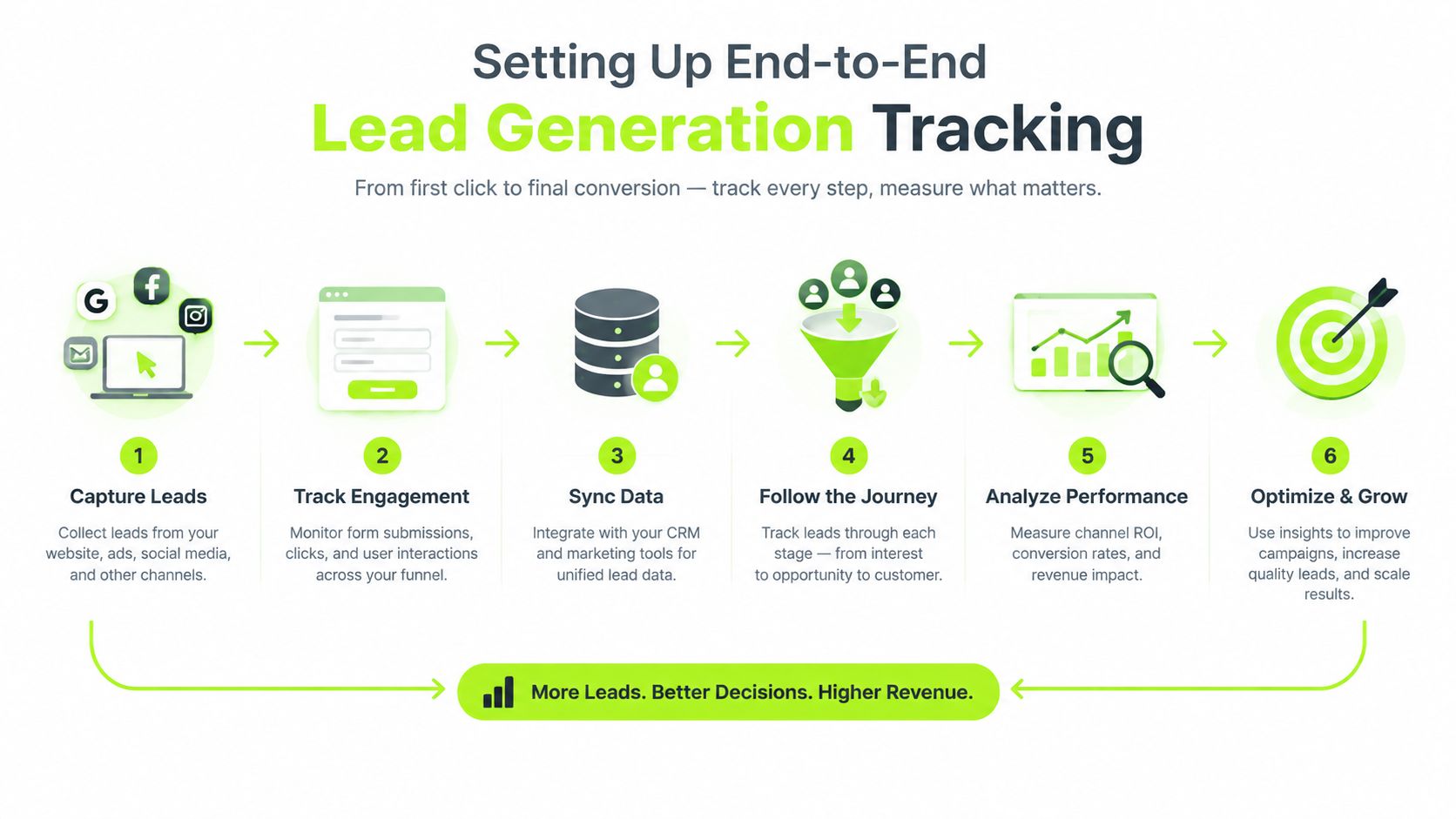
Setting Up End-to-End Lead Generation Tracking
A reliable setup doesn't need to begin with complicated technology. It needs clear definitions, consistent source data, and a process that captures offline activity as carefully as digital activity.
Start with a consistent source structure
Every campaign link should carry a clear source, medium, and campaign label. A Google search campaign, a Facebook advert, an email newsletter, and an organic search visit shouldn't all arrive in the CRM as “website enquiry”.
Use a naming convention that staff can understand. For example, a campaign might record:
- Source: Google, Facebook, email, referral, or organic search.
- Medium: Paid search, paid social, email, organic, or referral.
- Campaign: The membership offer or seasonal activity.
- Landing page: The specific page that generated the enquiry.
The source information should transfer into the CRM when someone submits a form. Don't rely on a membership secretary to remember to ask where every person came from, although a “How did you hear about us?” field can provide useful supporting context.
Define meaningful conversion events
Track the actions that represent real progress. A completed membership enquiry form is useful, but so are a phone conversation, a booked visit, an attended visit, an application, and a signed membership. Each event should have a timestamp and an owner.
This distinction prevents a common reporting error. Advertising platforms may count a form submission as a conversion, while the club needs to know whether that person answered the phone, visited the course, and joined. Both records should exist, but they shouldn't be treated as equivalent outcomes.
Connect digital and offline records
Phone calls need a place in the same journey as web forms. Staff should record the source where known, the enquiry type, the next action, and the current stage. In-person conversations at the clubhouse, open days, competitions, and referrals should enter the pipeline too.
The CRM becomes the working record, while advertising and analytics platforms provide acquisition detail. A system such as GolfRep's predictable revenue pipeline approach brings those elements together by combining lead capture, structured follow-up, and reporting.
Useful test: Select one recent member and trace the record backwards. If you can't identify the original source and the key handoffs, the tracking setup has a gap.
Understanding Channel Performance and Conversion Rates
Channel performance becomes clearer when clubs compare like with like. Blended figures can hide important differences between a search campaign aimed at people actively looking for membership and a social campaign designed to introduce the club to a wider audience.
A UK-specific dataset from Ruler Analytics, based on more than 5 million tracked conversions across 13 industries, reports an average website visit-to-lead conversion rate of 5.13%. Its channel figures include 5.4% for paid search, 5.8% for AI referral, 4.9% for email, 4.9% for organic search, 2.23% for organic social, and 2.11% for paid social. These figures come from a broader UK lead-tracking benchmark, not a golf membership forecast, so clubs should use them as a comparison point rather than a promised result. The benchmark dataset shows why channel segmentation matters.
Channel Conversion Rate Benchmarks
| Channel | Conversion Rate | Typical Use Case |
|---|---|---|
| Paid search | 5.4% | Capturing active membership searches |
| AI referral | 5.8% | Visits referred through AI platforms |
| 4.9% | Re-engaging prospects and existing contacts | |
| Organic search | 4.9% | Capturing non-paid search demand |
| Organic social | 2.23% | Building awareness and community interest |
| Paid social | 2.11% | Reaching defined local audiences |
The spread between paid search and paid social in this dataset is more than 2.5 percentage points, so treating the channels as interchangeable can lead to poor budget decisions. A social campaign may still have a role, particularly when it supports awareness or retargeting, but its performance should be judged against its intended job.
Compare outcomes, not only lead rates
A channel with a strong visit-to-lead rate isn't automatically the best membership channel. Add the next stages to the report: qualified enquiry, booked visit, attended visit, application, and signed member. Then segment by campaign and landing page.
This exposes the difference between efficient capture and valuable acquisition. One campaign may attract many low-intent enquiries, while another creates fewer contacts but more serious visits. The second campaign could deserve greater investment even if its initial conversion rate looks less impressive.
Referral activity deserves the same discipline. Hillier Hopkins reports that 71% of member clubs rely on member referrals for marketing in its UK golf-club report. The report highlights the importance of referral activity, but referral enquiries still need to be tracked through booked visits, attendance, applications, and membership outcomes.
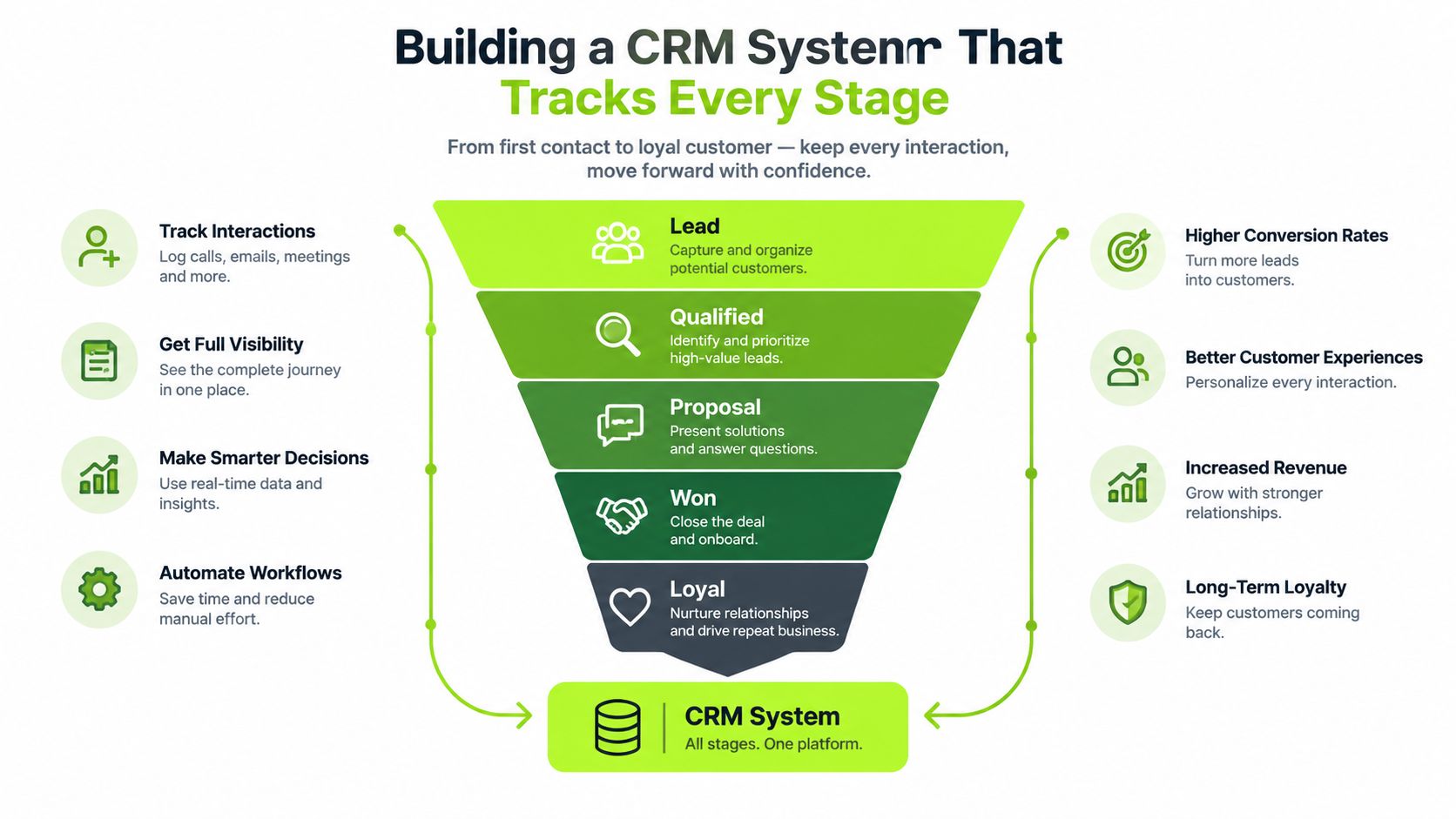
Building a CRM System That Tracks Every Stage
A CRM should make the next action obvious. It shouldn't become another database that staff update only before a committee meeting.
Start with a small number of stages that match the club's actual membership process. A practical pipeline might include new enquiry, contacted, qualified, visit booked, visit attended, application in progress, joined, lost, and nurture. The names can vary, but the definitions must be written down so every staff member uses them consistently.
Build the record around action
Each enquiry should carry the information needed for a useful handoff:
- Source and campaign: Where the enquiry originated.
- Enquiry type: Full membership, flexible membership, junior, family, ladies, corporate, or another relevant category.
- Owner: The person responsible for progressing it.
- Current stage: The last confirmed point in the journey.
- Last interaction: The most recent call, email, visit, or message.
- Next task: The action, owner, and due date.
- Outcome: Joined, lost, deferred, unsuitable, or still being nurtured.
The source field should remain attached to the record as it moves through the pipeline. If a lead is manually copied into another spreadsheet, or the original source is overwritten during a handoff, the club loses the ability to compare marketing activity with membership outcomes.
Automate the routine, not the relationship
Automation should acknowledge receipt, assign ownership, create reminders, and flag overdue tasks. It shouldn't replace the conversation that helps a prospective member understand the club's culture, course, facilities, and membership options.
Longer decision periods also need a structured nurture stage. A prospect who isn't ready to join today shouldn't disappear from the active record. Set a future task, record the reason for delay, and use relevant updates or invitations to maintain contact without sending irrelevant messages.
The UK B2B guidance compiled from more than 30 teams reports an average MQL-to-SQL conversion rate of 13%, while the top 10% reach 39% to 40% using behavioural lead scoring. It also reports an average sales cycle of 11.3 months, with 70% of that time occurring before vendor contact. The benchmark guidance isn't a direct golf-club benchmark, but it reinforces the operational lesson: define qualification rules, score meaningful intent, and don't mistake early-stage contacts for pipeline.
For broader ideas on process discipline, LiveDocument's sales improvement tips provide useful context. In a club, the equivalent is straightforward: make ownership visible, keep the next task current, and review stage movement regularly.
The Critical Role of Response Time in Conversion Tracking
A delayed response can make a well-targeted campaign look weak. The club may have generated a serious membership enquiry, but if nobody replies while the prospect is actively comparing options, the eventual result will be recorded as a marketing problem rather than a follow-up problem.
GolfRep's analysis reports an average golf-club response time of 47 hours and 32 minutes. It also states that a lead answered within one hour is five times more likely to convert than one left waiting 24 hours. The GolfRep response-time analysis provides a direct reason to report speed alongside source and conversion.
Measure the first human response
The CRM should record when the enquiry arrived and when a staff member first made meaningful contact. An automated acknowledgement can reassure the prospect, but it shouldn't be counted as the same thing as a personal reply.
Review response time by channel, day, and owner. A campaign may produce strong enquiries but weak membership results because calls arrive outside office hours, a form notification goes to an unattended inbox, or the responsible person is away. Without response-time data, those bottlenecks remain invisible.
GolfRep's practical guidance identifies a five-minute “golden window” for responding to new enquiries. The lead-management guidance positions that window as the most important operational target for improving conversion.
Design for the club's real working day
Most clubs don't have a large sales department. A workable system therefore needs routing and alerts, not a policy that depends on someone checking five separate inboxes throughout the day.
Use immediate notifications, a shared ownership queue, and escalation when an enquiry remains untouched. For missed calls, alerts that help improve response times can support the process by making sure staff know that a potential member tried to make contact.
The club should also record the reason for delay. If response times are consistently slow at weekends, the solution may be rota coverage. If calls are answered but not logged, the issue is process discipline. If staff respond quickly but visits don't progress, the club needs to inspect qualification, presentation, or follow-up quality.
A focused explanation of golf-club speed to lead can help committees turn response time from a vague expectation into a visible operating measure.
Creating a Unified Measurement Dashboard
A committee dashboard should show the journey, not just the top of the funnel. At minimum, it should connect source, campaign, enquiry type, owner, response time, pipeline stage, visit outcome, membership decision, and retention cohort.
Use different views for different decisions. A weekly operational view should highlight new enquiries, overdue tasks, response time, booked visits, and stalled records. A monthly management view should compare source-to-member conversion, cost per enquiry, cost per booked visit, and cost per signed member. A longer-term review should examine retention, usage, and spend by source.
Golfshake's 2025 UK membership view reported that 77% of golfers planned to renew, junior participation had grown by 10.5 percentage points, and the average age of UK members had fallen to 54.99. The Golfshake report suggests that clubs should track member type and lifecycle, not only acquisition volume.
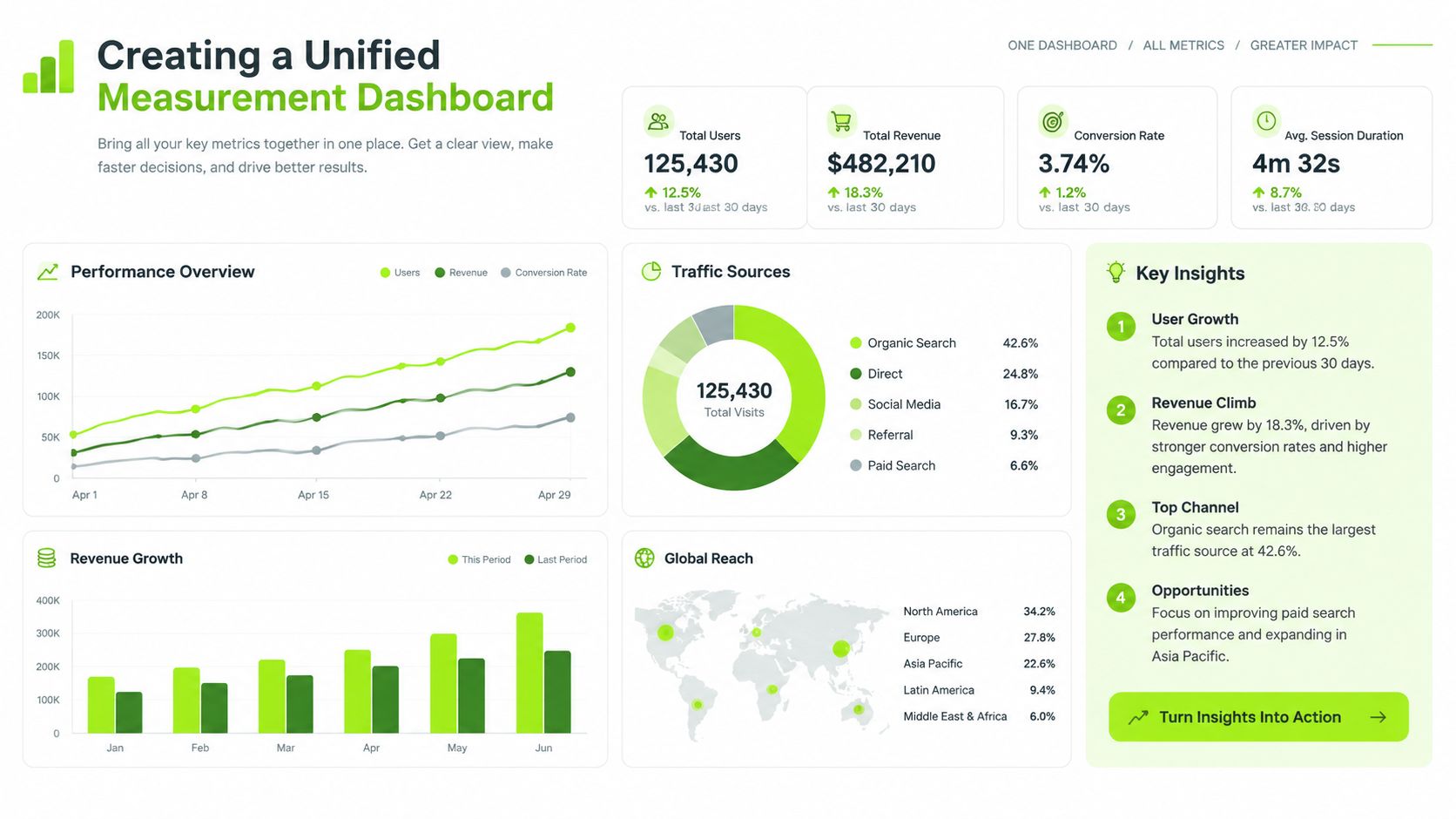
Create cohorts such as 0 to 3 months, 4 to 12 months, and 13 months or more, then compare retention, usage, and spend by original source. The purpose isn't to produce a complicated report. It's to reveal whether a campaign creates durable membership value or only a short-term sign-up.
Marketing attribution is already a mainstream measurement practice in UK-facing marketing. Econsultancy reported that 66% of company respondents carried out attribution on all or some campaigns and analysed the results. The attribution report marked a shift away from simple lead counting. For a golf club, the practical application is clear: preserve source data through the pipeline and review outcomes rather than celebrating activity alone.
GolfRep helps golf clubs connect advertising, enquiry capture, response workflows, CRM stages, and membership outcomes in one measurable pipeline. Visit GolfRep to discuss how your club can identify where enquiries are being lost and build a more predictable route from first click to signed member.
Ready to tap into our proven growth system?