8 Indoor Golf Marketing Ideas for UK Venues
Which hours, products and customer groups are underperforming at your indoor golf venue, and which are already working? That question matters more than choosing a new advert or social post. A venue can be busy at peak times and still leave capacity unused during weekday mornings, struggle to turn a first visit into a second booking, or see league players disappear when a season ends.
Indoor golf is its own commercial category, not a smaller version of club membership marketing. Operators need to match each offer to a specific constraint: off-peak bay occupancy, repeat play, winter demand, group spend or lapsed customer bookings. The strongest indoor golf marketing ideas start with booking behaviour, then connect promotion to a clear next step.
The eight ideas below solve different problems. Some are designed to sell quieter hours without cheapening peak slots. Others create reasons to return, package coaching and play, or reactivate past customers. Pick the idea that fits the gap in your venue, rather than running every offer at once.
1. Off-Peak Weekday Pricing and Bay-Filling Packages
A quiet bay at a busy time is a different problem from a quiet bay on a weekday morning. If evenings and weekends already book well, a blanket discount can reduce revenue from customers who would have paid the full rate. Treat quieter hours as a separate product instead.
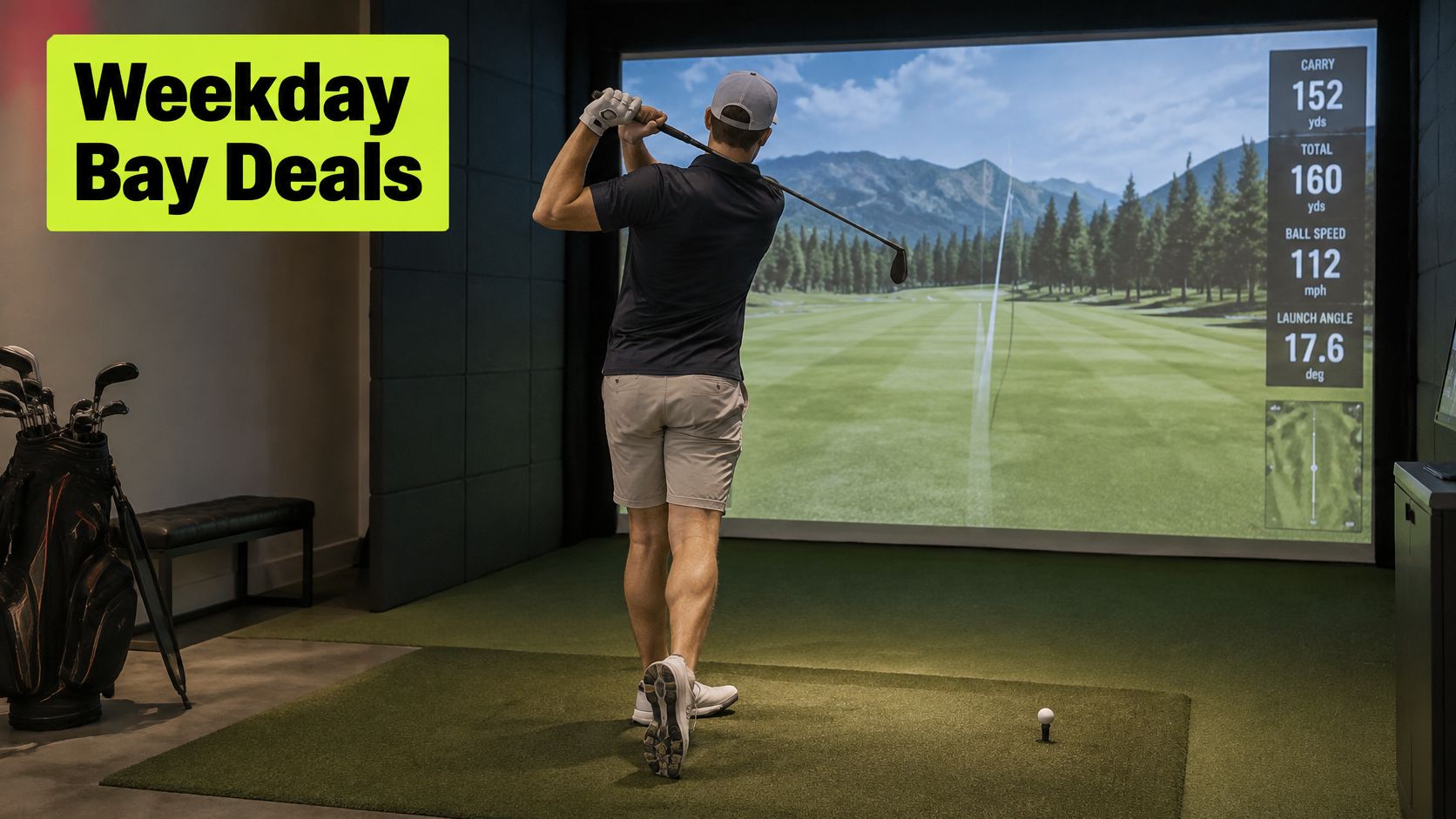
Start by reviewing bay occupancy by day and hour. Use the booking records from recent weeks to identify specific windows with spare capacity, then build an offer for those slots. A weekday morning rate, a lunchtime league or a set-length practice package could appeal to retirees, remote workers, students and local golfers with flexible schedules.
Protect peak value: Make the offer available only during the hours you want to fill, and keep standard pricing for busy sessions.
For example, a venue with empty bays in the morning could trial a fixed morning rate, clearly displayed on its booking page. The test should have a review date and a decision rule agreed in advance. If more people book but few return, the offer may be buying one-off visits rather than building a useful customer base.
Track occupancy in the promoted window, revenue per booked bay hour and second bookings from those customers. A lower price can make sense when the bay would otherwise sit unused, but it still needs to cover the costs associated with running the session. If the offer attracts customers who later book at full price, it may also serve as an introduction rather than just a discount.
Use the result to decide whether to keep, alter or withdraw the rate. The point isn't to make all hours cheaper. It's to price and package underused capacity differently, while preserving the value of the slots customers already want.
2. Taster Sessions Designed to Turn First Visits into Second Visits
A taster is most useful when it gives a newcomer an enjoyable first experience and makes the next visit easy to picture. Selling a short bay booking may bring someone through the door, but it doesn't give them a reason to return.
Build the session around a clear experience. That could mean a short introduction to the simulator, a guided game, or a coaching element led by a PGA professional. For someone who's new to golf, keep the language simple and the atmosphere low-pressure. For an existing golfer, focus on a useful output such as swing feedback or a practice goal.
The commercial measure is repeat behaviour, not just the number of tasters sold. Record the first-visit date and product in the booking system, then measure how many taster customers book again within a consistent period. If customers aren't returning, check whether the session was engaging, whether staff offered a relevant next step and whether booking another visit was straightforward.
Make the next visit part of the experience
At checkout, staff can recommend one next step based on what the customer enjoyed: another social session, a coaching appointment or a place in a league. A small credit against a follow-up booking can help, provided the terms are clear and the offer doesn't train customers to wait for discounts.
Give staff a natural closing line, such as asking whether the customer would prefer to practise the skill they worked on or try a different game next time. Then make the booking link prominent in the follow-up message.

Review repeat bookings by session type, staff member and time slot. That helps operators distinguish a weak offer from a good offer delivered at the wrong time. A well-run taster should leave the customer with a clear reason to come back, not just a receipt for a first visit.
3. Winter Leagues and Season-Long Competition Programmes
A league can turn sporadic bookings into a regular diary commitment, which makes it especially useful when outdoor golf is less appealing. It gives players a reason to return each week and gives the venue a clearer view of future bay demand.
Keep the format easy to understand. Set out how teams or individual players compete, how handicaps are handled and what happens if someone misses a session. Confusing rules can sour a social competition, while a simple format lets players concentrate on the game and the company.
Plan the renewal before the first fixture: Publish the next season's dates early enough for players to make a decision while they're still engaged.
A venue might run a Tuesday evening team league with a fixed booking slot and a season fee. A food offer or informal prize presentation on the final night can add to the occasion, but shouldn't be the only reason players attend. The playing format itself needs to be enjoyable for both regular golfers and less experienced teammates.
Promote the league through past booking data, local golf networks and the venue's own social channels. Explain who it suits, what's included and how to register. A league promoted only as “competitive golf” may put off people looking for a relaxed social night, so make the tone match the intended audience.
Measure more than sign-ups. Track attendance, food and drink spend, bay revenue, team participation and renewal for the next season. If a league fills but many players don't return, investigate the schedule, format and social experience before adding more teams. A stable league programme is built by making each season easy to join and worth renewing.
For practical ideas on making participation engaging, see Nim's real-world gamification videos.

4. Block Bundles and Monthly Pass Models for Simulator Bays
Pay-and-play keeps the first purchase simple, but it doesn't give regular customers a reason to commit beyond their next booking. A block of hours or an off-peak pass can create a more predictable relationship, particularly for local golfers who want frequent practice without taking up a full club membership.
The offer must fit the venue's capacity. A pass that allows unrestricted booking at busy times can displace customers who would have paid the standard rate. An off-peak-only pass or a prepaid block with clear booking conditions can give regulars value while protecting peak availability.
Make the terms easy to understand
Tell customers what the package includes, when it can be used, how booking works and what happens when it expires. Unclear expiry rules may create complaints and undermine trust. The package should feel like a useful way to plan future play, not a trap that relies on unused hours.
A local venue could sell a fixed block of practice time that customers use over a stated period. Reminders showing the remaining balance and suggesting a booking help customers get value from the purchase, while also prompting the next visit. If customers tend to buy another block before finishing the first, that's a good sign the model suits their habits.
Track block sales, hours used, expiry complaints and repurchase behaviour. Compare the effective revenue from package hours with what those bays could have earned through standard bookings. That comparison matters: prepaid cash is helpful, but it isn't automatically incremental revenue if the pass fills peak slots at a steep discount.
Use a monthly pass only where the booking rules can protect capacity and the venue can explain them clearly. For operators with a strong base of repeat local players, a well-designed package can make planning easier for both customer and staff. For occasional visitors, ordinary pay-and-play may remain the better fit.
5. PGA-Led Coaching Pathways That Build Long-Term Customers
A single lesson may solve an immediate need, but a coaching pathway gives the customer a reason to keep practising. It also helps the coach recommend an appropriate next step instead of leaving the player to decide what to book without guidance.
Build the pathway around customer progress. A beginner might move from an introductory lesson to a short course, then to practice sessions or a social league. A golfer seeking better ball striking may need a swing assessment followed by focused practice. The offer should reflect the customer's aim, not force every player through the same sequence.
For example, a venue could offer a beginner programme with an initial assessment, follow-up coaching and a final recommendation. At the end of each session, the coach records the player's goal and what to work on next. That note gives the next coach or front-desk colleague a useful starting point and helps the customer understand how each visit fits together.
Connect coaching to playing opportunities
A programme can lead naturally into a practice block, league or social session. That doesn't mean every lesson should become a sales pitch. The coach's recommendation needs to be relevant to the player's progress and confidence.
Track how many customers move from an initial lesson to further coaching, and how many continue into regular practice or organised play. Review the pathway with the coaches, because a weak progression may reflect an unclear offer, limited availability or a mismatch between the lesson and the customer's goal.
For help shaping a structured offer, see GolfRep's guidance on golf coaching courses. The commercial value comes from a player who knows what to do next and chooses to keep improving at your venue.
6. Corporate and Social Group Bookings with Food and Beverage Attachment
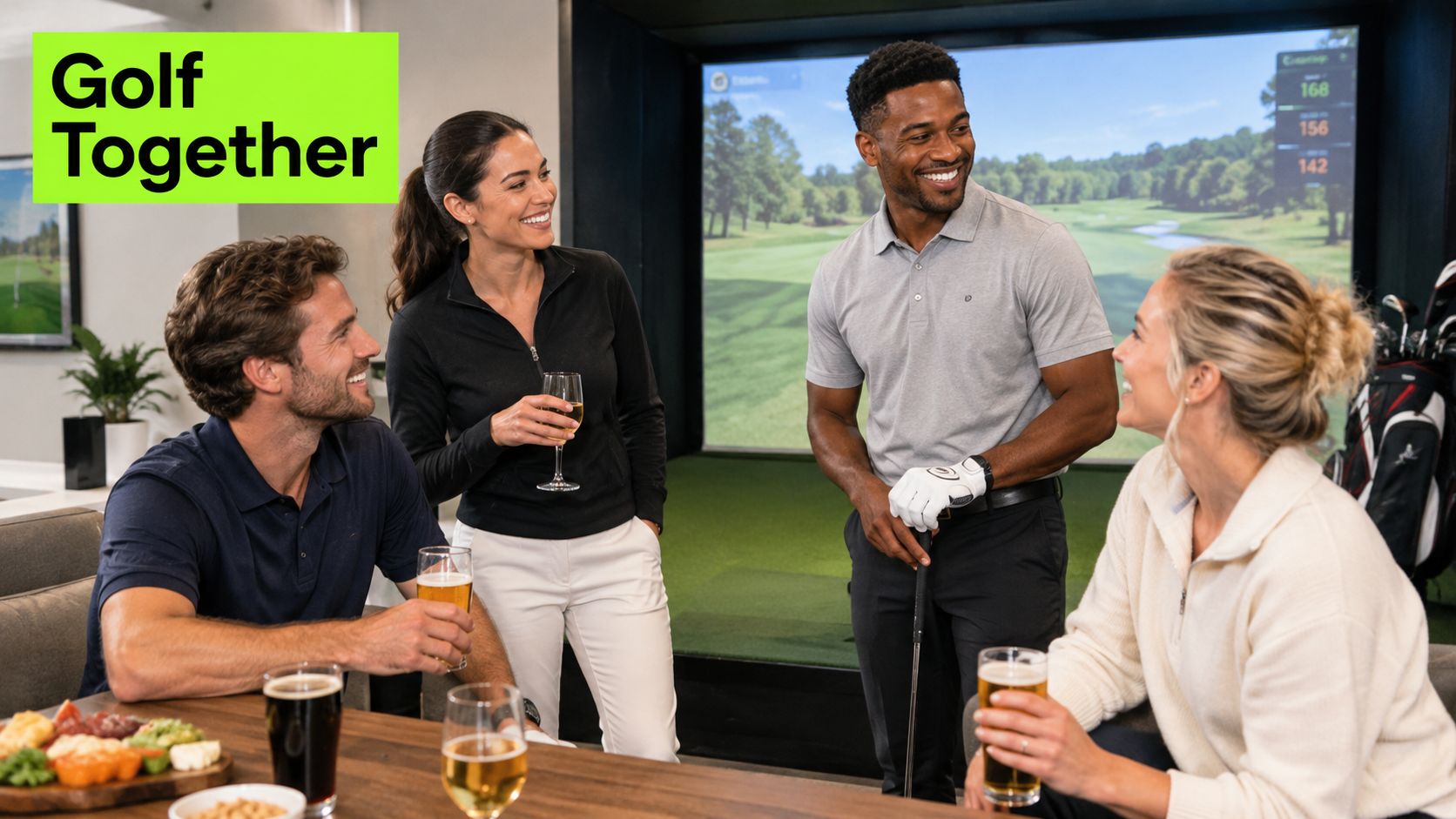
Group bookings can sell several bays at once, but the booking value shouldn't stop at bay hire. Corporate team-building, birthdays, leaving parties and informal get-togethers all give venues a chance to combine golf with food and drink.
Package the occasion clearly. A group organiser should be able to understand what the session includes, how long it lasts, what food is available and how to secure the date. A guided team challenge can work well for mixed abilities, while experienced golfers might prefer a competition with a leaderboard. Avoid a one-size-fits-all package that assumes every group wants the same experience.
Sell the occasion, not just the simulator: A clear group offer helps organisers picture the event and makes it easier for staff to prepare.
A venue might offer a team session with reserved bay time, a simple challenge and a set menu. Agree the deposit and cancellation terms at booking, and ask the organiser about dietary needs and the group's playing experience in advance. Fixed food choices can help the kitchen and bar plan service without making the event feel impersonal.
Record revenue per group, including bay time and food and drink, rather than judging the campaign by booking count alone. Also note how the group found the venue, what occasion they booked and whether the organiser enquired about another date. A group that spends well but creates too much staff pressure may need a different package or operating plan.
Ask the organiser whether they'd like to discuss another event before the group leaves. Put a follow-up reminder in the booking system so the relationship doesn't depend on someone remembering to make contact. For ideas that also apply to golf-club events, see corporate golf day marketing.
7. Booking-Data Reactivation and Win-Back Campaigns
Past bookings tell a venue what customers have enjoyed and how recently they played. That information can support a useful win-back message, as long as the offer reflects the person's previous behaviour rather than sending the same promotion to everyone.
Start by defining a lapsed customer consistently. A player who booked regularly for practice may need a different message from someone who came once for a birthday. Segment by recency, frequency and product type, then connect each group to a suitable reason to return. For instance, a former league player might respond to a new season, while a first-time taster customer may prefer a guided session.
The message should feel personal and specific. Mention the kind of booking the customer made, offer a relevant next step and make it easy to book. A general newsletter can still have a place, but it isn't a substitute for a focused reactivation message.
Measure rebooking, not email activity
Track how many recipients book again, what they spend and whether they return for another visit. Compare segments so you can see which customer groups respond to which offers. If a campaign attracts bookings only when heavily discounted, weigh that revenue against the margin and the possibility that the customer would have returned anyway.
Use the booking platform or CRM to record campaign contact and subsequent visits. Keep the customer's communication preferences in view and follow the venue's consent and data-protection processes. A clean, relevant message is more useful than repeated reminders that don't match the customer's interests.
For broader guidance on bringing customers back, see GolfRep's article on golf club reactivation campaigns. For messages that land in the inbox, operators can also learn about email deliverability and sender reputation.
8. Local Search Visibility and Seasonal Demand Planning
Indoor golf venues are found differently from golf clubs. A prospective member searches for a club by name or reputation; a simulator customer types "indoor golf near me", "golf simulator hire" or "things to do" in their town. That puts the venue in local search competition with bowling alleys, escape rooms and entertainment venues as much as golf businesses. If the listing is thin, the prices are out of date or the booking link is buried, that customer books somewhere else within minutes.
Treat the business profile like a second shopfront. Keep opening hours, contact details and service descriptions accurate, and list the products a first-time searcher would look for: coaching, leagues, social sessions, corporate events, food and drink. Add current photographs of the bays so people can see what they are paying for. Ask for reviews when customers have enough experience to write something useful, typically after a league block or coaching programme, and respond professionally to whatever comes back.
The same discipline applies across local appointment businesses. These gym marketing insights from RecensioAI cover parallel ground for another category that depends on local search to fill capacity.
Let the booking history set the campaign calendar: a promotion pays when it matches a real gap in your own demand.
Indoor golf has its own demand shape. Winter brings golfers looking for regular competition while outdoor courses are wet or closed, December pulls in corporate and Christmas group spend, and weekday afternoons stay quiet almost regardless of season. Plot bookings, first-time customers, repeat visits and revenue by month from your own system, then time each product to the gap it fills. Promote leagues ahead of winter, group packages ahead of party season, and aim off-peak pricing at the hours that never fill on their own.
Prepare the booking path before any campaign goes live. The landing page should explain the product, show the relevant time slots and give one clear way to book or ask a question, and the front-of-house team should know who each offer suits. Then read results by product: which searches produce first-time customers, which campaigns fill quiet hours, which bring repeat players back. Local visibility wins the search. The offer and the booking experience win the visit.
How to Choose the First Idea to Test
Don't launch all eight ideas at once. First identify the commercial constraint with the clearest cost: empty bays during particular hours, first-time customers who don't return, league players who fail to renew, low group spend or past customers who have stopped booking. The best first test is the one that addresses a visible gap in your own operation.
Choose one offer that matches that problem. If weekday daytime capacity is the issue, test a time-limited off-peak package. If tasters sell but repeat visits are weak, improve the session's next step before increasing promotion. If winter bookings are dependable but disappear after the season, put renewal dates and the next league programme in front of players earlier.
Run a focused pilot over a defined period, such as six to eight weeks, and agree what success would look like before the campaign starts. Use a small set of measures that match the offer. That might include off-peak occupancy, second-visit rate, league renewal, block repurchase, group revenue or lapsed-customer rebooking. Don't rely on impressions or total bookings if the commercial question is whether customers return or spend more.
Keep the test simple enough for staff to deliver consistently. Make sure the booking page explains the offer, the front-of-house team knows who it suits, and the booking system captures the information needed to review results. If performance disappoints, find out whether the issue was the offer, the timing, the audience or the booking experience before deciding to stop.
Indoor golf marketing works best when it supports a broader commercial journey. Attract the right customer, give them a strong first experience, offer a relevant reason to return and make repeat play worth choosing. Not every venue has the same bottleneck, so measure the problem before changing the promotion.
If you want help identifying whether your venue's main constraint is demand, conversion or retention, GolfRep can map the pipeline and help test the right fix without discounting away the value of your offer.
Indoor Golf Marketing Ideas: 8-Point Comparison Guide
| Strategy | Implementation Complexity | Resource Requirements | Expected Outcomes | Ideal Use Cases | Key Advantages |
|---|---|---|---|---|---|
| Off-Peak Weekday Pricing and Bay-Filling Packages | Low to moderate | Occupancy data, booking system, targeted promotion | Higher use of quiet slots while preserving peak rates | Venues with empty weekday bays | Monetizes unused capacity; easy to test and measure |
| Taster Sessions Designed to Turn First Visits into Second Visits | Moderate | Staff or coach time, follow-up messaging, repeat-booking tracking | More first-time visitors return within 30 days | Venues seeking to convert newcomers into regulars | Creates a clear next step into coaching, leagues, or memberships |
| Winter Leagues and Season-Long Competition Programmes | Moderate to high | League administration, booking tools, scoring, prizes, event support | Recurring attendance and more predictable seasonal revenue | Venues with weaker winter or weekday demand | Encourages repeat visits and builds social connections |
| Block Bundles and Monthly Pass Models for Simulator Bays | Moderate | Package pricing, booking controls, expiry terms, customer reminders | Upfront cash flow and increased repeat bookings | Venues with a base of regular local players | Encourages commitment while offering flexible access |
| PGA-Led Coaching Pathways That Build Long-Term Customers | Moderate to high | PGA professionals, lesson plans, customer records, progress tracking | More lesson customers progress to courses, practice, or leagues | Venues with coaching capacity and beginner demand | Builds trust and links coaching to other venue services |
| Corporate and Social Group Bookings with Food and Beverage Attachment | Moderate to high | Event sales, staff coordination, food and drink service, deposit process | Higher revenue per booking and potential repeat events | Venues targeting businesses, parties, and social groups | Combines bay revenue with food and beverage spend |
| Booking-Data Reactivation and Win-Back Campaigns | Low to moderate | Clean booking data, CRM or email tools, campaign tracking | More lapsed customers return at relatively low acquisition cost | Venues with an established customer database | Makes targeted use of existing customer relationships |
| Local Search Visibility and Seasonal Demand Planning | Moderate | Updated business listings, review management, booking data, campaign planning | More local discovery and better-timed marketing | Venues seeking new local customers and seasonal demand | Supports low-cost visibility and data-informed promotion |
GolfRep helps golf businesses build targeted campaigns and structured customer journeys that support acquisition, conversion and retention. If you want to improve bay utilisation, repeat bookings or revenue from indoor golf, visit GolfRep to discuss the commercial constraint you're trying to solve.
Ready to tap into our proven growth system?