Google Ads for Golf Clubs That Drive Membership

Most advice about Google Ads for golf clubs starts in the wrong place. It tells clubs to increase traffic, add more keywords and generate more enquiries. In practice, many clubs don't have a traffic problem. They have a follow-up problem.
A paid search campaign can put a membership offer in front of a relevant local golfer. It can't make an unmanaged inbox answer on Saturday, route an enquiry to the right person, or persuade a prospect to attend a visit after the first conversation. Those operational steps decide whether advertising creates members or creates more unanswered messages.
The Real Reason Most Golf Club Ad Budgets Underperform
A club that doubles its advertising spend without fixing response handling may double the number of opportunities it loses. The issue isn't that Google Ads fails to create demand. The issue is that the club treats demand generation as the whole campaign and leaves demand conversion to manual admin.
UK evidence makes the risk clear. Golf clubs have been reported to take an average of 47 hours and 32 minutes to respond to membership enquiries, with some pipelines converting at 0% because prospects join elsewhere before follow-up occurs, according to the Hillier Hopkins Golf Clubs Report 2024-25. That isn't a minor service issue. It directly affects the commercial return from every click.
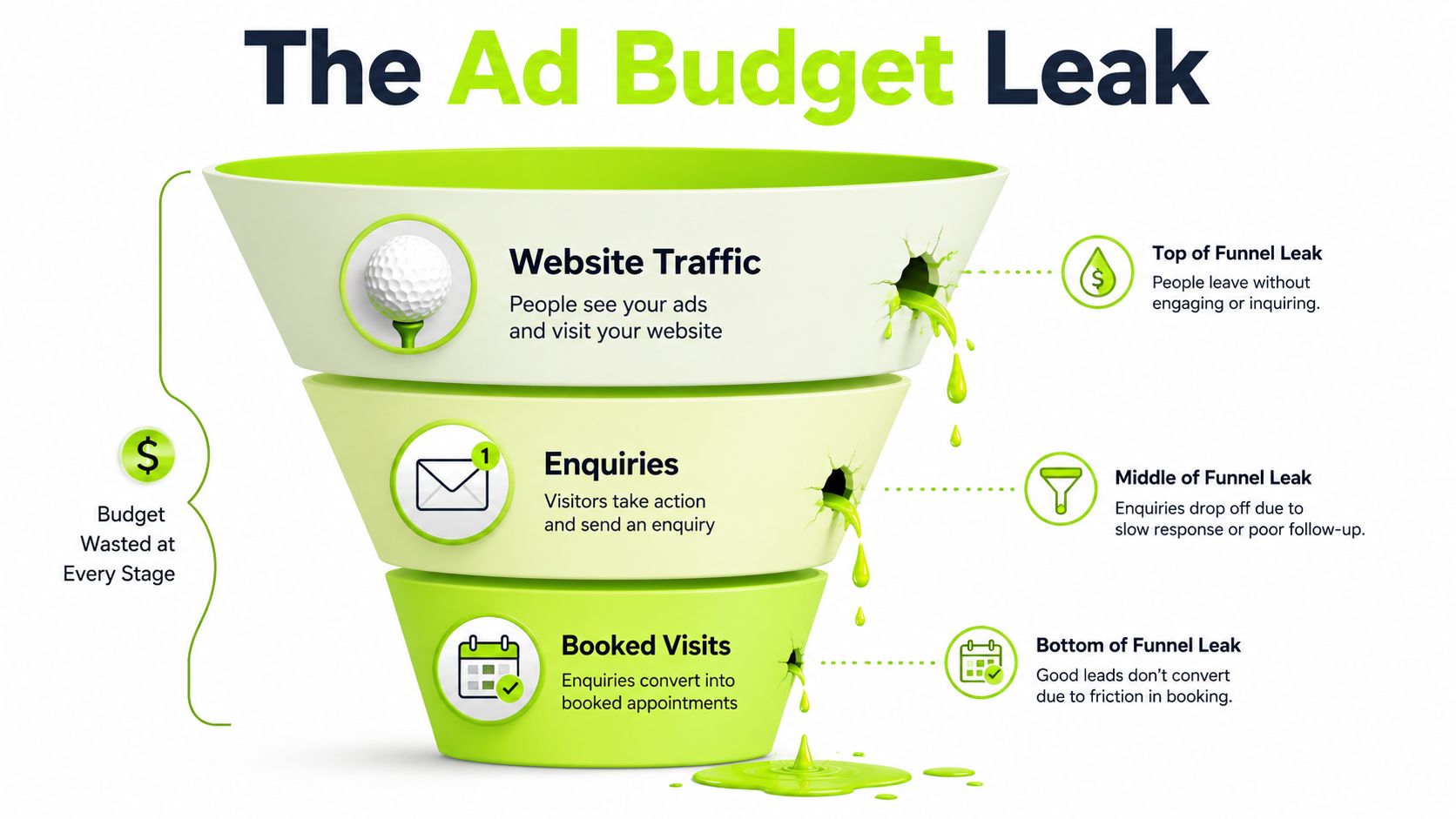
Separate the four jobs
A workable campaign has four connected layers:
- Targeting and keywords: Reach people searching for membership, lessons, tee times or societies in the club's catchment.
- Creative and landing pages: Match the advert to the visitor's intent and give them a clear next step.
- Measurement: Record forms, calls, bookings and later membership outcomes.
- CRM-led nurture: Acknowledge, qualify and follow up until the prospect books a visit.
Clubs often measure the first layer and assume the rest will take care of itself. It won't. A useful external perspective on making local golf demand easier to find is Live Tourney's guide to Live Tourney golf course marketing, particularly its focus on the way golfers discover nearby venues.
The same principle applies inside the club. Before changing campaign settings, review why most golf club marketing fails. The strongest account structure cannot compensate for a weak hand-off after the form is submitted.
Practical rule: Don't ask whether Google Ads generated an enquiry until you know who received it, how quickly they responded and whether the prospect booked a visit.
Sizing the Demand Around Your Club
Google Ads can expose demand, but national participation figures do not set a club's budget. The R&A's 2023 satellite account estimated that 5.356 million adults in the UK played golf at least once a year, including 2.357 million who played at least once every four weeks. It recorded 889,000 club members. The figures are detailed in the R&A's 2023 UK golf satellite account.
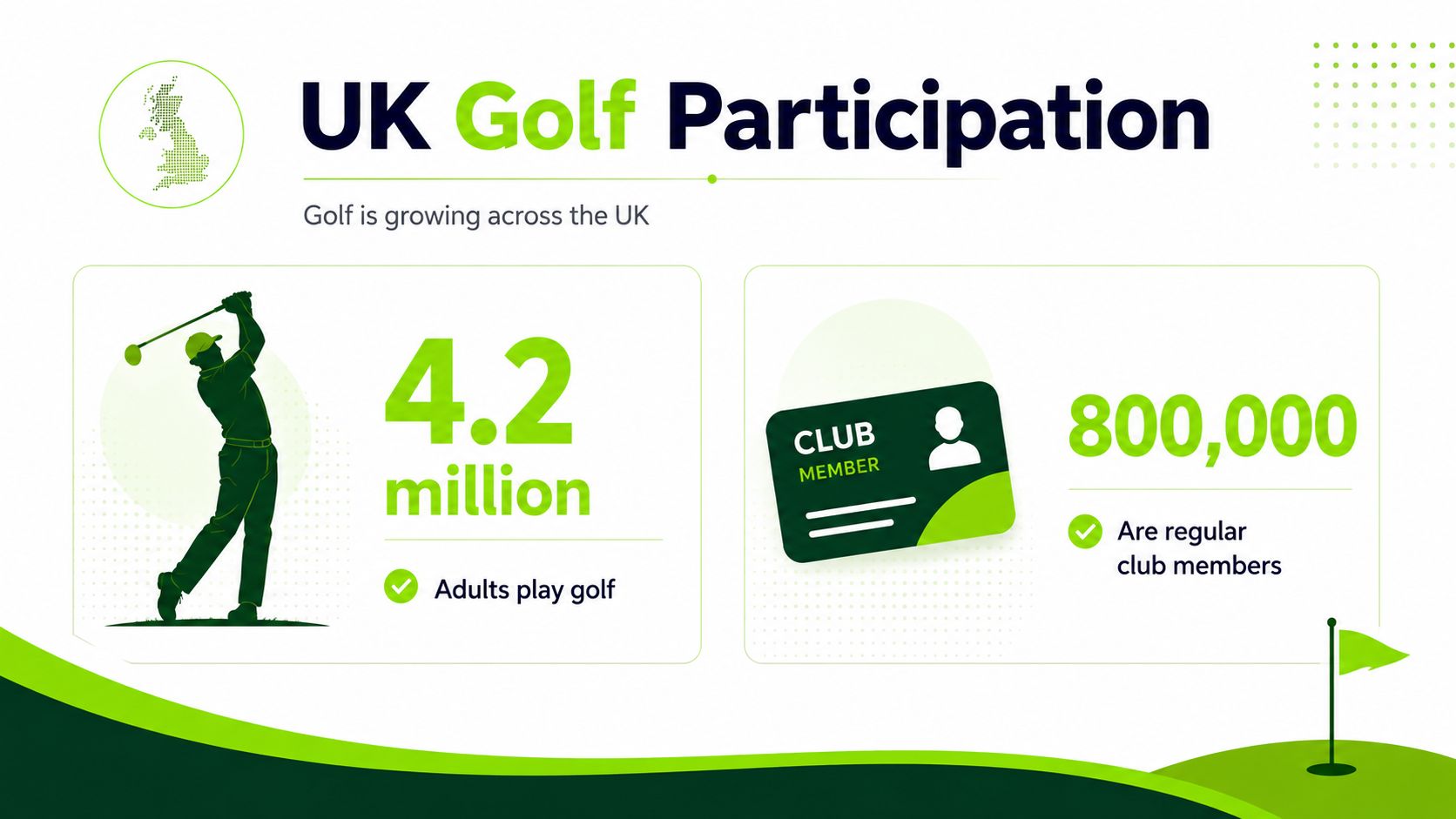
Use those national figures as context, then size the opportunity around distance, playing frequency, age and product fit. A golfer living nearby is not automatically a membership prospect. Someone farther away may still respond to a specific offer, such as a society day or lesson.
Match the audience to the offer
The wider market also includes off-course participation. A PGA-commissioned study reported 22.4 million adults in the UK and Ireland engaged with golf, including 16.3 million playing some form of golf and 4.9 million playing on course, according to the BBC's coverage of the study.
That supports separate commercial assumptions:
- Regular on-course golfers may respond to membership, flexible packages or a club tour.
- Casual players may fit visitor rounds, lessons or pay-and-play offers.
- Beginners and families may need an introductory experience before membership becomes relevant.
Search intent gives the campaign its most useful local signal. “Golf membership near [town]” indicates a different decision from “golf lessons [town]”. Set budgets, landing pages, CRM routing and follow-up around that distinction. The click only creates an opportunity. Response time and nurture determine whether local demand becomes a booked visit.
Campaign Structure That Separates Membership From Casual Play
A single campaign containing every golf-related keyword makes reporting difficult and messaging vague. It also encourages the club to judge a casual tee-time search by the same standard as a membership enquiry. Separate campaigns make the commercial purpose visible.
Start with a small account that a membership manager can review regularly:
Build around commercial intent
Brand should protect searches for the club's name, membership pages and branded offers. Non-brand membership should contain searches such as “golf membership near [town]” and “join a golf club in [county]”. These are the campaigns where the landing page and enquiry process deserve the most attention.
Casual play can include “pay and play [town]”, visitor green fees and tee-time searches. Keep lessons, society days and hospitality separate if the club actively sells them. Each service has a different buyer, objection and follow-up route.
A competitor campaign can be tested carefully, but it usually requires restrained copy and realistic expectations. People searching for another club may be comparing options, not actively looking for yours. A radius-based local campaign can support nearby membership demand, but location settings should be checked so the club isn't paying for clicks from people merely interested in the area.

Use naming conventions that survive staff changes, such as Search | Membership | Non-brand | County. Keep ad groups tight enough that the keyword, advert and landing page describe the same offer. Don't place membership, lessons and “golf clubs for sale” in one group and then expect a useful quality signal.
The same discipline applies to adjacent discovery channels. Operators assessing optimizing Google Things to Do for operators should still keep the product and booking intent distinct from membership acquisition.
For the strategic choice between channels, see GolfRep's comparison of Google Ads and Facebook Ads for golf clubs. The key decision is intent, not platform fashion.
Keywords, Ad Copy and Assets That Earn the Click
Keyword selection starts with the decision behind the search. A membership prospect needs clarity on cost, access and whether the club fits. A visitor wants availability and a direct booking route. A beginner may first need evidence that the club welcomes new golfers.
Build the advert and landing-page route around that intent:
Membership searches: Terms such as “golf membership near [town]” and “join a golf club in [county]” should lead to a membership page with one clear action, such as “Book a club tour” or “Speak to the membership team”.
Exploratory searches: “Best golf club near me” signals comparison rather than a firm decision. Use course details, membership options and genuine member proof, and avoid claims the page cannot support.
Lower-intent searches: Keep broader awareness terms away from the budget intended for people ready to join. Add negative keywords for irrelevant products, including “golf clubs for sale” and “second hand golf clubs”.
Ad copy should reflect the searcher's language without making promises the club cannot fulfil. Useful components include:
- Location: “Golf Membership Near [Town]”
- Offer: “Flexible Membership Options”
- Next step: “Book a Club Tour”
- Reassurance: “Meet the Team and See the Course”
Responsive search ads can test headline and description combinations, but every variation needs to remain accurate. Sitelinks should give visitors focused routes to a trial round, membership options, lessons and society enquiries. Callouts can state practical details such as parking, course access, dress code and clubhouse facilities. Structured snippets work well for listing facilities, provided they do not turn the advert into a compressed brochure.
Creative also supports the decision after the click and gives the CRM team useful material for follow-up. Course videos, member introductions and short facility tours can support organic and social activity. Golf video inspiration for TikTok offers formats that may feel more authentic than polished promotional footage. The advert earns attention, but response time and the route into the club's CRM determine whether that click becomes a conversation.
Landing Pages Built for Booked Visits Not Brochures
A homepage is designed to serve many audiences. A paid search landing page should serve one decision. Sending a membership search to a crowded homepage forces the visitor to find the relevant information, interpret the offer and discover the contact route. Many won't do all three.
The page needs to answer a simple question quickly: why should this golfer take the next step with this club?
Above the fold should remove uncertainty
A useful membership page can place these elements near the top:
- A specific promise for a specific reader. “Membership for golfers who want regular access near [town]” is clearer than “Welcome to our club”.
- A proof strip. Use genuine club information, such as member numbers, course details or an independently verified rating, where available.
- One primary action. “Book a tour” or “Arrange a membership conversation” is more useful than a generic “Submit”.
- Supporting routes. Add separate links for lessons, societies and visitor play, but don't let them compete with the membership action.
- A recognisable trust signal. Show the club name, location, contact details and a clear indication of who will respond.
The page should make the offer understandable without requiring a prospect to download a document. If fees, categories, joining requirements or playing restrictions affect the decision, explain them plainly. Hiding important commercial information may produce an enquiry, but it often produces a poorly qualified one.
Ask for enough information, not everything
A membership enquiry form usually needs:
- Name
- Email address
- Telephone number
- Preferred contact method
- Current playing status or membership interest
- A short free-text question
Avoid turning the first interaction into a full application. A low-commitment choice, such as a brief call or taster round, gives the club a chance to qualify the prospect while giving the golfer a manageable next step.
A landing page shouldn't ask a first-time visitor to behave like a committed member.
The page also needs to work for people who prefer calling. Use a visible phone number, define what happens after submission and ensure the form notification reaches a monitored address. A form that disappears into an unowned inbox isn't a conversion system.
Budget decisions need evidence
There isn't a responsible universal budget for every club size. A nine-hole club, a member-owned 18-hole venue and a multi-course resort have different catchments, offers and sales capacity. Start with the amount the club can monitor properly, then adjust according to qualified enquiries, booked visits and membership outcomes, not just click volume.
Google's UK guidance says conversion measurement begins by defining the website actions the club wants to increase, creating conversion actions in the account and using the Google tag or Google Tag Manager to measure web activity. That setup should exist before meaningful budget decisions are made.
For bidding, Maximise Conversions can be a sensible starting point once reliable conversion actions are recording. A target CPA can be introduced when the account has enough dependable history to guide it. Target Impression Share is more appropriate for protecting branded visibility than for finding new members. Manual CPC can work in a tightly controlled account, but it often under-bids during valuable searches and over-bids when demand changes.
Don't pause membership campaigns because winter reduces casual play. Membership decisions can take longer and may be considered outside the playing season. Casual play and society campaigns deserve a separate decision because their demand is more closely tied to immediate playing conditions and availability.
Shared budgets can help when several small campaigns serve the same commercial priority. They can hurt when brand, membership and casual play compete for the same allocation, because the system may favour the easiest clicks rather than the most valuable enquiries.
Tracking What Matters From Click to Booked Tee
Clicks are a media metric. The account should optimise towards evidence that a prospect is progressing towards a visit, a round or membership. A form submission starts that process, but it does not confirm a qualified conversation. A phone call matters only when the club can identify its source and record the outcome.
Give each conversion action a name that remains clear when staff change:
Membership enquiry | form submittedMembership call | qualifiedClub tour | bookedVisitor tee time | completedMembership | signed
The labels should mirror the club's sales process. Track calls through suitable attribution, then connect booked tours and tee times to the relevant booking or tee-sheet system where possible. Import offline outcomes so Google Ads can distinguish a member enquiry from a form filled by someone who will never visit.
| Conversion action | Why it matters | Recommended value |
|---|---|---|
| Membership form submission | Shows initial demand and starts follow-up | Record as a primary lead action |
| Tracked membership call | Captures prospects who prefer conversation | Qualify before using for bidding |
| Booked club tour | Shows progress towards a visit | Prioritise as a high-value action |
| Completed visitor booking | Connects paid search with actual play | Import from the booking system where possible |
| Signed membership | Links advertising to revenue | Import as an offline conversion |
Google's conversion measurement guidance for UK businesses sets out the need to define desired website actions and create the matching conversion actions. Consent belongs on the form journey, while call recording requires a separate review against applicable UK requirements.
Keep diagnostic metrics in their place. Time on page, scroll depth and impressions can show how visitors behave, but they cannot tell a committee whether an enquiry became a visit.
The final test is operational continuity: click, identifiable enquiry, assigned follow-up, booked visit and recorded outcome. GolfRep's guide to golf club enquiry tracking provides a practical checklist for connecting those stages. Without that chain, Google Ads may report activity while the club cannot see commercial progress.
What Happens After the Click and Why Most Budgets Leak
The form submission is where many campaigns become invisible. A prospect completes a form, receives no immediate confirmation, waits for a membership secretary to notice the email and eventually contacts another club. The advertising report may still show a lead, while the commercial team sees only a disappointing result at the end of the month.
Follow one enquiry through the club
A typical weak journey looks like this:
- The form arrives in a shared inbox.
- Nobody owns the response outside office hours.
- A spreadsheet records the contact inconsistently, or not at all.
- The first email is sent days later.
- A manager calls after the prospect has already chosen another club.
UK lead-response evidence describes an average response time of 47 hours, while only 7% of businesses achieve a response within five minutes. The same analysis says 78% of customers buy from the first company to respond, as reported in the UK lead response crisis analysis. Another UK study found only 32 companies, or 7%, responded within five minutes, while 240 companies, or 55%, took five or more days or didn't respond at all, according to SurveyBooker's lead management research.
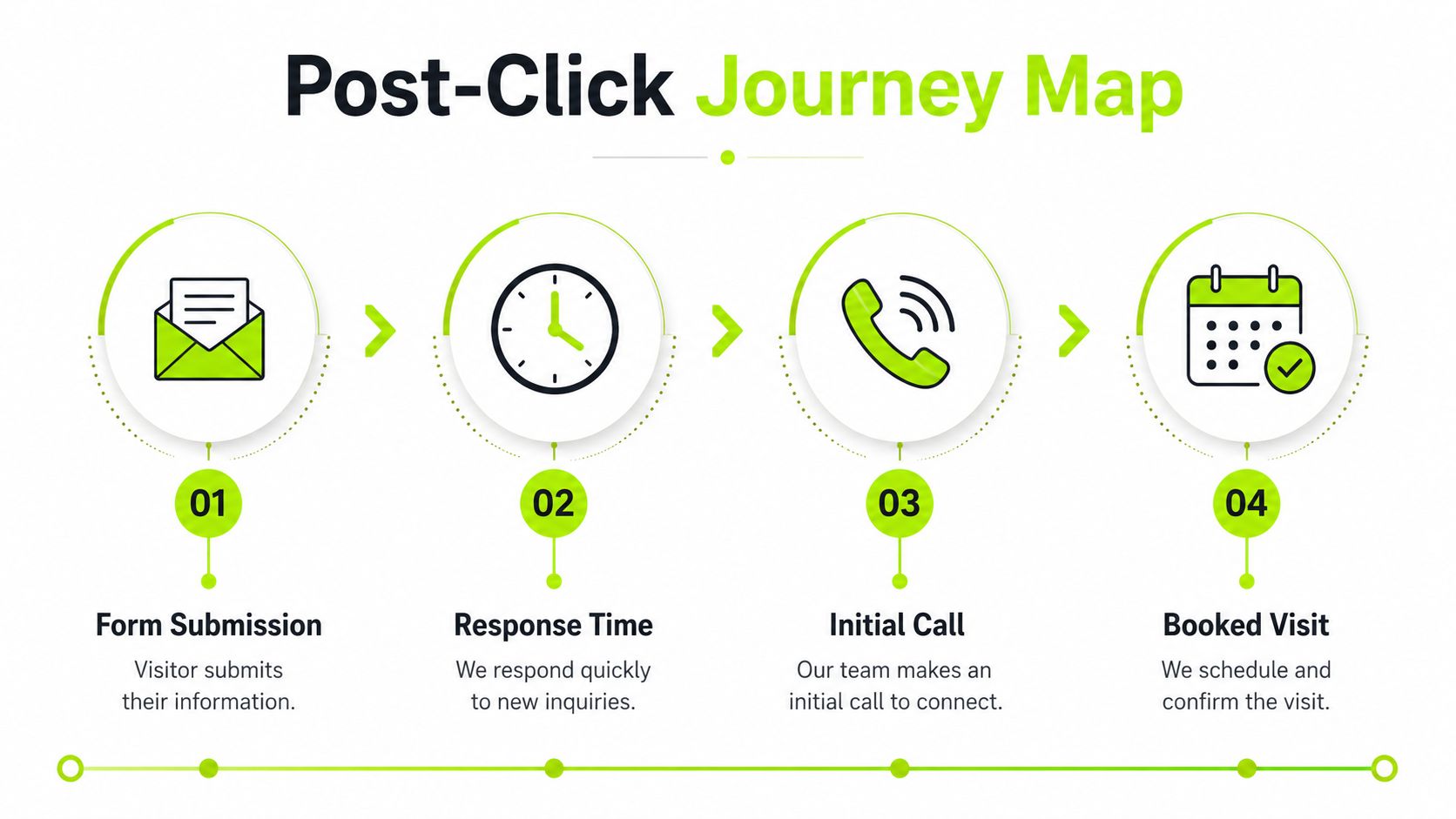
The fix is operational rather than cosmetic:
- Route instantly: Send the enquiry into a CRM with the source, campaign and requested service attached.
- Acknowledge quickly: Send a useful confirmation explaining what happens next and giving the prospect a direct contact route.
- Attempt a same-day call: Assign ownership to the membership secretary, manager or another named person.
- Nurture consistently: Use a sequence for unanswered calls, membership questions and visit invitations.
- Close the loop: Record whether the prospect booked, attended, joined or stopped responding.
A CRM doesn't need to be complicated. It needs a clear owner, visible status fields and an agreed follow-up process. GolfRep's growth system combines paid acquisition with CRM-enabled nurture and revenue tracking, which is one practical way to connect campaign activity with membership follow-up rather than leaving the club to manage both in separate tools.
A 90-day operating plan
Days 1 to 30, foundation
- Audit the membership page, forms, phone route and inbox ownership.
- Create separate campaigns for brand, membership and casual demand.
- Install conversion actions for forms and calls.
- Define response ownership for evenings and weekends.
- Create CRM stages from new enquiry to booked visit.
Days 31 to 60, optimisation
- Review search terms and add negative keywords.
- Compare qualified enquiries, not just total leads.
- Test landing-page actions such as a tour, call or taster round.
- Check every enquiry for response time and outcome.
- Import offline visit or membership outcomes where the systems support it.
Days 61 to 90, scale
- Increase budget only where the club can handle the resulting demand.
- Expand the strongest local intent groups.
- Refine nurture messages around common objections.
- Separate campaigns by membership type or audience when the data justifies it.
- Present the committee with cost per qualified enquiry and downstream conversion.
The monthly dashboard should stay small: cost per qualified enquiry, speed to first response, booked-visit show rate and visit-to-member conversion. Impressions and clicks remain useful diagnostics, but they shouldn't decide whether the programme is working.
More traffic is not a growth strategy if the club can't see, answer and progress the enquiries it already receives.
Google Ads for golf clubs works best as a measurable pipeline. The advert earns attention, the landing page earns the enquiry, and the club's response system earns the visit. GolfRep helps clubs connect those stages through paid search, structured follow-up and CRM visibility, so visit GolfRep to discuss a practical growth system built around your club's membership process.
Ready to tap into our proven growth system?