8 Junior Golf Programme Ideas for UK Clubs in 2026
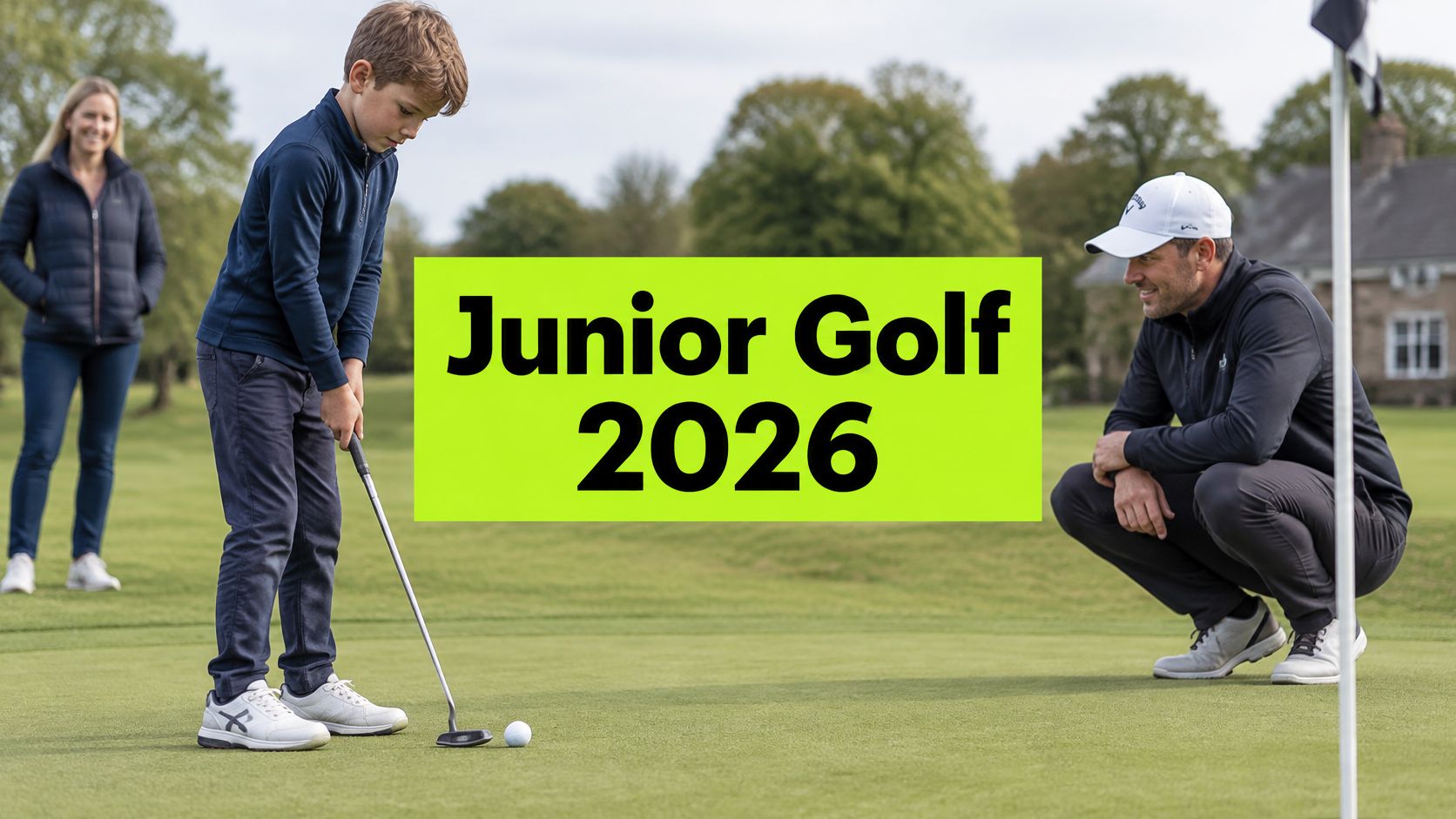
A family books a Saturday taster session. Their child enjoys it, the parents ask about lessons, and everyone leaves pleased. Then nothing happens for six weeks. By the time the next invitation arrives, the family has filled that space with another activity.
The club delivered a good session. It didn't give the family a clear next step. That's the failure to design out when choosing junior golf programme ideas: not a lack of activities, but gaps between trying golf, playing regularly and finding a lasting place at the club.
For a general manager, the commercial question is straightforward. Which programme fills otherwise quiet capacity, which earns sustainable coaching income, and which keeps young members involved as their circumstances change? Each needs a different budget and measure of success.
GolfRep's recommendation: Build one connected junior pathway, not a calendar of unrelated events.
A school taster can lead to a family visit. That visit can lead to coached play, a team fixture and membership. The route should remain visible through education, work and young adulthood, rather than stopping when a junior leaves the academy.
The programmes below each do a distinct commercial job. Choose the one that fixes your weakest stage, then make sure staff and families know what follows it.
1. Youth on Course Style Accompanied Junior Play
Commercial job: fill quiet tee times while making course access affordable. Offer reduced-rate or free junior play alongside a paying adult, with clearly defined booking windows. Treat this as a club-designed accompanied-play offer, not an assumption about the terms of any official Youth on Course scheme.

For example, a club could release suitable weekday morning availability during the school holidays. A parent pays the published adult rate and the child plays from forward starting positions, with permission to finish early.
The adult green fee is the immediate revenue line. The junior's repeat play is the longer-term opportunity, but neither justifies displacing a booking that would otherwise sell at full value.
Protect yield and make returning easy
The running costs include registration, starter or professional-shop time, loan equipment and any additional supervision. The larger commercial risk is opportunity cost, particularly if discounted access spills into busy periods.
- Set the adult rate: State what the accompanying player pays and whether member guests qualify.
- Define availability: Use quiet slots rather than blanket access.
- Explain course expectations: Give families simple guidance on pace, safety and shortened rounds.
- Offer progression: Invite returning juniors into a coaching session or membership trial.
Families can lose confidence when their first course visit feels like an etiquette test. A friendly arrival briefing matters more than a lengthy rules document.
Track repeat rounds separately from registrations. If families register but don't return, speak to them about timing, confidence and course suitability before changing the price.
2. Structured Junior Membership With Age Bands
A junior fee schedule should explain how a young person belongs at the club, not how cheaply they can join. Its commercial job is to make membership understandable and keep category changes manageable.
England's junior membership rose from 46,028 in 2024 to 61,483 in 2025, according to England Golf figures reported by Glenmuir. That's a reason to take the category seriously, not a forecast of what any individual club will achieve.
Consider a parkland club with younger-junior, older-junior and student categories. Each should explain course access, competition eligibility, coaching inclusions and how the next category works.
Price the whole promise
A low subscription can become expensive to deliver if it includes unrestricted coaching, equipment and busy-time access. Calculate those commitments before the committee approves the fee, including how revenue is shared with the PGA professional.
Our guide to golf club membership tiers provides a useful framework for distinguishing access and benefits without creating an unmanageable category list.
A student or young-adult rate should buy continued involvement, not merely postpone an unexplained jump to the full subscription.
Build category-change reminders into the membership system. Let the coach or junior organiser discuss the options with the family before the renewal notice arrives.
Where clubs lose the family: the parent compares a new subscription with the child's actual usage and sees no clear value. Review retention by age band, but also ask whether members can access suitable competitions, playing partners and tee times.
The next step is an agreed transition, not an automatic invoice.
3. Junior Coaching Pathway and Academy
Commercial job: create repeat coaching income through visible, worthwhile development. Parents need to understand what their child is learning, while juniors need achievable challenges and people they enjoy playing with.

A practical academy might move from safe club handling and putting games to short-course scoring, supervised rounds and club competition. Publish those stages in the welcome pack, but let coaches judge readiness through confidence and competence rather than birthdays alone.
The principle resembles age-group milestones for soccer development: make development understandable without expecting every child to progress identically. Golf assessments should remain specific to golf and the individual player.
Make progression affordable to deliver
The main costs are professional time, assistants, practice balls, equipment and administration. Agree who owns the coaching revenue and who funds the pathway before advertising it.
- Price preparation: Include assessment and parent-reporting time, not just time on the practice ground.
- Control group sizes: Balance coaching quality, safe supervision and a viable margin.
- Recognise broader progress: Reward course confidence, teamwork and decision-making alongside technique.
- Connect lessons to play: Give academy members a suitable fixture or supervised course session.
A termly progress conversation can explain why membership is the sensible next step. It shouldn't become a sales conversation disconnected from the child's readiness.
Clubs reviewing delivery can use our guide to choosing a junior golf coach. The critical retention measure is whether academy participants remain active, not how many certificates the club issues.
4. School Partnerships and Taster Sessions
A school partnership reaches children whose families wouldn't otherwise approach the club. Its commercial job is local audience development, followed by an accessible first club visit.
The Golf Foundation's Unleash Your Drive in Schools programme uses a six-week, teacher-led structure combining beginner golf games, core skills and mental-toughness activities. Clubs can use that structure to shape conversations with schools rather than expecting teachers to build a golf programme themselves.

For example, agree an after-school block with a nearby primary school and put the club visit in the calendar before delivery starts. Give parents the location, equipment arrangements, cost and booking method together.
Budget for the bridge to the club
School delivery costs include travel, coach time, portable equipment and liaison with staff. A free school session isn't commercially free, so agree whether the club, school or another funding arrangement covers those costs.
The expensive mistake is delivering an enjoyable introduction with no practical route onwards.
- Use parent consent: Arrange an appropriate opt-in route rather than assuming access to school contact lists.
- Remove uncertainty: Explain clothing, loan equipment, parking and whether parents stay.
- Measure continuation: Record which children attend club activity, not just school-session attendance.
Safeguarding comes before recruitment. England Golf's welfare officer guidance says responsible officers must recognise indicators of abuse, bullying and poor practice and know how concerns should be handled.
Brief coaches and volunteers, publish the reporting route and confirm supervision arrangements. Families need confidence in the club's operation before they'll commit to regular visits.
5. Junior Leagues, Matchplay and Inter-Club Competition
Competition doesn't have to mean asking a beginner to complete a demanding individual medal. A short, social league gives juniors a reason to return and a team to belong to.
Research commissioned for the Golf Foundation identified demand for team participation, club representation and supportive competition, informing GolfSixes League's six-hole Texas Scramble format, as explained by Sporting Insights.

A club could start with internal team fixtures on a quiet midweek afternoon. More confident players can progress into a matchplay ladder, an Order of Merit or inter-club matches without making those formats compulsory for everyone.
Participation rule: Keep a route for the junior who enjoys competing but isn't ready to compete alone.
Cost the fixture, not just the prizes
Budget for the organiser, supervision, course access, refreshments and any away-match travel. Volunteer time still needs an owner and a workable rota.
The Vanta Sports match play planning guide can support fixture planning. Keep the club's operating arrangements simple: clear eligibility, published dates, a cancellation process and someone responsible for results.
Families lose interest when fixtures repeatedly change or only the strongest players receive attention. Recognise attendance, improvement and team contribution alongside results.
Publish photographs only under the club's consent arrangements. The commercial measure is repeat participation and continued membership, not whether the trophy photograph looks impressive.
6. Family Taster Days and Pitch and Putt Entry Routes
Commercial job: help the whole family feel comfortable enough to return. A family taster isn't a junior lesson with parents left standing beside the practice ground.
Use putting challenges, short pitches and a relaxed introduction to playing a hole. Where a pitch and putt course exists, it can provide a less intimidating starting point than the main course.
The Golf Foundation reported introducing 226,000 young people through schools or youth clubs in 2025, including 106,344 girls, in its impact report. The practical implication for clubs is to welcome families without assuming prior golf knowledge or connections.
Design around the non-golfing parent
For example, run a bookable holiday afternoon using the short-game area, with loan clubs and a clear finish time. Offer mixed activities and test demand for girls-only sessions rather than assuming one format suits everyone.
- Make costs visible: State what the booking includes and whether refreshments are separate.
- Collect useful details: Ask for postcode, experience and preferred future session times.
- Offer a specific return visit: Give families a bookable starter session, not a general invitation to keep in touch.
Running costs include coach and host time, equipment, booking administration and use of the practice area. A modest booking fee can contribute towards delivery, but the event still needs a budget if it's free.
Families often disengage when the follow-on offer requires equipment purchases or an immediate membership decision. Keep the next commitment small, clear and appropriate to their confidence.
7. Holiday Camps and Winter Junior Programmes
An academy can lose momentum when term ends or the weather changes. Holiday camps generate seasonal coaching revenue; winter programmes protect the playing habit. They solve different problems and should be budgeted separately.
A summer camp might combine coaching games, a par-three challenge and a closing family round. An indoor facility could run a winter junior league with an agreed route into outdoor coaching when conditions improve.
Separate convenience from a childcare promise
Parents need exact arrival and collection arrangements, food information, weather plans and a clear account of supervision. Don't describe a coaching camp as childcare unless the operation is properly equipped and organised to provide it.
The main costs are staffing, equipment, consumables, covered-space provision and administration. For simulator operators, include bay time that could otherwise be sold, not just the coach's fee.
A full junior session isn't necessarily a profitable session if it occupies your most valuable capacity.
Use booking patterns to decide which dates deserve premium availability and which need a different format. Don't assume every school-holiday slot carries the same demand.
- Plan cancellations: Explain weather changes, refunds and transfers before payment.
- Ask for useful feedback: Find out whether timing, confidence or the activity mix affected enjoyment.
- Book the continuation: Offer an academy block or membership trial before the camp finishes.
The common weak point is a long gap after the closing session. Keep winter participants connected to playing partners, and give indoor juniors a named outdoor contact rather than a vague suggestion to try a course.
8. Junior to Adult Retention and Transition Programme
Commercial job: protect the investment made in every earlier stage. A junior pathway isn't complete if membership ends when education, work or a category change makes the existing arrangement unsuitable.
Consider a member preparing to leave for university. A renewal letter alone won't explain whether they can still play during holidays, enter competitions or remain connected to friends at the club.
A transition conversation should establish likely usage, affordability and what the member wants from golf. Our guide to attracting younger golf club members explores the wider proposition, but existing juniors also need a personal reason to stay.
Give someone responsibility for staying connected
Assign a named coach, organiser or committee contact. Use the membership system to prompt a conversation well before the category changes, then record the agreed next action.
- Offer appropriate access: Make student or young-adult terms clear, including any restrictions.
- Preserve friendships: Create social rounds or a young-adult team, not just a cheaper invoice.
- Record leaving reasons: Separate relocation, cost, lack of use and dissatisfaction.
- Measure continuity: Track whether former juniors remain members and active players into adulthood.
The broader principle of age-appropriate development for young athletes is useful here: needs change, so the support should change too.
This programme costs staff time, contact administration and any deliberate concession in subscription income. Judge that concession against the realistic alternative, not an assumed full-fee renewal.
Don't make every young adult the same offer. A local apprentice, a student living away and a frequent competitive player may need different membership arrangements.
How the eight junior golf programme ideas compare
Read the table by commercial job, not by format. The strongest set links one pathway: low-commitment entry creates prospects, regular play and coaching create members, competition deepens attachment, and transition pricing protects continuity.
| Item | Entry cost to family | Main commercial role | Best suited to |
|---|---|---|---|
| Youth on Course Style Accompanied Junior Play | Free or reduced junior green fee with a paying adult | Fill off-peak tee times and introduce families to the club | Clubs seeking a low-cost first round for juniors |
| Structured Junior Membership With Age Bands | Tiered junior fees by age band | Build a predictable membership and adult-retention pathway | Clubs wanting clear membership options and planned progression |
| Junior Coaching Pathway and Academy | Set by the club; reflects coach time, group size and practice or course access | Generate repeat coaching revenue and improve retention | Clubs with qualified coaches and capacity for ongoing sessions |
| School Partnerships and Taster Sessions | Often free or low cost per session; next paid step is a coaching block or junior membership | Reach new families and build a junior prospect pipeline | Clubs seeking community outreach through local schools |
| Junior Leagues, Matchplay and Inter-Club Competition | Set by the club or league; reflects fixtures, supervision, entries and prizes | Encourage repeat visits and create predictable playing demand | Clubs with juniors ready for regular, inclusive competition |
| Family Taster Days and Pitch and Putt Entry Routes | Free or low-cost taster; next paid step is pitch-and-putt play or a starter block | Introduce families to golf and generate membership leads | Clubs with practice areas or pitch-and-putt facilities |
| Holiday Camps and Winter Junior Programmes | Paid block set by the club; reflects coach ratios, hours and indoor or covered space | Fill quiet periods and create opportunities to convert families | Clubs with coaching capacity and holiday or indoor facilities |
| Junior to Adult Retention and Transition Programme | Concessionary student or young-adult rate, set by category | Retain members and protect the value of junior programmes | Clubs seeking to reduce late-teen and young-adult departures |
Choose the rows that fix the current leak: empty off-peak tee times, unconverted tasters, or late-teen exits.
Sequencing Junior Programmes Around the Family, Not the Activity
The strongest junior programmes don't compete with each other. Each has a clear purpose, a sustainable delivery cost and a next step that makes sense to the family.
School sessions and family tasters introduce the club. Pitch and putt, accompanied rounds and holiday camps help children become comfortable playing. An academy and league provide progress and belonging, while membership categories and transition conversations support continued involvement.
That doesn't mean every club needs every format. A small volunteer-led club may be better served by a dependable coaching block and regular supervised play than an ambitious calendar nobody can administer.
Start where families stop progressing
Review the current pathway with the PGA professional, junior organiser and membership lead. Find the point where families stop attending or decline the next offer, then speak to them about why.
- Strong taster attendance, weak repeat visits: Check timings, transport, equipment and the size of the next commitment.
- Busy coaching, little course play: Create supervised playing opportunities and suitable partners.
- Active juniors, weak renewals: Review membership value, access and category changes.
- Healthy summer participation, winter losses: Build a realistic continuation using covered practice or indoor capacity.
A simple spreadsheet or CRM can record the entry route, current stage, last attendance, next invitation and responsible person. Keep parent contact permissions and safeguarding information under appropriate controls rather than circulating unrestricted junior lists.
Judge the pathway commercially
For each programme, record collected income, direct delivery costs and the capacity used. Keep immediate contribution separate from subsequent coaching or membership revenue so the committee can understand both without counting income twice.
Then review movement between stages over a defined follow-up period. A taster should be judged partly on return visits; an academy on continued participation and development; a transition programme on retained relationships and memberships.
Set the next review date before launching another activity. If families aren't progressing, change the offer or remove the practical barrier before adding more sessions to the calendar.
The objective isn't to push every child towards competitive golf or immediate membership. It's to provide a credible route for those who want to continue, while running programmes the club can afford to deliver consistently. That's how junior activity becomes a lasting part of the club rather than a succession of well-attended starts.
GolfRep helps UK golf clubs improve acquisition, conversion and retention through a structured commercial approach. If you'd like to map your junior pathway, assess programme costs and identify where families stop progressing, visit GolfRep to arrange an open conversation about your current setup.
Ready to tap into our proven growth system?