Your Guide to Profitable Golf Coaching Courses
Well-designed golf coaching courses are one of the most powerful, yet often overlooked, assets a golf club has for driving predictable revenue and growing its membership base. For many clubs, the real opportunity is not just about generating more enquiries; it is about systematically turning that initial interest into long-term, loyal members.
The Untapped Revenue Inside Your Golf Club
For years, many clubs have treated golf coaching as a standalone service: a simple transaction between a PGA Professional and a golfer. We see this all the time. But this view completely misses its strategic value as a core business driver.
At GolfRep, we challenge club managers to see coaching not just as an amenity, but as the engine for a predictable membership pipeline. It is the most effective pathway you have to guide someone from being a casual visitor to a committed member.
The post-pandemic surge in golf has created an unprecedented demand for lessons and genuine improvement. This is not just a fleeting trend. It is a fundamental shift in the market, presenting a golden opportunity for clubs organised enough to meet this new wave of enthusiasm head-on.
Capitalising on the Demand for Improvement
The numbers speak for themselves. Across the UK's 3,101 golf courses, a significant 20% of the nation's 5.6 million adult golfers have taken at least one professional lesson. This is not just a statistic; it is a clear signal of a ready-made audience for well-structured coaching programmes. You can dive deeper into these figures in this report on UK golf industry statistics.
With rounds played surging, now is the perfect time to formalise your coaching offer.
But this is where the real work begins, and it is where we see most clubs falter. Getting someone to enquire about a beginner's course is often the easy part. The crucial failure point is what happens next: how those enquiries are handled, responded to, and ultimately converted. Without a robust system, valuable leads fall through the cracks due to slow responses, manual follow-up errors, and a simple lack of visibility.
The core challenge for modern golf clubs is not a lack of interest in the game. It is the absence of a structured system to capture that interest and convert it into reliable, recurring revenue.
A systematic approach changes everything. By building a proper coaching ecosystem, you create a defined journey for every new golfer who connects with your club. It is a simple, repeatable process:
- Beginner Courses: These are your front door, attracting new players and giving them a positive first impression of your club's environment.
- Improver Programmes: This is the critical next step, helping players build on their skills while fostering a sense of community and belonging.
- Pathway to Membership: From here, you can personally nurture participants from coaching programmes towards trial offers and, eventually, full membership.
This playbook is not about abstract marketing theory. It is about building a predictable growth engine fuelled by effective conversion. By implementing structured follow-up processes, ideally managed within a CRM system, you turn untapped potential into measurable results. You establish your club as the go-to destination for player development in your area.
Designing Coaching Programmes That Attract and Retain
A handful of ad-hoc lessons on the books is not a strategy. To drive predictable growth, you need to think bigger. It is about building a structured pathway that turns a curious beginner into a committed, long-term member of your club. This is not just about keeping your pros busy; it is about creating valuable assets that generate consistent revenue and real loyalty.
Forget the one-size-fits-all approach. Your potential members are a diverse bunch with different skill levels, goals, and schedules. The secret is to design a coaching structure that recognises this, offering specific programmes that meet people where they are and make the journey into golf feel both accessible and genuinely rewarding.
Creating a Clear Coaching Pathway
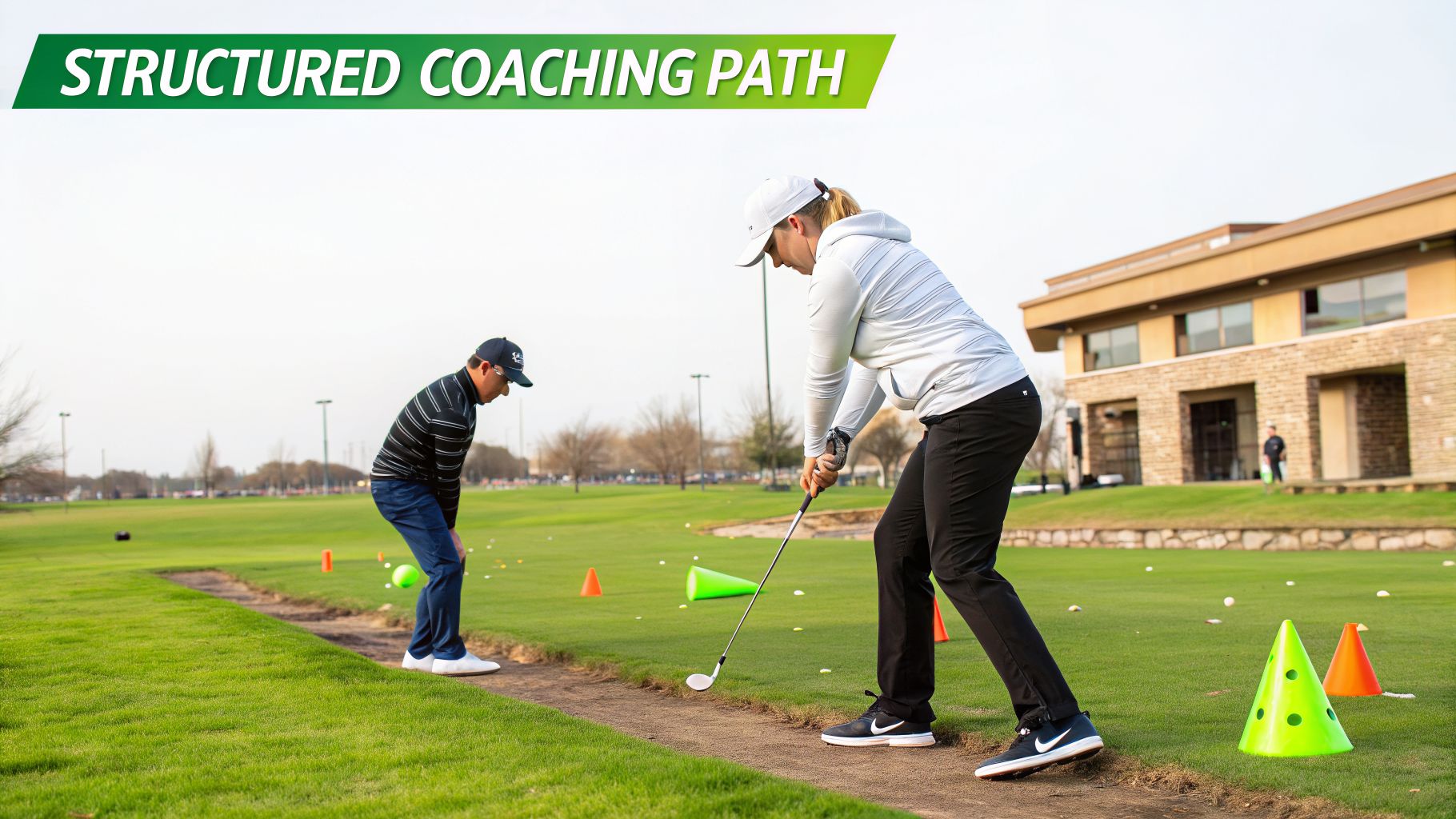
The most successful coaching set-ups we have seen all have one thing in common: a clear, logical path for new golfers to follow. Think of it as a funnel. You start with a wide, welcoming entry point to capture lots of interest, and each step guides participants closer to becoming fully integrated members of your community.
A tried-and-tested pathway usually includes these four stages:
‘Get into Golf’ Course: This is your lead magnet, pure and simple. It needs to be a low-commitment, high-value introduction for absolute beginners. Keep it fun, social, and focused on the fundamentals in a relaxed group setting.
‘Improvers Academy’: This is where you bridge the gap. As soon as someone finishes the beginner course, they should have an immediate and compelling next step. This programme builds on their new skills and gives them the confidence to get out on the course.
Specialised Clinics: Once you have golfers engaged, offer short workshops on specific skills like putting, bunker play, or adding distance off the tee. These are fantastic for keeping players invested and open up another revenue stream.
Pathway to Membership: This is the final, crucial conversion stage. Graduates from the Improvers Academy should be personally invited to social events, given trial membership offers, and encouraged to join club roll-ups. The aim is to make joining feel like the natural, exciting conclusion to their coaching journey.
Smart Pricing and Scheduling Strategies
When it comes to pricing, think value, not discounts. Slashing prices can cheapen your brand and attract bargain hunters who will never convert to full members. The smarter play is to create irresistible packages by bundling in extras that make the experience feel premium.
Here are a couple of value-led pricing ideas that work:
- The Complete Beginner's Package: For a five-week ‘Get into Golf’ course, bundle in unlimited range balls for the duration of the programme, a complimentary coffee after each session, and a voucher for a 9-hole twilight round when they finish.
- The Improver's Tier: Offer the follow-on course with added perks, such as a one-on-one swing analysis session with a pro or exclusive access to a members-only practice area.
Your schedule is just as important for getting people through the door. If you only offer courses during the club's quietest times, you are missing the point. You have to be available when your customers are.
We see this mistake all the time: clubs schedule courses to suit their own operational quiet spells, not the customer's free time. To get real traction, you must offer a mix of weekday evenings, weekend mornings, and perhaps even rolling monthly clinics to cater for everyone from busy professionals to retirees.
By designing your pathway, pricing, and schedule around the customer, you stop just selling lessons. You start building a reliable system for converting local interest into loyal members. This structured approach is also far more attractive for corporate partnerships, a topic we cover in our guide on using golf for business networking events.
Segmenting Your Audience for Maximum Impact
Different people want different things from golf. If you create specific programmes tailored to key groups, you will see your sign-up rates climb dramatically.
Key Target Segments:
- Juniors: It has to be about fun and games-based learning. Build a clear progression from after-school clubs to junior membership, and make sure you keep parents in the loop with progress updates.
- Women: Many women tell us they feel more comfortable learning in a female-only group. ‘Ladies Get into Golf’ courses that have a strong social element, like a glass of prosecco in the clubhouse afterwards, are always a huge hit.
- Intermediate Improvers: These are the golfers stuck on a handicap plateau and hungry for a breakthrough. They will jump at courses focused on course management, the mental game, and specific shot-making skills.
When you create these defined programmes, you are sending a powerful message. You are not just offering coaching; you are building a community and showing a real commitment to helping people improve and enjoy their golf.
A Modern Marketing Engine for Your Coaching Courses
You have designed a fantastic set of golf coaching courses. Now what? The biggest mistake we see clubs make is thinking the job is done. They will put up a poster in the pro shop, maybe drop a line in the monthly newsletter, and then wonder why the sign-ups do not pour in.
That passive approach simply will not cut it. To fill your courses and build a predictable revenue stream, you need a proactive, multi-channel marketing engine. This is not about blasting generic ads everywhere; it is a focused strategy to reach local golfers who are genuinely looking to improve and, ultimately, become part of your club's community.

A Multi-Channel Approach to Promotion
A modern promotional plan reaches people where they already spend their time. Instead of waiting for them to find you, you put your coaching programmes right in front of them. For most clubs, the two most powerful channels are targeted social media advertising and strategic email marketing.
Targeted Social Media Ads: Platforms like Facebook and Instagram are brilliant for this. You can run campaigns aimed at specific postcodes around your club and get even more precise by targeting people who have shown an interest in golf, local sports, or even your direct competitors.
Email Marketing: Your existing database is a goldmine. Think of all the past visitors, old enquirers, and society day organisers you have on file. A well-crafted email campaign to this "warm" audience is often the quickest and most cost-effective way to drive immediate bookings.
Using these two channels together allows you to capture brand-new interest while also re-engaging people who already know who you are.
Crafting Ads That Convert
Here is the secret to ad copy that actually works: sell the outcome, not the features. A beginner is not buying five lessons; they are buying the confidence to finally get out on the course with their friends. An intermediate player does not care about the technical jargon; they just want to break 90 for the first time.
Too many clubs promote the logistics: "Five weeks, one hour per session, £99." A far more compelling message is: "Go from beginner to course-ready in five weeks. Join our popular 'Get into Golf' programme and gain the confidence to enjoy the game for life."
This outcome-focused messaging needs to be consistent, from the ad itself to the landing page it links to. The page must be clean and simple, with an unmissable call to action and a dead-easy registration form. Your goal is to make the journey from seeing an ad to signing up completely frictionless.
Connecting Promotion to Your Conversion System
This is where all the pieces come together. Generating leads is only half the battle. Your promotional efforts are a waste if you do not have a solid system in place to handle that incoming interest. Before you spend a single pound on ads, you absolutely must have an automated process ready to manage those leads. You can see exactly how to build these workflows in our detailed guide to golf club marketing automation.
The good news is that the demand for structured coaching is exploding. Recent data from England Golf shows that 352 UK golf clubs are already running specific coaching programmes for adult beginners. They are meeting a real need, proven by the 5.75 million scores submitted to the World Handicap System in England in the first half of 2024 alone, a 29% year-on-year increase.
The opportunity for clubs that get this right is immense. By building a marketing engine that feeds directly into a structured conversion system, you turn every enquiry into a real chance to create a new, long-term member.
Converting Enquiries: Where Golf Clubs Fail
Right, you have designed some brilliant golf coaching courses and your marketing is successfully pulling in local interest. This is a huge win. But this is also the exact moment where most golf clubs stumble, and it is the single biggest failure point we see.
The real challenge is not getting people to raise their hands; it is what you do after they have raised them. Without a solid system in place to handle those enquiries, you are leaving a huge amount of money and potential members on the table.
Let’s be realistic. An enquiry for a beginner's course that sits in a general inbox for 48 hours is not a warm lead anymore. It is a cold trail. That potential new golfer has already moved on, likely to a rival club that was quicker to respond.
At GolfRep, we have seen this exact scenario play out countless times. The difference between a club that limps along and one that enjoys predictable growth is not the quality of its fairways: it is the quality of its follow-up. Success boils down to three things: responding at speed, having total visibility of your pipeline, and having a structured, automated way to nurture interest.
The Problem with the "Normal" Way of Handling Enquiries
Think about the typical process at many clubs. An enquiry form gets submitted and lands in a general inbox. A busy staff member might see it hours, or even days, later and forward it to the PGA Professional. The pro, who is likely juggling lessons and the shop, probably will not see it until the end of the day.
By the time a personal reply finally goes out, that initial spark of enthusiasm from the prospect has fizzled out. This manual process is fundamentally broken.
- Slow Response Times: Every hour you wait dramatically slashes your chances of conversion. People lose interest or simply find another option.
- Zero Visibility: Does the club manager know how many leads came in last week? Who followed up? What happened? It is a complete black box.
- Inconsistent Follow-up: There is no standard procedure. Some leads might get a quick call, others a brief email, and far too many get nothing at all.
- Admin Overload: It puts a huge, unnecessary administrative burden on your team, pulling them away from what they do best.
Now, let us contrast that with a structured system powered by a CRM. The difference is night and day.
A systematic approach to enquiry management is not a 'nice-to-have'; it is the fundamental engine of a predictable membership pipeline. It ensures every single lead is given the best possible chance to convert, without fail.
From Manual Chaos to Automated Clarity
To really grasp the difference, let’s compare the two approaches side-by-side. One is a familiar story of missed opportunities; the other is a blueprint for efficient growth.
Manual vs Automated Enquiry Handling for Golf Coaching Courses
The table makes it obvious. A manual process is not just inefficient; it actively works against your club's growth. An automated system, on the other hand, builds a reliable pipeline that turns initial interest into long-term commitment.
A Practical Automation Flow That Just Works
Putting a system like this in place does not need to be overly complicated. Using a Customer Relationship Management (CRM) platform, you can build a simple but powerful automation that completely changes your conversion game.
Here is a real-world example of how it works for a single enquiry for a beginner's course:
Instant Confirmation and Engagement
The second a prospect hits "submit," they receive an automated email and a text message. The email confirms their enquiry and includes a welcome video from your Head Professional, a link to the full course details, and maybe a few testimonials.
The text is short and friendly: "Hi [First Name], thanks for your interest in our Get into Golf course at [Club Name]. One of our team will call you shortly to answer any questions. Look forward to speaking with you!"
Internal Notification and Task Creation
At the same time, the CRM alerts your designated point person (maybe the Membership Secretary or a specific pro) and automatically creates a task in their name: "Call [First Name] re: beginner course enquiry." All the prospect's details are right there. This is a critical piece of building a robust golf club sales process.
Automated Nurturing for Undecideds
What if they do not answer the phone or book straight away? The system handles that, too. If the lead is not marked as 'converted' within three days, an automated follow-up email goes out. This email could offer something different, like an invitation to an upcoming open day or a link to a blog post on "5 Tips for Your First Golf Lesson." It keeps the conversation going.
Keeping the Door Open Long-Term
If they still do not convert, they are automatically added to a long-term nurture list. They will get your monthly newsletter and targeted emails about future golf coaching courses or club events. This keeps your club top of mind without anyone having to lift a finger.
This entire sequence runs on autopilot, making sure every single lead gets a prompt, professional, and persistent follow-up. It gives management complete lead visibility and allows you to measure what matters, like enquiry response time and conversion rates. This is how you stop guessing and start building a predictable machine that turns a simple lesson enquiry into a loyal, long-term member.
Measuring Success and Optimising for Growth
You have got your coaching courses promoted and your enquiry process automated. That is a fantastic start, but it is only half the battle. To build real, sustainable growth, you need to look past the immediate activity and focus on what truly impacts your club's bottom line. This is the part so many clubs get wrong.
It is tempting to measure success by counting the number of people in a beginner's class. A full class feels like a win, right? But that is a vanity metric. The real value is unlocked when you understand the entire journey from a casual enquiry to a committed club member. At GolfRep, we help clubs shift their focus from simply being busy to being profitable.
Defining the KPIs That Drive Growth
To get a real handle on your coaching programmes, you need to track a few core metrics. These are not just numbers for a report; they give you a clear, honest picture of what is working and, more importantly, what is not. A good CRM system is non-negotiable here, as it becomes your single source of truth.
Here are the key performance indicators (KPIs) we see deliver the biggest insights:
Cost Per Enquiry (CPE): This tells you exactly what it costs to get one person to raise their hand and show interest. For example, if you spend £200 on a Facebook ad campaign and it generates 20 enquiries, your CPE is £10. Knowing this helps you pour your marketing budget into the channels that give you the best return.
Enquiry-to-Booking Rate: What percentage of people who ask about a course actually sign up and pay? If 50 people enquire and 15 book, your conversion rate is 30%. If this number is low, it is a massive red flag, usually pointing to a weak or slow follow-up process.
Coaching-to-Member Conversion Rate: This is the big one. Of all the people who complete your coaching pathway, how many go on to take up a full membership? This KPI proves the true financial return of your entire coaching strategy.
These figures are not just data; they tell a story about the health of your sales pipeline. They show you exactly where to focus your efforts to get better results without ever having to slash your prices.
The path from an interested browser to a paying customer should be a clear, trackable process.
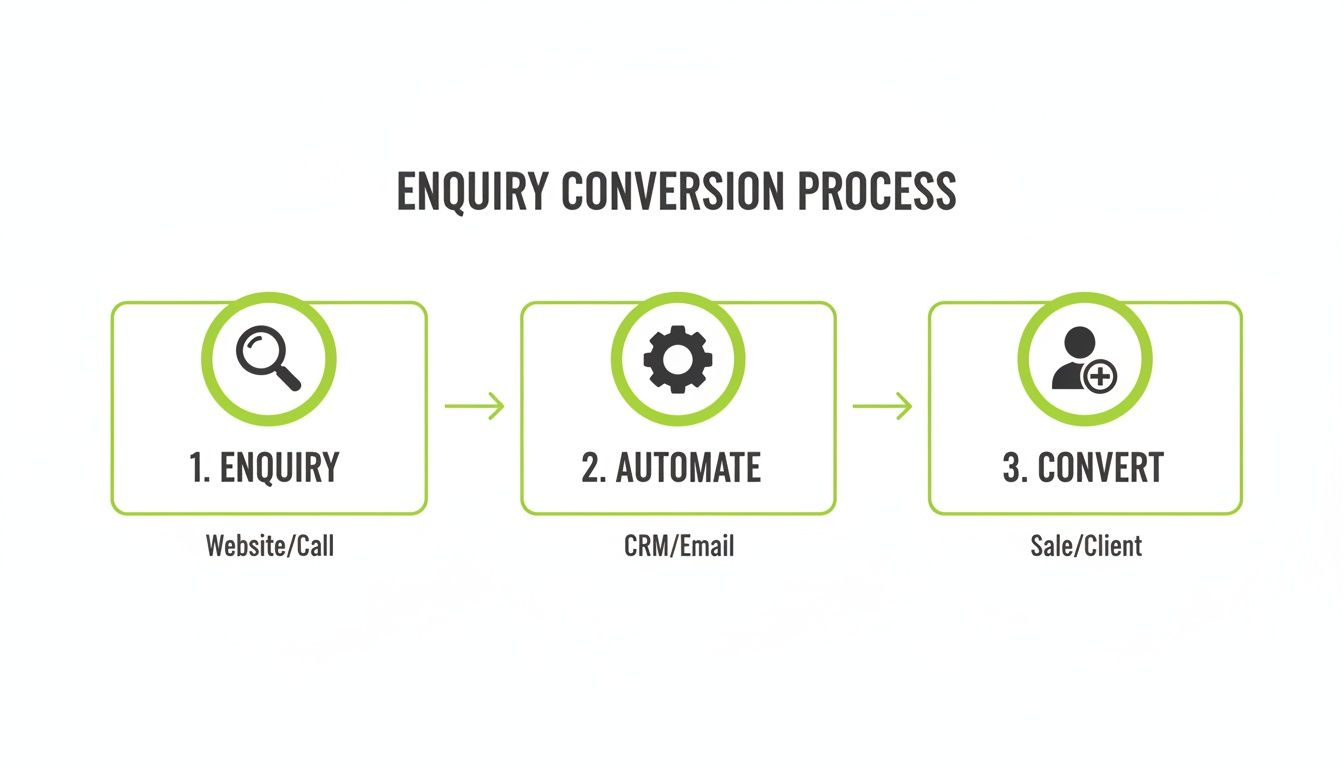
When you map it out like this, you can see how a structured system moves a prospect from initial curiosity through automated follow-ups and into a successful sale, giving you clear data at every step.
Using Data to Make Smarter Decisions
Once you start tracking these KPIs, you can stop reacting and start optimising. The data your CRM gathers is not just for looking back; it is for taking action. It allows you to ask sharp questions and get evidence-based answers.
Let us imagine your data shows a fantastic enquiry-to-booking rate for your 'Get into Golf' course. Great news! But then you notice a huge drop-off, as very few of those graduates sign up for the next step, the 'Improvers Academy'. This is not a failure; it is a signpost.
The goal of data analysis is not to find blame, but to find opportunities. A drop-off in your conversion funnel is simply pointing towards an area that needs a little refinement.
Armed with this insight, you can start digging. Is the price jump to the improver's course too steep? Is the schedule clashing with people’s workdays? Or maybe you just have not sold the benefits of the next course effectively enough.
From there, you can test solutions. Perhaps you could introduce a special bundled price for those who sign up for the 'Improvers Academy' right after finishing the beginner course. Or you could set up an automated email sequence that shares testimonials from past improvers, showcasing exactly how the course helped them.
This data-driven cycle of measure, analyse, and refine is the core of what we do at GolfRep. It replaces guesswork with a predictable growth engine. By focusing on your systems and tracking the complete customer journey, you can continuously improve your coaching offer, strengthen conversions, and turn your programmes into the most reliable source of new members your club has ever had.
Common Questions on Building Successful Golf Coaching Courses
When you are looking to launch or overhaul your golf coaching programmes, a few practical questions always come up. It is completely normal for club managers and committees to hit these same sticking points. Here are some straightforward answers to the most common queries we hear, based on what we have seen work time and again.
How Do We Get Our PGA Professional on Board with a New Coaching Structure?
Getting your PGA Professional on side is less about convincing and more about collaborating. This cannot feel like a directive coming down from the committee. For it to succeed, your pro needs to see this as a shared project from the very start: a way to grow their own coaching business and build their reputation.
The conversation should centre on what is in it for them. We are talking about a more predictable diary, a steady income stream from group courses, and the chance to become the go-to teaching expert in the local area. One of the biggest wins is showing them how a proper system, especially one powered by a good CRM, slashes their admin time. Automating the bookings, payments, and follow-up comms means they can stop chasing emails and just focus on coaching.
Sit down with them and map out the numbers. Show them how a structured pathway from a beginner taster course right through to full membership creates a constant, sustainable pipeline of new clients for their one-on-one lessons. When they see the system as a machine that feeds their own success, they will not just buy into it; they will champion it.
What’s the Best Way to Price Our Courses Without Devaluing Our Brand?
It is always tempting to get into a price war, but we strongly advise against it. Deep discounts often just attract one-off visitors who have no real intention of joining, which can cheapen your club’s image in the long run. The smarter play is to shift the focus from price to exceptional value.
Instead of just cutting the cost, think about what you can bundle into the package to make it irresistible. This immediately changes the conversation from "how much does it cost?" to "look at everything I get!".
- For Beginners: Imagine a 'Get into Golf' package that includes the lessons, unlimited range balls for the course duration, a free drink in the clubhouse after each session, and a voucher for a 9-hole twilight round once they have finished.
- For Improvers: You could offer different tiers. A 'Silver' package might cover the group lessons, while a 'Gold' upgrade adds a private swing analysis session or access to a members-only practice area for a month.
This approach means you are selling a complete experience and a guaranteed result, not just the coach's hourly rate. It cements your club’s position as a premium place to learn and improve, justifying a solid price point while making golfers feel they have received incredible value.
We Have a Limited Marketing Budget. What Are the Most Cost-Effective Tactics?
When the marketing pot is small, you have to be laser-focused. The good news is that you do not need a massive budget to see great results; you just need to put your money where it will work hardest.
Your most powerful and cost-effective tool is sitting right in front of you: your existing database. Running an email campaign to past visitors, society day guests, and old enquiry lists is almost free. You are talking to a warm audience that already knows who you are.
For paid ads, nothing beats the return on investment of a hyperlocal social media campaign. You can target specific postcodes right around your club and even layer on interests like 'golf' or people who follow your competitors. But here is the crucial part: the budget itself is less important than the system behind it. Every pound you spend is amplified when you have a solid process to capture, track, and convert every single lead you generate.
How Do We Handle Non-Members and Stop Them from Just Using Lessons Without Joining?
This is a perfectly valid concern, and it is one that can be solved with thoughtful programme design. The entire goal is to create a journey where becoming a member is simply the most logical and appealing next step.
Start by offering an initial 'Get into Golf' course to non-members at a really attractive price. Think of this as your acquisition tool, as it gets them through the door and experiencing what you have to offer.
The real magic is in the next step. Your follow-on programme, perhaps an 'Improvers Academy', should be priced with a clear incentive to join. For example, you might price it at £150 for non-members but only £100 for members. That simple £50 difference instantly demonstrates the financial benefit of taking up a trial or academy membership.
On top of that, use an automated follow-up system to keep in touch with these non-member participants. Send them personalised invites to club socials, member roll-ups, or an exclusive trial membership offer. If you make them feel part of the community from day one, joining stops feeling like a sales pitch and starts to feel like the natural thing to do.
At GolfRep, we specialise in helping UK golf clubs implement these very systems, turning coaching enquiries into a predictable pipeline of long-term members. Discover how our Growth System can build a sustainable revenue engine for your club at https://www.golfrep.co.
Ready to tap into our proven growth system?