How to Increase Golf Course Revenue

The popular answer to how to increase golf course revenue is to attract more golfers. That advice is incomplete. A club can spend more on advertising, reduce prices and fill the diary with activity, yet still fail to improve its financial position if the underlying constraint sits elsewhere.
Revenue depends on the whole commercial chain, from demand and booking through to retention and spend on site. A quiet weekday tee sheet needs a different intervention from a full tee sheet with weak yield. A shrinking membership needs a different product from a healthy membership with poor clubhouse spend. The right question for a board is simple: which constraint is currently limiting profitable revenue?
GolfRep works with golf clubs and facilities across acquisition, sales processes, CRM, follow-up, conversion, retention and revenue growth. The commercial principle is straightforward: identify the bottleneck, improve it, measure the result, then move to the next constraint.
Identifying Your Primary Revenue Constraint
More marketing is not automatically the answer. If a club has poor availability information, weak pricing, slow enquiry handling or an unappealing membership proposition, extra demand can increase workload without producing enough additional income.
Start by mapping the revenue journey for each income stream:
Attract: How do golfers, societies, members and event organisers discover the club?
Nurture: What happens after someone visits the website, joins a mailing list, downloads information or makes an initial enquiry?
Convert: Can the customer book, join or confirm an event without unnecessary delay?
Retain: Does the club give customers a reason to return, renew or spend more?
The audit should use actual operating evidence rather than committee opinion. Review the tee sheet by day and time, membership joins and leavers, visitor booking behaviour, enquiry stages, food and beverage sales, retail performance and practice-facility usage. Look for a constraint that appears repeatedly, not an isolated weak week.
Separate demand problems from operating problems
A demand problem usually shows up as low interest. The club has spare capacity, but few people are enquiring or attempting to book. The response may involve better positioning, local partnerships, improved course presentation or targeted campaigns.
A conversion problem looks different. People are visiting the website, requesting membership information, asking about societies or starting a booking, but too few complete the journey. In that case, more traffic isn't the first priority. The club needs to remove friction, clarify the offer and give staff ownership of the next action.
The same logic applies to membership. If the club attracts plenty of prospects but loses members after joining, the commercial issue may be onboarding, service quality, facilities or product fit. Hillier Hopkins' survey commentary identifies facility deterioration, dues increases and reduced service as important churn triggers, so a price increase without a visible improvement in value can damage recurring revenue. The survey also reports that 23% of clubs have more members leaving than joining, a clear reason to examine retention before relying on acquisition alone. The Golf Business Review's coverage of the survey provides the supporting context.
Board question: Which single operational failure would create the greatest financial improvement if fixed this quarter?
Use a constraint scorecard
Give each area a simple status, supported by evidence:
- Tee sheet: availability, occupancy, yield by time band and visitor repeat behaviour.
- Membership: joins, leavers, usage patterns, onboarding and reasons for cancellation.
- Ancillary spend: bar, food, retail, coaching, practice areas and events.
- Sales process: response speed, lead ownership, booked visits, proposals and closed revenue.
Don't launch four unrelated initiatives at once. Select the constraint with the strongest combination of financial value, controllability and implementation speed. The GolfRep guide to revenue growth management is useful for building this discipline into regular management decisions.
A club that identifies the constraint correctly can make a smaller, more focused investment and learn faster. A club that guesses will keep cycling through discounts, campaigns and capital projects without knowing which lever produced the result.
Optimising Tee Sheet Yield and Visitor Green Fees
Visitor revenue isn't just a question of filling empty times. The commercial objective is to put the right product in front of the right golfer while protecting the tee times that carry the greatest value.
Begin with a historical view of the tee sheet. Group times into practical categories such as premium weekend periods, standard weekday periods, twilight availability and shoulder-season inventory. For each category, compare booking lead time, cancellation behaviour, visitor demand, member usage and the revenue generated per available slot.
The Hillier Hopkins survey gives clubs an important distinction. Average rounds in members' clubs rose from 27,000 in 2023 to 32,000 in 2024, while average visitor rounds were 5,900 in 2024, broadly unchanged from 5,800 in 2023. The 2024/25 Hillier Hopkins report supports a practical conclusion: growth in total play doesn't automatically mean visitor revenue is improving.
Price the inventory, not the golfer
Protect peak availability with a firm rate and concentrate value-led packages on periods that need help. A twilight product might include a defined playing window, food and beverage credit or a practice add-on. A weekday package could combine green fee, breakfast and a guaranteed booking process for a small group.
The value comes from packaging and timing, not from announcing a blanket price cut. A discount reduces the perceived value of every tee time. A well-designed package gives the golfer a reason to choose an underused period while protecting premium inventory.
For societies and corporate groups, build clear packages around the operational reality of the day. Include arrival arrangements, competition administration, catering, practice access and post-round hospitality where these services improve the experience and increase total spend. Quote a complete product rather than forcing the organiser to assemble every component themselves.
Remove booking friction
The online journey should answer four questions immediately:
- What times are available?
- What does the round cost?
- What does the booking include?
- What happens after payment?
Test the journey on a mobile phone as an external visitor. Check whether the golfer can move from availability to confirmation without calling the club. If the software hides fees, requires unnecessary form fields or makes packages difficult to understand, the club is losing demand before staff can influence the sale.
Run a weekly yield meeting during the trading season. The commercial manager, golf operations lead and food and beverage manager should review empty inventory, package take-up, cancellations and the next available opportunities. The GolfRep guide to increasing tee sheet occupancy can support that review, but the club's own booking data must determine the action.
A good decision rule is simple. If a time regularly sells early, protect its price. If it remains empty close to play, improve its visibility or attach a relevant product. If it sells only after discounting, examine the offer, presentation and booking experience before reducing the rate again.
Designing Flexible Membership Products to Reduce Churn
Traditional annual membership assumes that golfers want the same access pattern every week. Many don't. A professional with variable working hours, a parent managing family commitments and a weekend-only golfer may value the club but reject a full subscription because the access model doesn't fit their life.
That doesn't mean every club should replace full membership. It means the club should create a deliberate product ladder, with clear differences in access, value and price.
Hillier Hopkins' survey reports that 40% of members' clubs now offer flexible memberships, while 23% of clubs have more members leaving than joining. The Golf Business Review analysis indicates that product design and retention now need to be considered together.
Build products around behaviour
Start with member usage, not demographic labels. Review when members play, how often they use the course, whether they use competitions, and which facilities they value. Then design access around genuine patterns.
A flexible proposition might include:
- Off-peak access: Suitable for golfers who can play during quieter periods, with restrictions explained plainly.
- Weekday access: Useful for retirees, shift workers and local golfers whose habits don't require weekend availability.
- Points or credits: A controlled way to offer limited access while preserving capacity during the busiest periods.
- Family access: A broader product that encourages household participation and creates more reasons to visit.
- Introductory access: A defined pathway from trial or casual play into a fuller membership, with the next step clear.
The price should reflect access, not merely imitate the full membership fee with a smaller number attached. Model the expected playing pattern, administrative cost, competition access and likely ancillary spend. A cheaper product can still be commercially sound if it brings in a golfer who wouldn't otherwise join and creates a route towards greater participation.
Protect the member experience
Flexible products fail when existing members believe they create unmanaged congestion or lower the quality of the club. Publish the rules before launch. Explain booking windows, peak restrictions, competition access and upgrade routes. Give the membership team a clear answer to common objections.
Retention also depends on the first months after joining. Assign someone to check whether new members have played, entered competitions, met other golfers and understood the facilities. A member who pays but doesn't participate is at risk even if there has been no complaint.
Practical rule: A flexible membership should make access easier to understand, not make the club's rules harder to manage.
Track each product separately. Monitor joins, cancellations, usage, upgrades, renewals and ancillary spend. Don't judge a flexible membership only by its headline subscription income. Its commercial value may also come from filling quieter times, introducing households to the club and keeping golfers connected when a full subscription would no longer fit.
The GolfRep resource on golf club churn rate offers a useful framework for examining the reasons members leave and the signals that appear before cancellation.
Maximising Food and Beverage and Ancillary Spend
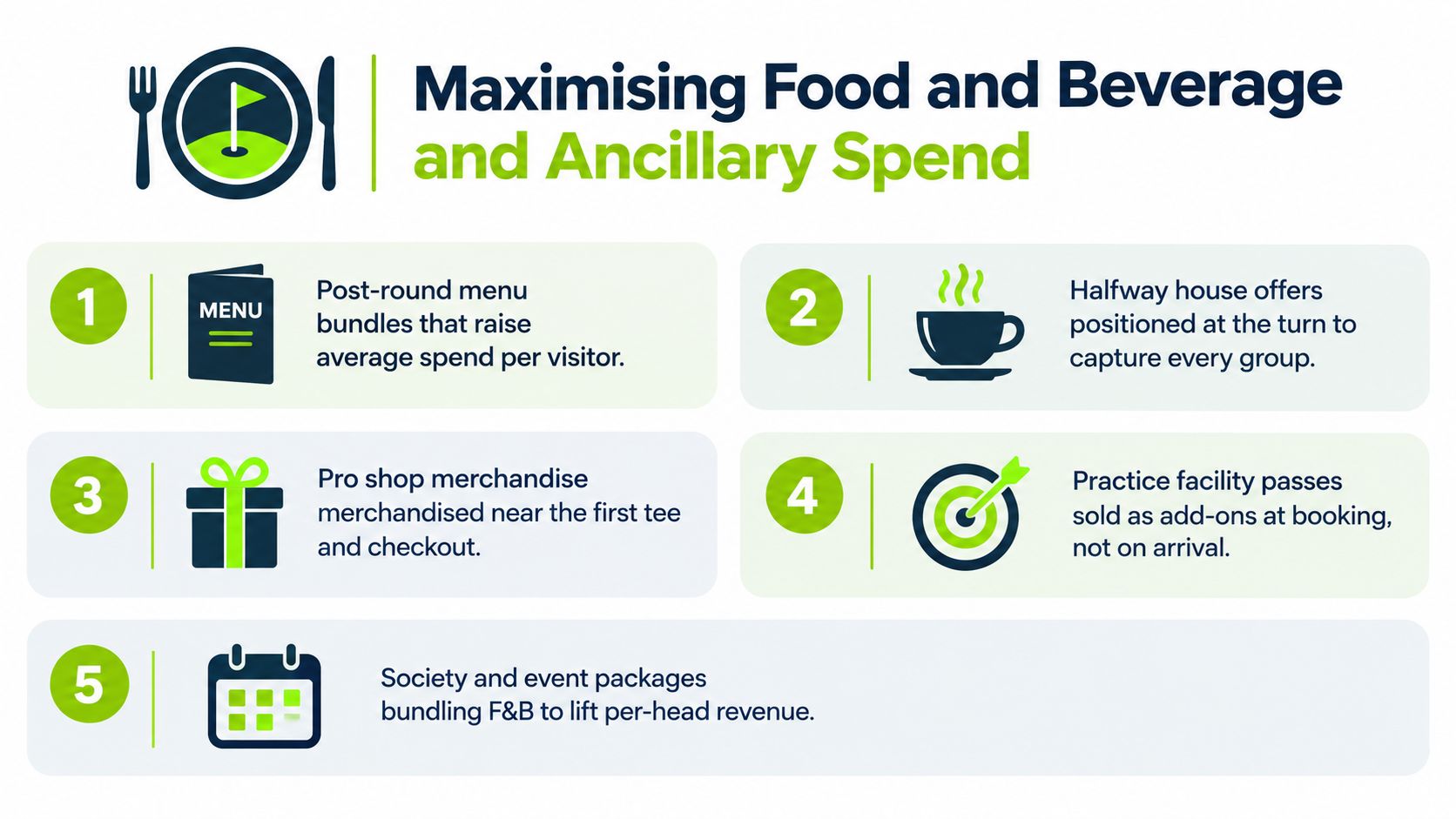
A golfer's value doesn't end when the scorecard is returned. The club has several natural opportunities to increase spend before the round, at the turn, after play and during non-golf visits. These opportunities work only when the operation makes the purchase convenient and relevant.
Hillier Hopkins' 2024/25 survey reports that 81% of members' clubs generated annual bar revenue above £150,000, up from 70% in the prior year. The Hillier Hopkins survey report shows that bar income is a substantial recurring revenue stream for many clubs, not a minor service attached to golf.
Design the day around spending moments
The halfway house should offer quick, dependable products that fit the pace of play. The clubhouse should make the post-round decision easy, with a menu that works for golfers who want a fast meal as well as groups prepared to stay. Society packages should settle catering in advance, reducing uncertainty for the organiser and improving the club's ability to plan stock and staffing.
Use simple prompts rather than forced selling. A bar team member can ask whether a group would like food after the round when confirming a society. A pro shop colleague can suggest a relevant practice add-on at booking. A coach can offer a follow-up session while the player's progress is fresh.
The physical layout matters too. Place merchandise where golfers naturally pause, make food visible from arrival areas and put practice products into the booking journey rather than waiting until the customer reaches the facility.
Turn facilities into products
Practice grounds, coaching, simulator bays and clubhouse rooms should have defined products, not just availability. Examples include coaching blocks, practice access attached to a visitor booking, winter sessions, small group instruction and casual dining tied to an event.
These products need owners and operating rules. Decide who sells them, how they are booked, which times are available and what happens when weather disrupts the plan. A facility that depends on staff remembering to mention an add-on will produce inconsistent results.
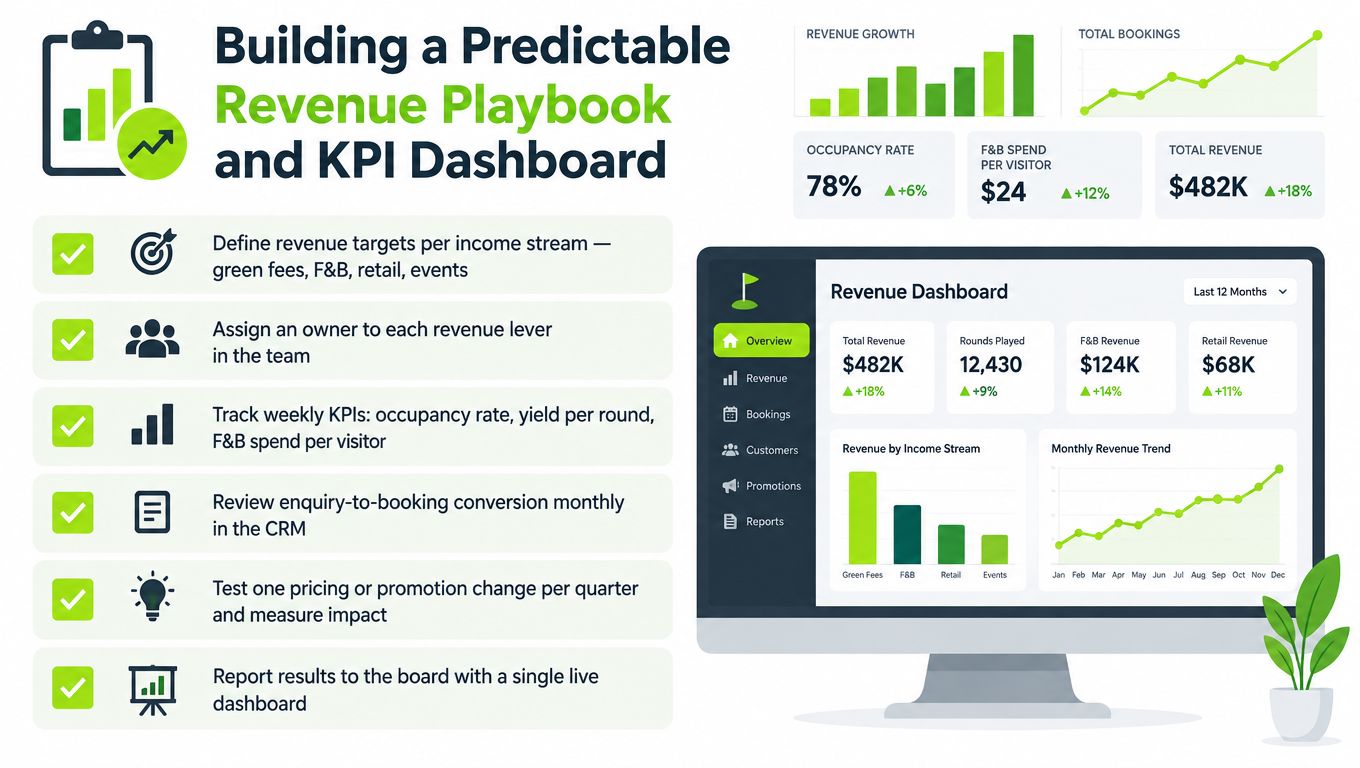
Measure spend per visitor, bar revenue by trading period, society food and beverage revenue, retail sales, coaching utilisation and practice-facility usage. Review the figures alongside staffing and product costs, because revenue without margin can disguise a weak commercial decision.
The strongest clubs don't treat food and beverage as a separate department competing with golf. They design the visit so the course, clubhouse, retail operation and practice facilities reinforce one another. More rounds create more opportunities, but the operation must give golfers a clear, well-timed reason to spend.
Accelerating Enquiry Conversion with CRM Automation
A club can generate demand and still lose revenue through slow, inconsistent handling. Membership, society and event enquiries often arrive through different channels, so staff need one visible process that records the contact, assigns ownership and shows the next action.
An independent UK golf-club marketing analysis reports an average enquiry response time of 47 hours 32 minutes, while the lead-response research cited in that analysis says that contacting a lead within five minutes makes them 2.6 times more likely to convert. GolfRep's UK golf membership marketing analysis provides the supporting figures.
Build the workflow around ownership
A practical CRM workflow should do five things:
- Capture: Record web forms, telephone notes, email enquiries and social enquiries in one pipeline.
- Route: Assign the enquiry to the appropriate membership, golf operations or events owner.
- Respond: Send an immediate acknowledgement and give staff a clear response standard during staffed hours.
- Follow up: Trigger a same-day second touch when the prospect hasn't replied.
- Report: Show open enquiries, overdue actions, stage movement and closed revenue.
Automation should remove admin, not replace judgement. A membership prospect may need a course visit and a conversation about access. A society organiser may need a package, date options and catering details. An event enquiry may require a structured proposal. The system should guide the next step while keeping the human conversation relevant.
Track speed to first response, time to booked visit, enquiry-to-booking conversion, enquiry-to-join conversion, pipeline value and lost-reason categories. Review these by enquiry type. A club may handle membership enquiries well while losing event business because nobody owns proposals outside office hours.
Commercial standard: Every open enquiry needs an owner, a next action and a date.
GolfRep can be used as one option for connecting demand generation with CRM visibility, structured follow-up and reporting. The important point isn't the brand of software. It's whether the club can see every opportunity, act quickly and explain why a prospect did or didn't convert.
A CRM also protects the club during staff absence and turnover. Instead of relying on personal inboxes or memory, the team can see the conversation history and continue the process. That makes revenue less dependent on one individual and gives the general manager a reliable view of the pipeline.
Building a Predictable Revenue Playbook and KPI Dashboard
A dashboard shouldn't be a collection of figures presented to satisfy a committee. It should help the management team decide what to do next.
Create one view covering each major income stream. Keep operational measures close to financial outcomes so the team can see the relationship between activity and revenue.
Choose measures that drive decisions
A useful weekly dashboard can include:
- Visitor golf: occupancy by time band, yield per round, cancellations and booking lead time.
- Membership: new joins, leavers, renewal position, product mix and member usage.
- Food and beverage: revenue by service period, spend per visitor, gross margin and labour coverage.
- Events and societies: enquiries, proposals, confirmed dates, average booking value and repeat bookings.
- Sales process: new enquiries, speed to first response, open pipeline, conversion and lost reasons.
Assign one owner to each measure. The owner doesn't need to control every factor, but they must explain movement and propose an action. A dashboard without accountability becomes a monthly reporting exercise rather than a management tool.
Use the same definitions every week. Decide what counts as an enquiry, a confirmed booking, a member join, a lost opportunity and an occupied tee slot. If departments use different definitions, the board will debate the numbers instead of making decisions.
Prioritise by impact and effort
Rank proposed initiatives on a simple grid:
| Priority | Commercial situation | Recommended action |
|---|---|---|
| High impact, low effort | Clear friction with an available owner | Implement quickly and measure |
| High impact, high effort | Strong opportunity requiring systems or staffing | Build a defined project plan |
| Low impact, low effort | Useful improvement with limited upside | Add to routine operations |
| Low impact, high effort | Weak return or unclear evidence | Defer until the constraint changes |
Run a monthly commercial review with the general manager, department owners and finance lead. Each owner should report the result, the explanation and the next action. Avoid approving a new promotion until the team has identified the capacity, product, process or retention issue it is intended to solve.
Food and beverage teams can also learn from adjacent hospitality disciplines. A practical resource on data analytics for restaurants can help managers think about product mix, service periods, customer behaviour and margin rather than relying only on total takings.
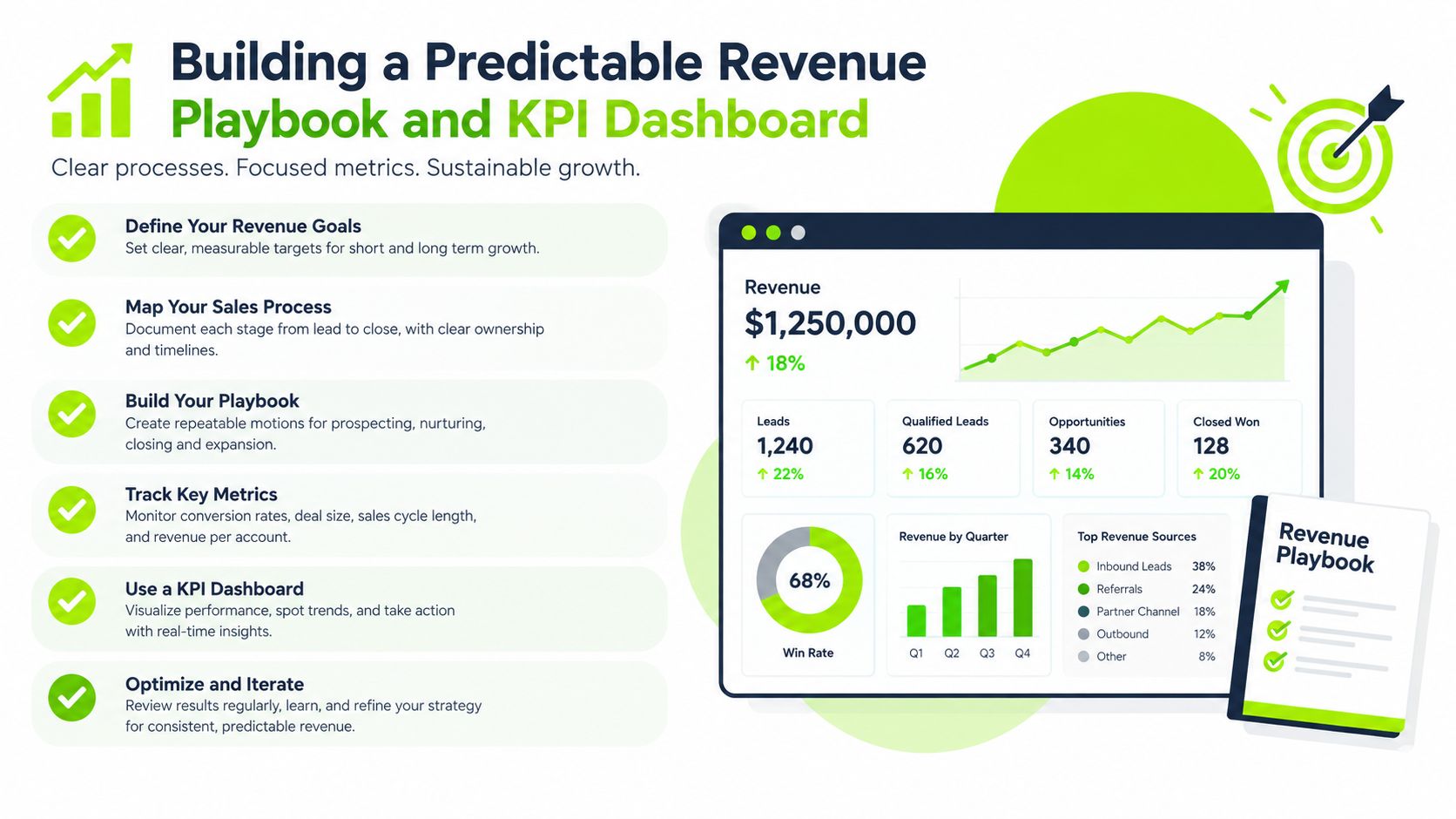
The board's role is to maintain focus. Revenue growth won't come from launching every possible idea. It comes from finding the current constraint, giving someone responsibility for it, measuring the financial effect and stopping activities that don't improve the result.
GolfRep helps golf clubs identify commercial constraints across membership, visitor golf, societies, events and ancillary revenue, then connect acquisition, CRM, follow-up and reporting into a workable operating system. If you'd like to understand which revenue lever is limiting your club and what to fix first, visit GolfRep.
Ready to tap into our proven growth system?