Golf Membership Marketing That Converts Enquiries
Most golf clubs don't have an enquiry problem. They have a response and conversion problem. More traffic, more forms and more open-day visitors won't create predictable membership growth if enquiries sit in an inbox, ownership is unclear or nobody can see which prospects have been contacted.
That's the uncomfortable truth at the centre of effective golf membership marketing. The club that wins the member isn't always the one with the biggest advertising budget. It's often the one that responds promptly, qualifies interest properly and gives every prospect a clear next step.
Why Most Golf Membership Marketing Fails Before the Follow Up
More advertising will not fix a club that loses enquiries after they arrive. The commercial problem is usually the handover from interest to conversation, where slow replies, unclear ownership and weak visibility turn paid attention into missed membership opportunities.
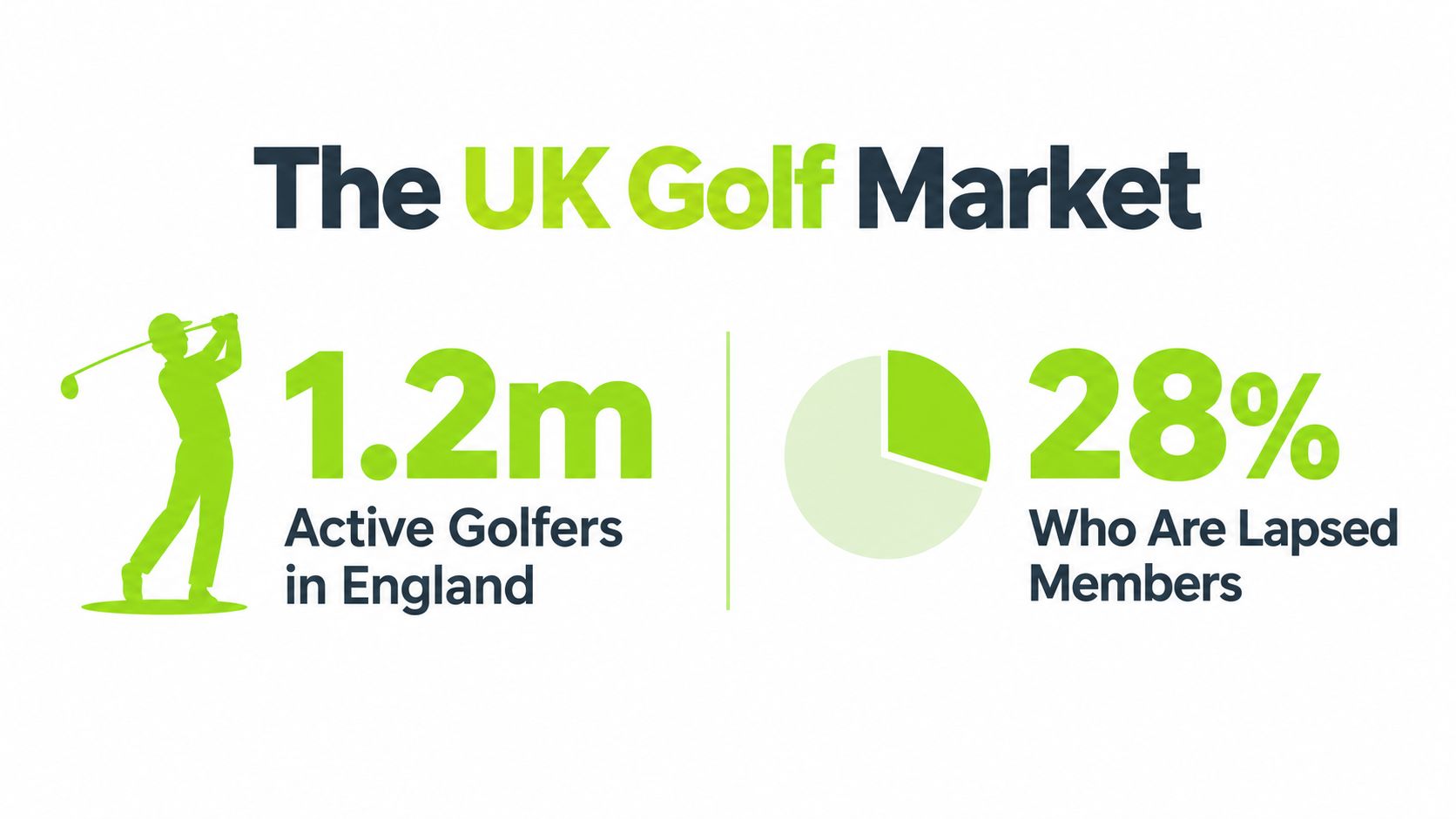
UK golf clubs already have a substantial addressable market. England Golf reported 1,735 affiliated golf clubs and more than 730,000 club members nationwide. Club membership reached 750,071 in 2025, up 2.66% year on year from 730,602, the highest level in at least 13 years, according to England Golf membership figures reported by The Golf Business.
The opportunity exists. Clubs lose it in the period between an enquiry and the first useful response.
A golfer submits a form during the evening. The membership secretary sees it the following morning. A volunteer plans to call, but a competition, staffing issue or committee meeting intervenes. The golfer receives no acknowledgement, cannot see the next step and starts considering another club that replies first.
Practical rule: Treat every enquiry as a live sales conversation, not an administrative task.
The enquiry leak is usually invisible
GolfRep's UK golf club enquiry data reports an average response time of 47 hours and 32 minutes for membership enquiries, as shown in GolfRep's analysis of golf club membership marketing. That delay matters because interest fades quickly, especially when a golfer has contacted several clubs at once.
UK lead-response research identifies the first five minutes as the highest-value response window. The research reports that leads contacted within five minutes are 2.6 times more likely to convert, while conversion rates are 98% higher when follow-up happens within five minutes. These findings are summarised in UK speed-to-lead conversion research.
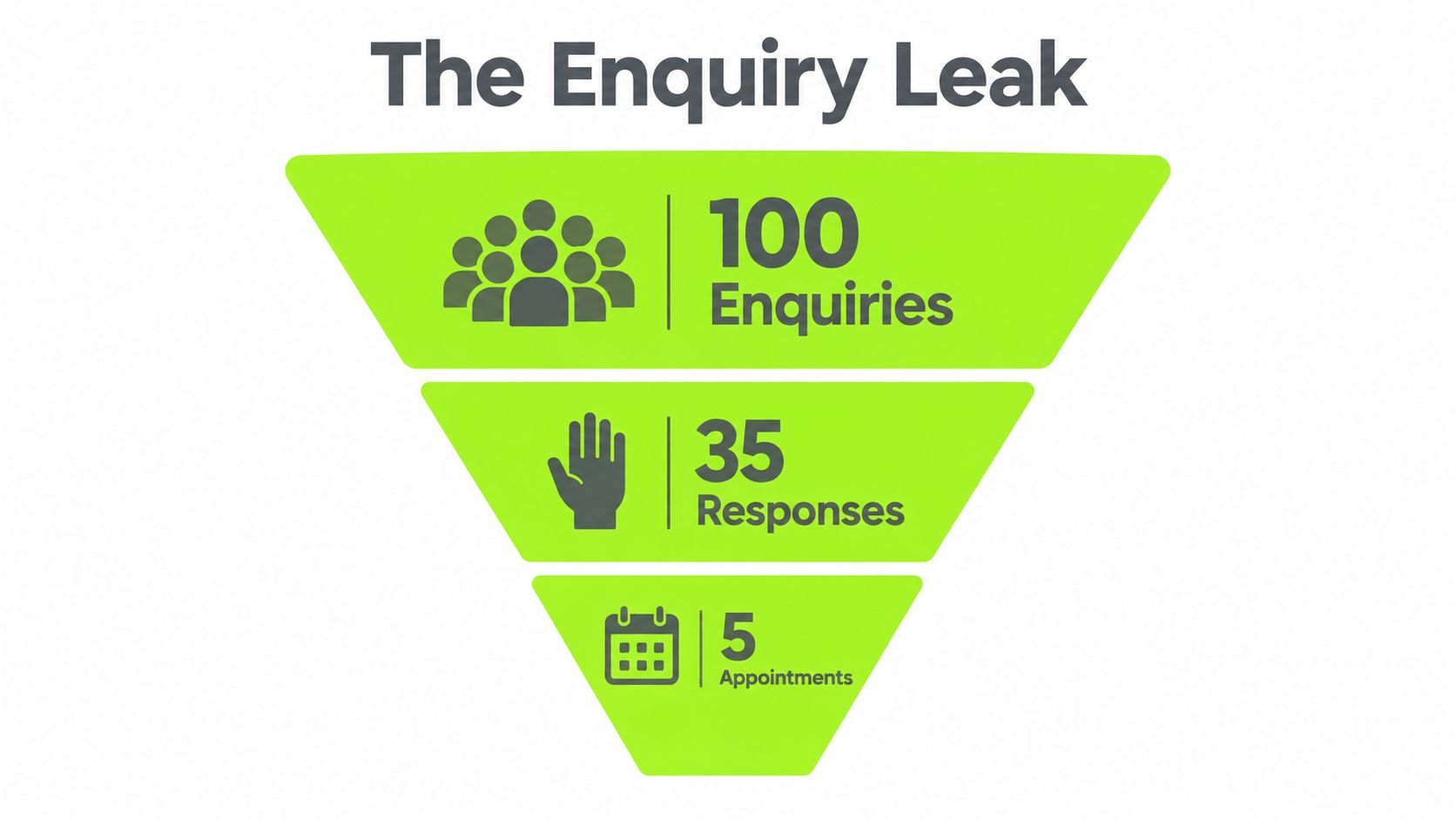
The illustration shows the commercial reality. Enquiry volume matters only when the club can move prospects through each stage. If nobody can identify who has replied, who needs a call or who has gone quiet, managers are measuring activity instead of pipeline health.
A CRM should show the owner, status, last contact, next action and likely outcome for every enquiry. That visibility replaces memory with an operating record, giving managers something specific to review with staff and committees.
Replace manual effort with an accountable process
A spreadsheet can record names. It rarely creates disciplined follow-up across weekends, staff absence and multiple enquiry channels. A proper system captures enquiries from forms, adverts and other agreed sources, acknowledges them promptly, assigns responsibility and creates the next task.
GolfRep combines lead generation with structured follow-up and CRM systems. That is different from acting as a generic marketing agency. The purpose is a predictable pipeline from first click to booked visit and membership decision.
Before increasing advertising spend, audit the current journey. Measure response speed, confirm who owns an enquiry after the first call, check whether every prospect has a recorded next action and identify where conversations stall. Those findings will show whether the club needs more leads or needs to stop losing the ones it already earns.
Who You Are Trying to Attract and Why It Matters
Broad awareness is a poor targeting strategy for a private golf club. The club needs golfers who fit its location, culture, playing habits and membership offer, then needs a system that identifies and handles their enquiries properly.
Locality should be the first filter. The English market is broad and spread across many areas, so a club should build campaigns around the communities it can serve rather than pay to reach an undefined national audience. As noted earlier, the market offers room for growth, but that opportunity only matters when the club can recognise a suitable prospect and move the enquiry towards a visit or membership decision.
Build segments around decisions, not demographics alone
Age can inform the brief, but the golfer's reason for joining usually gives the campaign more direction. Segmenting by the decision a prospect is trying to make produces clearer creative, better enquiry questions and more relevant follow-up.
Consider four practical audiences:
- Women looking for belonging: Show welcoming playing groups, social opportunities, coaching access and a clear route into club life. Avoid reducing the offer to a generic ladies' membership label.
- Younger households: Focus on flexibility, convenience, family access and playing opportunities that fit around work and other commitments.
- Established golfers: Explain course standards, competition, member interaction and the value of a well-run club environment.
- Lapsed or occasional golfers: Address confidence, re-entry and ease. These prospects may need reassurance that returning to regular play will feel manageable rather than intimidating.
The Hillier Hopkins UK golf club survey provides useful context for this targeting work. It reports that female membership reached 18% of total membership, up from 15% in 2022, while junior membership remained at 9% and 64% of members were aged 51 and over. Clubs also welcomed an average of 94 new members in 2023. Use those findings as context, not as a reason to copy another club's campaign.
Connect targeting to retention
A target audience is only useful if it produces members who engage after joining. Campaign language must describe the experience accurately, so the right golfer can recognise the fit before submitting an enquiry. Accurate expectations also give staff a stronger basis for the first call and the follow-up sequence.
Write every campaign brief around four fields:
- Location: Which surrounding areas can the club serve conveniently?
- Life stage: Is the campaign aimed at new households, returning golfers, established players or families?
- Playing frequency: Does the offer suit frequent competition players, occasional golfers or people rebuilding a routine?
- Reason to join: What problem does membership solve, such as access, community, structure or convenience?
The Hillier Hopkins survey reports that the proportion of clubs with waiting lists fell to 46% from 52%, with the average waiting list at 51 people versus 61 previously. Only 24% of member clubs had more leavers than joiners. The practical conclusion is clear. A club cannot rely on queues to protect membership. It must target relevant golfers, respond quickly, record every next action and nurture enquiries until the prospect reaches a decision.
Turning Interest Into Qualified Enquiries
More enquiries will not fix a weak membership process. The advert, landing page and enquiry form must help the right golfer recognise the fit, then give your team enough information to act quickly.
Start with the golfer's motivation, not the membership product. “Join our club” makes the prospect work out the value. “Find regular playing opportunities close to home” or “Explore a welcoming route back into club golf” gives the message a clear purpose and sets a more useful expectation.

Make the advert earn the click
Your advert should answer three questions quickly:
- Who is this for? Name the audience, location or situation.
- Why should they care? Explain the practical benefit of joining.
- What happens next? Ask for one clear action, such as arranging a visit or discussing membership options.
Use real club assets wherever possible. Course photography can attract attention, but images of members playing, meeting or joining club activities often show belonging more clearly. Keep every claim accurate. If the club offers flexible categories, coaching or a welcoming induction, explain those features plainly and ensure staff can discuss them consistently.
Build a landing page for one decision
A membership landing page should not send every visitor to the homepage. Give it one audience, one proposition and one next step.
Include:
- A headline that matches the advert.
- A short explanation of who the membership suits.
- The practical details a prospect needs before enquiring.
- Evidence such as course imagery, testimonials or information about club activities, where available.
- A form that asks only for information the club will use.
- A clear statement of what happens after submission.
Review page structure, message clarity and friction using Polish landing page CRO. The page should make the next decision easy, not force a prospect to search for basic answers.
Qualify without creating friction
Qualification should help staff prioritise conversations while helping the golfer reach the right answer faster. Keep the form short and purposeful.
Ask for location, playing experience, preferred contact method and the membership type being considered. A question about when the prospect would like to visit can distinguish immediate intent from early research. Do not collect information nobody will use.
Send each submission directly into the club's pipeline. AI lead qualification for golf clubs offers guidance on using automation to assess membership enquiries. The operational rule is simple: an enquiry has value only when the right person sees it promptly, understands its context and has a defined next action. A high-quality advert cannot compensate for an enquiry that disappears into an inbox.
Building a Follow Up System That Converts
Golf membership marketing rarely fails because a club cannot generate interest. It fails when an enquiry sits unseen, changes hands without ownership or receives a generic reply after the prospect has moved on. Build the follow-up process before increasing lead volume.
The system must operate outside office hours and during busy periods. Automation should remember acknowledgements, call attempts and reminders. Staff should handle judgement, questions and the relationship.
Start with a visible pipeline that reflects the club's actual process: new enquiry, contacted, qualified, visit invited, visit booked, decision pending, joined and not proceeding. Assign every record an owner, a next action and a due point. “We'll get back to them” is not a stage. The GolfRep guide to a golf club follow-up system sets out the operational detail behind this approach.
Respond immediately, then involve a person
An instant acknowledgement confirms that the club received the enquiry. Make it useful. Confirm the next step, include a relevant membership resource and offer a straightforward way to arrange a conversation or visit.
Automation can send the first response and support basic qualification. A named staff member must then take ownership, answer questions and assess whether the club suits the golfer. The first message buys time. It does not replace a proper conversation.
The Made Smarter report on the UK lead-response crisis says 78% of customers buy from the first company to respond, while only 7% of UK businesses achieve sub-five-minute response times and the average response time is 47 hours. Those findings are detailed in the UK lead-response report.
Give every enquiry a planned route
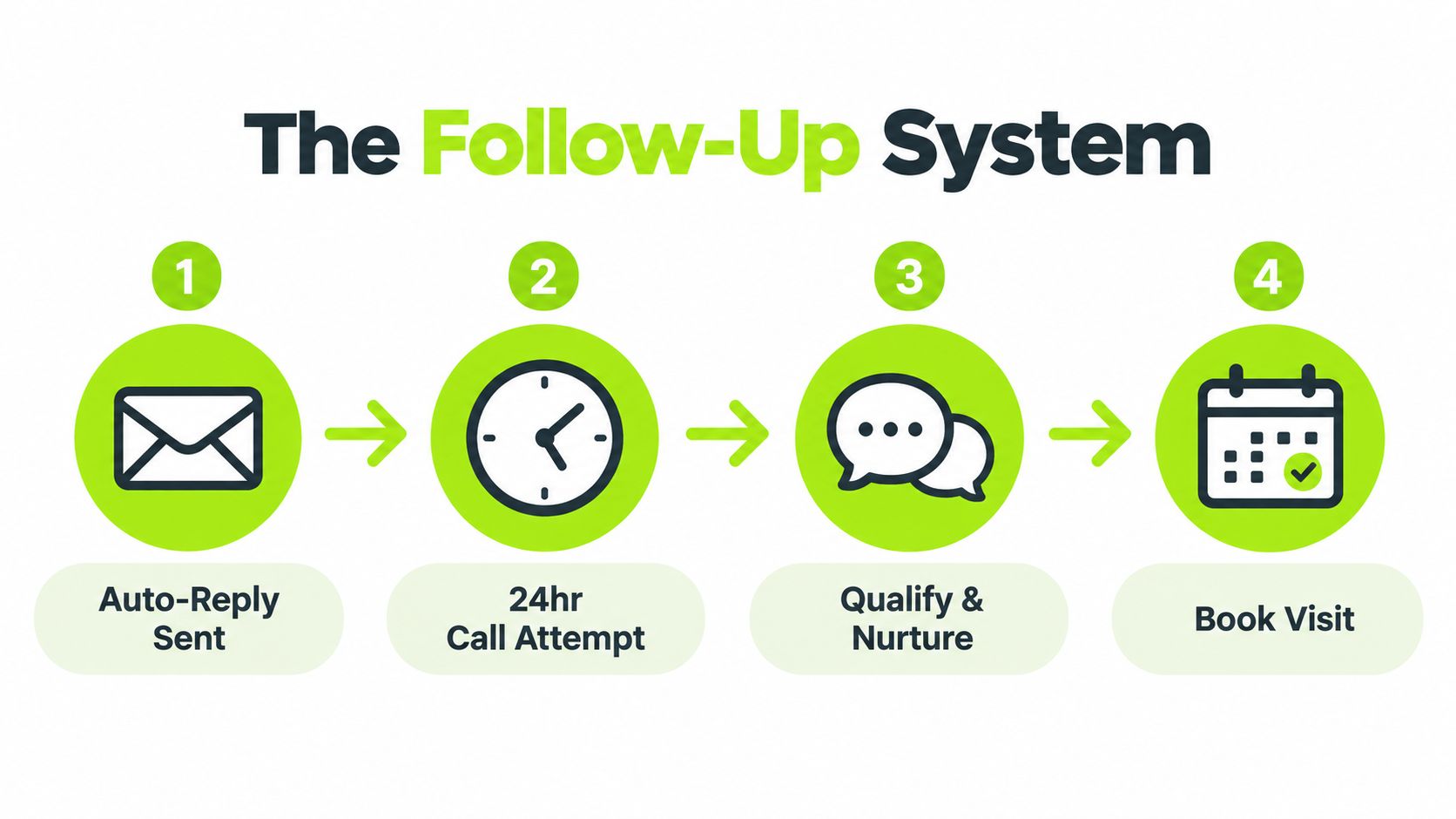
Use a defined sequence:
- Acknowledgement: Confirm receipt and explain what happens next.
- Call attempt: Contact the prospect promptly and record the outcome.
- Qualification: Establish fit, timing, playing preferences and questions.
- Visit invitation: Offer a clear opportunity to see the course and clubhouse.
- Nurture: Send relevant information when the prospect is not ready to decide.
- Decision follow-up: Record the outcome instead of letting the enquiry disappear.
Set the cadence around club capacity and the prospect's consent. Every message should remove a specific barrier to the next action, such as cost, playing access, social fit, joining process or timing. Generic reminders create activity without progress.
Protect handovers and evenings
Assign a primary owner, a backup owner and an escalation rule. If an automated qualification exchange identifies someone who wants a visit, the booking task must reach the correct person without a search through email threads.
The system should show overdue actions, unanswered enquiries and records without a next step. Review those exceptions daily, including evenings and weekends where the club promises a prompt response. Automation removes delay and repetition. Club staff provide judgement, warmth and local knowledge.
Measuring What Matters and Improving Every Month
Enquiry volume is an activity measure, not a membership result. A club can generate steady interest and still lose prospects through slow responses, unclear ownership and weak follow-up.
Build the report around the prospect's route from source to outcome. Record which campaign produced the enquiry, how quickly the club made contact, whether the prospect qualified, whether a visit was booked and whether membership followed. That visibility gives managers and committees evidence for decisions, rather than relying on “Facebook seems busy” or “the open day felt successful”. GolfRep's guidance on getting more golf club members also provides useful reference points for reviewing this process.
Use a pipeline health check
| Pipeline Stage | What to Measure | Healthy Benchmark |
|---|---|---|
| New to Contacted | Enquiries with a recorded contact attempt | 90% or above |
| Contacted to Qualified | Prospects who fit the club's criteria and have a recorded next step | Review monthly for consistency and stalled records |
| Qualified to Visit | Qualified prospects invited to or booked for a visit | Compare by source, audience and campaign |
| Visit to Decision | Visitors with a documented decision path | Review reasons for delay, decline or no decision |
| Enquiry to Membership | New enquiries that become members | 15% to 30% is the referenced conversion range |
Use the table to manage the system, not to blame staff. A weak New to Contacted rate points to unclear ownership, missing alerts or poor response discipline. If qualified prospects do not book visits, examine the invitation and the visit experience. If visits fail to become memberships, review the proposition, objections and follow-up quality.
Review the numbers monthly, then inspect individual records behind the trend. A falling conversion rate may reflect a change in audience, a broken form, slower contact or inconsistent qualification. The report should make that cause visible.
Include retention in the same conversation
Acquisition reporting can hide avoidable churn. In a 2025 UK member survey, 77.9% planned to renew, 18.3% were undecided and 3.8% said they wouldn't renew, according to Golfshake's report on UK golf club membership health.
The undecided group needs a planned communication journey. Track reduced participation, unanswered messages and missing onboarding engagement. Give staff a clear reason and a defined moment to intervene, then record the result. The same visibility used for prospects should help the club re-engage members before they leave.
Use GolfRep's guide to measuring marketing effectiveness to connect channel performance with commercial outcomes. Review the report, fix one weak stage and measure the change the following month.
Your Practical Playbook for Predictable Growth
Predictable growth doesn't require a complicated marketing calendar. It requires a short operating rhythm that staff can follow and managers can inspect.
Begin with the audience. Choose the local golfers the club wants to attract, define why they'd join and build the landing page around that decision. Then make sure the advert, form and follow-up messages describe the same proposition. A prospect shouldn't click an advert about flexible access and receive a generic membership email.
Run the process as a weekly habit
Use this checklist with the person responsible for membership:
- Review targeting: Check whether enquiries match the intended location, life stage and playing pattern.
- Inspect creative: Remove adverts that attract attention without producing qualified conversations.
- Test the landing page: Confirm that the page answers practical questions and makes the next action obvious.
- Check response discipline: Review every new enquiry for an owner, contact attempt and next action.
- Clean the CRM: Close duplicates, update outcomes and remove stalled records from active stages.
- Review visits: Identify why qualified prospects did or didn't attend.
- Monitor retention: Flag undecided members and people whose engagement has fallen.
- Agree one improvement: Change one part of the process, then measure what happens.
Don't copy another club's campaign blindly. A successful open-day message, membership category or social advert may depend on that club's location, pricing, facilities and culture. Use ad platform use cases to broaden your thinking about campaign objectives, then adapt the execution to your own club and pipeline data.
Golf membership marketing works best when marketing and operations share responsibility. The advert creates interest, the landing page sets expectations, the CRM protects visibility and the club team turns a conversation into a visit and a decision.
Retention and reactivation belong in the same system. The UK survey data shows that most members planned to renew, but the undecided segment still needs attention. Clubs that communicate early, onboard properly and notice disengagement have more control than clubs that wait for resignations.
GolfRep can help clubs connect advertising, qualification, automated follow-up and revenue tracking into one membership pipeline. If your club is losing enquiries between form submission and visit, visit GolfRep to discuss a practical system for improving response time, visibility and conversion. Bring your current enquiry process, and use the conversation to identify where the next member is being lost.
Ready to tap into our proven growth system?