Speed to Lead Golf Club: A Growth Partner's Playbook

Most advice around speed in golf talks about swing speed. That's useful for coaching, fitting, and performance marketing. It's not the commercial problem most clubs are trying to solve.
For a club manager, speed to lead golf club means something far more practical. How quickly does your club respond when someone asks about membership, a tour, lessons, fitting, or a trial visit? If that response depends on a shared inbox, a handwritten note at reception, or one staff member remembering to call back later, the issue isn't lead generation. It's lead leakage.
At GolfRep, we see this repeatedly. Clubs often assume the answer is more enquiries. In reality, many already have enough interest to grow. What they don't have is a reliable system for catching that interest, routing it properly, and following up before it goes cold.
Why Most Golf Clubs Misunderstand 'Speed to Lead'

Most clubs hear the phrase and think of clubhead speed. That's understandable. Public golf content heavily leans that way. But one of the biggest under-served gaps for UK clubs is that most content focuses on swing speed, not the operational problem of getting golfers to the first response fast enough to stop enquiry decay, as highlighted by TPI's discussion of driving distance and swing mechanics.
That misunderstanding creates a costly blind spot. A club can spend money on ads, social campaigns, website work, and open days, then lose the commercial benefit because nobody owns the response process properly.
More enquiries won't fix a broken handoff
A typical club has demand coming in from several directions at once. Membership forms on the website, Facebook messages, email enquiries, lesson requests through the pro, visitors asking at reception, and referrals passed around internally. If those routes don't feed one organised process, staff end up reacting instead of managing.
That's where clubs get stuck. They think they have a marketing problem when they have a systems problem.
If you want a broader view of why this happens, our piece on why most golf club marketing fails covers the same pattern from a wider pipeline perspective.
Practical rule: If your club can't see every enquiry, assign an owner, and confirm first contact quickly, you don't have a lead system. You have hopeful administration.
Enquiry decay is operational, not theoretical
Enquiry decay sounds like a marketing phrase. In practice, it's much simpler. A golfer shows interest. Time passes. Their intent drops. They join another club, book somewhere else, or decide not to bother.
Clubs often underestimate how often this happens because the lost lead rarely complains. They just disappear.
Common causes are easy to recognise:
- Shared inbox dependency: One person sees the email, but they're off-site, busy, or assume someone else will handle it.
- No triage: Every enquiry is treated the same, whether it's a serious membership prospect or a general question about green fees.
- Manual follow-up: Staff mean to reply, but the day gets taken over by competitions, member issues, weather disruption, or events.
- No visibility: Management can't tell what was answered, what's pending, or what was never followed up.
Speed is a business discipline
A good speed to lead golf club system isn't about sending robotic messages for the sake of it. It's about preserving intent long enough for a real conversation to happen.
That means three things need to happen quickly:
- Acknowledge the enquiry
- Route it to the right person
- Move the prospect to the next step
The clubs that do this well don't rely on memory. They build a process that works on busy days, weekends, staff holidays, and committee-led handovers.
How to Diagnose Your Current Lead Response System
The fastest way to improve lead handling is to stop assuming it works and test it properly.
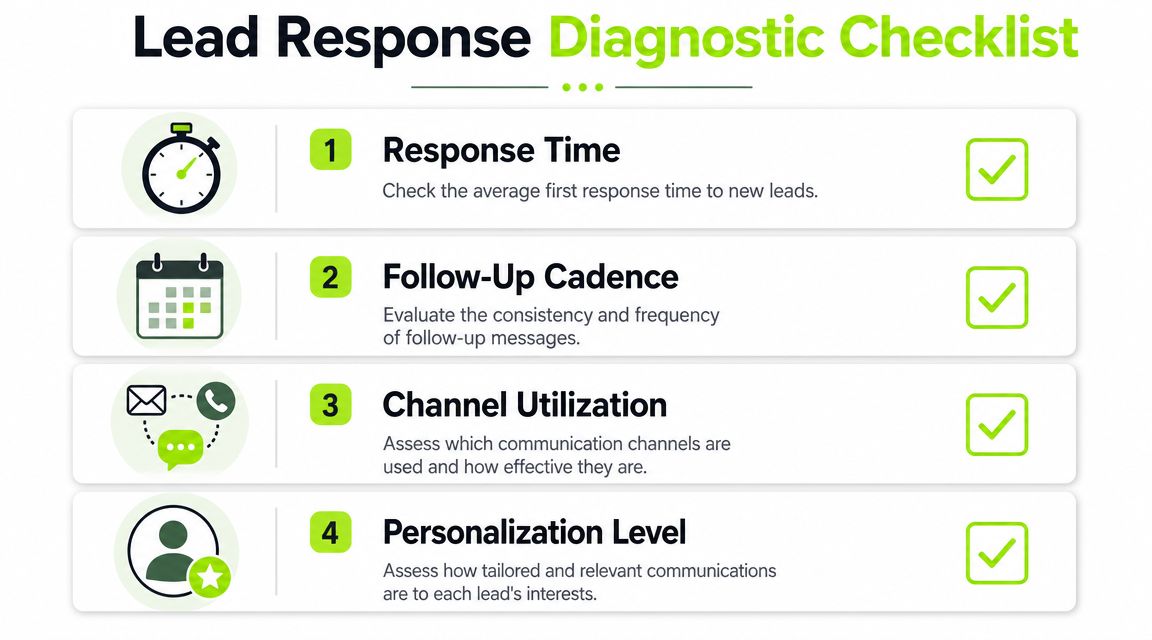
In golf, measurement always improves performance. Speedgolf is a useful metaphor here because it combines score and time into one result. Clubs should think similarly and measure both conversion and response speed, as described in the Speedgolf overview.
Run a mystery shopper test
Don't start with reports. Start with reality.
Submit a genuine-looking membership enquiry through your own website. Send one by email. If relevant, send a Facebook or Instagram message as well. Then track exactly what happens next. Not what staff believe happens. What actually happens.
Check these points:
- First acknowledgement: Did the prospect receive any confirmation that their enquiry had been received?
- Human follow-up: Did a named person make contact, or was the lead left in limbo?
- Channel consistency: If the enquiry came through social, did anyone move it into the main sales process?
- Next-step clarity: Did the club ask the prospect to book a call, visit, or tour?
Audit the handoffs
Most response failures happen between people, not because of a lack of effort.
A website form may go to admin. Admin may forward it to the membership secretary. The secretary may wait to check pricing with the manager. The manager may assume the pro is better placed to handle it. Meanwhile, the prospect hears nothing useful.
The weak point in most clubs isn't whether someone cares. It's whether the process still works when everyone is busy at the same time.
A quick internal audit usually reveals one of four patterns:
| Problem area | What it looks like in practice |
|---|---|
| Inbox bottleneck | New enquiries sit in one shared mailbox with no ownership |
| Spreadsheet tracking | Staff log leads manually, but updates are inconsistent |
| Phone-only follow-up | Good conversations happen, but nothing is recorded |
| Department split | Membership, lessons, and fitting leads get handled in separate silos |
Use a simple diagnostic checklist
You don't need complex software to identify the problem. You need honest answers.
- Response time: How long does it usually take before a new prospect receives a useful reply?
- Ownership: Is one person clearly responsible for each lead at every stage?
- Follow-up rhythm: If the prospect doesn't reply, does anyone follow up again in a structured way?
- Lead status: Can management see which enquiries are new, active, booked, won, or lost?
- Source tracking: Do you know whether leads came from the website, social media, referral, event, or phone?
If you can't answer those questions without asking three members of staff and checking two spreadsheets, the system isn't under control.
Building Your Automated Follow-Up Engine
Automation in a golf club is not about replacing people. It is about stopping good enquiries from going cold while staff are teaching, checking in societies, or dealing with members on site.
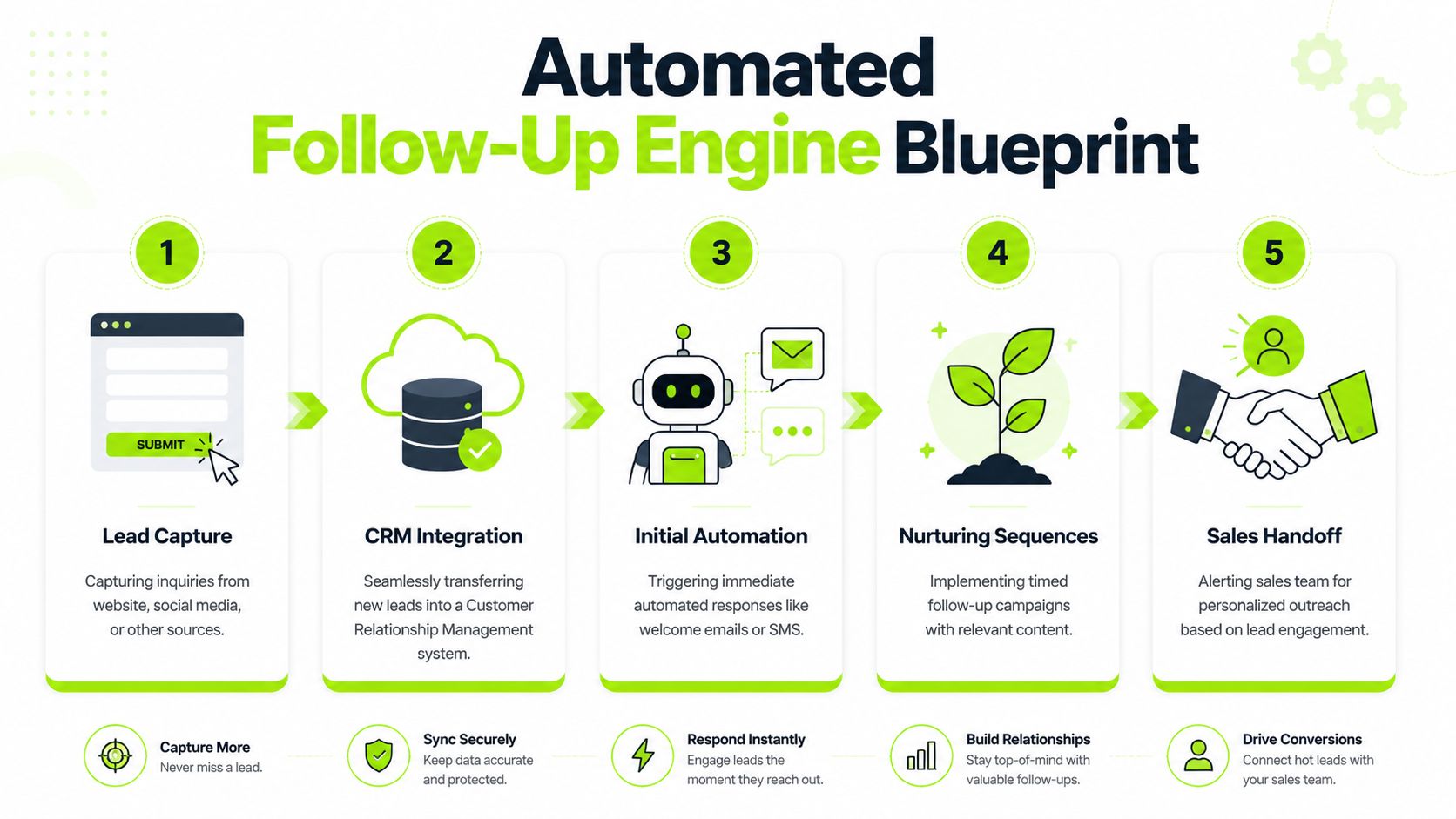
If you want better speed to lead, start with response speed as an operating system, not a staff virtue. The club needs a setup that captures the enquiry, routes it correctly, gives the prospect a prompt and useful reply, and makes the next human action obvious.
What the CRM does
A CRM holds the full record of the enquiry and the work around it. It should show what the prospect asked for, which channel they came through, who owns the next step, what has already been sent, and what outcome is being pursued.
Without that central record, clubs fall back on memory and scattered notes. An email sits in a shared inbox. A call note stays on one staff member's phone. A promising lead gets mentioned in passing after a busy morning, then disappears.
That lack of standardisation is expensive. Golf grew commercially once clubs could package and compare a more consistent experience, a shift reflected in this history of golf course lengths and standardisation. Lead handling works the same way. If the process is consistent, managers can spot delays, measure conversion by source, and fix handoff problems before revenue is lost.
What the automation layer does
The automation layer handles the parts that should happen every time and on time. It confirms receipt, tags the lead, creates the task, alerts the right person, and starts follow-up if the prospect goes quiet.
That protects the human part of the sale. Staff spend less time checking inboxes and more time speaking to prospects who are ready to book a tour, trial, lesson, or fitting.
A practical setup usually includes:
- Lead capture from every channel: Website forms, paid campaigns, social ads, landing pages, phone logs, and walk-in enquiries should enter one system.
- Intent-based tagging: Membership, visitor golf, lessons, fittings, events, and societies need separate routes and separate owners.
- Immediate acknowledgement: The first reply should confirm receipt and tell the prospect what happens next.
- Task creation with ownership: A named person gets the action, deadline, and context.
- Timed follow-up rules: If no reply comes back, the system sends the next message or prompts a call.
Why generic automation underperforms
One generic reply to every enquiry creates more work later. Staff then have to recover from a weak first impression and re-qualify basic information that the form should have captured upfront.
A family membership prospect needs different handling from a golfer asking about game improvement or a custom fitting. The point is not fancy personalisation. The point is routing by intent so the first human conversation starts in the right place.
That trade-off matters. The more detail you ask for on the form, the better you can segment and respond. Ask for too much, and completion rates drop. In practice, clubs usually need just enough information to direct the lead properly: enquiry type, preferred time frame, playing profile, and the clearest next step they want.
Automation should manage timing, routing, and reminders. Staff should handle judgement, rapport, and conversion.
Build for handoffs, not just messages
Clubs often focus on the email sequence and ignore the operational handoff behind it. That is usually the primary failure point.
If a membership enquiry requires pricing context from the manager, a tour booking from the front desk, and a follow-up call from the membership lead, the system has to assign those steps clearly. Otherwise the prospect receives prompt emails but no meaningful progress.
A workable engine has five parts:
- A clear enquiry form that captures intent
- A CRM with visible stages, ownership, and notes
- Automation for acknowledgements, reminders, and no-response follow-up
- A dashboard managers can review without chasing staff for updates
- Written handoff rules between admin, membership, coaching, and golf operations
For a closer look at how clubs put those pieces together, our guide to golf club automated follow-up systems breaks down the operating model in more detail. GolfRep is one option clubs use when they want lead capture, routing, follow-up, and CRM tracking in one managed process.
Proven Automated Workflows and Reply Scripts
Fast follow-up only works if the reply matches the enquiry. Speed without relevance creates admin noise, not booked visits.
That matters more in golf than many clubs realise. A prospect who asks about membership, a player asking about coaching, and a visitor interested in fitting should not enter the same message track. Clubs often use one generic acknowledgement for all three, then wonder why reply rates stay flat. The prospect got a fast message, but not a useful one.
Build the sequence around intent
Set up workflows by commercial intent first. Start with membership, lessons, fitting, society golf, and event enquiries. Then add simple routing rules based on what the person asked for, what time frame they gave, and whether they want information, a call, or a visit.
Golf language can help with that routing if you use it carefully. A lead mentioning distance, ball striking, or driver speed is often closer to coaching or fitting than a membership decision. As noted earlier, club speed benchmarks are a practical reminder that not every golf enquiry means the same thing. The right system sends that lead to the coach or fitter, not into a membership sequence.
A useful workflow does three jobs at once. It confirms receipt, sets the next step, and moves the lead toward the right staff member.
Use a simple workflow, then refine it
Start with a sequence your team can run every day without missing handoffs.
- Immediate acknowledgement: Confirm the enquiry and explain what happens next.
- Assigned follow-up: A named staff member contacts the lead in the next working window with one recommended next step.
- Value-based reminder: If there is no reply, send a message that reduces friction, such as available visit times, lesson options, or a short explanation of membership paths.
- Close-the-loop message: Let the lead opt back in later without keeping them in a dead sequence.
If a message does not make the next action clear, it is housekeeping, not sales follow-up.
The trade-off is simple. More messages can increase contact rates, but poor timing or generic copy will annoy serious prospects and waste staff time. I usually advise clubs to keep the core sequence short, then add branches only where the team can respond properly.
Automated Reply Script Templates
| Channel | Timing | Script Template |
|---|---|---|
| Immediately after enquiry | Hi [First Name], thanks for contacting [Club Name]. We've received your enquiry and sent it to the right person on our team. If you're asking about membership, we can help with options, pricing context, and arranging a visit. If your enquiry is about lessons, fitting, or game improvement, we'll route it to the relevant specialist. If there's one question you want answered first, reply here and we'll prioritise it. | |
| SMS | Immediately after enquiry | Hi [First Name], thanks for contacting [Club Name]. We've received your enquiry and will follow up shortly. To help us direct this properly, reply with the main thing you want help with: membership, lessons, fitting, a visit, or something else. |
| Next working window | Hi [First Name], I'm [Staff Name] from [Club Name]. I've reviewed your enquiry. Based on what you asked, the best next step is [a short call / a club visit / a lesson consultation / a fitting appointment]. If you send over a suitable time, I'll arrange it. | |
| Later if no reply | Hi [First Name], I wanted to follow up on your enquiry. Rather than send a full information pack, I'd prefer to send only what helps. If you're still looking at [membership / lessons / fitting], reply with your main question or the times that suit you best. | |
| SMS | Later if no reply | Hi [First Name], it's [Staff Name] from [Club Name]. Are you still looking for help with your enquiry? If yes, reply with the best time to contact you, or tell me whether you want information, a visit, or a quick call. |
| Final reactivation | Hi [First Name], I'll close this enquiry for now so we don't keep messaging you. If you want to pick it up again later, just reply to this email and we'll continue from there. |
What works and what doesn't
The best scripts sound like they came from a club operator who knows what happens after the reply. They refer to the actual enquiry, keep the next step narrow, and avoid dumping brochures into the first email.
Weak scripts usually fail for operational reasons:
- They promise contact “soon” without naming the next action
- They push too much information before the lead shows intent
- They route every golf enquiry through the same membership path
- They ask staff to personalise messages manually at scale
That last point is where many clubs lose control. If the workflow depends on staff rewriting every message, quality drops as volume rises. Good automation handles the repeatable parts so the team can spend time on calls, tours, and conversion work.
For clubs refining message timing and branch logic, our guide to lead nurturing best practices for golf club enquiries covers practical ways to keep follow-up relevant without making the system harder to manage.
One more point gets missed. The right script is not just about getting a reply. It should help the club bring in the right member or customer over time. That is why clubs should review follow-up performance alongside enquiry type, booked visits, and long-term value. A simple framework for how to measure customer lifetime value helps managers judge whether their fastest workflows are also bringing in the right business.
Measuring What Matters for Membership Growth
If your club can't see what happens between first enquiry and signed member, you're managing on opinion.
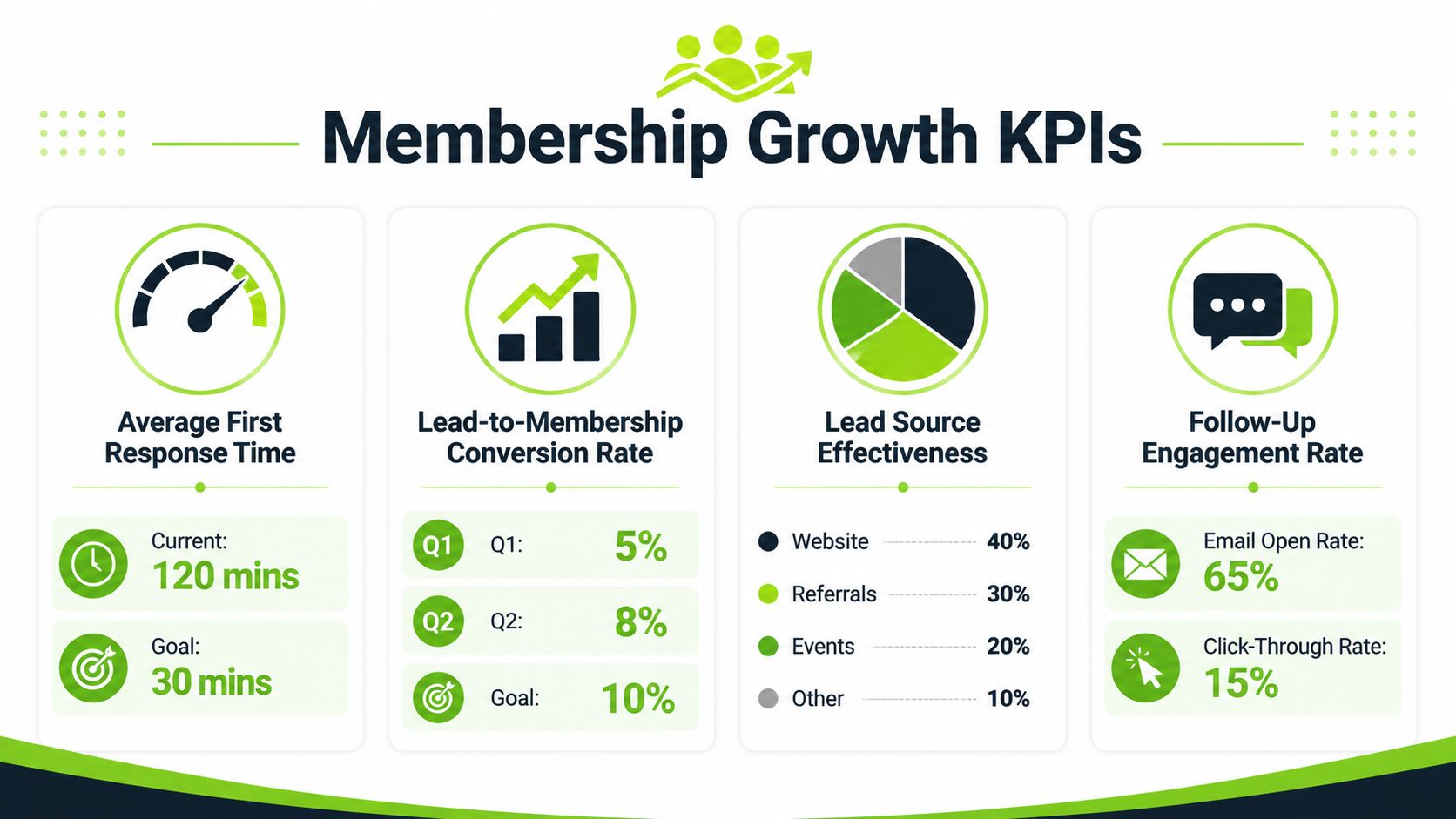
The point of measurement isn't to create more reporting. It's to help the manager answer basic commercial questions quickly. Are we replying fast enough? Are staff making contact? Which enquiry sources lead to visits? Which visits become members?
The metrics that matter in practice
You don't need dozens of KPIs. You need a short list that tells the truth.
A sensible dashboard includes:
- Average first response time: How long it takes before the prospect receives a meaningful reply
- Lead contact rate: Whether your team reaches the person
- Visit or appointment booking rate: How many enquiries move to a real next step
- Lead-to-member conversion: How many qualified prospects join
- Lead source visibility: Where the best-fit opportunities are coming from
Standardisation matters. Golf became easier to organise and market when formats became standardised. The same principle applies to growth operations. Standardise lead stages and measurement in a CRM, and performance becomes easier to manage consistently.
Why manual reporting causes blind spots
Spreadsheets can record activity. They struggle to reveal patterns.
One staff member may log every call. Another may update notes only when a lead looks promising. A third may forget to mark outcomes at all. The result is false confidence. The club sees some numbers, but not a dependable picture.
Good reporting doesn't just show volume. It shows where your process is leaking.
A proper dashboard lets a manager spot operational issues quickly. If response times are fine but bookings are weak, the problem may be the script or the offer. If bookings are healthy but conversions are low, the issue may be the visit experience, pricing clarity, or sales ownership.
Tie lead performance to long-term value
Membership growth should never be measured only at the point of sale. A club also needs to understand what a member is worth over time. That's why it helps to review a practical framework for how to measure customer lifetime value. It gives useful context for judging lead quality, retention, and what the club can sensibly invest in acquisition and follow-up.
When clubs start viewing speed to lead through that lens, response handling stops looking like admin. It becomes part of revenue protection.
Your Playbook for Staffing and Governance
Systems don't fail because the software is wrong. They fail because nobody owns the process clearly enough.
Assign roles, not vague responsibility
One person should own the overall pipeline. In most clubs, that's the general manager, commercial manager, or membership lead. That person doesn't need to reply to every enquiry, but they do need visibility and authority.
Operational roles then become clearer:
- Admin or front of house: Ensures incoming enquiries are captured correctly
- Membership contact: Handles joining conversations, visits, and follow-up
- PGA professional or performance lead: Picks up coaching, fitting, and game-improvement enquiries
- Manager: Reviews pipeline health, stalled leads, and response standards
If those roles blur, leads drift.
Get committee buy-in the right way
Committees often resist systems when they think they're buying marketing for marketing's sake. That framing is unhelpful.
The better framing is operational control. A speed to lead system gives the club a way to see incoming demand, assign ownership, and track outcomes. It reduces dependency on individual memory and makes handovers cleaner when staff change.
That tends to land better because it sounds like governance, not promotion.
Keep the rules simple
Most clubs don't need a thick sales manual. They need a few essential elements:
- Every enquiry enters one system
- Every lead has an owner
- Every owner has a next action
- Every stalled lead is visible
- Every month, management reviews response handling and outcomes
That's enough to create accountability without burying staff in process.
When the people, process, and platform line up, the club stops relying on luck. Enquiries get seen. Prospects get answered. More of the demand you already have turns into visits, members, and revenue.
If your club wants a clearer, more reliable way to handle membership and revenue enquiries, GolfRep helps build the process behind it. That includes lead capture, CRM visibility, automated follow-up, and the operational structure needed to turn interest into booked conversations and signed members.
Ready to tap into our proven growth system?