How to Attract Younger Golf Club Members: A 2026 Playbook

You know the pattern already. The committee wants younger members, the clubhouse feels quieter on weeknights, and everyone agrees the club needs fresh energy, yet the same old brochure-led approach keeps producing the same slow results. The problem isn't just getting attention. It's turning local interest into first visits, then visits into repeat play, then repeat play into membership.
Introduction to Younger Member Recruitment
UK clubs are seeing movement, but it's slow. England Golf data reported by the Golf Club Managers' Association shows the average member age in clubs has fallen from 56.18 to 54.99, with the male average down from 54.98 to 53.78 and the female average down from 64.65 to 62.98 GCMA report. That's progress, but it's not enough if the club still relies on passive enquiry handling and a vague “get in touch” page.
The core issue is conversion. A club can generate interest and still lose the prospect if nobody responds quickly, nobody knows who owns the lead, or the next step is buried in a PDF. That's why the smartest clubs treat younger-member growth as a pipeline problem, not a marketing slogan.
Practical rule: if a prospect can't see the next step within seconds, the club has already made the journey harder than it needs to be.
Younger recruitment works when clubs combine two disciplines. First, they create local entry points that feel safe and easy. Second, they build systems that keep every enquiry visible until it becomes a visit, a trial, or a signed-up member. That's the difference between hoping for demographic change and managing it.
Defining Younger Audiences and Value Propositions
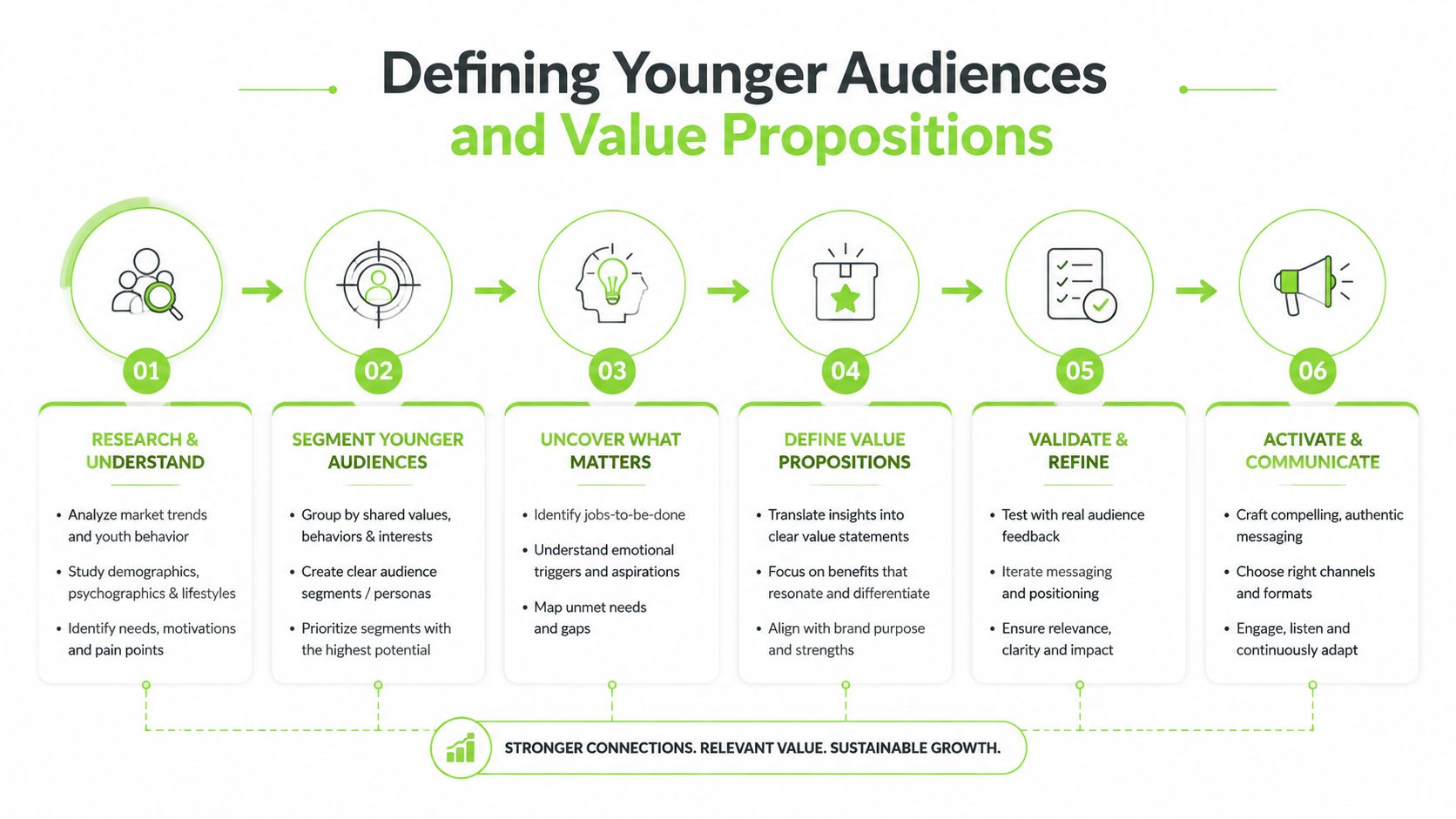
Start with geography, not guesswork. The strongest junior recruitment target is the child who already lives near your course, because local access beats broad awareness when the goal is first participation Delphi expert consensus study. That means your first audience should be juniors and families in the immediate catchment, not “young people” as a generic category.
A sensible segmentation model looks like this. Juniors who live close to the club need access, safety, and low-friction entry. First-time adults need flexibility, clear pricing, and a social route into play. Young families need a welcoming environment where golf doesn't feel like a long, formal commitment. If you want a useful framework for this work, see GolfRep's guide on what market segmentation looks like in practice.
Use the data behind the audience, then write a proposition they'd care about. The expert consensus study scored targeting children living close to the golf course at 8.47, junior tees on all courses at 8.16, and both make junior equipment available at clubs and friends day promotions at 7.79 Delphi expert consensus study. That points to a simple truth. Local access and lower-friction entry matter more than polished branding.
Use this filter: if a message doesn't remove a barrier, shorten a journey, or make the first visit feel easier, it's probably not a strong younger-member offer.
A practical way to write offers is to match each segment to one promise. For juniors, make it about access, equipment support, and tee flexibility. For adults in their twenties and thirties, keep the promise on time, social golf, and monthly affordability. For young families, frame golf as a shared habit rather than a competitive obligation. If you track personal progress in club sport or coaching, tools such as track your handicap with Dialed Golf can help make improvement feel visible and rewarding.
The point is not to build ten offers. It's to build two or three that are easy to explain, easy to join, and easy to follow up. Everything else just creates noise.
Designing Modern Offers and Events
Younger golfers don't want to buy a rigid annual relationship on day one. GolfWA's millennial engagement report recommends pay-as-you-go or monthly membership options, junior-centric events, and a staged progression ladder, while warning that inflexible annual pricing and narrow competition formats alienate younger players GolfWA report. That is the right commercial instinct for UK clubs too.
The best offers feel like entry points, not commitments. A monthly trial package, a flexible social membership, or a junior-friendly taster can all work if the club explains the route forward clearly. Don't oversell status. Sell access, simplicity, and belonging.
Build offers that lower the first barrier
A strong junior or younger-adult offer does three things. It makes the first payment manageable. It makes the first round easy to book. It makes the next step obvious. If you want event ideas that match that logic, GolfRep's clubhouse event marketing strategy is worth reviewing because the same principle applies to member recruitment.
Use plain names. “Young Adult Flex”, “Junior Starter”, or “Family Golf Evening” are better than jargon-heavy packages nobody remembers. Then make sure the offer is visible on the website, in the clubhouse, and in staff conversations.
Three event formats work well in real clubs:
- Junior open day: Keep the format short, friendly, and local. Parents should know exactly what happens when they arrive.
- Bring a junior social round: This works when existing members can introduce children, nephews, nieces, or grandchildren without pressure.
- Short-format family evening: Use tees, timings, and pace that remove the fear of slow play or awkward first-time mistakes.
Operationally, the event has to be easy for staff to run. One person owns registration. One person greets arrivals. One person follows up afterwards. If the club can't assign names to those tasks, the event will still happen, but the conversion will be weak.
Clubs lose younger prospects when events feel like internal fixtures with a few extra guests tacked on. The format has to be built for newcomers, not adapted as an afterthought.
Setting Up Digital Channels and CRM Workflows
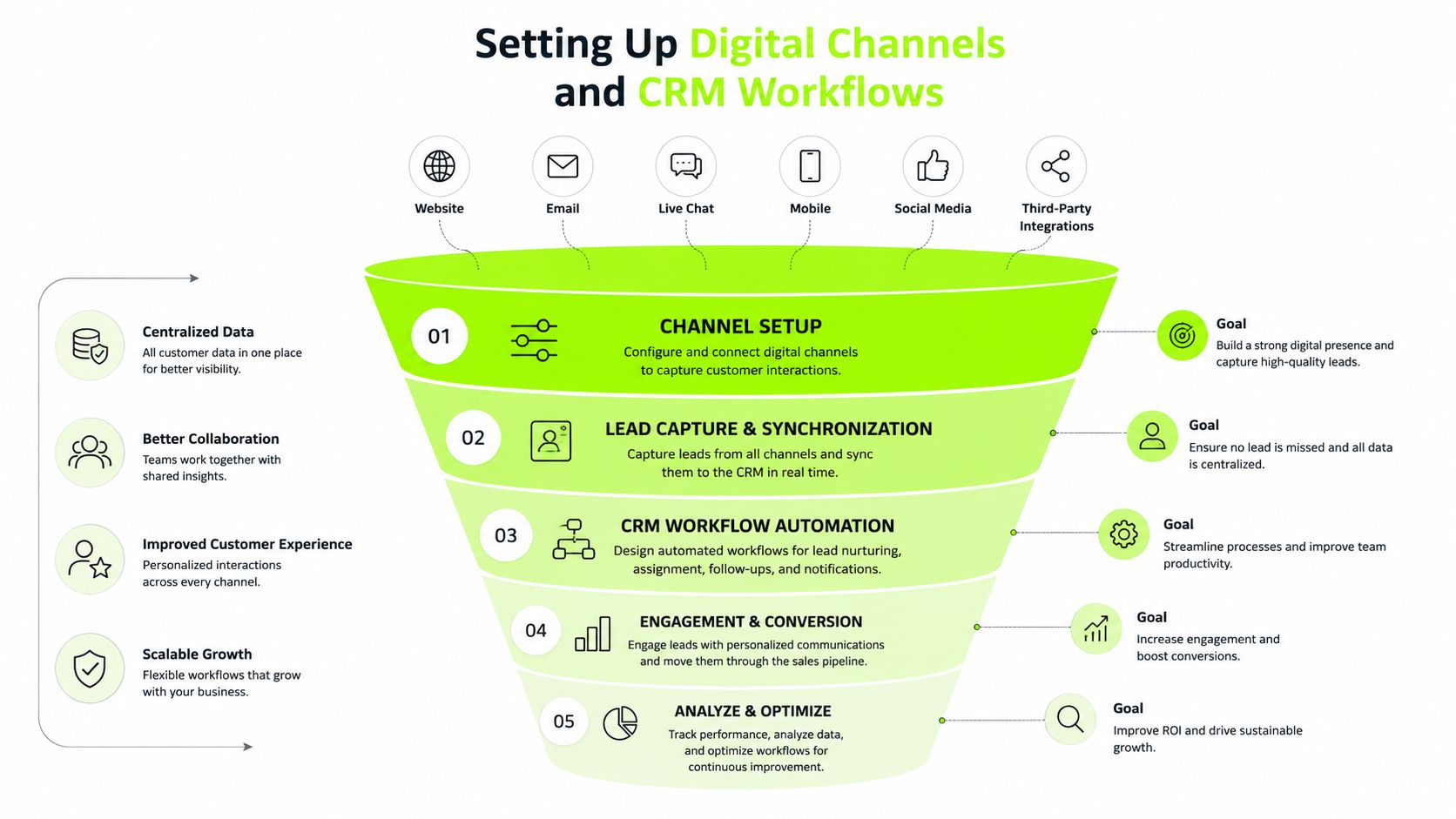
A younger member rarely starts with a phone call to the secretary's office. They start on a mobile screen, compare a few options, and leave fast if the path is clumsy. GolfRep's guidance is clear on this point. Every enquiry needs to be tracked from first contact to booked visit, and a mobile-first, fast-loading membership page with 24/7 automation is part of that system, not an optional extra GolfRep guidance.
The first job is the page itself. It should not read like a committee noticeboard. It needs plain English, short sections, package-specific enquiry forms, and visible next steps such as visit, call, trial, or request details GolfRep guidance. If the visitor has to dig for the offer, you've already reduced conversion.
Map each channel to one purpose
Use social ads to start attention, Google Ads to catch active intent, and email to nurture people who already showed interest. Don't let those channels operate separately. Every click should land in the same CRM so the club can see who enquired, who booked, who went quiet, and who needs follow-up.
That visibility is the point. If a committee member can't tell how many leads came in from a junior day, a social campaign, or a website enquiry form, the club is operating blind. GolfRep's CRM guidance is built around this exact problem, with central tracking, clear ownership, and a structured club-visit process through a dedicated CRM system GolfRep CRM guide.
A practical setup looks like this:
- Dedicated membership pages for each offer, not one crowded page for everything.
- Short enquiry forms tied to the specific offer the person viewed.
- Automatic lead routing so the right staff member sees the enquiry immediately.
- Status fields that show enquiry, booked visit, attended, no response, or converted.
- Simple dashboards so the manager can spot bottlenecks without asking for a manual update.
If your club uses video to explain an offer or promote an event, the format matters too. Short, clear clips usually work better than overproduced assets. For teams thinking about promotional content, AI video ad strategy for agencies is a useful lens for how fast-moving creative can support attention without making the message harder to understand.
The rule is simple. If a lead comes in and nobody acts on it fast, the club isn't short of interest, it's short of process.
Enhancing Onsite Experience and Local Partnerships
Getting someone to visit is only half the job. The club has to feel like a place where younger people belong, not a place where they are being assessed. That starts with the physical experience, from the first sign they see at the entrance to the way staff greet families at the desk.
A younger visitor notices friction quickly. If the clubhouse feels too formal, the signage is unclear, or nobody knows where to point a first-time guest, the club reinforces the idea that it isn't for them. Small changes matter here. Clear arrival signage, a visible welcome point, and staff who can explain the next step without jargon all reduce the sense of uncertainty.
Make the first visit feel easy
Junior-friendly tee adjustments help because they make the course feel playable rather than intimidating. Family golf days work because they shift the atmosphere from competition to shared activity. And if the club has a social area that encourages people to stay after the round, you create the kind of informal connection younger members remember.
Local partnerships extend that feeling beyond the gate. Schools bring reach, retailers can support equipment access, and community groups can help promote beginner events without a big budget. The strongest partnerships are simple. A school gets a safe and structured sport opportunity. A club gets new faces who already live nearby.
Useful test: if a local partner wouldn't be comfortable explaining your offer in one sentence, the offer needs tightening before outreach starts.
Many clubs underperform by marketing the event without preparing the site for their desired audience. A school group requires a different welcome than a weekend medal field. A young family needs a different tone than a long-standing member of twenty years. Staff training should reflect that difference.
The best clubs treat partnerships and on-site experience as one system. Promotion gets the person through the door. The environment decides whether they come back.
Pricing Packaging and Performance Measurement
Flexible pricing only works when the pathway is obvious. If a younger person starts on a trial, the club should already know what comes next, how the payment changes, and when the conversation moves from interest to commitment. GolfWA's report is blunt on this. Clubs need pay-as-you-go or monthly membership options and a staged progression ladder, while inflexible annual pricing pushes younger players away GolfWA report.
The packaging should reflect life stage. A junior starter offer should not look like a discounted adult subscription. A young family product should include social access and a clear route to fuller membership. An early-career golfer needs flexibility around work, time, and cashflow. That means the club should stop thinking in one membership type and start thinking in steps.
The same applies to measurement. If the club cannot measure response time, lead progression, and visit-to-membership movement, it is guessing. GolfRep's guidance on enquiry handling is built around full visibility from first contact to booked visit, because that is where most clubs lose momentum GolfRep guidance. A younger member journey also depends on a clear digital pathway with dedicated membership pages, linked enquiry forms, and visible next steps GolfRep digital pathway guidance.
A workable dashboard should include these fields:
- Enquiry source so the club knows what generated interest.
- Response status so no enquiry sits unnoticed.
- Booked visit date so follow-up doesn't drift.
- Offer viewed so the club can tailor the next message.
- Outcome so management sees which packages convert.
For clubs testing pricing, keep the comparisons simple. Trial membership versus monthly membership. Junior access bundle versus standard junior fee. Family golf evening versus open-ended social play. The winning version is the one that gets the most first visits without making the administration messy.
The value of measurement is not academic. It tells the committee where the bottleneck is. If enquiries are healthy but visits are low, the issue is response and scheduling. If visits happen but sign-ups stall, the issue is the offer, the handoff, or the in-club experience. If response is fast but the leads are poor, the targeting needs work. That clarity is what turns recruitment into a managed system instead of a seasonal scramble.
Action Plan with Templates and Checklists
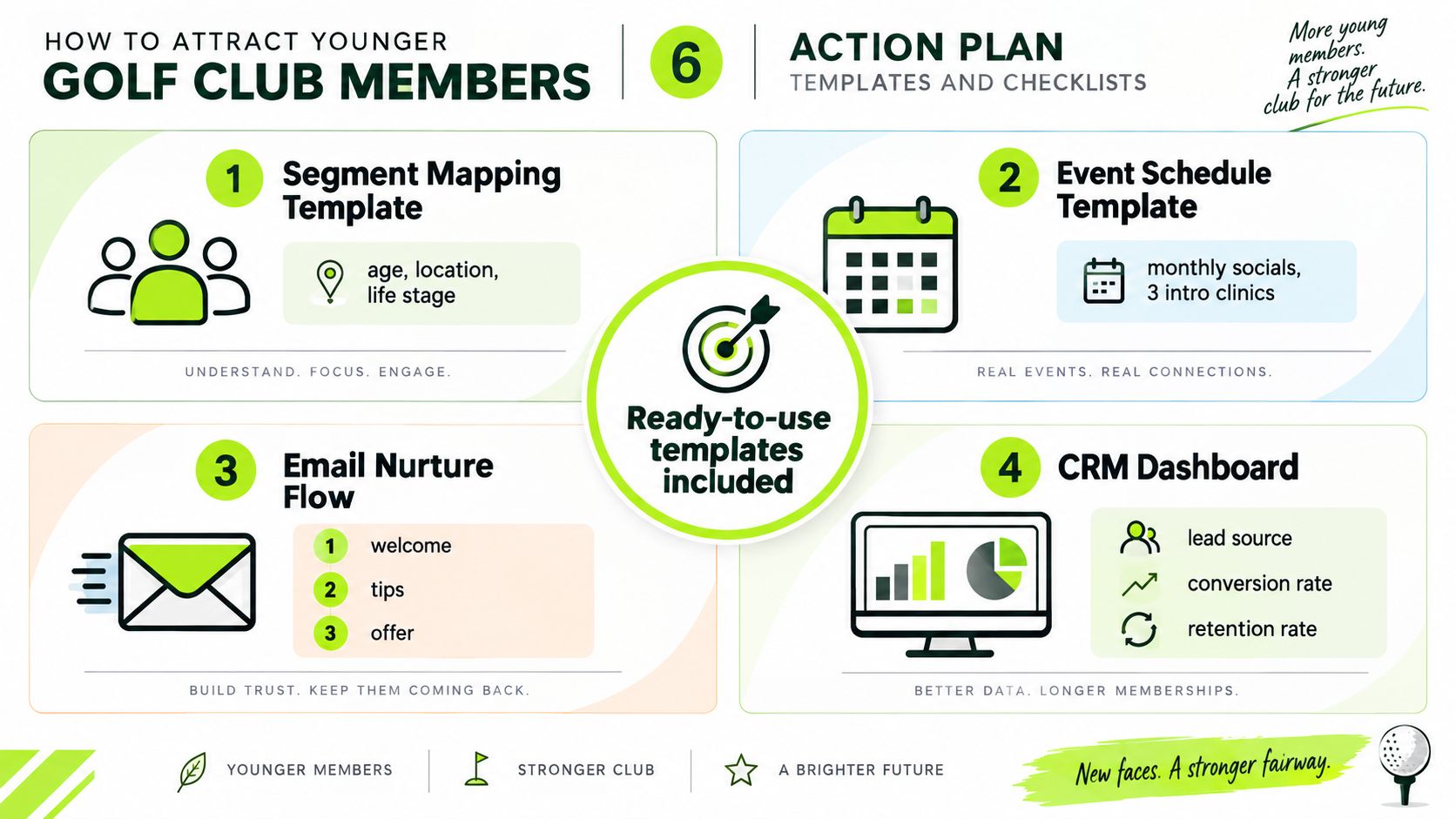
The fastest route to younger-member growth is simple to say and hard to ignore. Pick one junior segment, one adult segment, and one family-facing offer. Then publish the membership pages, connect the enquiry forms to a CRM, and assign someone to own the follow-up every day.
Use four working templates. Segment mapping should capture age, location, and life stage. Event scheduling should lock in monthly socials and a small number of intro sessions. Email nurture should move from welcome to tips to offer. The dashboard should show source, response, and outcome in one place.
Immediate checklist
- Publish the offer pages with clear next steps.
- Turn on enquiry routing so no lead sits in a shared inbox.
- Schedule the first junior day with staff ownership attached.
- Write the follow-up sequence before the event runs.
- Review the dashboard weekly and fix the weakest step first.
That's the whole game. Clubs that make the path obvious and the process accountable will convert more local interest into real members.
If you want help turning younger-golfer interest into booked visits and signed memberships, GolfRep can help you build the full system, from the offer page to the CRM follow-up. Visit GolfRep and see how a structured pipeline can give your club clearer lead visibility and a more reliable route to membership growth.
Ready to tap into our proven growth system?