Unlock Growth: Golf Membership Lead Generation
Most advice on golf membership lead generation gets the problem backwards.
Clubs are told to run more ads, post more on social media, or widen the offer. That can create more enquiries, but it doesn't fix the part that usually breaks. A prospect clicks, submits a form, waits too long, gets a generic reply, then disappears into an inbox or spreadsheet that nobody owns properly.
For a UK club manager, the fundamental question isn't “how do we get more leads?” It's “what happens to every lead after it arrives?”
That's where most membership growth is won or lost. A club with a modest flow of good-fit enquiries and a disciplined process will usually outperform a club with higher lead volume and weak follow-up. The clubs that grow consistently don't rely on occasional campaigns. They build a system that attracts the right people, captures intent cleanly, responds quickly, and keeps prospects moving until they either book a visit or clearly opt out.
The Real Problem with Membership Lead Generation
A lot of clubs still think lead generation ends when someone fills in a form.
It doesn't.
An enquiry is only the start of a sales process, and in golf that process is rarely immediate. Recent UK club-marketing commentary notes that many membership directors still lack proper CRM systems or automated nurture, even though major buying decisions typically take 7 to 9 touchpoints before commitment according to Private Club Marketing's membership trends commentary. If that's the reality, then a single email reply or one missed call isn't a process. It's wishful thinking.
Why more leads can make the problem worse
If your club handles enquiries manually, more volume can expose the weakness faster. A few common patterns show up again and again:
- Leads sit unseen: A form submission lands in a shared inbox and nobody notices until the next morning.
- Follow-up is inconsistent: One prospect gets a call, another gets a brochure, another gets nothing.
- No qualification happens early: Staff spend time chasing people who were only casually curious.
- There's no visibility: Nobody can answer which channel produced the lead, who spoke to them, or whether they ever booked a visit.
That's why isolated tactics disappoint. Facebook ads aren't the issue. Google Ads aren't the issue. Your website usually isn't the full issue either. The issue is the handoff between interest and action.
Practical rule: If your club can't see every enquiry, assign ownership instantly, and trigger follow-up without manual chasing, the system is leaking before the sales conversation even begins.
Some clubs try to solve this by turning up ad spend. Others ask the membership team to “stay on top of it”. Neither approach is reliable.
The pipeline matters more than the campaign
The strongest clubs treat membership growth like a pipeline, not a promotion. They know where enquiries came from, what happened next, and which prospects are still active. That gives them control.
Paid traffic can still play a useful role, especially when paired with a sharper acquisition model such as this AI Facebook ad scaling strategy, but scaling traffic before fixing response and nurture usually just means paying to create more neglected leads.
A good system makes lead value visible. It tells you which enquiries are worth attention, which offers trigger action, and where prospects drop out. Without that, clubs end up debating marketing channels when the actual problem sits in response time, qualification, and follow-up discipline.
Attracting the Right Golfers Not Just Any Golfers
Not every enquiry is useful.
That sounds obvious, but many clubs still run generic membership campaigns that target “golfers” as one broad audience. The result is predictable. They attract people outside the catchment, price-sensitive browsers with no urgency, or casual interest that never turns into a visit.

The better starting point is fit. Who is most likely to join this specific club, at this specific price point, in this specific location?
Recent industry coverage points to a more nuanced segment strategy. Clubs are adding under-40 categories, trial memberships, and social or family-inclusive models because younger prospects value flexibility and belonging over pure exclusivity, as discussed in Club + Resort Business coverage on attracting the next generation. That matters because many clubs are still advertising as if every prospect wants the same traditional full membership message.
Build segments around actual buying paths
A useful way to think about targeting is by membership path rather than platform.
| Segment | What they usually care about | Messaging that tends to work |
|---|---|---|
| Traditional full member | Course quality, competitions, handicap golf, consistency | Serious golf, booking access, club standards, long-term value |
| Under-40 prospect | Flexibility, affordability, belonging, less formality | Community, accessible entry point, modern club culture |
| Family-led buyer | Social life, dining, events, shared use | Family time, social calendar, welcoming environment |
| Trial or flexible prospect | Low-friction entry, trying the club before commitment | Tour, trial pathway, simple next step |
A club doesn't need dozens of campaigns. It needs a few clear audiences with matching offers and language.
What targeting should look like in practice
For paid search, focus on local intent. Terms around membership plus town, city, or region usually signal stronger intent than broad golf interest. For paid social, start with geography first. If your realistic membership catchment is postcode-driven, build campaigns around that rather than trying to cast too wide a net.
A practical setup usually includes:
- Postcode-level geo-targeting: Keep campaigns focused on realistic drive-time areas.
- Separate ads by membership type: Full, trial, under-40, or social should not all share the same message.
- Creative that shows belonging: Use imagery of the club experience, not just an empty fairway.
- Copy that answers fit questions: Is the club welcoming, active, flexible, family-friendly, competitive, or premium?
Clubs often talk about features when prospects are really deciding on identity. They're asking whether this feels like a place for people like me.
That's why “Join now” is weaker than a message that explains who the club suits and what the next step looks like. The prospect doesn't need every detail in the ad. They need enough relevance to click.
What usually wastes budget
Three things tend to drain budget fastest.
- Broad audience settings: These generate attention, not necessarily qualified membership interest.
- One-size-fits-all creative: A younger prospect and a traditional full member don't respond to the same message.
- Course-first messaging only: The course matters, but many prospects are also assessing club culture, flexibility, and social fit.
Good golf membership lead generation starts before the click. If targeting is vague, the rest of the funnel works harder than it should.
The Digital Handshake Your High-Converting Landing Page
Sending paid traffic to a homepage is one of the most common mistakes in golf membership lead generation.
The homepage tries to do too many jobs. It serves visitors looking for tee times, visitors checking society information, members wanting login access, and local people browsing the restaurant. A membership prospect arrives with one question and gets ten navigation options.
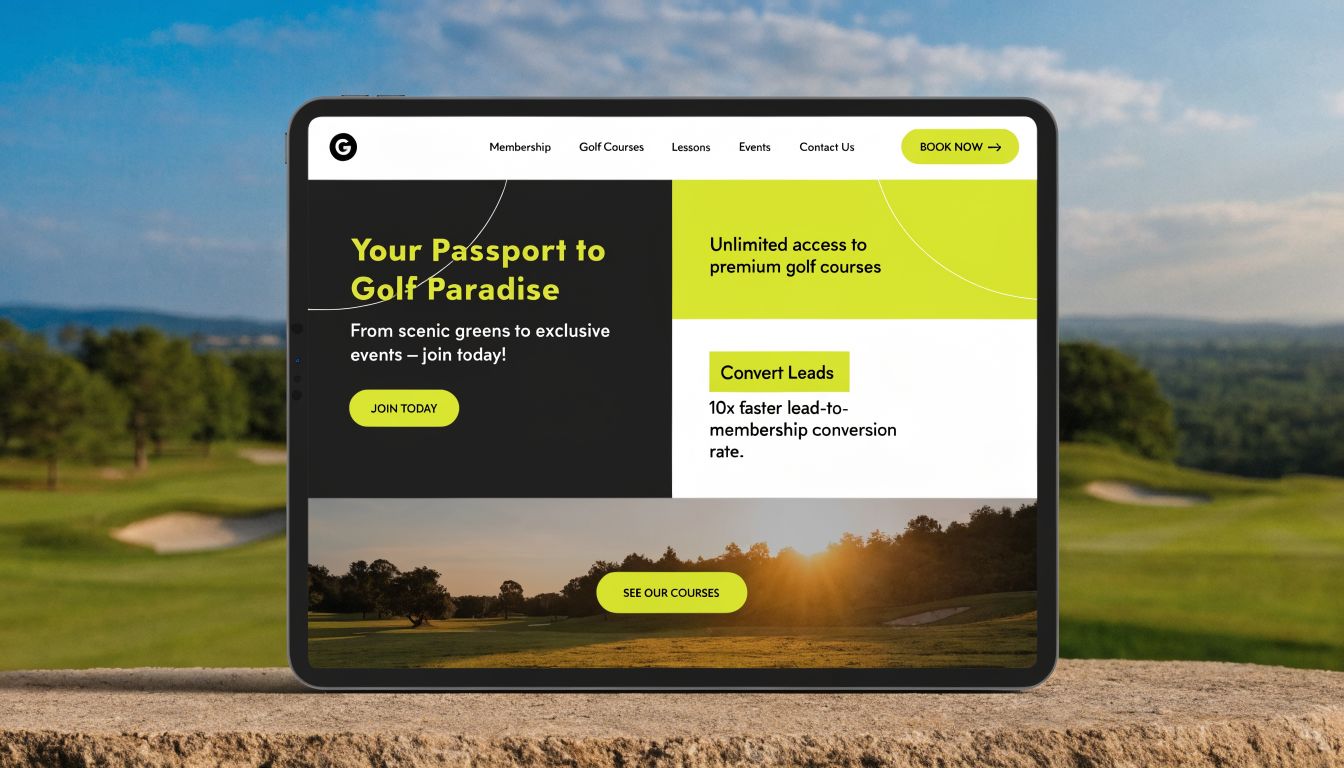
That's why a dedicated landing page matters. Club-marketing guidance recommends sending paid search and geo-targeted social traffic to a single membership landing page, capturing enquiries with a short form plus a brochure or tour call to action, and routing every lead into a CRM. The same guidance notes prospects typically need around 6 to 12 touchpoints before joining, which is why first-click performance has to be measured as the start of a path, not the end of one, as outlined in Club Marketing's membership growth advice.
What the page needs to do
A membership landing page has one job. Turn curiosity into a qualified enquiry.
That usually means including:
- A clear headline: Say exactly what the visitor is looking at. Membership opportunities at your club, not a vague welcome message.
- A short positioning statement: Explain who the membership suits and why people join.
- A primary call to action: Usually brochure request, tour booking, or membership enquiry.
- A short form: Ask for the minimum needed to continue the conversation.
- Useful reassurance: Membership types, location, club atmosphere, and what happens after submission.
If you want to see how clubs should think about their wider web presence before traffic even arrives, GolfRep has written about golf course online visibility and website performance, which connects closely with this part of the funnel.
What a strong offer looks like
The offer shouldn't be a discount by default. Most clubs rush there too quickly.
Better offers include:
- Download brochure and prices
- Book a club tour
- Speak to the membership team
- See membership options
- Arrange a trial visit
Each of those creates a next step without undermining price integrity.
A landing page doesn't need to be clever. It needs to be obvious.
What to remove
Clarity improves conversion more often than extra content does.
Take out anything that distracts from the decision:
- Large navigation menus
- Mixed calls to action
- Long history sections
- Generic contact wording
- Forms that ask for too much too early
If a campaign is getting clicks but no brochure requests, no forms, and no tour bookings, the issue is often page relevance or offer clarity. The audience may be fine. The page just isn't helping them act.
From Enquiry to Engagement The First Five Minutes
The first few minutes after an enquiry matter more than most clubs realise.
Not because automation is fashionable. Because silence creates doubt. A prospect submits a form and immediately wonders whether anyone saw it, whether the club is organised, and whether they should keep looking elsewhere. Clubs that respond fast feel professional before a conversation has even started.
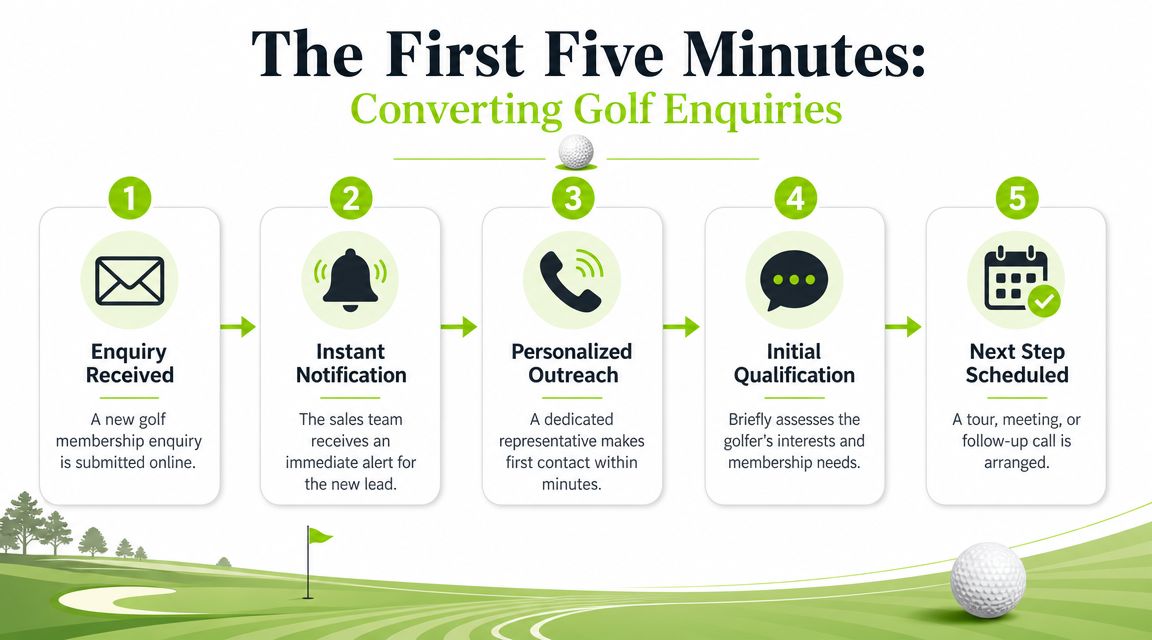
A quick response system isn't about removing people from the process. It's about making sure people step in at the right moment, with context, instead of discovering stale enquiries hours later.
What should happen immediately
A strong first-response setup is simple and disciplined.
The form is submitted
The lead enters one system, not several disconnected places.The prospect gets an instant acknowledgement
Email first. SMS can help where appropriate. The message confirms receipt and delivers the promised brochure or booking link.The membership contact is alerted
A task, notification, or CRM assignment is created immediately.The lead is tagged
Source, campaign, and membership interest should be visible from the start.A human follow-up begins quickly
The aim is not to write a long email. It's to move the prospect to the next action.
A useful reference point is GolfRep's guidance on speed to lead for golf clubs, which focuses on what clubs should operationalise after a new enquiry comes in.
What the first message should say
Most instant replies are too generic. They say thanks, but they don't move the sale forward.
A better response does three things:
- Confirms the enquiry clearly
- Delivers the promised asset or link
- Suggests the next step
For example, a first email might confirm that the brochure is attached, mention that membership options can be discussed based on playing habits, and invite the prospect to book a call or visit.
The key is tone. Helpful, prompt, and specific.
Field note: The first automated message should make the club feel responsive. The first personal message should make the prospect feel noticed.
Automation supports judgement
Some managers worry that automation makes the process cold. In practice, poor manual follow-up is colder.
A simple workflow gives staff a better starting position. They can see what the prospect asked for, which campaign they came from, what membership path they may fit, and whether they opened the brochure or clicked a booking link. That context makes the first human conversation sharper.
Without that structure, the membership team starts every conversation blind. They ask questions the form already collected, miss the lead's original intent, and lose momentum before rapport has even begun.
Turning Interest into Members The CRM Nurture System
Most golf membership enquiries don't convert on day one.
That doesn't mean the lead was poor. It usually means the decision is still forming. In the UK club market, Golf Life Insights' 2025 end-of-year report said clubs should continue prioritising full golf membership offerings, and Club Marketing cites data showing 80% of membership prospects are simultaneously searching for both a club and a home in the 2025 buying trends report. That tells you something important. Timing is often linked to broader lifestyle decisions, not just whether someone liked the ad.
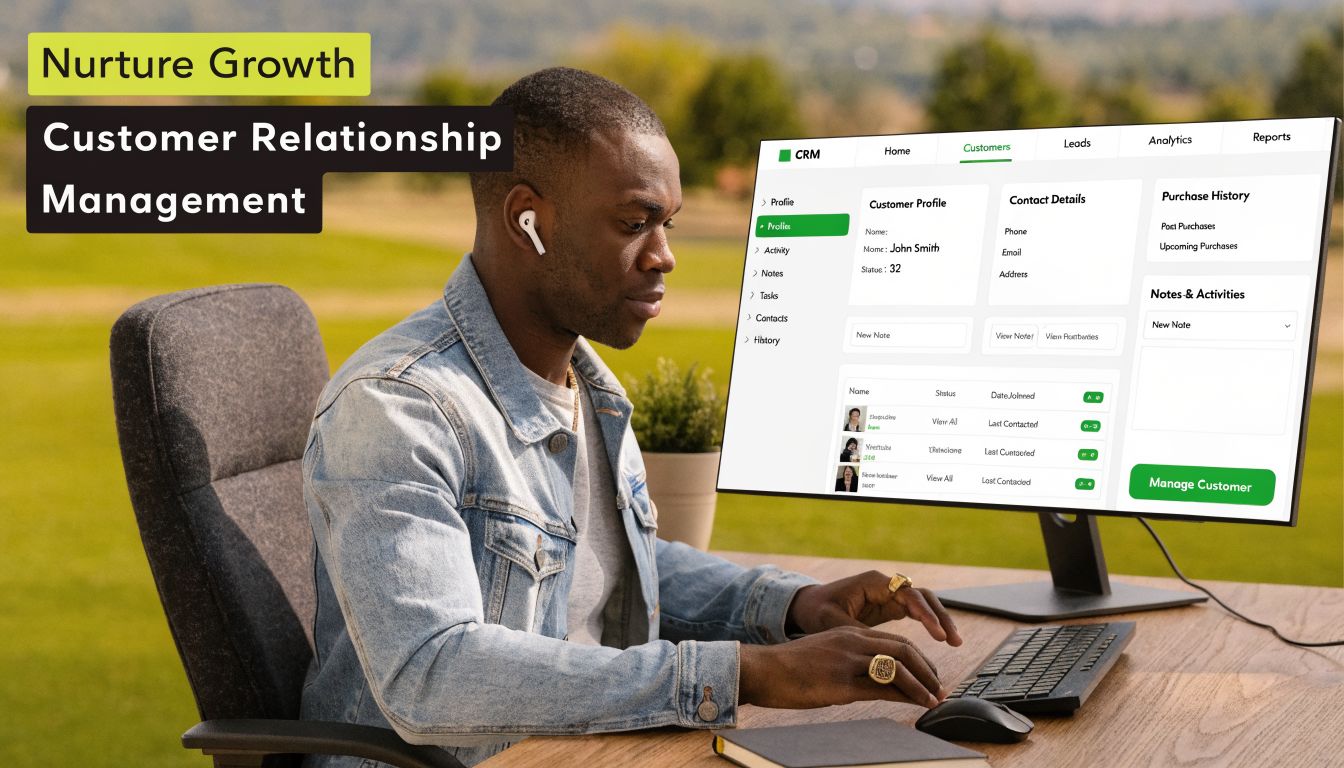
A CRM exists for this exact gap between first interest and actual readiness.
What ad-hoc follow-up looks like
A prospect downloads a brochure on Tuesday. Someone from the club calls on Thursday and gets no answer. A follow-up email is sent the following week with a PDF attached again. Then nothing happens until someone notices the name in a spreadsheet a month later.
That's not nurture. That's drift.
The prospect may still be interested, but the club has gone quiet. Worse, nobody knows whether the person clicked anything, replied elsewhere, booked a visit, or should be left alone.
What a working nurture flow looks like
A better process is steady and visible. Not aggressive.
A simple CRM sequence might include:
Day one
Brochure or membership guide delivered. Invitation to book a visit.A few days later
Short message focused on the club experience. Competition golf, social environment, flexibility, or family use depending on segment.Next follow-up
A practical note about membership types, joining process, or who the club suits best.Later touchpoint
Prompt to visit the club, speak with the membership contact, or attend at a suitable time.Re-engagement
A final check-in if there has been no action, with an easy way to reply.
To fix this, clubs need proper tracking. If you're comparing systems, articles that help teams find the best call center CRM software can be useful for thinking through workflow, lead ownership, and follow-up visibility, even outside a traditional call centre environment.
For golf-specific implementation, GolfRep has also covered what a golf CRM system should do for a club pipeline.
Why the CRM changes the conversation
A CRM makes the pipeline visible. That sounds basic, but it changes behaviour.
Instead of asking, “Did anyone reply to that lead?”, staff can see status, source, last contact, next action, and whether a visit is booked. Instead of exporting spreadsheets and chasing memory, the club gets one operational view.
Prospects rarely need more persuasion at the start. They need relevant follow-up until their timing, confidence, and circumstances line up.
This is also where one golf-specific system can help if a club wants joined-up advertising, automation, and pipeline handling in one setup. GolfRep is one option clubs use for that type of structured membership workflow. The point isn't the brand. The point is having a system that prevents enquiries from vanishing between departments, devices, or diaries.
Putting It All Together A Campaign Playbook
More leads rarely fix a membership pipeline. A club usually gets a bigger result by tightening speed-to-lead, setting clear lead ownership, and following up in a way staff can realistically maintain.
Hillier Hopkins found that more UK member clubs were gaining members than losing them, with only 24% reporting more leavers than joiners in the Hillier Hopkins golf clubs report. The market is there. The operational question is whether your club can turn interest into booked visits and signed forms without relying on memory, inbox searches, or whoever happens to be on shift.
A useful campaign playbook is a 90-day rollout, not a theory diagram. Here is the version I would put in place first.
Days 1 to 30. Fix response speed and conversion points
Start where money is currently leaking.
Audit every route a prospect can take to enquire about membership. Paid ads, organic search, social clicks, portal listings, referrals, and the club website should all send people to one clear path with one clear next action. If some routes still send traffic to the homepage or a generic contact page, fix that first.
Then test your response process like a prospect would. Submit an enquiry during office hours, in the evening, and at the weekend. Check how long it takes to get an acknowledgement, whether a staff member is alerted, and whether the next step is obvious. Many clubs discover the actual issue here. The form works, but nobody owns the lead for several hours, or the reply arrives without a suggested call or visit.
By the end of month one, the club should have:
- one primary membership enquiry path
- working alerts to the right staff member or shared inbox
- a target response time the team can meet
- agreed lead ownership
- a basic CRM stage setup so no enquiry sits unassigned
If that sounds operational rather than promotional, that is the point.
Days 31 to 60. Launch one focused campaign, not three half-managed ones
Month two is for controlled testing. Pick one audience, one offer angle, and one catchment area. A club trying to reach everyone at once usually ends up with weak messaging and mixed lead quality.
A practical example is a local paid search or paid social campaign aimed at golfers within realistic driving distance, with creative built around the specific membership path you want to sell. That might be full membership, flexible points-based access, off-peak, or a trial route into full membership. The message should pre-qualify, not just attract clicks. Price-conscious joiners, lifestyle movers, lapsed members returning to the game, and younger working golfers do not respond to the same promise.
Set the campaign up so you can answer three questions at the end of the month:
- Which source produced booked visits.
- Which source produced qualified conversations.
- Which source produced low-intent form fills that drained staff time.
That is enough to make a useful budget decision.
Days 61 to 90. Inspect the pipeline, then tighten follow-up
Month three is where clubs usually find hidden waste. Not in the ads, but in the gap between enquiry and decision.
Review the pipeline stage by stage. Look for where prospects stall. If many enquire but few book a visit, the issue is usually response handling or weak follow-up. If visits happen but applications stay low, the problem often sits in the sales conversation, the membership proposition, or the lack of a clear next step after the tour.
This is also the point to refine nurture by segment. A golfer who asked about joining with a partner should not get the same follow-up as someone comparing flexible categories after moving house. Better segmentation usually improves conversion more than broadening top-of-funnel spend.
Use a simple review format with your team each month:
- leads received
- contact rate
- average time to first personal response
- visits booked
- visits attended
- applications started
- memberships sold
- no-contact and no-show rates by source
That gives a manager something far more useful than click reports. It shows where process changes will produce revenue.
What club managers should check every week
The weekly discipline matters more than the campaign launch.
Ask who still owns each live lead. Check whether any enquiry has gone untouched for more than a day. Look at booked visits for the coming week and how many older enquiries need a reactivation attempt. If nobody can answer those questions in two minutes, the system is still too loose.
A strong membership pipeline is usually boring to run. That is a good sign. Staff know who responds, what happens next, when follow-up goes out, and which leads need intervention from a manager.
The clubs that grow steadily treat membership acquisition like an operating process with deadlines, visibility, and accountability. GolfRep is one option clubs use to set up that kind of workflow across advertising, CRM handling, and follow-up. The principle matters more than the platform. Every enquiry needs a clear owner, a next action, and a recorded outcome, or the club is paying to create admin rather than members.
Ready to tap into our proven growth system?