Master Golf Club WhatsApp Lead Follow Up
Most advice on golf club WhatsApp lead follow up gets the problem backwards.
Clubs don't usually lose growth because nobody is enquiring. They lose growth because enquiries sit in a form inbox, get forwarded to one person, receive a slow reply, or never make it into a proper follow-up process at all. That's why a club can feel busy, spend money on marketing, and still struggle to turn interest into visits, tours, society bookings, and membership joins.
WhatsApp helps, but only when it sits inside a system. A personal mobile, a few saved replies, and good intentions won't fix inconsistent handling. What works is a structured process with immediate acknowledgement, qualification, CRM visibility, consent capture, and measured follow-up over time.
Why Your Club Loses Members Before They Ever Visit
The biggest myth in club growth is that you need more leads.
In most clubs, the first problem is lead handling. Membership enquiries arrive at awkward times. Society organisers compare venues on the same day. Lesson prospects message while they're still motivated. If nobody replies quickly, the prospect moves on to the next club that does.
Research cited by Growth List's sales follow-up statistics shows that making contact within the first five minutes makes leads 100 times more likely to convert than waiting just 30 minutes, and waiting an hour can cut your odds of even making contact by 10 times. For golf enquiries, that matters because the buyer is often actively comparing options, not browsing casually.

The real leak sits after the form fill
A club can have a decent website, solid local reputation, and regular enquiry flow, then still underperform because the process after submission is weak.
Common failure points look like this:
- Inbox dependence. A website form sends an email to one staff member who's on the course, in a meeting, or off that day.
- No ownership. Nobody knows who should reply to a membership lead versus a society lead.
- One-and-done follow-up. A prospect gets one message, doesn't respond immediately, and the club assumes they weren't serious.
- No audit trail. Conversations happen across email, phone, WhatsApp, and handwritten notes with no single record.
That creates a leaky bucket. More ad spend pours more water into the same broken process.
Practical rule: If your club can't tell you who replied, how quickly they replied, and what happened next, the issue isn't lead volume. It's process visibility.
This is the same pattern other enquiry-led businesses run into. The operational lessons in how to retain franchise leads apply closely here because the loss often happens between first interest and first real conversation.
Why WhatsApp changes the response window
WhatsApp isn't useful because it's trendy. It's useful because it fits how people already communicate.
For a club, a fast WhatsApp acknowledgement does two things immediately. First, it confirms the enquiry was received. Second, it opens a live channel while the prospect is still engaged. That's a very different experience from a form submission disappearing into silence.
A lot of clubs don't realise how many enquiries they lose in that gap. GolfRep covered that broader issue in this piece on how most golf clubs lose enquiries without realising, and the same pattern shows up again and again in follow-up audits.
The important shift is simple. Stop asking, “How do we get more leads?” Start asking, “What happens in the first few minutes after someone raises their hand?”
Building Your Foundation with WhatsApp Business
The wrong setup creates work. The right setup creates trust.
Most clubs start with the standard WhatsApp app on one person's phone. That's fine for casual communication, but it's a poor base for a club sales process. It ties conversations to an individual, makes handovers messy, and gives you very little structure.
Choose the right version for the job
There are really three levels:
| Option | Best for | Limitation |
|---|---|---|
| WhatsApp app | Personal use | No proper business workflow |
| WhatsApp Business app | Small-volume club handling | Useful, but still limited for scale |
| WhatsApp Business Platform | Automated, CRM-led follow-up | Needs setup and integration |
If you're only handling a low volume of ad hoc messages, the Business app can work as a short-term step. You can set a business profile, greeting message, opening hours, and basic labels.
If you want proper automation, routing, and CRM logging, you need the WhatsApp Business Platform. That's the version built for systems, not just chats.
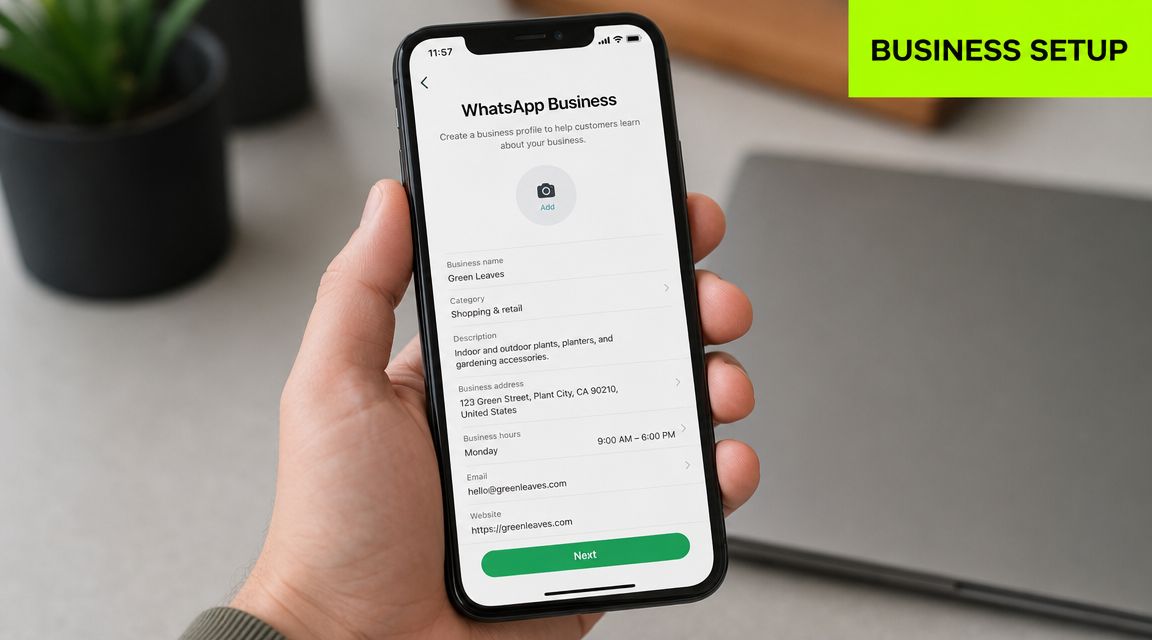
Set up the profile like a club, not a person
A prospect should immediately see that they're messaging the club.
Get these basics right:
- Use a dedicated club number. Don't build your enquiry process around the general manager's mobile.
- Set the business name clearly. Use the club name exactly as members and prospects know it.
- Write a short business description. Mention the core services you want enquiries for, such as membership, societies, visitors, events, or lessons.
- Add opening hours. This helps set expectations, even if your automation handles first response outside office hours.
- Use the club logo or a clean brand image. Avoid random course photos cropped badly into a circle.
These details seem small, but they reduce friction. Prospects decide quickly whether a message feels legitimate and professional.
Labels help, but they won't replace a system
Inside the WhatsApp Business app, labels can organise early-stage conversations. For example:
- New membership enquiry
- Society prospect
- Booked club visit
- Needs callback
- Consent not captured
That's better than nothing, but labels are still a manual workaround. Once volume increases, someone forgets to update them, messages get missed, and reporting disappears.
A club that relies on one person remembering who needs a reply doesn't have a follow-up system. It has a fragile habit.
The other issue is persistence. Club teams change. Committee members rotate. Admin staff take leave. If your golf club WhatsApp lead follow up process lives inside one handset, it becomes hard to manage and harder to improve.
Start with professionalism, then build automation
The first setup doesn't need to be complicated. It does need to be deliberate.
At minimum, your foundation should give you:
- A dedicated business identity
- Clear first-response messaging
- Basic organisation by enquiry type
- A path toward CRM integration
That final point matters most. WhatsApp works best when it becomes the front door to a tracked process, not a side conversation that staff have to remember later.
Connecting WhatsApp to Your CRM for Full Visibility
At this point, most clubs either build a pipeline or create a mess.
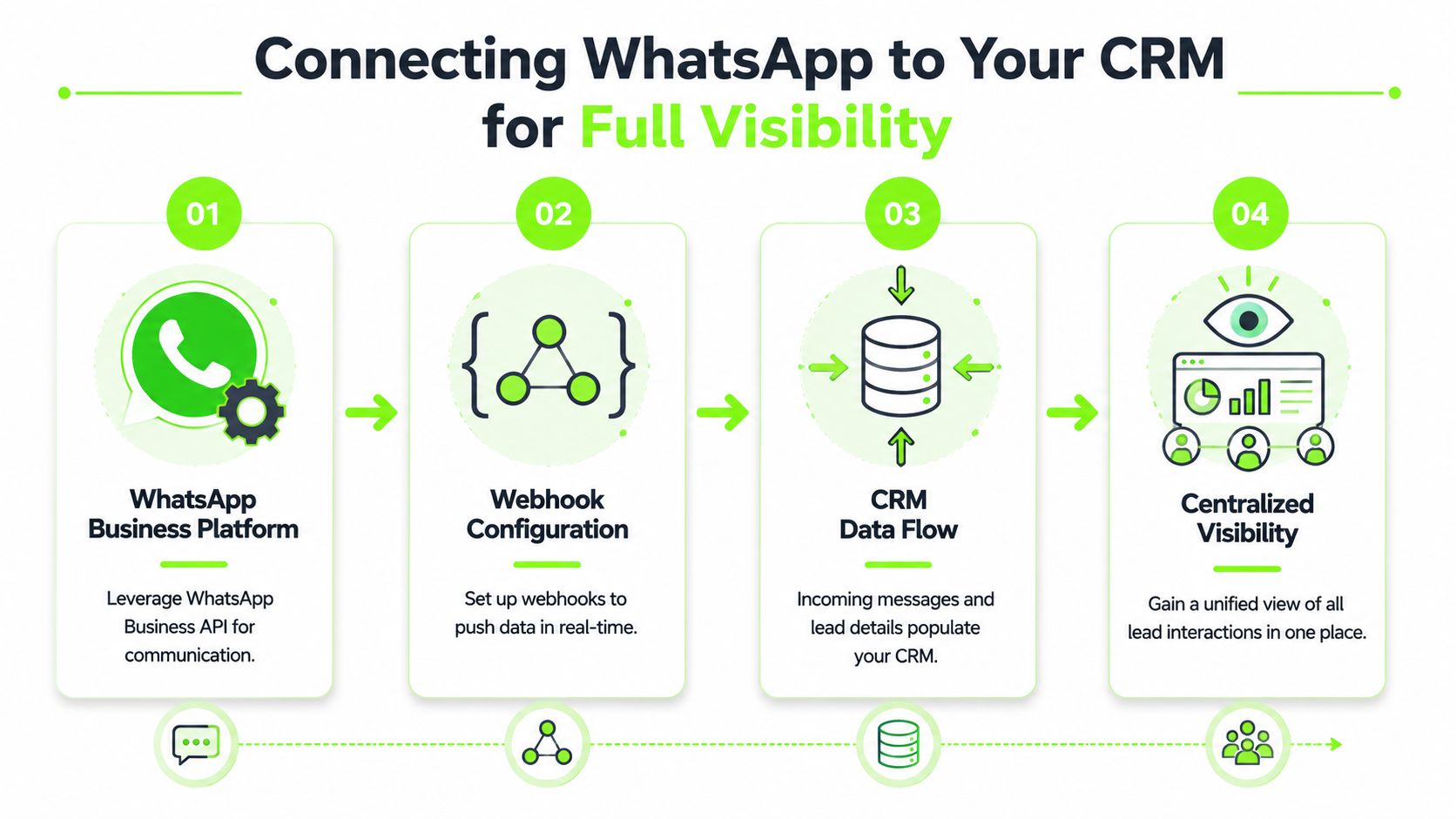
WhatsApp on its own is only a messaging channel. It doesn't solve visibility, ownership, tracking, or reporting. True value appears when every enquiry, message, reply, status update, and handoff lands in one place.
Think of a webhook as a digital postman
A webhook sounds technical, but the job is simple.
When someone fills in a form on your website or ad, the webhook sends that information straight into your CRM instantly. The CRM can then trigger the correct WhatsApp response, assign the enquiry, and store the record against that contact.
That's the difference between a manual process and a system. No forwarding. No copying and pasting. No “did anyone reply to this one?”
The clean setup most clubs actually need
A practical CRM-connected setup usually looks like this:
- Capture the enquiry from website forms, Meta lead ads, Google ads, event pages, or contact forms.
- Filter obvious spam before any message is sent.
- Push the enquiry into the CRM with source, timestamp, enquiry type, and contact details.
- Trigger an immediate WhatsApp acknowledgement based on the enquiry category.
- Create owner tasks or routing rules for a staff member to take over where needed.
- Log every interaction in the same contact record.
A key part of that setup is data hygiene. The Revenue Club's CRM guidance for golf clubs notes that automated follow-up can be paired with spam filtering and advanced lead workflows. That matters because sending WhatsApp messages to junk submissions wastes staff time and pollutes your CRM from day one.
What full visibility actually gives you
Without a CRM, clubs tend to ask vague questions.
Did we get many membership enquiries last month?
Did anyone follow up with the visitor who asked about a tour?
Which campaign brought in the best prospects?
With a CRM, you can answer them properly.
- Lead source visibility shows whether an enquiry came from Google, Meta, organic search, referral, or an event.
- Status tracking shows whether the lead was contacted, qualified, booked, lost, or still active.
- Conversation history means anyone on the team can step in without guessing.
- Pipeline reporting gives management a view of real opportunities, not just inbox traffic.
For clubs reviewing options, this broader small business CRM marketing guide is a useful non-technical primer on why CRM structure matters before you add automation on top.
If the WhatsApp conversation isn't attached to the lead record, you haven't built visibility. You've only moved the conversation to a faster app.
A purpose-built setup can sit in HubSpot, Pipedrive, or another CRM with proper workflow support. GolfRep implements this kind of structure for golf clubs through a tracked follow-up system tied to lead source and pipeline movement, but the principle is broader than any one provider.
For a more golf-specific view of the system itself, this overview of a golf club CRM system covers the operational side in more detail.
Designing High-Converting Automated Message Sequences
The mistake most clubs make after setup is sending messages that are fast but shallow.
A quick reply is useful. It isn't the whole job. Golf memberships, society bookings, and event enquiries are high-consideration decisions. Prospects usually need reassurance, relevant information, and a clear next step before they commit.
Walane's article on WhatsApp lead follow-up automation makes an important point for high-value enquiries like golf memberships. The goal isn't just speed. It's guiding the prospect towards a club visit by using proof points and useful information that make booking the next step feel logical.
Start with acknowledgement, then qualify
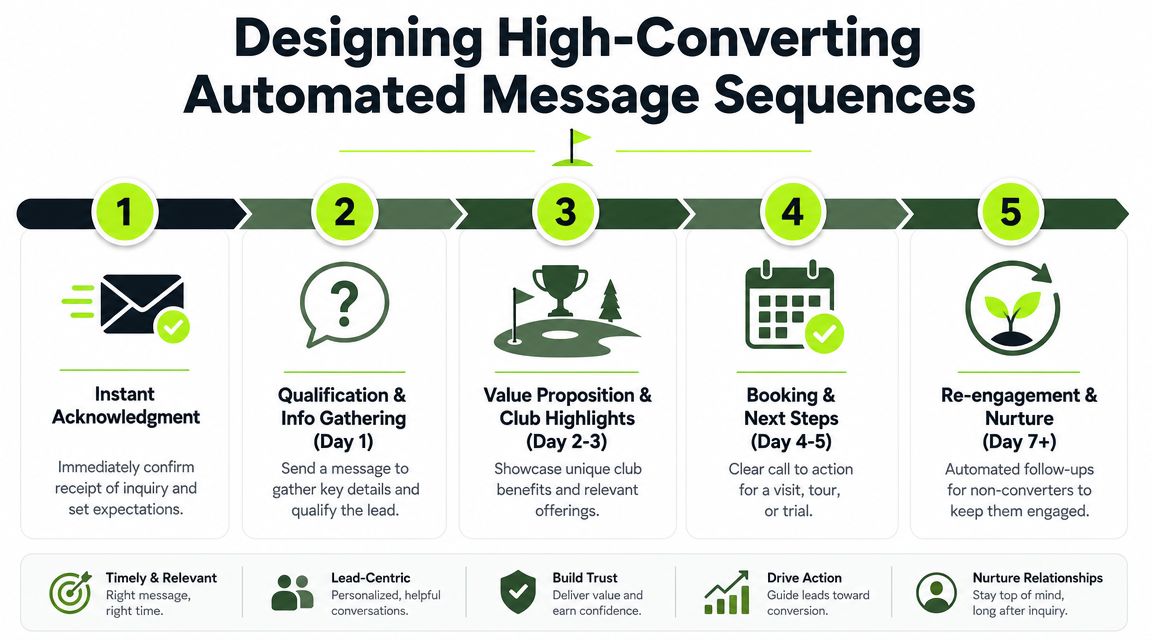
The first message should confirm receipt and reduce uncertainty.
A simple membership example:
Hi Sarah, thanks for your enquiry about membership at Greenfield Golf Club. We've received your request and can help with current options. To point you in the right direction, are you mainly looking for full membership, flexible golf, or beginner-friendly access?
That works because it does three jobs at once. It confirms the enquiry arrived. It sounds human. It asks a small question that helps the system or staff route the lead correctly.
What doesn't work is a generic wall of text, a PDF dropped without context, or a hard sales message before the club understands the prospect.
Build sequences around the actual buying journey
Different enquiry types need different paths.
Membership enquiries
For membership, the sequence should move from interest to fit to visit.
A practical structure:
- Message one confirms receipt and asks a simple qualifying question.
- Message two shares the most relevant next information, such as category options, beginner suitability, weekday access, or joining process.
- Message three invites the prospect to the next real step, usually a club visit, tour, coffee meeting, or hosted round.
- Message four and beyond handle objections, timing, and reminders if they haven't booked.
The important point is relevance. A retired local golfer, a lapsed player, and a young family relocating to the area shouldn't receive the same sequence.
Society and corporate enquiries
These buyers often care about availability, format, food, and response reliability.
A better WhatsApp flow asks for date, group size, and whether catering or extras are needed. Once that information is in the CRM, staff can pick up the thread with context instead of starting from scratch.
Lesson enquiries
Lesson prospects usually need lower-friction booking, not a nurture journey. The fastest route is often to confirm the coaching type, offer time windows, and move them to a scheduled slot.
Keep the automation conversational
A strong golf club WhatsApp lead follow up sequence shouldn't feel robotic, even when it's automated.
Use these principles:
- Ask one question at a time so the prospect can reply quickly.
- Write like staff speak at the club front desk, not like a brochure.
- Link to useful assets only when they support the next decision.
- Escalate to a human early for high-intent prospects.
A weak sequence talks at the lead. A strong sequence creates momentum.
What works in practice: the message should answer the prospect's likely next question before they have to ask it.
Don't stop after one unanswered message
Sales follow-up data cited by Salesgenie's follow-up statistics says responding within five minutes or less makes a business 100 times more likely to connect with and convert, and it cites Salesforce as finding that 80% of sales require at least five follow-up attempts before a sale is made. That matters because many clubs still treat WhatsApp as a single-message tool.
A simple follow-up rhythm for unbooked prospects is:
- Immediate acknowledgement and qualification
- Short follow-up later with the most relevant information
- A booking prompt once interest is clearer
- A reminder if the prospect has gone quiet
- A final check-in before moving them into longer-term nurture
That's not about pestering people. It's about recognising that serious buyers are often busy, distracted, or still comparing options.
If you want a broader view of how these stages fit together operationally, this guide to a golf club follow-up system is a useful companion.
Navigating GDPR for Compliant WhatsApp Communication
Fast follow-up is useful. Unclear consent is risky.
Clubs often approach this stage casually. A prospect submits a form, the club immediately starts sending WhatsApp messages, and nobody has thought clearly about whether that message is service-related, promotional, or properly documented.
The UK position needs more discipline than that. As outlined in nocrm.io's guidance on WhatsApp follow-ups and lead nurturing, clubs must justify their lawful basis for electronic marketing under GDPR and PECR. In practice, that means separating service messages from promotional messages and capturing explicit consent at the first touchpoint where needed.
Service versus promotion
A useful way to think about it is this:
| Message type | Example | Handling principle |
|---|---|---|
| Service message | Sending a requested brochure or confirming a booked visit | Tied to the enquiry or requested action |
| Promotional message | Sending an offer, event push, or general membership marketing later | Needs clear consent and opt-out handling |
If someone asks for membership information and you reply with the information they asked for, that sits differently from adding them to an ongoing promotional nurture sequence.
That distinction should exist inside the CRM, not only in staff memory.
What clubs should record
Your CRM record should show:
- How the enquiry arrived
- What the person asked for
- Whether WhatsApp contact was disclosed at the form stage
- Whether marketing consent was given
- Whether the contact later opted out
This is one of those areas where operational discipline protects both conversion and reputation. If a prospect feels chased before trust is established, complaints rise and goodwill drops.
Separate the message that fulfils the enquiry from the message that promotes the club. If you blur the two, staff get confused and compliance gets weak.
For a wider look at mobile and messaging rules, CartBoss's compliance advice is a useful companion read. The channel is different, but the habits around consent, opt-outs, and documentation are closely related.
Tracking Performance to Create a Predictable Pipeline
A WhatsApp setup only becomes commercially useful when the club can measure what it's doing.
Most clubs track activity poorly. They know messages were sent, but they can't see whether those messages led to a show round, a trial round, a membership meeting, or a signed direct debit. That's why follow-up feels busy but unpredictable.
Track movement, not just messages
The most useful dashboard focuses on pipeline progression.
Look at metrics such as:
- Time to first response
- Lead-to-conversation rate
- Conversation-to-visit booking rate
- Visit-to-membership conversion
- Open opportunities by enquiry type
- Lead source against eventual outcome
These aren't vanity metrics. They tell you where the process is breaking. If conversations start but visits don't, your sequence may be informative but not persuasive. If visits happen but joins stay low, the issue may sit with pricing presentation, member fit, or the on-site sales process.
Predictability comes from closed-loop reporting
When the CRM, WhatsApp workflow, and sales process are connected, management can finally answer practical questions with confidence.
Which campaigns create real opportunities?
Which staff handoffs lead to booked visits?
Which message sequence moves society leads fastest?
Where are prospects stalling?
That's what turns golf club WhatsApp lead follow up from a communications tool into a growth system. You stop relying on memory, inboxes, and anecdotal updates. You start managing a visible pipeline.
The clubs that grow steadily aren't always the clubs with the biggest audience. They're the clubs that respond quickly, follow up consistently, capture clean data, respect consent, and measure every stage from enquiry to revenue.
If your club wants a more structured version of this, GolfRep helps UK golf clubs build CRM-connected follow-up systems that link lead generation, WhatsApp response, qualification, and conversion tracking into one visible pipeline.
Ready to tap into our proven growth system?