Golf Course Marketing Agency Guide for UK Clubs

The most popular advice for golf clubs is simple, attract more enquiries. That advice is incomplete. A club can increase traffic, collect more form submissions and still fail to grow because nobody responds promptly, records the next action or follows up consistently.
From GolfRep's perspective, the commercial problem is usually not enquiry volume. It's the gap between a golfer showing interest and a club giving that golfer a clear, timely path towards a visit, conversation or membership. A shared inbox, manual reminders and unclear ownership create opportunities that disappear without leaving a useful record.
That matters in a sizeable market. England Golf records 1,735 affiliated golf clubs and more than 730,000 club members nationwide, while the average county has 21,408 golfers. The same reporting shows that average club-member age has fallen from 56.18 to 54.99, with average male member age moving from 54.98 to 53.78 and average female member age from 64.65 to 62.98. These figures point to a broad audience, but not one that responds to a single message or channel. (England Golf market data)
Practical rule: More leads only help when your club can see, contact and progress them.
A suitable golf course marketing agency should therefore connect advertising and content with response-time standards, lead visibility, conversion tracking and CRM nurture. This guide explains what that work involves, how to assess commercial models, what an effective onboarding process looks like and how the approach should differ between private clubs, multi-site operators and volunteer-run clubs. For a closer look at the operational issue, see GolfRep's guide to golf club enquiry management.
What a Golf Course Marketing Agency Actually Does
A golf course marketing agency has two connected jobs. First, it helps the right golfers discover a club or venue. Second, it creates a dependable process for turning that interest into a conversation, a booked visit and, where appropriate, a membership or other commercial outcome.
A generic supplier often stops at the first job. It may manage paid advertising, search visibility, social content or website activity, then send enquiries to a club team for follow-up. A specialist growth partner looks further down the journey and asks who owns each enquiry, what happens after the first contact and how the club records the result.
Think pipeline rather than bucket
A bucket collects water but doesn't direct it anywhere. A pipeline has stages, movement and ownership. Golf club marketing works in the same way.
A campaign may attract a local golfer searching for membership, a visitor looking for a tee time or a company considering a golf day. The system then needs to:
- Capture the enquiry with useful information about the person and their interest.
- Qualify the opportunity so staff know whether it concerns full membership, flexible access, green fees or an event.
- Respond promptly with a relevant acknowledgement and a clear next step.
- Route the lead to a named person rather than leaving it in a general inbox.
- Nurture the prospect when they aren't ready to decide immediately.
- Track the outcome from first contact through visit, decision and joined membership.
The value isn't in automation for its own sake. The value is removing avoidable delays while preserving the personal conversation that makes a club feel welcoming.
Why golf experience matters
Golf clubs have sensitive commercial considerations. A private members' club may want stable, long-term members without relying on constant discounts. A proprietary venue may need to balance membership with visitor revenue, events and hotel demand. A multi-site operator needs consistent reporting without making every venue sound identical.
The partner must understand brand position, pricing integrity, club culture and staff capacity. It should also recognise that an enquiry from an established golfer may need different handling from one generated by a younger player, a family or someone returning to the sport.
The same principle applies when a club outsources specialist work. If a committee is assessing choosing a white label SEO provider, it should still ask how search activity connects to enquiry handling and commercial reporting. Search visibility is useful, but it shouldn't become a disconnected channel that produces activity without pipeline accountability.
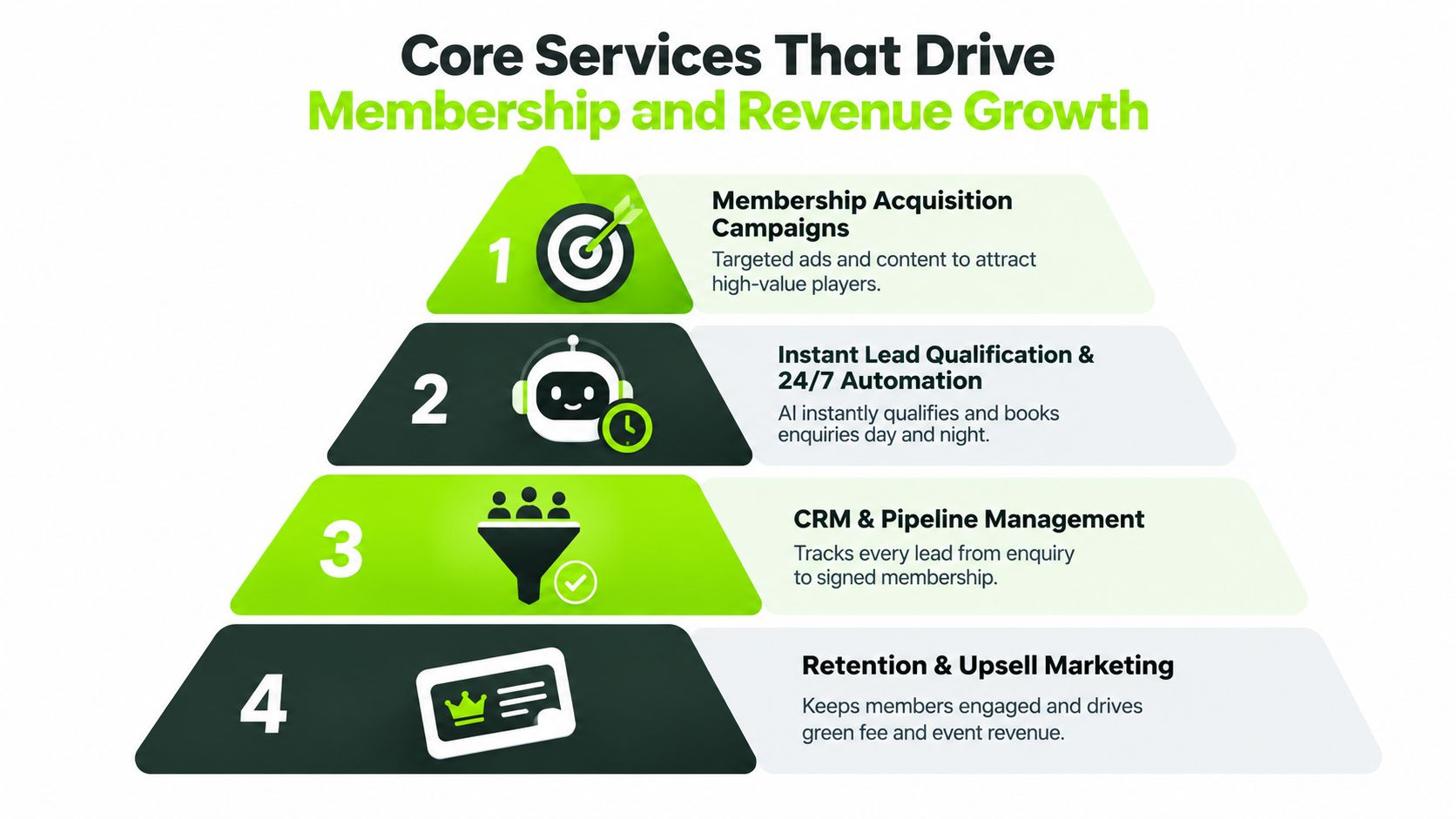
Core Services That Drive Membership and Revenue Growth
The right service mix depends on the club's commercial priorities and its ability to handle demand. A private club with an underused membership process needs a different intervention from a resort group trying to coordinate several sites.
Membership acquisition campaigns
Acquisition campaigns put a specific proposition in front of a defined audience. That proposition might centre on full membership, a flexible category, an open day or a guided tour. The important point is that the campaign should make the next step clear and should attract the type of golfer the club wants.
A strong campaign also prepares the follow-up process before launch. The team should know what counts as a qualified enquiry, who receives it and which questions need answering. Enquiry to visit rate and visit to join rate are more useful than impressions alone because they connect marketing activity to club outcomes.
The wider membership mix supports a segmented approach. Hillier Hopkins reported that 64% of golf club members were aged 51 and over, while female membership had reached 18% and junior membership remained at 9%. (Golfshake summary of UK club membership) A single membership message is unlikely to speak equally well to mature golfers, women, juniors and families.
Instant qualification and automation
Automation gives a prospect an immediate response when staff are unavailable. It can confirm receipt, ask sensible qualifying questions, offer a booking route and alert the right team member. It shouldn't pretend to replace a membership conversation.
Independent UK lead-response reporting found that contacting a lead within 5 minutes was associated with an approximately 21% qualification rate, compared with about 1.9% after 24 hours. The same report recorded a median first-touch response time of 1 hour 42 minutes in a sample of 28,400 leads. (UK lead-response research)
CRM and pipeline management
A CRM provides one visible record for each enquiry. Staff can see the source, interest, last contact, next action and current stage without searching through emails or relying on memory.
The system should reflect the club's real process. Useful stages might include new enquiry, contacted, visit booked, visit completed, decision pending, joined and lost. A manager can then identify stalled opportunities and distinguish a weak campaign from weak follow-up.
Paid advertising and nurture flows
Paid media can create demand quickly, but it works best when the offer, landing page and follow-up sequence are aligned. A golfer who isn't ready to book a visit may still respond to useful information about membership categories, playing opportunities, club culture or upcoming events.
Nurture should be planned around genuine questions rather than generic promotional messages. It can remind prospects of the next step, provide practical information and prompt a conversation when timing becomes more suitable.
Retention and reactivation
Acquisition receives more attention, but renewal risk deserves its own process. In a Golfshake survey of more than 2,500 golfers, 77.9% of current club members planned to renew, while 18.3% were undecided and 3.8% didn't plan to renew. (Golfshake retention survey data)
A retention system can identify undecided members, trigger appropriate save conversations and re-engage people who have stopped playing. Growing participation doesn't remove churn risk. It can raise expectations for communication and member experience.
A practical service checklist:
- Acquisition: Can the campaign target the right membership or revenue category?
- Response: Does every enquiry receive a prompt, relevant first contact?
- Visibility: Can staff see every lead and its next action?
- Measurement: Does reporting connect campaigns with visits, joins and revenue?
- Retention: Are renewal risk and lapsed members handled deliberately?
KPIs Reporting and How to Measure Real Performance
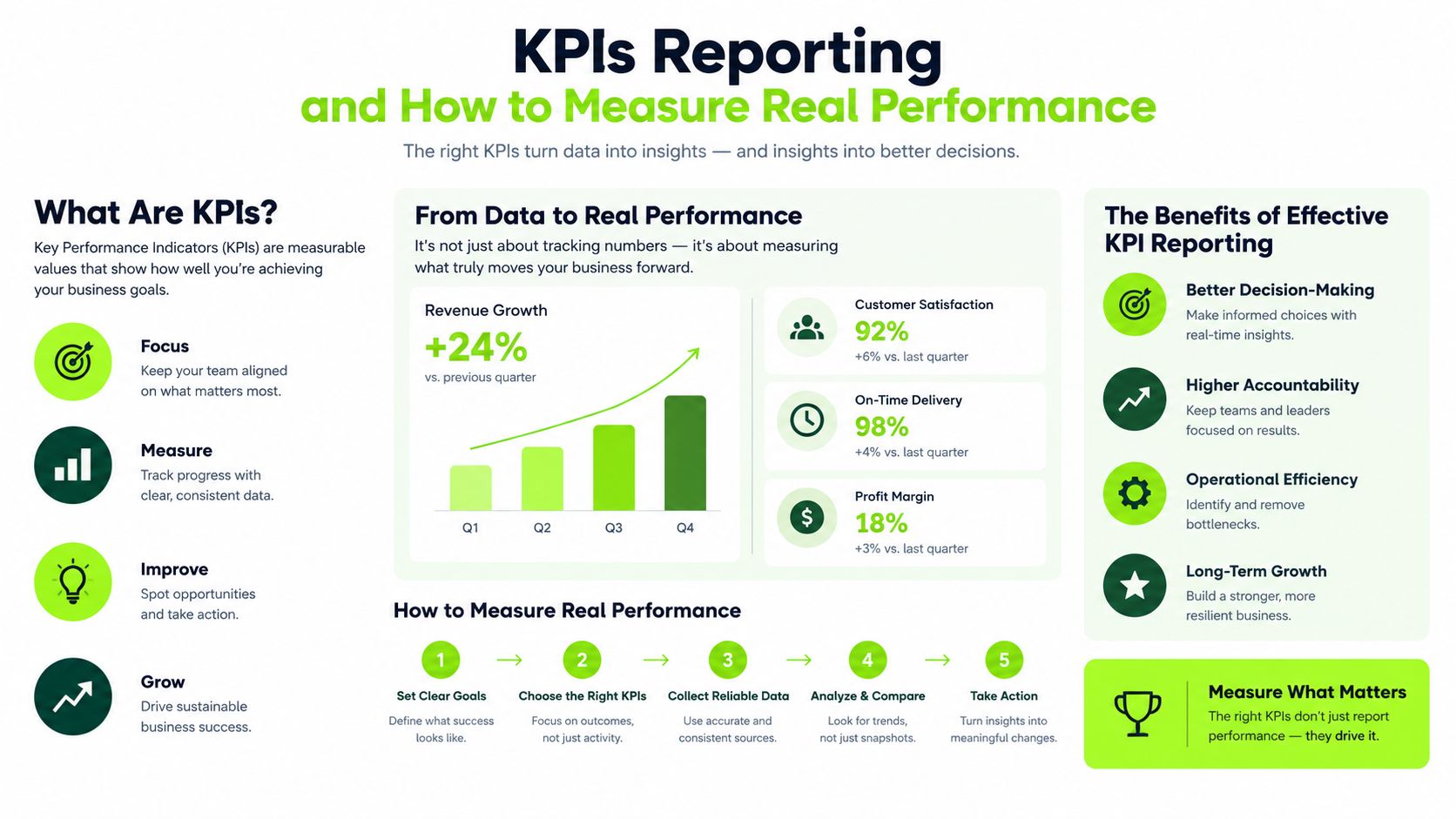
A report full of clicks and reach can look busy while telling a committee very little. Good reporting follows the golfer from first interaction to a commercial outcome, then shows where the process needs attention.
The measures that expose the pipeline
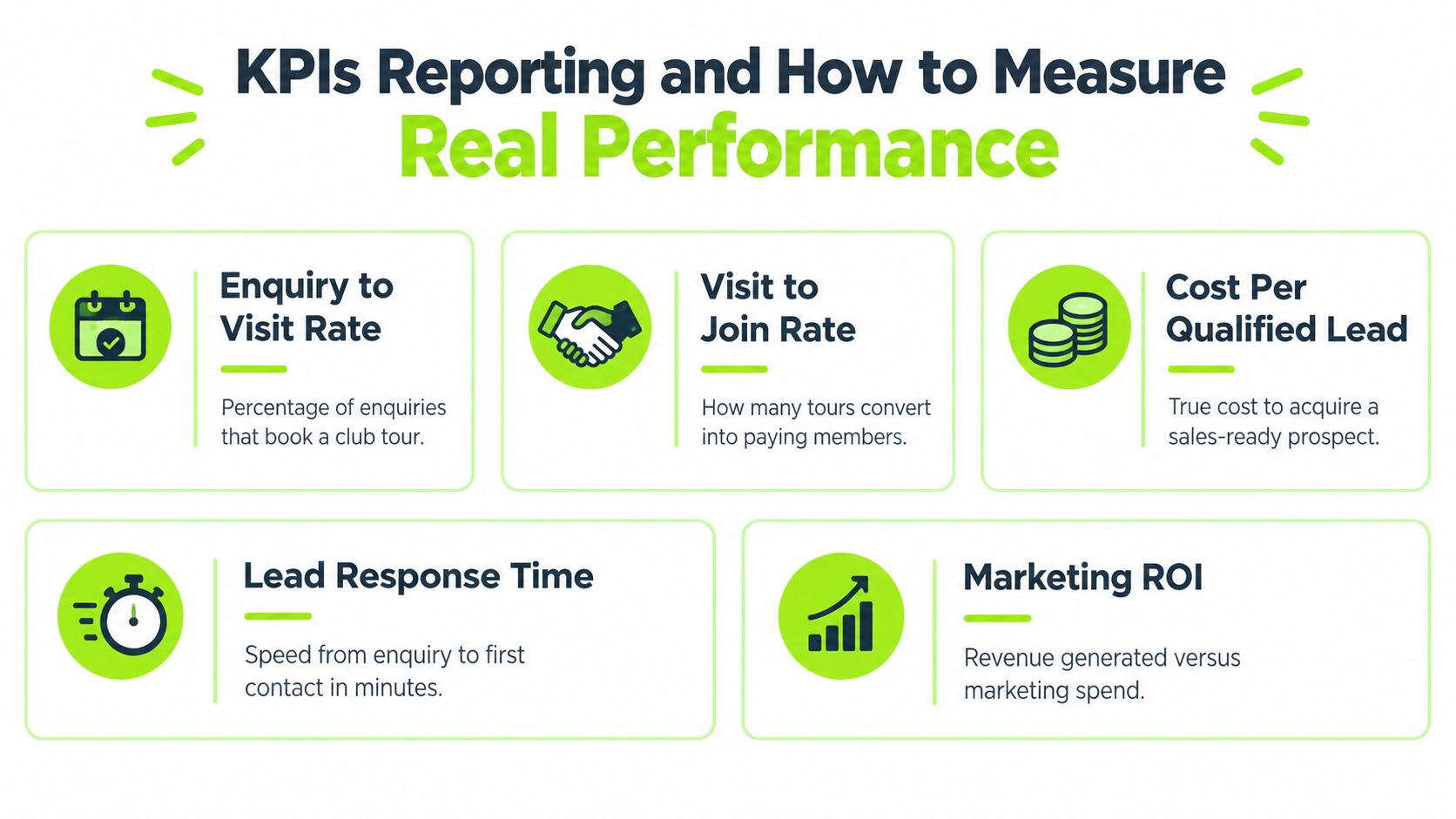
Enquiry to visit rate shows whether initial interest becomes a booked tour, call or club visit. A low rate may point to weak response, unclear next steps, poor qualification or a proposition that doesn't match the audience.
Visit to join rate measures the quality of the visit experience and the follow-up afterwards. A club may attract suitable prospects but fail to explain value, handle objections or maintain contact after the tour.
Cost per qualified lead is more useful than cost per form submission. It asks whether the club is paying for people with a realistic interest in the relevant offer.
Lead response time should be visible by source, day and responsible team member. Averages can hide delays, so managers should look for missed handovers and periods when no one is monitoring new enquiries.
Marketing ROI connects revenue with marketing spend. For membership, the club may need to track the journey over a longer period rather than judge performance from the first interaction.
Pipeline value and renewal retention add commercial context. A report should show opportunities still in progress, not just closed wins, and should identify members who need a save or reactivation conversation.
Compare reporting quality, not dashboard design
A useful review answers three questions:
- What happened: Which sources and campaigns generated enquiries?
- What changed: How many prospects progressed, stalled or converted?
- What happens next: Which message, process or ownership issue needs refinement?
Social platforms can help managers understand audience behaviour. For example, real-time social media insights can provide timely context around content and engagement. Those insights shouldn't replace pipeline data, because engagement doesn't confirm a booked visit or membership.
A monthly review can examine trends, while a more frequent operational check focuses on response time and overdue follow-ups. GolfRep's guide to measuring marketing effectiveness offers a useful framework for keeping the discussion tied to outcomes rather than activity summaries.
The best agency relationship makes performance easier to understand. Managers should be able to explain what the club spent, what it generated, where leads are waiting and what the team will change next.
Pricing Contract Models and Red Flags to Avoid
Price should be assessed alongside responsibility. A low fee isn't good value if the club still has to design the process, chase leads and assemble its own reporting. A higher fee may be justified when the partner manages connected acquisition, CRM setup, nurture and measurement, but the scope must be explicit.
Compare the commercial structures
| Model | How It Works | Best For | Watch Out For |
|---|---|---|---|
| Retainer | The club pays an agreed fee for defined strategic, campaign and support work | Clubs that need consistent activity and planning | Vague deliverables or payment for activity without commercial review |
| Performance-led | Fees or incentives are linked to agreed outcomes | Clubs with clear tracking and confidence in their sales process | Disputes over attribution, lead quality or factors outside the agency's control |
| Hybrid | A base fee covers infrastructure and delivery, with an outcome-based element | Clubs that want shared accountability without removing essential setup work | Poorly defined targets or incentives that encourage low-quality enquiries |
A retainer can offer stability, but only if the club receives clear work and transparent reporting. Performance-led arrangements can align incentives, but they require agreed definitions of a qualified lead, visit and conversion. Hybrid models often make practical sense when a club needs a CRM and follow-up foundation before results can be judged fairly.
Red flags committees should test
Discount-led promises are a warning sign when they substitute price reductions for a clear member proposition. Discounts can attract people who aren't a good long-term fit and may weaken the club's pricing position.
A partner that doesn't ask about CRM integration, lead ownership or response standards may be focused on acquisition rather than conversion. Reporting that lists impressions and clicks without booked visits, joined members or retention indicators leaves the committee unable to assess commercial value.
Ask for written answers to these questions:
- Scope: What will the agency do each month, and what remains with the club?
- Ownership: Who responds to new enquiries, and how are missed actions escalated?
- Definitions: What does the agency call a qualified lead or conversion?
- Access: Can the club see its data, pipeline and campaign records?
- Exit terms: How can either party end the relationship, and what happens to the CRM and assets?
A credible golf course marketing agency won't hide behind a long contract or a polished activity report. It will explain the operating model in plain English and show how accountability works when performance is below expectation.
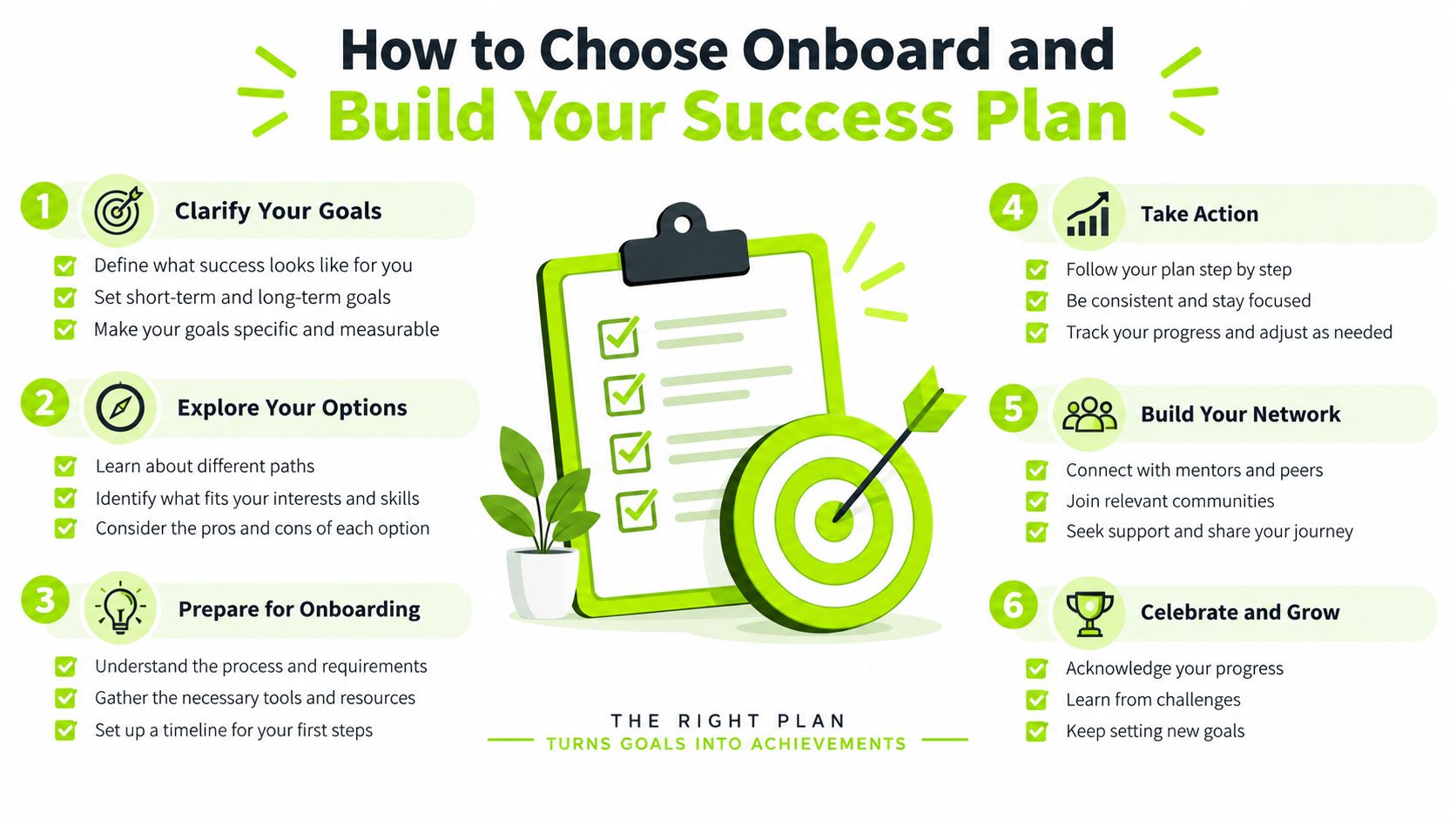
How to Choose Onboard and Build Your Success Plan
A committee often chooses an agency after comparing creative work, sector logos and proposed channels. Those details matter, but the more revealing test is whether the agency understands what happens inside the club on a busy day.
Consider three club situations. A private members' club may have a strong reputation but no consistent process for following up membership enquiries. A multi-site operator may generate plenty of interest but struggle to keep data and standards consistent across venues. A volunteer-run club may have a welcoming proposition but limited time to manage a complicated system.
The right partner starts with the operating reality, not a standard package.
Choose for fit and practical capability
During interviews, ask each agency to describe the first response after a form submission. Ask how the lead enters the CRM, who receives the notification, what happens if the person doesn't reply and how a manager sees the result.
Also test their understanding of club culture. A private club may need measured, consultative language. A resort may need separate journeys for members, visitors and events. A volunteer-run club may need fewer stages and more automation because staff can't monitor a pipeline throughout the day.
Look for four qualities:
- Golf knowledge: The agency understands membership categories, visits, renewals and club decision-making.
- Systems capability: It can connect forms, calls, campaign sources, CRM stages and follow-up.
- Communication: Managers receive clear updates without unnecessary technical language.
- Adaptability: The plan reflects seasonality, staff capacity, brand standards and pricing.
Build the plan in a controlled sequence
Start by agreeing the commercial priority and the definition of a qualified enquiry. Then map the current journey, including every handover and delay. Next, configure tracking and CRM stages before launching campaigns, so the club can see results from the first day.
The early launch period should test message, audience, response and booking flow together. If enquiries arrive but visits don't, the agency and club should examine the follow-up process rather than increasing spend. If visits happen but joins don't, the conversation, proposition and post-visit nurture deserve attention.
GolfRep's golf club CRM and operating system is one example of a CRM-led approach designed around lead capture, visibility and structured follow-up. Whatever platform a club chooses, the principle is the same. Staff should know what to do next, and managers should be able to verify that it happened.
A successful onboarding plan ends with a review rhythm, named owners and agreed measures. The club doesn't need to master every marketing tool. It needs a system that the people responsible for growth can use consistently.
Tailored Playbooks and Real Results for Every Club Type
A private member club shouldn't copy a resort's playbook. Its priority may be predictable membership growth without undermining the value of belonging. The campaign should communicate the club experience, qualify genuine interest and give prospects a consultative route to a visit. Follow-up should support the membership team rather than push every person towards a discount.
A multi-site operator faces a different problem. Each venue may have distinct facilities, audiences and commercial priorities, but the group still needs centralised CRM visibility and consistent follow-up standards. A suitable system can let central teams compare pipeline movement while allowing local staff to handle conversations in the right tone.
Volunteer-run clubs need simplicity. They may not have a dedicated membership manager monitoring enquiries throughout the day, so automated acknowledgement, reminders and clear ownership can protect opportunities without adding a large administrative burden. The system should reduce manual work, not create another platform that volunteers must constantly maintain.
GolfRep's published examples include reviving Bidston Golf Club with more than double membership, building a steady pipeline for Addington Palace, launching a rapid membership campaign for Downes Crediton and scaling automation for Macdonald Hotels & Resorts. These examples illustrate different operating needs, but they shouldn't be treated as guaranteed outcomes for every club. The useful lesson is that campaign design, response handling and CRM structure need to match the venue.
Market growth also shouldn't encourage complacency. Hillier Hopkins' survey found that clubs welcomed an average of 94 new members in 2023, while only 24% reported more leavers than joiners. (Hillier Hopkins golf club survey) At the same time, 46% of clubs had waiting lists, with an average list of 51 people, and 43% charged standard playing subscriptions above the CASC threshold. (UK club membership reporting) Demand and capacity can coexist with weak retention. Clubs need save campaigns, renewal communication and reactivation journeys before churn becomes visible in the accounts.
The next steps are practical:
- Audit where enquiries arrive and who owns them.
- Measure response time and stalled opportunities.
- Define the membership or revenue category worth prioritising.
- Choose a partner that connects acquisition with CRM follow-up.
- Review visits, joins, pipeline value and renewals together.
A golf course marketing agency should make growth more predictable, not just make marketing busier. The strongest clubs build a process that responds quickly, gives staff visibility and continues the conversation until the golfer reaches a clear decision.
GolfRep helps UK golf clubs combine lead generation, structured follow-up and CRM visibility so managers can see what happens from first enquiry to membership or renewal. Visit GolfRep to explore a practical growth system built around your club's operating model.
Ready to tap into our proven growth system?