Golf Club WhatsApp Marketing: Practical Guide
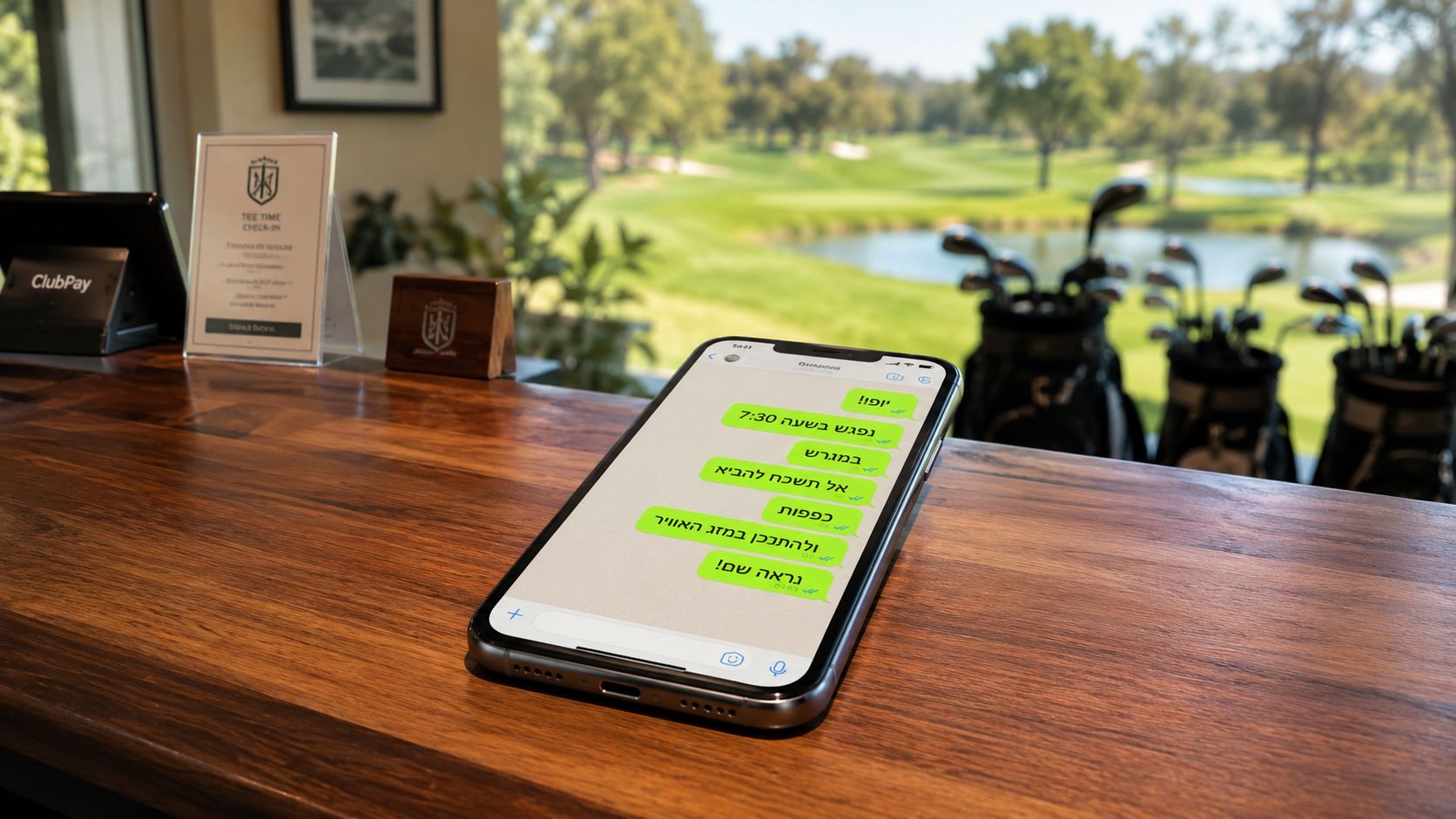
Most golf club WhatsApp marketing advice gets the problem backwards. Clubs do not usually need more enquiries, they need a faster, cleaner way to handle the ones they already have, because a slow reply in a membership context is often the same as no reply at all. In a UK club, where decisions are relationship-led and often depend on a few short conversations, WhatsApp makes sense less as a broadcast channel and more as a response system that keeps good leads from going cold.
That matters because WhatsApp is a channel people use and notice. Industry sources report around a 98% message open rate and 45-60% click-through rates for WhatsApp marketing, compared with roughly 20-25% open rates and 2-6% CTR for email, and broader scale now sits at more than 3 billion monthly active users worldwide with 200+ million businesses using WhatsApp Business each month (business messaging benchmarks). For golf clubs, that only becomes useful if the club has a disciplined follow-up process, because GolfRep's follow-up guidance notes that contacting a lead within the first five minutes can make them 100 times more likely to convert than waiting 30 minutes, which is exactly why speed deserves more attention than another round of ad spend.
Why WhatsApp Marketing Matters for Golf Clubs Right Now
The first mistake clubs make is treating lead generation and lead handling as the same job. They are not. A website form, a Meta lead, or a phone enquiry only becomes revenue if someone responds quickly, qualifies the interest properly, and moves the conversation towards a visit.
Practical rule: if your office can't answer fast, your marketing budget is paying to create missed opportunities.
That is why golf club WhatsApp marketing fits the membership sales cycle better than most clubs realise. Membership and visitor decisions are not usually made in one clean transaction. They unfold through a short sequence, a first message, a reply, a few clarifying questions, then a nudge towards a taster round, open day, or meeting with the team.
WhatsApp is useful here because it feels immediate without being as intrusive as a call, and it keeps the thread visible to both sides. A club can acknowledge the enquiry, answer one question at a time, and move the conversation forward without forcing the prospect to check email inboxes or wait for office hours. That matters when staff are stretched and the front desk is already juggling visitors, phones, members, and tee sheet issues.
There is also a practical commercial point. In a low-volume, high-value membership environment, small gains in response speed and show-up rate matter more than abstract reach. The leak is not that golfers fail to enquire, it is that clubs often lose them in the gap between interest and follow-up. WhatsApp closes that gap when the process behind it is structured, logged, and owned by the team.
The best use case is not a loud promotion blast. It is a reliable path from enquiry to visit, with a visible record of who asked, when they asked, what they wanted, and what happened next. That is the level of control most clubs need before they think about more traffic.
Choosing Between WhatsApp Business App and the API
The right WhatsApp setup depends on how the club works, not on what sounds modern in a committee slide deck. A small club with a couple of people handling enquiries can get by with the WhatsApp Business App. A busier club, a resort, or a multi-site group usually needs the WhatsApp Business API because the operational demands are different.
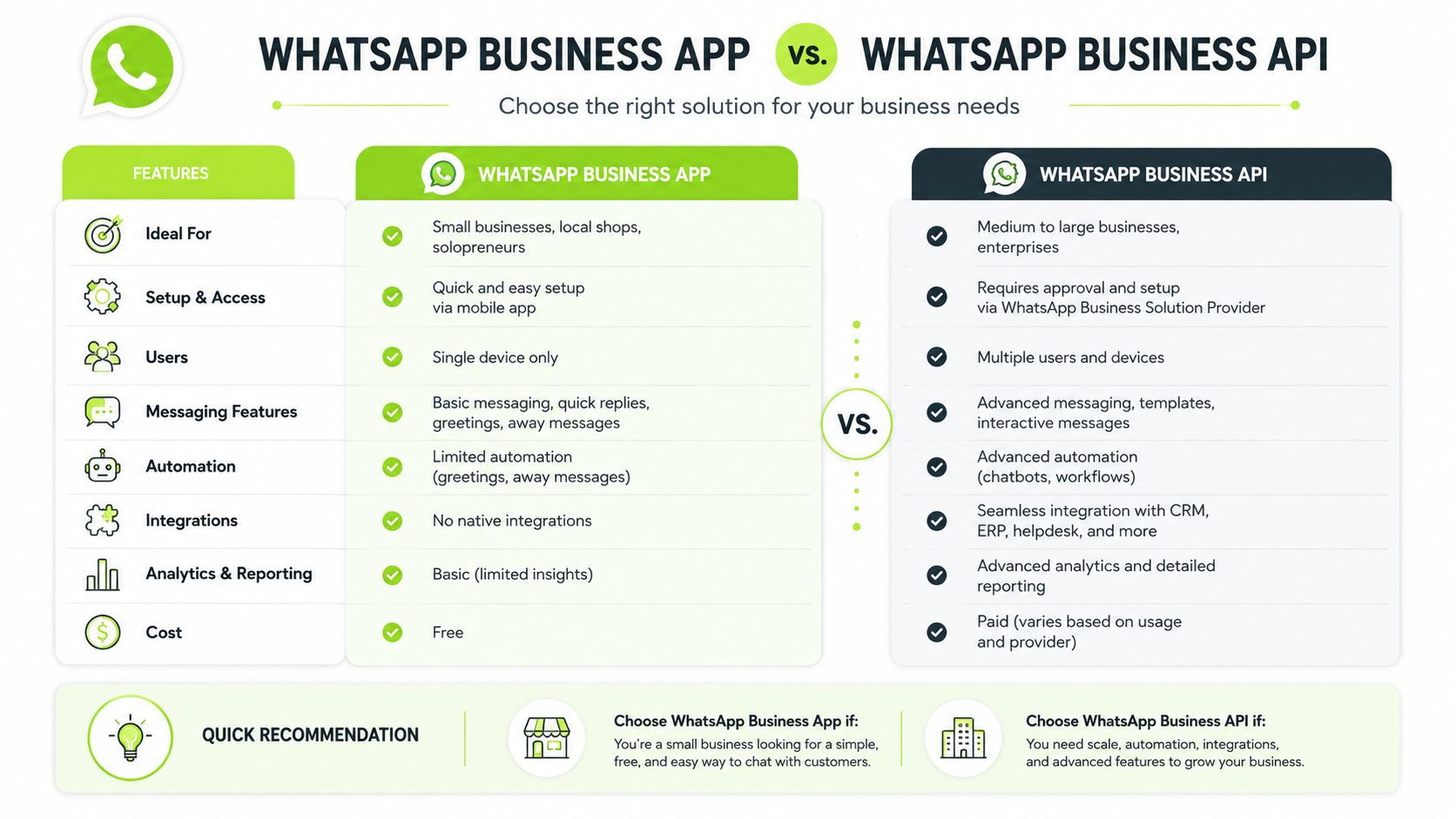
WhatsApp App vs API for golf clubs
| Criterion | WhatsApp Business App | WhatsApp Business API |
|---|---|---|
| Best for | Small offices, light enquiry volume, simple follow-up | Higher enquiry volume, multiple staff, structured CRM workflows |
| Users | Usually one device or a small team sharing access informally | Multiple team members can work from connected systems |
| Automation | Very limited | Built for templates, routing, and workflow automation |
| CRM integration | Minimal | Stronger fit for CRM-connected follow-up |
| Broadcast and segmentation | Basic | More flexible segmentation and reporting |
| Operational fit | Fine for ad hoc replies | Better for repeatable membership and event processes |
A useful way to decide is to ask who is replying, how often they reply, and what happens when one person is off sick or on holiday. If the answer is “we'll just pick it up when we can,” the App may be enough for now, but the club is already exposing itself to inconsistency. If the answer is “we need every enquiry logged, routed, and measured,” the API is the more sensible option.
The API matters most when WhatsApp needs to sit inside a wider system. That means CRM integration, source tracking, and automated acknowledgements that don't rely on one person remembering to send a message. For club leaders, that is the difference between a messaging tool and an operating process.
GolfRep uses a shared CRM with instant automated responses and follow-up flows for new enquiries, booked tours, no-shows, and unconverted visitors, which is why the API usually fits clubs trying to build a proper pipeline rather than a pile of chats. The App can still work in very small settings, but once enquiry handling becomes a real business function, the limits show quickly.
Consent, GDPR and the UK Rules Clubs Must Follow
WhatsApp can feel informal, but the compliance standard in the UK is not informal at all. For most clubs, the safe default is permission-based messaging, with clear evidence of what people agreed to receive and a straightforward way to opt out. The club should not rely on “they gave us their number” as a blanket excuse to send promotional messages.
There's an important distinction between service messages and marketing messages. A reply that confirms an open day enquiry or a tee-time booking is part of service delivery. A message promoting a lesson offer, a membership drive, or an event is marketing, and that needs the right consent and expectation set from the start.
What clubs should capture
- Explicit opt-in: make it clear that the person is happy to receive WhatsApp updates, not just phone calls or emails.
- Message purpose: explain whether the club will use WhatsApp for enquiries, reminders, offers, or all three.
- Source of consent: store where the opt-in happened, such as a form, QR code, or in-person conversation.
- Opt-out path: give people a simple way to stop messages without friction.
Group chats are a common mistake. They feel convenient, but they are a poor fit for marketing and can create privacy problems fast. A one-to-one message thread, recorded in the CRM, is far cleaner and easier to defend if anyone asks how the club obtained and used the number.
The practical test is simple. If the message would surprise the recipient, it probably needs a clearer permission trail. If it relates directly to a requested service, like confirming a visit or answering a question, it is much easier to justify. Clubs should also keep expectations tight, because over-messaging quickly turns a useful channel into one people ignore.
Guidance from the UK's direct-marketing rules and WhatsApp best-practice content both point in the same direction, use consent-led messaging, clear expectations, and an easy exit. The clubs that handle this well do not send more. They send fewer, better messages to people who want them.
Building the Enquiry to Visit Workflow
A WhatsApp system works only when it is built as a process, not a loose habit. The cleanest model is a four-step workflow, capture the enquiry, filter the noise, log the details, and trigger the immediate response. That structure is what stops good prospects from disappearing between form fill and first contact.
1. Capture and log the enquiry
Every enquiry should enter the same record with the source, timestamp, and enquiry type attached. That includes website forms, Meta leads, phone enquiries, QR scans, and event sign-ups. If the club cannot see where the lead came from, it cannot tell which channels are generating visits.
2. Acknowledge immediately
The first WhatsApp message should confirm receipt and set the next step. It does not need to be polished marketing copy. It needs to reassure the prospect that someone has seen the message and that a response is underway.
A fast acknowledgement buys time. A slow one usually loses it.
3. Qualify with one question at a time
Once the enquiry is acknowledged, the club can ask a short qualifying question, such as whether the person is looking for membership, a taster round, an event booking, or lessons. One question at a time keeps friction low and makes it easier for staff to respond properly. If the answer indicates serious interest, a human should step in before the thread gets robotic.
4. Prompt the visit and follow up
The next job is to move the person towards a visit, a call, or a booking slot. If they do not book straight away, reminders should be triggered rather than left to memory. That sequence, immediate response, brief qualification, booking prompt, then reminders, is the operational pattern clubs should copy.
For a fuller view of the wider process, GolfRep's guide on golf club enquiry management is a useful companion because it ties the front-end lead capture to the back-end follow-up logic.
The point is not to automate the club out of the process. It is to make sure the first response happens even when the office is busy, then hand the conversation to a person at the moment the prospect is ready for one.
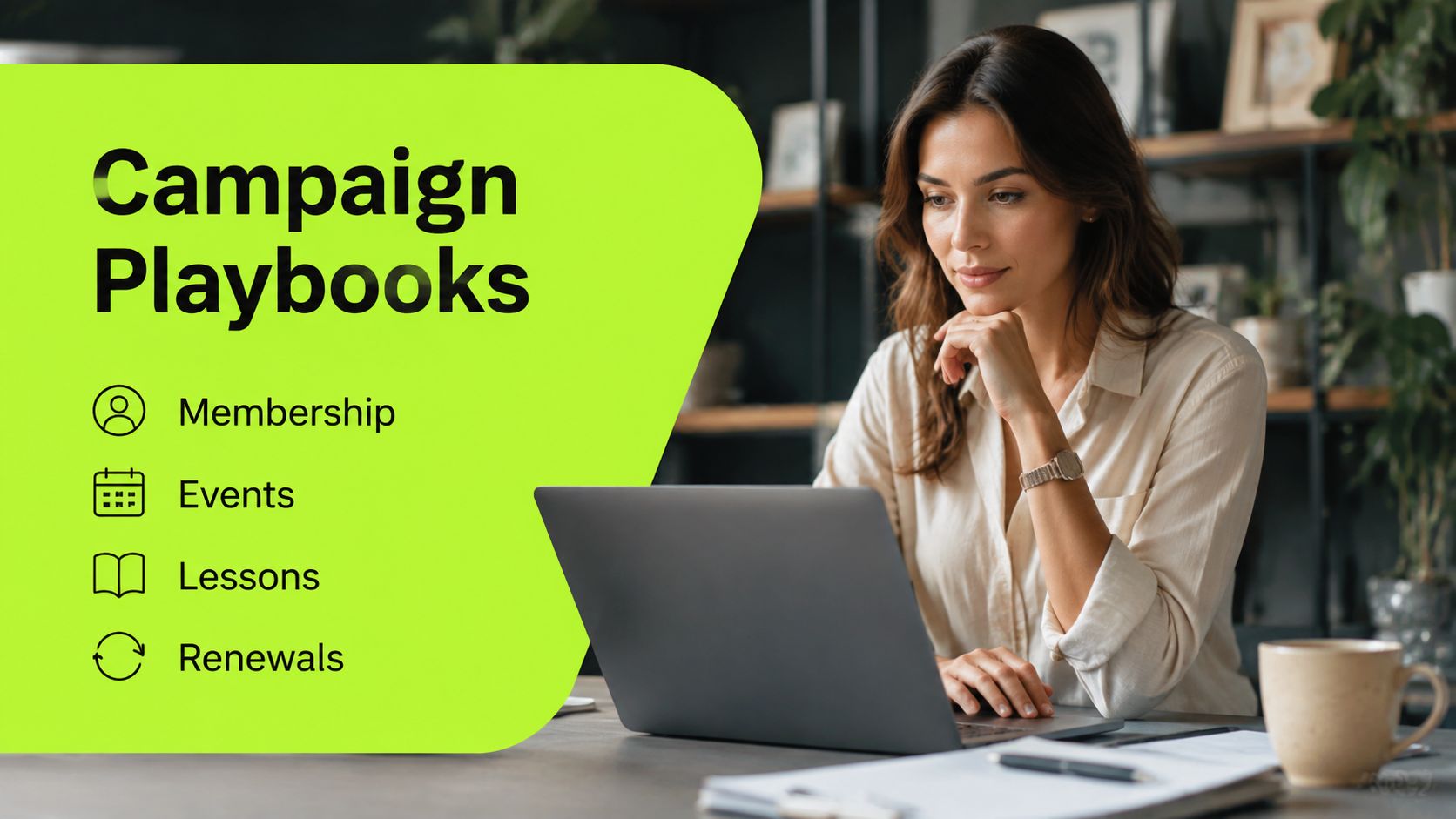
Campaign Playbooks for Membership, Events, Lessons and Renewals
WhatsApp works best when it is adapted to the job in hand. A membership drive, a social event invite, a lesson promotion, and a renewal reminder all need different wording, different timing, and a different level of urgency. Clubs that use one generic message for everything usually end up sounding pushy or vague.
Membership drive
A membership campaign should feel like an invitation, not a broadcast blast. The message can mention a taster round or a booked visit, but it should always give one clear next step. The right recipient is someone who has already shown interest, not the entire database.
Open day or social event
Event messages work well when they mix members and prospects, because the social context lowers the pressure. The response you want is usually a simple yes, plus a note on whether they are bringing a guest. Staff then confirm the practical details without turning the message into a sales pitch.
Lesson promotion
Lessons are a natural fit for WhatsApp because they are personal and time-sensitive. Existing members who have asked about improving their game are far more likely to respond to a short, specific message than a general newsletter banner. The hand-off should go straight to the pro shop or coaching team so the reply feels local and human.
Renewal sequence
Renewals need a quieter tone. A member whose year is ending does not want to feel like they are being chased. A short reminder, a check-in on their experience, and a simple route to renew is enough. If they hesitate, the staff member can follow up with context rather than a hard sell.
The value of this approach is that the same system flexes across different goals without sounding like spam. Clubs do not need separate tools for each one. They need clear audience segments and a sensible script for each use case.
Segmentation, Message Templates and Timing That Actually Work
Most WhatsApp campaigns fail because the same message goes to people with different needs. A prospect who asked about membership last week should not receive the same wording as a long-standing member, and neither should be treated the same as someone who clicked an event advert and vanished. Segmentation is what keeps the channel useful instead of noisy.
The simplest way to segment is by enquiry source, membership status, and engagement level. Those three filters are enough for most clubs to avoid lazy broadcasting. They also make it easier to match the message to the moment, which is where response quality comes from.
What good templates look like
Good WhatsApp templates are short, direct, and easy to answer. They open with context, ask one thing, and close with a clear next step. The best ones sound like a competent club manager, not a sales script.
Poor templates do the opposite. They pile on details, ask three questions at once, and bury the action under a paragraph of copy. On a phone screen, that usually means no reply.
Cadence matters just as much as copy. Industry guidance recommends a 1-2 proactive message cadence per week and warns against over-messaging, which is sound advice for clubs because the audience is not sitting around waiting for promotions. Some of the strongest WhatsApp strategy advice also stresses one-question-at-a-time replies and personalisation through CRM variables, both of which reduce friction and keep the conversation moving (WhatsApp marketing best practices).
For club managers, the discipline is restraint. Send enough to stay relevant, but not so much that people start ignoring the thread. That is where segmentation, timing, and template quality all meet.
If you want a wider framework for deciding who should receive what, GolfRep's note on market segmentation is worth reading because the same logic applies whether the contact is a prospect, a visitor, or a member. The club that understands its audience will always out-message the club that just sends more.
Tracking the KPIs That Prove the System Is Working
A WhatsApp system should be judged on operational results, not vibes. The core measures are straightforward, average reply time, total response volume, show-up rate for booked visits, conversion to membership, and member retention. Independent CRM guidance also recommends tracking reply speed and response volume, because those numbers show whether the team is keeping up with demand (customer-care metrics and WhatsApp chat capture).
The reply-time benchmark matters here. A 2025 WhatsApp marketing article reports that 67% of users who message a business on WhatsApp expect a reply within 24 hours, while another industry source says users respond in about 45 seconds on average (WhatsApp response expectations). Clubs do not need to match every consumer benchmark perfectly, but they do need to know when response speed is slipping.
A practical reporting rhythm keeps the system honest.
- Weekly: review new enquiries, response times, and booked visits.
- Monthly: review conversion to membership and any gaps in handover.
- Quarterly: review which sources and message types are producing real visits.
If reply times rise, the team is either understaffed or relying too much on manual follow-up. If booked visits drop, the message is probably weak, the booking step is awkward, or the wrong people are being contacted. If members stop engaging, the club has likely crossed the line from useful reminders into background noise.
A useful companion for building a stronger dashboard is ten essential strategies from Oviond, because clubs need reporting discipline as much as they need the message itself. The same principle applies to GolfRep's enquiry tracking approach, which keeps the source, speed, and outcome visible in one place.
The clubs that win with WhatsApp are not the ones that send the most. They are the ones that can show, week after week, that enquiries are being answered fast, visits are being booked properly, and good leads are not being lost in the cracks.
If your club wants WhatsApp to do more than sit on a phone and collect unread messages, GolfRep can help build the follow-up system behind it. We work with clubs to connect lead capture, instant response, CRM tracking, and structured nurture so enquiries turn into booked visits and, where it fits, membership conversations. Visit GolfRep to see how that works in practice.
Ready to tap into our proven growth system?