8 Golf Club Marketing Examples That Drive Member Conversions
Most golf clubs don't have an enquiry problem. They have a conversion problem.
A campaign goes live. A few membership forms come in. Someone on the team plans to call people back after the weekend, or once the secretary has a free hour, or when the inbox is under control. By then, the prospect has moved on, booked elsewhere, or gone cold. That's why improve local business conversion rates is a more useful mindset than chasing more clicks for the sake of it.
At GolfRep, we see this constantly. Clubs invest in ads, social posts, redesigned websites, and seasonal offers, then wonder why the member numbers don't move fast enough. The answer usually sits in the gap between enquiry and follow-up. The average response time to membership enquiries at UK golf clubs is 47 hours and 32 minutes, according to GolfRep's review of golf club sales process issues. That delay can leave entire pipelines converting at 0% because the prospect has already joined another club.
The strongest golf club marketing examples don't stop at lead generation. They pair campaigns with response systems, CRM visibility, and consistent nurture. That's where member conversions occur.
1. Membership Drive Campaigns with Structured Lead Follow-up
Membership drives still work. What doesn't work is launching paid traffic into a form, then relying on a busy office to remember who came in, when they came in, and what they asked for.
A proper drive needs two parts. First, the campaign brings in local demand. Second, the follow-up system turns that demand into trial rounds, site visits, and sign-ups. If the second part is weak, the campaign will look worse than it is.
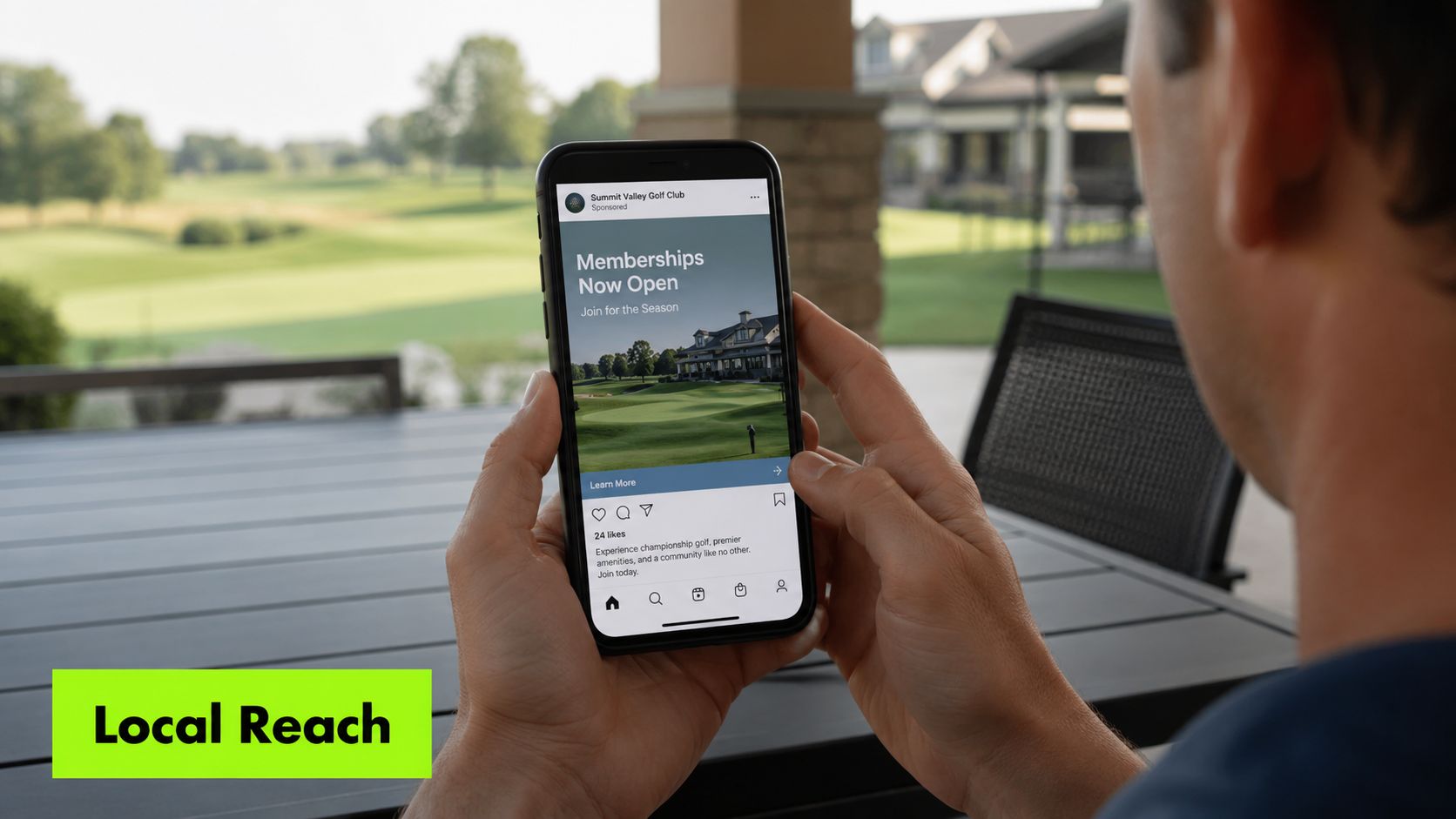
At GolfRep, we've seen the difference that structure makes. Clubs such as Bidston Golf Club, Addington Palace, and Downes Crediton are useful examples because the gains didn't come from ads alone. They came from combining traffic with acknowledgement emails, nurture flows, booking prompts, and clear visibility over every open enquiry.
What separates the winners
The club needs to know who responds first, what happens after the first form fill, and how leads get qualified. That often means asking for name, email, phone, and handicap on a mobile-friendly landing page, then routing the lead into a CRM rather than a shared inbox.
Practical rule: Don't launch ads until you've agreed internally who responds, how fast they respond, and what happens on day 1, day 3, and day 7 after an enquiry.
That matters even more in a market that's growing and changing. Golf club membership in England reached 750,071 in 2025, the highest recorded level in at least 13 years, with growth of about 2.66% year on year and nearly 20,000 additional golfers, according to The Golf Business coverage of membership growth in England. More demand is available, but only if clubs handle it properly.
What to put in place first
- Fast first contact: Aim to contact new enquiries within business hours, not days later.
- Segmented follow-up: Separate flows for beginners, experienced golfers, and former members produce better conversations than one generic message.
- Weekly review: Check leads received, leads contacted, visits booked, and memberships closed.
- System visibility: A documented golf club follow-up system matters more than staff memory.
- CRM discipline: If you need a simple primer on the role a CRM plays, this explanation of what CRM software is used for is helpful.
2. Local Paid Search and Google Ads Targeting
Search traffic has one major advantage over most other channels. The golfer is already looking.
If someone searches for membership near your town, beginner golf lessons locally, or corporate golf options in your area, you don't need to create demand from scratch. You need to show up, match the intent, and make the next step easy.

Too many clubs run one broad campaign and send every click to the homepage. That usually creates muddled traffic and weak attribution. Search works best when membership, lessons, corporate enquiries, and green fee traffic each get their own campaign structure and their own landing page.
Where clubs often go wrong
The common mistake is measuring Google Ads only by clicks or cheap traffic. That hides which keyword themes are producing qualified local prospects. A campaign can look efficient on paper and still produce poor membership outcomes if the search terms are too broad.
Another issue is weak local intent mapping. A private club shouldn't treat “golf clubs” and “[club name] membership” as equal. One is broad browsing. The other is a high-intent query that deserves stronger bidding, tighter ad copy, and direct conversion tracking.
Search campaigns work best when clubs track enquiries and booked visits, not just website traffic.
There's also a practical reason to take mobile seriously here. More than 60% of UK golf-related searches now happen on phones, and those visitors need sub-three-second load times with immediate form visibility, as noted in Golf Rep's review of golf club marketing systems. If the page is slow or the form is buried, the click is wasted.
Better paid search setup
- Separate intent groups: Build different campaigns for membership, lessons, corporate golf, and casual play.
- Use location assets: Show address and phone details directly in the ad where relevant.
- Track conversions properly: Form submissions, calls, and visit bookings should all be visible.
- Refine search terms: Review actual search queries and cut irrelevant traffic.
- Send clicks to the right page: A membership ad should lead to a membership page, not the general club homepage.
If you're comparing channels or planning budgets, GolfRep's guide to paid advertising for golf clubs gives a useful framework.
3. Email Nurture Sequences for Trial Round and Membership Conversion
Email nurture is where many enquiries are either rescued or lost.
A golfer might fill in a membership form while at work, on a train, or late in the evening. They're interested, but they're not ready to buy on that exact click. If nothing useful happens next, the enquiry cools. If a relevant sequence starts immediately, the club stays in the decision.
The strongest nurture flows aren't long newsletters. They're short, direct, and tied to a specific action. One sequence for beginners. Another for experienced golfers comparing clubs. Another for people who've already booked a trial round and now need reassurance before the visit.
What good nurture actually looks like
The first message should acknowledge the enquiry and make the next step obvious. That might be booking a trial round, choosing a time for a call, or replying with a couple of qualifying details. After that, each email should answer one concern at a time. Cost clarity. Club atmosphere. Playing opportunities. Beginner support. Social side. Competition access.
What doesn't work is sending the same brochure-style copy to everyone. A beginner worried about fitting in doesn't need the same messaging as a low-handicap golfer changing clubs.
Clubs also need to connect email with staff process. If someone clicks three times and replies with a question, that should trigger a real follow-up, not sit unnoticed in a general mailbox.
A simple sequence shape
- Email one: Acknowledge the enquiry and offer the next action clearly.
- Email two: Match the prospect type with relevant benefits.
- Email three: Remove friction around visiting, trying the course, or speaking to the team.
- Email four: Add social proof, common questions, or membership pathway clarity.
- Email five: Use a direct invitation to book, visit, or respond.
The point isn't volume. It's relevance and timing.
At GolfRep, we treat nurture as part of the sales process, not a side activity. When clubs automate these touchpoints inside a CRM, they stop relying on memory and start creating a predictable path from enquiry to visit.
4. Lapsed Member Reactivation Campaigns
One of the most overlooked golf club marketing examples is the one sitting in your own records.
Former members already know the course, the atmosphere, the location, and the basics of the offer. That doesn't mean they'll automatically return, but it does mean the conversation starts from a warmer place than a cold lead from an ad.
The mistake is treating every former member the same. Some left because of price. Some stopped playing regularly. Some moved clubs because they wanted flexibility. Some drifted out because nobody stayed in touch.
Why reactivation is changing
The market has shifted, and clubs need to reflect that in their reactivation offers. Junior memberships in England rose by more than 34% in 2025, moving from 46,028 to 61,483, according to The Golf Business report on England's changing membership profile. That tells clubs the market isn't just growing. It's evolving toward more family and younger player demand.
A reactivation campaign built around only the old annual full-member pitch misses that shift. In many cases, the better route is a modern re-entry path. A trial period. Family-oriented messaging. A flexible route back into regular play. A conversation about how the club now fits a different stage of life.
Former members don't need a blast email. They need a reason that makes sense for why they left.
Stronger reactivation practice
Start with basic segmentation. Separate those who left due to cost from those who left because they weren't playing enough. Then write outreach that speaks to that reason directly. If the club has improved facilities, changed membership options, or added coaching and junior pathways, say so plainly.
Phone calls still matter here, but timing matters more. Clubs that leave reactivation entirely to occasional admin time usually contact too late and too inconsistently. A reactivation flow should be scheduled, tracked, and reviewed like any other campaign.
Discounts can help in some cases, but they're often overused. A trial experience, a return visit, or a low-friction path back into club life tends to preserve value better than broad fee-cutting.
5. Social Media Campaigns with Local Targeting
Social media is useful for golf clubs, but only when it has a job to do.
Posting nice course photos three times a week isn't a strategy on its own. Local social campaigns work when they combine clear audience targeting, strong creative, and a follow-up path that turns interest into an actual enquiry. Without that, clubs collect likes and comments, then wonder why membership still feels flat.
A useful benchmark comes from Astbury Golf Club. In a UK Meta Ads campaign, an ad spend of £225 generated 71 highly qualified leads at an average cost of £3.20 per lead, resulting in 21 conversions to 7-day membership and around £25,000 in new membership revenue. Green fee sales were also up 46% year on year by August 2025, according to this Astbury Golf Club Meta Ads case study.
What made that campaign different
It wasn't enough that Meta produced leads. It was the combination of local targeting, a compelling offer, and a conversion path that didn't leave prospects hanging. That case also reported an enquiry-to-member conversion rate of about 30%, well above the typical UK golf club benchmark range of 10% to 15% cited in the same case study.
That's the lesson many clubs miss. Social media doesn't become effective because the platform is fashionable. It becomes effective when the club knows exactly who it wants to reach and what should happen after the click.
Better local social execution
- Build separate audiences: Beginners, existing golfers, corporate prospects, and former members shouldn't all see the same ads.
- Use real visuals: Course footage, clubhouse images, and genuine member experience usually outperform stock-style creative.
- Match ad to landing page: If the ad promotes a membership pathway, the page should continue that message directly.
- Retarget warm traffic: People who visit but don't enquire should see a different message next.
- Refresh creative regularly: Small local audiences tire of the same message quickly.
GolfRep's guide to golf club social media marketing goes deeper into how to structure this properly.
6. Webinars and Virtual Events for Member Education and Conversion
Virtual events aren't the first tactic most clubs think about, but they can work well when a club needs to educate before it sells.
This is especially useful with beginners, returning golfers, and corporate prospects who don't yet feel ready for a direct membership conversation. A short online session can remove uncertainty before the first visit. It also gives the club a clean hand-raise from people who are willing to register and engage.
Where this format fits
A beginner-focused session might cover how membership works, what the first few months look like, and how lessons or introductory play fit in. A corporate session might focus on hospitality use, networking value, or hosted business golf. The point isn't to deliver a polished seminar. It's to reduce friction and identify serious prospects early.
At GolfRep, we've found these events work best when they're part of a follow-up system, not a one-off diary item. Registration should trigger confirmation emails. Attendance should feed into CRM records. Follow-up should reflect whether the prospect attended, asked questions, or clicked through afterwards.
A webinar without post-event follow-up is just another piece of content. A webinar with tracked next steps becomes a sales asset.
Practical implementation
Keep the session focused and short enough to hold attention. Use live Q&A to surface objections in real time. Then direct attendees toward one clear next action, such as a trial round, a membership call, or a site visit.
Recorded sessions are also useful. They can be reused in nurture emails or sent to prospects who couldn't attend live. That gives the club another way to answer common concerns without asking staff to repeat the same explanation from scratch every time.
For committee-led clubs, this approach can be particularly practical because it centralises key messaging and makes follow-up more consistent.
7. Member Referral Programs with Incentives
Referral programmes are often spoken about as if they run themselves. They don't.
Members will refer friends if the club experience is strong and the process is easy. They won't do it consistently if the programme is vague, the reward is confusing, or the referred prospect gets a poor first response. In that situation, the club wastes its warmest source of demand.
This matters even more when broader membership growth is uneven. One source cited in UK golf sector commentary says 68% of UK private clubs reported membership stagnation in 2024 despite increased digital ad spend, highlighted in this discussion of golf course marketing and promotions. That gap is one reason referral-led growth deserves more attention. It's often under-structured, not under-valued.
What good referral programmes do differently
The process should be simple enough that members can share it in seconds. A short form, a QR code, or a dedicated referral link works better than asking members to explain a complicated process to their friends. The club should also log the referral source properly, so nobody argues later about who introduced whom.
The reward matters, but not as much as clubs think. A referral scheme usually performs better when the club keeps the process friction-free and handles the referred lead quickly. If the referred prospect waits days for a response, the member's recommendation loses force immediately.
Referral rules worth keeping
- Keep entry simple: One link or one form is enough.
- Promote it more than once: A referral programme can't live only on a noticeboard or a single email.
- Track source cleanly: The CRM should show who referred the lead.
- Protect the first impression: A poor trial visit ruins the referral before the reward matters.
- Use sensible incentives: Rewards should encourage introductions without cheapening membership.
If you want broader thinking on how incentives can be structured, these actionable insights on referral programs are useful background.
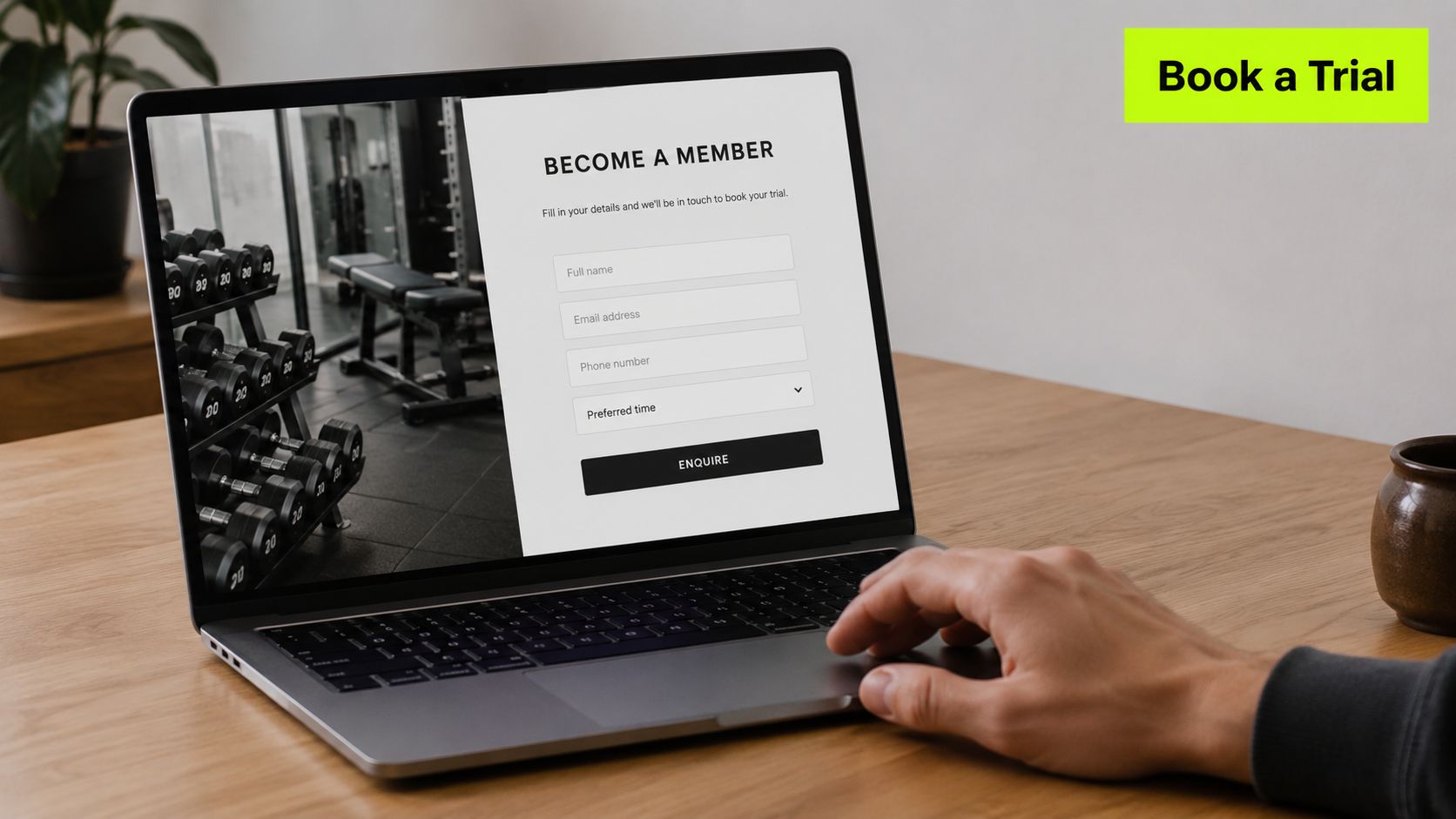
8. Landing Page Optimisation for Membership Enquiries
Many golf clubs spend money getting attention, then send prospects to pages that make conversion harder than it needs to be.
A landing page isn't just a trimmed-down website page. It's a page built for one action. If your campaign is driving membership interest, the page should help that visitor enquire quickly, understand the offer, and trust the next step. Anything else is distraction.
Practical trade-offs are vital. Clubs often want to include every detail. History, captains, opens, dining, competitions, dress code, multiple menu links, and five separate calls to action. That usually lowers conversion because the prospect has too many exits.
Match page structure to modern demand
Membership growth is up, and the member base is getting younger. The average age of club members in England fell from 56.18 to 54.99 between the previous measurement period and the 2025 data. Male average age fell from 54.98 to 53.78, while female average age fell from 64.65 to 62.98, according to The Golf Business analysis of English golf demographics. That matters because younger, more active prospects tend to expect faster, cleaner digital experiences.
Landing pages should reflect that. Mobile-first layout. Form visible early. Clear membership pathway. Direct language. No clutter.
What to change first
- One page per audience: Beginner membership and experienced golfer membership often need different messaging.
- Fewer distractions: Remove unnecessary navigation and secondary exits.
- Shorter forms: Ask only for details the club will use in follow-up.
- Visible next step: Tell prospects exactly what happens after they enquire.
- Confirmation that feels real: An immediate acknowledgement reduces uncertainty and supports faster follow-up.
The strongest golf club marketing examples often look ordinary on the surface. A form. A headline. A short explanation. A good image. But behind that simplicity is disciplined thinking about what the page is there to do.
8-Point Comparison of Golf Club Marketing Strategies
| Tactic | Implementation complexity | Resource requirements | Expected outcomes | Ideal use cases | Key advantages |
|---|---|---|---|---|---|
| Membership Drive Campaigns with Structured Lead Follow-up | High, integrates paid ads, CRM and fast operational follow-up | Significant: sustained ad budget, CRM/automation, trained staff and processes | Predictable, scalable volume of qualified enquiries and measurable ROI | Rapid membership growth, seasonal campaigns, clubs with capacity to handle volume | Scalable automation that prevents lead drop-off and attracts consistent qualified leads |
| Local Paid Search and Google Ads Targeting | Medium, keyword strategy and ongoing bid optimisation | Continuous ad spend, landing pages, conversion tracking and bid management time | Immediate high-intent traffic and transparent cost-per-enquiry metrics | Competitive or urban markets needing instant visibility | Precise intent targeting with tight budget control and fast results |
| Email Nurture Sequences for Trial Round and Membership Conversion | Medium, content design, triggers and conditional branching | CRM or email platform, copywriting, templates and analytics | Higher conversion over time; cheaper per-conversion once built | Warming leads, converting hesitant prospects, post-enquiry follow-up | Personalised, automated follow-up that increases bookings and reduces manual workload |
| Lapsed Member Reactivation Campaigns | Medium, data segmentation and tailored outreach | Clean member data, targeted email/ads, modest incentives and phone outreach | Faster conversions at lower acquisition cost than new-member campaigns | Recovering former members and recapturing revenue from database | Lower CAC and higher likelihood to convert due to prior club familiarity |
| Social Media Campaigns with Local Targeting | Medium, frequent creative refresh and audience testing | Visual assets (photo/video), ad spend, platform management and tracking pixels | Increased local awareness, engagement and lead volume (variable quality) | Brand-building, storytelling, corporate packages and social event promotion | Cost-effective visual storytelling with advanced targeting and retargeting options |
| Webinars and Virtual Events for Member Education and Conversion | Medium, content planning, speaker coordination and tech setup | Webinar platform, subject matter experts, promotion and follow-up sequences | Qualified, engaged leads and long‑tail lead generation from recordings | Education-led conversion, corporate outreach, longer decision cycles | Builds authority and captures high-intent prospects with reusable content |
| Member Referral Programs with Incentives | Low–Medium, program setup, tracking and ongoing promotion | Referral tracking system or codes, modest rewards and regular promotion | Low-cost acquisitions with higher retention and lifetime value | Clubs with an engaged existing membership base | Lowest CAC, higher retention and powerful word-of-mouth endorsement |
| Landing Page Optimisation for Membership Enquiries | Low–Medium, focused design and A/B testing | Web development, analytics and testing tools; creative assets | Higher form completion rates and improved ad ROI | Any campaign driving traffic from ads, email or social | Reduces friction, improves conversions and increases efficiency of ad spend |
Putting Strategies into Action
The common thread in these golf club marketing examples is simple. The campaign matters, but the system behind it matters more.
Clubs can generate enquiries in many ways. Paid social can work. Search can work. Referral programmes can work. Email reactivation can work. Webinars can work. Landing pages can work. However, the key distinction isn't between online and offline tactics. It's between clubs that rely on manual follow-up and clubs that build a repeatable process for handling demand.
That distinction is becoming more important as the market changes. England now has a larger registered membership base than it had in previous years, and the profile of that member base is shifting younger. Clubs that still market and sell as if every prospect wants the same traditional membership journey will miss part of the opportunity in front of them.
There's also the issue of flexibility. Sandwell Park Golf Club launched a flexible membership option via PlayMoreGolf in November 2023 and gained 80 flexible members within 12 months, passing its initial target of 50. It added 10 members in the first 3 months, reached 60 by May 2024, and hit 80 by September 2024, according to this Sandwell Park Golf Club flexible membership case study. That example matters because it shows how clubs can access demand that a rigid all-inclusive offer may not capture.
Operationally, that means picking tactics that suit your club's capacity. If your team can't respond quickly, don't scale ad spend first. Fix the response process. If staff can't see where leads sit, don't add more channels. Fix lead visibility. If enquiries arrive but nobody knows which campaigns convert, put tracking in place before making bigger budget decisions.
A sensible starting point is often narrower than clubs expect. Choose one campaign type. Build one landing page. Create one fast acknowledgement flow. Track one set of conversion stages from first enquiry to membership decision. Then improve from there. Predictable growth usually comes from steady operational discipline, not constant tactical switching.
That's the approach we take at GolfRep. We don't look at marketing as isolated promotion. We help golf clubs build predictable pipelines by combining lead generation with structured follow-up, CRM systems, and clear conversion tracking. For clubs that want better results from the demand they're already generating, that usually matters more than adding another channel.
The best next move is the one your team can support. Start where the leaks are most obvious, tighten the process, and make every enquiry easier to convert.
If you want a practical way to turn more membership enquiries into booked visits and sign-ups, GolfRep offers a golf-specific growth system built around lead generation, follow-up automation, CRM visibility, and conversion tracking for UK golf clubs.
Ready to tap into our proven growth system?