Golf Club Email Marketing That Converts Enquiries

Most golf clubs don't have an enquiry problem. They have a follow-up problem.
A new membership enquiry arrives through the website, reception takes a phone message, or a visitor attends an open day. Someone intends to respond, but the next action sits in an inbox, a notebook, or a spreadsheet. By the time the club replies, the prospective member has already spoken to another club.
That's why Golf club email marketing should be treated as an operational system, not a monthly newsletter exercise. Email becomes valuable when it records intent, triggers the right response, gives a staff member ownership, and keeps communicating until the prospect makes a decision.
The UK golf market gives clubs a substantial audience to work with. The R&A's 2023 Satellite Account for Golf in the UK estimated 889,000 registered club members, alongside 2.357 million adults playing at least once every four weeks and 5.356 million playing at least once per year. The opportunity is clear, but clubs need a reliable process for turning interest into visits and visits into membership. The R&A data and regional membership analysis provide useful context for that addressable market.
Why Email Is Really a Follow-Up System, Not a Newsletter
The popular advice is to send more newsletters. That's usually the wrong starting point.
A newsletter can tell members about competitions, course work and upcoming events. It can support the club's relationship with existing members. It cannot compensate for a missed enquiry, an unanswered phone call or a visitor who leaves without a clear next step.
UK lead-response research found that new enquiry leads are 10 times less likely to respond after five minutes, while conversion rates were 98% higher when follow-up happened within five minutes. The UK lead-response findings aren't golf-specific, but the buying behaviour is highly relevant. Someone comparing membership options is still actively deciding where to go. A slow response gives another club time to become the helpful, available option.
A separate UK lead-handling survey found that nearly 10% of firms responded within five minutes, while more than 46% responded within an hour. Its practical recommendation is straightforward, businesses should aim to respond in the first five minutes and, at minimum, within the first hour. The lead-response survey shows why a club needs a visible response standard rather than a vague instruction to “get back to people quickly”.
Practical rule: Every enquiry needs an owner, a next action and a scheduled follow-up. If any of those is missing, the club is relying on memory.
A proper system starts when someone submits a form, calls reception, books a trial visit or attends a visitor event. The contact should receive a useful acknowledgement, while the relevant staff member receives a task. The following messages should depend on what the person does, not on whether the marketing manager remembers to send a broadcast.
That means separating service communication from promotional communication. A trial confirmation is different from a sales email. A reminder about a booked visit is different from a newsletter. A lapsed-member message should acknowledge their previous relationship with the club, not treat them like a cold prospect.
This approach is deliberately narrow. It isn't about decorative templates, clever subject lines or chasing open rates. It's about building a golf club follow-up system that makes response time, lead visibility and conversion tracking dependable.
Building Segments, Tags and a Clean List
A club secretary can't build useful automation from a database that contains duplicates, missing consent records and contacts nobody can identify. List hygiene comes before campaign design.
Start with one record per email address. Suppress duplicates, correct obvious errors and separate records that shouldn't receive marketing. Deceased contacts and people who have been lapsed for more than three years should be archived under an appropriate consent and retention policy, not left in the active marketing audience.
The core segments should reflect how the club operates:
- Active Member: Current members who need operational updates, renewal communication and relevant club news.
- Lapsed Member: Former members who may be suitable for a carefully managed re-engagement sequence.
- Trial Visitor: Someone who has booked or completed a visit but hasn't joined.
- Enquiry: A prospect who has made contact but hasn't attended the club.
- Corporate or Guest: Society organisers, event prospects, visiting players and other non-member contacts.
Tags add the detail that segments alone can't provide. Use source tags such as webform, phone, walk-in and referral. Add interest tags including golf only, social, dining and lessons. Lifecycle tags should show movement, for example new, trial booked, trial completed and decision pending.
Use tags a secretary can pull
“Prospective high-value audience” is not a useful instruction. Enquiry-Junior-Female-Webform is useful because a staff member can retrieve those records and decide what to do next.
A sample enquiry might enter the CRM like this:
| Field | Example |
|---|---|
| Contact | Sarah Jones |
| Source | Webform |
| Segment | Enquiry |
| Interest | Junior, golf |
| Lifecycle | New |
| Owner | Academy lead |
| Next action | Send acknowledgement and call |
After Sarah books a visit, the lifecycle tag changes to trial booked. After attendance, it becomes trial completed, and the system can start the appropriate follow-up. The record should show the last contact date and the next action, so another staff member can understand the position without searching through old emails.
A short weekly review won't fix a neglected database. Set aside a regular 30-minute list-hygiene routine to merge duplicates, check bounced addresses, update lifecycle tags and review records without an owner. Clubs looking for a practical reference on maintaining a clean email address list can use that guidance alongside their own consent records and database rules.
The club's database should support action, not just storage. A structured golf club database marketing process gives reception, membership staff and the professional team a shared view of who needs attention and why.
Setting Up the CRM and Automations Around Response Time
A CRM shouldn't be a digital address book. It should be the club's operational backbone.
Set a five-minute auto-response standard for every new webform, phone enquiry logged by reception and walk-in card. The prospect should receive an immediate acknowledgement, while the responsible employee receives an internal alert through Slack, Teams or the CRM task system. The message doesn't need to close the sale. It needs to confirm receipt, provide a useful next step and make the club feel organised.
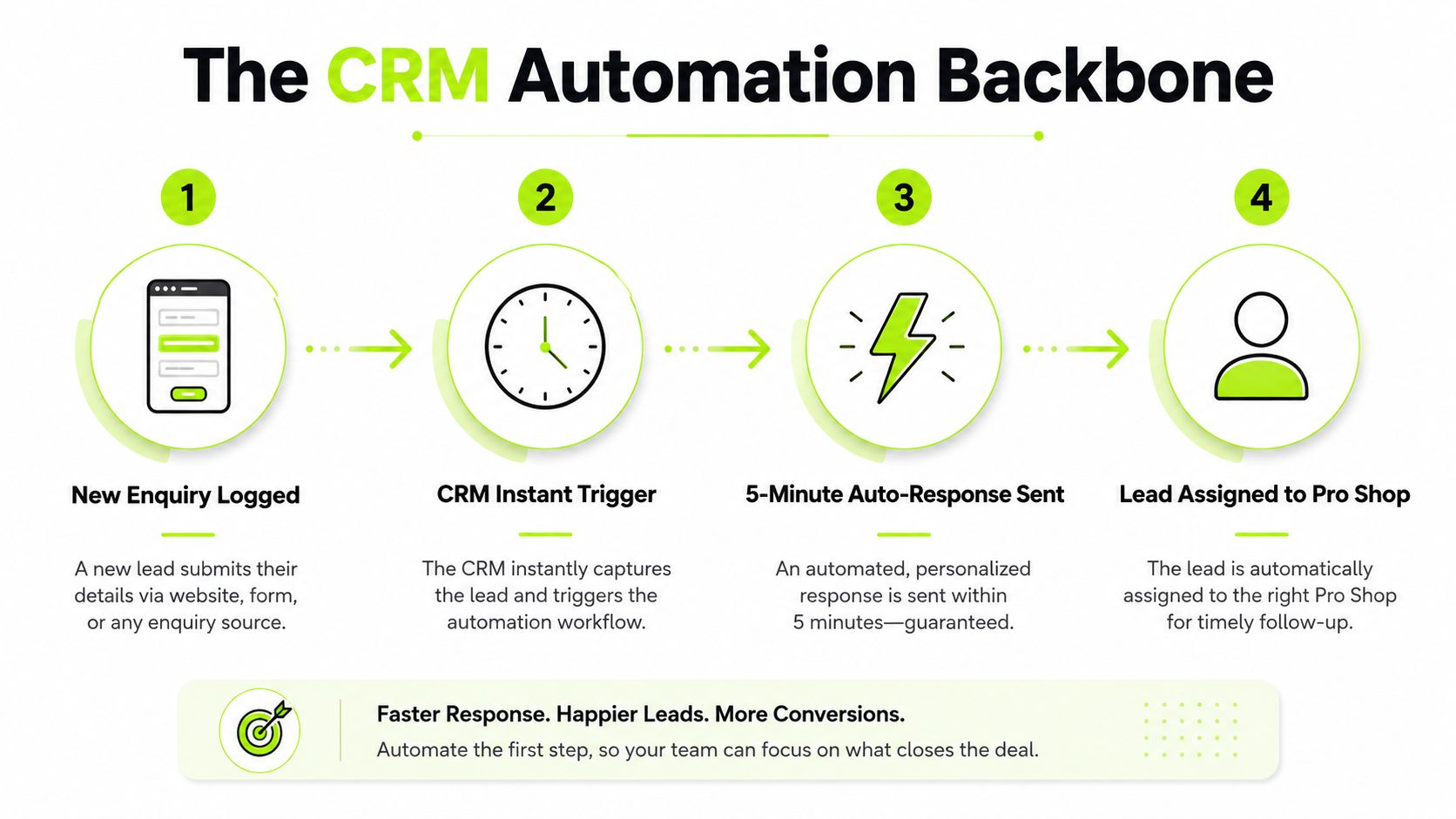
Routing must be explicit. Junior enquiries should go to the academy lead. Corporate enquiries should reach the secretary or events contact. General membership enquiries should go to the membership manager. If the named owner is unavailable, a round-robin fallback should assign the record to another trained person.
The minimum CRM fields are simple:
- Source, so the club knows whether the enquiry came from a webform, phone call, walk-in or referral.
- Segment tags, so the right messages are sent.
- Last contact date, so staff can see whether the lead is being neglected.
- Next action, so every record has a clear task.
- Owner, so responsibility doesn't disappear between departments.
A shared inbox and spreadsheet may work for a small volume of contacts. Once several people are handling active prospects, they create duplicated work, unclear ownership and poor reporting. The problem isn't the spreadsheet itself. It's the lack of triggers, task creation and a reliable history of communication.
Build these automations first
- Enquiry acknowledgement: Send immediately and create an internal task.
- Trial confirmation: Confirm the booking, explain what to bring and provide a contact route for questions.
- Lapsed-member re-engagement: Start only when the appropriate lifecycle and consent conditions are met.
- Event booking reminder: Confirm the booking details and prompt the organiser about the next required information.
GolfRep provides a system built around automated follow-up, CRM-enabled nurture and visibility from enquiry through to sign-up. A club could also configure these workflows in tools such as HubSpot, Mailchimp or Klaviyo, provided the data, routing and task rules are properly maintained.
The operational test: If a human action is needed, the CRM must create the task automatically. Don't rely on someone remembering.
Proven Nurture Sequences and Email Templates
Email follow-up should begin when an enquiry arrives, not when the next newsletter is ready. A Tuesday morning inbox might contain a membership question, a county card query and a society-day request. Each needs a different route to a visit or conversation.
New enquiry sequence
Trigger: A prospect submits a membership or visitor enquiry.
Immediate email subject: Thanks for contacting [Club Name]
Send an acknowledgement immediately. Confirm receipt, state who will respond and answer one relevant point if the form captured the prospect's interest. For example:
Thanks for getting in touch. We've received your membership enquiry and a member of the team will contact you shortly. If you're considering a trial visit, you can reply with your preferred weekday or weekend time.
The second message should remove a practical uncertainty. Explain what the membership includes, whether county card access applies or how a trial visit works. Keep one clear purpose per email. A prospect needs a useful answer, not a forced decision.
The following message can show the club through accurate course information, a short member story or a direct invitation to visit. A useful starting point for structuring these messages is our lead nurturing best practices guide, which covers timing, sequencing and template structure. The Micro CRM email follow up guide is also useful, but the final copy should sound like the club rather than a software template.
Trial visit sequence
Trigger: A trial visit is booked.
Confirmation subject: Your visit to [Club Name]
Confirm the date, arrival point, parking arrangements and the person the visitor should ask for. After the visit, send a short follow-up asking whether anything remains unclear and offering a direct route to discuss membership options. Avoid a discount-heavy pitch while the prospect is still deciding whether the club suits them.
A follow-up might read:
Thanks for visiting today. We hope the course and clubhouse gave you a useful feel for the club. If you'd like to discuss membership categories, reciprocal arrangements or the next available starting date, reply to this email and we'll help.
Lapsed-member re-engagement
Trigger: A former member enters the approved re-engagement segment.
Lead with recognition, not pressure. Mention a genuine change, such as course improvements, a new academy offering or a revised membership structure, only when it applies to the club. A later message can invite a conversation. The final message should make it easy for the person to remain unsubscribed.
Renewal sequence
Trigger: A current member reaches the club's renewal communication point.
Explain renewal dates, available options and the route for questions. Reinforce membership with useful information about the coming season, competition calendar or member events. Keep operational renewal notices separate from broader promotional marketing.
Every sequence should use the CRM tags already assigned. A trial completed contact needs different messaging from an Enquiry contact, while a corporate organiser must stay out of a membership renewal flow. Each interaction should determine the next email and, where needed, the next staff task.
Cadence, Subject Lines and Campaign Planning
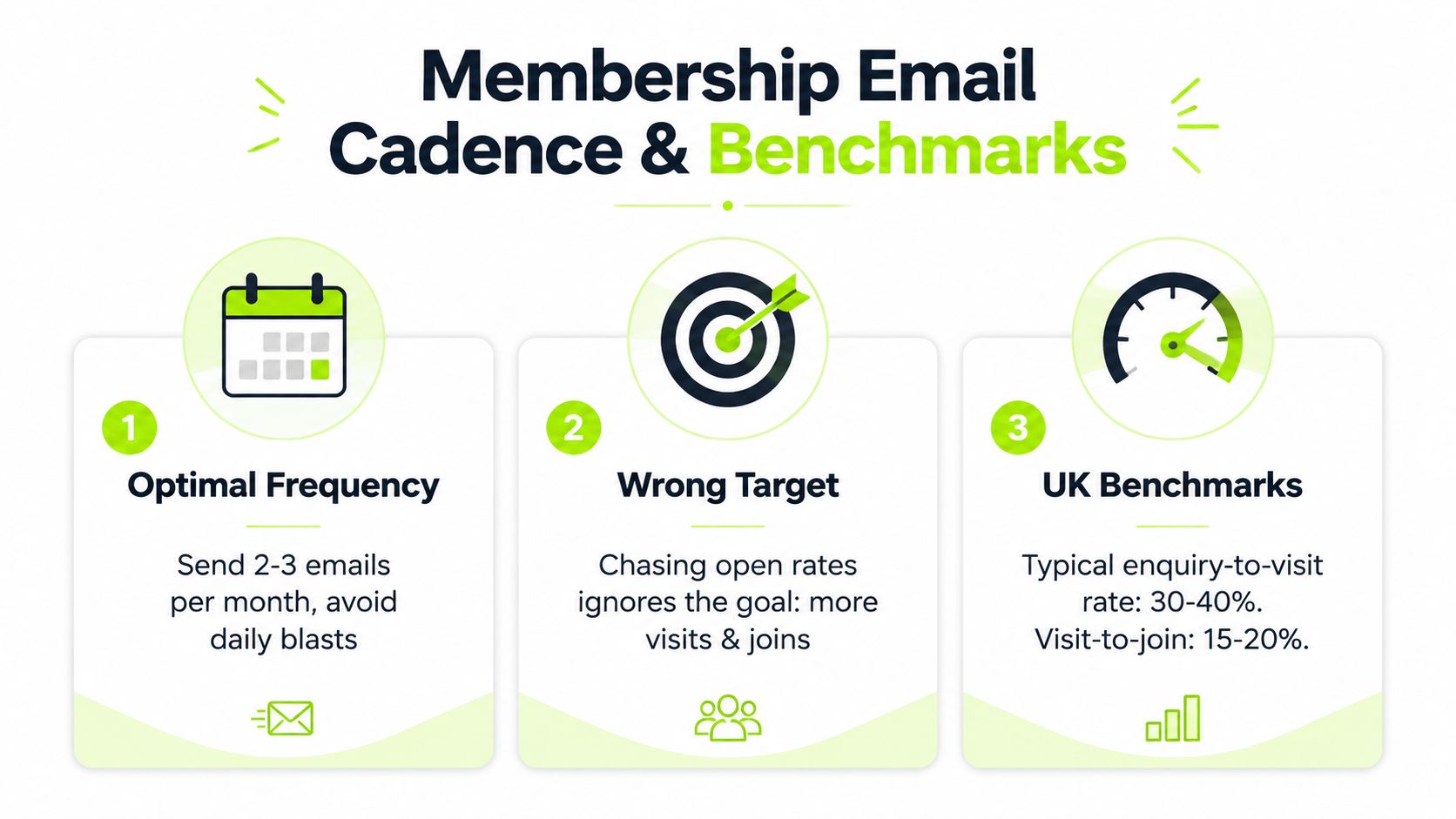
The club shouldn't measure email success by opens alone. An open can indicate curiosity, an automatic security scan or a returning member checking a familiar sender. It doesn't prove that someone booked a visit or joined.
Independent hospitality email benchmarks for the UK and Ireland report an average open rate of 25.13% and a conversion rate of 0.39% for hotel email campaigns. The hospitality email benchmark report is a useful regional proxy for golf clubs and resorts, but it also supports a practical conclusion: direct conversion from a single email is modest. The value comes from timely follow-up, relevant repetition and reducing lead decay.
The number that matters is not who opened the message. It's what happened afterwards.
A sensible campaign rhythm combines automated sequences with planned broadcasts:
| Campaign | Audience | Primary outcome |
|---|---|---|
| Member newsletter | Active members | Keep members informed |
| Competition calendar | Active members and relevant prospects | Drive participation or interest |
| Society organiser outreach | Corporate and guest contacts | Generate conversations |
| Winter offer or update | Appropriate prospect segments | Create a visit opportunity |
| Junior recruitment window | Junior and family-related enquiries | Book an academy conversation |
Subject lines should be short, specific and local. Useful patterns include:
Course update before SaturdayYour next available tee timeCounty card access at [Club Name]Society day dates for [Season]Meet the new junior academy coachA question about your trial visitMember milestone at [Club Name]
Don't send every campaign to the full database. Suppress active members from prospecting sends where the message is irrelevant, and exclude current members from lapsed-member campaigns. The segmentation rules should decide who receives each communication.
The Hillier Hopkins survey data shows why this discipline can create an operational advantage. Email campaigns were used by 14% of members' clubs in 2024/25, compared with 71% using member referrals, while social media was used by 60% and advertising by 38%. The 2024/25 UK golf-club survey indicates that email remains a relatively underused channel, but the opportunity isn't to send more generic messages. It's to build a better system.
GDPR, PECR and UK Compliance for Club Databases
Compliance starts with separating different types of communication.
A club needs a lawful basis to store and manage member information. Marketing email to a non-member enquiry is a separate question governed by the Privacy and Electronic Communications Regulations, alongside UK GDPR requirements for data handling, transparency and individual rights. Don't assume that someone who books a tee time, downloads information or asks a question has automatically agreed to receive ongoing marketing.
The common mistakes are practical:
- Bought lists: Don't import a third-party member or golfer list without being able to demonstrate a valid basis for contacting those people.
- Old spreadsheets: Don't move historical enquiries into a new platform without checking the privacy information and marketing permissions that applied when the data was collected.
- Visitor bookings: A booking confirmation is not the same as permission for promotional campaigns.
- Missing records: Store the consent source, date, wording and communication preference where consent is used.
- Unsubscribe requests: Suppress people promptly and don't add them back through another staff member's list.
A person may ask for access to their data, deletion or an end to marketing. The club needs a clear process for identifying the record, checking the request and responding within the applicable UK data-protection timeframe. Small clubs aren't exempt from having an organised process.
Email platforms should be covered by appropriate supplier arrangements, including data-processing responsibilities and clarity about where information is hosted. Staff should know which system is authoritative, rather than exporting lists into personal files.
A quarterly routine should suppress bounced addresses and review unengaged records. An annual consent refresh can help the club reassess older enquiry data, while member records should remain separate from marketing records. Renewal communication about an existing membership shouldn't automatically be treated as consent for unrelated promotional email.
Clubs also need to think about measurement. Guidance on email tracking rules for Gmail is useful when reviewing tracking practices, but it doesn't replace a club-specific privacy notice or a documented lawful-basis decision.
Measuring What Matters and Troubleshooting Common Failures
A reliable system gives the general manager a view of the pipeline, not a collection of attractive email reports.
Track four measures:
- Enquiry-to-trial rate: Shows whether the club turns initial interest into a visit.
- Trial-to-join rate: Shows whether the visit and follow-up support a membership decision.
- Time to first response: Monitor whether the club meets its five-minute operating standard.
- 90-day member retention: Shows whether new members continue beyond the initial joining period.
Open rate can still help identify a deliverability or subject-line issue, but it shouldn't dominate the review. Membership growth depends on booked visits, completed visits, joins and retained members. Where possible, connect campaign activity to value per contact rather than celebrating a high open rate with no commercial outcome.
Six failures to diagnose
- Emails land in spam: Check whether the problem affects all campaigns or one segment. Review sending reputation, content, list quality and recent bounce activity in Mailchimp, Klaviyo or HubSpot, then suppress invalid and disengaged records.
- Trial bookings stay low: Check whether the email has one clear action and whether the booking process works on mobile. Replace a general “learn more” link with a direct visit option.
- Automations don't fire: Confirm the trigger field, workflow status and entry conditions. Test with a new record rather than assuming the form submission reached the platform.
- Tags misfire after a form edit: Compare the form field values with the automation rules. A small naming change can stop a prospect entering the intended sequence.
- Unsubscribes spike: Identify the segment, subject line and message that caused the change. Reduce irrelevant broadcasts and suppress contacts who are already in a more appropriate sequence.
- Dormant members don't re-engage: Check whether the message gives a reason to return or merely asks for attention. Review the audience definition, permission status and previous activity before changing the copy.
Review the system every 30 days. Re-test each sequence against the previous month's data, check ownership and response times, and confirm that form edits haven't broken the tags. Last year's assumptions won't tell you why this month's enquiries stalled.
GolfRep helps clubs combine lead generation with structured follow-up, CRM visibility and automated nurture for enquiries, trial visitors and reactivation campaigns. If your club is losing prospects between first contact and booked visit, visit GolfRep to discuss a practical system for making that pipeline visible and dependable.
Ready to tap into our proven growth system?