Golf Club Database Marketing: The Complete Playbook

Most clubs do not have a shortage of interest. They have a shortage of follow-up discipline, clear ownership, and visibility on what happens after someone raises a hand. That is why golf club database marketing should be treated less like list building and more like the operating system behind membership growth, visitor conversion, and retention.
A database on its own does nothing. A database connected to enquiry handling, consent, CRM stages, and measurable follow-up turns casual interest into booked visits and signed members. Clubs that still chase more traffic before fixing that operating layer usually end up paying for the same leak twice.
Why the Database Is the Real Bottleneck
The most common mistake is to judge marketing by how many enquiries arrive. That sounds sensible until you see how many clubs lose value between first contact and final decision. The issue is usually not demand, it is whether the club can see, sort, and act on each enquiry quickly enough to keep the conversation alive.
That is why a database matters more than a bigger advert budget. A UK industry article on club marketing makes the point plainly: the key question is whether each channel is generating enquiries, what type of enquiries it is producing, and what is not working. If the club cannot answer those questions, it is guessing at growth instead of managing it.
Why enquiry volume misleads committees
A busy inbox can look healthy while the underlying process is weak. One enquiry may be a serious membership prospect, another may be a casual visitor, and another may be someone who never intended to convert. Without a database that records source, intent, and follow-up status, all three look the same.
That is where the mindset shifts. Golf club database marketing is not about collecting names for the sake of it, it is about creating visibility on the journey from first contact to outcome. If a secretary, GM, or pro cannot see where each lead sits, response speed becomes inconsistent and opportunities drift.
Practical rule: if a lead is not visible in one place, it is already at risk.
The best clubs treat every enquiry as a tracked record with ownership, next action, and status. That approach fits the way committee-led clubs work, because it reduces dependence on memory and inbox searching. It also makes it much easier to compare channels and see which ones produce genuine members rather than polite interest.
For a useful perspective on why leads fail to convert in the first place, see why golf club leads don't convert.
Capturing Consent-Led Data Across the Club
Good capture starts long before someone fills in a membership enquiry form. Golf Retailing advises clubs to build around the website, which it describes as working 24/7, and to place at least five separate email data-collection points across visitor pages, including special offers, membership availability, pro-shop offers, coaching days, and monthly competitions. That is sensible because most golfers do not arrive ready to join on the first touch.
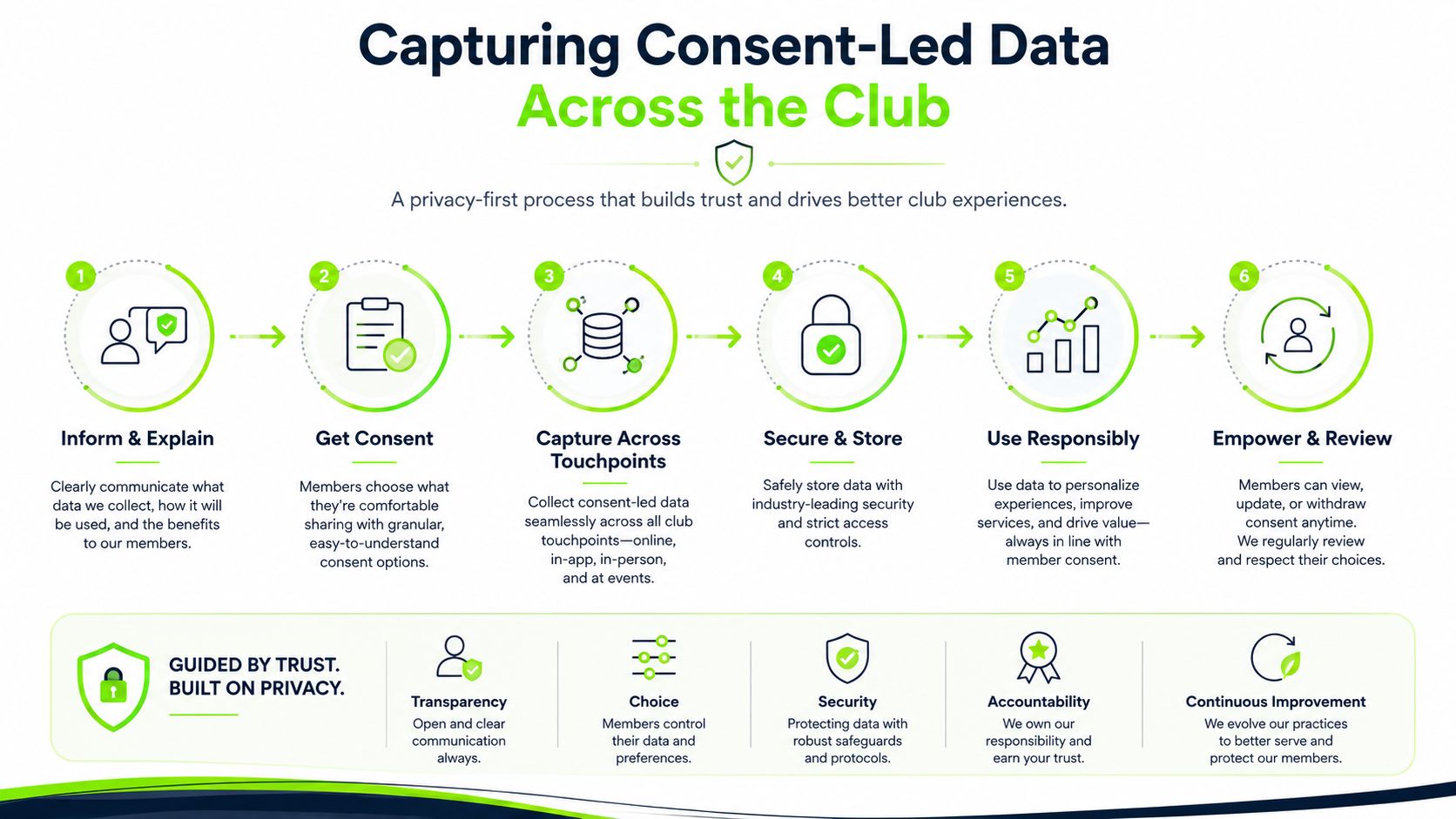
Put capture points where intent already exists
The point is not to throw forms everywhere. It is to place consent-led capture at moments where the golfer has already shown interest. A membership page should ask for a callback or brochure download. A coaching page should offer a lesson update or beginner-friendly invite. A pro-shop page can invite sign-up for offers, while an open day page should collect names for follow-up rather than treating event registration as a dead-end.
A website enquiry should never be a one-way message. It should feed a record, a response, and a next step.
Soft interest and marketing-qualified interest need different handling. A golfer who wants monthly competition updates is not the same as someone asking about membership fees. Both belong in the database, but they should not receive the same immediate message. The first needs nurture. The second needs a fast, personal reply and a clear route to a visit.
That distinction matters on the ground. It stops clubs from blasting the same email to every contact and then wondering why response rates flatten. It also gives the team a cleaner way to segment later, because each capture point maps to a known reason for contact.
The practical habit is simple. Each form, landing page, or counter enquiry should push into one central record with the source attached. If the club is using email, tee-sheet, or POS data, that record should be updated rather than duplicated. For a deeper look at email capture and follow-up, see golf club email marketing.
Building Segments That Reflect Real Member Behaviour
Once data comes in, the job is to make it useful. The strongest UK club database setups usually start with three operational streams, tee-sheet activity, point-of-sale spend, and event or booking history. Together, those streams show who plays, who spends, and who turns up for specific club occasions.
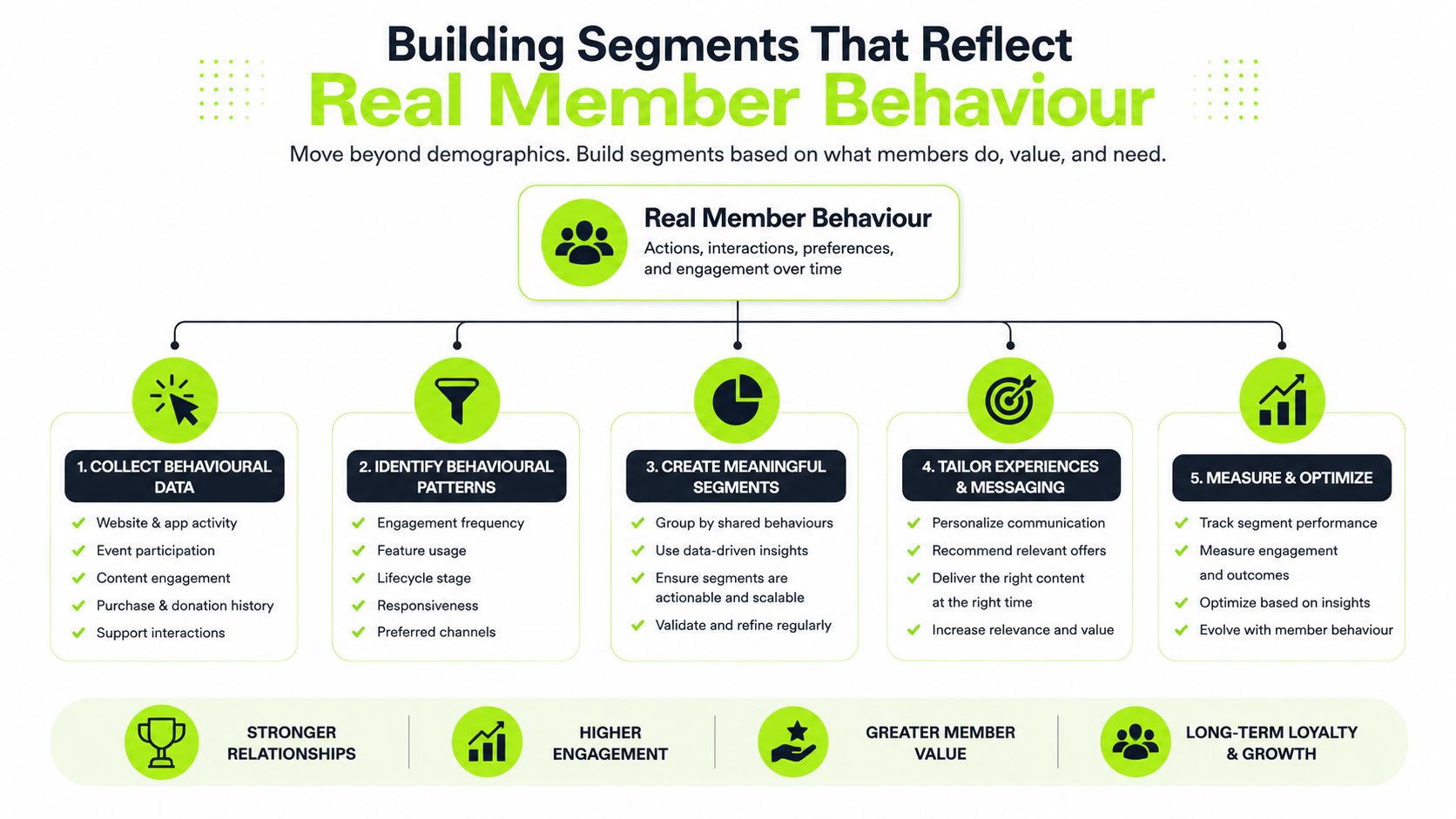
Segment by behaviour, not by guesswork
If a club only has a contact list, every message gets the same shape. That is where relevance breaks down. Practical segments are easier to use and much easier for a secretary, pro, or membership lead to act on. Typical groups include heavy users, casual players, inactive members, high F&B spenders, pro-shop buyers, and event-driven members.
Those groups matter because they signal different commercial opportunities. A heavy user may respond to loyalty recognition or guest invitations. An inactive member needs a reactivation conversation rooted in usage patterns. A high F&B spender may be a good fit for event-led offers, while a pro-shop buyer may respond to coaching or equipment-related follow-up.
The useful part is not the label itself, it is the next action. If the database can tell the club who has not booked recently, who has spent consistently in the bar, or who keeps returning for events, the club can match message, timing, and offer to actual behaviour. That is a better use of staff time than sending broad newsletters and hoping something lands.
RFM-style scoring is useful when a club needs more prioritisation. It can sort records by recency, frequency, and monetary value, and guidance for clubs notes that this can create 27 database segments when a finer split is needed for retention or upsell work. That is more than enough for most clubs, so the rule is to keep it practical. If a segment cannot support a clear action, it is too complicated.
For a simpler framework on segmentation logic, see what is market segmentation.
What good segmentation changes
It changes who gets contacted, when, and why. A club that knows which members are drifting can intervene earlier. A club that knows who spends heavily in food and beverage can invite them into events rather than pushing generic offers. A club that knows who buys in the pro shop can time product or coaching messages more intelligently.
The gain is not sophistication for its own sake. It is that the club stops treating every member as if they behave the same way.
Setting Up the CRM and Automation Layer
A database without a CRM is just a list. The moment records are tied to stages, owners, and actions, the club gets something it can effectively manage. For most clubs, the minimum viable setup is straightforward: new enquiry, contacted, booked visit, taster, and member.
Build the pipeline around how the club sells
Those stages should reflect the club's real sales process, not a software vendor's default settings. If the secretary handles the first call, the pro conducts a taster, and the GM closes the membership conversation, the CRM needs owner assignment so nobody assumes someone else is chasing it. Lead source tracking should sit on every record, because it is the only way to see which channels produce genuine movement.
The best CRM setup for a club is the one staff will actually use on a busy Friday afternoon.
Automation does the repetitive work that people forget when the diary gets full. An instant acknowledgement email confirms the enquiry was received. A speed-to-lead alert tells the right person to respond. A reminder task stops a warm lead from sitting untouched until next week. The point is not to replace human follow-up, it is to protect it from delay.
That is also where integration matters. Tee-sheet, club management, and email tools should feed the same core record wherever possible. If the team still copies details between systems manually, the database will fragment and nobody will trust the reporting. One central member record is far more useful than three partial versions of the truth.
GolfRep's own approach sits in this space, centralised lead management, pipeline stage tracking, contact history, and follow-up status, all tied to enquiry handling rather than isolated marketing activity. That is the sort of structure clubs need if they want predictable movement from interest to visit.
The practical test is simple. Can a committee member open the CRM and answer three questions quickly, who enquired, what happened next, and what needs doing now. If not, the system is still too loose.
Campaign Templates That Convert Across the Lifecycle
Different segments need different sequences, otherwise the club wastes the same message on people at very different stages of readiness. The strongest campaigns are not flashy, they are timed well, easy to follow, and tied to a clear outcome. In club settings, that usually means one flow for new enquiries, one for members at risk, and one for the people who already show value.
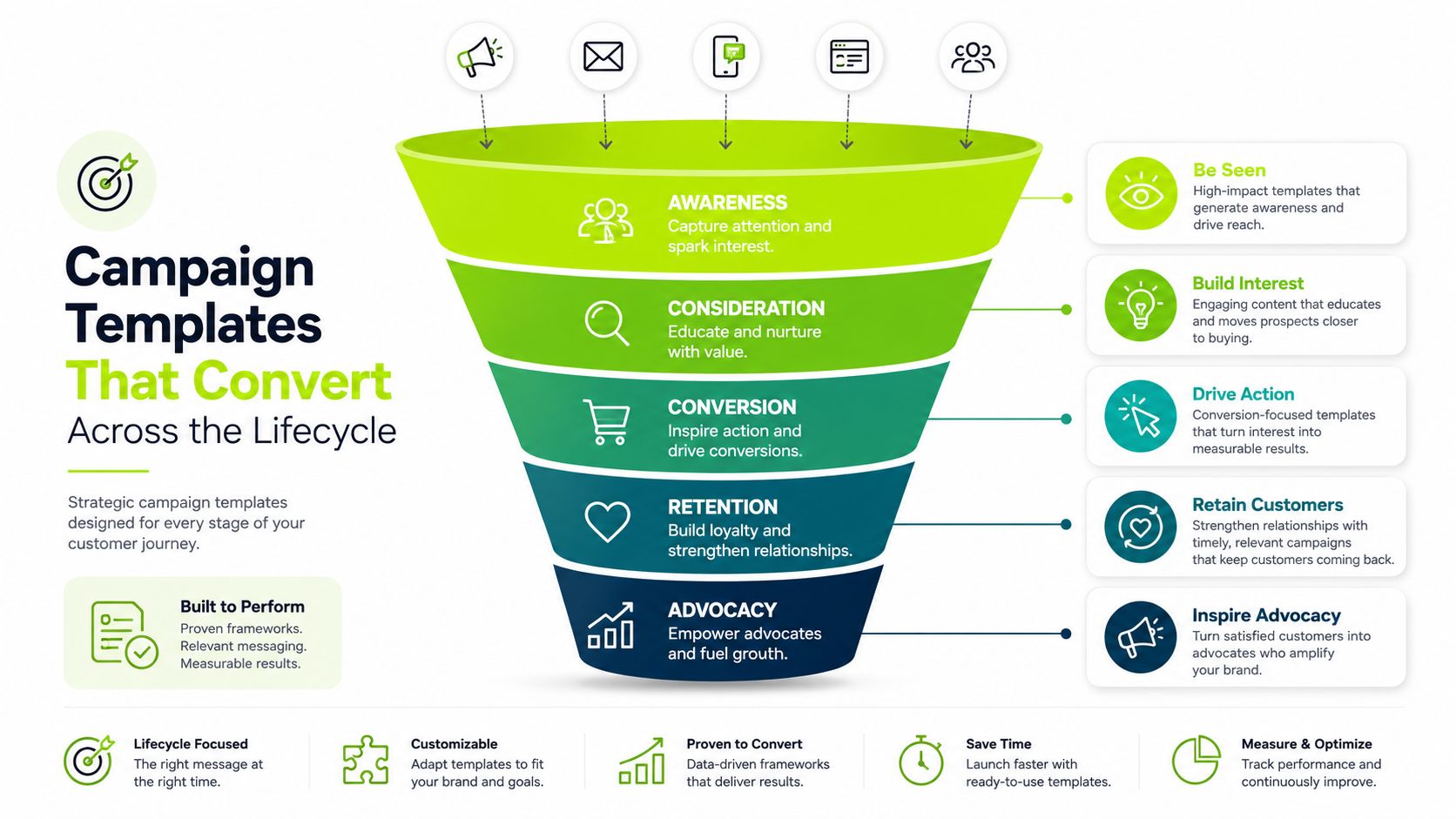
New enquiry nurture needs speed and clarity
The first message should acknowledge the enquiry immediately, then a person should follow up fast. Golf marketing guidance repeatedly points to fast first response, lead visibility, structured follow-up, and consistent nurture, and that is exactly right for membership prospects. The sequence should aim to book a visit, not just keep the thread alive.
A workable flow is simple. The enquiry comes in. The CRM sends an acknowledgement. A staff member calls or emails with a clear next step. If the prospect does not engage, one or two follow-up touches keep the door open without sounding pushy. The objective is a visit, a taster, or a conversation with the right person at the club.
Dormant members need re-engagement, not blanket discounts
A member who has gone quiet usually needs context, not a fire-sale price. Tee-sheet history and, where relevant, food and beverage patterns can show when engagement started to slip. That lets the club send a relevant prompt, such as an invitation to rejoin a roll-up, attend an event, or speak to the team about what would make the club easier to use again.
Manual follow-up often falls short. Staff capacity is limited, so the same names slip through the cracks every month. Automated reminders and simple nurture can keep those relationships warm without requiring the secretary to track everything by hand.
High-value members should see better offers
The best members and event-driven players deserve more than generic newsletters. They are the people most likely to respond to guest-day invitations, F&B events, coaching offers, or premium experiences. A sensible club uses that segment to deepen revenue, strengthen attachment, and create visible value for its most active people.
Avoid turning every campaign into a discount. Better systems record intent, automate acknowledgement, and show the full journey from first click to final handshake.
Recent golf-marketing commentary also notes that automated campaigns such as welcome emails, birthday emails, and post-round feedback are still underused. That matters because these are easy ways to build touchpoints without adding more admin. They are not glamorous, but they create a steadier database culture and help clubs keep the conversation going between visits.
Measuring What Matters and Optimising the Pipeline
Most club reports are overloaded with numbers that do not help anyone make a decision. Open rates, traffic spikes, and total enquiries can all be interesting, but they do not tell a committee whether the pipeline is working. Modern golf marketing should be judged by measurable actions, and a 2026 industry report is clear that the important layers are audience capture, authenticated identity, and conversion, with conversion defined as tee-time bookings, equipment purchases, membership sign-ups, and event registrations, not clicks or impressions. See the report's framing of “Not clicks. Not impressions. Transactions.” at GolfN's 2026 state of golf marketing insight.
Keep the dashboard short enough to use
A usable dashboard should focus on stage movement, not noise. If the club can see how many people moved from enquiry to visit, from visit to sign-up, and from active member to inactive risk, the management team can act on gaps quickly. That is better than celebrating a large enquiry count while conversion slips.
| Metric | What it measures | Healthy benchmark focus | Source stage |
|---|---|---|---|
| Enquiry-to-visit rate | How many leads become booked visits | Consistent movement from first contact to appointment | New enquiry to booked visit |
| Visit-to-sign-up rate | How often visits become members | Quality of the visit and the close process | Booked visit to member |
| Cost per acquired member | What it costs to win each new member | Efficient spend against actual sign-ups | Channel to member |
| Member retention rate | How many members stay active | Early intervention before lapse | Active member to retained member |
| Revenue per active member | How much active members contribute | Better use of high-value segments | Active member behaviour |
The most useful habit is a monthly review that starts with the biggest gap. If enquiries are healthy but visits are weak, the issue is follow-up or appointment setting. If visits happen but sign-ups do not, the issue is usually the handover, the offer, or the conversation itself. If retention is weak, the club needs to work on engagement before it becomes a cancellation problem.
Attribution matters too. If a committee cannot tell which channel produced the member, it cannot fund the right activity next time. That is why database reporting should sit close to CRM data, not in a separate spreadsheet that nobody checks.
GDPR, Consent, and a Practical Next-Step Checklist
UK clubs do not need legal theatre, they need disciplined basics. Marketing data should be collected with a clear lawful basis, stored with consent records where required, and retained only as long as the club needs it. PECR also matters for electronic marketing, so the club must be careful about how it uses email and similar channels.
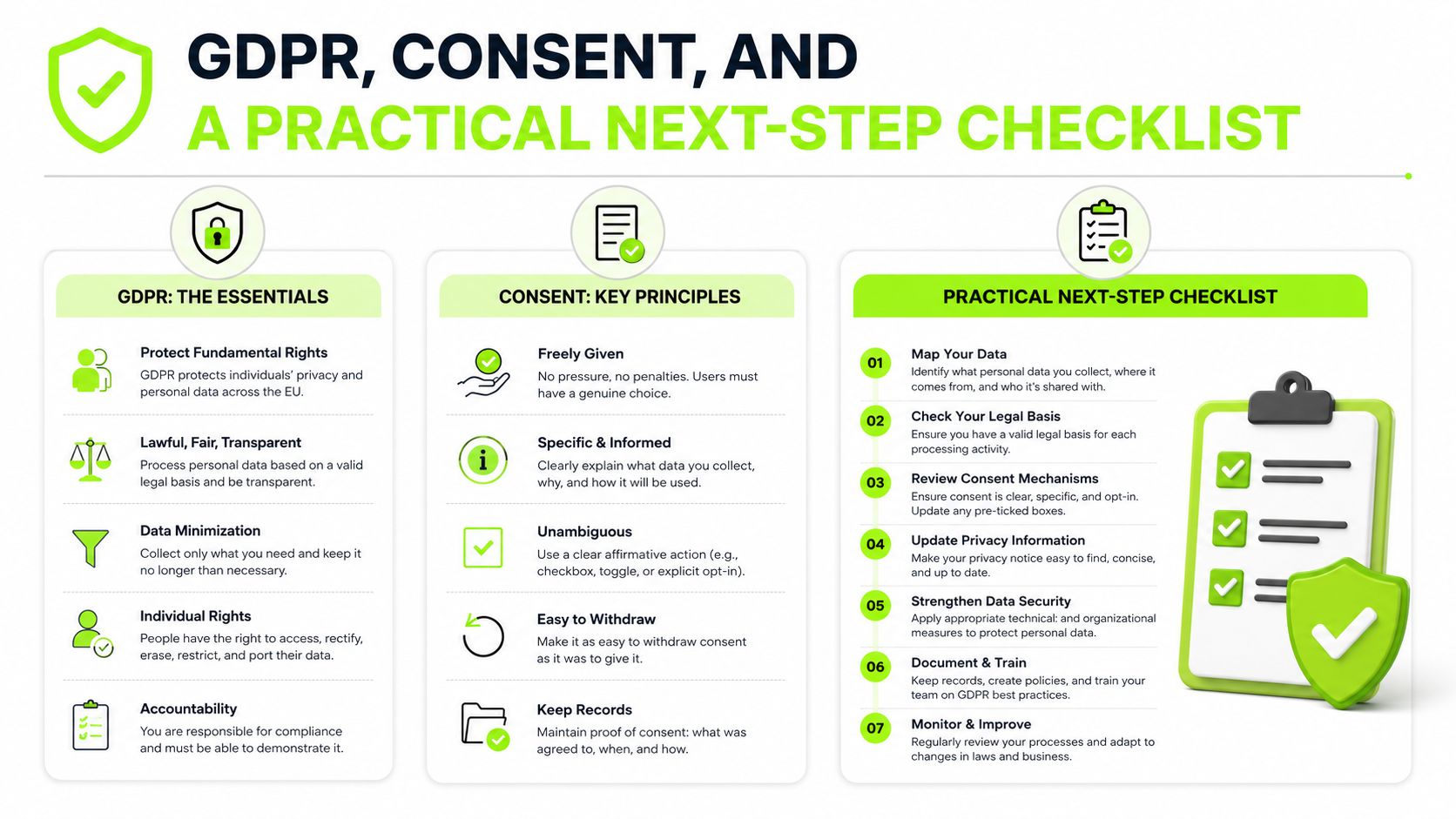
Keep the compliance process simple and visible
A practical right-to-be-forgotten process should be easy for staff to find and action. If someone asks for removal, the club needs to know where the record lives, what systems hold it, and who is responsible for deletion or suppression. The club should also keep a basic audit trail so it can prove what was done and when.
If consent or cookie handling needs a technical tidy-up, a useful practical resource is solve Consent Mode V2 issues, especially for clubs where website tracking and marketing capture have drifted apart.
A sensible two-week checklist looks like this.
- Audit every capture point: check membership forms, open day pages, coaching forms, and pro-shop sign-ups.
- Clean the CRM structure: make sure enquiry source, stage, and owner fields exist on every record.
- Review consent wording: confirm that marketing opt-ins are clear and separated from general contact fields.
- Test one follow-up flow: choose a single priority campaign and make sure it sends, tracks, and alerts properly.
- Fix suppression and deletion handling: ensure staff know how to honour removal requests without losing control of the process.
The goal is not a perfect system on day one. It is a database that is controlled, usable, and tied to daily club operations. Once that is in place, the club can improve conversion with far less wasted effort.
GolfRep helps clubs build the structure behind predictable membership growth, centralised CRM, lead tracking, and automated follow-up that stops enquiries from going cold. If your club wants a database that behaves like an operating system rather than a spreadsheet, visit GolfRep and take a look at how we approach lead handling, nurture, and conversion visibility.
Ready to tap into our proven growth system?