AI Driven Marketing Automation for Golf Clubs
The popular advice on AI-driven marketing automation usually starts with content. Ask an AI tool for social posts, email copy or advert variations, publish the output and call the job done. That can save a club time, but it doesn't answer the commercial question a general manager faces: which prospect should receive attention now, what should happen next, and can the club trace that activity to a visit, application or membership?
GolfRep sees AI differently. For a golf club, its strongest role is an operational decision layer connecting paid media, website behaviour, CRM records and human sales judgement. The system should recognise intent, route the right opportunity, suppress irrelevant messages and give staff the context needed for a useful conversation. Content remains part of the process, but it isn't the process.
UK adoption shows why this matters. The Office for National Statistics found that the proportion of UK businesses with at least 10 employees reporting use of one or more AI technologies rose from approximately 12% in late 2023 to just under 35% by 2026, according to its analysis of AI adoption in UK businesses. Adoption is becoming more common, but using a tool and redesigning a workflow are different commercial decisions.
Moving Beyond Automated Content Generation
A club can generate a polished membership advert in seconds and still provide a poor buying experience. If the advert sends every prospect to the same form, stores incomplete information in a shared inbox and gives the membership secretary no clear priority, the club has automated production without improving acquisition.
That distinction is visible beyond golf. A 2025 British Chambers of Commerce survey found that 35% of SMEs were actively using AI, yet only 11% said technology was automating or streamlining operations to a great extent. The gap is the important point. Adoption doesn't prove operational integration.
AI should decide what happens next
A content tool answers, “What could we publish?” An operational AI layer answers more valuable questions:
- Priority: Is this a prospect who has shown enough intent to justify prompt personal contact?
- Context: Has the person asked about membership, visitor golf, coaching or facilities?
- Timing: Should the club send information, offer a visit, create a task or wait?
- Suppression: Has the prospect already booked, visited or opted out of promotional messages?
- Ownership: Which member of staff is responsible for the next action?
Consider a prospect who clicks a paid membership advert, reads the joining information and starts a visit booking. Raw enquiry volume treats that person like every other form completion. A connected system can recognise a sequence of signals, increase priority, notify the appropriate staff member and change the follow-up once a booking exists.
That isn't about replacing the membership secretary. It gives the secretary a cleaner queue and better evidence about where human attention is most useful.
Practical rule: automate classification and preparation, not judgement where the decision affects price, eligibility, exceptions or personal circumstances.
Integration matters more than novelty
The most advanced model won't compensate for missing fields, duplicate contacts or inconsistent stages. Before choosing a new AI feature, a club should define the journey from ATTRACT → NURTURE → CONVERT → RETAIN and identify the records required at each stage. Paid source, enquiry type, consent status, visit date, attendance and membership outcome matter more than impressive software terminology.
The UK evidence also points to a widening operational choice. Earlier ONS management-practice data recorded AI adoption at 9% of UK firms in 2023, with adoption projected to reach 22% in 2024, while firms in the top management-practice decile showed advanced-technology adoption, including AI, at 88%, compared with 51% in the bottom decile, as reported by the Office for National Statistics. For a club, the lesson isn't to copy a large technology business. It is to strengthen the management process around the technology.
GolfRep's practical view is straightforward: use AI to reduce delay, improve prioritisation and support consistent action. Use humans to handle nuance, reassurance and the relationship that makes a prospective member comfortable joining.
A useful guide to the operational model is how golf clubs are using AI to convert more enquiries, particularly when the club is deciding whether its first investment belongs in content, lead routing, CRM hygiene or staff process.
Practical Automation Across the Member Journey
A golf membership is rarely an instant purchase. The prospect may compare clubs, ask about playing rights, attend a visit, discuss the decision with family and then decide whether the culture and facilities fit. Automation should support that consideration without turning the journey into a sequence of generic reminders.
England Golf data reported in April 2025 indicated more than 730,000 golf-club members across 1,735 clubs in England, while the average member age had fallen to 54.99, as reported by The Golf Business. Those figures don't describe one uniform buyer. A new golfer, an experienced player moving club and a returning lapsed golfer need different information and different levels of reassurance.
From advert click to visit
The useful distinction is between prediction and execution. AI can assess patterns and recommend a next action. CRM automation sends the message, creates the task, updates the stage and records what happened.
| Funnel stage | AI capability | Commercial outcome |
|---|---|---|
| Paid advert and landing page | Identify audience and message patterns associated with stronger intent | Better alignment between media spend and suitable prospects |
| Initial enquiry | Classify enquiry type, summarise the request and identify missing information | Faster, more relevant first response |
| Nurture | Select content based on declared interest and behaviour | Less generic communication and clearer progression |
| Visit booking | Detect booking intent and prioritise staff intervention | More opportunities move from information to experience |
| Visit attendance | Trigger confirmation, reminders and exception handling | Fewer avoidable gaps in the visit process |
| Membership decision | Record outcome and feed it back into campaign reporting | Marketing can be judged against applications and memberships |
A prospect downloading a joining pack hasn't necessarily shown the same intent as someone checking competition information and attempting to book a tour. The model should combine events rather than reward every action equally. A raw score can mislead if it ignores recency, consent, duplicate records or whether the person has already spoken to the club.
Segmentation should reflect golf decisions
The message should follow the prospect's reason for considering membership. A beginner may respond to a low-pressure introduction, coaching information and a chance to see the clubhouse. An experienced golfer may care about handicap arrangements, competition structure, tee access or the club's playing culture.
Useful segments can include:
- New golfer: introductory coaching, confidence-building and a simple visit invitation.
- Experienced golfer: playing rights, competitions, facilities and joining process.
- Family or flexible prospect: practical access, timing and membership options.
- Lapsed or returning player: a clear route back into regular golf without assuming the reason for leaving.
These aren't permanent labels. A CRM should update the prospect's state when behaviour changes. Someone who begins as an information seeker becomes a visit opportunity after booking, and acquisition messaging should stop at that point.
Clubs reviewing service workflows may also benefit from practical guidance on automation tools for customer service. The relevant principle is not to automate every conversation. It is to handle routine requests consistently while giving staff a clear route for questions that require knowledge of the club.
Paid media needs a revenue signal
AI can help optimise audiences, creative variations and spend during live campaigns. A Marketing Week survey of more than 1,200 marketers found that 41.1% were using machine learning to optimise spend during campaigns, as reported by Marketing Week. For a golf club, that capability becomes more useful when the advertising platform receives meaningful outcomes, such as a booked visit or membership application, rather than only a form submission.
The connection is what many clubs miss. If an advert produces enquiries but the CRM never records attendance or joining outcomes, the system can't distinguish cheap attention from valuable demand. The club ends up optimising for what is easiest to count.
For a broader operational view, GolfRep's guide to golf club automation shows how automated actions can sit alongside human work rather than pretending that a membership sale is a fully digital transaction.
Intelligent Lead Routing and CRM Integration
A scoring model has no commercial value if it produces a number that nobody trusts or acts upon. The club needs a visible connection between the signal, the decision and the person responsible for the next step.
The most reliable design starts with structured events. Capture the source of the enquiry, the page or form involved, the declared interest, email or SMS permission, booking attempt, visit date, attendance and final membership outcome. Free-text notes still have value, but they shouldn't carry information that the process needs to route or report.
Build the workflow in five decisions
1. Audit the record. Check whether one person can appear as several contacts, whether stages mean the same thing to everyone and whether staff record outcomes consistently. AI can't infer a reliable commercial pattern from incomplete history.
2. Define the event model. Agree which actions change the prospect's state. A landing-page completion may create a contact, while a booking attempt may create a priority task. A visit attendance should move the person into a different follow-up path.
3. Set confidence thresholds. High-confidence signals should create a fast human hand-off. Lower-confidence contacts can enter educational nurture about course access, community, facilities and membership fit. The thresholds should be reviewed against actual outcomes, not chosen because a software vendor recommends them.
4. Create exception queues. Route missing consent, conflicting records, sensitive questions, unusual pricing requests and failed automations for review. A committee-led club needs a named owner for that queue, even if the owner checks it only at agreed points during the day.
5. Close the loop. Record whether the contact booked, attended, applied, joined, deferred or declined. Feed those outcomes back into reporting so the scoring model learns from commercial results rather than message engagement alone.
Make human hand-offs explicit
A high score should not automatically send a pricing promise or make an eligibility decision. It should create a clear task with the prospect's source, interests, recent activity, permission status and suggested next action.
The staff member then adds what automation can't reliably provide, such as knowledge of current club capacity, a nuanced explanation of membership categories or reassurance about fitting into the club. The system records the outcome and changes the next step.
The best routing system doesn't remove the receptionist from the journey. It removes uncertainty about who needs help and why.
Permissions must be visible before any electronic marketing action. Operational confirmations, such as a booked-visit reminder, should be separated from promotional messages about membership packages or coaching. If a contact has objected to direct marketing, the suppression state should be immediate and obvious.
Landing pages and forms also need proper measurement. Teams comparing pages templates and analytics should focus on whether each page captures the fields required for routing without creating unnecessary friction. A shorter form isn't automatically better if it leaves the club unable to distinguish a society enquiry from a membership opportunity.
UK businesses are already concentrating AI use in marketing. 72% of UK AI-adopting businesses report marketing as an active application area, while 53% use AI continuously, according to the UK AI Adoption Research Report. That supports an always-on decision layer, but it also raises the standard for governance. Continuous automation needs logs, ownership and review, not a set-and-forget sequence.
A practical explanation of the qualification problem is available in GolfRep's lead qualification automation guide. The central discipline is to make every automated decision visible enough for a manager to challenge.
Balancing Personalisation with Privacy and Trust
Personalisation works when it feels like useful recognition. It fails when a prospect feels watched, categorised or pushed through a script that knows more than they intended to share.
UK consumer evidence shows the gap clearly. 71% of consumers want brands to anticipate needs through personalised offers or helpful information, but only 34% of brands meet that expectation, while 78% expect a digital-to-physical experience and only 45% of brands deliver it, according to Adobe's UK Digital Trends research. A club can use that gap commercially, but only if it treats trust as part of conversion rather than a legal paragraph at the bottom of a form.
Use progressive personalisation
Start with what the prospect has deliberately shared. If someone requests a membership pack, send information relevant to that request. If they book a visit, stop acquisition messages and switch to confirmation, preparation and attendance support. If they don't attend, offer a rescheduling route rather than sending a generic newsletter.
Increase relevance only as permission and intent become clearer. This approach limits unnecessary data use and produces more natural communication:
- Declared intent first: Use the enquiry type and stated interests.
- Behaviour second: Add actions such as guide downloads, booking attempts or email engagement where permitted.
- Human context next: Let staff add relevant notes after a conversation.
- Sensitive decisions last: Escalate questions about eligibility, pricing exceptions or personal circumstances.
The club should explain why a person is receiving a message without exposing technical detail. “You asked for information about membership” is useful context. A message that implies the club has predicted a private concern can feel intrusive even if the prediction is accurate.
For teams reviewing the risks around personal data on video AI platforms, the same principle applies to golf marketing: understand what data is collected, why it is needed, where it goes and how long it is retained. The club doesn't need to collect every possible signal to provide a relevant next step.
Compliance should shape the workflow
The Information Commissioner's Office states that ordinary marketing profiling isn't automatically prohibited, but individuals have a right to object to profiling for direct marketing. Clubs must clearly bring that right to the person's attention, stop the profiling when a valid objection is received and confirm this within one month, according to ICO guidance on automated decision-making and profiling.
That means the CRM needs an objection field that directly controls future activity. A note buried in a conversation record isn't enough if the next automated campaign ignores it.
PECR adds another practical requirement. Automated marketing calls require consent, and general direct-marketing consent or consent for live calls isn't sufficient, as explained in the ICO's direct marketing guidance. Store permission by channel and purpose, not as one blanket tick box.
Trust can improve commercial quality
Clear preference controls reduce wasted contact. A human route for questions prevents an automated answer from handling a sensitive issue badly. Transparent messages make it easier for a prospect to understand the relationship they're entering into.
UK research also reports that 88% of consumers expect responsible and secure data handling, while only 49% of organisations meet that expectation, according to Adobe's UK Digital Trends research. Responsible personalisation isn't a brake on growth. It helps a club protect its reputation while focusing staff time on prospects who have given a clear reason to continue the conversation.
Measuring Commercial Impact and Revenue Attribution
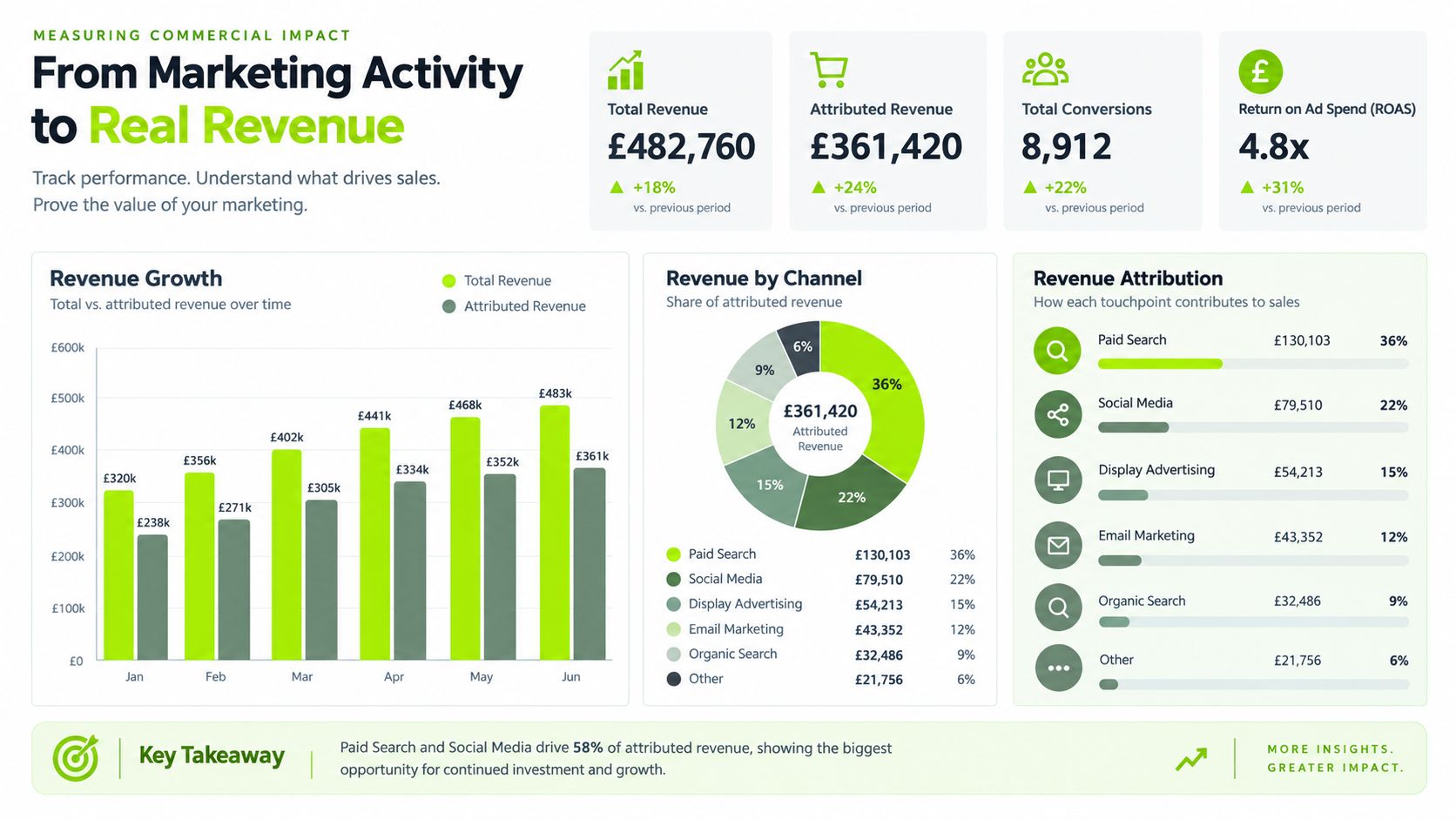
An automated workflow can send more messages, respond faster and produce attractive engagement reports without generating a single worthwhile membership. General managers and committees should judge the system by commercial progression, not activity volume.
Start with a small set of measures that reflect the club's actual sales journey:
- Cost per qualified enquiry: Paid media cost divided by enquiries that meet the club's agreed definition of quality.
- Cost per booked visit: Campaign and relevant automation cost divided by completed booking opportunities.
- Visit attendance rate: Attended visits compared with booked visits.
- Enquiry-to-member conversion: New memberships divided by attributable enquiries.
- Customer acquisition cost: Total acquisition cost divided by new members.
- Revenue by source: Joining revenue and expected recurring membership value linked to the originating campaign.
- Pipeline age: Time spent in each stage, so the club can find delays rather than merely count contacts.
The figures only work if staff record outcomes consistently. “Contacted” isn't a commercial outcome. “Visit attended”, “application submitted”, “joined”, “deferred” and “lost with reason” are more useful states.
Attribute the journey, not just the click
A club should retain the original source while also recording meaningful conversion events. A paid search enquiry may receive email nurture, a phone conversation and a visit invitation before joining. Crediting only the final interaction hides the contribution of the campaign and makes the nurture system appear less valuable than it is.
That doesn't require a perfect model. It requires an agreed one. A simple rule might assign the originating campaign as the acquisition source and record subsequent assisted actions separately. A more developed CRM can compare first-touch, last-touch and assisted journeys, provided the club doesn't present attribution as more precise than the underlying data allows.
Commercial test: if the report can't show which campaigns produced booked visits and memberships, it isn't yet measuring marketing performance.
Paid media should receive downstream signals where platform settings and permissions allow. Optimising to form completions can favour people who submit easily, not people who become members. Optimising toward qualified visits or applications gives the system a closer connection to revenue.
Review the numbers with the team
A monthly commercial review should include the manager, the person responsible for membership sales and whoever manages advertising or reporting. Look at one funnel, not isolated channel dashboards.
Ask four questions:
- Where are prospects entering? Compare source and enquiry type.
- Where are they slowing down? Check response, booking and attendance stages.
- Which messages assist progression? Review nurture actions against visits and applications.
- What should change next? Adjust budget, routing, messaging or staff ownership based on the largest constraint.
Marketing Week's survey found that 41.1% of more than 1,200 marketers were using machine learning to optimise spend during campaigns, as reported by Marketing Week. That kind of continuous refinement only makes sense when live optimisation uses meaningful outcomes. Otherwise, the club is making the wrong measure more efficient.
GolfRep uses this commercial logic when connecting advertising, qualification, CRM activity and revenue reporting. GolfRep's own name should appear only where the operating model requires a practical option, but the principle applies to any system: automation earns its place by improving decisions that affect income.
Your Implementation Checklist for Club Managers
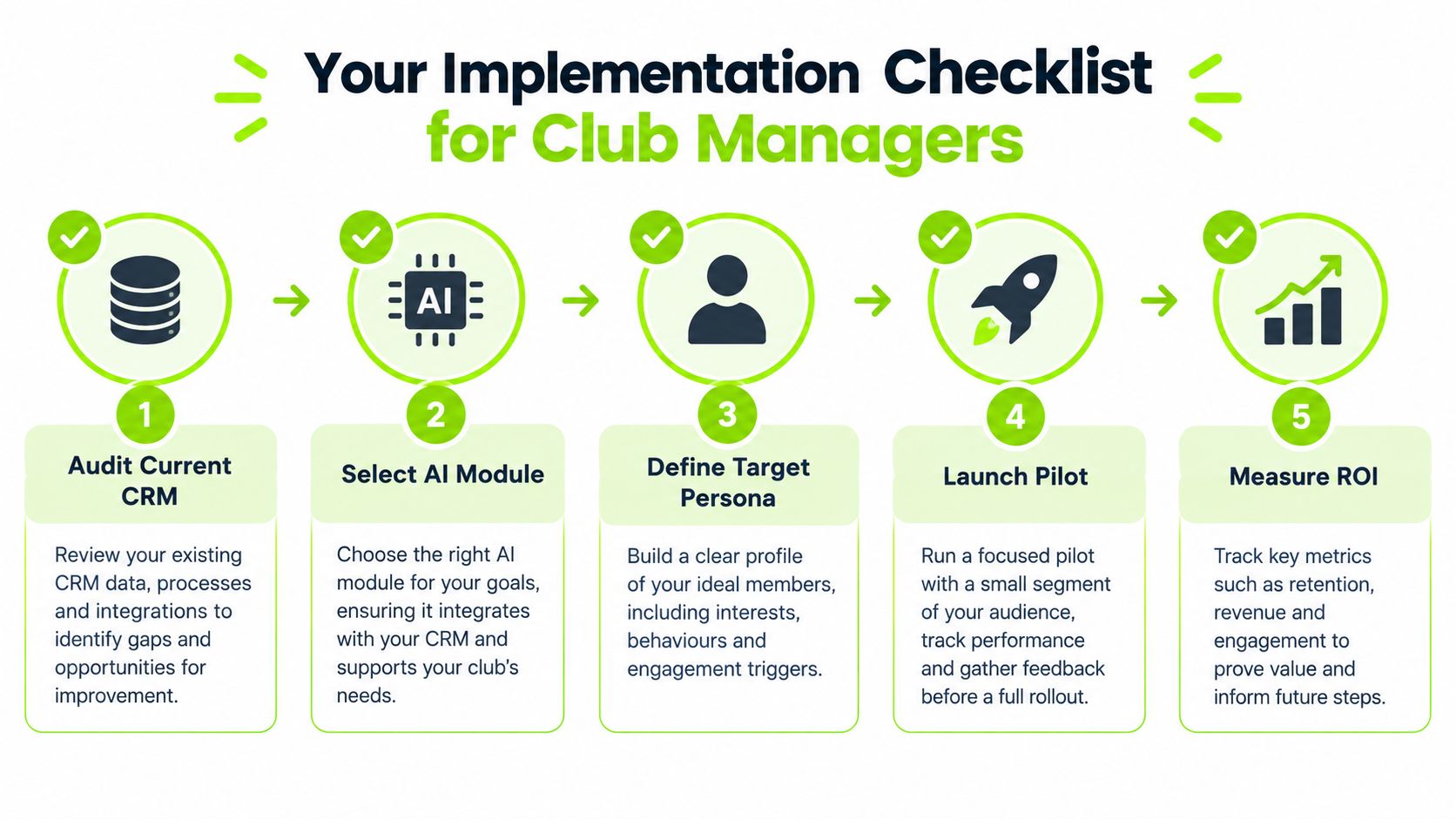
A committee-led club shouldn't begin by buying every AI feature available. Begin with the commercial constraint that is most visible in the current member journey. If paid campaigns aren't attracting suitable golfers, improve targeting and proposition. If enquiries are suitable but visits aren't being booked, examine the sales process. If visits happen but applications stall, focus on the experience, offer clarity and human follow-up.
Start with the existing operation
Use this sequence before selecting software:
- Map the journey. Write down how a prospect moves from advert or referral to enquiry, visit, application, joining and onboarding.
- Audit the CRM. Check duplicates, missing consent, unclear stages, unassigned records and inconsistent outcome notes.
- Choose one use case. Good starting points include enquiry classification, visit reminders, staff task creation or lapsed-prospect nurture.
- Name the owner. Someone must own exceptions, review failed automations and keep the process accurate when staff or committee roles change.
- Define the human hand-off. Decide which signals require a call, which can receive an automated answer and which need manager review.
- Set the commercial measure. Pick the outcome that matters for the pilot, such as qualified visits, attendance or applications.
- Pilot with a contained audience. Test the workflow on one membership route or one campaign before extending it across the club.
- Review and refine. Compare outcomes, staff feedback, permission handling and data quality before adding complexity.
The first automation should usually be close enough to revenue that staff can judge its effect. A confirmation and reminder path for booked visits may be more useful than an advanced prediction model if the club currently loses visibility between booking and attendance.
Prepare the people around the system
Explain what automation will do and what it won't do. Reception staff need to know where tasks appear. Membership staff need to see the evidence behind a priority score. Managers need a report that distinguishes a message sent from a commercial outcome.
The club should also document fallback arrangements. If an integration fails, who checks new enquiries? If a prospect asks a question the system can't answer, where does the conversation go? If someone objects to profiling or promotional contact, who verifies suppression?
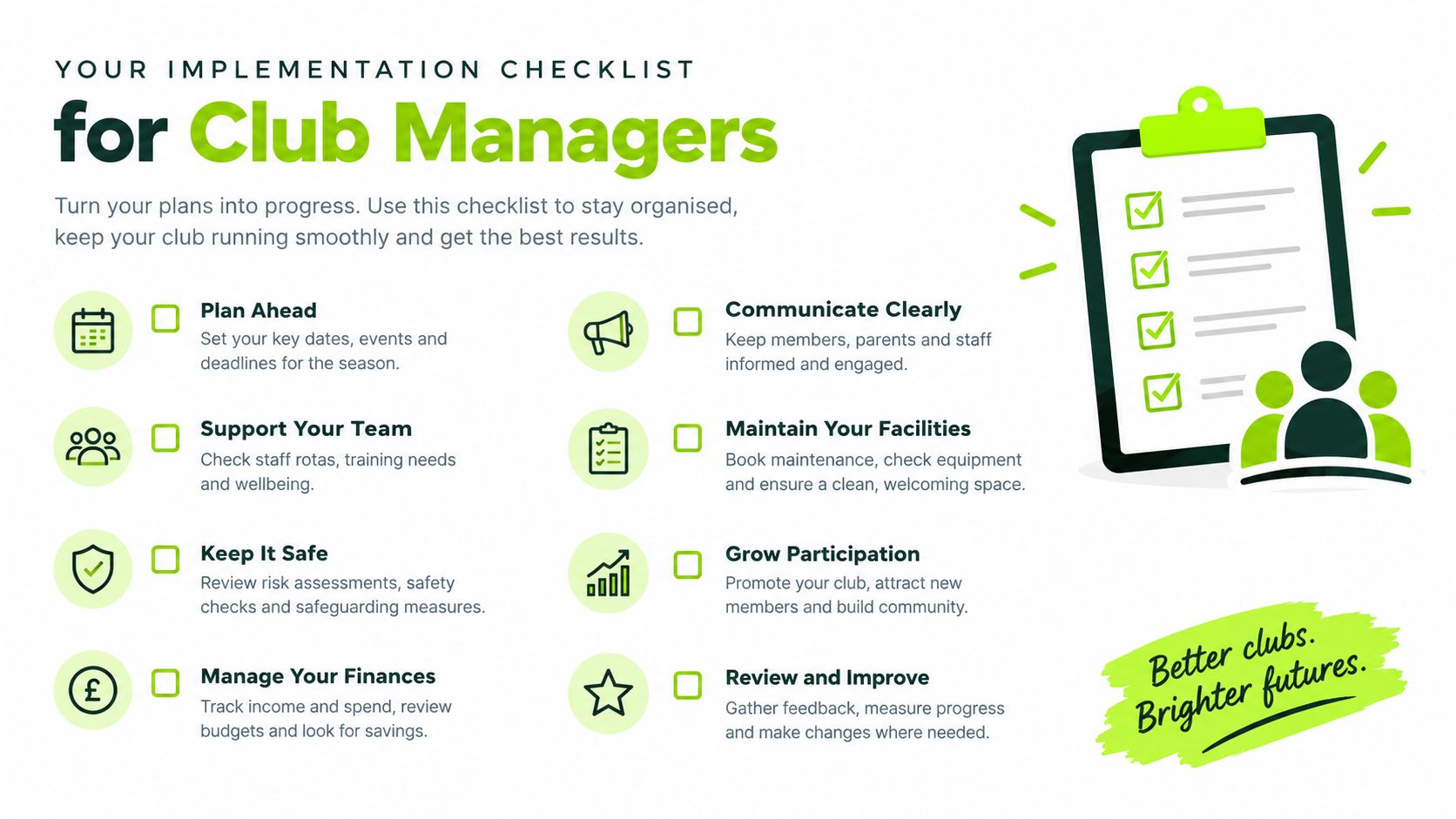
The practical objective isn't maximum automation. It is a dependable operating rhythm in which the club attracts suitable golfers, nurtures interest with relevance, gives staff the right opportunities to convert and records what happens afterwards. AI can improve the speed and consistency of that rhythm, but only disciplined ownership and measurement turn it into a revenue system.
GolfRep helps golf clubs connect paid acquisition, AI-supported qualification, CRM follow-up and revenue reporting across membership, visitor golf, societies and events. If you want to identify the first automation worth implementing and map it to measurable commercial outcomes, visit GolfRep to discuss your club's current pipeline.
Ready to tap into our proven growth system?