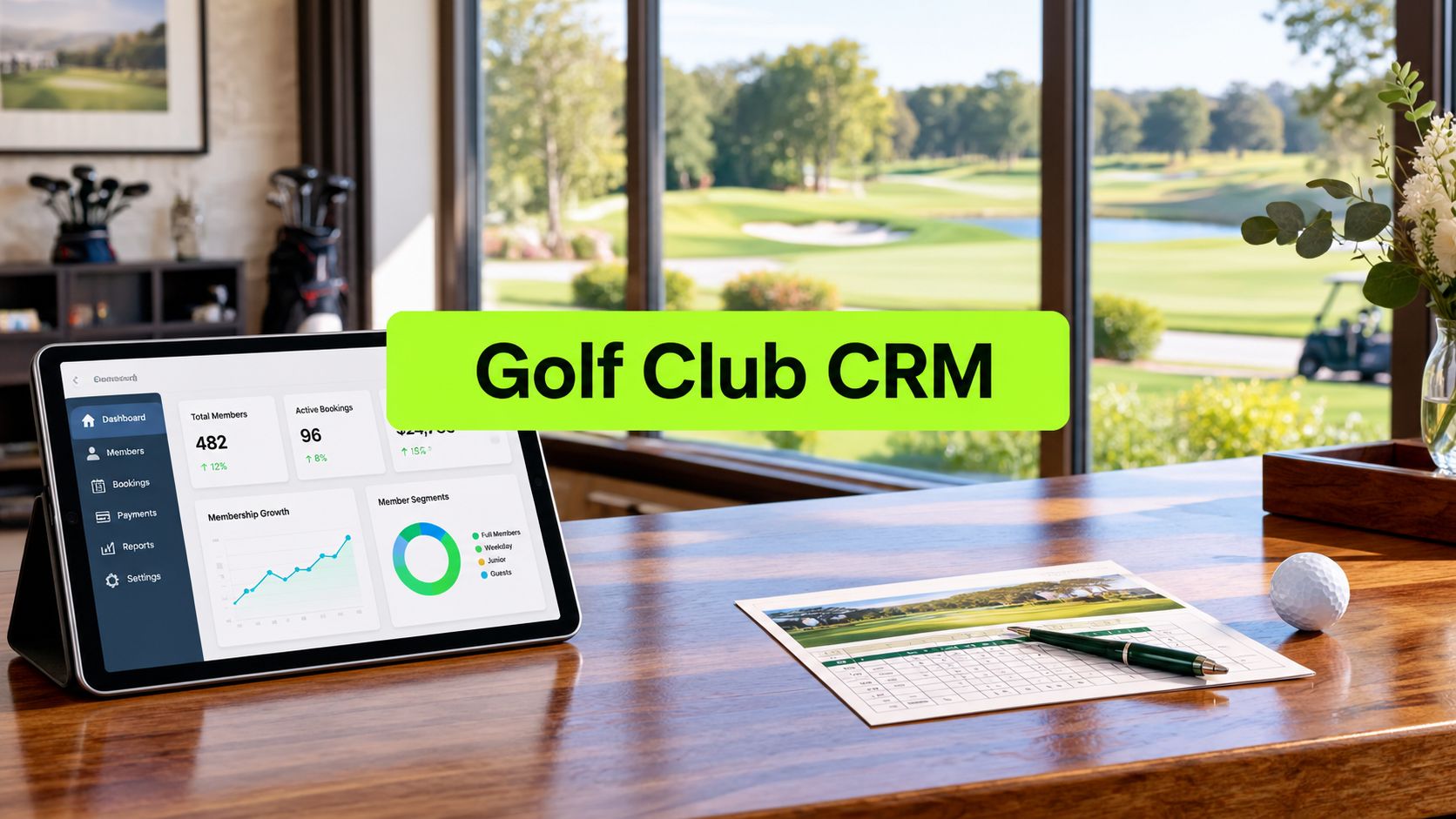
Golf Club Digital Marketing: A Practical Playbook for Growth

A membership secretary opens the club inbox on Monday morning and finds enquiries from the weekend, a few social media messages, and a note from a member who has recommended the club to a friend. Some prospects have received a reply. Others are waiting for a call. Nobody can say with confidence which campaign generated each enquiry, who needs a follow-up, or how many visits could be booked this week.
That's the operational reality behind many golf club digital marketing problems. The club may have a good course, a respected local reputation, and plenty of online activity. The weak point is often what happens after someone raises a hand.
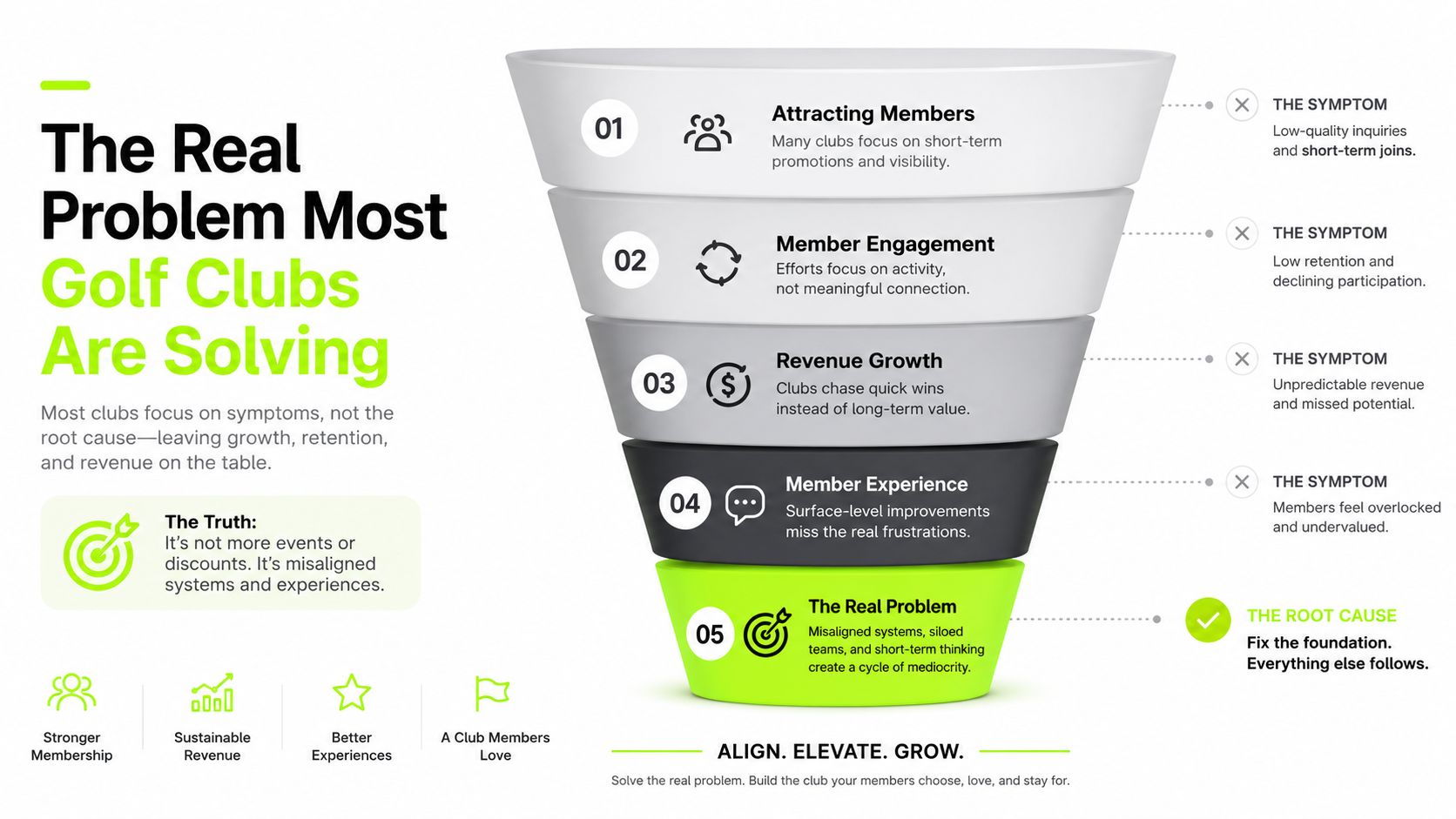
The Real Problem Most Golf Clubs Are Solving
The usual question is, “How do we generate more enquiries?” It's understandable, especially when committee discussions focus on advertising, social media reach, or the next membership campaign. But many clubs don't have an enquiry shortage. They have a lead-handling problem.
An enquiry that sits in an inbox is not a pipeline. A name in a spreadsheet isn't a prospecting system. If the club can't see where each person came from, what they're interested in, and who owns the next action, marketing activity becomes difficult to judge and easy to abandon.
The common reasons golf club marketing fails usually sit in this gap between attention and action. A post can create interest, an advert can produce a form submission, and a referral can introduce a highly qualified golfer. None of those activities creates membership revenue unless someone responds promptly and guides the prospect towards a visit, conversation, and decision.
Move from activity to pipeline
A club should be able to answer five basic questions for every new enquiry:
- Source: Did the prospect come from Google, social media, a referral, a partner, or an existing database?
- Intent: Are they asking about full membership, flexible membership, junior golf, visitor play, or something else?
- Ownership: Which person is responsible for the next contact?
- Stage: Are they new, contacted, qualified, invited to visit, or ready to join?
- Outcome: Did the enquiry become a booked visit, a membership application, or a lost opportunity?
This is pipeline-led marketing. It treats each channel as a feeder into an organised sales process rather than as an isolated stream of activity.
Practical rule: Before increasing advertising spend, find out how many existing enquiries have never received a clear second contact.
The shift doesn't require a complicated technology project. It starts with one agreed process, one place to record every lead, and clear response responsibilities. Once that foundation exists, the club can make better decisions about channels, budget, messaging, and staffing because it's measuring movement through the pipeline rather than collecting surface-level engagement.
The Channels That Actually Drive Membership Enquiries
Every digital channel has a job. The mistake is treating Google Ads, social media, SEO, email, and the website as separate marketing projects. They work better when they feed the same capture and follow-up process.
The UK benchmark is useful here. In the 2024/25 survey of UK members' and proprietary golf clubs, member referrals were used by 71% of members' clubs, social media by 60%, advertising by 38%, email campaigns by 14%, and direct mailings by 12%. The sector benchmark report also found that member referrals were judged the most successful activity by 53% of members' clubs, while social media was considered most successful by 24%.
Match the channel to the buying stage
Paid search captures existing intent. Someone searching for membership in a particular town or county is closer to action than someone who casually watches a course video. Search campaigns should send that person to a focused membership page, not a generic homepage, with a clear form and a tracked phone option.
Paid social creates awareness and helps the club reach audiences who may not yet be searching. It can support campaigns for returning golfers, local families, beginners, or junior pathways. Its job is to create qualified interest, so the advert needs to make the next step obvious.
Organic search builds discoverability over time. Useful pages answering real questions about membership, beginner options, facilities, flexible playing arrangements, and local golfing needs can bring in prospects without paying for every click. Local search principles also apply beyond golf. Clubs can learn from practical resources on gym near me search visibility, particularly the importance of accurate local information and clear service pages.
Social content strengthens trust. Course condition updates, member stories, competition results, staff introductions, and junior activity help a prospect decide whether the club feels welcoming and relevant. Social media should not be judged only by likes. The meaningful question is whether interested people can move from a post to an enquiry and then into a follow-up journey.
Email nurture keeps the club present between first contact and a visit. A prospect may be interested but busy, uncertain about playing arrangements, or comparing several clubs. Relevant, timely emails can answer questions without requiring the membership secretary to remember every follow-up manually.
The website is the conversion hub. It should make membership information easy to find, explain the experience clearly, and offer a low-friction next step. The practical guide to Google Ads for golf clubs is useful for clubs considering paid search, but advertising only works properly when the destination page and follow-up process are ready.
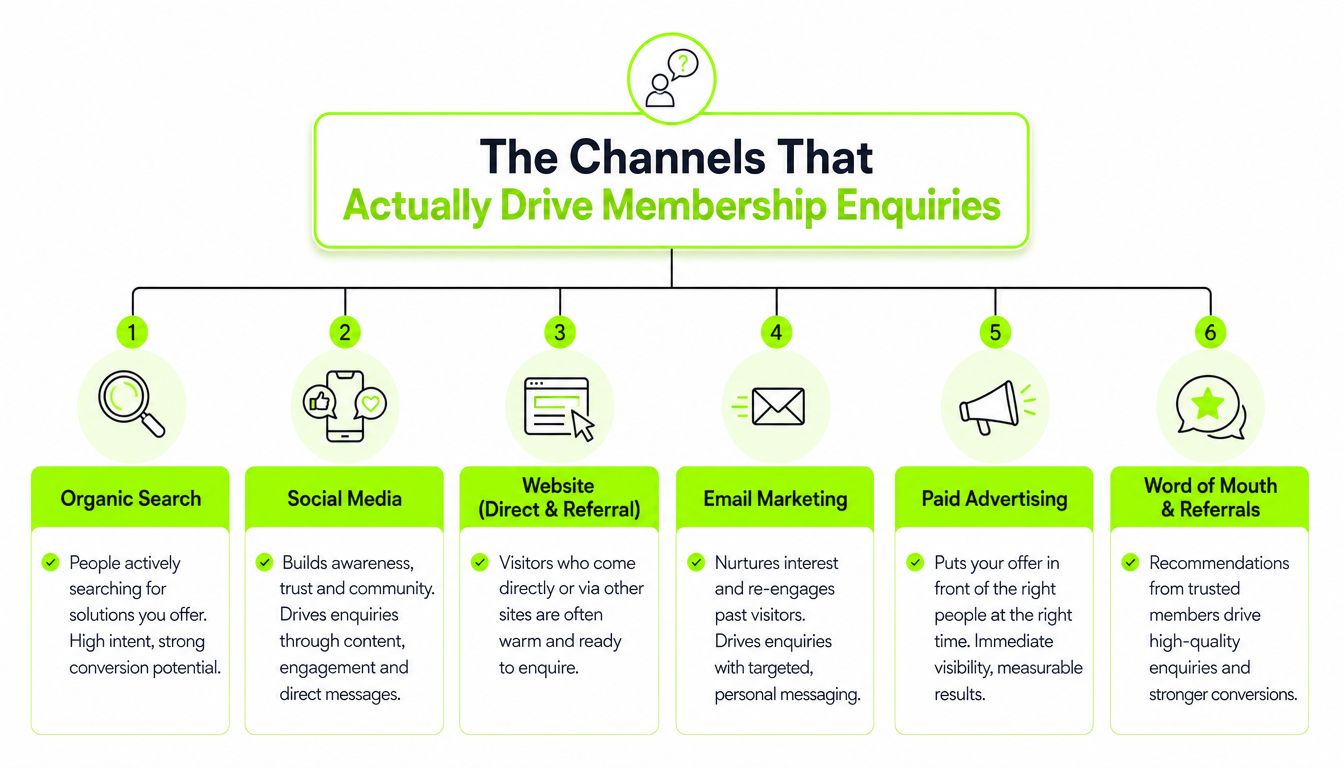
A strong mix doesn't mean running every channel at full intensity. It means assigning each channel a clear role, using consistent tracking, and making sure every enquiry reaches the same operating system.
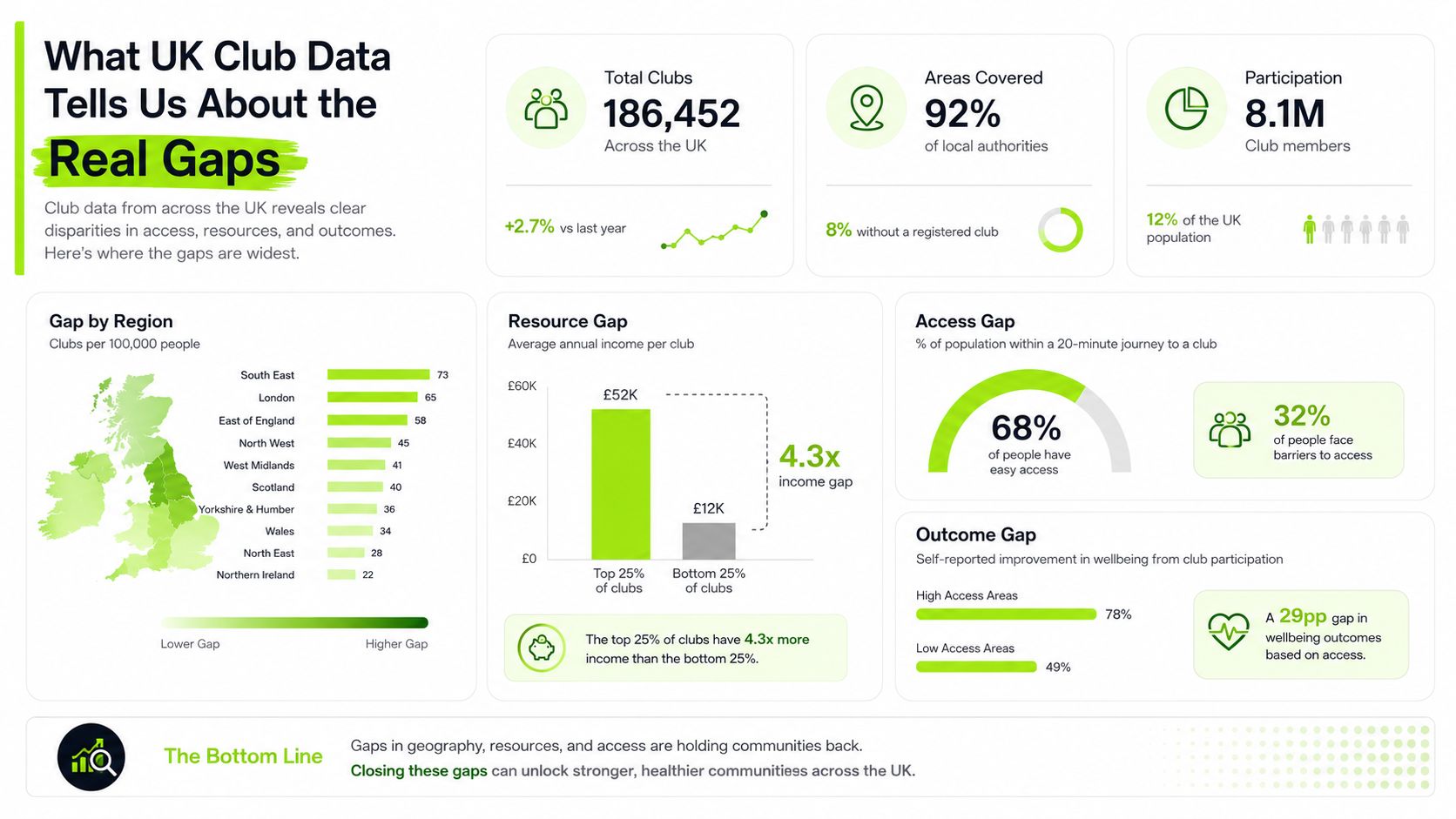
What UK Club Data Tells Us About the Real Gaps
The UK club market has already built much of the basic digital infrastructure. England Golf's 2016 Golf Club Membership Questionnaire, covering 602 clubs in England, found that 89% of clubs used a website regularly and 75% used platforms such as Facebook, Twitter, and Instagram for promotion. The historical membership marketing analysis shows the important distinction: a website had become normal, but effective social promotion was still uneven.
The more recent picture shows that social media is now established, while CRM-led nurture remains less common. The 2024/25 UK survey recorded social media use at 60% among members' clubs, compared with 14% for email campaigns and 12% for direct mailings, as reported in the Hillier Hopkins golf club report.
That creates a familiar imbalance. Clubs are often visible at the top of the funnel but less organised in the middle. They can publish a post, run an advert, and receive a form submission, yet still rely on an individual to remember who needs a call and when.
Visibility isn't the same as readiness
A club's digital maturity should be assessed across the full journey:
| Area | Basic setup | More dependable setup |
|---|---|---|
| Website | Information about membership | Clear pages, enquiry paths, and tracked actions |
| Social media | Regular posts | Content linked to specific journeys |
| Enquiries | Shared inbox or spreadsheet | Central record with ownership and stages |
| Follow-up | Individual memory | Agreed reminders and automated nurture |
| Reporting | Reach and engagement | Enquiries, visits, applications, and sources |
This is why data-driven golf marketing matters operationally, not just analytically. The club needs enough visibility to identify where prospects are being lost. If email is rarely used, if forms don't distinguish membership types, or if phone enquiries never enter the same record as web enquiries, the club can't see the true demand generated by its marketing.
The opportunity isn't necessarily to outspend other clubs. It's to close the gap between being found and being followed up. A club with modest channel activity and disciplined lead management can be easier to join than a more visible competitor whose response process is inconsistent.
Capturing and Qualifying Every Enquiry That Arrives
The best enquiry system reflects how golfers contact a club. Some complete a form after reading the membership page. Some call during office hours. Others send a direct message on Facebook or Instagram. If those routes land in separate places, the club needs a simple method for bringing them together.
Start with the capture points. Create dedicated landing pages for the main journeys, such as membership, flexible playing, junior golf, and visitor enquiries. Each page should ask only for information needed to make the next conversation useful. Name, contact details, preferred contact method, and the type of membership or playing interest are usually more valuable than a long questionnaire.
Phone handling needs the same discipline. Whoever answers should record the enquiry immediately, including the prospect's main question and the agreed next action. A missed call should create a task, not disappear into the phone log.
Qualification should help people, not obstruct them
Qualification isn't about rejecting casual interest. It's about giving the club enough context to respond properly and prioritise time.
Useful fields include:
- Playing situation: New to golf, returning after a break, currently a member elsewhere, or actively comparing clubs.
- Membership fit: Full, flexible, junior, social, or another route offered by the club.
- Timing: Ready to visit, gathering information, or considering a future move.
- Practical needs: Preferred playing times, location concerns, family requirements, or questions about facilities.
- Next action: Call, email, tour, taster visit, or membership information pack.
The response standard must be realistic and measurable. A UK lead-response white paper found that 78% of customers purchase from the first company to respond, while the average UK business response time was 47 hours and only 7% responded within five minutes. It also reported that organisations were 60 times more likely to qualify leads when responding within one hour rather than after 24 or more hours. The lead-response crisis report provides the evidence for treating response time as a commercial process, not an administrative preference.
The first response doesn't need to close the membership. It needs to confirm receipt, answer the immediate question, and create a clear next step.
A practical setup can include an instant acknowledgement, an internal task for the responsible person, and a short nurture sequence if the prospect doesn't book a conversation. The system should show overdue tasks clearly, so managers don't need to search through inboxes to find them.
What a Mature Growth System Looks Like in Practice
A mature growth system isn't defined by a particular CRM brand or advertising platform. It's defined by how well the club connects acquisition, response, qualification, nurture, and reporting.
GolfRep's work with Bidston Golf Club illustrates the scale of change that can occur when marketing and follow-up are treated as one operating model. The club was facing a serious commercial challenge, including the risk of closure. Its turnaround involved a joined-up approach to acquiring suitable prospects, managing enquiries, and supporting membership conversion. The relevant lesson isn't the headline result. It's that paid activity alone wouldn't have solved the underlying problem without a process for handling the demand.
Addington Palace shows a different starting point. A club with a strong proposition still needs a consistent pipeline view when it wants steady growth. The system needs to show which enquiries are new, which have been contacted, which prospects have been invited to visit, and where the membership team needs to intervene.
Different clubs need different operating details
Downes Crediton required a rapid membership campaign, but speed only becomes useful when the team can see new leads quickly and act on them. A campaign can be adjusted when the club knows which messages are generating suitable enquiries and which prospects are progressing. Without that visibility, managers are left debating impressions rather than making informed changes.
Macdonald Hotels & Resorts demonstrates the multi-site version of the same principle. Different venues may have different offers, locations, and teams, but centralised CRM structures can help the operator maintain consistent lead capture and follow-up while preserving local relevance. The system should support local ownership without creating disconnected records.
A useful operating model typically includes:
- Tracked acquisition: Campaigns identify the source and message that created the enquiry.
- Immediate acknowledgement: The prospect receives confirmation while the interest is fresh.
- Human qualification: A club team member understands the golfer's situation and recommends the right next step.
- Structured nurture: Follow-up continues when the prospect doesn't decide immediately.
- Pipeline reporting: Managers can see volume, stage, ownership, and outcomes.
- Review and refinement: The team changes campaigns or processes based on progression, not noise.
The software matters, but adoption matters more. A complex CRM that nobody updates is less useful than a simple system that the membership secretary, general manager, and front-of-house team use every day.
A GolfRep Growth System combines targeted acquisition, enquiry capture, CRM integration, automated follow-up, and conversion tracking. It should be judged by the clarity it gives the club and the actions it helps the team take, not by the number of features on a product sheet.
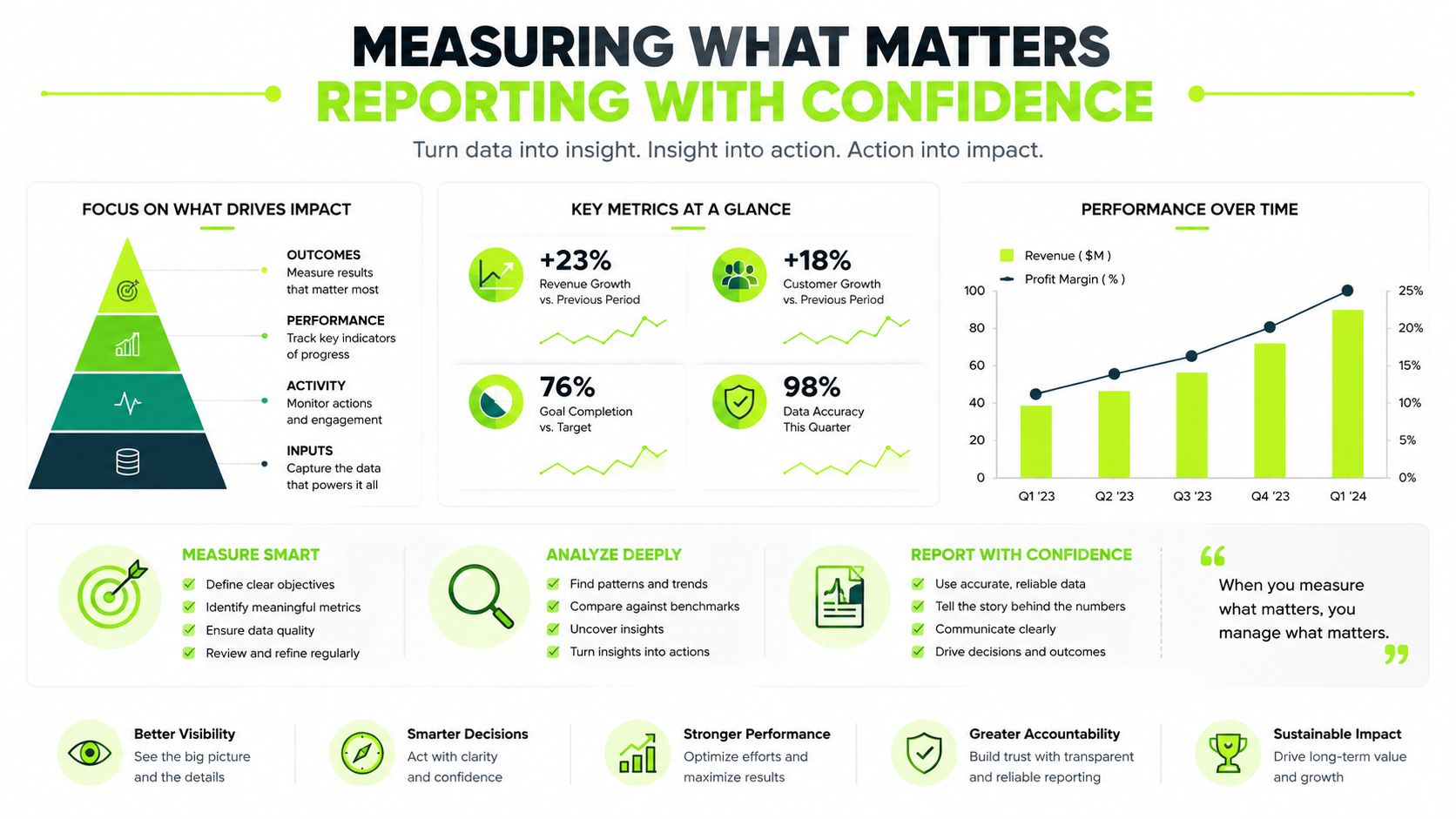
Measuring What Matters and Reporting With Confidence
A committee can't make a sound budget decision from follower counts alone. Impressions may show that an advert was delivered, but they don't show whether the club received a suitable enquiry, booked a visit, or signed a member.
A useful measurement framework follows the prospect through the commercial journey:
- Source: Which campaign, channel, referral, or partnership created the first contact?
- Enquiry: What did the prospect ask about, and was the record captured correctly?
- Contact: How quickly did the club respond, and did the prospect engage?
- Visit: Was a course tour, taster round, meeting, or other visit booked?
- Decision: Did the prospect apply, join, defer, or become unresponsive?
- Value: What recurring membership revenue can the club associate with the process?
Keep the reporting rhythm simple
A weekly review should focus on movement and immediate action. Which new enquiries arrived? Which are overdue? Which prospects need a call? Which visits are booked for the coming period?
A monthly report can take a broader view. Compare channels by qualified enquiries, visits, applications, and memberships. Review the reasons prospects didn't progress. Check whether the club's follow-up process is being used consistently.
| Dashboard view | Question it should answer |
|---|---|
| New enquiries | Are suitable prospects entering the pipeline? |
| Response time | Are people receiving timely contact? |
| Pipeline stages | Where are prospects slowing down? |
| Channel source | Which activity creates useful opportunities? |
| Visit bookings | Is interest becoming an in-person conversation? |
| Membership outcomes | Which sources and processes support joining? |
Attribution won't always be perfect. A golfer may see a social post, search for the club later, speak to a member, and then complete a form. The answer isn't to pretend the journey is simple. Record the first known source, the latest interaction, and the human referral where possible, then use the combined picture to guide decisions.
A dashboard earns its place when it changes what the club does next.
Reporting should also include operational measures. If enquiries are increasing but response times are slipping, more advertising may worsen the bottleneck. If visits are being booked but applications remain low, the club may need to examine the visit experience, the membership explanation, or the follow-up after the tour.
Budgeting for Predictable Growth Without Overreaching
A sensible golf club digital marketing budget starts with readiness, not ambition. There's little value in increasing paid traffic if the membership page is unclear, the form sends enquiries to an unattended inbox, or the team can't report what happened next.
Budget lines usually fall into three groups:
- Acquisition: Paid search, paid social, creative production, and local campaign testing.
- Infrastructure: CRM setup, integrations, forms, tracking, and automation.
- Trust and conversion: Website improvements, photography, useful content, email nurture, and visit materials.
The order matters. Fix capture and response visibility before scaling acquisition. Otherwise the club may pay to create more work for a process that already loses opportunities.
A consistent testing approach is more useful than a short burst followed by silence. Test one audience, one offer, or one message at a time where possible. Keep the campaign running long enough to understand lead quality and progression, but don't continue funding activity that produces enquiries the club can't qualify or convert.
Committee members also need a clear distinction between marketing cost and growth system investment. Advertising creates opportunities. CRM and follow-up systems protect those opportunities. Website and content work can improve how confidently prospects evaluate the club. Each line should have a defined role in the journey and a reporting measure attached to it.
The budget conversation should therefore ask:
- What stage of the pipeline is currently weakest?
- Can the team respond consistently to more enquiries?
- Which existing activity has a traceable outcome?
- What needs to be tested before the club scales?
- Who will own the process internally?
A club doesn't need to fund every channel. It needs to fund the conditions that allow its chosen channels to produce a reliable commercial result.
The Long Game of Building a Predictable Membership Pipeline
More marketing spend isn't the same as more growth. A club can increase impressions, launch another campaign, and still make little progress if prospects wait too long for a response or disappear into disconnected records.
Predictable membership growth comes from a club knowing where every prospect sits. The team can see who has just enquired, who needs a call, who has been invited to visit, and who needs a relevant follow-up. Managers can then make decisions from pipeline evidence rather than from the latest anecdote in a committee meeting.
That changes the relationship between a club and its growth partner. The partner isn't asked to deliver leads. Both sides agree on the target audience, the enquiry process, the reporting definitions, and the actions the club team must take. The first phase should establish the baseline, connect capture and CRM, improve response handling, and launch focused campaigns. The following work should refine the system using actual progression data.
For committee-led clubs, the first practical step is often an enquiry audit. Review the last batch of membership enquiries and identify where each came from, how quickly the club responded, whether a visit was offered, and what happened afterwards. The gaps will usually point to a clearer priority than another round of generic advertising.
Golf club digital marketing works when attention becomes a managed conversation, and managed conversations become trackable membership decisions.
GolfRep helps UK golf clubs combine targeted lead generation with enquiry capture, structured follow-up, CRM systems, and conversion tracking, so managers can see what happens from first contact to booked visit and sign-up. If your club wants to audit its current pipeline or build a more predictable membership process, visit GolfRep to discuss the next practical step.
Ready to tap into our proven growth system?