How to Attract Golf Societies and Drive Revenue

A society organiser calls at 10.15am asking for a date, a price and confirmation that the clubhouse can handle breakfast, scoring and lunch. The general manager is on the course, the PGA professional is coaching, and the message lands in a shared inbox alongside membership questions and supplier invoices. By the time somebody replies, the organiser has already contacted several other venues.
That situation explains why how to attract golf societies isn't only a marketing question. It's a commercial operations question. Clubs need a proposition that's easy to buy, a response process that protects intent, and an onsite experience that gives organisers a reason to return.
Understanding the Society Market Opportunity
Society golf can look like a useful extra rather than a core revenue stream. That view usually comes from looking at individual bookings instead of the annual value of a well-managed organiser relationship. A society may occupy midweek capacity, bring food and beverage spend, create visitor exposure and return on a predictable date each year.
Hillier Hopkins' survey of UK golf clubs found that the average number of society rounds per members' club was 2,500 in 2023/24. Reported club totals ranged from 36 to 7,000 rounds, and some clubs recorded society income of £20,000 to £40,000. Those figures show a wide performance gap, but they also establish that society acquisition can be a meaningful revenue channel rather than a marginal add-on.
The same survey recorded average visitor rounds of 5,800 in 2023, up from 4,500 in 2022. A club that already attracts outside play has a useful pool of golfers and organisers to develop, provided it gives them a clear reason to choose a society format and a straightforward way to secure a date.
Demand exists beyond the local membership
The wider market is substantial. The R&A's 2023 UK Satellite Account estimated consumer spending on golf at £5.165 billion, with 5.356 million adults playing at least once a year. It also estimated 2.357 million adults played at least once every four weeks, while club membership stood at 889,000 people.
That audience isn't limited to members of your own club. Society organisers often know exactly what they want, compare venues quickly and rely on recommendations from other golfers. England Golf represents more than 1,900 affiliated golf clubs and 675,000 members, according to Golf Tourism England's England Golf overview. Clubs are competing within a knowledgeable golf audience, not selling an unfamiliar leisure activity to the general public.
Commercial point: Society revenue becomes more predictable when the club manages organisers as repeat accounts, not as anonymous visitors.
The practical question is therefore not whether demand exists. It's whether the club can capture it consistently. Start by reviewing the tee sheet, identifying midweek capacity, listing the facilities that matter to organisers and calculating how many society days the operation can fulfil without damaging member experience.
Then build the acquisition plan around that capacity. A club with limited catering space shouldn't promote every possible group size. A club with strong weekday availability may choose to prioritise larger societies, while another may focus on smaller groups that fit existing staffing and food service. The proposition must match what the club can deliver repeatedly.
For a more detailed look at the acquisition side, see GolfRep's guide to golf society lead generation. The important distinction is that lead volume is only useful when the club has the inventory and process to convert it.
Designing Packages and Pricing That Convert
A society package should let an organiser answer four questions without a phone call: what's included, what does it cost, what must be paid now and what happens next. If those answers are hidden in a long PDF or split across several emails, the organiser has to do administrative work before deciding whether to book.
Start with the tee sheet. Map midweek availability, preferred arrival periods, catering capacity and any dates that should be protected for members or existing events. Then create a minimum viable package around the inventory you want to sell. It might include golf, a welcome drink, breakfast, a meal or competition support, but every inclusion should have a clear operational owner and margin rationale.
Avoid using discounts as the default answer. A lower price can fill a date, but it can also set an expectation that the club's value is negotiable. A better package makes the experience easier to organise. Clear arrival instructions, defined food choices, an organiser contact and a reliable competition format can be more persuasive than shaving money from the green fee.
Make payment terms part of the product
Deposit mechanics reduce uncertainty for both sides. Examples in published society booking terms include non-refundable deposits of £5 per person, £10 per player and £100 per booking, with payment deadlines ranging from 7 to 14 days. These are examples of how clubs protect diary space, not a universal pricing rule.
The terms should appear in the proposal, confirmation email and booking record. State whether the date is provisional, when the deposit is due, when the club may release the slot, and how changes to player numbers affect the final balance.
| Approach | Deposit requirement | Final numbers deadline | Commercial impact |
|---|---|---|---|
| Flexible provisional hold | Small per-player deposit within the stated booking window | Confirm before catering and tee-sheet planning are locked | Easier initial commitment, but requires active deadline management |
| Firm confirmed booking | Non-refundable booking deposit within the agreed period | Set a clear cut-off before the event | Protects capacity and gives the organiser certainty |
| Full-service society booking | Deposit followed by staged confirmation of numbers and catering | Link final numbers, menu choices and dietary requirements to one date | Reduces late administration and protects food, staffing and payment planning |
Final numbers and catering choices should be treated as commercial controls. One club requires them 14 days before the visit, another requests menu choices and special requirements at least 7 days beforehand, and a further example uses a 72-hour deadline. The right cut-off depends on the operation, but ambiguity helps nobody.
A practical package document should include:
- The experience: Course, practice facilities, catering, prizes and competition support.
- The commercial terms: Price, deposit, balance, cancellation and reduced-number rules.
- The timetable: Arrival, breakfast, first tee time, meal and presentation.
- The organiser actions: Payment dates, player details, menu selections and dietary requirements.
- The club contact: One named person who owns the booking.
GolfRep's guidance on golf club package deals is useful when reviewing how inclusions and value should be presented. The package must be profitable to deliver and simple enough for an organiser to approve.
Optimising the Enquiry and Booking Journey
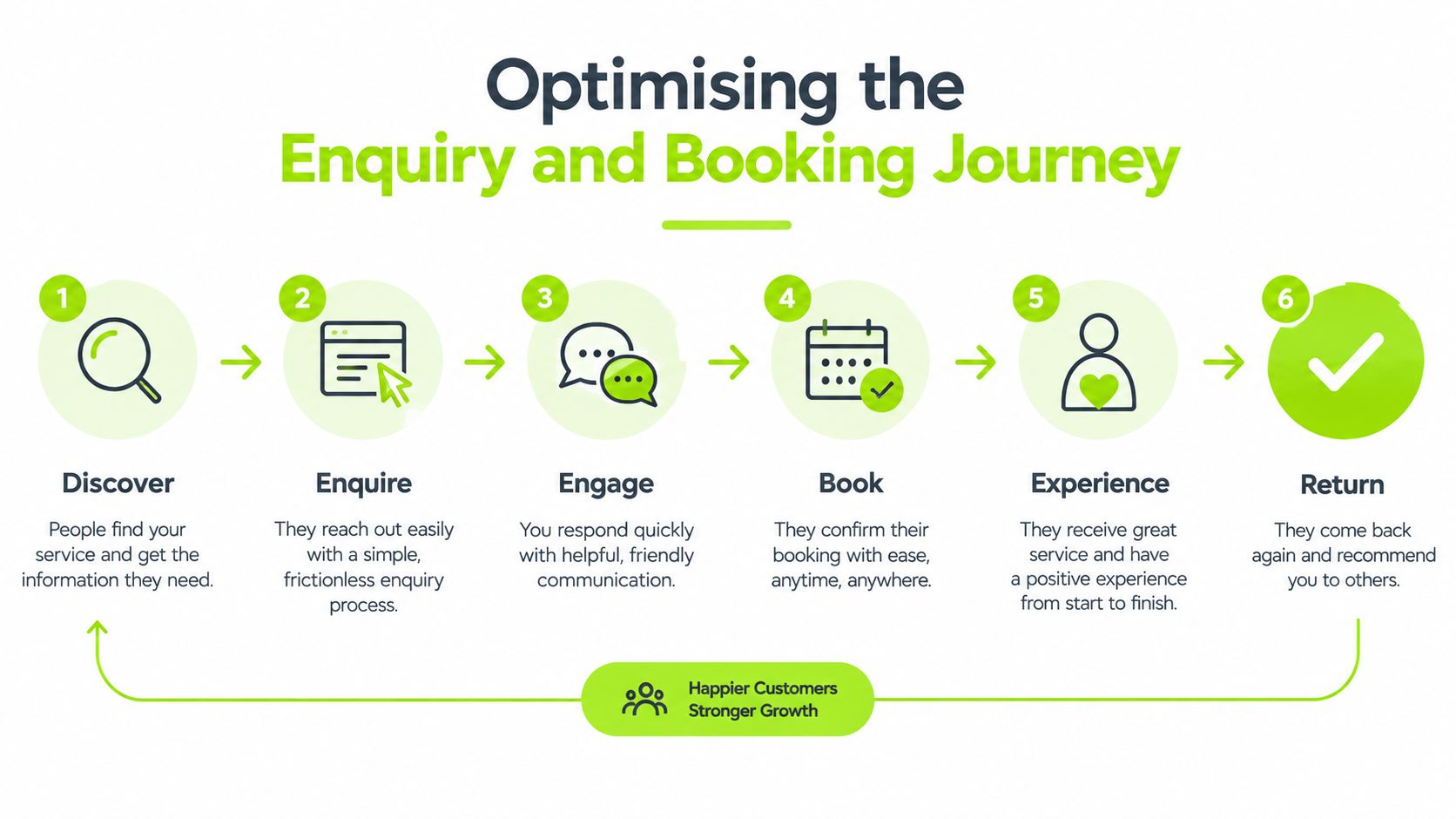
A club can have an attractive course and a competitive package, then lose the booking because its process is slow. Industry reporting indicates that clubs using HubSpot at more than 50 golf clubs receive an average of 350+ society enquiries per year, while average response time remains 30 hours. The same industry context reports that leads contacted within five minutes are 2.6 times more likely to convert. See the industry reporting on society enquiry response for the underlying context.
That gap matters because society organisers rarely contact one venue in isolation. They're comparing date availability, price, food, course quality and the ease of dealing with each club. A fast acknowledgement doesn't win every booking, but a delayed response gives competitors time to establish the relationship.
Build a process with clear ownership
The best journey is short, visible and specific. It doesn't require a complicated technology stack, but it does require somebody to own every stage.
- Acknowledge immediately: Use an automatic confirmation that confirms receipt and sets a realistic reply expectation.
- Assign an owner: Record the enquiry centrally and name the person responsible for progressing it.
- Qualify the request: Capture the preferred date, group size, format, catering needs, budget position and flexibility.
- Check operational fit: Confirm tee-time inventory, staffing, catering capacity and any member restrictions.
- Send a custom proposal: Answer the organiser's actual request instead of sending a generic brochure.
- Follow up to a decision: Record the next action, deadline and reason for any lost booking.
The qualification stage is where many clubs can improve. “Please send more information” isn't enough. The commercial team should know whether the organiser wants a one-off day, an annual event, a corporate format, a competition with prizes or a simple round followed by food.
Use a pipeline with stages such as new enquiry, qualified, proposal sent, decision pending, deposit requested, confirmed, completed and rebooked. Each record should show date, group size, estimated value, owner, next action and lost reason. A shared inbox alone won't provide that visibility.
GolfRep's approach to golf club enquiry management focuses on making ownership and follow-up measurable. Clubs can use a CRM, a structured spreadsheet or an integrated booking platform, provided staff follow one process.
The aim isn't to promise an instant answer that the team can't sustain. It's to acknowledge quickly, gather the right facts and give the organiser a dependable route to confirmation.
Outreach Channels and Targeted Acquisition
Once the booking journey is reliable, outreach can create demand for the dates the club needs to fill. Start with people who already have a reason to organise golf. Previous society organisers, members who run businesses, local employers, golf coaches, county contacts and nearby hospitality partners are more useful prospects than a broad audience with no group-booking intent.
The lapsed society database is often the first place to look. Segment it by previous visit date, group size, package purchased, preferred day and organiser contact. Don't send the same message to every record. A small society that previously booked a midweek round needs a different proposal from a corporate organiser who required breakfast, meeting space and a presentation meal.
Make the message easy to act on
An effective outreach email should include the details an organiser needs to make a quick judgement:
- A relevant date or period: Mention the midweek inventory you're trying to sell rather than sending an open-ended seasonal brochure.
- A clear package: Show what the organiser receives and what the price includes.
- A practical reason to choose you: Lead with course condition, catering reliability, arrival flow, competition support or another genuine strength.
- A simple next step: Ask for a preferred date, approximate group size or a short call.
- A named contact: Make it clear who will answer and manage the booking.
The travel radius may be wider than many clubs assume. UK society research reports that 51% of organisers are willing to travel one to two hours for the right day out, according to GolfRep's society booking research. That doesn't mean every club should advertise nationally. It means a differentiated experience can justify targeting beyond the immediate postcode, especially where the course, clubhouse, accommodation or event format gives the group a reason to travel.
Local corporate outreach should be practical rather than grand. Build a list of businesses with existing golf connections, hospitality requirements or teams that organise client events. Offer a clear conversation about dates, group size and format. The club's advantage might be a manageable drive, reliable catering or a professional host, not just a low tariff.
Choose promotion channels with care
Use email, direct calls, member referrals, local partnerships and relevant golf communities before committing to untargeted advertising. If the club creates supporting online content, a useful guide to backlink building sites can help the team understand how authority-building works, but links won't compensate for an unclear offer or slow booking process.
Track each outreach source in the pipeline. Record the organiser, channel, date contacted, response, proposal and confirmed value. That lets the club favour channels producing suitable society days instead of celebrating activity that doesn't reach the tee sheet.
Onsite Experience and Repeat Booking Systems
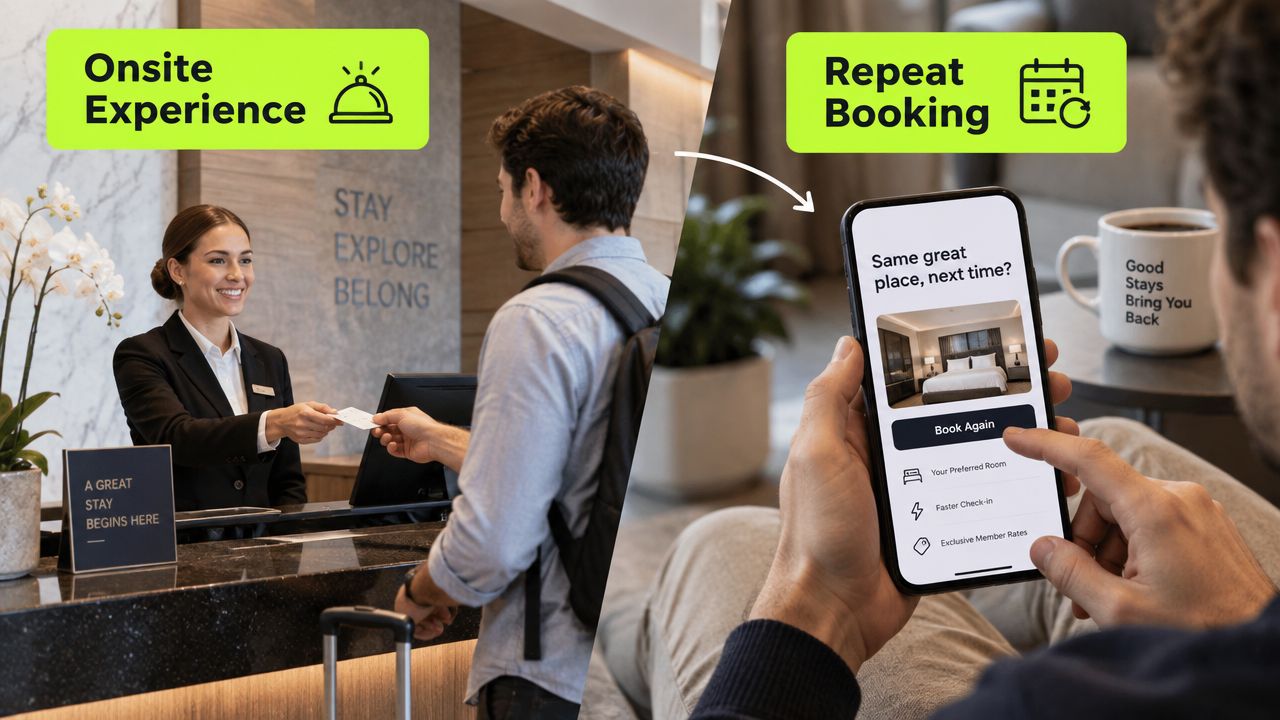
The organiser's judgement is formed before the first tee shot. They notice whether the arrival instructions were clear, whether staff know the group's name, whether breakfast is ready, whether scoring arrangements are understood and whether the meal arrives on time. These details determine whether the club feels dependable enough to use again.
A strong society day has one internal owner. That person checks the booking before arrival, confirms the final numbers and catering requirements with the relevant teams, briefs the starter and welcomes the organiser. Staff shouldn't make the organiser repeat information already provided during the sales process.
Treat the organiser as a returning account
The post-event process should begin while the experience is still fresh. Ask for concise feedback on the course, arrival, catering, pace, competition administration and value. Don't ask a vague question such as “Was everything okay?” Ask which part the organiser would change before booking next year.
A practical follow-up sequence looks like this:
- On the day: Thank the organiser, confirm any outstanding balance and note any service issue before it becomes a complaint.
- Immediately after: Send results or agreed event information, then request focused feedback.
- After a positive response: Offer a preferred date or equivalent period for the next event.
- Before the next planning cycle: Reconfirm the package, pricing, deposit and cut-off dates.
- After confirmation: Protect the slot and manage the booking through the same controlled process.
The timing of the rebooking offer should reflect the organiser's planning pattern and the club's diary. The key is to make the next booking easier than the first. Keep the previous format, guest preferences and catering notes in the CRM, then ask only for information that has changed.
A UK golf-club survey found that societies played an average of 2,466 rounds in 2024, according to the Hillier Hopkins Golf Clubs Report. The commercial lesson is to set a core annual society volume target and protect suitable slots for reliable organisers, rather than treating every booking as an unrelated transaction.
For broader thinking on retention strategies for growth, the same principle applies here: retain the organiser relationship, not just the player record. A society that returns regularly can stabilise midweek demand and generate referrals, but only if the club remembers preferences and delivers consistently.
Measuring Success and Commercial KPIs
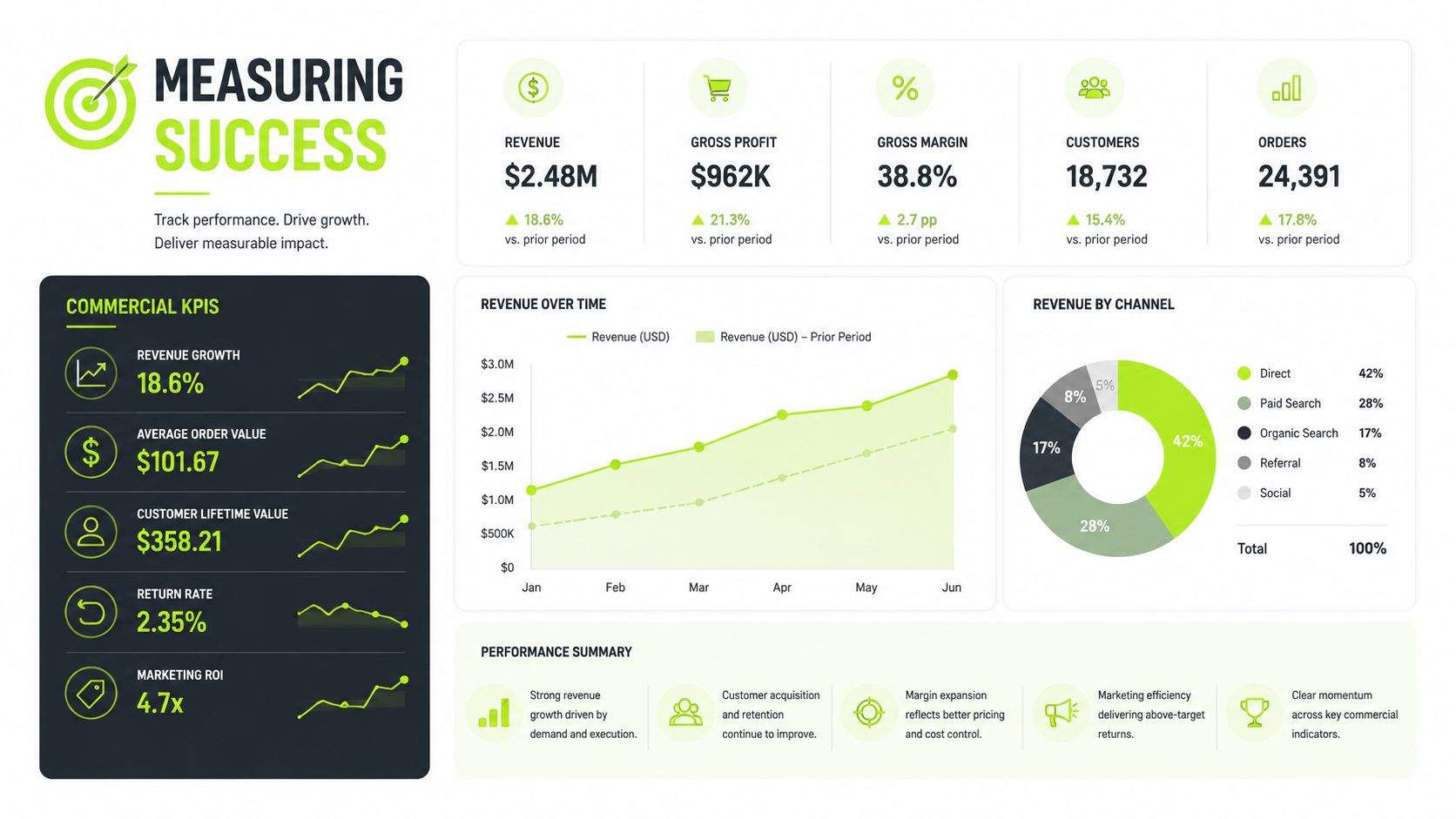
Society performance shouldn't be judged only by the total on the annual revenue line. That number tells the committee what happened, but not whether the club is generating enough demand, replying effectively, pricing correctly or losing bookings at the deposit stage.
A useful report follows the organiser from first contact to repeat booking. It should show both activity and commercial outcome.
Track the full pipeline
At minimum, report these measures by month and by source:
- Enquiries received: Count every society request, including phone, email, website and referral enquiries.
- Response time: Record the first acknowledgement and the first meaningful human response separately.
- Qualified opportunities: Identify requests with a viable date, group size and operational fit.
- Proposal rate: Show how many qualified enquiries receive a custom proposal.
- Booking conversion: Measure confirmed bookings against qualified opportunities, not just raw enquiries.
- Deposit conversion: Track how many provisional bookings become paid, confirmed bookings.
- Average group size: Compare expected and final numbers to identify planning and pricing issues.
- Revenue per society day: Include golf, catering and appropriate ancillary spend.
- Repeat booking rate: Record organisers who return, not merely individual golfers.
- Lost reasons: Use defined categories such as price, date unavailable, slow response, catering mismatch or no decision.
The source report matters as much as the total. A referral may produce fewer enquiries but stronger conversion, while a broad campaign may create volume that staff can't qualify. Use a consistent source field and record the confirmed value attached to each booking.
Find the actual constraint
Sector research reports that more than 80% of societies would book additional golf days if the process were easier, as discussed in industry coverage of society growth. That makes booking friction a measurable commercial issue. Ask organisers where the process slowed down, then compare their feedback with pipeline evidence.
A simple weekly review should answer:
- Which enquiries need action today?
- Which proposals have no recorded next step?
- Which provisional bookings are approaching their payment deadline?
- Which dates have capacity but insufficient qualified demand?
- Which lost reasons are increasing?
- Which organisers are ready for a repeat-booking offer?
Don't optimise every measure at once. If suitable enquiries are plentiful but response times are poor, improve ownership and acknowledgement first. If response is strong but deposits aren't paid, review package clarity and terms. If bookings are healthy but repeat business is weak, inspect the onsite experience and rebooking process.
A practical attribution guide for marketers can help teams think clearly about how activity contributes to revenue, but golf clubs should keep the reporting grounded in their own diary, staffing and margin realities.
The commercial objective is a visible pipeline, not a decorative dashboard. When managers can see where society bookings stall, they can fix the constraint, measure the result and move to the next one.
GolfRep helps golf clubs attract suitable society demand, organise enquiries in a visible sales process, automate timely follow-up and measure the route from first contact to confirmed and repeat bookings. If you want to identify the biggest booking constraint in your club and build a more predictable society pipeline, visit GolfRep.
Ready to tap into our proven growth system?