10 AI Marketing Automation Software Tools for Golf Clubs
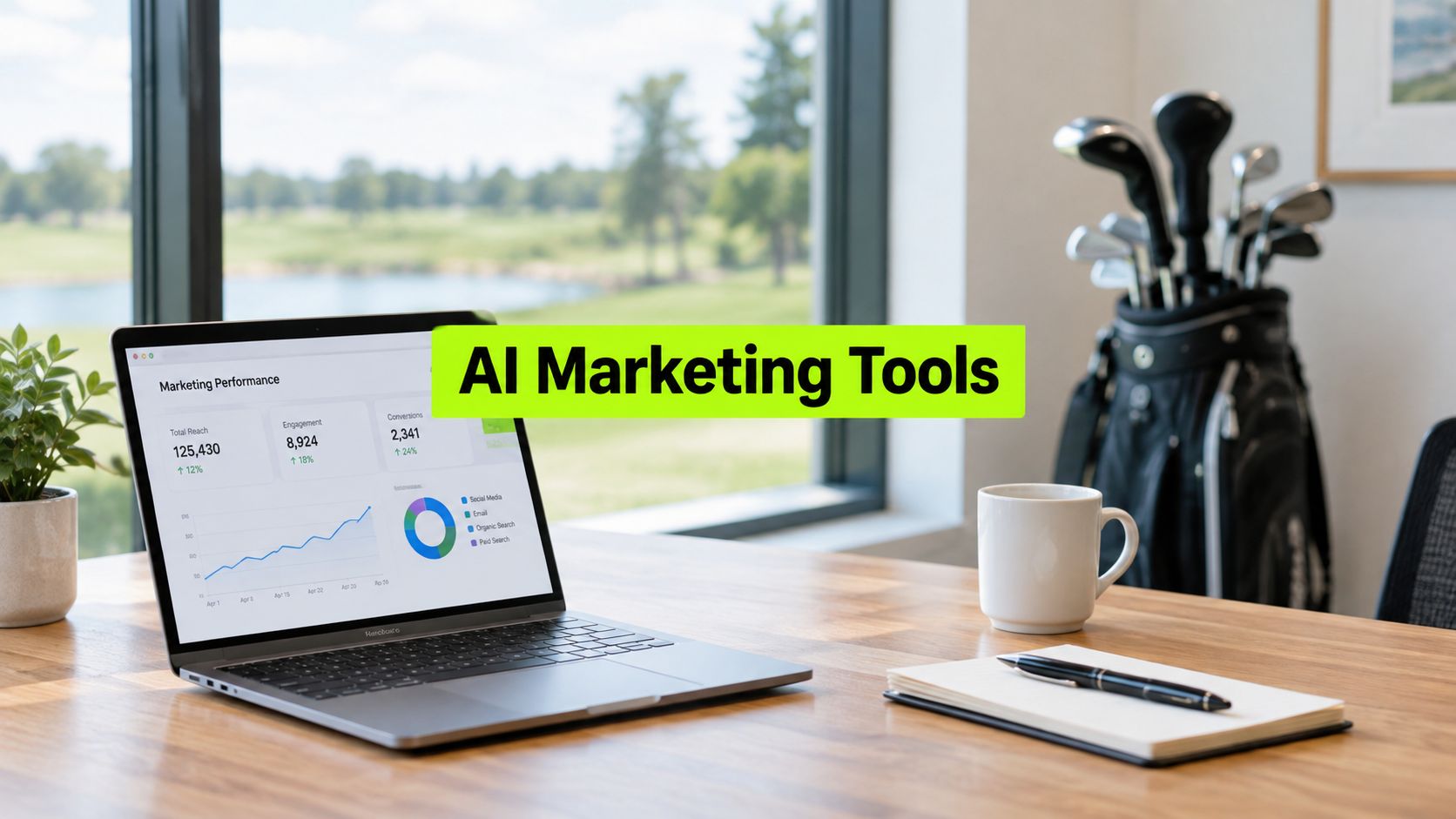
A committee meeting can turn a software question into a commercial decision. The general manager is asked whether the club should buy marketing automation, but the answer depends on the club's size, the team's capacity and the revenue streams that need attention. A membership club trying to improve the journey from enquiry to visit has different needs from a resort coordinating campaigns across several venues or an indoor golf facility encouraging repeat bookings.
UK marketers are already putting AI into day-to-day workflows. ISBA reported that the share of UK advertisers with at least one live generative-AI use case rose from 9% in April 2024 to 41% in July 2025, while efficiency was the primary purpose of AI strategy for 62% of advertisers (ISBA's report on generative AI adoption). For a club, the practical question isn't whether a platform has AI features. It's whether it can connect the right customer information to useful actions without adding work or creating governance problems.
The options below are grouped by fit, from connected platforms and flexible tools to enterprise systems usually better suited to larger operators. The test is how each supports membership, visitor revenue and the people expected to run it. For another perspective on customer retention systems, see this guide to loyalty programme tools for retailers.
1. HubSpot Marketing Hub
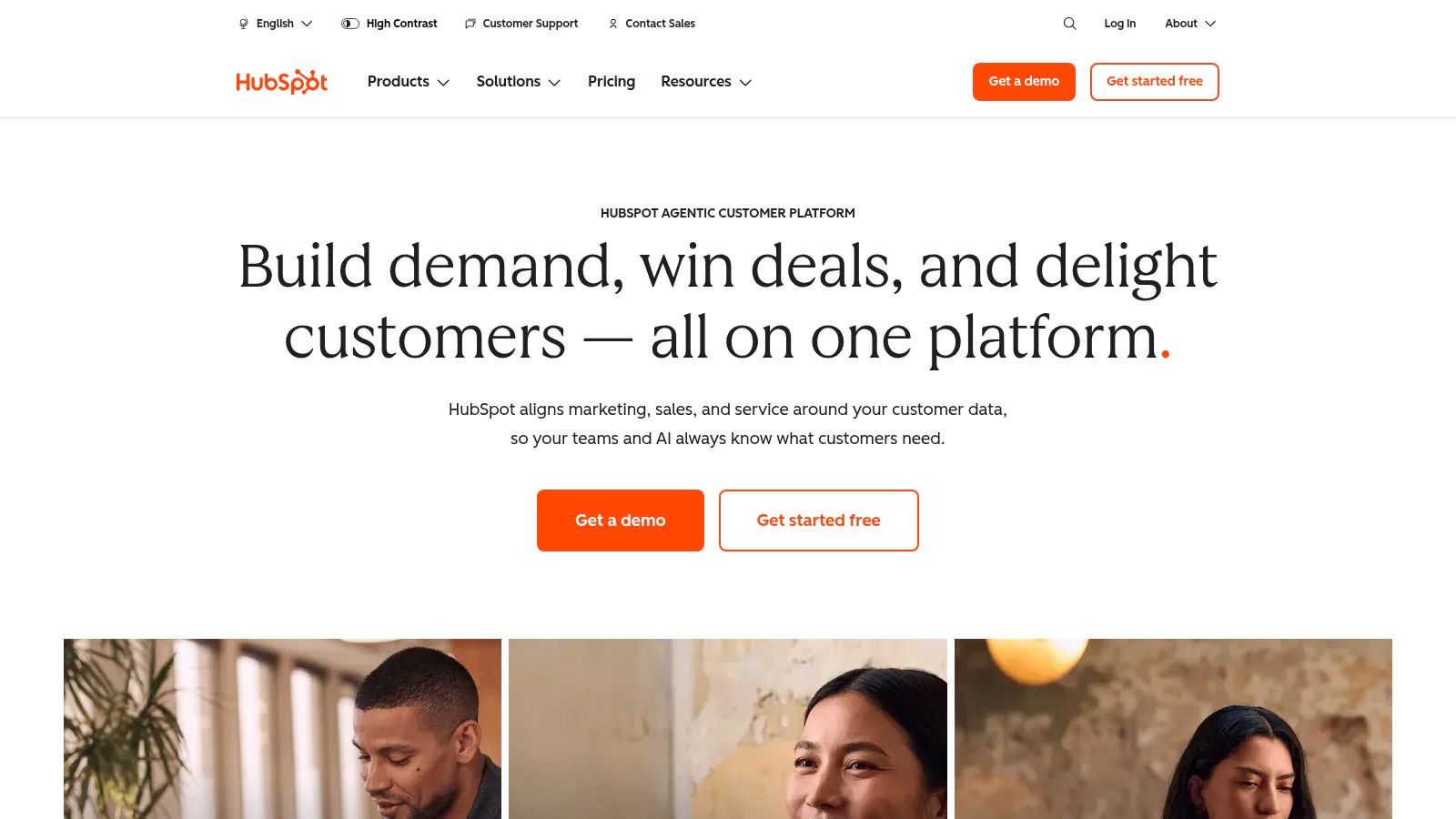
HubSpot Marketing Hub suits clubs that want customer records and marketing workflows together. Its CRM-connected workflows can support membership enquiries, visit bookings and follow-up, provided staff maintain accurate records. Breeze AI supports content and subject-line generation, audience segmentation and automated journeys. HubSpot also offers reporting to assess visibility in AI-generated search answers.
The practical benefit is continuity: membership interest, communication history and visit status can inform the next message. Forms, landing pages, advertising and reporting sit within the platform too. For visitor campaigns, test whether the records available give staff enough context to send relevant follow-up.
Where the trade-off shows up
A small team may have fewer systems to connect, but it still needs someone responsible for maintaining workflows.
Pricing and feature access can depend on tier, seats, credits and contact levels. Advanced capabilities may require higher tiers. A club manager should test the package against a membership or visitor workflow before paying for breadth better suited to a larger operation.
Practical rule: Build one complete journey, from enquiry form to booked visit and staff notification, before migrating a large contact database.
GolfRep's guide to golf club marketing automation provides golf-specific context; its guide to setting up club automation journeys is another reference for implementation. HubSpot's published AI capabilities and controls can help teams assess content and customer-data management. For copy-generation context, see AI content generation explained.
Use HubSpot Marketing Hub to check package details against that tested journey before committing.
2. Salesforce Marketing Cloud Engagement
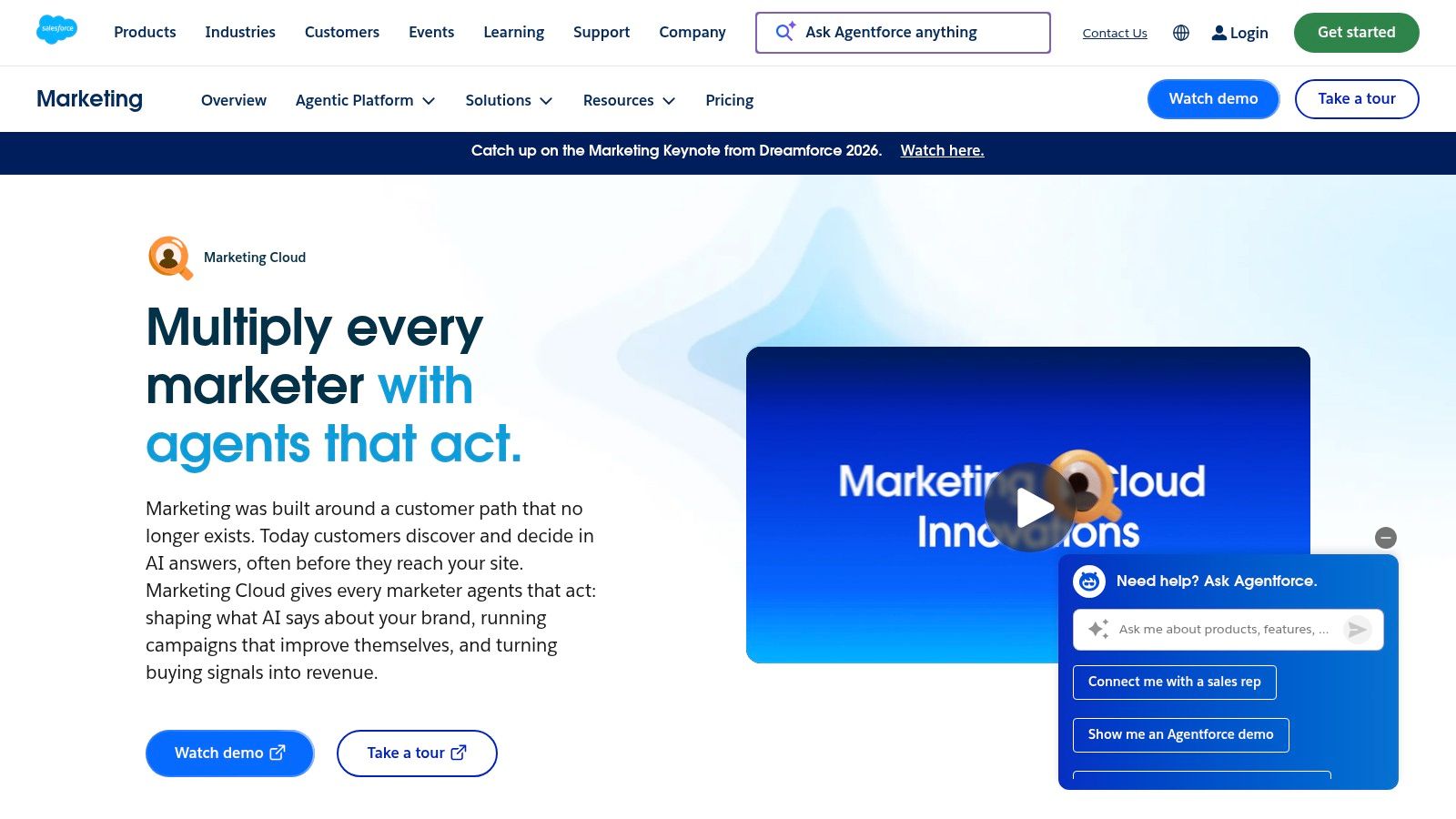
A multi-site golf group may need to coordinate campaigns across email, SMS and push notifications while maintaining shared customer data and oversight. Salesforce Marketing Cloud Engagement is built for that kind of cross-channel operation. Journey Builder supports triggered journeys, while Einstein features include predictive scoring, send-time optimisation, content support and personalisation.
The strongest case for this platform is usually an organisation already working with Salesforce Sales, Service or Data Cloud. In that setting, marketing journeys can draw on a wider operational picture rather than operating as a separate campaign database. Salesforce's UK research found that 65% of surveyed marketers struggled to respond promptly because they lacked customer context, and 84% said they were running generic campaigns (Salesforce's UK State of Marketing findings). That points to a practical requirement for any club system: automation needs accurate information such as enquiry source, interest, visit stage and engagement history.
A platform for scale, not spare capacity
Salesforce has deep ecosystem and governance capabilities, but smaller teams may find it administratively demanding. Pricing is generally provided through a sales process, and additional products or services may affect total cost. A club without a clear system owner risks buying journey tools that nobody has time to maintain.
Before considering it, map the data and workflows that need to connect across venues. If the requirements are limited to membership enquiries and visitor follow-up at one site, a lighter platform may be easier to run. Visit Salesforce Marketing Cloud Engagement.
3. Adobe Marketo Engage
Adobe Marketo Engage is aimed at organisations that need structured lead management, nurturing and performance analysis across complex marketing programmes. Its capabilities include lead scoring, account-based orchestration, AI-assisted personalisation and revenue attribution, with integrations across Adobe Experience Cloud.
For a golf operator, the potential fit is less about sending a regular membership email and more about coordinating distinct audiences and longer journeys. A resort group, for example, might need to manage prospects for different venues, accommodation offers, golf breaks and membership products while evaluating how each programme contributes to commercial outcomes. Marketo's analytics and programme controls can support that work where the organisation has enough operational complexity to justify them.
The implementation question
The platform's sophistication comes with a real management cost. Setup and ongoing operations may call for specialist support, and pricing is quote-based rather than publicly listed. That makes it harder for a small club team to assess value without first defining the processes and reporting it expects to run.
Marketo becomes easier to justify when an organisation already has marketing operations expertise and a clear need for detailed attribution or account-based activity. It's less convincing as a first automation platform for a single club with a short membership sales journey. Define the customer stages, ownership rules and reporting requirements before speaking to a supplier, then check whether the platform is proportionate to the work. For an overview of how AI-supported automation can fit into golf marketing, see GolfRep's article on AI-driven marketing automation. Visit Adobe Marketo Engage.
4. Klaviyo
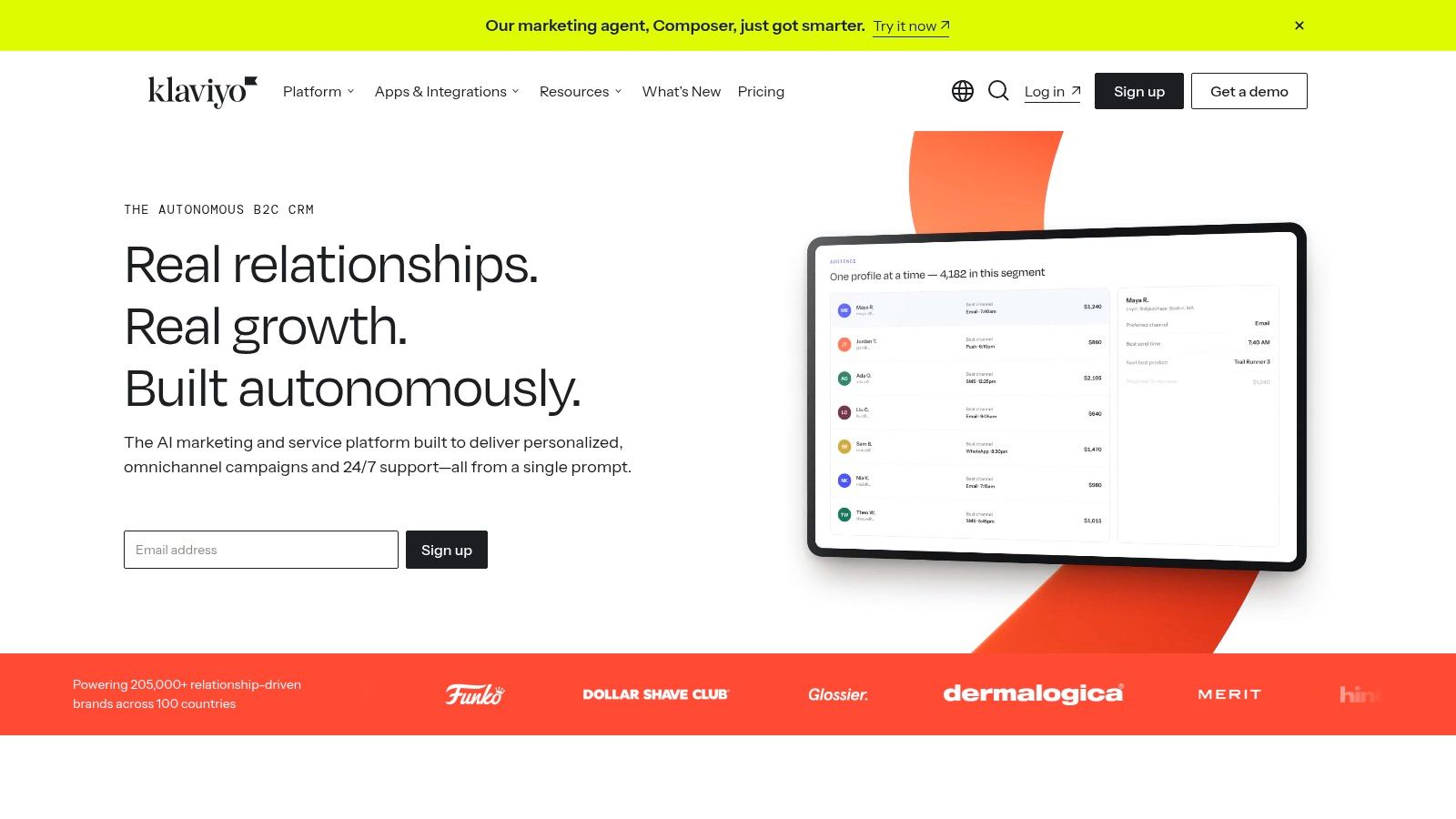
Klaviyo's strength is customer messaging shaped by behaviour and profile information. It combines email, SMS, WhatsApp and push messaging with predictive analytics and generative AI for campaigns and automated flows. Its features include predictive churn and lifetime-value analysis, product recommendations and tools for creating campaigns.
That emphasis can translate into useful ideas for golf businesses with frequent customer interactions. An indoor facility might want to distinguish first-time visitors from regular players and send relevant booking prompts. A club could segment visitor golfers by booking or engagement history, then invite suitable prospects to a repeat round or membership visit. Those journeys still depend on the quality of the customer data and the club's permission to contact people.
Good for messaging, less natural for complex sales
Klaviyo is designed with consumer and commerce use cases in mind. That can make it approachable for campaigns and customer engagement, but it may not provide the structure a club needs for a more involved sales pipeline with staff ownership, application stages and membership decisions. Contact and channel-based costs can also rise as the database and messaging activity grow.
Clubs should confirm that the platform can capture the statuses they need, not just send the communications they want. If the main requirement is segmented email rather than a full sales CRM, Klaviyo may be a reasonable contender. Read GolfRep's practical guide to golf club email marketing, and see an overview of SignalZen's email channel for another perspective on email communication. Visit Klaviyo.
5. ActiveCampaign
A small team often needs a workable automation builder more than a sprawling technology stack. ActiveCampaign combines email-focused automation with a lightweight CRM and Active Intelligence features for campaign creation, workflow guidance and analysis. Its visual builder, templates and predictive sending tools can help a club create journeys without needing a dedicated marketing operations department.
A practical membership workflow might start when someone submits a joining enquiry, assign the prospect to a staff member, send an acknowledgement and schedule a follow-up if no visit is booked. The club can then use the CRM to track progress and keep staff aware of which prospects need attention. The platform's AI tools may help build or refine campaigns, but staff still need to check that the content reflects the club's offer and tone.
Don't automate a process nobody owns. Decide who reviews new leads, updates statuses and handles replies before you switch on the workflow.
Check limits as the database grows
ActiveCampaign can suit small and mid-sized teams looking for email-centric automation, but plan limits and contact tiers matter. Entry-level plans may not include every feature, and costs can rise as the database expands. Its native CRM is also lighter than a dedicated sales platform, so clubs with more complex pipelines should test whether the available fields and reporting are sufficient.
The platform states that customer content isn't used to train its AI, a point administrators may want to consider alongside their own data and privacy requirements. Start with a single journey and review both staff workload and commercial outcomes before adding more branches. Visit ActiveCampaign.
6. SAP Engagement Cloud
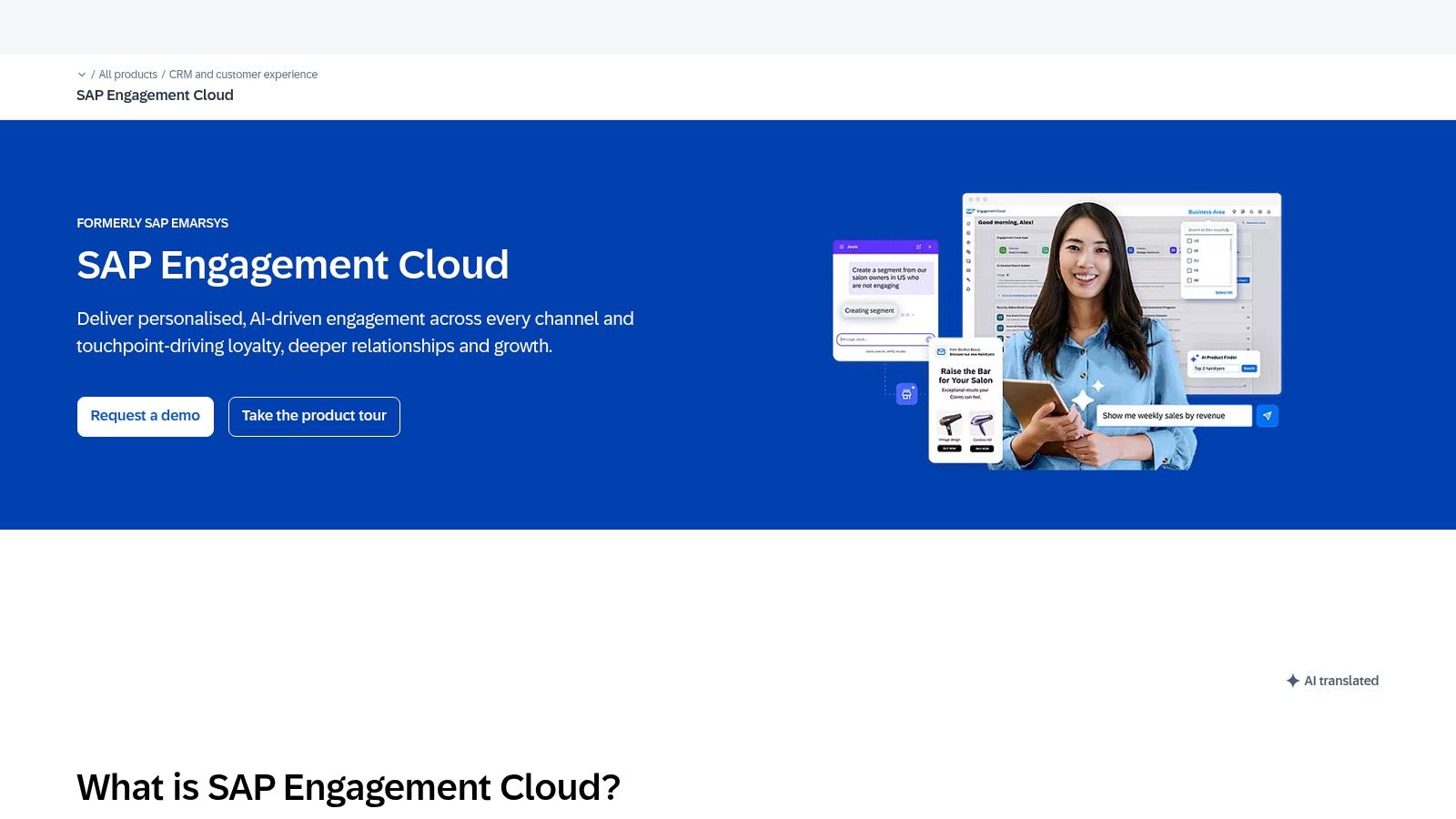
SAP Engagement Cloud, formerly SAP Emarsys, is an enterprise platform for coordinating customer engagement across email, SMS, push notifications and advertising. Its features include AI-supported segments and predictive recommendations, with integrations across SAP systems such as S/4HANA, Analytics Cloud and customer data platforms. Roles and permissions are designed to support organisations with more complex operating structures.
That makes it more relevant to a multi-brand or multi-region golf operator than to a single club working from a compact membership database. A group with several resorts may need shared standards for customer records and campaigns while allowing local teams to manage venue-specific communications. SAP connectivity can be valuable where other business processes already run on SAP.
Match the system to the operating model
The platform's potential strength is coordination across a large organisation. Its likely drawback for a smaller golf business is the implementation effort and specialist expertise required to make that coordination useful. Pricing is quote-based and usage-dependent, so a club should assess the full operating cost, not just the software licence.
Consider this platform when systems integration and permissions are genuine business requirements across sites. If the need is to acknowledge enquiries, promote visitor golf or remind staff to follow up, a more focused system is likely to be easier to manage. Visit SAP Engagement Cloud.
7. Dotdigital
Dotdigital combines customer data and marketing automation with AI-assisted content, personalisation and journey optimisation. Its tools support email, SMS and WhatsApp, alongside a drag-and-drop journey builder, send-time optimisation and ecommerce integrations. The platform may be relevant to clubs that want a UK-based supplier and a mix of customer communications in one environment.
For membership and visitor activity, the key test is whether the journeys can reflect how people engage with the club. A prospect who has visited for a taster session should not necessarily receive the same next message as someone who has only enquired about annual membership. Segmentation can help separate these audiences, while automation can make follow-up more consistent.
The operational trade-off: published pricing is limited, some packages require a quote, and advanced channels such as WhatsApp may be billed separately. Strong personalisation is only useful if the club captures reliable customer information and has a clear process for responding to replies. A journey builder can schedule communications, but it won't decide which membership proposition suits an individual or handle a nuanced conversation with a prospective member.
Dotdigital also offers ecommerce recommendations, which may be more useful to golf businesses selling products or packages online than to clubs focused solely on membership. Ask the supplier to demonstrate a complete workflow using the club's actual enquiry stages and channels, then confirm which functions and message costs are included. Visit Dotdigital.
8. Bloomreach Engagement
Bloomreach Engagement brings together customer data, AI orchestration and messaging. Loomi AI supports segmentation and personalisation, while the platform can coordinate email, SMS, WhatsApp and in-app messaging. Its real-time triggers and customer profiles may suit businesses that need to respond to online behaviour across web and app channels.
For golf, the fit depends on how much customer activity happens digitally and how many systems need to contribute to a unified profile. A golf resort with online booking, accommodation and other services may have more reason to connect web behaviour with customer communications than a club that manages most membership conversations directly with staff. A facility with repeat online bookings may also find behaviour-led messaging useful, provided the booking data is dependable.
A connected profile is only valuable when the team can act on it. Make sure staff can see the relevant booking or enquiry history, not just the automated campaign result.
Bloomreach's packaging can allow organisations to start with a channel or module and expand, but the pricing is quote-based and sensitive to profiles and usage. Some advanced AI capabilities may cost extra beyond the base offering. Clubs should scope their expected records, channels and triggers before agreeing a proposal, then check how additional usage would affect costs. Visit Bloomreach Engagement.
9. Braze
Braze is built for real-time customer engagement across mobile, web and messaging channels. Its Canvas journeys support cross-channel campaigns, while BrazeAI features cover areas such as content generation, quality assurance, decisioning and conversational engagement. Data and experimentation tools help teams coordinate activity across a connected digital experience.
This is a plausible option for a golf operator with a strong app or digital booking experience and the internal capability to connect customer data from different sources. It may be less practical for a club whose main customer interactions take place by phone, in person or through a straightforward website form. In that setting, more channels and decisioning options can create implementation work without improving the customer journey.
Data foundations matter
Braze offers developer extensibility and data tools, but the strongest results may depend on capable data engineering support. Pricing is quote-based, and editions or add-ons can vary. A smaller team should ask who will maintain integrations, test journeys and investigate failed data transfers after launch.
Start with a specific digital interaction, such as a booking action or a post-visit communication, and confirm that the relevant customer data can reliably trigger the next step. Don't select it solely because it supports real-time orchestration. The club needs a measurable use case and an owner who can keep the system working. Visit Braze.
10. Insider One
Insider One combines a customer data platform with AI-supported personalisation and omnichannel engagement. It brings customer profiles together and supports predictive targeting across web, app, email, SMS and WhatsApp. For organisations with substantial digital activity, this can help coordinate messages based on customer behaviour across multiple touchpoints.
The potential golf use case is a multi-site operator with varied digital interactions, such as online booking, resort stays and app engagement. A unified profile could help distinguish a visitor who books regularly from someone whose activity suggests interest in membership. Staff would still need to check that the data is accurate and that automated targeting is appropriate.
Consider complexity and scale
Insider One's pricing isn't public and requires a sales discussion. The strongest value is likely to come where volumes or use cases justify the platform's breadth, rather than where a single club needs basic email follow-up. Its on-site and in-app personalisation features may be useful for digital operators, but they won't replace a clear sales process or a staff member who can answer questions.
Ask for a demonstration using a real club journey, from digital interaction through to booking or membership outcome. Clarify how profiles are matched, how consent and preferences are handled, and what technical support the club would need to maintain integrations. Visit Insider One.
Top 10 AI Marketing Automation Platforms Compared
| Platform | Core Capabilities | Best Suited For | Standout Value | Pricing and Considerations |
|---|---|---|---|---|
| HubSpot Marketing Hub | CRM-linked campaigns, AI tools, forms and journey automation | Teams seeking CRM and marketing in one platform | Connected campaign tracking and reporting | Varies by seats, contacts, credits and plan; advanced features cost more |
| Salesforce Marketing Cloud Engagement | Email, SMS and push journeys with Einstein AI | Larger organisations already using Salesforce | Real-time triggers and enterprise governance | Quote-based; can require significant administration |
| Adobe Marketo Engage | Lead nurturing, scoring, account-based marketing and attribution | Teams managing complex marketing journeys | Advanced automation and performance analytics | Quote-based; implementation may need specialist support |
| Klaviyo | Email, SMS and other messaging with predictive analytics | B2C and commerce-focused brands | Fast setup and strong ecommerce integrations | Costs scale with contacts and channels; less suited to complex B2B |
| ActiveCampaign | Visual automations, email campaigns and lightweight CRM | Small and mid-sized teams | Powerful automation with relatively fast deployment | Contact-based pricing; features vary by plan |
| SAP Engagement Cloud | Omnichannel journeys, AI segmentation and SAP integrations | Multi-brand or multi-region enterprises | Enterprise permissions and SAP connectivity | Quote-based; implementation often needs partner expertise |
| Dotdigital | Cross-channel journeys, AI-assisted content and personalisation | Retail, membership and UK-based organisations | UK vendor with ecommerce integrations and 24/7 support | Pricing varies; some channels may cost extra |
| Bloomreach Engagement | CDP, AI segmentation and real-time messaging | Ecommerce teams focused on personalisation | Flexible channel and module options | Usage-based, quote-led pricing; some AI features may cost extra |
| Braze | Real-time cross-channel journeys, AI tools and experimentation | High-scale digital engagement teams | Developer extensibility and experimentation tools | Quote-based; strong data engineering can help maximise value |
| Insider One | Unified profiles, predictive targeting and omnichannel personalisation | Enterprises focused on web and mobile experiences | Personalisation across web, app and messaging | Pricing not public; strongest value may require higher volumes |
Matching the Platform to Your Club's Next Commercial Step
The best AI marketing automation software for a golf club is the system that supports its next commercial step and can be managed consistently. A club focused on membership may need customer records, enquiry stages and visit follow-up in one place. An operator focused on visitor and tee-sheet revenue may prioritise booking data, repeat-visit segments and timely campaigns. A small team may need fewer features, clearer ownership and less maintenance more than it needs enterprise-grade orchestration.
Don't treat automation as a substitute for the people and processes behind it. UK Business Data Survey findings show the integration challenge: among businesses using AI, integrated users were more likely to analyse and collect data than users whose AI tools weren't integrated with existing systems (UK Business Data Survey 2026). For a club, that makes data ownership and system connections part of software selection. Decide which system holds the customer record, who can access it, how staff will correct errors and what happens when someone objects to marketing.
Privacy needs to be designed into the workflow. The Information Commissioner's Office says lead generation and direct marketing must be fair, lawful and transparent, and people can object to direct marketing, including profiling used for it (ICO guidance on collecting information and generating leads). Explain how information is used, provide a clear route to object and retain human oversight when a system prioritises prospects or triggers follow-up.
Before buying, run a short trial around one customer journey. Agree how you'll assess it: track whether the process supports renewals or visitor conversion, whether staff hours are saved, and whether customer records and hand-offs are more reliable. Use measures that reflect the club's objectives, such as booked visits, membership progress or repeat bookings, rather than judging the system by message volume alone.
The commercial lesson is straightforward: choose software after identifying the constraint. GolfRep helps golf businesses map customer acquisition, sales processes, CRM, follow-up, conversion and retention so that clubs can see where a change is likely to matter before committing to a platform.
GolfRep works with golf clubs and facilities on commercial growth systems that connect demand generation, AI-supported lead qualification, CRM and follow-up. If you want to map the workflow that would make a real difference at your club before buying software, visit GolfRep.
Ready to tap into our proven growth system?