Mastering Golf Club Marketing Automation for Predictable Growth

When you hear "marketing automation," you might think it's all about finding more leads. But for golf clubs, the real power lies in building a smarter system to convert the interest you already have. It’s about swapping out inconsistent, manual follow-ups for structured, immediate, and personal communication that turns a trickle of enquiries into a reliable pipeline of new members.
The True Challenge In Growing Your Golf Club

For many golf club managers, the default response to flat membership numbers is to open the marketing wallet. The thinking goes: "We need more members, so let's ramp up the advertising spend." More social media ads, more print campaigns, more promotions for the next open day. The goal is simple: get more people to enquire.
But from our experience working with clubs across the UK, we’ve seen that this isn't where the real problem lies. The biggest bottleneck for most isn't a lack of interest; it’s the lack of a system for handling, responding to, and ultimately converting the enquiries that are already coming through the door.
Think about your current process for a moment. Someone fills out a form on your website. What happens next? Too often, that email lands in a busy general inbox, monitored by a manager or secretary who is already juggling a dozen other priorities.
A response might not go out for hours, sometimes even days. And when it does, it’s usually a generic, one-size-fits-all email with a price list attached. If that person doesn't reply right away, they're often forgotten. It's a manual, reactive approach that leaves a huge amount of potential revenue on the table.
Shifting From Manual Effort To Systemised Growth
The trouble with handling enquiries manually is that it all hinges on one person's availability and memory. It’s inconsistent, a nightmare to track, and impossible to scale. A busy week at the club or a key staff member on holiday can grind your entire new member pipeline to a halt.
This is where applying the principles of golf club marketing automation changes the game. It is not about replacing people with robots. It is about empowering your team with a system that guarantees every single enquiry gets a professional, timely, and relevant response, 24/7.
The goal isn’t an endless flood of new leads. It’s ensuring that every prospective member who raises their hand feels seen, valued, and professionally guided towards making a decision.
An automated system doesn't get distracted. It doesn't forget to follow up. It simply executes a carefully planned communication strategy, time after time, freeing up your team to focus on the human touches that matter most, like hosting fantastic club tours and welcoming new members personally.
The Real Cost of Inconsistent Follow-Up
Think about the financial impact of a disorganised enquiry process. If you lose just one or two potential members each month because of slow replies or sloppy follow-up, the lost annual subscription fees start to add up very quickly.
That person who enquires on a Friday evening? They are unlikely to hear back until Monday morning. By then, their initial excitement has probably faded, or worse, they’ve already booked a visit at a competitor club down the road that replied instantly.
Effective automation tackles this head-on by creating a clear framework for every enquiry.
- Immediate Acknowledgement: Every form submission triggers an instant, personalised confirmation. This small touch reassures the prospect their enquiry has been received and you're on the case.
- Structured Nurturing: A pre-planned sequence of emails can then share helpful information, answer common questions, and nudge them toward the next logical step, like booking a tour.
- Pipeline Visibility: Every lead is tracked in a central system, often a CRM, giving you a crystal-clear view of how many prospects are at each stage of their journey.
By putting these systems in place, you move from guesswork to a predictable engine for growth. You start building a pipeline that reliably converts casual interest into committed members, not by spending more on ads, but by professionally handling the demand you already have.
Building Your Growth Engine on a Golf-Specific CRM
Let’s be honest: you can’t automate anything without a solid data foundation. We have walked into countless golf clubs that are still running their entire membership pipeline on a jumble of spreadsheets, paper sign-up sheets, or worse, the manager’s memory. This is not just disorganised; it’s a black hole where high-value leads disappear forever.
When you're relying on manual lists, you have zero visibility. You have no real idea where your best enquiries are coming from, how long they have been waiting for a call back, or what they’ve been told so far. The only way to get out of this reactive mess is to build a proactive system.
This is where a Customer Relationship Management (CRM) system comes in. Think of it as the single source of truth for every prospective member. It’s the central hub, the solid ground you need before you can even think about building effective automations.
Capturing the Right Data for Automation
A CRM is so much more than a digital address book. It needs to be a living, breathing record of every single interaction someone has with your club. If you want your automations to actually work, you need to be disciplined about capturing the right information from the very first click.
Without this data, every lead just gets the same generic "thanks for your enquiry" email, which we all know rarely gets the job done. With it, you can start treating each person like an individual, even when the system is doing all the heavy lifting.
Here are the non-negotiables, the data points your CRM absolutely must capture for every new enquiry:
- Lead Source: Where did they find you? Was it a Facebook ad, a Google search, your website’s contact form, or a member referral? Knowing this is the only way to figure out which marketing channels are actually worth your time and money.
- Enquiry Date: This one is critical. The clock starts ticking the second they reach out. This small piece of data is the foundation for tracking your all-important enquiry response time.
- Membership Interest: Are they after a 7-day, 5-day, or maybe a corporate package? This allows you to segment them from day one and send them information that’s actually relevant.
- Engagement History: A good system will automatically log every email they open, every link they click, and every page they visit on your website. This is gold. It tells you exactly how engaged they are and what parts of your club they care about most.
A properly configured CRM turns a pipeline of guesswork into a clear, visual process. You can see at a glance who needs a follow-up call, who’s ready for a tour, and who’s gone cold. It stops valuable prospects from ever slipping through the cracks again.
Why a Central System Prevents Lost Revenue
Let's face it, joining a golf club isn't a cheap decision, and it’s getting more expensive. With 87% of UK clubs reporting fee increases, firing off a single email with a price list attached just doesn’t cut it anymore. People are taking longer to decide, and they need more convincing that your club offers real value for their investment.
This is exactly where a CRM-driven system proves its worth. It gives your marketing automation the power to send personalised follow-up sequences that tackle those cost objections head-on by showcasing your club's unique benefits, community, and social life.
A central system gives you the visibility to manage this longer sales cycle. For instance, you might see that a prospect has opened three emails about the social calendar but still hasn't booked a visit. That’s a perfect trigger for an automated, personal-sounding invitation to an upcoming club event, a level of detail a spreadsheet could never handle.
For any club serious about building a reliable pipeline of new members, getting a proper CRM in place is the most important first step. To dig deeper into what to look for, you might want to read our guide on choosing a golf CRM system. A system like this doesn't just store data; it empowers you to act on it intelligently, giving every single enquiry the best possible chance of becoming a long-term, loyal member.
Designing Automated Journeys That Convert Leads Into Members
Having a CRM packed with data is a great first step, but the real magic happens when you put that data to work. This is where your strategy turns into action. A well-designed automated journey guides a potential member from their very first flicker of interest all the way to signing on the dotted line, without your team having to manually send every single email.
The beauty of a structured system is that it’s always on. An enquiry that comes in at 10 PM on a Saturday night gets the exact same immediate, professional response as one that lands at 10 AM on a Tuesday. That consistency is crucial for building trust and showing a level of organisation that makes your club stand out.
This is all about turning that initial interest into structured data you can actually use for personalised communication.

The key takeaway here is that effective golf club marketing automation isn't a single action. It's a carefully planned sequence, moving from simple data capture to organised storage and, finally, to intelligent, personal conversations.
The Critical First 24 Hours
Those first few moments after someone gets in touch are, by far, the most important. Their interest is at its absolute peak, and your response time sets the tone for their entire experience with your club. A slow or generic reply sends a clear message: you’re either disorganised or too busy for them.
An automated system flips this script entirely.
To see the difference, let’s compare the old way with the new. Many clubs still rely on a staff member to manually sift through an inbox and reply when they have a spare moment, which is a recipe for missed opportunities.
Manual VS Automated Enquiry Handling
The contrast is stark. An automated approach ensures that every single lead feels valued from the second they reach out. This builds momentum and dramatically increases the likelihood of a positive outcome, helping you understand why some golf club leads don’t convert while others do.
Building Journeys for Specific Scenarios
Of course, not all enquiries are created equal, so your follow-up shouldn’t be a one-size-fits-all email. A truly robust automation strategy involves creating different communication paths, or "journeys", based on what each prospect is actually interested in. This is called segmentation, and it's the secret to making your messages feel personal and relevant.
You can design specific sequences for all your common enquiry types, ensuring every person gets information that speaks directly to their needs.
Here are a couple of real-world examples.
Example Journey: Booking a Club Tour
- Capture: A prospect fills out your "Book a Tour" form.
- Instant Response: They immediately get a confirmation email with a link to your online calendar (Calendly is great for this) to pick a time that suits them.
- Reminders: 24 hours before their tour, they receive an automated email and SMS reminder. This one simple step can slash no-shows.
- Follow-Up: A few hours after the tour, an automated thank-you email is sent, maybe with a direct link to the membership application.
Example Journey: Trial Membership Promotion
- Capture: A golfer signs up for your 1-month trial membership offer.
- Welcome: They are instantly added to a 4-week email journey designed to help them get the absolute most out of their trial period.
- Nurturing: Each week, they get an email highlighting a different part of the club: the social calendar, the pro shop, an upcoming competition.
- Conversion: In the final week, the messaging shifts to focus on the benefits of full membership, with a clear call-to-action to sign up.
The real power of this approach lies in its consistency. Every single lead for a specific offer receives the same high-quality, professional nurturing, every single time. It removes human error and makes sure no opportunity is ever missed.
Why Segmentation Beats Generic Emails Every Time
By segmenting your leads right from the start, you can tailor your messaging with a level of precision that manual processes just can't match. Sending someone interested in a flexible 5-day membership a long email about the perks of the full 7-day package is a complete waste of their time and your effort.
Instead, your system can have distinct tracks for each membership category. Someone asking about corporate membership gets information about hosting clients and team events. A parent of a potential junior member receives details about coaching programmes and safeguarding policies.
This relevance shows you’ve listened. It transforms your communication from a generic broadcast into a helpful, one-to-one conversation, building a strong foundation for a long-term member relationship before they've even set foot in the clubhouse.
Measuring and Optimising Your Automation System
Building an automated system is a huge step forward, but it’s not a ‘set and forget’ solution. Think of it like a performance engine; to get the most out of it, you need to give it regular check-ups and fine-tune it based on what the data is telling you.
This isn’t about getting bogged down in vanity metrics like email open rates. It's about zeroing in on the numbers that directly impact your club’s bottom line. The whole point is to shift from guesswork to data-driven decisions. A well-organised system will show you exactly which parts of your membership journey are firing on all cylinders and which ones are letting you down. It’s this process of continuous improvement that turns a good system into a great one.
Focusing on the Metrics That Matter
To understand what’s really working, you need to track the right Key Performance Indicators (KPIs). These are the specific, no-fluff metrics that give you a clear, unbiased picture of how your growth engine is performing. From our experience working with clubs, there are three that stand head and shoulders above the rest.
These are the numbers that should have a permanent home on your dashboard, giving you an at-a-glance health check of your entire membership pipeline.
- Average Enquiry Response Time: This tracks the exact time, in minutes or hours, from the moment a prospect hits 'submit' on a form to when they get their first meaningful message from you. A solid automation setup should hammer this down to under 5 minutes, a speed that’s just not humanly possible to maintain consistently.
- Lead-to-Visit Conversion Rate: This is a crucial one. It tells you what percentage of qualified leads actually book a tour or visit to the club. It's a direct measure of how well your initial follow-up emails and texts are doing their job of creating real engagement and getting people through the door.
- Cost Per New Member: This is the ultimate bottom-line figure. It’s a simple calculation: total marketing and sales spend divided by the number of new members who sign up. The goal, always, is to drive this cost down by making your automation and conversion processes more efficient over time.
By keeping a close eye on these three KPIs, you get complete transparency from the very first click all the way through to recurring revenue. It replaces vague feelings about "how busy we are" with cold, hard facts about what's actually driving growth.
Building Your Performance Dashboard
All the data needed for these KPIs should already be sitting inside your CRM. The next step is to bring it to life in a simple, easy-to-digest dashboard. This does not have to be a complex, custom-coded project; most modern CRMs like HubSpot or ActiveCampaign have built-in reporting tools that make this quite straightforward.
Your dashboard becomes the single source of truth for the club's growth. It lets you, your manager, or the committee see exactly how things are performing in an instant, without anyone having to dig through spreadsheets or chase you for a manual report.
This central view gets everyone on the same page, making strategic conversations far more productive. It helps you properly understand the real ROI of golf club marketing by connecting every action to a tangible result.
A Practical Approach to Continuous Improvement
Once you have that clear visibility of your KPIs, you can start making small, incremental tweaks to improve them. This is where the simple but powerful idea of A/B testing comes in. It’s all about creating two versions of something, an email, a text, a landing page, to see which one performs better.
You don't need to be a marketing guru to run simple tests that can deliver surprisingly big wins. The secret is to change only one thing at a time. That way, you know for sure what caused the change in results.
Simple A/B Tests You Can Run:
- Email Subject Lines: Try a straightforward subject line like "Your Enquiry to Oakwood Golf Club" against something more compelling, like "Ready to Play at Oakwood Golf Club?". See which one gets more people to open the email.
- Calls-to-Action (CTAs): In the email that prompts people to book a tour, test a button that says "Book Your Tour" against one that reads "See Available Times". You would be amazed how a small wording change can affect click-through rates.
- Follow-Up Timing: If your standard nurture sequence sends a follow-up email after two days of silence, test a version that waits three days instead. You might find that little bit of extra breathing room gives people more time to consider the offer.
Making these small, data-led adjustments is how you achieve long-term success. Every test gives you a valuable piece of insight, allowing you to refine your system bit by bit until it becomes an incredibly efficient and predictable engine for growing your membership.
How UK Golf Clubs Are Really Driving Growth With Automation
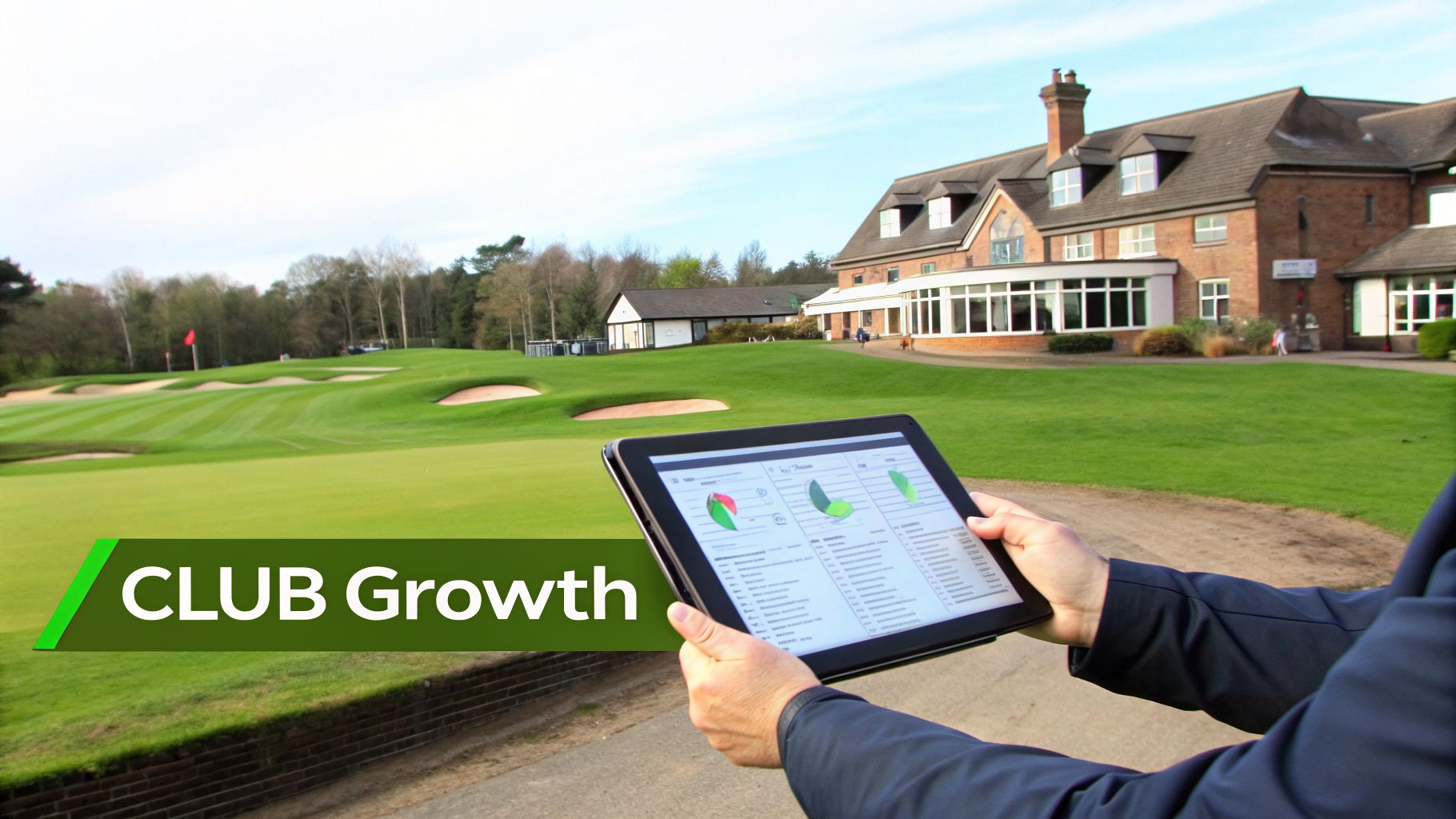
It’s one thing to talk about marketing automation in theory, but what does it actually look like on the ground? The real value isn’t in the tech itself, but in how it solves the day-to-day headaches that club managers and committees know all too well.
The following examples come directly from our work with UK clubs, helping them switch from manual, often disjointed methods to a structured system that delivers predictable growth. It’s all about getting tangible results.
Scenario One: A Private Members' Club Buried in a Waiting List
We worked with a prestigious members' club in the Home Counties that had a long waiting list, all managed on a simple spreadsheet. On the surface, a full waiting list sounds like a great problem to have, but in reality, it was pure chaos.
Communication was patchy at best, often left to volunteers. There was no real system to figure out who was still keen to join and who had moved on. They couldn't tell if a candidate from three years ago was more engaged than someone who applied last month, making the invitation process feel inefficient and almost arbitrary.
Our first step was to get their entire waiting list into a proper CRM. From there, we built a straightforward automated sequence to re-engage every single candidate.
- It started with an initial email asking them to confirm they were still interested.
- Anyone who opened or clicked was tagged as ‘active’ and automatically added to a quarterly nurture sequence featuring club news and updates.
- Those who didn't respond after two automated nudges were flagged as ‘inactive’ for the committee to review later.
This simple workflow cleaned their data almost overnight, giving them a clear, prioritised list of the most enthusiastic candidates. It also professionalised their approach, making everyone feel valued instead of just a name forgotten on a spreadsheet.
Scenario Two: A Golf Resort Trying to Unify Its Brand
A well-known resort with three fantastic but distinct courses had a completely different challenge. Enquiries for each course were handled by different people, which created a confusing and fragmented experience for potential members.
Response times were all over the place, the tone of the emails was inconsistent, and there was zero central oversight of the membership pipeline. The commercial director couldn't track performance across the group or see which course was converting enquiries most effectively, which made strategic planning next to impossible.
We brought all their lead management under one roof in a single CRM and built a standardised automation framework that still allowed for flexibility.
While the core follow-up process was consistent for brand identity, automated rules would tailor the content based on which course the prospect enquired about, ensuring the messaging always felt relevant.
The results were immediate. The brand experience became polished and professional, no matter which course a prospect contacted first. For the first time, the management team had total pipeline visibility via a shared dashboard, letting them accurately track conversion rates and response times. It gave them a predictable system for growth that could finally be managed and optimised from the centre.
This kind of system isn't just about bringing new people in; it's critical for keeping them. The average UK club attracts around 75 new joiners a year, but also loses about 63 in the same period. Good automation is just as important for onboarding and engaging your members to reduce that churn. You can dig deeper into these figures in the latest golf club survey.
Common Questions About Golf Club Automation
Switching to an automated marketing system is a big step. For golf club committees and managers already juggling a hundred things to keep members happy, it's natural to have a few questions. Let's walk through some of the most common ones we hear from clubs just like yours.
We want to give you straightforward, real-world answers to show you exactly how this all works in practice.
How Much Time Does This Really Take to Manage?
This is usually the first thing everyone asks, and for good reason. The answer is probably less than you think.
Yes, there is an upfront investment of time to get the strategy right and build out the core automations. But once it's up and running, the day-to-day management is surprisingly minimal. The system works tirelessly in the background, 24/7, meaning your team isn't spending its days chasing cold leads or remembering to send follow-up emails.
Their focus shifts from manual, repetitive tasks to what they do best: engaging with genuinely interested people who are already primed for a conversation. Most of the ongoing "work" is just keeping an eye on the dashboard and picking up the phone when a qualified prospect is ready to talk.
Will This Make Our Club Feel Impersonal?
It's a completely valid concern. Nobody wants their club to feel like a faceless corporation. The truth is, when done right, automation actually makes your communication more personal, not less. Poor automation is generic; good automation is incredibly specific.
By tapping into the data you already have, like whether someone is interested in a 7-day membership versus a flexible one, you can send messages that resonate because they’re directly relevant to what that person wants.
Good automation doesn't replace the human touch; it creates more opportunities for it. By handling the repetitive tasks, it frees up your team to deliver that crucial one-to-one service when it matters most: during a club tour, a welcome call, or a taster round.
What If We’re Not Very Tech-Savvy?
You don’t need to be. Modern automation platforms are built to be user-friendly, not just for developers. At GolfRep, we manage the entire technical build from start to finish. We hand you a system that’s ready to go from day one.
We then provide hands-on training for your team, focusing only on the parts they'll actually need to use. Think of it like this: we build and maintain the engine; you just need to know how to drive the car. We make sure you're comfortable behind the wheel, viewing performance dashboards and updating a prospect’s status, without ever needing to worry about what's under the bonnet.
Ready to stop losing leads and build a predictable membership pipeline? At GolfRep, we build growth systems that combine intelligent lead generation with the automated, professional follow-up needed to convert interest into long-term members.
Ready to tap into our proven growth system?