The Masters and How golf clubs should leverage big events

The Masters weekend creates a familiar scene at many UK clubs. The bar is full, members stay longer, social channels wake up, and a few new faces start asking about green fees, trial rounds, lessons, or joining.
That activity feels like momentum. Sometimes it is. But for most clubs, it’s still only attention, not growth.
The mistake is treating the event itself as the strategy. A viewing night, a social post, and a small promotion can create interest, but they don’t convert that interest on their own. The core commercial question is simpler than most clubs make it. When someone shows intent during a major golf event, do you have a system to capture them, respond quickly, qualify them, and move them towards a visit or a membership decision?
That’s where The Masters and How golf clubs should capitalize on big events becomes practical, not promotional. Big events already do the hard work of creating emotional energy. The clubs that benefit are the ones that turn that short window of attention into a measurable pipeline.
From Event Hype to Predictable Revenue
Sunday night looks promising. The lounge is full for The Masters, guests are asking about membership, a few visitors want to come back, and the bar team has scribbled names on booking sheets. By Tuesday, half of those enquiries are sitting in inboxes, nobody knows who called whom, and the moment has passed.
That pattern is common in UK clubs. The issue is rarely demand during a major. It is what happens in the 72 hours after interest shows up.

A Masters screening can fill a room. A timely post can drive direct messages. Website traffic to membership or visitor pages often rises during big tournament weeks. Revenue only follows if the club can capture those enquiries properly, route them to the right person, and follow up while intent is still high.
That is the part generic event advice often skips. It spends plenty of time on attendance, atmosphere, and social engagement. The commercial result usually depends on quieter systems in the background: CRM fields set up properly, automated replies that buy your team time, lead tags that separate members from visitors, and follow-up tasks that do not rely on memory. For clubs planning those systems around major weeks, this golf club event marketing guide is a useful companion.
Why viewing events rarely fix the real commercial gap
A viewing event can still do useful work. It gives members a reason to bring guests, creates a timely excuse to promote the club, and can lift food, drink, retail, and lesson interest over a short period.
The trade-off is simple. High footfall creates more admin at exactly the moment many clubs are least prepared to handle it.
Commercial value drops quickly when:
- Guest details stay on paper and never reach the CRM
- One membership enquiry form feeds every type of lead, so staff cannot prioritise properly
- Enquiries sit in shared inboxes without a named owner
- Follow-up depends on who is on shift
- No one can report which event contacts became visits, lessons, tee times, or members
That is why some clubs feel busy during major weeks but struggle to point to any clear return a month later.
Practical rule: If your club cannot show source, owner, next action, and outcome for an event lead, you are not running a revenue process. You are collecting interest and hoping staff remember what to do with it.
What a systems-first club does differently
The stronger model is operational, not promotional. Before the first event post goes live, the club decides what will happen when someone enquires, books, replies, or clicks.
In practice, that usually means matching the enquiry to the next commercial step instead of sending everyone the same generic response.
| Event interest type | Best next step |
|---|---|
| Membership enquiry | Book a club visit or membership call |
| Visitor enquiry | Convert to a tee time, then trigger a return-play follow-up |
| Beginner interest | Route to lessons or a beginner pathway |
| Lapsed contact | Send a targeted invitation based on previous activity |
| Corporate interest | Move to an event, hospitality, or partnership conversation |
That distinction sounds obvious, but many clubs still miss it. A guest asking about flexible membership needs a different message, timeframe, and owner than someone looking for a fourball next Saturday.
Attention fades fast. Process has to be quicker.
Interest during The Masters is emotional. People watch the tournament, talk about golf all weekend, and decide they want to play more, come back, or finally look at joining.
If the response is slow, vague, or manual, that intent cools off before a sales conversation starts.
A club that wants predictable revenue needs five things working together:
- One clear offer tied to the event
- One capture path for each main enquiry type
- One system of record where every lead is visible
- One follow-up standard with timing, ownership, and message templates
- One reporting view that shows what converted and what stalled
None of that is complicated. It does require discipline, and sometimes a decision to simplify rather than run five offers at once.
Busy event weeks can hide weak sales handling. The test comes later, when management asks which enquiries became booked visits, green fees, lesson packages, or memberships, and the club can answer without piecing the story together from inboxes and paper forms.
The Pre-Tournament Playbook for Your Club
Good event results usually look organised from the outside because they were organised weeks earlier.
By the time The Masters starts, your club shouldn’t still be deciding the offer, writing social captions, or debating who answers incoming membership enquiries. That work needs to be done in advance.

Many clubs lose the value of major events because preparation happens too late. The simplest way to avoid that is to treat the event as a short campaign with a clear commercial objective, not as a diary date.
Start with one commercial objective
Don’t run a broad campaign with six goals. Pick the outcome that matters most.
Examples include:
- Membership pipeline growth for the upcoming season
- Visitor revenue around event week
- Beginner lead generation tied to lessons or academy activity
- Retail or hospitality sales connected to the viewing experience
- Partner visibility during a club-hosted event
Once the objective is fixed, the message becomes easier to write and the staff know what to do with each enquiry.
A club trying to push society bookings, full membership, junior sign-ups, Sunday lunch and pro shop sales all at once usually ends up saying nothing clearly.
Build the offer without damaging pricing
A major event doesn’t mean you need a discount-led campaign.
In practice, clubs get better outcomes when they build urgency around access, timing, experience, or added value rather than price cutting. That protects positioning and avoids training prospects to wait for offers.
A stronger offer usually sounds like this:
- Limited access: a small number of hosted club tours during event week
- Priority experience: guest pass, practice access, or hosted welcome round
- Relevant pathway: beginner consultation, membership review, or personalized trial step
- Timed availability: booking window linked to the event, not an indefinite deal
That approach keeps the club in control. It also gives staff a clearer conversation than “we’re doing a bit off this month”.
Segment the audience before you write anything
Clubs often send one generic message to everyone and wonder why responses are mixed.
Different audiences need different entry points. Before launch, sort contacts into practical groups such as:
| Audience | Best message angle |
|---|---|
| Past membership enquiries | “Still considering joining this season?” |
| Existing visitors | “Play more often with a better fit” |
| Social followers near the club | “Come in during Masters week” |
| Lapsed members | “See what’s changed” |
| Lesson clients | “Ready to play more regularly?” |
This is where planning matters. If your database is unclear, duplicates are common, or nobody can reliably separate visitors from old membership leads, the campaign becomes harder than it should be.
For a useful reference point on campaign structure, this guide to golf club event marketing is a good example of how clubs can connect event activity to a proper conversion process.
Prepare the campaign assets early
Clubs usually underestimate how many moving parts sit behind a “simple” event push.
At minimum, prepare:
- Landing page copy that matches the offer exactly
- Email versions for each audience segment
- Paid and organic creative sized correctly for each platform
- A staff briefing note with key talking points
- Form routing rules so every enquiry reaches the right person
- A follow-up plan for out-of-hours enquiries
This is also the point to remove friction. If someone clicks from social and lands on a cluttered membership page with old PDFs, multiple phone numbers and no clear next step, interest drops quickly.
Brief the team like operators, not spectators
Even a good campaign breaks down when staff think marketing is “someone else’s thing”.
The front desk, pro shop, membership contact, general manager and food and beverage team all need to know:
- What the campaign offer is
- Who it is for
- How to log interest
- Who owns follow-up
- What response standard applies
That short briefing does more for conversion than another round of social posting.
The clubs that look polished during a major event usually aren’t more creative. They’re more prepared.
A club doesn’t need a huge team to do this well. It needs a fixed plan, one offer, clear ownership and the discipline to treat pre-event setup as part of sales, not just marketing.
Capturing and Qualifying Interest in Real Time
A prospect sees your Masters offer on Saturday evening, taps through, submits a form, and waits.
If nothing useful happens in the next few minutes, the club has already lost ground.
Event traffic behaves differently from steady membership demand. Enquiries come in outside office hours, across several channels, and with mixed intent. Some people want joining information. Some want a trial round. Some are only curious because the tournament has put golf back in front of them. Clubs that treat all of that as one inbox problem usually end up with slow replies, weak notes, and a poor handover into sales.
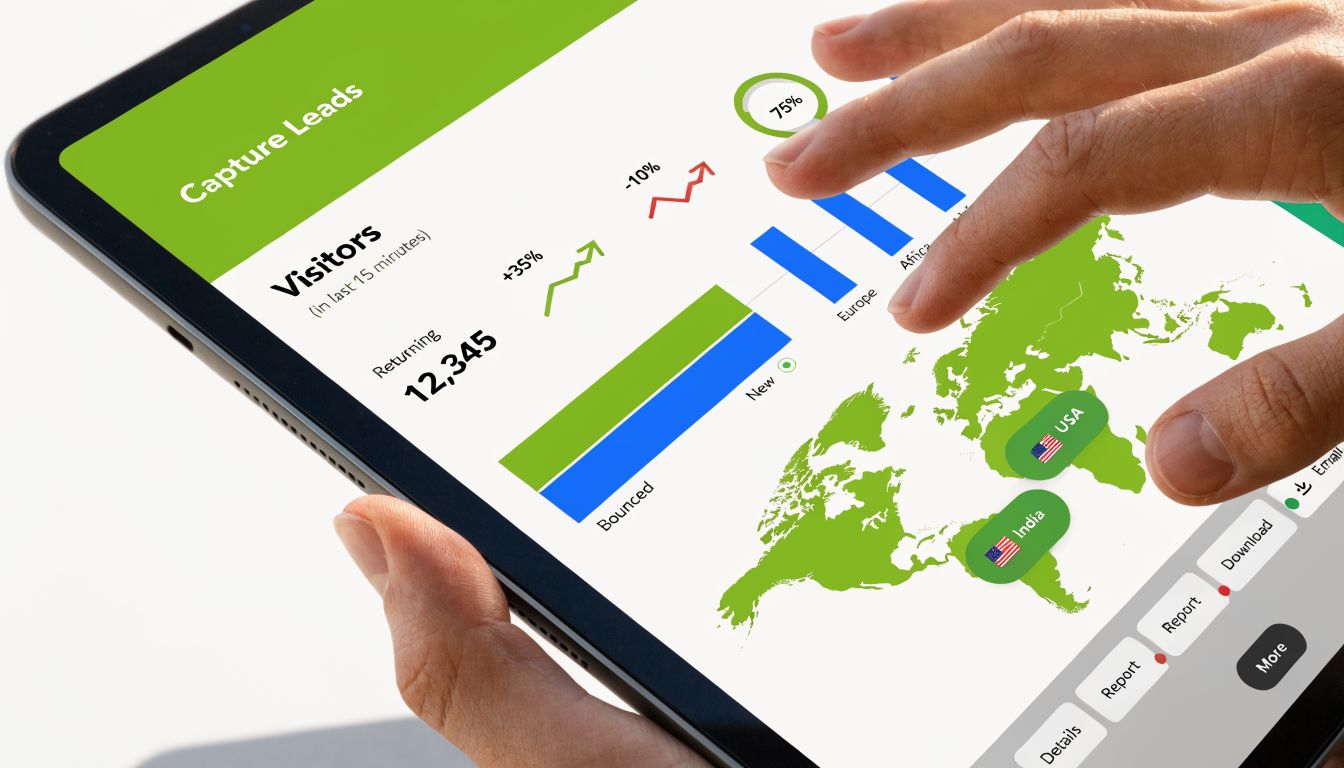
Attention during a major only matters if the club can identify intent quickly and send each enquiry into the right path.
Your landing page should do one job
During event week, broad navigation works against conversion. A campaign click should land on a page built for one action and one audience.
That action might be:
- book a club visit
- request membership details
- register for a trial experience
- enquire about a hosted event offer
Good pages are usually tighter than clubs expect. One clear headline. One offer. One form. Enough proof to reduce doubt, but not so much that the visitor starts wandering.
Include:
- A headline tied to the campaign offer
- A short explanation of what happens next
- A concise form
- Relevant proof, such as club imagery, membership options, or testimonials
- One call to action
The trade-off matters. Ask for too much and completion drops. Ask for too little and the follow-up team wastes time figuring out whether the person is a member prospect, a society organiser, or someone looking for a single visitor round.
Qualify quickly, without turning the form into admin
Clubs often get this wrong in one of two ways. They build a long form that feels like an application, or they collect only a name and email and leave the rest for a manual callback.
A better setup collects enough information to route the lead properly on day one.
| Field | Why it matters |
|---|---|
| Name and contact details | Basic follow-up |
| Main interest | Membership, visitor play, lessons, events |
| Playing background | Helps frame the next conversation |
| Preferred timeframe | Shows urgency |
| Best contact method | Improves response quality |
Automated qualification helps at this stage. A fast acknowledgement email or SMS can confirm receipt, set expectations, and gather one or two missing details without asking staff to monitor every enquiry live. Clubs that want a practical model can review this guide to AI lead qualification for golf clubs.
The point is not to automate for its own sake. It is to stop warm leads sitting untouched while staff are busy running the event.
Channel volume is not the problem. Fragmentation is.
A lot of clubs believe they have a lead generation issue during big events. More often, they have a lead visibility issue.
Interest comes in through website forms, Instagram messages, email replies, phone calls, and casual conversations captured by staff during the weekend. If those interactions stay in separate places, nobody can judge source quality, response speed, or next action. Duplicate records appear. Promising prospects get two replies from different people, or none at all.
Common failure points look like this:
- Instagram messages stay in a social inbox
- Website forms go to a shared mailbox with no owner
- Phone enquiries never reach the CRM
- Handwritten names from the bar or event desk never get logged
- Duplicate contacts sit under different spellings or email addresses
A single system fixes more than clubs expect. Every enquiry should enter one record with source, intent, owner, and next step attached. That gives the team a working queue instead of a collection of disconnected conversations.
Fast replies help. Tracked replies close more business.
What good real-time handling looks like
The strongest clubs set a simple operating standard for event week and stick to it.
- Capture every enquiry in one system
- Send an immediate acknowledgement
- Tag the enquiry by interest type and urgency
- Assign an owner
- Set the next action before the lead cools
That process sounds basic. It is also the point where many clubs separate marketing activity from revenue control.
If someone enquires on Saturday night about flexible membership, the club should not rely on one staff member remembering to call on Tuesday. The enquiry should be logged automatically, acknowledged immediately, tagged correctly, and placed into a follow-up sequence the team can see on Monday morning. That is how event interest becomes a manageable pipeline instead of a pile of half-finished conversations.
Good clubs do not need more noise during a major. They need cleaner capture, faster qualification, and a system that protects demand while attention is still high.
The Post-Tournament Conversion Engine
Sunday evening is when clubs lose money.
The event has gone well. The lounge was full, the team fielded enquiries all weekend, and a handful of visitors said they wanted to come back. By Tuesday, the inbox is mixed in with operational emails, one prospect is waiting on pricing, another meant to book a tour, and nobody is fully sure who owns either conversation. Interest has not disappeared. The process has.

That is why the post-event period decides whether a Masters-themed campaign produces revenue or just a short spike in attention. Clubs rarely have a lead generation problem after a major. They have a conversion control problem.
The weak point is usually follow-up discipline. Enquiries sit too long. Staff reply from personal inboxes. Notes stay in someone’s head. A prospect who looked promising on Saturday gets the same generic reply as someone who only wanted visitor rates.
Manual follow-up fails for predictable reasons
Manual chasing can work for a handful of leads. It breaks once event traffic meets day-to-day club operations.
The pattern is familiar:
- Good prospects wait too long for a useful reply
- Staff send different messages about pricing, tours, and availability
- Warm leads get no structured nurture after the first contact
- Managers cannot see pipeline health without asking around
- Revenue attribution stays vague at committee level
Membership and visitor decisions are rarely made in one step. People compare clubs, check diaries, talk through cost, or wait for the right time to visit. A club that relies on one call and one email usually leaves money on the table, not because the offer was poor, but because the buying process was left unmanaged.
Build a follow-up system, not a string of reminders
A good post-event flow has one job. Move each prospect to the next commercial step with as little delay and confusion as possible.
That starts with the first 24 hours. Every lead should receive a prompt confirmation, a named contact where relevant, and a clear next action. If someone asked about flexible membership, send the relevant route and a booking option for a call or visit. If they asked about lessons or beginner pathways, send that journey instead. Clubs lose conversions when they treat all post-event interest as one category.
The strongest flows usually cover three stages.
1. Stabilise the enquiry
The first message should confirm receipt and reduce uncertainty. It needs to answer simple questions fast.
Include:
- confirmation that the enquiry is logged
- who owns the next step
- when the prospect should expect contact
- one direct route to book, reply, or ask a question
This is operational, but it affects revenue. Prospects are far more likely to continue when the club looks organised from the first touch.
2. Add context before asking for commitment
Many clubs send a fee table too early. That creates a price comparison with no supporting value.
A better sequence explains how the club fits the person’s stated interest. For membership prospects, that may mean categories, usage patterns, practice access, competition options, or social fit. For newer golfers, it may mean lessons, onboarding, and what the first month looks like. For lapsed players, it may mean flexibility and ease of return.
Useful follow-up content gives the sales conversation shape. For clubs reviewing that process, this guide to a golf club follow-up system covers ownership, automation, and visibility in practical terms.
3. Ask for one specific next step
Every message should lead somewhere concrete.
That could be:
- book a tour
- schedule a membership call
- attend a trial session
- reply with preferred joining timeline
- confirm interest in a specific package
“Just checking in” messages rarely convert well because they ask the prospect to do the thinking. Good follow-up reduces decisions into one clear action at a time.
Follow-up should remove friction, not add noise.
Use automation where consistency matters most
Smaller clubs sometimes resist automation because they want a personal sales process. Fair enough. Poor automation does feel cold.
The answer is not to avoid it. The answer is to automate the parts that should be consistent every time, then leave the human conversation for the parts that benefit from judgement.
Automate:
- instant acknowledgements
- lead routing by enquiry type
- task creation for staff
- reminders when no action is logged
- nurture emails based on interest and timing
Keep personal:
- tour calls
- membership recommendation
- pricing discussions with context
- objection handling
- closing conversations
That trade-off matters. Automation protects response speed and coverage. Staff time is then spent where it changes outcomes.
Track progression, not just volume
A busy event can create a false sense of success. Attendance numbers feel positive. Enquiry totals look useful. Neither tells the commercial story on its own.
The club needs a visible path from first contact to outcome.
| Stage | What to track |
|---|---|
| Enquiry created | source, date, interest type |
| First response | response time, owner |
| Qualification | budget fit, timing, intent |
| Sales step | tour booked, call booked, trial arranged |
| Decision | joined, deferred, lost, no fit |
Many clubs in the UK still underperform in tracking performance metrics. They can describe activity, but they cannot show conversion by source, response standard, or follow-up path. That makes it hard to improve and even harder to defend marketing spend in front of a committee or board.
A proper post-tournament conversion engine fixes that. It gives the club a managed pipeline, clear ownership, automated momentum, and reporting that ties event interest to revenue outcomes. Without those systems, the event creates attention. With them, it creates repeatable growth.
Applying the Augusta Model to Your Club's Revenue
The commercial lesson from Augusta isn’t “be exclusive” in a vague branding sense. It’s that scarcity, control and focus can increase perceived value across multiple revenue lines.
That matters for local clubs because many of them dilute value by trying to sell too much, too often, to too many people at once.
The Masters shows a different model. Merchandise is restricted. Sponsorship is tightly controlled. Brand association isn’t crowded. That creates desire and protects pricing.
According to this analysis of what The Masters teaches about brand building, the tournament generated over $80 million in merchandise sales over seven days by keeping products exclusive to the venue. The same source notes that in 2019, with only six official sponsors, it produced an estimated $21.3 million in media value per sponsor.
Those numbers are Augusta-level, not club-level. But the underlying commercial logic is highly transferable.
Sponsorship works better when fewer brands get more meaning
Many clubs oversell sponsorship because it feels safer to take several smaller deals.
The result is familiar. Tee board logos, programme mentions, banner clutter, mixed messages, and partners who don’t feel especially visible. The club gets some income, but the sponsor doesn’t get a strong association with anything distinctive.
A better route is to package fewer sponsorships around moments that feel premium.
For example:
- Club championship partner with category exclusivity
- Season launch partner tied to one member event series
- Major screening hospitality partner with clear in-club presence
- Junior development partner linked to a specific programme
This creates a stronger sales story. The sponsor isn’t buying “a logo somewhere”. They’re buying focused visibility around a recognisable club asset.
Fewer sponsors can create more sponsor value when the club protects attention instead of fragmenting it.
Merchandise should feel event-led, not always available
Most club retail struggles for a simple reason. Too much of it feels permanent, generic, and easy to ignore.
The Augusta lesson is that scarcity sharpens demand. A local club can apply that without pretending to be Augusta.
Practical examples include:
| Standard approach | Better event-led approach |
|---|---|
| Year-round generic crest stock | Limited event collection |
| No launch date | Fixed release tied to a club event |
| Available to everyone indefinitely | Time-bound member access |
| Standard shop messaging | Specific “championship edition” story |
This works particularly well for:
- Club championship apparel
- Captains’ day merchandise
- Anniversary items
- Season opener products
- Member guest event collections
The key is restraint. If everything is “exclusive”, nothing is.
Protect the brand while adding revenue
Clubs often separate membership growth, sponsorship, and retail as if they are unrelated. In practice, they reinforce each other.
A club with a clear event identity can:
- attract more qualified non-member interest
- give sponsors a stronger story to buy into
- create merchandise people want now, not later
- make the venue feel more distinctive during key dates
The trade-off is operational discipline. Scarcity only works if stock, timing, access and communication are controlled properly. Exclusivity only works if the club is willing to say no to clutter.
That’s the part many clubs resist. It feels easier to accept every small sponsor, keep every product available, and add every message onto every campaign. But that convenience reduces value.
The Augusta model is useful because it reminds clubs that commercial strength often comes from what you limit, not just what you promote.
Conclusion Building Your Growth System
Big events come round every year. The opportunity isn’t random.
What varies is whether a club treats that opportunity as a short-lived buzz moment or as part of a repeatable revenue system.
The clubs that get the most from The Masters don’t rely on the event to do the selling for them. They prepare the offer in advance, capture interest properly during the event, and follow up through a structured process once the weekend ends. That’s how a spike in attention turns into booked visits, new members, partner value and secondary spend.
The opposite approach is still common. Clubs generate interest, handle it manually, lose visibility, and then assume the market was soft. Usually it wasn’t. The process was.
A good growth system doesn’t need to feel corporate or impersonal. It should make the club feel more responsive, more organised and easier to join. That’s especially important for committee-led clubs and lean management teams, where good intent often gets stretched by day-to-day operations.
The practical lesson in The Masters and How golf clubs should capitalize on big events is simple. Event hype is temporary. Systems create revenue. If your club wants predictable growth, build the follow-up engine first and let the event feed it.
If your club wants help turning major-event interest into a visible, trackable membership pipeline, GolfRep helps golf clubs build the systems behind growth. That means lead capture, structured follow-up, CRM visibility, and conversion tracking that shows what’s working.
Ready to tap into our proven growth system?