Indoor Golf Bar Marketing: 8 Strategies That Fill Bays
What does an empty bay cost you on a Tuesday afternoon? An unsold set of irons still sits in the rack. A simulator unit still holds its value on the balance sheet. An unsold bay hour does not. Once 3pm arrives, 2pm is gone, and no campaign brings that hour back.
That is the commercial problem indoor golf bar marketing has to solve. Not awareness for its own sake, and not a stack of offers that undercut each other. At GolfRep we treat an indoor golf bar as a bay-utilisation and revenue-per-hour business. We work with UK golf facilities on acquisition, sales process, CRM, conversion, retention and revenue, and the right move depends on the bottleneck in front of you.
We use a simple cycle: attract, nurture, convert, retain. Local demand and coaching bring people through the door. Off-peak offers and group packages turn interest into a paid booking. Leagues, memberships and follow-up turn a first visit into a habit. The eight strategies below each hit a different constraint, from quiet weekday bays to a customer who never books again. Start with the constraint that is limiting revenue, then measure it, then move on.
1. Off-Peak Bay Booking Paired With Bar Credit
A quiet weekday slot can earn more when the booking brings bar spend with it. Pair a bay hour with a fixed food or drinks credit, available only during the hours you want to fill. The offer should add revenue, not just lower the price of a booking that would have happened anyway.
The bay is the entry point; the bar credit gives customers a reason to stay and spend. Bundled revenue can make quiet hours worthwhile at lower occupancy than relying on bay hire alone, but only if the extra bar margin covers the cost of the credit.
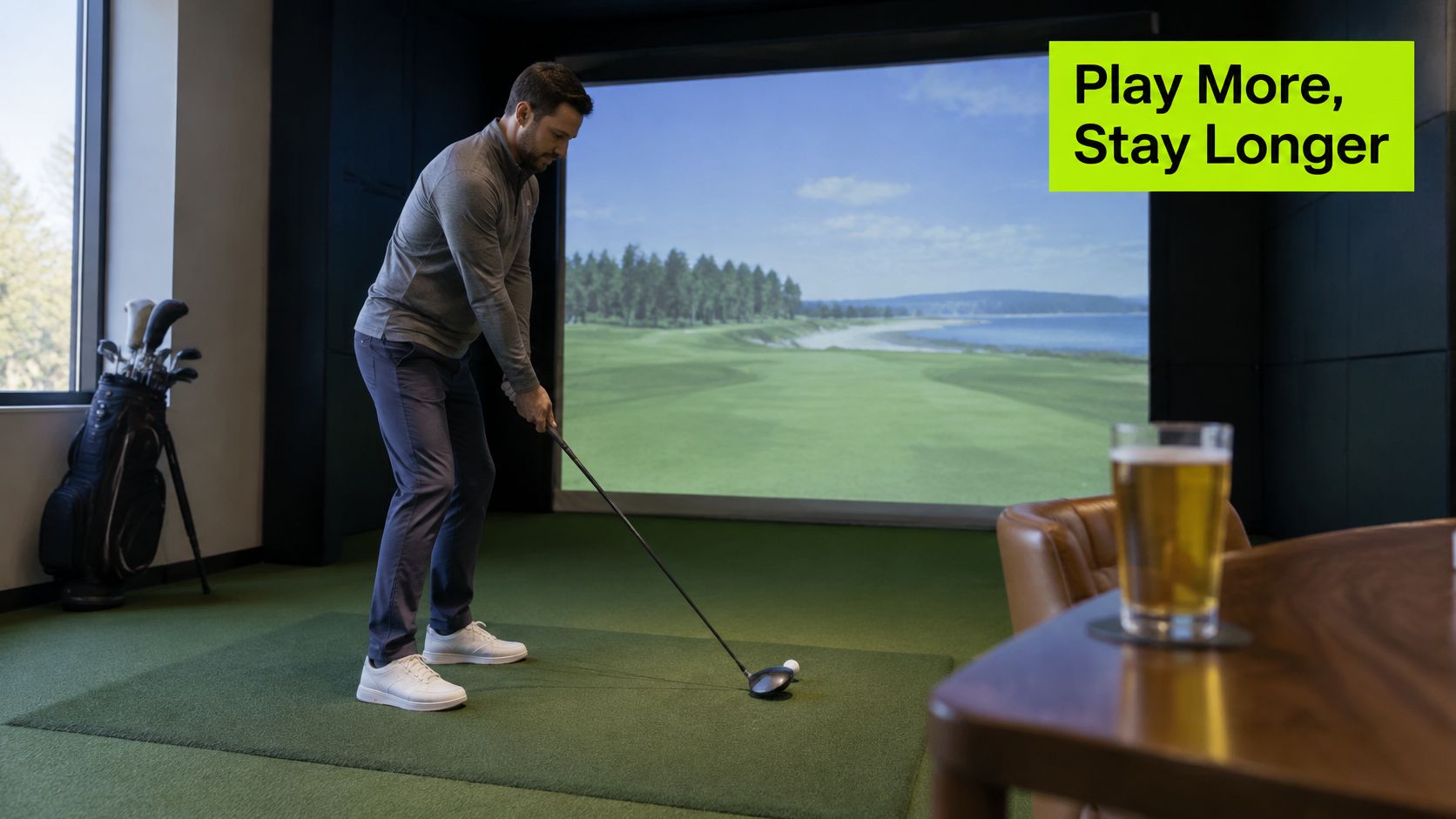
For example, if four bays are regularly empty before 3pm on weekdays, offer a 60-minute booking with a set drinks credit during those hours. Compare the fill rate and bar spend per visit with the previous quarter. If the credit costs more than the extra bar margin, you have bought occupancy at a loss.
Keep the offer within hours that would otherwise go unsold. A familiar pairing of bay time with food and drink can work without copying the scale of a large entertainment venue. For more practical ways to fill golf simulator bays, match each offer to the hours you need to sell.
Practical rule: Remove the credit from slots that already fill. If the offer reaches a busy evening, it discounts your best inventory.
- Name the window: Show eligible off-peak hours on the booking page so customers and staff have the same expectations.
- Measure both tills: Compare bay occupancy and bar spend per visit before and after the offer.
- Limit repeat use: Restrict the credit to first-time or occasional bookers if regulars begin waiting for it.
- Review monthly: Remove the offer from any hour that fills without it.
2. Pay-and-Play Pricing Built Around Demand Patterns
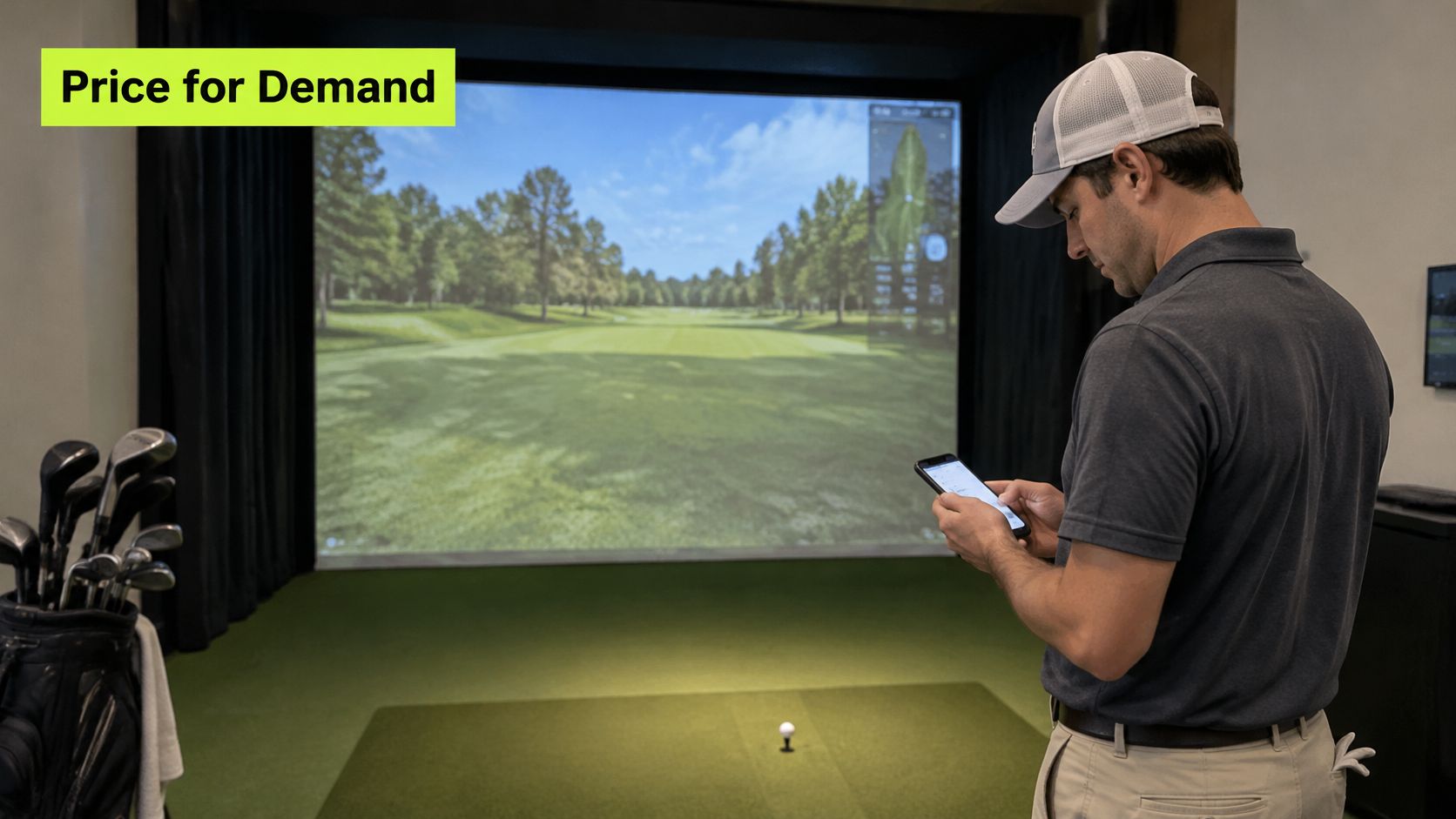
Are your busiest bay hours priced to reflect what customers will pay, while quieter slots still earn their keep? Pay-and-play is the core product for many indoor golf bars, yet a single hourly rate leaves little room to respond to demand. Bay time expires once the hour passes, so price each slot according to when it is booked.
Great Britain recorded a 14% increase in rounds played in 2025, the highest level since comparable records began in 2005, according to The Golf Business. That wider interest does not make every hour equally valuable. Blanket discounts can train customers to wait for a deal; clear peak pricing protects revenue from hours that already sell well.
Keep pricing simple: peak, standard and off-peak. Run those bands for six weeks, then review occupancy and revenue per bay hour in each. If a band stays more than about four-fifths full, test a modest increase there and leave the other rates unchanged. Changing one band at a time makes the effect easier to judge.
A cheaper Tuesday morning that fills may earn more than an empty bay at the Saturday rate. A Saturday slot that sells out at a low price may be underpriced. Check the booking pattern before changing either rate, and explain the difference plainly on the booking page: quieter slots cost less; busy slots cost more.
Keep the bands simple enough for staff to explain in one sentence.
3. Membership and Bay-Hour Subscription Models
Could a membership fill quiet bays without giving away your busiest hours? The right subscription turns regular visits into predictable income, but its allowance and booking rules must protect revenue per bay hour.
Set tiers around when members can book. A lower-priced plan can steer regulars towards quieter periods, while peak hours remain available for casual bookings and groups. The trade-off is straightforward: more included hours can improve the offer, but hours used at busy times may displace bookings that would earn more.
What to model before you launch
For a proposed four-hour monthly allowance, compare the membership fee with the pay-and-play revenue those hours could earn at the times members are likely to book. If members mainly choose Saturday evening, the plan may discount valuable inventory. If they choose Tuesday lunchtime, it may generate revenue from hours that would otherwise go unsold.
- Price the allowance against likely use: Allow for members who use fewer than their full hours, but check that the fee still covers the bay time they do book.
- Set out the rules clearly: State the booking window, included hours, peak periods, contract length and whether unused hours roll over.
- Track cancellations: Ask why members leave, then adjust the tier if the same problem keeps coming up.
- Direct members towards quieter hours: Use membership messages to promote available off-peak slots, rather than discounting every booking publicly.
Set a clear fair-use or rollover rule before launch. Members need to know what happens to unused hours, and the business needs to know how much bay time each tier commits. Review bookings and cancellations together: a popular plan can still underperform if members use too many peak hours for the fee.
4. League Nights and Recurring Social Competitions
A league player has a night in the diary before the week starts. That is easier to forecast than hoping walk-ins fill a Tuesday, and the bar trade tends to follow the same people every week.
Shorter formats are already growing outdoors. Golf News reported that England Golf logged a 17.89% rise in nine-hole scores in 2024, up 142,043 on the year before. People want a defined session, not a five-hour commitment. A simulator league is that product indoors.
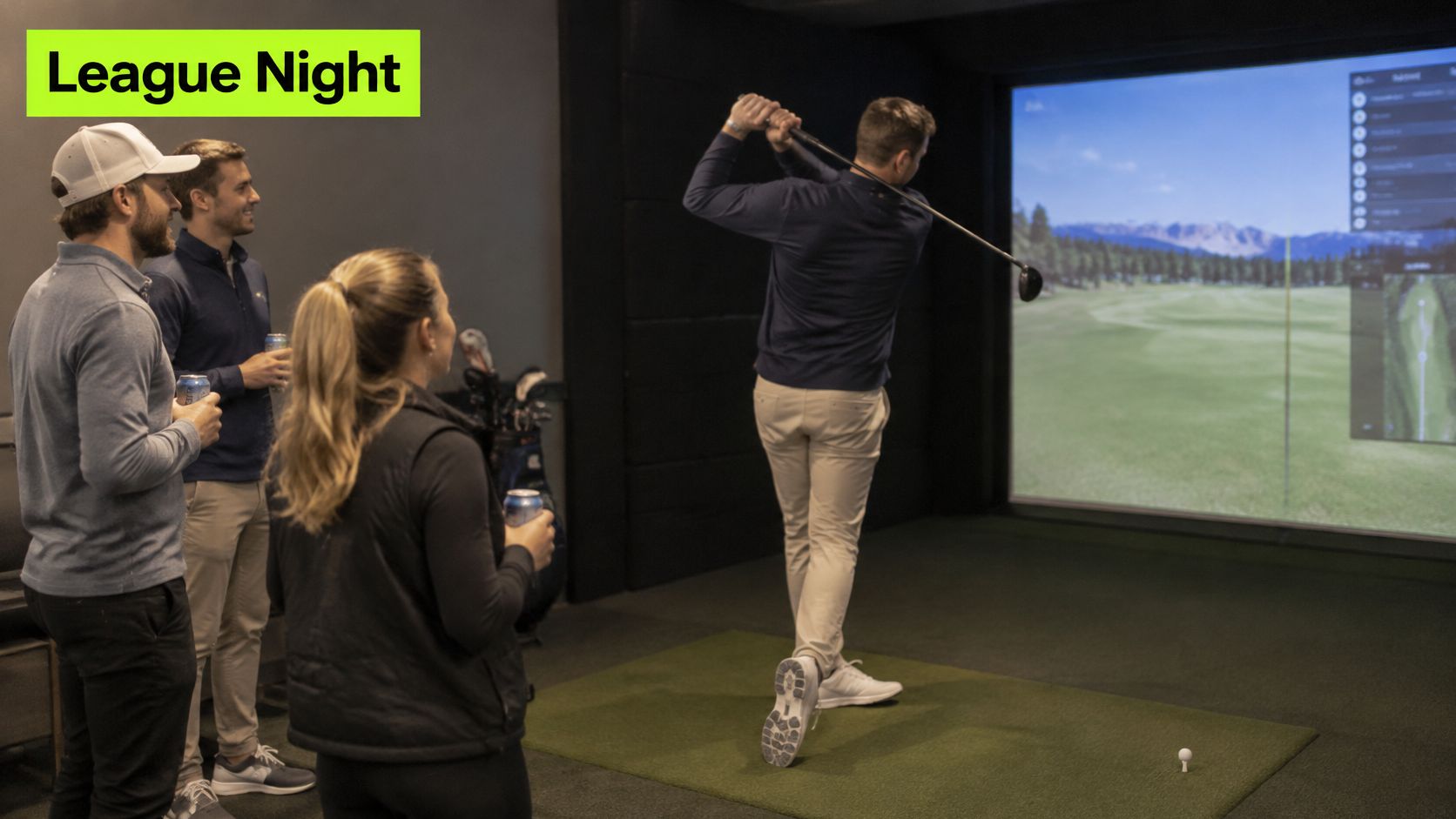
Say you run a six-week Tuesday league for twelve teams. Charge per team, include a modest drinks voucher, and take the fee up front. At the end, look at bar spend on those nights and how many teams rebook the next block. If they drink and they return, the league is a retention product. If they play and leave, the format is entertainment you haven't attached to the bar.
Publish the calendar at least six weeks ahead so captains can hold the night. Collect names and consent at sign-up, then sell the next season to people who already know the room. A simple closest-to-the-pin or stableford card that staff can run without extra software beats a clever app nobody opens. Count how many league players also book a bay, a lesson or a party outside the league. That is the spillover. Ideas for formats sit in our piece on indoor golf league ideas.
5. Group, Party and Team Event Packages
Birthdays, hen and stag nights, office outings and groups of friends stay longer and drink more than a solo practice hour. The mistake is quoting every enquiry from scratch. Organisers want a price per head, a food and drink choice, and a way to pay a deposit without a phone call.
Published UK rates show why the package has to be a product, not a single hourly figure. Examples gathered by GolfRep include a Birmingham rate from £10.75 plus VAT per person per hour, exclusive ground-floor hire for up to 20 guests at £250 plus VAT per hour, and whole-venue hire for up to 100 at £450 plus VAT per hour. On those Birmingham numbers, 30 guests at the per-person rate for three hours is £967.50 plus VAT before food, while three hours of exclusive ground-floor hire is £750 plus VAT, or £37.50 a guest. Same room, different product, very different margin once food and staff go in.

Build three or four standard packages. A workable party shape is up to eight players, two bays, a food option and a drinks package, priced per head with about a 30% deposit. Then check the margin after food cost and the extra staff, not just the headline. Set a minimum group size and a cancellation rule you will enforce.
Ask for dietary needs and the occasion on a short form. Track how many of those groups book again within three months. A party that never returns was a one-night till. A party that comes back as a league or a membership was acquisition. Some venues also use identity-based networks for entertainment venues to see who is in the building and invite them back. Useful only if someone owns the follow-up.
6. Coaching and Lesson Funnels for New Players
Coaching is often parked in a separate menu, priced like a pro-shop extra. For an indoor bar it is one of the cleaner ways to create a second visit. The customer arrives with a goal, not a vague plan to "try the sim sometime".
BBC Sport, citing England Golf, notes that most simulator users come for swing analysis, lessons or social play on selected holes, not a full virtual round, and that 82% of traditional golfers in Britain and Ireland have tried an alternative format such as a simulator, pitch-and-putt or adventure golf. Lessons and social play are already how people use the room. Your funnel should match that, not assume everyone wants 18 virtual holes.
Say a £30 taster is followed, before they leave the bay, by a four-lesson block and a pay-and-play credit. Count how many tasters buy the block, and how many are back within 30 days. If the taster ends with "see you sometime", you have sold an hour of coaching and nothing else.
Give every pupil one next step at the end of the session: the course, a quiet-hour bay credit, or an intro league. Set a coaching target next to the occupancy target so the pro isn't judged only on lesson fees while the bays sit empty around them. A good coach also hears when a group wants a birthday or an office night. Pay attention to that. It is cheaper than another ad.
7. First-Visit Follow-Up and Loyalty Programmes
The first visit is the cheapest moment you will ever have that person's attention. Many bars take the card payment and stop there. The next customer has to be bought all over again.
Engagement is moving, including among people who aren't club members yet. GCMA reported 5.75 million scores through the World Handicap System in England in the first half of 2025, a 29% increase on the year before. Some of those golfers will find you for a social hour. The commercial question is which offer you put in front of them afterwards: a lesson, a nine-hole challenge, a beginner league, or a short membership. Friends who came for a night out should not get the same message as the person who asked about a handicap.
Capture consent at booking and say what you will send. A short thank-you the next day, with one return offer aimed at a quiet weekday slot, is enough. Compare the repeat rate with people who didn't get the offer, even if the "control" is just the month before you started. Then look again at 30 days and 60 days, split by how they first found you.
A stamp card or points on bar spend can do the same job as a clever app. The point is a reason to come back that isn't a permanent discount on peak time. Watch opt-outs. If people are leaving the list, the message is a nuisance and it will hurt the next campaign. How we think about turning a first booking into a regular is covered in how to grow an indoor golf facility.
8. Local Search, Reviews and Referral Partnerships
An indoor golf bar sells time-sensitive local visits. A golfer choosing where to play this weekend is more likely to check your opening hours, location and recent photos than compare launch-monitor brands. If the listing is inaccurate or the photos do not show the venue clearly, that booking can go elsewhere.
Your catchment is local, so focus marketing there rather than trying to build a national brand. Keep your Google Business Profile current: check opening hours, photos and categories, and reply to reviews. Ask for a review at the end of a good visit, such as after a group session, while the experience is fresh.
Give local search its own pages. Clear pages for bays, parties and leagues help visitors find the booking that suits them. Businesses that optimise service pages for local searches can make it easier for nearby customers to find the right offer. Track how each booker found you, then prioritise listing improvements if search is already bringing bookings. The aim is to fill available bay hours without paying for more demand than you can serve.
Choose referral partners whose customers fit your quiet slots and offers. A nearby office may help fill weekday afternoons; a hotel or golf club may be a route to players looking for indoor practice. Agree what each partner will recommend and how bookings will be tracked. A referral is useful when it sends the right customers at the right time, not when it generates clicks.
Eight indoor golf bar marketing strategies at a glance
| Strategy | Primary revenue goal | Best time to deploy | Main trade-off |
|---|---|---|---|
| Off-Peak Bay Booking Paired With Bar Credit | Fill quiet bays and increase food and drink spend | Quiet weekday periods and slow seasons | Discounts may cannibalise peak bookings or train customers to wait |
| Pay-and-Play Pricing Built Around Demand Patterns | Maximise revenue per bay hour | When demand varies by day, time or season | Complex or frequent price changes can confuse customers and erode trust |
| Membership and Bay-Hour Subscription Models | Generate predictable recurring revenue | When there is a base of regular players to convert | Generous allowances or poor retention can weaken profitability |
| League Nights and Recurring Social Competitions | Secure repeat bookings and dependable bar trade | Quiet weekday evenings | Requires ongoing organisation and commits bay capacity |
| Group, Party and Team Event Packages | Increase high-value group bookings and spend per visit | Evenings, weekends and event occasions | Staffing, capacity and food costs can reduce margins |
| Coaching and Lesson Funnels for New Players | Convert new players into repeat bookings or members | When seeking new-customer growth and repeat visits | Depends on coach availability and profitable lesson pricing |
| First-Visit Follow-Up and Loyalty Programmes | Increase repeat visits and customer lifetime value | After first visits and during slower periods | Rewards and frequent messaging can erode margin or engagement |
| Local Search, Reviews and Referral Partnerships | Attract local customers and generate referral bookings | For ongoing customer acquisition and weekday demand | Results take time, and reputation or referrals need ongoing management |
Finding the Constraint That Actually Limits Your Revenue
The eight strategies sit on the same cycle. Local search, reviews, partners and coaching attract people who didn't know the room existed, or who only knew it as a night out. A clear next offer, sent while the visit is still fresh, is how you nurture them. Off-peak bay-and-bar bundles, demand-based pay-and-play rates and set party packages convert that interest into hours you can bank. Leagues, bay-hour memberships and a return visit inside 30 or 60 days retain them, which is what makes revenue per bay hour rise instead of resetting every Monday.
Don't run all eight at once. Name the constraint. If weekday bays are empty and weekends are full, the constraint is off-peak product and price, not more ads. If first-timers never reappear, the constraint is follow-up and a second-visit offer, not another league. If groups come and the bar attach is weak, rewrite the package before you buy more reach. If regulars exist but pay full rate every time and then drift, test a membership against real usage, not against a hopeful average.
Improve that one constraint, measure bay occupancy, revenue per occupied hour, repeat rate and bar attach, then move to the next. An indoor golf bar doesn't grow on disconnected promotions. It grows when each perishable hour earns what it can, and when a first visit becomes a habit with a name and a reason to return.
GolfRep works with UK golf venues on predictable acquisition and revenue systems across that cycle. A short look at the pipeline usually shows where the biggest commercial constraint sits, whether that is demand, the offer, the follow-up or the repeat visit.
GolfRep builds acquisition and follow-up for golf facilities, including indoor venues that need weekday bays, group bookings and repeat visits rather than one-off promotions. We combine local campaigns with a pipeline you can see, from first enquiry to the next booking. If you want that applied to your diary, visit GolfRep.
Ready to tap into our proven growth system?