How to Increase Golf Club Revenue: A Practical 2026 Guide
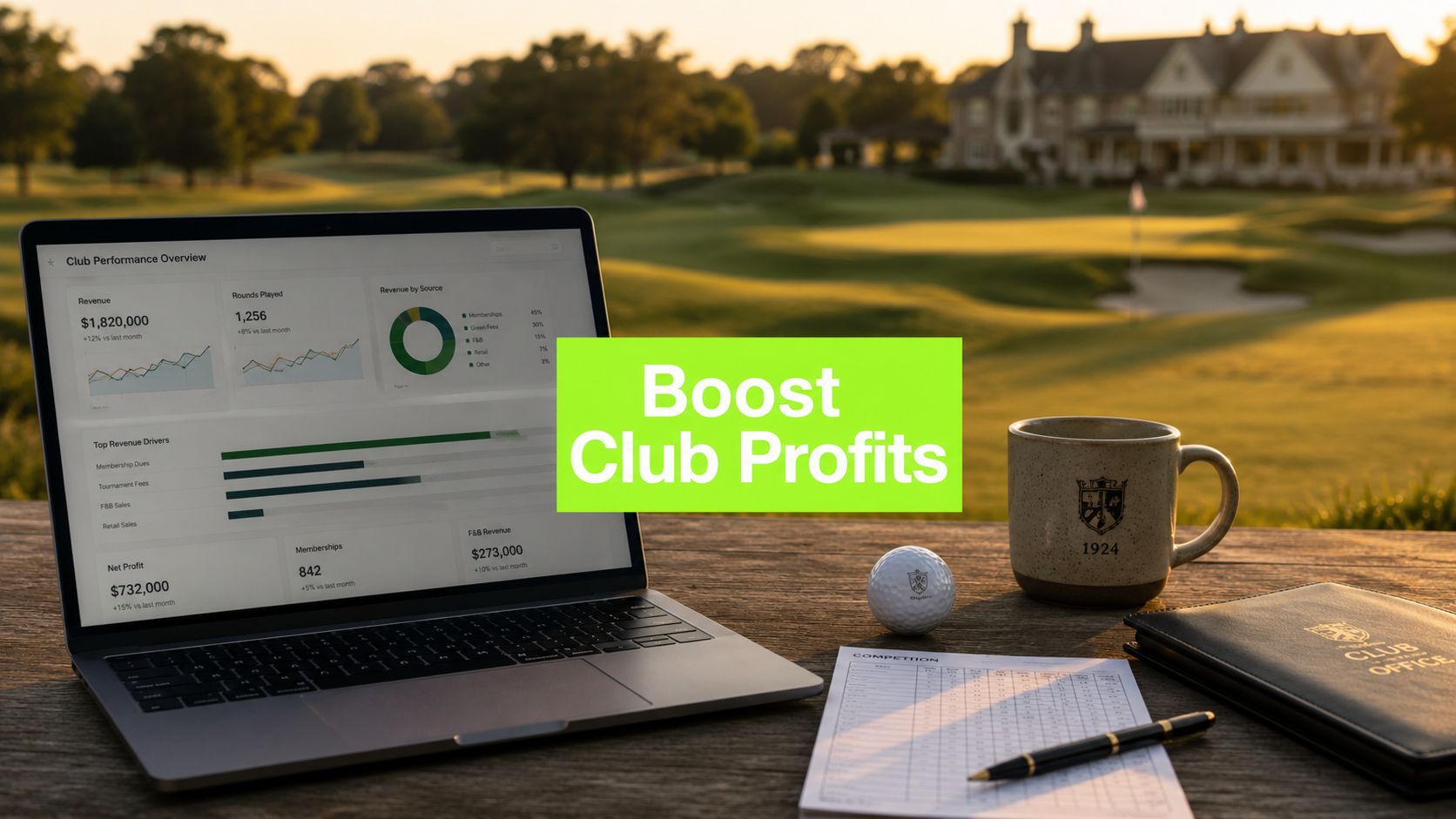
Most clubs keep asking for more enquiries. That's the wrong starting point. If the first response is slow, the follow-up is inconsistent, and nobody can see where leads are dropping out, then extra traffic just means extra leakage.
Golf club revenue rises when the club treats growth as a system, not a slogan. The strongest gains usually come from tightening the journey from first enquiry to booking, visit, membership, and on-site spend, because that is where money is being lost right now. In the UK market, that matters even more because the sector is large enough that small improvements compound quickly, with IBISWorld estimating the UK golf courses industry at £2.8 billion in 2026 and independent market research projecting the UK golf club market to grow from USD 149.01 million in 2024 to USD 196.93 million by 2032, a 3.55% CAGR (IBISWorld).
A practical way to think about how to increase golf club revenue is simple. Stop treating enquiries like isolated conversations, and start treating them like a pipeline with visible handoffs. That shift is where clubs start turning website visits, phone calls, walk-ins, visitor rounds, and event interest into recurring income instead of one-off interest. It's the same commercial logic seen in other leisure sectors, and resources like strategies for boosting hotel profits show how much revenue can sit in the gap between demand and conversion.
Why More Enquiries Aren't the Answer
Clubs often blame slow trading on weak demand. The bigger issue is usually what happens after the lead arrives. Interest leaks away because nobody owns the next step, nobody knows who replied, and follow-up depends on memory instead of process.
The leaky bucket problem
A club can bring in more enquiries and still lose revenue if response times are slow and the pipeline is invisible. More traffic only fills the top of the funnel while the same prospects drop out before a visit, a join decision, or any meaningful next step. That is why generic marketing so often disappoints. It creates activity, then leaves the club with a stack of untracked conversations.
Practical rule: if a lead isn't logged, assigned, and chased, it isn't a lead yet. It's just unanswered interest.
The better question is not how to get more people to enquire. It is where they disappear after first contact. Golf clubs that examine how clubs lose enquiries without realising usually find the same pattern, weak ownership, slow handoffs, and no clear follow-up. GolfRep's revenue generation guidance points to the same problem from a different angle, revenue is lost when interest is not converted after the first touch.
Speed changes the outcome
Response time is one of the clearest operational levers. GolfRep notes that the average response time to membership enquiries in UK golf clubs is 47 hours and 32 minutes, and says that delay contributes to pipelines reaching 0% conversion when prospects have already joined elsewhere. The same source says AI-driven follow-ups can reduce conversion lag by 54% and raise the sign-up rate by 2.1x (GolfRep sales process guidance).
That does not mean every club needs flashy campaigns. It means the club must answer quickly, record the enquiry, and keep the conversation moving. A separate piece of GolfRep guidance says the first club to reply usually wins the member, and that replying within 5 minutes can make conversion rates 98% higher, because leads become 10 times less likely to respond after that short window (GolfRep on response speed).
The same operational truth shows up in broader conversion literature too. A response within one hour makes a membership lead five times more likely to convert than waiting 24 hours, and same-day responses convert at roughly double the rate of next-day responses (CRM guidance for golf clubs, The Conversion Code excerpt).
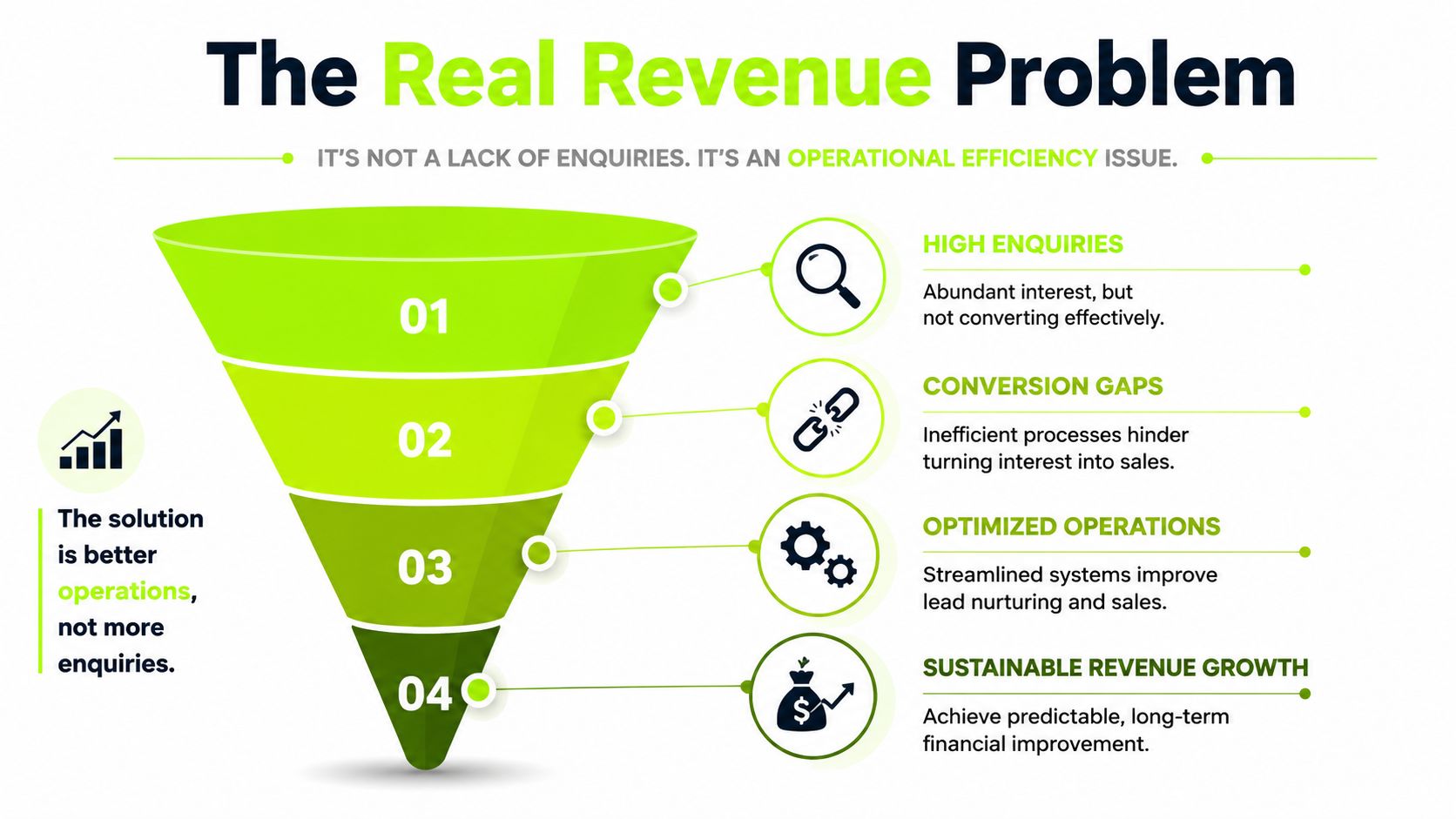
The clubs that grow steadily usually do one thing well. They make the enquiry visible, then they make the next action inevitable. That is the difference between a busy inbox and a commercial system.
The same principle applies beyond memberships. Revenue improves when the club tracks each handoff, from enquiry to booking, from booking to visit, and from visit to repeat spend. A useful reference point is strategies for boosting hotel profits, because the commercial logic is the same, demand only turns into income when the process behind it is controlled.
Building a Predictable Membership Sales Pipeline
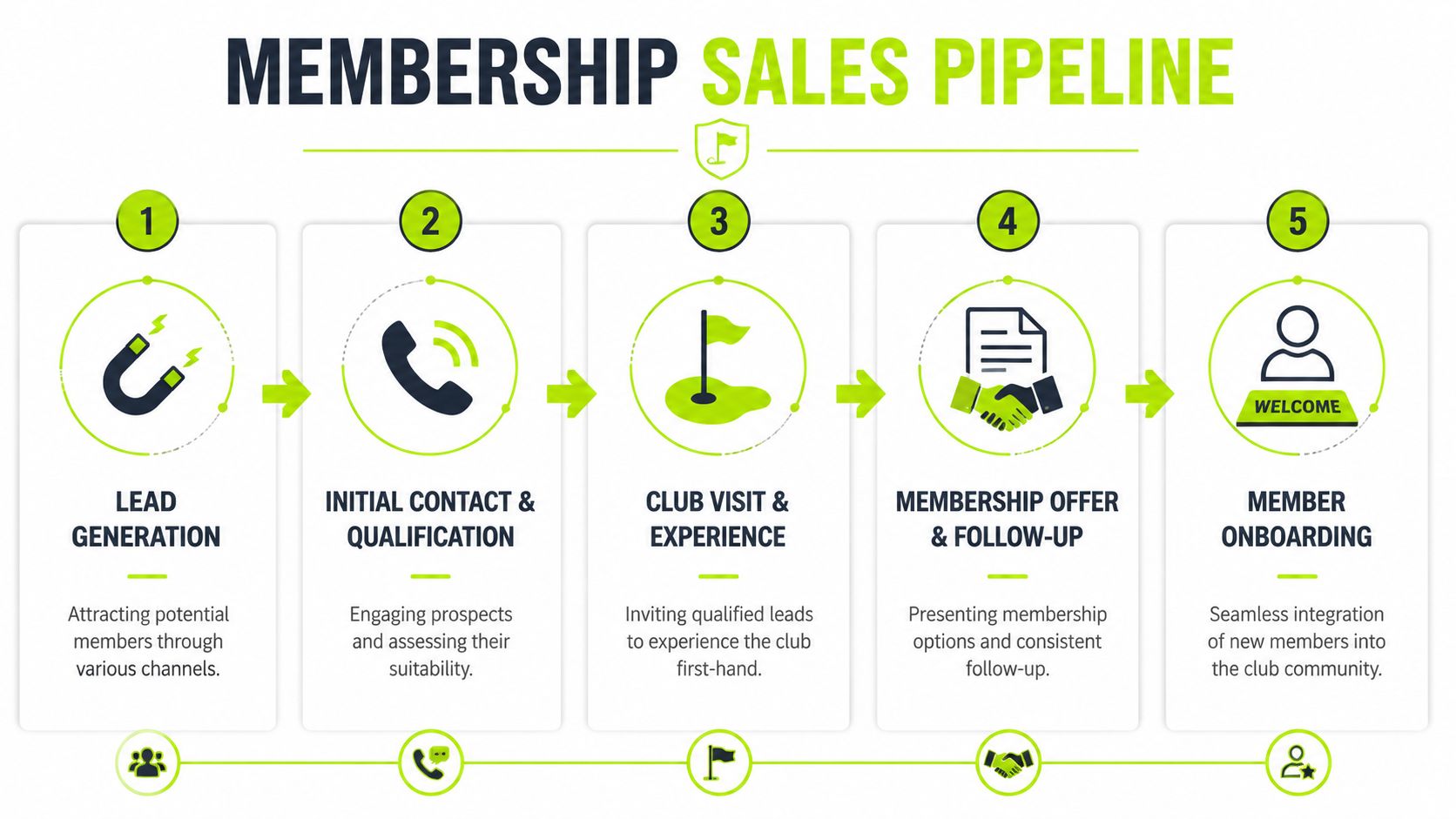
A membership pipeline works only when every lead moves through the same stages. Capture, qualify, nurture. If a club skips one of those stages, it starts relying on chance, and chance is a poor revenue strategy.
Capture every lead in one place
Every enquiry needs a home. Website form, phone call, walk-in, social message, referral, event enquiry, all of it goes into one CRM. That does more than help sales. It gives management a live view of what is coming in, what has been answered, and what is still open.
A lot of clubs still split responsibility across the office, the pro shop, and the committee. That is where opportunities disappear. A clear membership process needs central visibility, structured follow-up, and one place where the team can see the next action. Golf club automation guidance points clubs in that direction because no one can manage what they cannot see.
Qualify fast and set expectations
Once the lead is captured, the first reply should do more than say thanks. It should acknowledge the enquiry, confirm what happens next, and give the prospect a simple route back to a human. If the club can also ask a short set of qualifying questions, it can prioritise serious buyers without putting everyone into the same queue.
The best follow-up feels personal, but the process behind it should be standardised.
That matters because the average club cannot afford to treat every lead manually. A member prospect who wants a tour next week needs a different pace from someone asking casually about fees. A little structure keeps the response relevant without slowing it down.
Nurture until the decision is made
Most clubs lose people during the gap between first enquiry and sign-up. Planned follow-up matters because prospects do not always join on the first contact, even when interest is genuine. The lead nurturing pipeline has to keep moving in the background, with every step recorded in the CRM so nothing depends on memory or a single staff member.
One acknowledgement, one personalised visit invite, one follow-up after the club tour, one final check-in before the decision goes cold. Clubs that use that rhythm keep momentum better than clubs that wait for the prospect to come back on their own.
The practical rule is simple. A pipeline is not a spreadsheet. It is a repeatable sales process that links enquiry, response, visit, offer, and onboarding in a way everyone can see, and it only works when the follow-up is tracked properly.
Optimising Green Fees and Visitor Revenue
Visitor revenue usually gets treated as a pricing issue. It's really a yield issue. The club already owns the asset, the course, so the question is how well it fills tee times, captures data, and turns one visit into a second.
Use pricing as a yield tool, not a blunt instrument
Static green fees leave money on the table when demand changes across the week. Dynamic pricing gives the club a way to monetise strong times more intelligently while still keeping weaker slots attractive enough to fill. One UK case study from The Revenue Club describes dynamic pricing on the tee sheet alongside KPI benchmarking against the wider market, which helps clubs identify where revenue is leaking and where capacity can be monetised more effectively (The Revenue Club case study).
That approach works best when it's tied to the booking journey. If the tee sheet is live, the visitor knows what's available, and the price reflects demand, then the club can avoid both under-selling and random discounting.
Treat every visitor like a future lead
A visitor round should not end at the 18th green. The booking process should capture contact details cleanly, and the follow-up should thank the golfer, invite them back, and present the next logical offer, whether that's another round, an event, or a membership conversation.
The point is to make the visitor database useful. If the club only stores names, it has a list. If it stores behaviour, it has a marketing asset.
A visitor who enjoyed the round is much easier to bring back than a cold lead you've never met.
The practical trade-off is simple. Lowering price can fill gaps quickly, but it can also train the market to wait for deals. Better clubs use pricing intelligently, then build repeat business through the post-round journey. That's how the course itself becomes part of the acquisition engine instead of just the thing being sold once.
Maximising On-Site Spending Through F&B and Events
Ancillary income is often stronger than clubs expect, but only when the clubhouse is run like a revenue centre rather than a passive amenity. The 2024/25 Hillier Hopkins survey found that 81% of UK members' clubs reported annual bar revenue above £150,000, the highest level recorded, which underlines how important on-site spend has become (Hillier Hopkins report).
Make the clubhouse part of the commercial journey
A strong clubhouse doesn't wait for trade to arrive by accident. It gives members a reason to spend after the round, gives visitors a reason to stay, and gives the local community a reason to come in even when they're not playing golf. The most effective clubs treat food, drink, and events as part of the membership experience, not as side activity.
Corporate golf days are a good example. The best packages don't just sell tee times. They bundle golf, catering, room use, branded items, and a clean event contact point so the organiser has one point of responsibility. If you need a practical reference point for the planning side, how to host a corporate event is useful because it shows how much structure sits behind a smooth event.
Segment offers instead of sending everything to everyone
Members, visitors, corporate leads, and local community groups don't want the same message. A segmented email list lets the club promote the right social evening to the right group, invite the right people to a tasting night, and keep event enquiries separate from membership leads. That makes the communication feel relevant and keeps the team from chasing the wrong audience.
The pro shop fits into the same pattern. A visitor who buys a round should see an easy next step, not a hard sell. A member who renews should be offered something that feels like a reward for loyalty, not just a receipt.
For clubs wanting a tighter operating model, GolfRep's guidance on maximising F&B revenue at your golf club is a sensible reference because it keeps the focus on repeatable systems rather than one-off promotions. The practical lesson is that the clubhouse should help convert casual footfall into higher-value visits.
Implement Systems to Measure and Improve Performance
Clubs usually know total revenue. They often do not know where it came from or where it leaked away. That gap is the problem. A proper revenue system turns guesswork into a clear view of what is working, where follow-up is failing, and which part of the process needs attention.
Track the numbers that actually explain growth
The most useful measures are not just headline income figures. Managers should watch enquiry response time, lead-to-visit conversion, visitor-to-member conversion, and average member spend. Those four measures show whether the club is winning new business, losing it, or moving the same demand around with better wording.
Put those numbers inside a central CRM, and the club can see patterns without chasing spreadsheet fragments. It also becomes easier to compare lead sources, review follow-up quality, and spot the stage where conversion weakens. A structured system matters more than another campaign because it shows where the commercial process is breaking.
Use transaction data to find behaviour, not just totals
Commercial decisions get sharper when you look at behaviour inside the transaction trail. Vendmoore's vending transaction data analysis is a useful reminder that granular spending data can reveal patterns you will not see in a monthly summary. The same principle applies in golf clubs. If you can see what visitors buy, when members spend, and which offers get ignored, you can adjust pricing and promotion with more confidence.
Measure the handoff, not just the headline.
The most common gap in club strategy is the conversion after first contact. Clubs need a system that tracks every lead and reduces leakage between the first enquiry and the final sign-up, rather than just launching more promotions. The point is simple. More leads do little if replies are slow, notes are missing, or no one owns the next step.
The strongest clubs review the pipeline regularly and make small adjustments. They do not wait for a year-end review to notice that responses are too slow or that visitor spend is flat. They use the data to tighten the process, then let the process do the work.
If your club wants to increase revenue without relying on constant discounting or guesswork, GolfRep can help you build a structured pipeline that captures every enquiry, follows it up properly, and tracks the journey through to membership and on-site spend. Get in touch with GolfRep to discuss a practical revenue system for your club.
Ready to tap into our proven growth system?