How to Increase Golf Club Membership: Attract & Retain
Most advice on how to increase golf club membership starts in the wrong place. It tells clubs to run more ads, post more on social media, discount harder, or hold another open day and hope the diary fills itself.
That isn't the main problem.
At GolfRep, we see the same pattern repeatedly. Clubs do generate interest. Enquiries come in through the website, Facebook forms, email, phone calls, visitor bookings, events, and conversations in the bar. Then the process breaks. Nobody knows who followed up. Replies sit in a shared inbox. A warm lead gets one email and then silence. A prospect asks about a flexible option and gets sent the full membership brochure.
If you're serious about how to increase golf club membership, stop thinking only about demand generation. Start looking at response, qualification, nurture, conversion, and onboarding. Membership growth becomes predictable when those steps are organised into a system.
Your Membership Growth Problem Is Not What You Think
The most common assumption in golf club growth is that low membership means low awareness. Usually, it doesn't. More often, it means the club has a handling problem, not a marketing problem.
A club can spend money driving enquiries and still stay flat on membership if those enquiries aren't processed properly. That's the leaky bucket most committees miss. They talk about getting more leads while existing leads are being lost through slow replies, poor visibility, and inconsistent follow-up.
The demand is there. The fit is often wrong
The UK market has already been shifting. England Golf data highlighted by GCMA shows the average member age has dropped from 56.18 to 54.99, while the 30 to 50 demographic remains under-captured because clubs often fail to offer the casual tee-time availability this group requires.
That matters because many clubs still respond to every prospect as if they want the same thing. They don't.
Some want traditional full membership. Some want to play at quieter times. Some want a pathway back into club golf after years of general play. Some are under 40 and won't accept a rigid structure that assumes they can commit like a retiree.
Practical rule: If a prospect asks for flexibility and your process only offers a fixed annual package, the problem isn't lead volume. It's offer-to-buyer mismatch.
Manual sales processes kill momentum
The usual setup looks harmless enough:
- Website enquiries land in a general inbox
- Phone calls are noted on scraps of paper or not logged at all
- Tours happen when someone remembers to arrange them
- Follow-up depends on who is on shift
- Committee oversight is based on anecdote, not a pipeline view
That isn't a sales process. It's admin by memory.
A prospect who is comparing clubs won't wait for internal confusion to clear. If they enquire on Tuesday and hear back next week, the moment has gone. If nobody can see where they are in the journey, nobody can move them forward.
Growth comes from fixing the middle
Most clubs don't need a completely new brand story. They need a reliable conversion system between first enquiry and signed membership. That's the gap we unpack in our view on why most golf club marketing fails.
The clubs that grow consistently tend to do three things well:
| Area | Weak clubs do this | Growing clubs do this |
|---|---|---|
| Enquiry handling | Reply when someone gets time | Respond through a defined process |
| Qualification | Treat every lead the same | Separate curiosity from buying intent |
| Follow-up | Send one message and wait | Nurture until a visit is booked |
If you want a cleaner answer to how to increase golf club membership, it starts here. Stop asking only how to create more interest. Ask how your club handles the interest it already has.
Build a 24/7 Automated Lead Conversion System
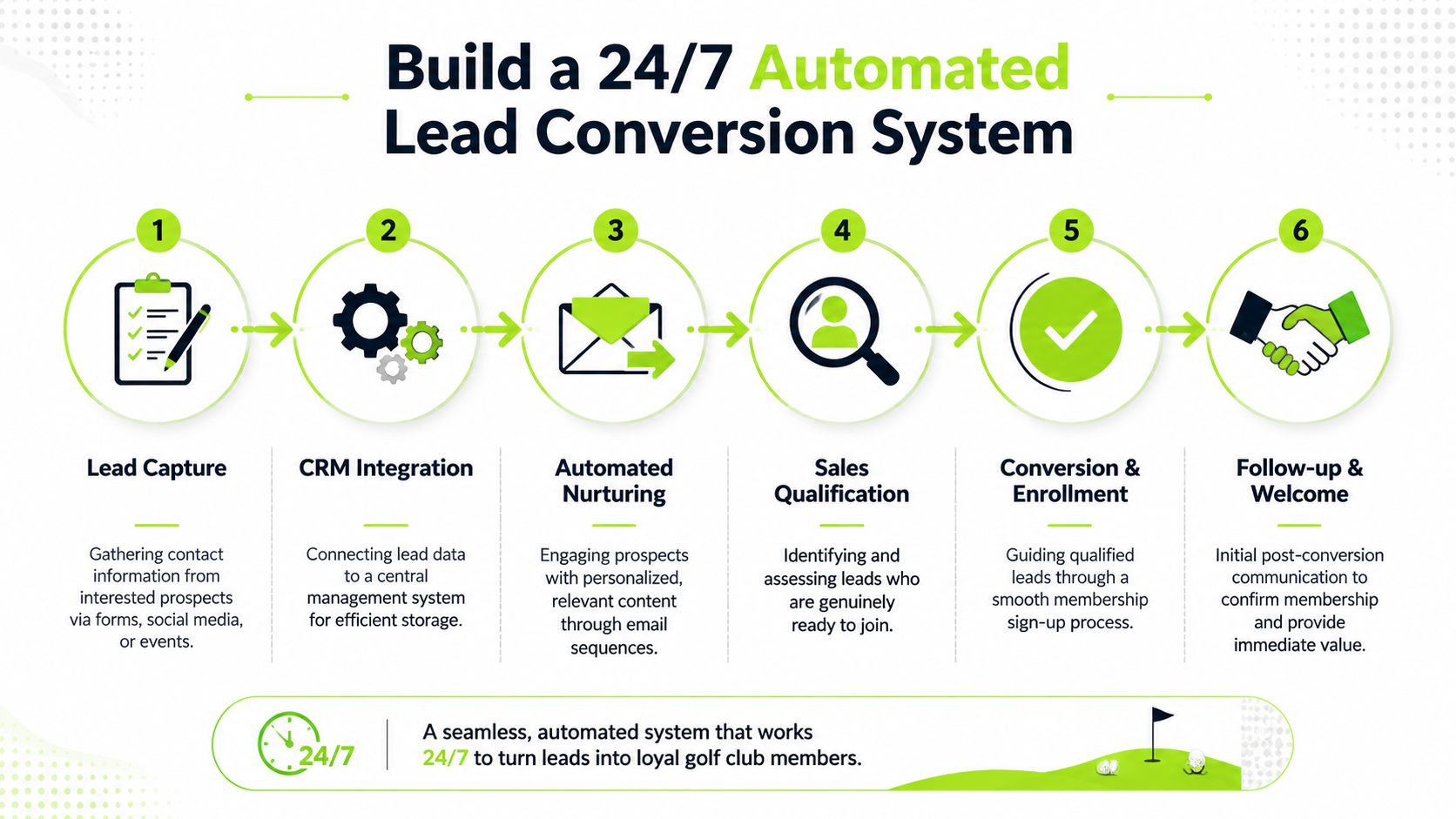
A club can't grow predictably if enquiries disappear into inboxes and spreadsheets. You need a system that captures every lead, shows who owns the next action, and responds even when the office is closed.
The reason is simple. Speed shapes outcomes. In UK private golf clubs, the average time between first membership enquiry and signed deal is 47 days, and AI-driven follow-up systems can reduce that delay by 54% while lifting sign-up rates to 2.1x higher.
What the system needs to do
A proper lead conversion system doesn't replace your team. It makes sure your team isn't relying on memory.
The core pieces are straightforward:
Capture every enquiry in one place
Website forms, Facebook leads, event sign-ups, referral requests, and membership downloads should all feed into one CRM.Acknowledge instantly
Prospects shouldn't wait until tomorrow for a basic response. An immediate confirmation reassures them that the club is organised.Qualify early
Ask practical questions. What membership type are they considering? How soon are they looking to join? Are they returning to golf, moving club, or starting from general play?Route the next action
A high-intent prospect should trigger a call task or visit invitation. A lower-intent lead should enter nurture, not be forgotten.
Why a CRM matters more than another campaign
Most clubs don't have a lead problem. They have a visibility problem. If management can't answer how many active membership enquiries exist right now, which ones are qualified, and which ones have gone cold, the club is operating blind.
A CRM gives you a single source of truth. It also creates accountability. Staff can see status, task history, and outcomes instead of guessing.
A shared inbox feels easy until three people assume someone else replied.
At GolfRep, our initial focus is often not "more marketing", but the infrastructure that turns interest into trackable opportunities. Our automated follow-up approach for golf clubs is one example of that kind of system, combining lead capture with structured follow-up rather than leaving clubs to manage it manually.
Automation should feel personal, not robotic
Many club managers worry that automation will make communication feel cold. It doesn't have to. The core issue is relevance.
A strong automated flow can:
- Send the right message first based on the enquiry source
- Use email and SMS together so the club stays visible
- Prompt staff action when a lead shows buying intent
- Book visits faster by reducing back-and-forth
If you want a broader primer on how these sequences work, this guide on email marketing automation explained is useful because it breaks down the logic behind automated messaging without overcomplicating it.
The operational standard to aim for
Your system should work whether the membership secretary is on annual leave, the pro is teaching, or the office is closed on Sunday afternoon.
Build for that reality:
- One CRM for all membership enquiries
- Automated first response at all hours
- Lead qualification fields that staff use
- Task reminders so follow-up isn't optional
- Pipeline stages that show where deals stall
- Visit booking prompts built into the journey
That's how you move from occasional bursts of sign-ups to a repeatable process. Clubs that depend on heroic staff effort eventually slow down. Clubs with systems don't need to reinvent the process every month.
Design Nurture Sequences That Book Club Visits
Most membership follow-up fails because it asks for too much, too soon. The prospect downloads a membership pack and gets hit with a hard sell before they've even formed a clear opinion about the club.
A better objective is simpler. Don't try to close the membership from the first email. Book the visit.
A typical enquiry journey
A golfer sees your club online, clicks through, and asks about joining. They're interested, but not ready. They might be comparing two or three clubs. They may not understand your categories. They may be worried they'll join and not fit in.
The weak version of follow-up goes like this:
- an automated confirmation with no personality
- a brochure attached
- silence unless the prospect replies first
Then everyone wonders why the enquiry went nowhere.
The stronger version works differently. The first message confirms receipt and explains what happens next. The next touchpoint shares a reason to visit, not just a price list. A later message answers a likely concern such as flexibility, beginner friendliness, or tee access. Another prompts a tour or coffee meeting with a named person.
Why most clubs lose control here
That's exactly what nurture sequences solve when they're set up correctly. They create consistency between first interest and first visit, instead of leaving that middle section to chance.
A prospect should feel guided, not chased.
Send fewer generic sales messages. Send more useful prompts that reduce uncertainty and make the next step easy.
What a good nurture flow includes
The strongest nurture sequences combine timing, relevance, and a clear objective.
A useful structure often includes:
Early reassurance
Confirm that the enquiry has been received and give a named next step.Club context
Show what membership feels like. Use course imagery, practice access, social atmosphere, coaching options, or flexible categories where relevant.Objection handling
Answer common concerns before they become silent drop-off points.Visit invitation
Offer a tour, a trial touchpoint, or a short conversation at the club.
For clubs refining this process, these lead nurturing best practices for golf clubs are a practical place to start.
Sell the visit, not the annual fee
A visit changes the decision. Prospects can see the clubhouse, the pace of the place, the practice areas, the dress of the membership, and how welcome they feel. Those details rarely come across in a brochure.
That means your emails and texts should lead naturally to one action. Come and see the club.
When clubs stop treating follow-up as admin and start treating it as guided conversion, membership sales get easier. The club experience does the heavy lifting. The nurture sequence gets the right people through the door.
Develop Pricing and Offers That Protect Your Brand
A lot of membership advice still pushes clubs toward the same blunt tactic. Cut the joining fee. Run a seasonal deal. Take money off and hope volume fills the gap.
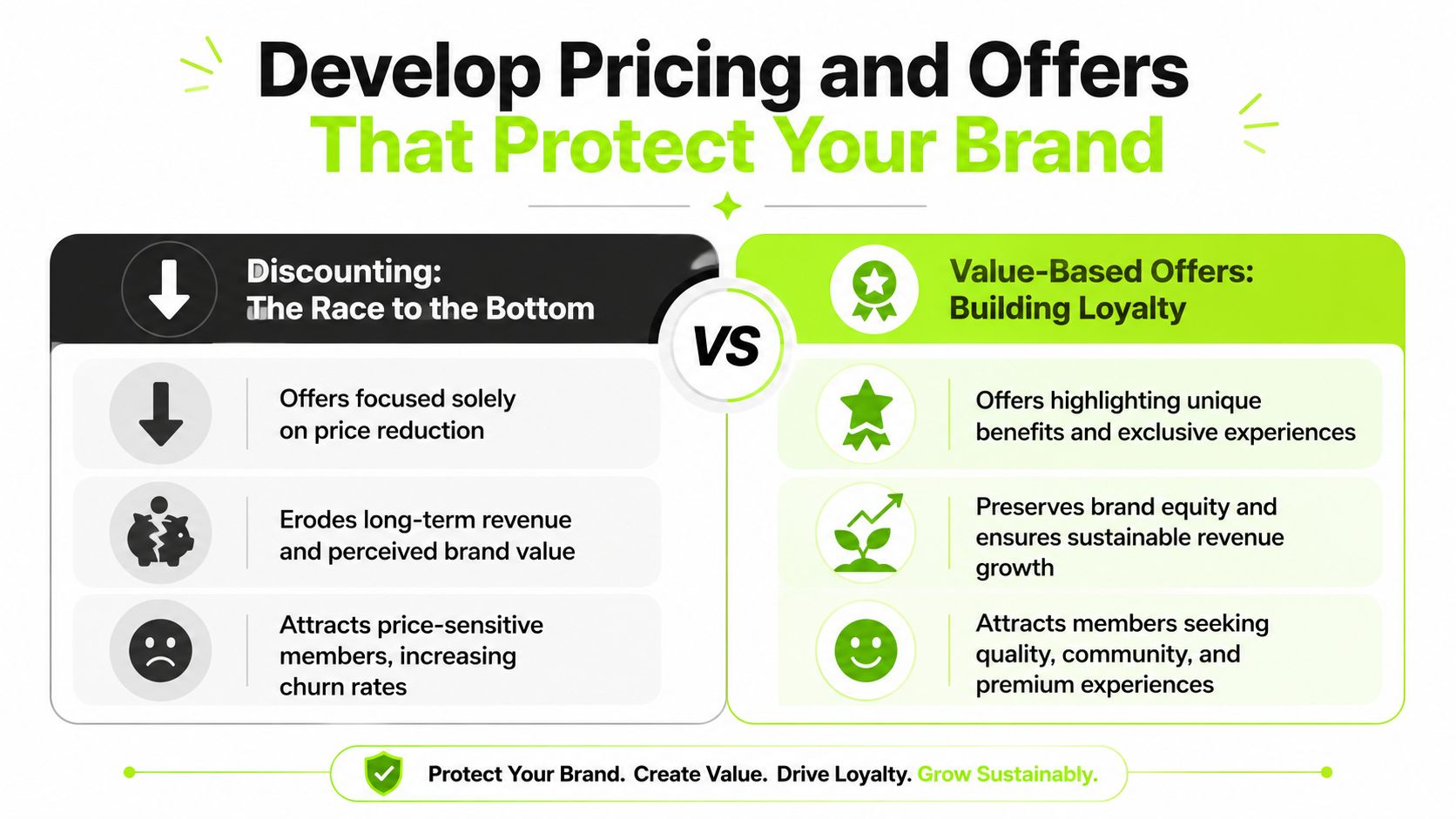
That approach usually creates a different problem. You train the market to wait for discounts, upset existing members, and weaken the perceived value of joining.
Discounting isn't a growth strategy
That should force a rethink.
Discounting can create a short spike in response, but it often attracts the least committed buyer. Those prospects compare on price first and leave quickly when another offer appears elsewhere. That's not the member base most clubs want to build.
Better offers focus on fit
The stronger option is to create entry points, not cheapened membership.
That can mean:
| Offer type | What it does | Why it protects brand |
|---|---|---|
| Trial or preview membership | Lets prospects experience the club before a full commitment | Preserves headline pricing |
| Flexible play categories | Suits golfers with variable schedules | Aligns value with usage |
| Social or lifestyle tiers | Opens the door for non-traditional members | Broadens relevance without lowering standards |
A good offer removes friction. It doesn't apologise for price.
What clubs should communicate instead of "save now"
The message should be about usefulness and belonging.
For example:
- Show how the category fits real life rather than listing technical terms only.
- Explain who the offer is for such as returning golfers, younger professionals, or those easing back into regular play.
- Use nurture to support value so prospects understand the experience before seeing the commitment.
Protecting your brand doesn't mean being rigid. It means being clear about the value you offer and designing pathways into it.
That distinction matters for clubs that want sustainable growth. The market doesn't need more emergency offers. It needs membership structures that make sense for modern golfers while keeping pricing integrity intact.
If you're working out how to increase golf club membership without starting a race to the bottom, this is one of the biggest strategic decisions you'll make. Price should support positioning. It shouldn't replace a proper conversion process.
Create an Onboarding Programme That Builds Loyalty
Winning a signed membership form isn't the finish line. It's the handover point between sales and retention.
Many clubs put all their effort into getting the new member over the line and almost none into what happens next. Then they act surprised when a new joiner disappears, plays a little, never really settles, and leaves later.
Retention starts in the first few weeks
Recent 2025 membership data showed nearly 10 percentage points of overall growth, with junior participation up by 10.5 percentage points and club-member respondents rising from 84% to 86%. That improvement reflects more than acquisition. It reflects clubs broadening appeal and keeping people engaged.
A new member decides very quickly whether your club feels easy to join and easy to belong to.
The first stretch should never be left informal.
A practical onboarding blueprint
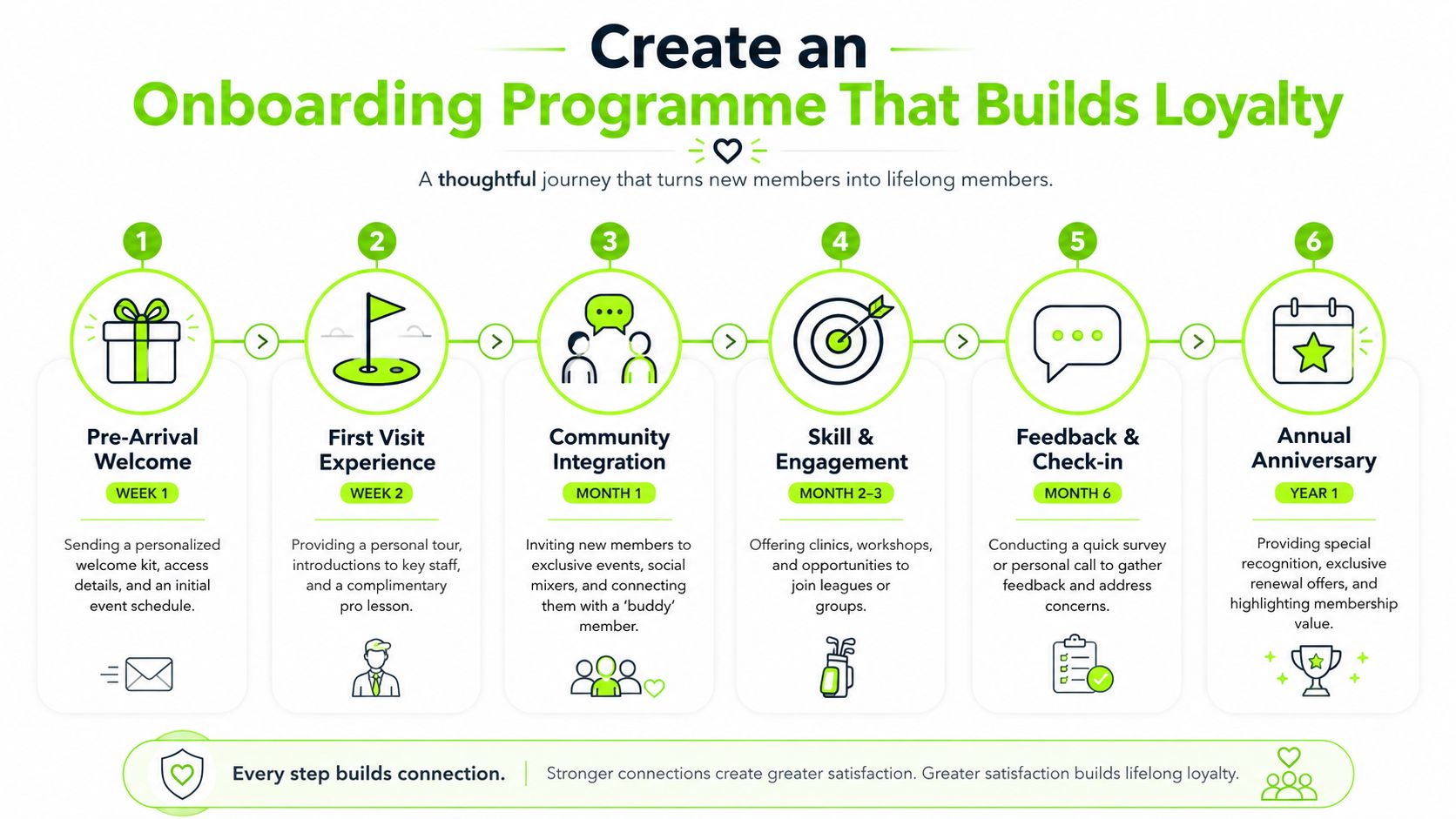
A useful onboarding programme can be simple, but it must be deliberate.
Week one matters most
Make the first contact feel organised.
- Send a clear welcome with login details, key contacts, competition basics, and how to book.
- Introduce the next step so the member knows what happens after joining.
- Remove avoidable friction around tee booking, handicap admin, and clubhouse use.
Build human connection early
Most retention problems aren't pricing problems. They're belonging problems.
Use touchpoints like these:
- A hosted first visit with introductions to staff and key areas
- A member buddy or ambassador who can answer informal questions
- A welcome event for recent joiners, especially those who don't already know people at the club
There are good lessons from adjacent sectors too. This piece on automating gym member onboarding is useful because the principle is the same. New members stay when the early experience reduces uncertainty and builds routine.
Keep checking in after the excitement fades
The clubs that retain well don't stop after the welcome email.
Use a simple sequence across the first months:
- Prompt participation in suitable roll-ups, clinics, or social formats
- Check engagement if the member hasn't booked or visited much
- Ask for feedback before frustration hardens into churn risk
New members rarely leave because of one big issue. They leave because nobody noticed the small issues early enough.
Onboarding is where long-term value is won or lost. If your club wants to grow membership sustainably, don't treat retention as something that happens naturally. Build it into the same system that brought the member in.
Measure What Matters and Optimise Your Growth Engine
Once the club has enquiry handling, nurture, pricing, and onboarding in place, the final step is measurement. Not vanity metrics. Not vague reports about website traffic being "up". Useful numbers tied to movement through the pipeline.
If you can't see where prospects stall, you can't improve the system.
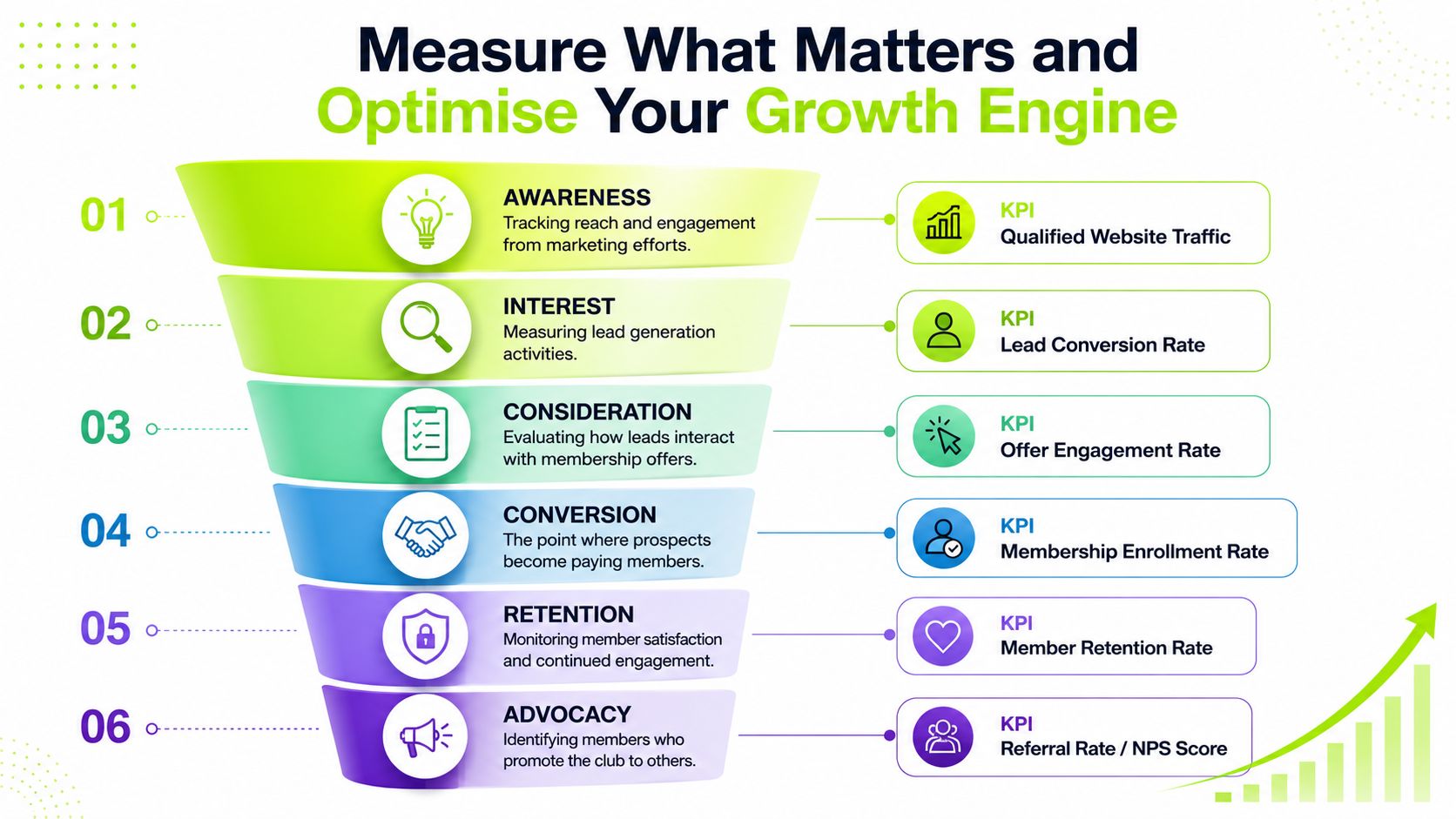
Track the stages that lead to revenue
A practical dashboard for membership growth should answer a few plain questions:
| Funnel stage | Question to ask |
|---|---|
| Enquiry | How many qualified leads entered the pipeline? |
| Response | How quickly did the club reply? |
| Nurture | How many prospects engaged with follow-up? |
| Visit | How many booked and attended a club visit? |
| Conversion | How many visitors became members? |
| Onboarding | How many new members actually activated and engaged? |
That gives management something they can act on.
If enquiry volume is healthy but visits are low, the problem sits in qualification or nurture. If visits are happening but sign-ups are weak, the offer or sales conversation needs work. If sign-ups are fine but retention is poor, the onboarding experience needs attention.
What to stop measuring first
Many clubs spend too much time looking at top-of-funnel noise.
Less useful metrics on their own include:
- Website sessions without qualification data
- Social media engagement without enquiry attribution
- Email opens without movement to visits or conversations
Those numbers can have a role, but they don't tell you whether membership revenue is becoming more predictable.
For clubs running open days, trial experiences, or member guest events, a simple guide to event ROI calculation can help teams connect activity to outcomes rather than judging success by turnout alone.
Make ownership clear inside the club
Membership growth is never just a marketing task. It sits across management, sales handling, and member experience.
A clean division of responsibility helps.
For general managers
- Own system visibility so the club can see pipeline health at a glance.
- Review bottlenecks monthly rather than discussing growth only when numbers dip.
- Protect process discipline so enquiry handling doesn't depend on one staff member.
For membership directors or secretaries
- Own lead progression from enquiry to visit to sign-up.
- Standardise follow-up so every prospect gets a timely and relevant path.
- Record outcomes properly instead of relying on memory or inbox searches.
For PGA professionals and front-of-house teams
- Support the visit experience because tours and first impressions influence conversion.
- Help with onboarding touchpoints so new members get integrated quickly.
- Flag disengagement early when a new member isn't showing up or settling in.
Clubs grow faster when everyone can see the same pipeline and understands their role in moving people through it.
If you're working out how to increase golf club membership, think less about isolated campaigns and more about a connected growth engine. Enquiry generation matters. But predictable results come from what happens after the click, after the form fill, and after the first conversation.
A club that responds fast, qualifies properly, nurtures consistently, protects its pricing, welcomes members well, and tracks each stage of the pipeline won't need to guess where growth will come from. It will be able to see it.
If your club wants a clearer view of its membership pipeline, GolfRep helps build systems for lead handling, follow-up, CRM visibility, and conversion tracking so growth doesn't depend on spreadsheets, guesswork, or ad spend alone.
Ready to tap into our proven growth system?