Golf Course Management Degree: An Owner's Guide for 2026

Most committees still ask the wrong question about a golf course management degree.
They ask whether the qualification sounds impressive. They should ask whether the person can stop revenue leaking out of the top of the membership funnel. In the UK, 68% of golf club enquiries are never responded to within 24 hours, and only 22% of clubs track conversion from enquiry to booked visit according to UK-Golf's 2025 Membership Growth Report. That is not a marketing problem. It is a management problem.
A good golf course management degree matters because modern clubs need more than a tidy course and a competent office. They need someone who understands operations, finance, people, course standards, and the systems that turn interest into paid membership. If you're hiring for 2026, treat this role as a commercial appointment, not an administrative one.
The Hidden Growth Problem Your Club Is Facing
68% of club enquiries go unanswered within 24 hours, as noted earlier. That figure explains why many clubs miss membership targets even when interest in joining is healthy.
The main problem is not awareness. It is conversion discipline.
An enquiry arrives. No one owns it. It sits in a shared inbox, gets passed between the pro shop and the office, or ends up on a handwritten note beside the till. By the time someone replies, the prospect has already compared other clubs, booked a visit elsewhere, or decided the club feels disorganised.
That failure hits revenue fast. Every missed callback is a lost chance to book a tour, start a conversation about membership category, and move a prospect into a joining process the club can measure. Committees often focus on the top of the funnel because it feels active. The primary leak sits in the handover between first contact and booked visit.
Why course quality alone won't save you
A well-presented course helps retention. It does not repair a weak sales process.
Prospective members judge a club long before they stand on the 1st tee. They judge it by response speed, clarity, follow-up, and whether anyone takes ownership of their enquiry. If those basics fail, extra advertising spend just sends more prospects into the same broken system.
Use a simple test. If the committee cannot see last month's enquiry count, booked visits, follow-up rate, and joins by source, the club does not have a growth system. It has scattered activity.
What this means for a strategic hire
A properly trained manager fixes this by building process, assigning responsibility, and making conversion visible week by week.
That is the commercial value of a golf management graduate. The right hire does more than keep tee sheets full and departments organised. They can set response standards, tighten front-of-house handovers, create visit-booking routines, and report on where prospects stall. That gives the club something far more useful than good intentions. It gives the committee a predictable membership pipeline.
If your club keeps saying, "we've had plenty of enquiries," but membership still feels flat, review your follow-up system first. GolfRep's analysis of how most golf clubs lose 30% of enquiries without realising shows how often the loss happens in ordinary day-to-day handling, not in marketing.
What a Golf Management Degree Actually Teaches
A proper golf course management degree isn't just a greenkeeping course with a business module bolted on.
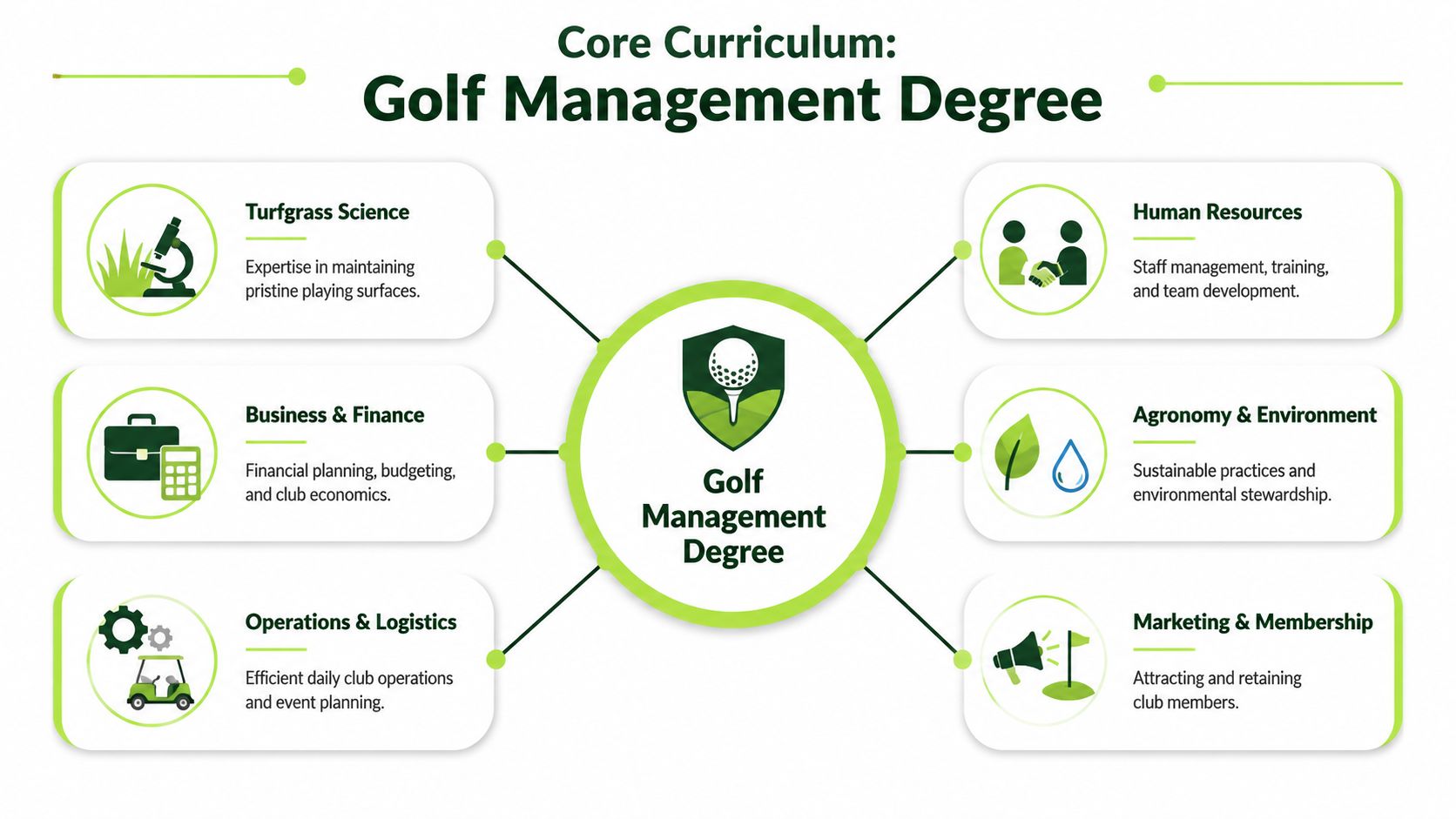
The strongest programmes combine course science, club operations, finance, staffing, compliance, and member-facing commercial work. That blend is what makes the qualification useful to a real club, because a golf facility is part sporting venue, part hospitality business, part land management operation, and part membership organisation.
The technical side
At the technical end, students are taught subjects that directly affect playing conditions and maintenance planning.
That usually includes turfgrass science, agronomy, pest control, equipment maintenance, and facility infrastructure management. In UK conditions, that matters because drainage, irrigation, soil performance, and weather exposure aren't side issues. They shape member satisfaction every week of the year.
A manager who understands those areas can make better decisions with the course team, challenge suppliers intelligently, and balance presentation against cost. They won't need to be the head greenkeeper. They do need to understand the consequences of every operational decision.
The commercial side
The other half of the degree is where many committees underestimate its value.
Students also cover business management, budgeting, hospitality operations, marketing, and club administration. That's the difference between someone who can maintain standards and someone who can run a club properly.
For a committee-led club, that skill set is particularly useful because it turns vague discussions into measurable decisions. Instead of debating "how to get more members", a trained manager can define a process, assign responsibility, monitor the pipeline, and report clearly.
A useful overview of the wider discipline sits in GolfRep's guide to golf course management, especially for clubs trying to connect day-to-day operations with membership performance.
The parts that matter most in practice
If I were hiring, I'd care less about academic language and more about what the person can apply on site. The strongest graduates usually bring three practical strengths:
- Operational judgement: They understand how course standards, staffing, machinery, and scheduling affect the member experience.
- Commercial discipline: They can read numbers, manage budgets, and spot where revenue is being lost.
- System thinking: They don't rely on memory, goodwill, or handwritten notes to run key processes.
A club doesn't need another well-meaning generalist. It needs someone who can organise work, report clearly, and make growth measurable.
That's why the degree is relevant. It prepares someone to manage a complex golf business, not just admire the game from the sidelines.
Understanding UK Accreditation and Entry Requirements
Accreditation is a hiring filter, not a footnote. If your club wants someone who can improve operations and build a membership process that converts interest into joined members, the degree title alone is not enough.
In the UK, the benchmark programme is the PGA's Applied Golf Management Studies route, delivered through a small group of partner universities, as set out by the The PGA's AGMS programme information. That matters because it tells you the candidate trained inside a recognised golf-industry pathway rather than a broad sports course with a golf label attached.
Entry standards matter too. Programmes tied to the PGA route typically expect academic qualifications and a playing standard that shows the applicant has spent serious time in the game. Committees often underrate that point. They should not.
A candidate with that background usually understands how golfers judge value. They know why tee availability, pace of play, competition administration, presentation standards, and staff response times shape retention. That knowledge supports more than course operations. It helps a manager diagnose why a membership enquiry stalls after the first visit, why trial rounds fail to convert, and why a weak follow-up process gets blamed on price.
Why accreditation affects commercial performance
A generic business graduate may be able to produce reports. A PGA-aligned graduate is more likely to understand the practical chain from golfer experience to member conversion.
That distinction shows up in daily decisions. How are visitor details captured. Who follows up after an open day. How quickly does the club respond to an enquiry. Is there a defined handover from golf operations to membership sales, or does every lead sit in someone's inbox until it goes cold? Accredited training does not guarantee commercial discipline, but it usually gives you a candidate who can connect golf operations, customer experience, and revenue without needing the whole club explained to them from scratch.
If your committee wants a plain-English reference point on what formal credentials signal in hiring, this guide to professional qualification meaning is useful.
What to check before you shortlist anyone
Ask direct questions and listen for specific answers.
- Accreditation: Was the degree part of a PGA-recognised route, or was it a general sports management programme?
- Industry placement: Which club or facility hosted the placement, and what responsibilities did the candidate hold?
- Commercial exposure: Have they worked with enquiry handling, visitor conversion, membership administration, budgeting, or reporting?
- Systems discipline: Can they explain how they would track a lead from first contact to joined member?
- Committee readiness: Can they present a recommendation clearly, with numbers, actions, and accountability?
Clubs make weak hires when they stop at golfing credibility. You need proof that the candidate can install process, measure performance, and remove friction from the path between first enquiry and membership sign-up. That is where this qualification starts to pay for itself.
Career Pathways and Expected Salary Ranges
Salary matters because it signals scope. If you hire a graduate from a golf management programme and use them as little more than an extra pair of hands, you waste both the salary and the qualification.

The stronger career routes are the ones that put commercial responsibility alongside operational accountability early. That means roles such as assistant manager, golf operations supervisor, membership and operations coordinator, or a trainee manager post with reporting, budgeting, and member service responsibility built in.
Those titles matter less than the brief.
If the role includes enquiry handling, follow-up standards, visitor conversion, retention reporting, and cross-department coordination, you are building a future club leader. If it only covers shift cover and basic administration, progression slows and the club gets little return.
Where graduates usually progress
Graduates with range tend to move into posts such as:
- Operations Manager
- Director of Golf
- General Manager
- Course Manager or Superintendent, where the programme had a stronger turf and maintenance focus
- Membership or Commercial Manager, especially at clubs that need disciplined sales process more than traditional hierarchy
For committees focused on growth, the most useful pathway often runs through operations and membership before general management. That route produces leaders who understand staffing, standards, member expectations, and the sales process that turns enquiries into subscriptions. Clubs rarely have a lead generation problem alone. They have a follow-up problem, a handover problem, and an accountability problem.
A graduate who can fix that earns their salary quickly.
What salary ranges actually mean
Salary ranges vary by region, club size, and the split between golf, hospitality, and estate responsibilities. Broadly, entry-level graduate roles in UK club operations or assistant management often sit in the mid-£20,000s to low-£30,000s. Mid-level operational and departmental leadership roles usually move higher, and general management salaries rise sharply once full budget, people, and commercial responsibility sit with one person.
Do not obsess over finding the cheapest graduate. Set pay against outcomes.
If you expect the hire to improve rota control, tighten reporting, reduce dropped enquiries, support member retention, and give the committee cleaner numbers each month, pay for that level of responsibility. A lower salary only makes sense for a narrower role with limited decision-making authority.
One practical point on hiring. Candidates do not all arrive through a standard three-year university route, and some strong prospects first come through a bridge to a university degree. That matters if your club wants capable applicants who took a less traditional route into the industry but still developed the discipline and academic grounding needed for management.
The commercial return committees should expect
A good graduate hire should improve more than daily operations. They should help build a predictable membership pipeline.
That means better response times to enquiries, clearer tour and trial processes, tighter follow-up after visitor rounds, cleaner CRM notes, and regular reporting on how many prospects move from first contact to joined member. Very few clubs measure those stages properly. Fewer still assign ownership.
Hire for that gap.
The right person can grow into general management, but the immediate value is simpler. They bring structure to revenue activity that too often relies on memory, goodwill, and whoever happens to answer the phone.
Evaluating Alternatives to a Full Degree
A full degree isn't the only route into golf club management, and clubs shouldn't pretend otherwise.
For some roles, an apprenticeship, affiliate pathway, or targeted professional certification is the better fit. That is especially true for smaller clubs, volunteer-led operations, or appointments where local governance knowledge matters more than a broad academic qualification.
When a degree is the right choice
Choose the degree route when you need someone with long-term leadership potential and enough range to manage multiple parts of the business.
That usually suits clubs dealing with complex operations, stretched staffing, or a need for stronger commercial control. A graduate can often bridge departments more effectively because they've been trained across technical, operational, and business areas.
When an alternative makes more sense
Alternative routes can work well when the role is narrower, the budget is tighter, or the club needs someone grounded in local practice rather than academic breadth.
That might include apprenticeship-trained staff, industry certifications, or candidates who've progressed internally and added formal short-course training. For aspiring professionals who need a stepping stone before full higher education, this explanation of a bridge to a university degree is a useful reference.
Training pathways for golf club roles
| Qualification | Typical Duration | Core Focus | Best For |
|---|---|---|---|
| PGA-accredited golf management degree | Multi-year | Broad operational, business, and technical training | Clubs hiring for future leadership and cross-functional responsibility |
| Apprenticeship route | Structured work-based pathway | Practical experience, on-the-job development | Clubs needing hands-on operational support with room to grow |
| Professional certification | Shorter and targeted | Specific management or club administration skills | Committee-led clubs needing practical governance and operational support |
| Internal progression plus short courses | Flexible | Club-specific knowledge and role development | Smaller clubs with trusted staff ready for more responsibility |
The practical trade-off
A degree gives breadth. Alternative pathways often give speed, affordability, and local relevance.
Committees should decide based on the role they need filled, not on prestige. If you're hiring someone to modernise operations, lead teams, and build process discipline, the degree has a strong case. If you need a reliable club operator who understands the realities of your governance model and community expectations, a certification-led route may be the sharper decision.
The weak option is not "non-degree". The weak option is hiring without clarity.
How to Maximise the Value of Your Graduate Hire
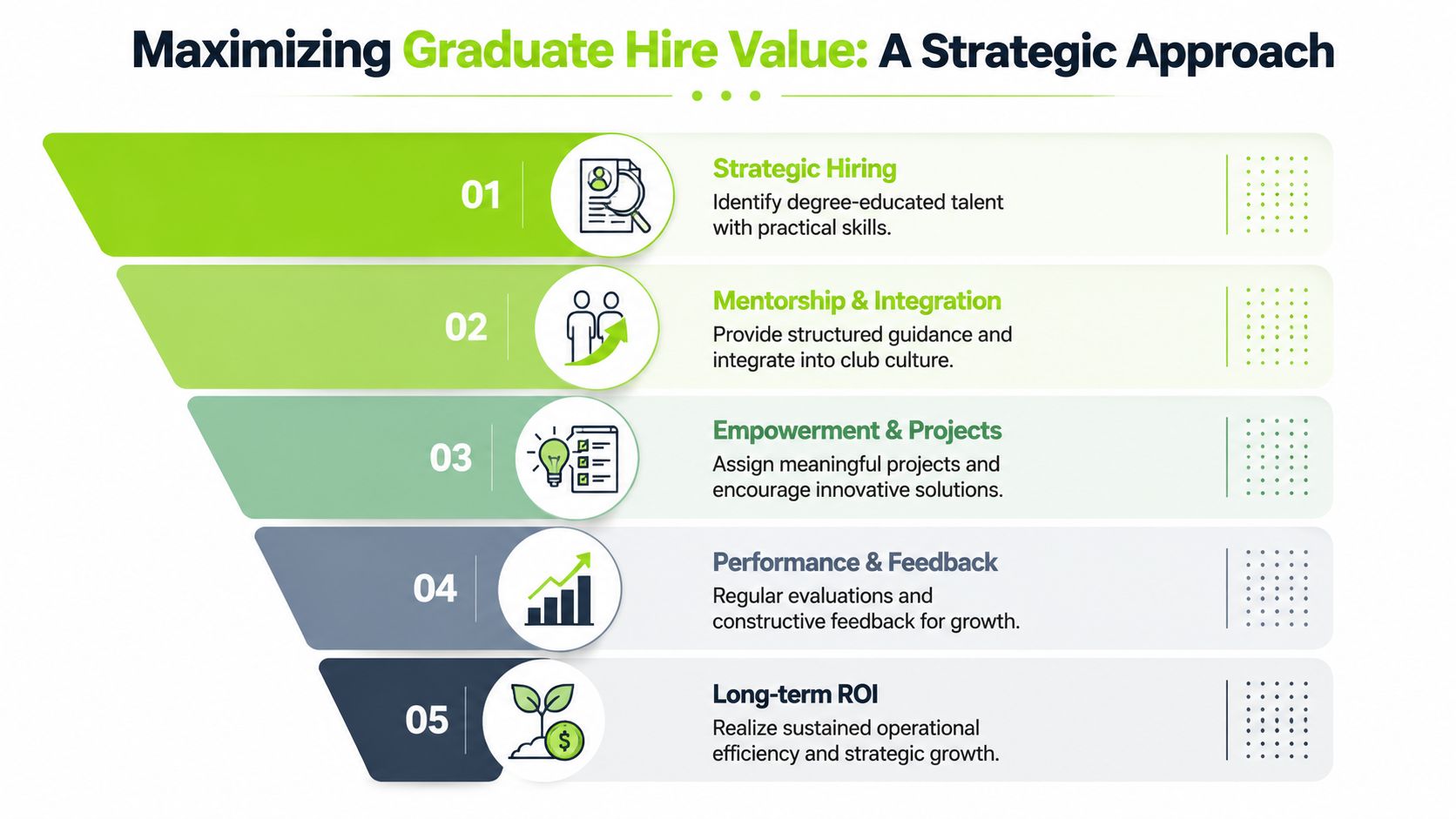
A graduate hire pays off when you give them ownership of revenue-critical processes, not just daily admin. If your committee wants better membership growth, start with the point where clubs lose money fastest. Poor enquiry handling.
Too many clubs appoint capable people and then trap them in inbox management, fragmented instructions, and slow committee approvals. That is how a promising hire becomes an expensive coordinator instead of a manager who improves conversion, retention, and operational control.
Put them in charge of enquiry handling
Give one person clear ownership of the membership pipeline. In many clubs, that should be your graduate hire.
The immediate priority is simple. Every enquiry needs a fast response, a defined next step, and consistent follow-up until the prospect either books a visit, joins, or drops out for a known reason. If no one owns that process, leads sit in personal inboxes, staff reply inconsistently, and the club loses prospects it already worked to attract.
Their remit should cover:
- Response standards: Set target response times and enforce them.
- Lead capture: Record every enquiry in one place, not across email chains and notebooks.
- Follow-up process: Schedule calls, visit invitations, reminders, and post-visit contact.
- Pipeline reporting: Show how many enquiries convert to visits, and how many visits convert to paid memberships.
The goal is not speed on its own. The goal is to turn interest into booked visits while intent is still high.
Give them systems and authority
Responsibility without tools is committee theatre.
A graduate with commercial sense cannot improve lead conversion using memory, goodwill, and scattered spreadsheets. Give them a CRM, agreed workflow stages, email and call templates, and permission to standardise how prospects are handled. That is how you create consistency across staff, reduce missed follow-up, and stop membership sales from depending on whoever happens to be available that day.
Clubs that want this role to grow into broader operational leadership should also define reporting lines early. If every process change needs repeated committee debate, progress slows and accountability disappears. GolfRep's view on how strong golf club managers improve oversight and performance is a useful benchmark for setting that scope properly.
Measure the pipeline, not just the outcome
Final membership numbers are a lagging result. They do not tell you where the process is breaking.
Your graduate hire should track each stage weekly. Count enquiries received, first-response times, visits booked, visits attended, proposals sent, and memberships closed. Then review the drop-off points. If enquiries are strong but visits are weak, the response process is the problem. If visits are healthy but joins are poor, the club's sales conversation, pricing presentation, or onboarding offer needs work.
That is the standard. Anything less is guesswork.
Set a hard brief for the first 90 days
Do not tell them to "help with membership." Give them a measurable operating brief.
- Audit the current journey: Map every step from initial enquiry to joining decision.
- Fix ownership gaps: Decide who replies, who follows up, and who reports results.
- Standardise communication: Create scripts, templates, and service levels for every lead source.
- Install weekly reporting: Review pipeline numbers in management meetings, not once a quarter.
- Cut approval delays: Let the manager make routine process improvements without waiting for endless sign-off.
A degree-trained hire creates value when the club uses them to build repeatable systems. If you want better membership growth, treat this role as a commercial operator with authority over process, reporting, and follow-up discipline.
Building a Predictable Future for Your Club
A golf course management degree matters because clubs are more complex than many committees admit.
You're not just maintaining a course. You're managing people, standards, member expectations, facilities, cash flow, and a membership pipeline that can easily break through poor follow-up. The right hire brings structure to all of that.
The biggest mistake is treating this role as a traditional appointment defined by routine tasks. In a competitive market, the stronger view is simple. Hire for operational control and commercial clarity.
A good graduate won't solve every issue on day one. But they should be able to organise work, improve decision-making, and build systems that make growth more predictable. That's the value of the qualification.
Clubs that keep relying on manual processes, fragmented ownership, and delayed responses will continue to lose opportunities they already paid to generate. Clubs that invest in capable management and proper systems give themselves a much better chance of stable, measurable growth.
If your club wants a clearer, more reliable way to turn enquiries into booked visits and new members, GolfRep helps golf clubs build predictable pipelines through lead generation, structured follow-up, and CRM-led conversion systems.
Ready to tap into our proven growth system?