Golf Course Advertising: A Growth Club Guide

Effective golf course advertising is no longer just about visibility. Nearly half of UK clubs already use advertising, but the commercial win comes from treating paid ads as an acquisition layer supported immediately by referrals, CRM and structured nurture.
A typical club manager can see the problem clearly. A weekday tee sheet has gaps, the membership pipeline looks uneven, and the committee wants growth without undermining pricing or overloading the team. The first response is often a poster, a social post or a broad local campaign. Those activities may create attention, but attention alone doesn't pay for staffing, course maintenance or clubhouse operations.
GolfRep approaches advertising as part of a wider commercial system. The sequence is ATTRACT, NURTURE, CONVERT, RETAIN, with each stage connected to the club's capacity and revenue objectives. A campaign for visitor golf should not run in the same way as a campaign for full membership, and neither should be judged only by impressions or clicks.
Understanding Modern Golf Marketing
A club with unused weekday capacity has several possible explanations. The audience may not know the tee times exist, the offer may be unclear, the booking journey may create friction, or the club may generate interest that nobody owns internally. Printing more flyers only addresses one possibility, and often not the most important one.
Modern golf course advertising gives operators a way to test those assumptions. A club can promote a specific visitor package to golfers within a practical travel area, direct them to a dedicated landing page, record the enquiry in a CRM and measure whether the campaign produces bookings. A membership campaign can use different creative, a different form and a different follow-up path.
From passive awareness to commercial control
Word of mouth still matters. In fact, member referrals remain a powerful source of growth, but relying on them alone leaves the club exposed to seasonality, member demographics and local awareness. Paid advertising creates a controllable input. It lets the club decide which product to promote, who should see it, when the campaign should run and what action the prospect should take.
That doesn't mean every club should spend more. The right question is whether the club can handle the demand a campaign might create. If the membership secretary has no agreed follow-up process, the booking team is already stretched, or the course can't accommodate the proposed visitor volume, increasing reach may reduce service quality rather than improve net revenue.
Commercial rule: Advertise the product the operation can deliver consistently, not simply the product the committee wants to grow.
A practical advertising plan starts with one constraint. It might be quiet weekday tee times, weak society enquiries, limited awareness among local non-members or poor conversion from open-day registrations. The campaign then needs a defined audience, a clear action, an accountable owner and a reporting method that connects spend to booked revenue.
GolfRep's wider perspective on marketing in golf is useful here because advertising sits inside the club's full commercial journey. The strongest campaigns don't stop at exposure. They create a measurable route from first contact to visit, purchase, membership or repeat use.
The UK Golf Advertising Market in 2025/26
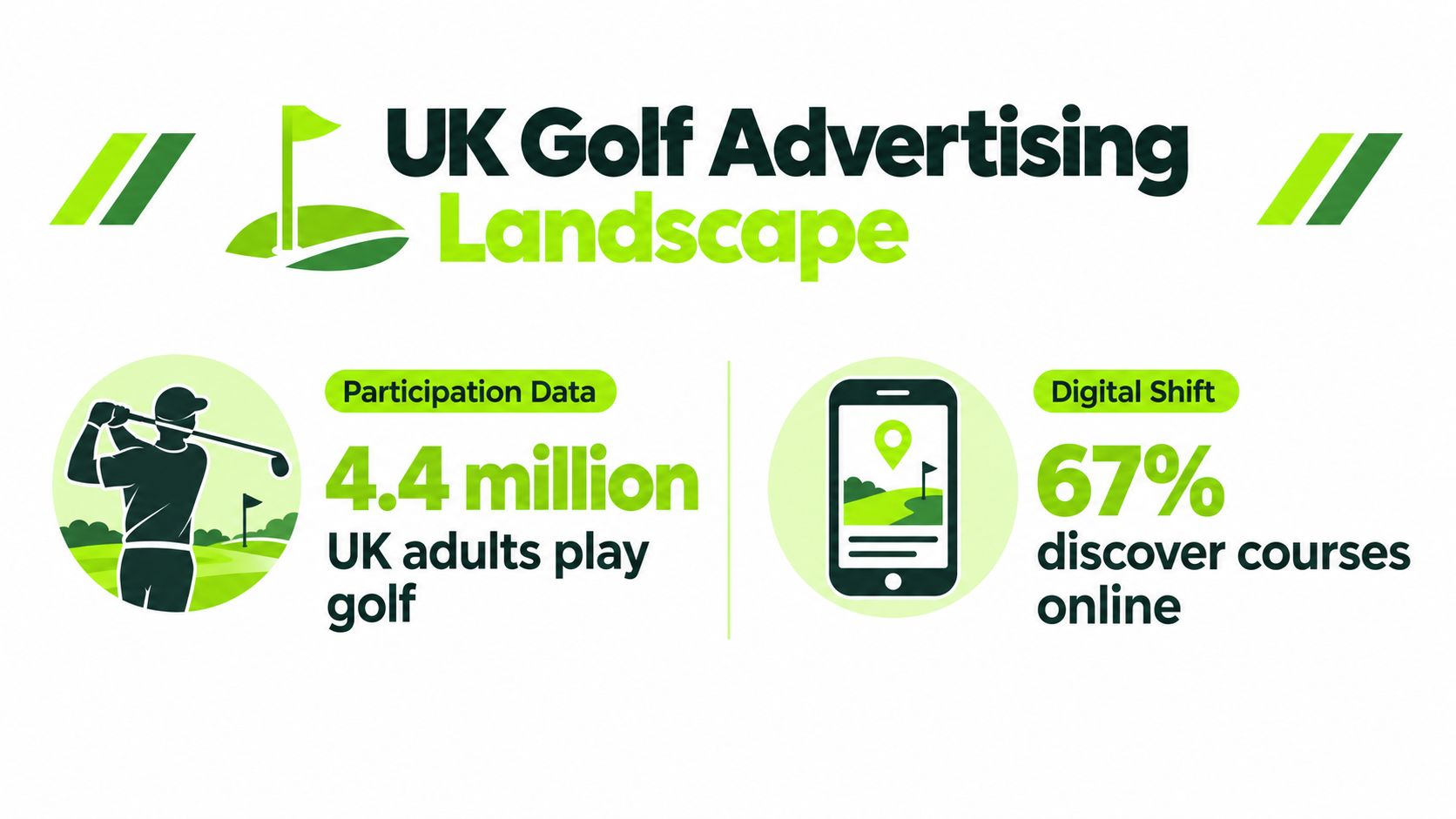
The addressable audience is broader than the traditional view of golf promotion. The R&A's UK golf satellite account for 2023 reported that 4.3% of UK adults, or 2,356,530 people, played golf at least once in the previous four weeks. It also reported that 9.9% of adults, or 5,355,811 people, played at least once in the previous 12 months.
That gap has a direct commercial implication. A club can address recent players, occasional golfers, lapsed golfers and people considering a more regular route into the sport, rather than only committed members. In England, the same account estimated that 4.2% of adults were regular golfers and 9.6% were occasional golfers. Local advertising should reflect those different levels of commitment, with separate offers and follow-up routes where capacity allows.
Advertising is already part of club promotion
Advertising is established in UK golf rather than a new experiment. Hillier Hopkins' 2022/23 survey, reported by BBC Sport, found that 47% of members' clubs used advertising as a marketing activity. Member referrals were used by 75%, social media by 63%, email campaigns by 31% and networking by 18%.
The practical lesson is channel integration. Clubs typically combine paid promotion with referrals, email and social communication. Advertising creates the initial opportunity. Referrals and CRM nurture then provide reassurance, reminders and a route to action. Without that second phase, a campaign can produce enquiries that the club never converts.
Recent findings point to a more selective approach. In the Hillier Hopkins 2025/26 survey, 55% of members' clubs said member referrals were their most successful marketing activity, followed by social media at 49%, email campaigns at 23%, advertising at 21% and networking at 15%, as reported in ClickThrough Marketing's sector report. Paid media should therefore feed a defined acquisition system, with referral prompts, automated email nurture, open days or a personal sales conversation ready before spend increases.
Audience size does not choose the offer
Participation data supports the opportunity, but it does not determine what a club should advertise. A premium visitor round, flexible membership, junior pathway and society package appeal to different audiences and place different demands on tee sheets, staff and follow-up.
The commercial test is specific: segment by purpose, geography, playing frequency and operational capacity, then connect each audience to a deliverable product and conversion path. Broad reach can create attention. Targeted reach, linked to available inventory, CRM automation and booked revenue, provides a useful test of demand.
Choosing the Right Advertising Channels
Channel selection should follow the revenue objective, not habit. A club that wants more society bookings needs to reach organisers and businesses differently from a facility seeking casual visitor rounds. A membership campaign may need education and reassurance, while a quiet tee-time campaign may need speed and convenience.
Five practical channel choices
Paid social works well when the club has strong visual assets and a clear local audience. Facebook and Instagram can support membership open days, junior programmes, women's introductions, visitor packages and clubhouse events. The weakness is intent. A person may engage with a course image without having any immediate plan to buy, so the campaign needs a defined next step, such as an event registration or enquiry form.
Paid search captures existing demand. Someone searching for visitor golf, societies, golf membership or a local course may already have a commercial need. Search tends to be valuable when the club's landing page answers practical questions about pricing, availability, location, inclusions and the next action. It can be less effective where the club has little capacity or where the search terms are too broad.
Local display and retargeting can keep the club visible to people who have already visited a page or engaged with an offer. This approach suits longer decisions, particularly membership and events. It shouldn't replace a clear proposition, though. Repeating a generic brand message to previous visitors rarely solves uncertainty.
Partnership advertising reaches audiences through complementary local organisations, employers, hotels, tourism businesses and community groups. It can work especially well for societies, corporate golf and hospitality events, where trust and local relevance influence the buying decision.
Email and database activation are owned channels rather than paid media, but they complete the system. A club can use advertising to attract new prospects while using email to nurture previous visitors, open-day attendees and people who have expressed interest. Clubs should also review current platform options through a neutral guide to the top digital marketing platforms 2026 before committing to software.
Match the channel to capacity
Use a simple decision filter:
| Commercial objective | Suitable starting point | Operational requirement |
|---|---|---|
| Quiet weekday tee times | Paid social, search and database campaigns | Live availability and a fast booking route |
| Full membership | Paid social, search and local partnerships | A clear proposition, tour process and follow-up owner |
| Societies | Search, direct outreach and partnerships | Package pricing, dates and organiser response process |
| Events and functions | Search, display and venue partnerships | Photos, menus, capacity information and enquiry handling |
| Junior or flexible entry points | Paid social and community partnerships | A defined pathway and staff availability |
The key trade-off is reach versus intent. Social campaigns may create more affordable attention, while search can produce fewer but more commercially motivated enquiries. Neither is automatically superior. The correct mix depends on what the club can fulfil and how well it can move a prospect to the next stage.
For practical guidance on one of the most common paid channels, see GolfRep's approach to Facebook ads for golf courses. The principle is consistent across channels: define the action before spending the budget.
Creative Strategy and Targeting Approaches
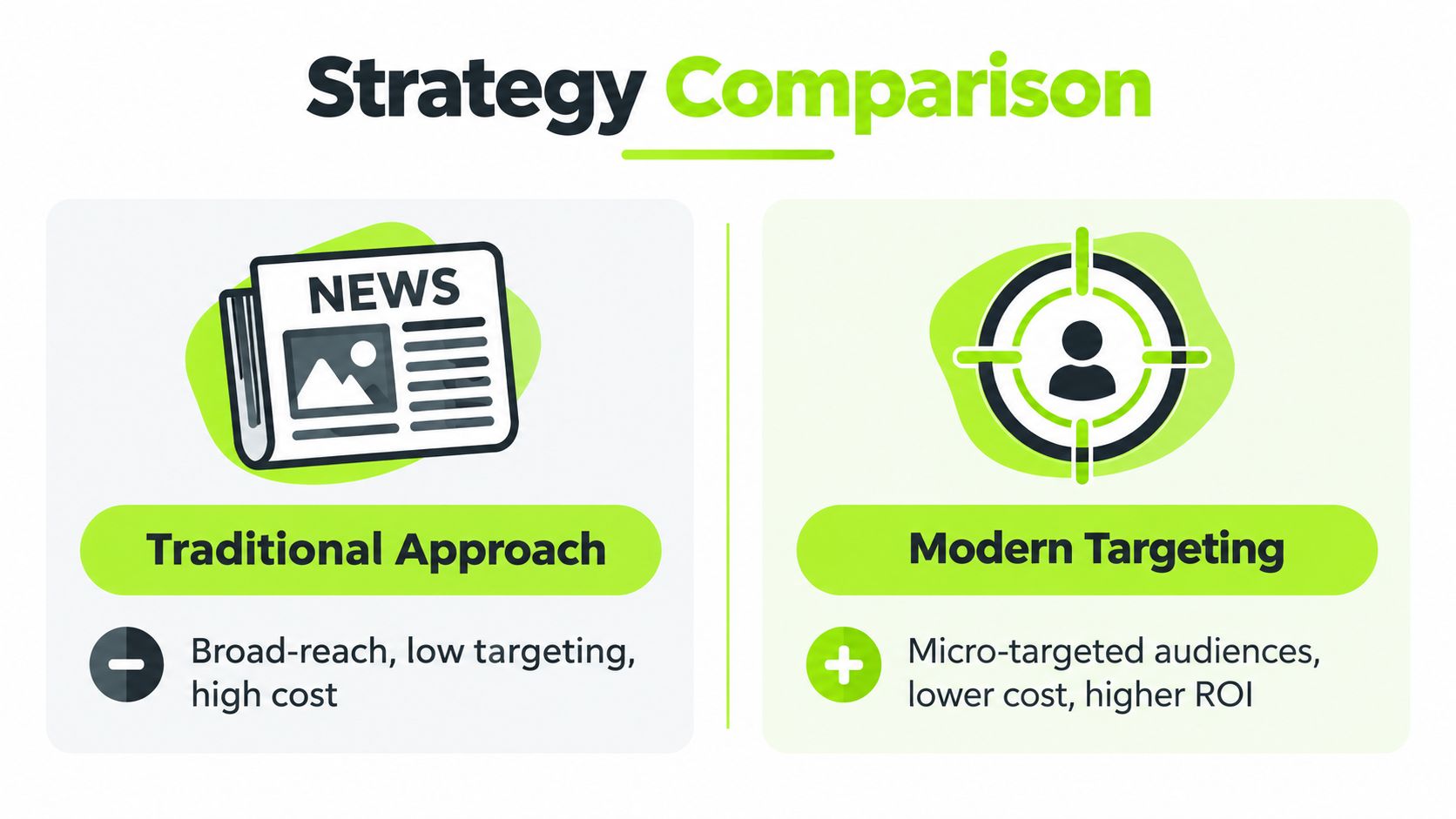
Traditional golf advertising often promotes one product to everyone. The message might show a beautiful course, mention membership and invite the reader to enquire. It can look professional while still failing to answer the prospect's real question.
Modern targeting starts with the golfer's route into the club. England Golf recorded 750,071 club members in 2025, up 2.66% year on year, while iGolf surpassed 72,800 subscribers and added nearly 40,000 new registrations, with female sign-ups up 34%, according to The Golf Business. These figures indicate a broadening market that includes golfers seeking flexible ways to play, not only people ready to commit to a traditional full membership.
Segment by decision, not just demographics
A useful campaign structure might separate:
- Newly active golfers, who may respond to a guided introduction, flexible access or a low-pressure club visit.
- Non-member regular players, who may want to compare benefits, playing access, social activity and total annual value.
- Returning golfers, who may need reassurance that the club can fit around work, family or changing circumstances.
- Junior and family audiences, who need clear information about coaching, supervision, progression and practical timings.
- Women entering or returning to golf, where the message should focus on belonging, confidence and an accessible route into club life rather than relying on generic membership language.
The offer shouldn't automatically mean a discount. A better entry point could be a structured visit, a taster session, a guided tour, a flexible playing option or an invitation to a suitable club event. The club protects its pricing while reducing the commitment required at the first step.
Use the handicap journey carefully
A beginner doesn't need the same creative as a golfer comparing clubs. Beginners need clarity about what happens on arrival, whether equipment is available and how they'll be supported. More experienced non-members may care about tee availability, course quality, competition access, practice facilities and the social calendar.
That difference should appear in the landing page as well as the advert. A campaign that says “Join our club” but sends every audience to the same generic membership page forces the prospect to do the segmentation themselves.
The latest participation signals also create a capacity question. England Golf reported 11.83 million scores recorded in 2025, a 16% increase on 2024, while Great Britain rounds were reported as 14% higher in 2025 than in 2024, according to Golf Times. If demand is already strong, advertising should prioritise the audiences and products the club can serve well, rather than maximising volume indiscriminately.
Campaign Design and Creative Execution
Good creative makes the next decision easy. It tells the golfer what's available, who it's for, why it matters and what to do next. Course photography can earn attention, but it rarely provides enough information to drive a booking or a membership conversation by itself.
Build the advert around one action
Start with a specific outcome. Examples include booking a visitor round, registering for an open day, requesting a membership pack or enquiring about a society date. One advert should not ask the reader to choose between several unrelated actions.
Use a practical headline:
- “Weekday visitor golf near [location]”
- “Explore flexible membership at [club]”
- “Plan your next society day”
- “Book a guided club visit”
The supporting copy should clarify the audience and remove avoidable uncertainty. State the relevant playing window, what's included, how to enquire and whether availability is limited by the tee sheet. Avoid claims about being the best, cheapest or most popular unless the club can substantiate them.
Make the landing page do the selling
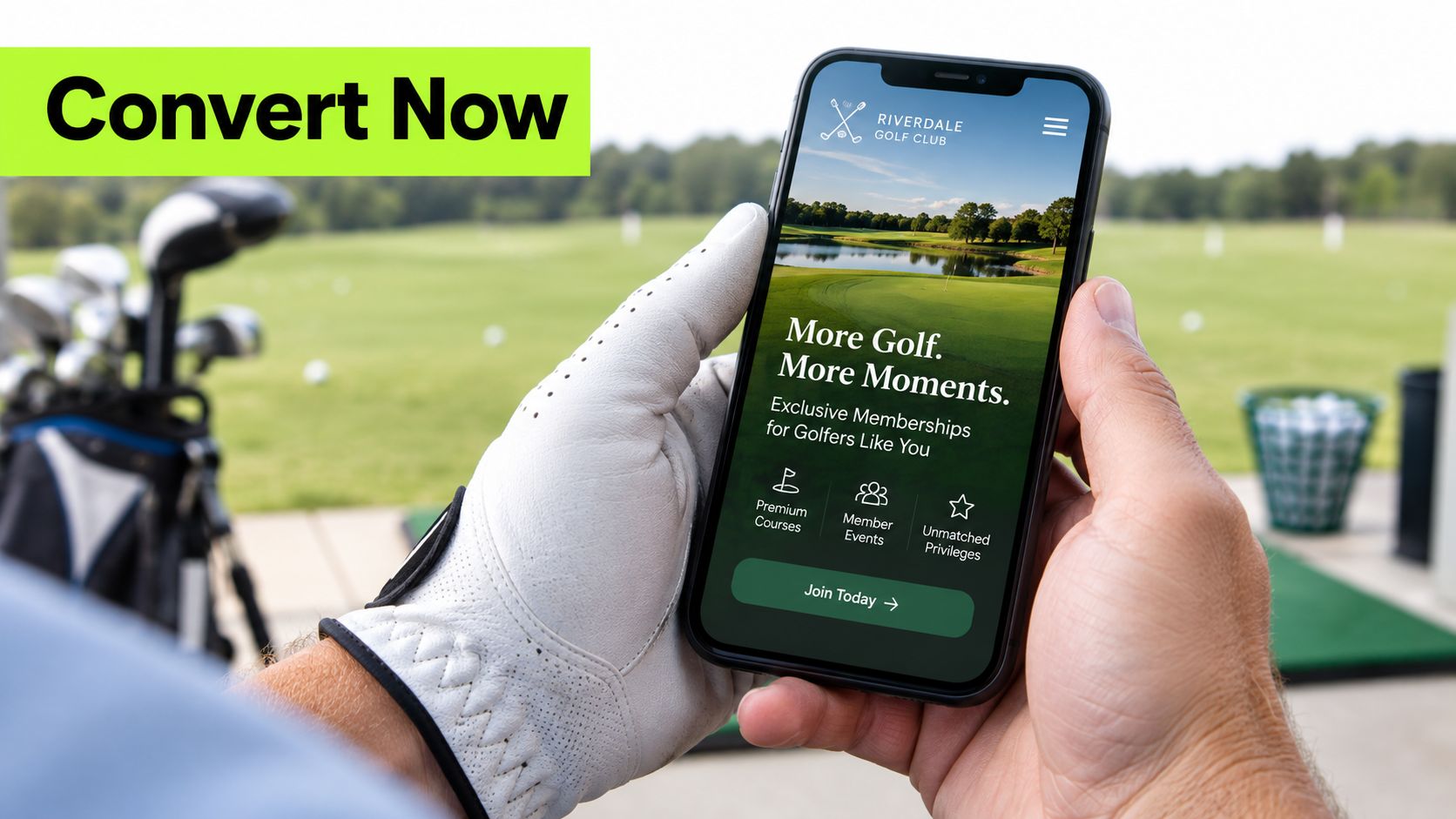
The landing page should continue the promise made in the advert. Include relevant course images, location, key inclusions, practical details, social proof that the club can support, and a short form. A society page needs different information from a membership page, including dates, catering, competition format and organiser contact.
The form should collect enough information to route the enquiry without creating unnecessary friction. Ask what the golfer wants, their preferred timing and the best contact method. Separate service contact from promotional consent. The ICO direct marketing checklist states that consent must involve a positive action, pre-ticked boxes aren't permitted, and silence or inactivity doesn't count as consent.
Practical rule: The advert earns the click. The page earns the enquiry. The team and process earn the revenue.
Test one meaningful variable at a time, such as the audience, headline, offer or landing page. Keep a record of what changed and judge the result by qualified enquiries, booked visits and revenue, not engagement alone.
From Advertising to Automation
Advertising creates a workload as well as an opportunity. Every campaign should have a defined destination, a named owner and a follow-up sequence before it goes live.
A practical workflow looks like this:
- The advert sends the prospect to a focused landing page.
- The form records the enquiry source and commercial interest.
- An immediate confirmation explains what happens next.
- The CRM assigns the enquiry to a staff member or team.
- Automated reminders support the follow-up process.
- A manager reviews progress from enquiry to visit, booking or sign-up.
Automation shouldn't make the club feel impersonal. It should handle acknowledgements, reminders and routine information, while staff focus on questions, tours, calls and decisions that require judgement.
This setup also protects campaign quality. If a paid social campaign generates a high volume of low-intent forms, the team can adjust the audience or offer. If search produces fewer but stronger enquiries, the club can review whether more budget can be supported. Without source tracking, those decisions become guesswork.
Clubs also need to keep marketing consent separate from ordinary enquiry handling. The ICO says organisations should explain which contact methods they'll use and allow people to select their preferences. The CAP Code applies to non-broadcast advertising, sales promotions and direct marketing, so paid adverts and promotional emails should use supportable, non-misleading wording. Clubs can review golf club marketing automation for further operational context.
For teams producing recurring campaign content, the wider discipline of automation can also help stop manual content repurposing costs, provided the club keeps approval and brand control with a named person.
GolfRep is one option for clubs that want advertising, CRM-enabled nurture, qualification and revenue tracking connected in one operating model. The important point isn't the platform. It's ownership, visibility and a process the club can run consistently.
Measuring Success and Optimising Growth
Clicks and impressions are useful diagnostics, but they're not commercial outcomes. A club should report the full path from advertising spend to revenue, while recognising that membership and visitor decisions have different timeframes.
Track:
- Spend by campaign, so budget decisions remain visible.
- Qualified enquiries, not just form completions.
- Booked visits, rounds or events, which show movement beyond interest.
- Conversion by source, to identify the channels producing viable customers.
- Revenue generated, separated by product.
- Retention and repeat behaviour, because an initial sale can understate or overstate its value.
The club should also compare results with operational capacity. A campaign that fills a waiting list may be commercially useful, but it can create frustration if prospects receive no clear route forward. A club with spare weekday capacity may prioritise visitor bookings, while a club with limited availability may advertise open days, waitlist registration or higher-value experiences instead.
Review campaigns on a regular management cycle. Keep the elements that produce qualified demand, change the parts that create friction and stop activity that consumes staff time without a credible revenue path.
The licensing position matters for clubs promoting hospitality and events, too. Government guidance under the Licensing Act 2003 explains that certain premises licence or club premises certificate applications require local newspaper advertising and an on-site notice displayed for at least 28 consecutive days, with specific notice requirements. Marketing and operational compliance should therefore be reviewed together.
The strongest golf course advertising programmes form a continuous loop. Demand enters the system, staff convert it, customers experience the product, and retention data improves the next campaign.
GolfRep helps UK golf clubs connect advertising with CRM, follow-up, conversion tracking and revenue planning across membership, visitor golf, societies and events. If you want to identify the commercial constraint limiting your current campaigns, visit GolfRep to discuss a practical growth system for your club.
Ready to tap into our proven growth system?