A Modern Golf Club Sales Process That Actually Converts
A solid golf club sales process is the path you create to guide a potential member from their first show of interest to the day they pay their fees. It is your club's operational plan for every interaction, defining everything from how you handle a website form to what happens after a tour. The goal is a professional, consistent experience that makes every prospect feel valued.
Why Your Club Is Losing Enquiries Before They Even Visit

Here is a hard truth: for most golf clubs, the real barrier to growth is not a lack of interest. It is a broken process for handling that interest.
Many committees jump straight to spending more on marketing, thinking the only answer is more enquiries. But they are often papering over the cracks. Slow response times, patchy follow-up, and no clear visibility of your enquiry pipeline are where the real revenue is lost. The main challenge for golf clubs is not generating enquiries, but handling, responding to, and converting them effectively.
When someone fills out the form on your website, their excitement is at its peak. Every minute they wait for a reply is a minute that excitement fades. Or worse, it is a minute they spend on a competitor's website.
The Real Cost of a Manual Process
Think about this common scenario. An enquiry lands in the general office inbox at 4 PM on a Friday. The person who handles it is busy with a society day or has already left for the weekend. That lead sits there, unseen, until Monday morning. By then, the prospect has already had conversations with two other clubs who responded in minutes.
This kind of manual, disconnected approach is a recipe for failure. It creates significant problems:
- Delayed Response: Leads go cold very quickly. A slow reply sends a clear message: we are disorganised. It is a poor first impression.
- Inconsistent Follow-up: When your system relies on memory or a sticky note, follow-up becomes a lottery. Some prospects are chased too much, while others are completely forgotten.
- No Visibility: How can a manager make good decisions without data? Without a system, you have no real way of knowing how many active enquiries you have, what stage they are at, or why they are not converting.
The biggest wins do not come from getting more leads; they come from converting the leads you already have. A well-built golf club sales process turns those missed opportunities into predictable income.
Speed and Systems Win New Members
Now, let's paint a different picture. A prospect enquires at a club with a proper system in place. They instantly get a personalised email thanking them for their interest and sharing some key information. At the same moment, the membership manager’s phone pings with a notification to schedule a personal call.
This is the power of a system. The prospect immediately feels heard and important. Speed, a personal touch, and clarity will win you the new member almost every time. This is not just theory; it is the foundation for any club wanting to grow predictably. If you are looking for more ideas on finding the right people in the first place, our guide on effective golf club membership marketing is a great place to start.
Before you invest another penny in advertising to fill the top of your funnel, you must fix the leaks at the bottom. The rest of this guide will give you the blueprint to build that watertight system.
Building Your Foundation With The Right Technology
A modern sales process cannot run on good intentions and scribbled notes alone. If you are serious about growth, you need the right technology. Technology is the engine that drives consistency, speed, and crucial visibility, turning a reactive, often chaotic approach into a well-oiled machine.
The cornerstone of this foundation is a Customer Relationship Management (CRM) system. Do not be put off by the corporate-sounding name. A modern CRM, especially one suited to the golf industry, is simply your central hub for every sales conversation.
Think of it as the digital command centre for every enquiry. The second someone fills out a form on your website or replies to an advert, their details land in one organised, secure place. No more lost emails, misplaced phone numbers, or trying to recall a conversation from last week.
Centralising Your Enquiries for Total Visibility
Without a central hub, leads are scattered everywhere: inboxes, spreadsheets, and stacks of paper on a desk. This is precisely where hot prospects go cold and opportunities fall through the cracks. A CRM fixes this by creating a single, accessible record for every potential member.
This gives your team a crystal-clear view of the entire pipeline. Anyone can pull up a record and instantly see the prospect's history, their last point of contact, and exactly what the next step should be. This completely eliminates the guesswork and ensures a seamless, professional experience for the enquirer, regardless of who they speak to.
To see just how big the difference is, look at this side-by-side comparison. It shows what happens at a typical club versus one that is using a proper system.
Manual Process vs System-Driven Process: A Comparison
The contrast is stark. A system-driven process is not just about being more organised; it is about creating a fundamentally better experience for potential members and giving your team the tools they need to succeed.
Connecting Your Digital Front Door
A powerful sales process has to be connected. This means integrating your CRM directly with your digital "front door": your website and social media channels.
When a prospect fills out your "Membership Enquiry" form, the data should not just send an email to your general inbox. It needs to flow directly into the CRM, instantly creating a new contact and starting the sales process. That immediate connection is what keeps the momentum going.
The Power of Instant Qualification and Automation
This is where the real impact is made. A well-configured system does not just store information; it acts on it. Automation lets you handle the critical first steps instantly, 24/7, without anyone on your team having to lift a finger.
Think about the impact of these automated actions:
- Instant Acknowledgement: The moment an enquiry lands, the system can send a personalised email or SMS confirming you have received it. This small touch is huge; it tells the prospect they are in the right place and are being looked after.
- Internal Notifications: At the same time, the system can notify the Membership Manager or relevant team member, letting them know a new lead is ready for a personal follow-up call.
- Lead Nurturing: If someone is not quite ready for a visit, the system can automatically place them into a pre-built follow-up sequence, sending useful information about the club over the next few days or weeks to keep them engaged.
A CRM does not replace your team; it empowers them. It takes care of repetitive, administrative tasks, freeing up your people to focus on what they do best: building relationships and giving fantastic club tours.
Ultimately, this technology is not a cost. It is a vital investment in efficiency and growth. It guarantees every single lead is captured, responded to immediately, and nurtured systematically. To see more on how this works in the real world, check out our detailed overview of a golf CRM system and what it can do.
Ask yourself a few simple questions. Do you have a single view of all active enquiries? Can you respond to every new lead within five minutes? Do you know for sure where your best leads come from? If the answer to any of these is no, then getting the right technology in place is your most important next step.
Mapping The Journey From First Click To First Tee Time
A great golf club sales process is a carefully mapped journey. It is about guiding a potential member from a casual click on an advert all the way to their first round as a full member. What you are building is a clear, repeatable path that makes every person who enquires feel they are being looked after professionally.
The journey kicks off the second someone shows even a glimmer of interest. This could come from many places, but they all need to feed into the top of your sales pipeline. The key is making sure every entry point is connected to your central system, so no lead ever falls through the cracks.
You will see enquiries coming from a few common sources:
- Website Enquiry Forms: Your most direct route. These are people actively looking for what you offer.
- Social Media Ads: Great for capturing interest from highly targeted campaigns on platforms like Facebook and Instagram.
- Walk-Ins & Phone Calls: Traditional methods are still important, but they must be logged in the same system as your digital leads.
- Event Registrations: A goldmine for details from open days, taster sessions, or society golf events.
Once a lead comes in, the clock is officially ticking. This next stage is where you build momentum and start a relationship before your team has even picked up the phone.
Nurturing Interest With Smart Automation
Here you can see a real gap between the clubs that are growing and those that are standing still. Instead of letting a new enquiry gather dust in an inbox, an automated nurture sequence should take over immediately. This is simply a series of pre-written emails and texts designed to engage, inform, and gently nudge the prospect towards the next logical step: booking a visit.
This is not about spamming people. It is about adding real value and answering their questions before they have even had to ask. When done right, a good sequence feels helpful, not pushy, and keeps your club at the front of their mind while their interest is high.
A strong nurture sequence does more than just follow up. It qualifies the prospect, teaches them about the club's value, and ensures that by the time a team member speaks to them, they are already warm and well-informed.
Think about it from the prospect's perspective. They get an instant, helpful response, followed by useful info that tackles common questions. That simple act builds trust and positions your club as an organised, professional outfit right from the start.
Example Nurture Workflow
A typical automated flow that works brilliantly looks something like this:
- Instant Acknowledgement (Email & SMS - 0 minutes): "Hi [First Name], thanks for your interest in [Club Name]. We've got your details, and one of the team will be in touch shortly. In the meantime, here’s a link to our digital brochure..."
- Value Follow-Up (Email - Day 2): "Hi [First Name], just following up. Many people ask us about the club's culture and social scene. Here’s a short video from our Club Captain on what makes [Club Name] so special..."
- The Call To Action (Email & SMS - Day 4): "Ready to see the course for yourself? The best way to get a feel for [Club Name] is to visit us for a personal tour. You can book a time that works for you right here: [Booking Link]."
This sequence ensures every prospect gets a consistent, high-quality experience, 24/7. It also acts as an effective filter, letting genuinely interested people book themselves in while keeping less urgent leads warm for the future.
The Handover: From Automation To The Personal Touch
Automation is a powerful tool, but it will not close a membership on its own. The most critical point in the entire process is the handover from automated messages to a real human conversation. This is where your team's personality and expertise really shine.
Your CRM should automatically flag a task for a team member to make a personal call within 24 hours of the initial enquiry. The goal here is not a hard sell; it is to build rapport, understand what the person is looking for, and get a club tour booked in the diary.
Here is a simple framework for that important first call:
- Introduction: "Hi [First Name], it's [Your Name] from [Club Name]. I saw you were looking for information on our membership and just wanted to introduce myself."
- Discovery: "So I can give you the right info, what are you looking for in a golf club?" (Listen for keywords: competitive golf, social scene, family-friendly, practice facilities).
- Positioning: Based on their answer, highlight one or two things that fit perfectly. "That's great. Our members really love the competitive roll-ups we run on a Wednesday..."
- The Ask: "Honestly, the best way to see if we're the right fit is to come and have a look around. I have some time on Thursday or Saturday for a quick tour and a coffee. Which would be better for you?"
This structured, low-pressure approach turns a simple enquiry into a welcoming experience. Creating a seamless digital presence is also a key part of this journey; you can explore this further in our guide to getting your golf course online. This process, blending smart automation with a timely personal touch, is the engine of a predictable membership pipeline. It reflects the vibrant UK golf market, where manufacturers’ sales of clubs and equipment hit nearly £165 million in 2023, showing a clear and sustained appetite for the game. Discover more insights about the UK golf equipment market on Statista.com.
Defining Clear Roles For Your Sales Team
Technology and automation are the engine of a modern golf club sales process, but your team is in the driver's seat. A process is only as good as the people running it, which is why defining clear roles is not just an admin task. It is absolutely critical for turning interest into income.
When roles are unclear, leads get dropped. The most common point of failure we see is a poor handoff, where an enquiry gets passed from one person to another without anyone taking clear ownership. This creates confusion for your team and, more importantly, for the prospective member. Everyone needs to know exactly what part they play.
This is a simplified look at the member journey your team will manage, from the first point of contact right through to conversion.
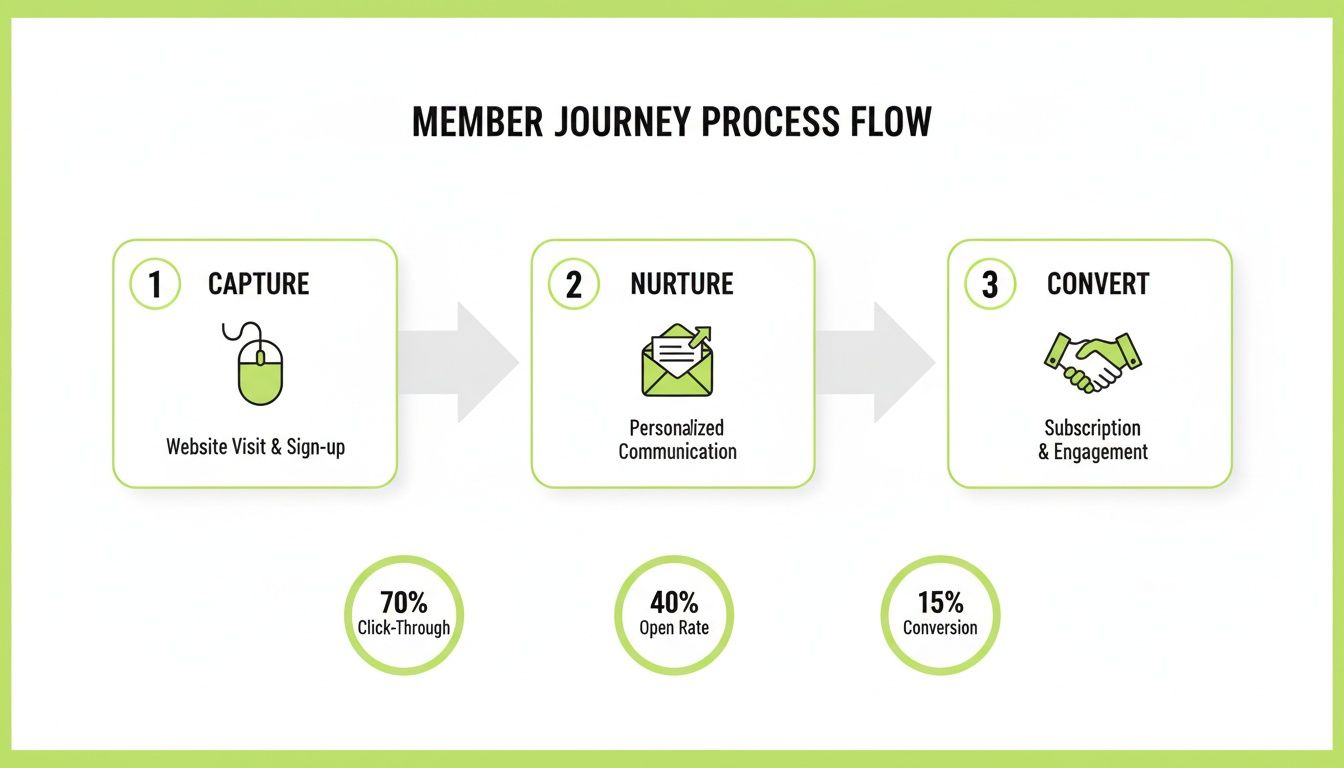
As you can see, a structured system moves a prospect smoothly from one stage to the next, with specific team actions needed at each point.
Assigning Ownership And Accountability
For any process to work, someone has to own each stage. While the General Manager or Club Secretary will oversee the entire strategy, you need to assign specific responsibilities to the people closest to the action. This is how you build accountability and make sure nothing falls through the cracks.
A simple but highly effective role structure often looks like this:
- Process Owner (General Manager/Club Secretary): This person is responsible for the overall strategy, keeping an eye on the key metrics in the CRM, and making sure the team has the training and resources they need. They do not handle every single lead, but they own the results.
- Lead Responder (Membership Secretary/PGA Professional): This is your front line. When the CRM flags a new enquiry for a personal follow-up, this is who makes the call. Their job is to build initial rapport, answer questions, and book the club visit.
- Tour Host (Designated Team Member): This could be the same person as the Lead Responder or another trained member of the team. Their role is to deliver an exceptional, personalised tour that showcases the club's value beyond its physical features.
A well-defined process removes the guesswork. When a lead comes in, there should be zero confusion about who needs to do what next, and by when. This is the foundation of a high-performing sales culture.
Training Your Team To Give The Perfect Tour
The club tour is your single biggest conversion opportunity. It requires much more than just pointing out the 18th green. Your team needs to be trained to conduct a consultative tour, one that focuses on the prospect's needs rather than just reciting a list of facilities.
Effective tour training should cover these key areas:
- Asking Discovery Questions: Start by asking what they are looking for in a club. Are they a competitive player? A social golfer? Or are they looking for a family-friendly environment for their kids to learn the game?
- Connecting Features to Benefits: Do not just show them the practice area; explain how the new short-game zone will help them shave strokes off their handicap. Do not just point to the bar; talk about the vibrant social calendar and the great atmosphere after a Saturday competition.
- Creating a Sense of Belonging: Introduce them to other members or staff along the way. Help them picture themselves as part of the club community before they have even signed the application form.
This approach transforms the tour from a simple walk-around into a powerful, persuasive conversation.
The good news is that current demand for memberships puts your team in a strong position. A recent survey revealed that 46% of UK golf clubs had waiting lists in 2023, a massive jump from just 18% in 2012. This shows that clubs with a professional process can be selective and focus on attracting the right members who will add long-term value. You can read more about these changing fortunes for UK golf clubs on hillierhopkins.co.uk.
By defining clear roles and training your team effectively, you build a cohesive unit where everyone knows their part in turning strong interest into committed, long-term members.
Measuring The Metrics That Matter For Growth
There is an old saying: you cannot improve what you do not measure. A perfectly designed sales process is a great start, but without tracking its performance, you are flying blind. To turn your sales and marketing from a cost centre into a predictable engine for growth, you must focus on the numbers that actually move the needle.
This means looking past vanity metrics like website clicks or social media likes. They show activity, but they do not tell you if you are generating revenue. The real story is found in a handful of clear Key Performance Indicators (KPIs) that track the health of your sales pipeline from the first enquiry to the final handshake.
Your CRM is the key to unlocking this data. With it, you get a real-time dashboard giving you an instant, accurate picture of your pipeline’s performance without sinking hours into manual spreadsheets. This clarity is what allows you to spot bottlenecks, focus on what is working, and make smart, data-driven decisions to keep improving.
Focusing On Revenue-Driving KPIs
If you want to build a predictable growth model, your attention needs to be fixed on a few core metrics. These are the KPIs that connect marketing activity directly to membership sales, giving you a clear view of your return on investment.
Every club manager should have these numbers at their fingertips:
- Lead Response Time: How long does it take your team to make personal contact after someone enquires? Speed is everything here; a fast response dramatically increases your chances of getting them through the door.
- Enquiry-to-Visit Rate: What percentage of qualified enquiries result in a booked club tour? This is a direct measure of how effective your initial follow-up and nurture process is.
- Visit-to-Membership Rate: Of the people who take a tour, how many join? This KPI is the ultimate test of your tour experience and how well your team sells the value of the club.
A clear dashboard is not just for reporting; it is a strategic tool. It lets you ask better questions. "Why did our visit rate dip last month?" or "Which lead source is bringing in the most valuable new members?" This is how you drive continuous improvement.
Building Your Performance Dashboard
Your CRM dashboard should lay all this out in a simple, visual way. The goal is to be able to assess the health of your pipeline in under a minute. It should give you a bird's-eye view of the entire process, from new leads dropping in at the top to new members coming out the bottom.
To give you a head start, we have outlined the essential KPIs to track. This table shows what they measure, why they are important, and what a healthy benchmark looks like for an ambitious club.
Essential Sales Process KPIs For Golf Clubs
Track these key performance indicators to measure the health and effectiveness of your membership sales pipeline.
By keeping a close eye on these numbers, you can quickly diagnose and fix problems before they escalate, ensuring your pipeline stays healthy and productive.
Using Data To Identify And Fix Bottlenecks
Once you have this data flowing, you can start using it to make strategic moves. If your Enquiry-to-Visit rate is lagging, it points to a problem with your initial follow-up. Maybe the automated emails are not compelling enough, or perhaps the team is taking too long to pick up the phone.
Likewise, a low Visit-to-Membership rate tells you something is off with the club tour itself. This might be the trigger to retrain the team on conducting a more consultative, value-focused tour rather than just a quick walk around the facilities. This data-led approach is crucial for attracting not just any members, but the right ones.
This is especially true when considering the growing golf tourism sector. The UK golf tourism market is projected to expand significantly, from USD 4.6 billion in 2025 to USD 6.9 billion by 2035, a massive opportunity for clubs with a polished sales process. You can dig deeper into these UK golf tourism market findings on futuremarketinsights.com.
By consistently measuring these core KPIs, you transform your sales process from a series of hopeful activities into a fine-tuned system for predictable growth.
Answering Your Questions About The Sales Process
Even with a solid blueprint, we know that changing how your club handles sales can bring up some legitimate questions, especially for managers and committees. These are practical, real-world concerns, and they deserve straight answers.
Let's tackle some of the most common queries we hear from clubs looking to get more serious about their growth.
Is a CRM System Too Complicated for a Small Team?
This is a fair question, and probably the one we hear most often. The thought of implementing new software can feel daunting, but modern systems have come a long way. The trick is to avoid generic, overly corporate tools and pick a CRM that is actually built for the day-to-day realities of a golf club.
Yes, there is an initial investment of time to get it set up and your team comfortable. But that time pays for itself, and quickly. Think of all the administrative hours you will get back. More importantly, think of the revenue from new members who might have slipped through the cracks in the old system. A good partner will handle the heavy lifting on setup and training, making sure your team feels confident. The goal here is to make their jobs easier, not to add another layer of complexity.
How Should We Handle Pricing Enquiries?
When someone asks about price, it is one of the strongest buying signals you can get. It is a critical moment, and just emailing back a price list is a huge missed opportunity. You are basically inviting them to shop around based on a single number.
Instead, use it to start a proper conversation. An automated email can immediately reply, confirming you have received their request and letting them know someone will call them shortly. That personal phone call is where the value is built. A trained team member can find out what they are really looking for, talk about the club's value far beyond the fee, and book them in for a visit.
This simple shift turns a price check into a value conversation. The membership fee becomes one part of a much bigger, more compelling picture, not just a number on a screen.
Why Do We Need a Formal Process if We Have a Waiting List?
Having a waiting list is a great problem to have, but it can create a false sense of security. Without a proper process for managing it, that list can go stale very quickly. Contact details become outdated, and people who were once keen simply lose interest and move on.
A formal process, powered by a CRM, turns that static list into a dynamic pipeline of future revenue. It means you can actively nurture those relationships. Send them exclusive club news, invite them to member-guest events, or give them a heads-up on a new menu at the restaurant. You are keeping them warm and engaged.
When a spot finally does open up, they are still excited and ready to say yes. This approach ensures your waiting list is a predictable income stream, not just a spreadsheet gathering dust.
At GolfRep, we specialise in helping clubs build these predictable pipelines. We do not just find you leads; we provide the structured follow-up systems and CRM you need to turn them into loyal members.
If you are ready to stop losing leads and start building a reliable engine for growth, book a discovery call with us today at https://www.golfrep.co.
Ready to tap into our proven growth system?