Top Golf Club Open Day Marketing Ideas for 2026
Most advice on golf club open day marketing ideas still revolves around banners, posters, local ads, and hoping enough people turn up on the day. That approach isn't useless, but it is incomplete. Footfall on its own doesn't pay subscriptions, fill competitions, or build a healthier member base.
At GolfRep, we see the same issue repeatedly. Clubs can often generate interest, but they struggle to capture it properly, respond quickly, and move people from curiosity to commitment. An open day shouldn't be treated as a single event. It should sit at the centre of a conversion system that tracks every enquiry, follows up automatically, and gives the club visibility over what ultimately turns into revenue.
That matters because the addressable market is far bigger than many committees assume. The R&A's 2024 participation work reported that 15.8 million adults in Great Britain had played golf on-course or off-course in the previous 12 months, which is a strong argument for low-friction, beginner-friendly open days rather than relying only on existing members and their immediate circles (golf participation analysis referenced here). If even a small share of that broad audience shows local intent, open days become a scale tactic, not a side project.
So if you're reviewing digital marketing for small businesses principles and wondering how they apply to a golf club, this is the practical version. Not just how to promote an open day, but how to build one that creates qualified enquiries, booked visits, and structured follow-up.
1. Targeted Digital Pre-Event Campaign with Lead Qualification Automation
The best open day campaigns start before anyone books. They start with a clear offer, a local audience, and a landing page that filters serious interest from casual curiosity.
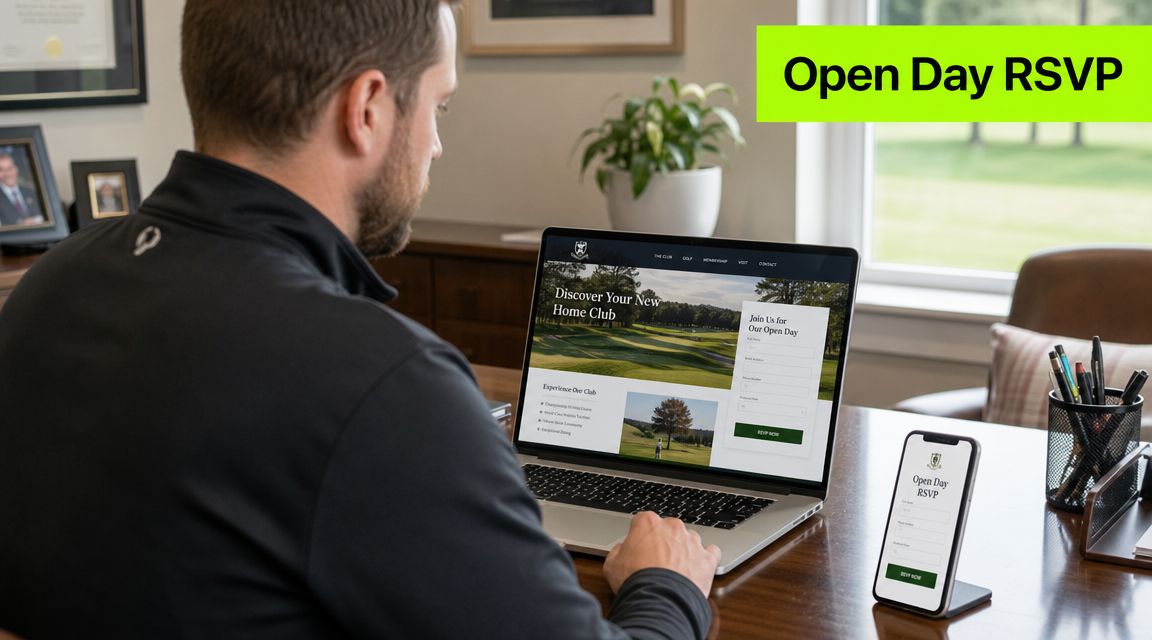
A club that runs Facebook and Instagram ads to a generic homepage usually wastes budget. Visitors arrive, click around, and disappear. A club that sends traffic to a dedicated page for the open day gets a much cleaner result. The visitor sees the event date, what to expect, who it suits, and a simple form that captures intent.
Build the campaign around intent, not reach
Pre-event ads should answer basic buying questions fast. Is this open day for beginners, returning golfers, families, or players comparing membership options? If the ad doesn't make that clear, the click quality drops.
The form matters just as much as the ad. Ask enough to route the lead properly, but not so much that people give up halfway through. For most clubs, useful fields include playing background, interest type, preferred attendance slot, and whether the visitor wants social, flexible, or full playing membership information.
Practical rule: if the lead hits your CRM and still needs manual sorting before anyone can act on it, your form isn't doing enough.
Use the registration flow to tag prospects automatically. Someone who wants beginner coaching shouldn't receive the same reminder sequence as someone asking about competition access. That's where proper AI lead qualification for golf clubs becomes useful. It reduces admin and gives the team a clearer view of who needs what.
A few tactical points make a real difference:
- Start early enough: Launch the campaign several weeks before the event so reminders and retargeting have time to work.
- Use club-specific creative: Real photography, recognisable holes, the clubhouse, and genuine member atmosphere usually outperform generic golf imagery.
- Retarget non-converters: If someone visits the page but doesn't register, serve them a reminder ad closer to the event.
- Connect forms directly to follow-up: Once a lead registers, confirmation and reminder messages should send automatically, not when someone in the office gets a free moment.
If you're pairing ad traffic with messaging flows, tools and ideas from wider automated customer service practice can help, but only if they're adapted to a golf buying journey. The point isn't automation for its own sake. It's making sure no enquiry sits unseen.
2. Tiered Membership Experience Stations with Live Demonstrations
Many clubs run open days like guided tours. Guests walk around, collect a leaflet, maybe hit a few balls, then leave with a vague impression. That isn't enough. People join when they can picture themselves using the club.
A stronger format is to build the day into stations that reflect real membership pathways. One station might focus on beginner and flexible options. Another can focus on competitive golf, handicaps, and fixture access. A third can centre on social use, coaching, or family participation.
Let prospects self-select
When people can physically move through different experiences, they often qualify themselves. A visitor who spends time with the PGA professional, asks about competitions, and wants to see the practice area is different from a parent asking about junior coaching or someone interested mainly in the clubhouse and social calendar.
That makes the sales conversation easier. Staff stop delivering the same pitch to everyone and start responding to observed interest.
Good stations often include:
- Beginner clinic: Simple coaching, no jargon, loan clubs available, clear reassurance for non-golfers.
- Membership desk: A staffed area where someone can explain categories, joining process, and what happens next.
- Play experience: Short-format golf, simulator use, putting challenges, or supervised course tasters.
- Club life area: Social calendar, dining, events, and family-facing activities.
England Golf's participation reporting has highlighted growth in casual and non-traditional formats such as driving range, toptracer-style, and short-format golf participation, which is why open day messaging and activities should welcome people who don't yet think of themselves as golfers (golf promotion and beginner-focused messaging discussion).
The more your event assumes prior golf knowledge, the more beginners will politely disengage.
This is also where live demonstrations matter. A PGA professional running a short clinic gives credibility. A team member showing how a flexible membership works removes ambiguity. A staff member explaining dress expectations in plain English can ease anxiety that would otherwise block the next step.
Keep the flow simple. Short sessions. Clear signposting. Staff who know the difference between informing and overwhelming. The point isn't to impress visitors with complexity. It's to make the club feel usable.
3. Email and SMS Nurture Campaign with Automated Follow-Up Sequences
Most clubs lose open day opportunities after the event, not before it. They collect names, maybe send one follow-up email, then rely on manual calls that happen too late or not at all.
That is where a nurture sequence earns its place. Once someone registers, attends, clicks, or asks a question, the club should have a structured series of messages ready. Not generic blasts. Timed, relevant follow-up based on behaviour.
Before, during, and after the event
Pre-event email should reduce drop-off. Keep it short. Confirm what the visitor booked, where to go, what to bring, and what they'll experience. If beginners are welcome, say that plainly. If equipment is available to borrow, say that too.
During the event, SMS works best for logistics. Send a confirmation, a reminder, and if needed a check-in link. Don't overdo it. Too many texts feels intrusive and usually damages trust faster than it boosts attendance.
The strongest technical principle here is mobile-first execution. The Office for National Statistics reported that 92% of UK adults were recent internet users in 2023, and 88% used a mobile phone to access the internet, which is why open day registration, check-in, and follow-up pages should be built for quick one-handed completion on a phone (UK internet use and mobile access overview).
After the event, speed matters. A prospect who asked about a trial round should receive that information while the visit is still fresh, not next week. A parent who discussed junior golf should get a different path from a returning adult golfer comparing membership categories. A proper golf club follow-up system helps clubs handle that consistently.
Use tags that reflect what happened on the day:
- Attended beginner clinic: Send beginner pathway content, what to expect next, and a low-pressure next step.
- Asked about competitions: Follow up with fixture structure, handicap process, and a visit or trial invitation.
- Showed social interest: Share clubhouse events, member atmosphere, and non-competition value.
- No-show registrant: Offer a rebooked visit or virtual introduction instead of writing them off.
The common mistake is thinking the event itself does the conversion. Usually it doesn't. The event creates momentum. The follow-up converts it.
4. Strategic Referral and Member Ambassador Programme
When a member brings a guest, the club borrows trust that no advert can create. That's why referral-led attendance is often better than paid reach alone. The lead arrives warmer, less sceptical, and with some basic social proof already built in.
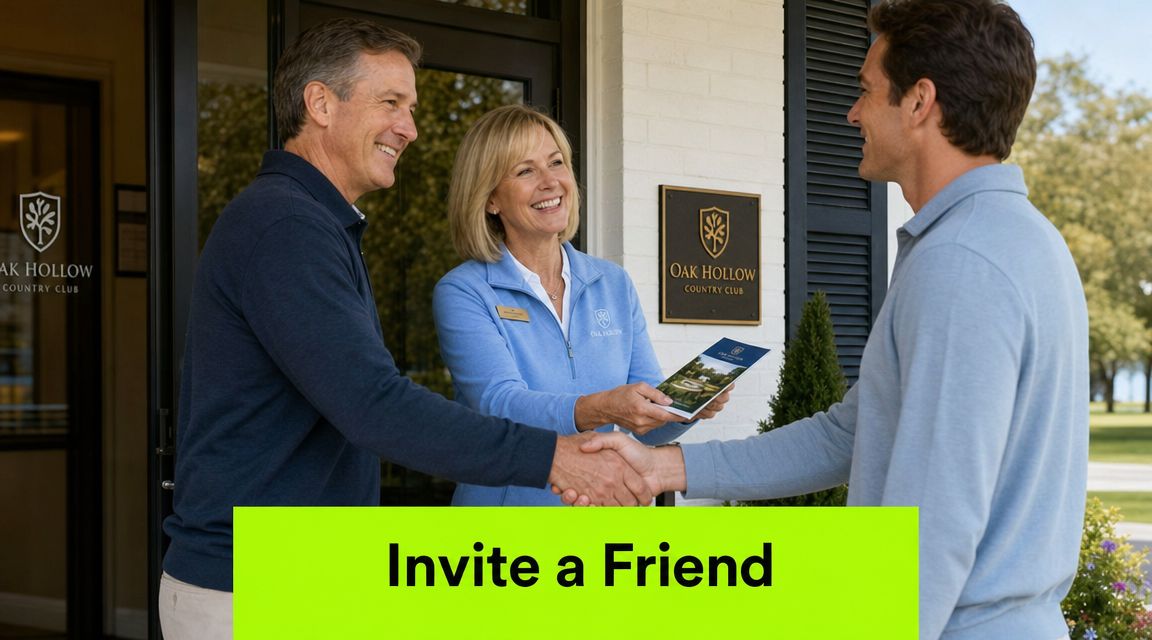
But most member referral efforts fail for a simple reason. The club announces the open day and vaguely asks members to invite someone. That isn't a programme. That's a hope.
Give ambassadors a job to do
If you want members to help, make it easy and structured. Give them invitation copy they can send by WhatsApp or email. Give them a shareable booking link or QR code tied to their name. Tell them who the open day is for, so they don't guess.
Useful ambassador prompts include lapsed golfers, partners who don't currently play, parents of juniors, work colleagues, and friends who use ranges but haven't tried club membership. Members often know exactly who fits those groups. They just need the club to ask clearly.
A referral setup works better when the club also handles attribution properly. At check-in, ask who invited the guest. Store it. If you don't track the source, you can't see which members are helping and you can't follow up intelligently.
Because the market is locally competitive, this matters more than many clubs think. England alone has around 1,700 golf courses and Great Britain has well over 2,000, which means clubs don't just need awareness. They need a system for turning familiarity into visits quickly (golf club marketing ideas and local competition context).
A referred guest doesn't remove the need for follow-up. It raises the standard for it.
The best ambassador programmes also brief the member on what happens next. If their guest attends, who contacts them after? Can the member host them for a return visit? Can they answer practical questions about club culture that staff might phrase too formally?
Referral marketing works because it feels human. But it still needs process behind it. Otherwise the club creates warm introductions and then handles them with cold administration.
5. Localised PR and Media Partnerships with Golf Publications and Local Press
Not every open day lead comes from paid channels or member referrals. Some come because the club appears active, relevant, and visible in the local area. That is where PR earns its keep.
This doesn't mean chasing national attention for its own sake. It means finding local angles that make the open day worth covering. A club investment, a new coaching initiative, women and girls activity, a family-friendly format, a sustainability change, or a beginner pathway can all be stronger stories than "we're holding an open day on Saturday".
Use a story, not an announcement
Journalists and editors rarely care about generic event notices. They do respond to changes in the club, community value, or wider participation trends. So build the pitch around why this event matters now.
A few workable angles:
- Community access: The club is making golf easier for first-time visitors to try.
- Beginner support: Equipment loan, simple coaching, and no dress-code anxiety for newcomers.
- Club development: The open day forms part of a wider membership or facility push.
- Family appeal: A practical route into junior and household participation.
Press coverage also helps older audiences who may not respond to digital ads in the same way younger prospects do. It can reinforce credibility too. If someone sees the club in the local paper, then later sees a social ad, the second touch lands differently.
The trade-off is that PR is slower and less controllable than paid traffic. You can't guarantee coverage, timing, or prominence. So it works best as support, not as the main engine of the campaign.
If you're doing this properly, prepare a small media pack. Include strong photos, a short event summary, a named spokesperson, and a clear explanation of who should attend. Make the journalist's job easy. If the club sends over a long committee-style release full of internal language, it usually gets ignored.
PR doesn't replace direct response marketing. It improves the quality of attention around it.
6. Interactive Online Event Portal and Virtual Open Day Component
Some prospects want to visit in person. Others prefer to explore before they commit to a date. If your open day only works for one type of buyer, you'll miss people who needed a softer first step.
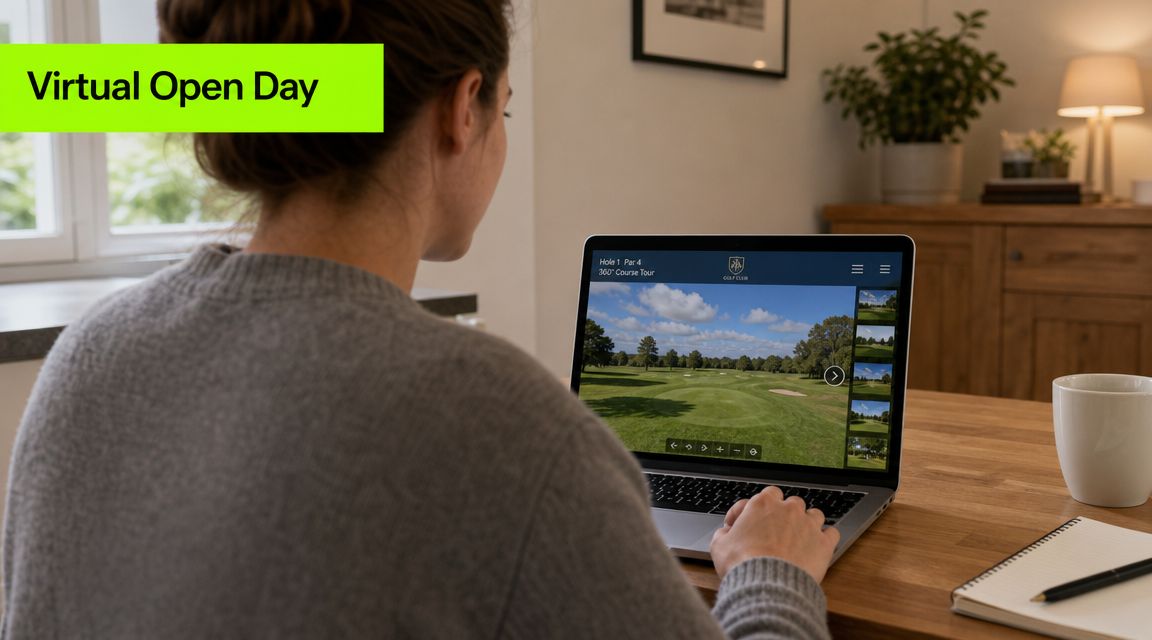
That is why an event portal works well. Not a cluttered section of the main website. A dedicated place where visitors can register, understand the format, compare membership routes, and choose what they want to do next.
Give hesitant buyers a lower-friction path
Some clubs make the mistake of treating a virtual option as second best. In practice, it can be a useful qualifying layer. Someone might watch a short clubhouse tour, browse common questions, and book an in-person slot only after they feel less uncertain.
A useful portal can include:
- Timed visit booking: Let people choose a session instead of turning up into a crowd.
- What to expect content: Clothing guidance, parking, equipment availability, and who the event suits.
- Membership comparison page: Plain English differences between options.
- Virtual Q&A registration: A later session for anyone who couldn't attend in person.
- Lead capture on every path: Downloads, bookings, and enquiries should all feed your CRM.
This is especially helpful for beginners and families, because uncertainty is often practical rather than motivational. They don't know what happens when they arrive. They don't know whether they'll look out of place. A portal can answer those concerns before a staff member ever speaks to them.
A virtual follow-up session can also rescue no-shows and slower decision-makers. If someone registered but didn't attend, invite them to a shorter online introduction instead of moving them straight into a cold lead bucket.
The common failure here is overproduction. Clubs spend too much time building polished content and not enough time making the path simple. Clear beats clever. If the portal is easy to use, easy to book from, and connected to follow-up, it does its job.
7. Competitive Membership Trial Offers and Booked Tee-Time Follow-Up
An open day creates interest. A trial creates evidence. Once someone has used the course, met people, and seen how the club feels in real conditions, the membership decision becomes much more grounded.
That is why trial offers work, especially for golfers comparing clubs or returning after time away. The key is not to treat the trial as a freebie. Treat it as a managed conversion stage.
Book the next action before the prospect cools off
Clubs often offer a trial round and then leave the prospect to organise it. That loses momentum. If a visitor expresses genuine interest during the open day, book the tee time while they're there or send the booking link immediately with a named point of contact.
A few principles matter here:
- Keep it simple: One clear trial structure is better than a menu of confusing options.
- Tie it to attendance: The open day should naturally lead into the trial invitation.
- Pair the visitor with someone suitable: A welcoming member or staff host can make a big difference.
- Track usage: If the prospect books, attends, visits the clubhouse, or asks follow-up questions, record it.
Many clubs still rely on memory, spreadsheets, or handwritten notes. That creates blind spots. The person who seemed promising on the day may receive no follow-up at all if nobody owns the next step.
A trial also helps you separate curiosity from buying intent without using hard selling. If someone enjoys the event but never books the trial, that tells you something. If they do book and engage, that tells you something more valuable.
The best trial offers don't feel like discounts. They feel like the obvious next step in a well-run joining journey.
You can also personalise the conversion conversation after the trial. A player who used the practice facilities and asked about competitions needs a different message from someone who valued the social side and flexibility. The trial gives you real behaviour to respond to, not assumptions.
8. Data-Driven Event Metrics and Post-Event Nurture Optimisation
Most clubs review an open day with one question. "Was it busy?" That is far too shallow. A packed car park can still produce weak commercial results if the wrong people attended, lead capture was poor, or follow-up broke down.
The better question is this. Which parts of the event produced qualified opportunities, and what happened to them afterwards?
Measure the movement, not just the turnout
Useful open day reporting starts with source tracking. Did the attendee come from paid social, local press, member referral, organic search, or an existing database? Then look at behaviour. Which station did they visit? Did they ask about membership? Did they book a trial, request a callback, or start an application?
Current advice often stops at promotion, but clubs need to measure business value beyond attendance because rising costs have increased the pressure on marketing to convert efficiently (country club marketing strategy discussion).
What to track after the event:
- Lead capture rate: How many attendees entered the CRM with usable details.
- Qualified interest: Who asked for a specific next step.
- Booked follow-up actions: Trial rounds, coaching tasters, meetings, callbacks.
- Application starts: A stronger signal than general interest.
- 30, 60, and 90-day outcomes: Which attendees converted later, not just immediately.
For clubs that want committee buy-in, this level of visibility matters. It gives the club a cleaner explanation of where the budget went and what it produced. It also helps next time. If referrals brought warmer leads than paid traffic, you can invest accordingly. If one station created better-quality conversations, redesign the event around it.
A proper data-driven golf marketing setup also makes staffing easier. You can see who followed up, who hasn't been contacted, and where leads are stalling. If you need a practical framework for check-ins and attendance capture, a practical attendance management guide can be useful as a starting point.
The open day becomes much more valuable when it improves the next campaign as well as the current one.
8-Point Golf Club Open Day Marketing Comparison
| Item | Implementation complexity | Resource requirements | Expected outcomes | Ideal use cases | Key advantages |
|---|---|---|---|---|---|
| Targeted Digital Pre-Event Campaign with Lead Qualification Automation | Medium, needs campaign setup and testing | Paid media budget, landing page, CRM/AI forms, creative assets | High-intent leads, measurable cost-per-attendee, scalable pipeline | Clubs wanting fast volume of qualified prospects across local postcodes | Precise targeting, measurable ROI, automated qualification and follow-up |
| Tiered Membership Experience Stations with Live Demonstrations | High, logistics and scheduling for live activity | PGA professionals, trained staff, station materials, space allocation | Strong on-day conversions and better-fit member selection | Premium clubs emphasizing experience and premium pricing | Memorable experiential engagement, reduces buyer remorse, immediate sign-ups |
| Email and SMS Nurture Campaign with Automated Follow-Up Sequences | Low–Medium, templates and automation rules required | CRM with automation, copywriting, segmented email/SMS lists | Improved recall and conversion from warm leads, consistent follow-up | Clubs with existing contact lists or warm prospects | Cost-effective nurturing, personalised messaging, reliable tracking |
| Strategic Referral and Member Ambassador Programme | Low, program design and communications | Member incentives, tracking codes/links, admin fulfilment | Lower CAC, higher-quality referrals, stronger community buy-in | Clubs with satisfied membership base aiming for organic growth | High credibility, low acquisition cost, strengthens member engagement |
| Localised PR and Media Partnerships with Golf Publications and Local Press | Medium, story pitching and media relations | PR time, press materials, media outreach, photography | Increased credibility, reach to older/non-digital audiences | Clubs with strong stories (turnarounds, new facilities, notable pros) | Earned media credibility, SEO/content assets, broader demographic reach |
| Interactive Online Event Portal and Virtual Open Day Component | Medium–High, tech and content production | Microsite/portal, 360° media, streaming tools, staff for live chat | Expanded reach, pre-qualified virtual leads, measurable engagement metrics | Clubs needing to accommodate remote or time-constrained prospects | Removes attendance barriers, scalable engagement, detailed intent data |
| Competitive Membership Trial Offers and Booked Tee-Time Follow-Up | Medium, coordination of trials and tracking | Trial management, tee-time scheduling, buddy volunteers, CRM tracking | High trial-to-member conversion, earlier community embedding | Clubs targeting competitive or undecided prospects who need experience | Low-friction entry, strong retention predictors, high conversion from engaged trials |
| Data-Driven Event Metrics and Post-Event Nurture Optimisation | Medium, setup of tracking and reporting processes | CRM, analytics dashboard, staff data discipline, survey tools | Continuous improvement, justified budgets, better channel ROI | Clubs seeking to optimise repeatable acquisition and report to committees | Objective performance evidence, improved budget allocation, actionable insights |
From Event to Pipeline: Your Next Steps for Growth
Clubs that treat the open day as a turnout exercise usually overestimate success. A busy car park and a stack of enquiry forms can still produce very little membership growth if the follow-up process is weak.
The better approach is to treat the day as one conversion stage inside a wider membership pipeline. That changes the questions you ask before launch. Which audience segments are worth attracting? What do you need to know before they arrive? How will staff qualify intent on the day? What triggers the first follow-up message? Which behaviours suggest a prospect is close to joining, and which suggest they need a different offer or a longer nurture path?
Many clubs get stuck at this stage.
Generating interest is rarely the hardest part. Handling it properly is. Manual follow-up slips. Notes sit across inboxes, paper forms, and spreadsheets. Staff remember the hot prospects but lose track of the quieter ones who still had strong intent. Open days put pressure on every weakness in that process because interest arrives in a short burst. If the system behind the event is loose, the club feels busy and still struggles to convert.
The strongest golf club open day marketing ideas connect acquisition, qualification, follow-up, and reporting into one operating system. Paid traffic should feed a focused registration page. Referral sources should be tracked properly. Check-in should push data into the CRM without rekeying it later. Staff conversations should capture useful buying signals, not vague notes. Follow-up should reflect what each visitor did, saw, or asked about. Trial rounds should be booked while intent is still high, not a week later when interest has cooled.
That distinction is important because execution usually beats flair. I have seen average creative perform well when response times were tight, lead ownership was clear, and every prospect moved through a defined follow-up path. I have also seen polished campaigns waste budget because nobody could answer a basic question after the event: who is calling whom, by when, and with what offer?
There is a staffing point here too. Open days do not sit with marketing alone. The pro shop, membership lead, office team, general manager, and committee all shape conversion. Prospects notice a smooth handover between those people. They notice confusion even faster.
Keep the process simple enough to run under pressure. One registration path. One source of truth for lead data. One agreed qualification method. One follow-up structure by segment. One reporting view that shows what happened after the event, not just how many people attended.
That is the difference between activity and pipeline.
For clubs that want help putting those systems in place, GolfRep is one option focused on golf club growth, combining lead generation with CRM-led follow-up and conversion tracking.
Ready to tap into our proven growth system?