Golf Club Open Day Ideas That Fill Your Tee Sheet

Was your last golf club open day worth running, or did it bring people through the clubhouse for a few hours? Turnout matters, but it doesn't show whether guests took a useful next step. A stronger measure is whether they booked a follow-up call, tried the course, or made a membership enquiry within 90 days.
The right format depends on the audience you need to reach and the commercial constraint you're trying to address. A taster session may bring beginners to the practice ground, while a guest day can introduce experienced golfers through people who already trust your club. A winter simulator event has a different job again: giving first-time visitors a reason to come back.
These golf club open day ideas are designed to help you match the event to its audience, then judge it by a conversion measure that matters. Choose the format that suits your club's current priority, not the one another club ran last season. A well-planned event can also support clubhouse revenue, including by making it easier to manage golf club guest pre-orders.
1. Traditional Membership Open Day
A traditional membership open day works best when guests experience the club rather than sit through a sales presentation. Give them a named host, a warm welcome, a look around the clubhouse and a chance to play. A member or PGA professional can lead a short course experience, then introduce the club's membership options over lunch or refreshments.
For example, a parkland club could hold a Saturday morning event with registration at 9am, a guided tour, a nine-hole fun round and a buffet lunch. Finish with a short, informal explanation of the membership categories and a clear invitation to book a trial round or speak to the membership lead. Pre-registration lets the club plan hosts and keep each group small enough for real conversation.
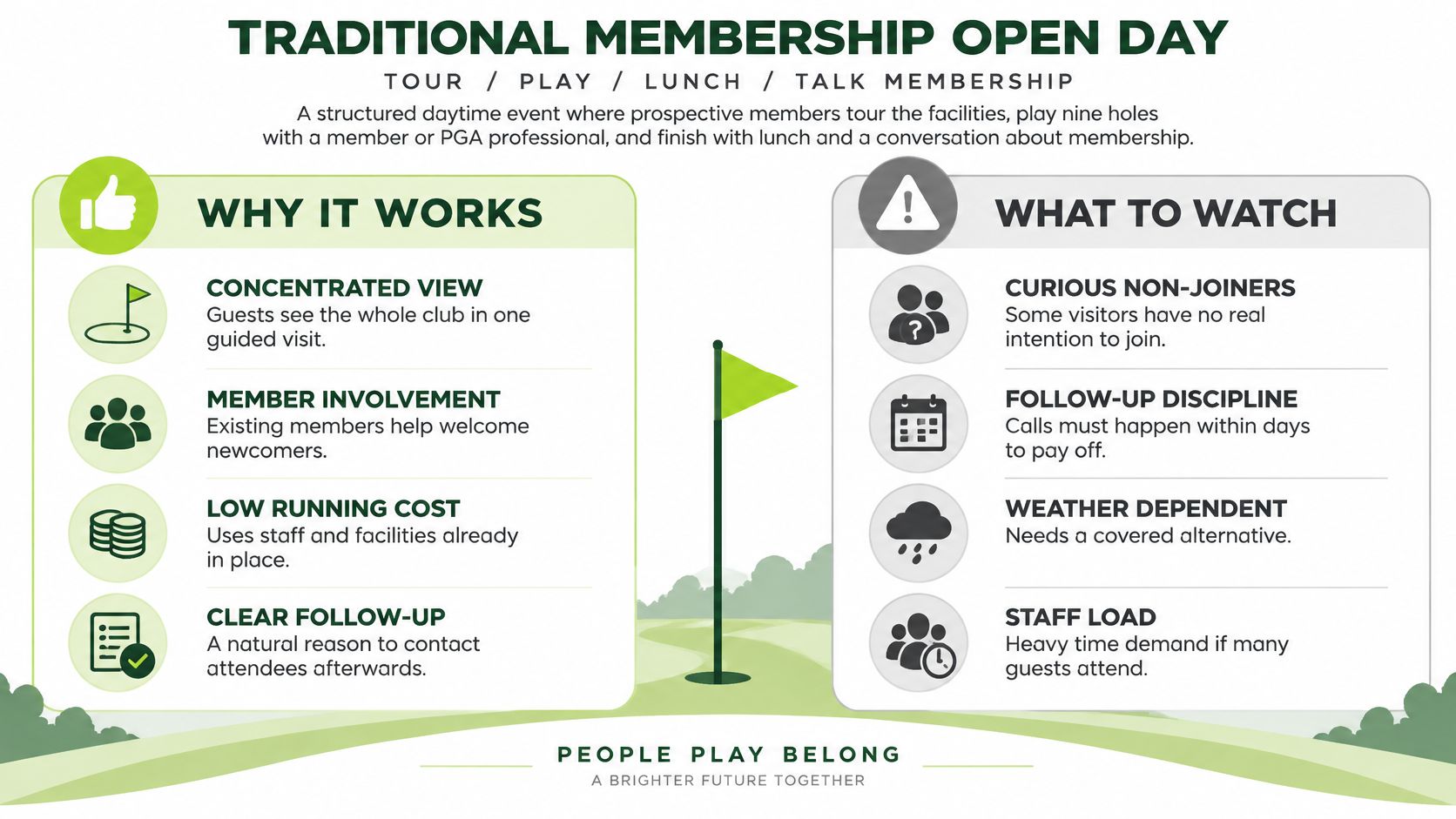
Collect each guest's contact details and golfing background at arrival, then give one named person responsibility for follow-up within 48 hours. The event should feel like a guided introduction to the club's culture, not a sales pitch delivered beside the buffet.
Measure the next step: Track attendance, membership-pack requests, trial-round bookings and members who join within 90 days. A full room without a next-step measure is difficult to assess.
A strong event also needs a clear promotion and registration plan. Use this guide to marketing a golf club open day to plan the route from invitation to visit. For guests who aren't ready to join immediately, keep a useful follow-up sequence in place to bring past customers back.
2. Bring-a-Friend Member Guest Day
A member's invitation can make a first visit feel less daunting. The guest already has someone to play with, ask questions and introduce them to the club. This format is especially useful when the club wants to reach local golfers who may not respond to a general advertisement.
Run a set guest day and give members a simple way to register their guest, such as an invitation card or a digital form. A Tuesday event might pair each member with one guest for a round, then offer coffee in the clubhouse and a brief introduction to membership. Keep the guest policy clear, including any playing requirements, dates and dress expectations.
The commercial balance matters. A waived or reduced guest fee may help remove friction, but the offer shouldn't make full membership look poor value. Set the terms in advance and brief the team so guests receive a consistent welcome, whether they arrive with a longstanding member or someone new to the ambassador role.
Ask who introduced each guest and record the relationship in the club's system. If a guest shows interest, the member can help arrange a return visit or introduce them to the membership lead. A short evening talk for members and their guests can work too, provided it doesn't replace the playing experience.
The core measure is not how many members bring someone through the gate. Track guest attendance, subsequent course visits and membership enquiries, then recognise the members who make thoughtful introductions. That gives the club a clearer view of whether the event is creating prospects or subsidising a round.
3. Beginner and Taster Golf Day
New golfers need a first experience that feels achievable. A long round with unfamiliar rules, equipment and etiquette can be a poor introduction. Start with a short welcome, a practical lesson from a PGA professional and time on the range or short-game area, then let participants try a simple course format such as a par-three loop.

A club could offer a monthly Saturday session with equipment provided, a short lesson and light refreshments. Another option is to arrange a taster afternoon with a local school, workplace or community group, then invite participants to a beginner course. Price the session to cover coaching and equipment costs while keeping the first step accessible.
Make the next step easy to understand
Tell newcomers what they can do after the taster. That might be another coached session, a beginner course, pay-and-play or a suitable introductory membership. Avoid giving every attendee the same joining offer before you know what they want from golf.
A simple pathway helps the club see where interest develops: taster to lesson, lesson to further play, and further play to membership. Give each participant a personal follow-up with a recommended next activity, rather than sending a generic sales message.
Explain basic etiquette and how the club operates in plain language. New players should know where to go, what to wear and what happens during the session. The main measure is progression into a booked lesson or another playing visit, not the number of people who take a first swing.
4. Ladies and Women's Open Day
A women's open day earns its place by showing how a woman can join club life on her terms: a welcoming introduction, a short coaching or playing experience, and time with women who already play there. The audience is specific, so the format has to be specific too. A generic mixed open day rarely gives a hesitant female golfer enough reasons to come back.
Run it at a time that fits the audience. A weekday morning can combine coaching, nine holes and coffee, with the ladies' captain explaining the section's calendar, tee-time options and social events. An evening session suits women who work during the day: a short lesson, a drink, and a low-pressure introduction to the clubhouse. Invite current female members to host, answer practical questions and play alongside attendees. Their presence does more than a welcome speech.
Be concrete about mixed membership, social play and the route from beginner to regular golfer. If the club has a women's section, involve its members in planning rather than asking them to turn up on the day. The event can stand alone or sit inside a repeatable coaching programme. England Golf's Women on Par programme supports delivery as either an event or within an existing academy programme. Have the next session ready to book before attendees leave.
Judge the day by the audience it attracts and what they do next. Track attendance by playing standard and membership interest, then count how many book a follow-up coaching session, a nine-hole playing visit with a member host, or a club tour. That separates curious social golfers from women ready to join. For a wider view of pricing, messaging and retention, these ladies' golf membership ideas set out the next steps beyond the open day.
5. Junior and Family Open Day
Parents usually want to see how a club looks after children before they consider a junior or family membership. Make the day enjoyable for children, but give parents enough time to understand the playing pathway, costs and practical commitment.
A Sunday event could start with junior coaching, followed by a family putting or chipping challenge and a parent information session over lunch. Younger children might use a short-game area, while older juniors try a coached activity suited to their ability. Show how a beginner can progress towards regular play and competition, and name the coaches responsible for that pathway.
The parents' conversation shouldn't compete with children's activities. Set up a separate, supervised space so adults can ask questions while juniors remain engaged. Explain the available options clearly, including how the club supports new players as they improve.
Safeguarding needs to be part of the event plan. England Golf's club governance guide says clubs should have a trained Club Welfare Officer responsible for reporting safeguarding and welfare issues. Name the welfare lead, brief coaches and volunteers, make supervision arrangements clear, and explain how concerns will be raised on the day.
The most useful measures are the households attending, junior trial bookings and family memberships that follow. Track the household, not just the child, because a junior event can introduce the whole family to the club.
6. Twilight Social Open Evening
Some prospective members want to meet people and see the clubhouse before they commit to a full golf day. A twilight social event can offer that first step through a putting challenge, a short playing activity, food and conversation. It suits working people, couples and small groups, as well as clubs that want to introduce guests to their clubhouse facilities.
For example, a club could host an early evening putting competition, followed by drinks and a short membership introduction. Another might offer a nine-hole twilight format and a set meal package. In both cases, price the food and activity together so the club can see whether the event covers its costs.
Make the membership talk brief and useful. Explain who the club's membership suits, what playing options are available and how a guest can arrange a course visit. A long presentation will lose the people who came for a social evening, while a vague invitation gives interested guests no clear action.
Use a welcome card or event registration to capture contact details and permission to follow up. Record the guest's preferred interest, whether that's golf, social events or food and drink. For a tournament or social group, club merchandise such as custom hats for golf tournaments may help give the occasion a shared identity, but it shouldn't become the main reason to attend.
Report revenue per guest, subsequent golf visits and membership enquiries. Those measures show whether the evening is serving the club as a social event, a golf introduction, or both.
7. Open Competition or Charity Pro-Am Day
Experienced golfers may be more likely to try a club through competition than through a membership presentation. An open stableford or stroke-play event lets them experience the course under proper playing conditions, while a charity pro-am can bring together local businesses, sponsors and community supporters.
A Saturday open competition could finish with a prize-giving and buffet, followed by an invitation to a separate membership information evening. A charity pro-am might use sponsor support and a dinner to raise funds for a local cause or the club's junior programme. Keep the playing experience and event logistics strong, because the competition itself is the attraction.
Before confirming the date, prepare a budget that includes entry income, prizes, catering and staffing. Set the entry process so the club captures each golfer's name, handicap and contact details. Make it easy for entrants to understand the format, conditions and what happens after their round.
Within a week, send a personal thank-you and a relevant invitation. An experienced player may prefer a return round or a course tour over a beginner-style taster. Match the next step to the golfer's level and stated interest.
Track entrants, revenue per entrant, follow-up visits and membership enquiries. A well-attended competition can still be a weak membership event if the club doesn't make a suitable next step available. Equally, it may be commercially worthwhile for event income and community reach, even if joining isn't the immediate outcome.
8. Winter Indoor Simulator Open Day
When weather makes outdoor golf less appealing, a simulator or covered practice area gives guests a way to try the club without relying on course conditions. For an indoor golf facility, the open day should introduce the bays, coaching and booking process. For a golf club, it can lead into winter golf or a later visit to the course.
An indoor facility could run short, pre-booked bay sessions with a coach demonstration and a closest-to-the-pin challenge. Give each guest a clear offer for a return visit, such as a bookable session at a stated rate, if that suits the facility's pricing. A covered practice area can also lead into a short course or a winter playing option.
Sell the return visit, not just the first slot
Use timed bookings and a clear arrival process to prevent queues around the bays. Capture the visitor's first activity and whether they're interested in coaching, casual play or a regular package. For an indoor operator, this information helps staff recommend an appropriate next session instead of a generic membership pitch.
The primary measure is first-visit to second-visit conversion. Also compare bay use before, during and after the event to understand whether the session created additional demand or shifted existing bookings. Read more about winter marketing for indoor golf when planning how the event can lead into repeat play.
A busy open day can look successful while producing few return bookings. Make the next visit easy to arrange before guests leave, and report the return rate alongside attendance.
Eight open day formats compared
| Format | Primary audience | Planning effort | Best suited to | Key success metric |
|---|---|---|---|---|
| Traditional Membership Open Day | Prospective members | Moderate; requires hosts and prompt follow-up | Clubs seeking to showcase facilities and membership options | Attendees who join within 90 days |
| Bring-a-Friend Member Guest Day | Friends, colleagues, and family of current members | Low; requires guest registration and clear policies | Clubs looking to attract prospects through member referrals | Guest-to-membership conversion |
| Beginner and Taster Golf Day | Beginners and occasional golfers | Moderate; requires coaching staff, equipment, and safety planning | Clubs aiming to introduce newcomers to golf and build a participation pipeline | Conversion from taster to lesson, play, or membership |
| Ladies and Women's Open Day | Women who play or are interested in golf | Moderate; benefits from active female hosts and a credible programme | Clubs seeking to grow women's participation and membership | Attendee-to-membership conversion |
| Junior and Family Open Day | Children and their parents or guardians | High; requires safeguarding, supervision, and a junior pathway | Clubs aiming to attract households and develop junior membership | Attending households that convert to trial or family membership |
| Twilight Social Open Evening | Working adults, couples, and social groups | Moderate; requires evening staffing and food and drink planning | Clubs with strong hospitality and summer twilight facilities | Revenue per guest and subsequent golf or membership conversion |
| Open Competition or Charity Pro-Am Day | Competitive golfers, sponsors, and charity supporters | High; requires significant administration and volunteer effort | Clubs looking to attract local golfers and raise revenue or community awareness | Entrants who visit again or convert to membership |
| Winter Indoor Simulator Open Day | Golfers seeking indoor or winter play | Moderate; requires reliable simulator facilities and booking management | Clubs or operators with indoor or covered practice facilities | First-visit-to-second-visit conversion |
Choosing the Right Open Day and Making It Count
Start with the commercial constraint, then choose the format that gives the right audience a realistic next step. If the club needs more beginner golfers, a coached taster is more suitable than a full competitive day. If women's participation or family membership is the priority, build an event around their actual needs and make the next session or trial easy to book. If winter demand is the issue, use indoor or covered facilities to generate repeat visits. If the club needs more local playing prospects, a member guest day or open competition may fit better.
Set one primary measure before promoting the event. A traditional membership open day might be judged on trial-round bookings and joins within 90 days. A beginner day should report progression into lessons or further play. A family event should track junior trials and household membership decisions. A twilight evening can report revenue per guest and subsequent golf visits, while an indoor event should focus on first-visit to second-visit conversion.
Use supporting measures to explain the result. Record registrations, attendance, activities completed, staff conversations, follow-up bookings and applications. Keep each guest's details, interest and next step together so the club can see what happened after the event. A high registration count with weak attendance points to a different issue than strong attendance with few return visits.
Pre-registration and contact capture are essential, regardless of the format. They help the club prepare hosts, manage numbers, accommodate access needs, and follow up with a relevant invitation. For events involving juniors or vulnerable adults, assign a welfare lead and brief everyone working with participants. For visitors with access requirements, ask in advance and plan the route and activity accordingly.
Every attendee should receive one clear, personal next step within 48 hours. That might be a booked conversation, a trial round, a beginner session, another simulator booking or a membership information pack. Avoid treating all guests alike: the person who wants coaching needs a different invitation from the experienced golfer who wants to play the course.
GolfRep helps UK golf clubs build campaigns and follow-up systems that connect open-day attendance with visits, applications and membership outcomes. If you want to find where your event pipeline loses people, we can use a structured growth review to map the process and identify the next commercial constraint.
GolfRep helps golf clubs plan targeted open-day campaigns, capture registrations and build follow-up that turns visits into measurable next steps. To map where your open-day pipeline is losing prospective members, visit GolfRep and arrange a structured growth review.
Ready to tap into our proven growth system?