Indoor Golf Winter Marketing: 7 Ways to Fill Quiet Bays
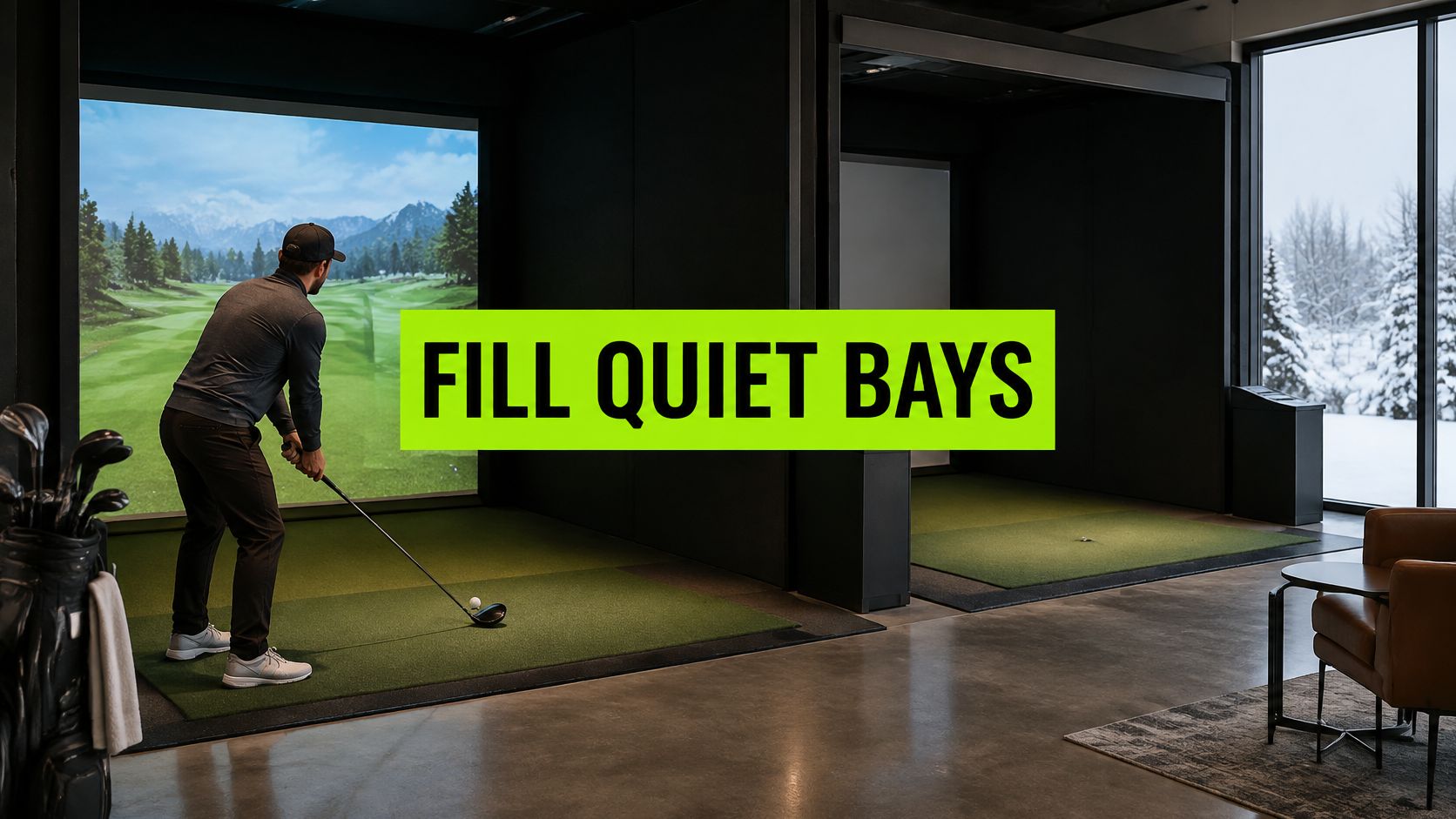
A four-bay indoor golf facility can be fully booked on Saturday afternoon and almost empty on Tuesday morning. The building, heating and core staffing still cost money either way, so winter's commercial problem isn't just how to attract more golfers. It's how to sell the hours that would otherwise go unused without discounting the sessions customers already want.
That distinction matters. England's Active Lives figures show that the proportion of adults in England playing golf at least twice in the previous 28 days was 4.0% in 2024–25, but participation has varied across measurement periods. Winter demand shouldn't be assumed to disappear, or to distribute itself evenly across the week. Sport England's Active Lives data is a useful reminder to judge your own winter by actual bookings, not by a general assumption about the season.
Indoor golf winter marketing works best when each offer fills a specific gap in bay or staff capacity and gives customers a reason to return. The approaches below move from quiet-hour utilisation to repeat visits and new-customer acquisition. For context, Golf Problems' overview of indoor golf clubs explains why these facilities can serve both golfers and people seeking a social experience.
1. Off-Peak Pay-and-Play Pricing for Winter Bay Utilisation
A lower rate can be sensible when a bay would otherwise sit empty. It's damaging when it discounts a session that would have sold at the normal price. Treat winter pricing as a way to shift demand into quiet time bands, not as a blanket reduction across your booking calendar.
Start with your booking system. Pull the last eight to twelve weeks of bay bookings and group them by hour and day. Compare booked capacity with the hours you made available, then identify the specific slots that remain consistently quiet. Your own figures should set the boundaries of the offer, not an assumption that every winter weekday behaves the same way.
A facility with four bays might find that Tuesday mornings are slow while Saturday afternoons regularly sell out. It could create a named “Weekday Morning Session” for the quiet period, keep weekend pricing unchanged and show the offer prominently on its booking page and Google Business Profile. That gives customers a clear reason to choose the quieter slot without teaching them to expect lower rates at peak times.
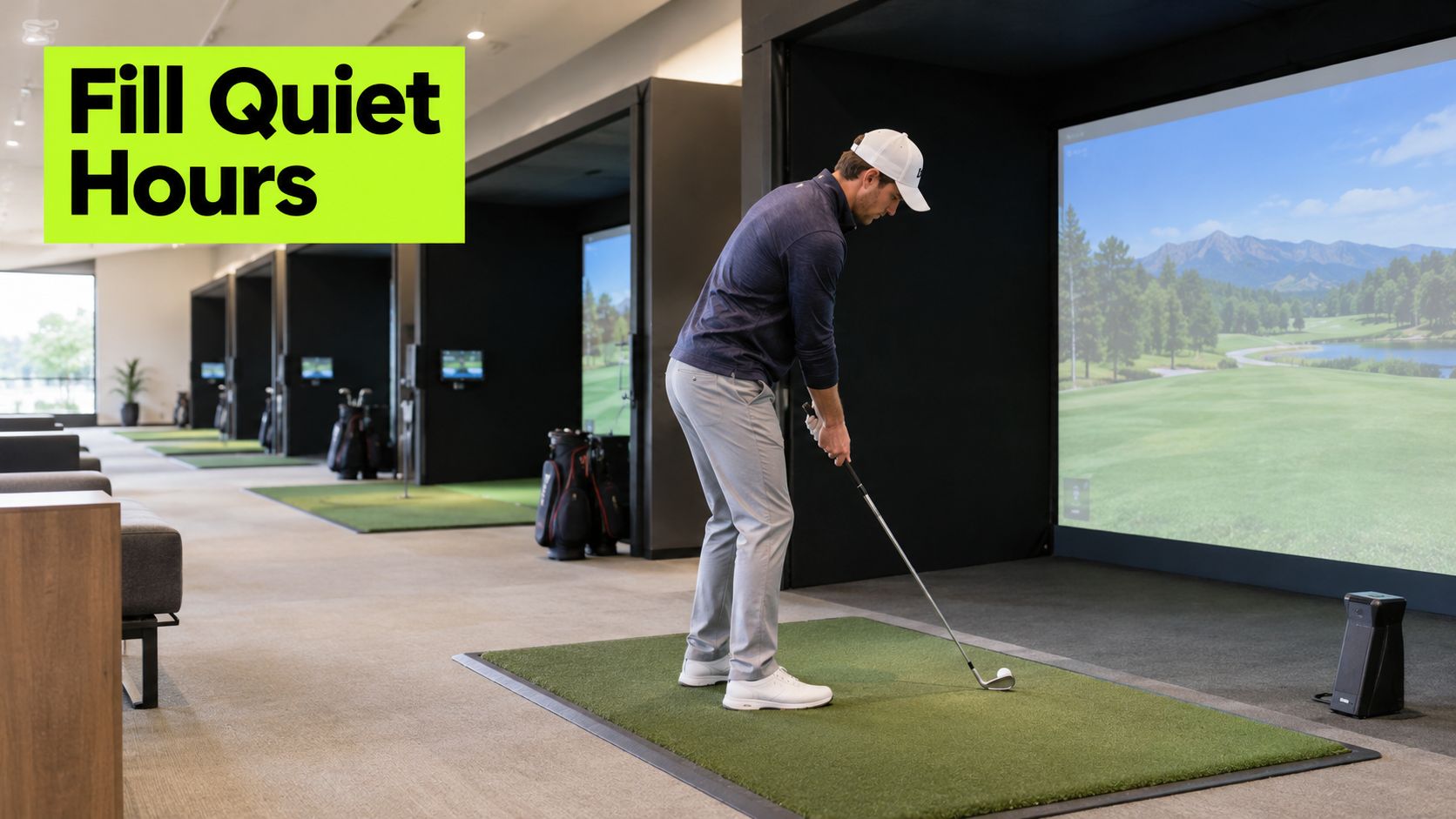
Protect the price of demand you already have. If an off-peak window starts filling reliably, tighten the promotion or move it to a quieter time band rather than extending the discount.
Review occupancy every fortnight and compare it with your own baseline. Track both the number of hours sold in the targeted window and the average revenue per booked bay hour, so additional bookings don't disguise an unnecessary drop in yield. For a practical approach to capacity planning, see GolfRep's guide to filling golf simulator bays.
2. Winter Membership and Block Booking Packages
One-off bookings fill individual sessions. A winter pass can make those visits more predictable, but only if its terms fit how customers really use the facility. Sell a commitment that suits the player, not a complicated package designed mainly to bring cash forward.
Look at repeat booking patterns before deciding whether to offer a block of sessions, a monthly off-peak pass or a coaching-linked package. If customers tend to book sporadically, a large commitment may put them off. If they already return regularly, a session block can reward that behaviour and make it easier for them to reserve quiet windows in advance.
For example, a regular customer who books the same weekday slot could buy a winter pass for a set number of sessions, valid over a clearly stated period. Show the expiry terms at checkout and send reminders as the customer uses the package. A reminder when only a few sessions remain gives the team a natural opportunity to ask whether the customer wants to rebook or discuss a more regular arrangement.
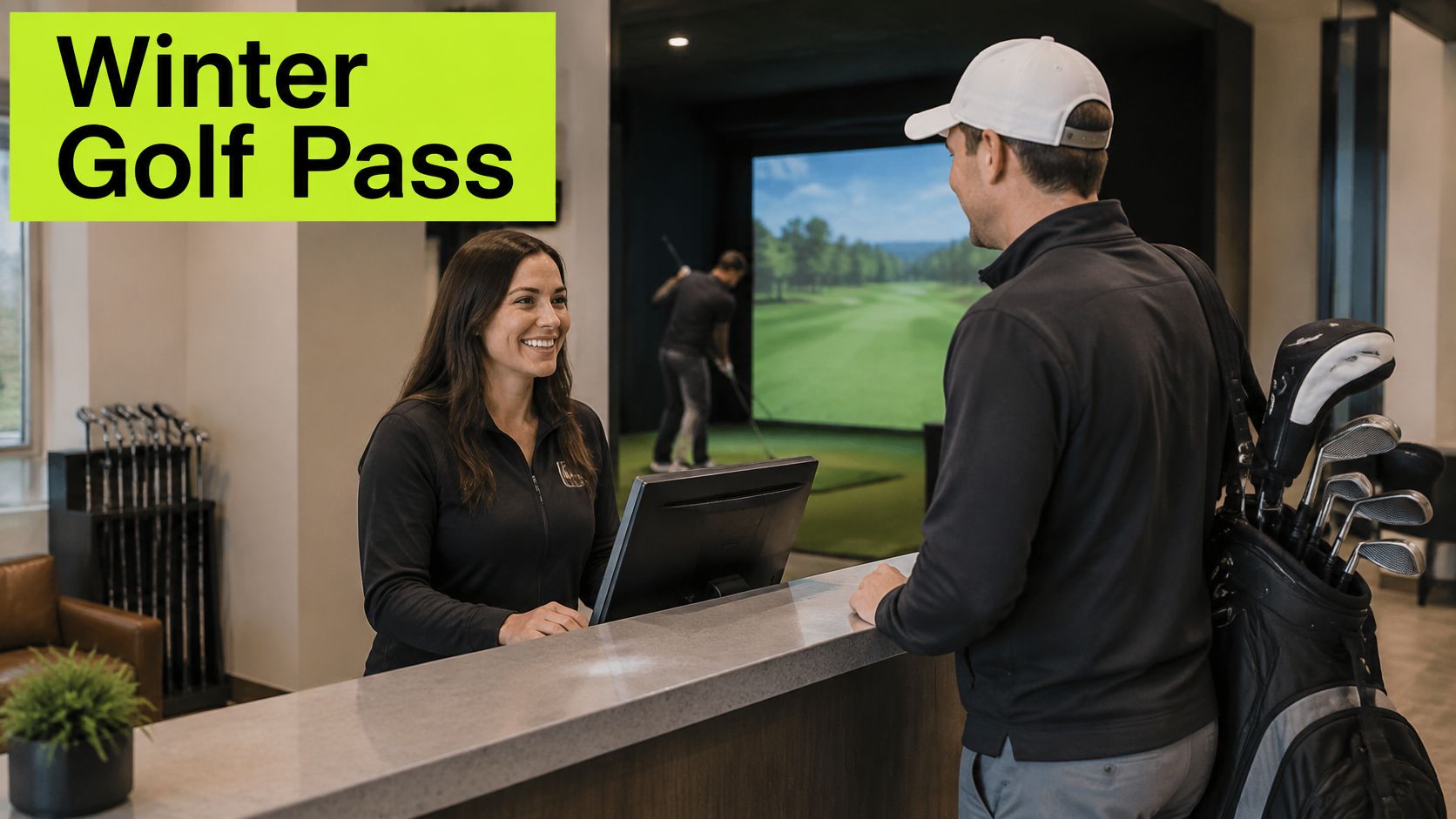
The trade-off is between commitment and flexibility. A pass that's too restrictive creates frustration; one that can be used at any time may shift customers out of full-price peak sessions. Limit use to the time bands you're trying to fill, and make booking availability clear before purchase.
Track package sales, use of sessions and the proportion of customers who book again after the package ends. If regular users don't return, the package may be creating a temporary price incentive rather than a lasting habit. If your club offers memberships, record which package holders ask about a trial or tour, but don't assume that indoor attendance alone means someone is ready to join.
3. Winter Leagues and Competitive Play
A league gives people a reason to come back at a set time. That makes it useful when the problem isn't awareness alone, but keeping particular bays occupied regularly through the winter. It can also suit players who want competition and company without first committing to traditional club membership.
Start with a short pilot in one time band you need to fill. Set a clear weekly slot, define the format and tell players how scores and standings will be shared. If participants don't have handicaps, use a simple ability grouping or self-assessment so new players aren't discouraged by an intimidating competition.
Say Tuesday evenings are underused. You could invite teams to play a weekly simulator competition, publish the leaderboard and arrange a social final. A group chat can handle practical updates, but keep the booking and contact details in your own system. That allows you to understand who took part and invite them to another appropriate offer, such as coaching, a practice session or the next league.
Don't judge the league only by how many players sign up. A popular league can still be poor business if it fills slots that were already busy, consumes staff time without a clear return or doesn't lead to repeat activity outside competition nights.
Record paid bay hours, attendance, no-shows and additional bookings from league participants. At the finish, ask which players want to continue, then offer the next suitable activity rather than sending everyone the same promotion. A final social evening can help build a community, but measure whether participants subsequently book outside the league too. GolfRep's indoor golf league ideas can help when you're shaping the format.

4. Winter Coaching, Academy and Improver Programmes
When bay hire alone isn't making the best use of quiet hours, structured coaching can give customers a stronger reason to book and a professional a more organised way to deliver sessions. Indoor practice also suits golfers who want to work on their game while outdoor play is less dependable.
Build the programme around a defined outcome, such as improving contact, understanding launch-monitor feedback or following a practice plan. A PGA professional can run a small group at a consistent time, while the facility sells the block in advance. Price it as a complete programme and state what's included, who it's for and whether customers need previous experience.
Consider a weekday evening improver course. Participants attend a series of coached sessions, then receive a specific next step: a practice booking, a follow-up lesson or an invitation to a suitable outdoor club activity. That handover matters commercially. A course that ends without a route to further practice can produce good sessions but little repeat revenue.
Set a minimum group size and maximum capacity before you advertise. The minimum protects the professional's time; the maximum ensures the session remains useful and safe. Agree the curriculum with the coach, and make the cancellation and refund arrangements clear if the group doesn't reach the required size.
Track enrolments, attendance, completion and the next booking made by each participant. For junior programmes, confirm safeguarding arrangements, staff checks and insurance before accepting bookings. The commercial test is whether coaching fills capacity at a viable return while giving players a reason to stay connected, not merely whether the course sells out.
5. Christmas Party, Corporate Event and Group Packages
Group bookings can sell several bays together and create food and drink revenue alongside play. They're a different product from ordinary simulator hire, though, so don't price or staff them as if they were just a large individual booking.
Keep the choices simple. Offer a small number of packages with clear inclusions, such as bay time, a short team challenge and a food option. Set out how many people each package suits, what the organiser needs to confirm and when the booking becomes secure. A deposit and written cancellation terms help protect capacity and staff planning.
For example, a company organising a winter social could book several bays for a team event, add a set food package and finish with a short competition. The organiser gets an easy-to-explain event; the facility can plan staffing and catering against the booking. That's more manageable than building a bespoke offer from scratch for every enquiry.
The operational risk is overpromising. Check bay availability, food preparation and front-of-house cover before confirming the event. A group that arrives to find unclear timings or slow service is unlikely to return, even if the simulator experience itself works well.
Capture the organiser's contact details, company name and event type. After the event, send a thank-you message with one relevant next step, such as a return visit or a team league, and record whether the group responds. GolfRep's guidance on indoor golf corporate events can help you shape a clear offer. The practical measure is revenue per event alongside the bay hours and staff time it consumes, not just the number of guests.
6. First-Visit Conversion and Winter Onboarding for New Customers
A first booking is a start, not proof that a customer will return. New visitors may come with a friend, as part of a gift or because they want to try a simulator. The next visit is more likely when your team makes it easy to book and recommends an activity that fits what the customer enjoyed.
Give staff a short, natural way to ask what brought each first-time visitor in. Someone focused on improving their swing may want coaching; a group that came for a social session may prefer another group booking. Record the answer as a simple customer tag, then use it to make the follow-up relevant.
A practical process might include a thank-you message after the visit, a useful invitation a few days later and a final prompt if the customer hasn't booked again. The message should link to a specific next step, such as a practice session, a coached assessment or a social booking. Avoid treating every new visitor as a membership prospect before you understand their interest.
Make the second booking part of the visit, not an afterthought. Staff can mention suitable times while customers are at reception, when the experience is still fresh.
Track how many first-time visitors book again within your chosen measurement window, and compare that rate with your own previous periods. Also record whether staff offered a second booking at check-out. If repeat visits remain low, review the first-visit experience, the relevance of the offer and whether follow-up reached the customer at the right time.
The wider audience for indoor golf makes this step important. England Golf participation reporting, covered by National Club Golfer, counted 12.6 million adults in England who played some form of golf in the previous twelve months, including 5.3 million who used off-course formats. Those figures don't mean every simulator visitor is ready for club membership. They do show why facilities should capture what a visitor wants and give them a suitable route back.
7. Winter Taster Sessions and Local Search Capture for New Golfers
Some local customers aren't looking for simulator practice. They want an easy way to try golf, meet friends or find an activity that doesn't require booking a full round. A beginner-friendly taster can make that first step clear, provided the session is welcoming and the next step is planned.
Keep the offer straightforward. State who it's for, how long it lasts, what happens during the session and how to book. A weekly beginners' evening, for example, could introduce basic shots with a coach and finish with a short simulator game. The customer leaves knowing what they tried and what they could book next.
Make the same information easy to find locally. Keep your Google Business Profile accurate, add current facility photos and describe the taster in plain language on your booking page. You can also promote it through local networks, with the message adjusted for the audience. A couples' session and a women's beginner session may need different wording even if they use the same bay and staff.
Ask for permission to follow up, and record what each participant wants from golf. That could be social play, improving through coaching or trying a course. Then offer an appropriate second visit instead of sending a generic discount that risks attracting people who won't return at the normal rate.
Measure how many people book the taster, attend and return for another session. Compare those results with the staff time and promotional spend involved. If a local leaflet campaign supports the launch, plan the distribution around the areas you can serve and direct people to a dedicated booking page; The Print Warehouse's guide to planning leaflet distribution can help with that practical step.
How the seven winter marketing approaches compare
| Item | Best for | Revenue model | Setup effort | Main risk |
|---|---|---|---|---|
| Off-Peak Pay-and-Play Pricing for Winter Bay Utilisation | Filling quiet bay hours | Time-banded session fees and add-ons | Moderate: set rates and review occupancy | Peak customers may wait for discounts |
| Winter Membership and Block Booking Packages | Encouraging regular winter visits | Prepaid session bundles and recurring passes | Moderate: configure billing, expiry and reminders | Heavy use can reduce margins |
| Winter Leagues and Competitive Play | Building community and repeat visits | Entry fees covering bay time and competition | Moderate: organise fixtures, scoring and communication | Dropouts or mismatched skill levels |
| Winter Coaching, Academy and Improver Programmes | Golfers seeking structured improvement | Course fees, group coaching and lessons | High: qualified coaches, staffing and safeguards | Low enrolment or staffing constraints |
| Christmas Party, Corporate Event and Group Packages | Corporate and social groups | Per-person packages, bay hire, food and drink | High: coordinate bookings, staff and catering | Seasonal capacity strain and cancellations |
| First-Visit Conversion and Winter Onboarding for New Customers | Turning trial visitors into regulars | Repeat bookings, coaching, league and membership sales | Low to moderate: create follow-up and tracking workflows | Inconsistent follow-up or intrusive messages |
| Winter Taster Sessions and Local Search Capture for New Golfers | Beginners and lapsed golfers nearby | Introductory session fees and follow-on bookings | Moderate: schedule sessions and maintain local listings | Discount-seekers may not return |
Choosing Your Winter Starting Point
Don't launch all seven offers at once. Start by pulling eight to twelve weeks of bookings by day, hour and bay, then identify the specific periods with the weakest utilisation. Your booking system should show whether the main gap is unused capacity, too few repeat visits, a lack of structured activity or insufficient new-customer interest.
Match the first change to that constraint. If quiet weekday hours are the problem, test time-banded pricing or a block offer while protecting peak rates. If first-time visitors don't return, improve the welcome, second-booking prompt and relevant follow-up before increasing spend on acquisition. If coaching or events are the better fit for available staff and space, package them with clear capacity, inclusions and booking terms.
Choose one main measure for each test. For a pricing offer, track booked bay hours and revenue per bay hour in the target window. For a first-visit process, track the share of new customers who return and the proportion who book their next session before leaving. For packages, track usage and rebooking after expiry; for leagues, record attendance and bookings outside league time. These figures tell you whether the offer is creating useful incremental activity or just moving existing customers into a cheaper slot.
Review results after six weeks, then decide whether to keep the offer, change it or stop it. A winter campaign should not be judged only by the number of enquiries or bookings. Consider whether it filled capacity that would otherwise have stayed empty, whether the staff time was worthwhile and whether customers took a meaningful next step.
Indoor golf winter marketing is a utilisation decision as much as a promotional one. A facility with the right offer for its quietest hours can bring customers in without weakening peak pricing, then build a path from a first visit to repeat use. GolfRep works with golf clubs and indoor operators to identify commercial constraints and plan growth across acquisition, conversion and retention.
GolfRep helps UK golf clubs and indoor operators plan campaigns, customer journeys and follow-up around the capacity they need to fill. If you're weighing up a winter offer, visit GolfRep to discuss how to measure its impact on bookings, repeat visits and revenue.
Ready to tap into our proven growth system?