Golf Club Membership Enquiries: The Playbook for Conversion
Most advice about golf club membership enquiries starts in the wrong place. It tells clubs to buy more traffic, run more ads, post more on social media, and widen the top of the funnel.
That can help, but it usually isn't the main constraint.
At GolfRep, we see the same pattern repeatedly. The club is already getting interest. The problem is what happens after that interest arrives. An enquiry lands in a shared inbox. A member of staff means to call back later. The membership PDF is somewhere on a desktop. Nobody records the outcome. By the time anyone follows up properly, the prospect has gone cold or joined a club that replied first.
That isn't a marketing problem. It's a systems problem.
For most clubs, the fastest route to better membership growth is not more spend. It's a tighter process for handling golf club membership enquiries from first contact through to visit, nurture, and sign-up.
The Real Bottleneck in Membership Growth
The popular assumption is simple. If membership growth feels slow, the club must need more leads.
In practice, many clubs don't have a lead shortage. They have lead leakage. Good prospects enquire, then disappear because the response is slow, unclear, or inconsistent. Staff are busy, committee-led processes create delays, and nobody has full visibility of who was contacted, what was said, or what happens next.
That matters even more when demand is already healthy. In Golfshake's 2025 membership survey, 30% of golfers said their club had a waiting list, up from 27% the previous year, and 57.4% believed membership was growing at their club.
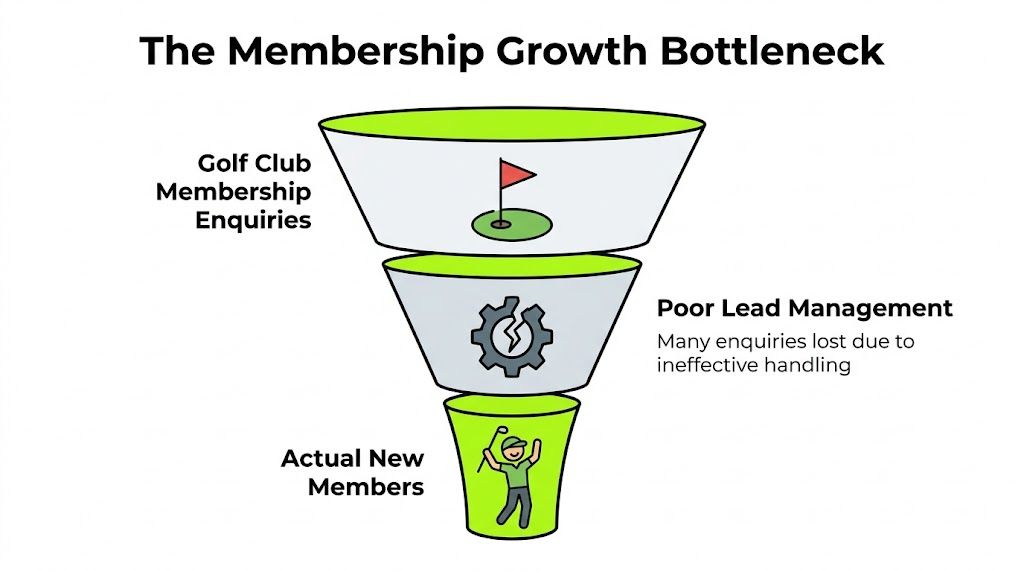
If demand is active, the club's job changes. It is no longer just about attracting interest. It is about capturing, responding to, and converting that interest before it slips away.
What lead leakage looks like in a golf club
Lead leakage usually isn't dramatic. It's operational.
A prospect fills in a form on Saturday afternoon and hears nothing until Monday. Another asks about a flexible category and gets sent the full membership brochure with no explanation. A visitor scans the website, can't work out the total first-year cost, and leaves without enquiring. A good lead comes in, but the only person who knows how to handle it is off that day.
These are small failures. Together, they block growth.
Practical rule: If a club can't tell you the status of every open membership enquiry today, it doesn't have a lead generation issue. It has a process issue.
The clubs that convert more usually do three things well
They don't rely on memory.
They don't rely on one staff member.
They don't treat all enquiries the same.
A working system normally includes:
- Fast acknowledgement: The prospect gets an immediate response, even outside office hours.
- Clear ownership: One person is responsible for the next action.
- Defined stages: Enquiries move from new lead to contacted, to visit booked, to nurture, to member.
Manual handling breaks down because golf clubs are busy businesses. The phone rings, competitions are running, bar issues appear, members need attention, and the enquiry sits there. That is why the bottleneck isn't effort. It's structure.
The clubs that grow more predictably don't necessarily market harder. They remove friction from the conversion path.
Building Your Enquiry Capture and Qualification Engine
A decent membership page isn't enough anymore. Clubs need an enquiry capture system that collects the right information at the start, not a blank contact form that creates more work later.
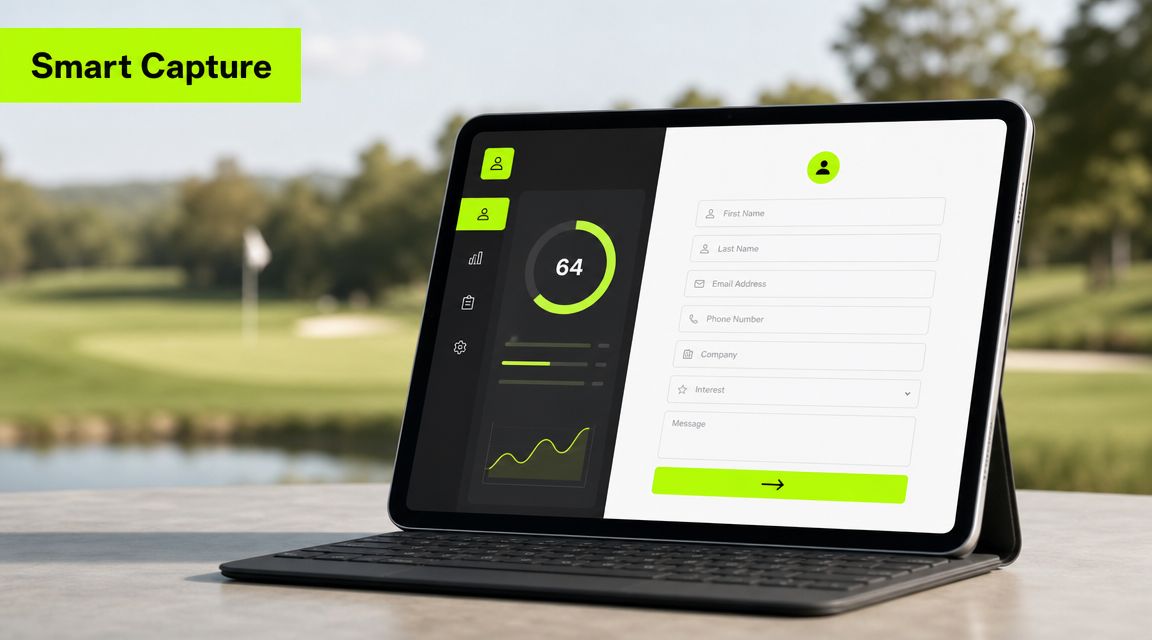
The first job is making it easy for the prospect to raise a hand. The second is making sure the club learns enough in that first interaction to respond properly.
What a good enquiry form should actually ask
Most clubs either ask too little or too much.
If you ask only for name, email, and message, you create an admin problem. Staff then have to chase basic details before they can give a useful answer. If you ask for everything under the sun, completion rates suffer and the process feels heavy.
The middle ground works best. A practical form should usually capture:
- Membership interest: Full, flexible, junior, academy, social, corporate, or not sure.
- Playing profile: Current golfer, returning golfer, beginner, visitor considering a switch.
- Timing: Ready now, researching options, likely later in the season.
- Contact preference: Phone, email, either.
- Operational questions: Handicap status, preferred playing days, whether they want a tour or trial round.
That gives you enough to segment immediately. A retired weekday golfer should not receive the same follow-up as a younger prospect comparing flexible options around work. A social prospect asking about club life needs a different conversation from a low-handicap player focused on competitions.
A smart form shouldn't just collect enquiries. It should reduce ambiguity for staff and make the first reply more relevant.
Transparency improves the quality of the enquiry
A lot of prospects hesitate because club pricing is vague. They don't just want the subscription figure. They want to know what year one really costs.
The practical fix is simple. Publish clear guidance on what you pay in year one, including subscription, joining fee, and levies. The industry guidance discussed in this golf facility planning resource supports the importance of affordability and clarity for facility viability, and that same principle applies directly to membership conversion.
If you hide pricing behind a callback, many prospects won't enquire at all. They'll assume the worst.
Qualification doesn't have to mean friction
Qualification can be handled by form logic, by automation, or by conversational tools. If you're exploring how chatbots qualify leads, the useful takeaway is not novelty. It's consistency. The same qualifying questions get asked every time, and staff receive better data before making contact.
For clubs that want a more structured process after capture, this guide on golf club lead management is a useful next step.
The best capture engine does one thing very well. It gives the club a head start before the first human conversation even begins.
The First 5 Minutes Winning with Instant Automated Responses
The first five minutes after an enquiry are where clubs either look organised or look indifferent.
That judgement happens quickly. A prospect has just shown intent. They may be comparing several clubs at once. They may have asked about pricing, waiting lists, or trial rounds. If your process depends on somebody spotting the email later, you've already introduced risk.
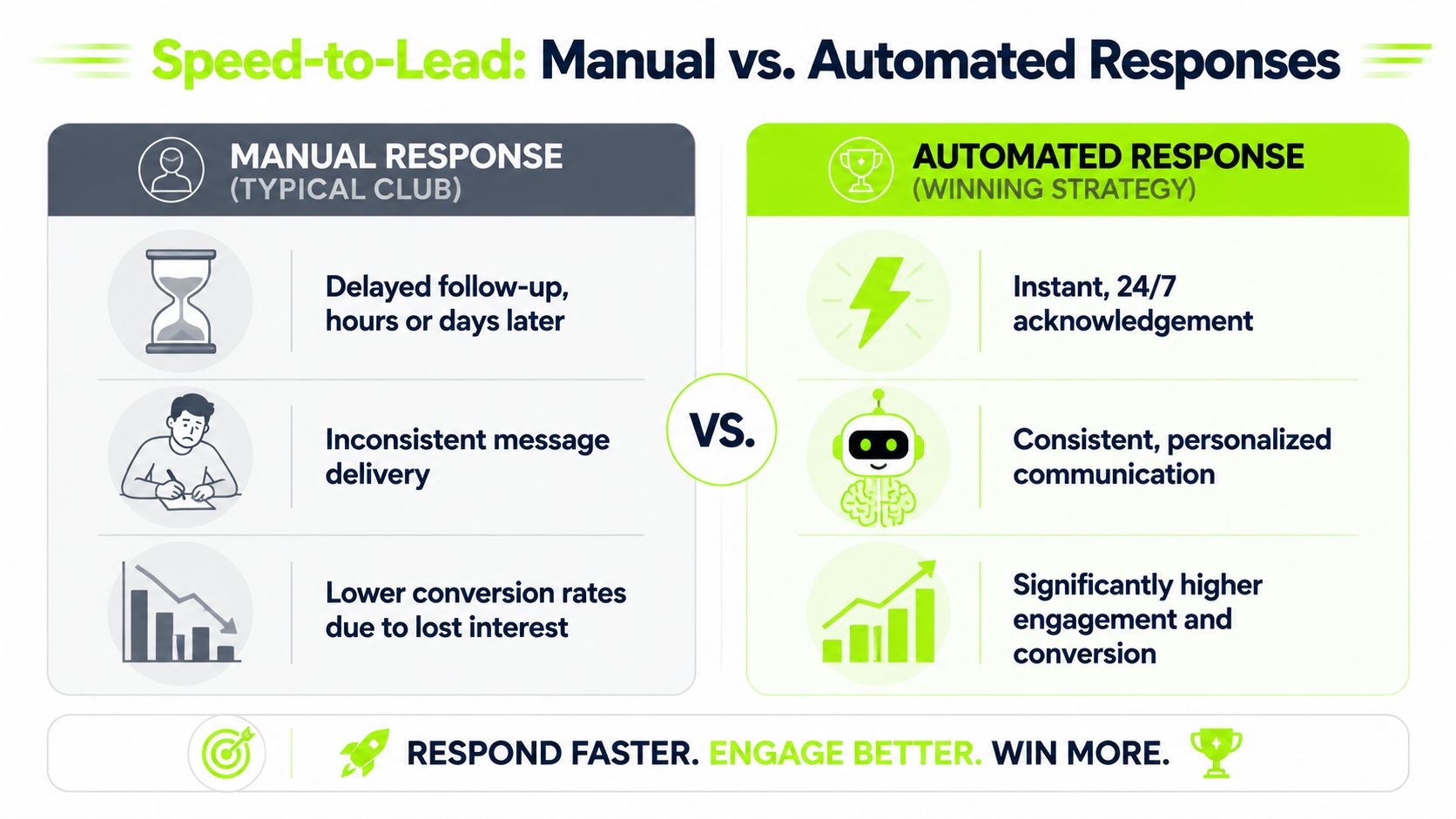
A clear industry trend is that clubs with online enquiry forms and automated follow-up can reduce drop-off by answering operational questions immediately, while clubs that make prospects wait for a callback often lose those leads to faster-responding competitors, as noted in this golf membership operations article.
What the weak version looks like
The weak version is familiar.
A prospect submits a form and gets either nothing or a generic “thanks, we'll be in touch”. No pricing. No outline of the joining process. No indication of when somebody will call. No useful next step.
That kind of reply doesn't build confidence. It tells the prospect the club is reactive.
What the strong version looks like
A strong instant response does three jobs at once:
- Confirms receipt so the prospect knows the enquiry has landed.
- Answers common questions straight away, such as membership categories, pricing guide, or whether a visit can be arranged.
- Sets expectations for personal follow-up, including who will contact them and when.
The point isn't to replace people. The point is to stop the gap between enquiry and human contact from feeling empty.
A practical first-response email might include:
- A direct acknowledgement: Thank them by name and confirm the club has received the enquiry.
- A useful link or attachment: Fee guide, membership page, tour booking page, or explanation of the joining process.
- A next-step promise: State that a team member will call or email within a defined window.
- A route for urgency: If they want to speak sooner, give them a direct number or booking option.
Why automation works better than good intentions
Most clubs don't fail because staff don't care. They fail because the system depends on staff remembering.
Automation removes that dependency. It means every enquiry gets the same standard of first contact, even on evenings and weekends. It also means the prospect feels momentum, which is what you want immediately after they enquire.
Slow follow-up doesn't just delay conversion. It changes how the prospect judges the club.
If the website asks a golfer to trust the club with a joining fee, annual commitment, and part of their leisure time, the operational experience has to support that trust from minute one.
For clubs still handling responses manually, the practical improvement is not complicated. Start with one triggered acknowledgement, one useful resource, and one promised next step. Then make sure the personal contact takes place.
If you want to tighten that part of the process, this article on speed to lead for golf clubs covers the operational side in more detail.
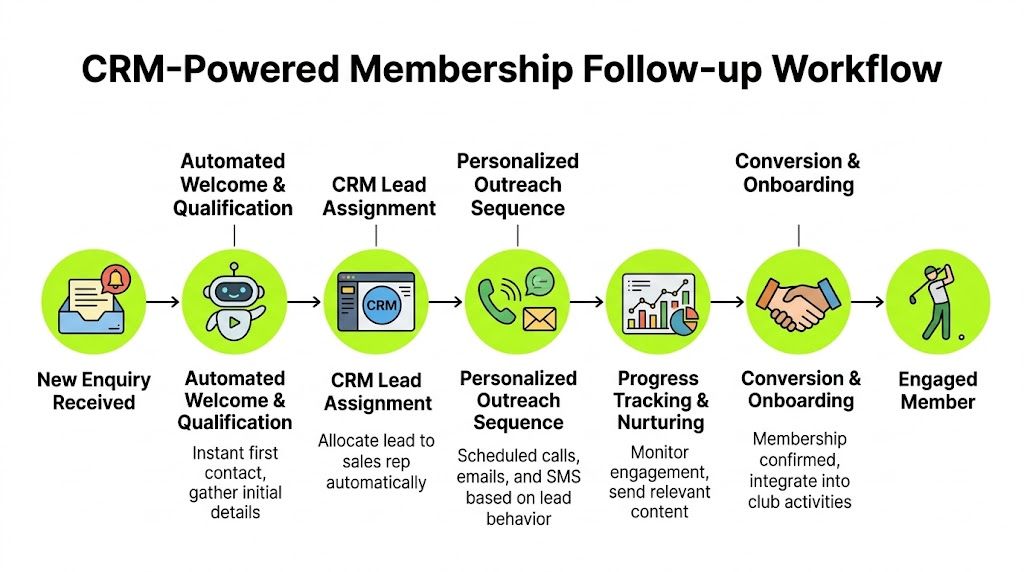
Designing Your CRM-Powered Follow-up Workflow
Once the first response is in place, the question becomes simple. What happens next, and who owns it?
If the answer lives in somebody's inbox, on a handwritten note, or in a spreadsheet only one person updates, the workflow is fragile. Clubs need a CRM-led follow-up process because membership sales are not one conversation. They are a sequence of actions over time.
That matters particularly for longer pipelines. In the Hillier Hopkins 2024/25 golf clubs survey, an average of 21 members at each club progressed from the waiting list to full membership in the last renewal period. That is a reminder that not every good prospect converts immediately. A proper system has to manage today's hot lead and next season's likely member.
A workable pipeline for most clubs
You don't need a complex setup. You need a clear one.
A sensible workflow often looks like this:
| Stage | What happens | What must be recorded |
|---|---|---|
| New enquiry | Form submitted or call logged | Source, membership interest, date received |
| Auto-response sent | Instant acknowledgement goes out | Time sent, content delivered |
| Staff follow-up due | Task assigned to named person | Due date, owner |
| Contact attempted | Call or email made | Outcome, notes, next action |
| Visit or trial booked | Prospect commits to next step | Date, attendance status |
| Nurture | Not ready yet but still engaged | Reason for delay, nurture segment |
| Converted or closed | Member joined or opportunity ended | Final status and reason |
This creates something many clubs currently lack. Visibility.
A manager should be able to open the system and see every live membership opportunity, every overdue task, and every stalled enquiry.
The follow-up rhythm matters
Good clubs don't just “follow up when they can”. They decide in advance what the cadence should be.
That usually means:
- Immediate automation on submission
- Personal contact from a staff member within the club's chosen service window
- A scheduled next action if there is no response
- A stage change after each interaction, so nobody has to guess where the lead stands
When call handling is part of the process, tools that enhance customer relationships with integrated VoIP can be useful because they tie conversations back to the lead record instead of scattering notes across devices and inboxes.
Systems create accountability
The hidden value of a CRM is not the software itself. It is the discipline it imposes.
When the workflow is visible, the club can answer operational questions quickly. How many enquiries are waiting for first contact? How many booked visits happened? Which membership category creates the most interest? Where do prospects stall?
This is also where one practical mention of GolfRep fits. For clubs that need both enquiry generation and the follow-up structure behind it, GolfRep builds CRM-enabled pipelines that track leads from first enquiry through to booked visits and sign-ups. The important point isn't the provider. It's the model. Lead generation without workflow control leaves too much to chance.
Nurturing Leads Who Are Not Ready to Join Today
Not every membership enquiry is ready for a sales call and a joining form this week.
Some people are comparing clubs. Some are waiting for renewal dates elsewhere. Some are unsure about cost, time, handicap, family commitments, or whether they'll use the club enough. If your process treats those people as lost, you waste a large part of the opportunity.
A better approach is to keep the conversation alive without chasing too hard.
A common prospect journey
Consider a typical enquiry. A golfer visits the website in spring, likes the course, and asks about membership. They sound interested but hesitant. On the call, they explain that they're playing casually at the moment, their current routine is unpredictable, and they aren't sure a full category is right.
Most clubs do one of two things. They either push too hard and create pressure, or they stop following up and let the lead disappear.
The better option is a nurture sequence built around the actual barrier.
A useful methodology is to make the enquiry process deep and narrow, so the club identifies the specific reason the person hasn't joined yet, as described in this membership survey guidance. If the barrier is affordability, the nurture should address payment structure and real usage value. If the barrier is confidence, the nurture should show beginner-friendly pathways, welcoming member culture, and low-pressure entry points.
The purpose of nurture isn't to send more emails. It's to remove the reason the prospect is still undecided.
What that nurture can look like over time
Month one might focus on clarity. A short email explains the membership options that best match the prospect's playing habits and links to a simple explanation of what joining involves.
Month two can add proof and familiarity. Invite them to an open day, a trial visit, or a social event that lets them experience the club without committing.
Month three should narrow the decision. Send something relevant to their stated concern, such as weekday access, competition life, lessons, practice facilities, or the social side of the club.
That sequence feels personal when it reflects what the prospect told you.
A broader framework for doing this well is covered in these lead nurturing best practices.
What doesn't work
Generic monthly newsletters rarely convert warm membership enquiries on their own.
Neither does repeated “just checking in” messaging with no added value.
Useful nurture is specific, calm, and relevant. It respects timing while keeping the club visible. When the prospect's circumstances change, your club should already feel familiar, organised, and easy to join.
Measuring What Matters and Optimising for Growth
A club can feel busy with enquiries and still perform poorly.
That happens when nobody measures the pipeline properly. Staff remember the good conversations. Managers hear anecdotal feedback. Committee members ask whether marketing is working. Without a handful of operational metrics, nobody can see the actual bottleneck.
The numbers that matter most
For golf club membership enquiries, the most useful measures are usually simple:
- Total enquiries: How many membership opportunities entered the system.
- Average response time: How long it took to acknowledge and then personally contact the lead.
- Lead contact rate: How many enquiries received a real two-way interaction.
- Tour or trial booking rate: How many qualified leads progressed to a visit.
- Enquiry-to-member conversion rate: How many enquiries eventually joined.
These metrics do different jobs. Total enquiries tells you about volume. Response time tells you about operational sharpness. Tour booking rate shows whether staff are moving conversations forward. Conversion rate tells you whether the whole system is working.
How to read the pattern, not just the number
One metric on its own can mislead.
If enquiries are strong but visits are weak, the problem may sit in the first call or in poor explanation of the next step. If visits are happening but sign-ups are low, the issue may be pricing clarity, member fit, or lack of post-visit follow-up. If contact rate is low, the root cause may be weak capture data or inconsistent task completion.
A practical review rhythm helps:
| Metric | Likely issue if weak | Typical fix |
|---|---|---|
| Response time | Slow handling or no automation | Trigger instant replies and assign ownership |
| Contact rate | Bad data or missed tasks | Improve forms and enforce CRM task completion |
| Visit bookings | Weak qualification or unclear next step | Tighten scripts and offer easier booking paths |
| Conversion | Poor nurture or unclear value | Improve follow-up content and pricing clarity |
Clubs improve faster when they stop debating opinions and start reviewing pipeline behaviour.
Growth becomes more predictable when the process is visible
As a result, the full system starts to compound. Better capture produces better qualification. Better qualification makes the first response more useful. Better follow-up creates more visits. Better nurture recovers good prospects who aren't ready yet. Measurement then shows where to refine the process.
That is how membership growth becomes more predictable. Not because every month is identical, but because the club understands where leads come from, how they move, and where they stall.
The clubs sitting on a goldmine of unconverted enquiries usually don't need a miracle. They need visibility, ownership, and a repeatable process.
If your club is getting interest but struggling to turn golf club membership enquiries into booked visits and signed members, GolfRep helps build the systems behind the pipeline, including structured capture, automated response, CRM follow-up, and lead nurture that gives managers clear visibility of what happens after the enquiry comes in.
Ready to tap into our proven growth system?