Golf Club Event Marketing: The Practical Growth Playbook
Most golf club event marketing advice starts in the wrong place. It tells clubs to promote harder, reach more people and collect more enquiries, as though a full inbox automatically creates membership growth. It doesn't. An event only creates commercial value when the club responds quickly, understands the prospect's intent and follows up consistently until the next step is booked.
At GolfRep, we see the same operational gap repeatedly. A club can run an attractive open day, corporate golf event or member-guest format, then lose momentum because enquiries sit in a shared inbox, attendance isn't recorded properly, or nobody owns the follow-up. The practical growth playbook is therefore less about creating noise and more about building a reliable journey from interest to attendance, visit and membership conversation.
The Hidden Challenge in Golf Club Event Marketing
The popular assumption is that the hardest part of golf club event marketing is generating demand. In practice, many clubs already have enough interest to justify a better process. The problem begins after someone submits a form, sends an email, replies to a social post or speaks to a member of staff.
UK businesses average a 47-hour lead response time, while only 7% achieve a response within five minutes. The same UK lead-response research reports that 78% of customers buy from the first company to respond. Those figures apply across the SME sector, not specifically to golf clubs, but the operational lesson is directly relevant: a prospect's enthusiasm is strongest when they enquire, not when a club eventually finds time to reply. (UK lead response research)
A delayed response creates several problems at once. The prospect may forget which event they asked about, assume the club isn't organised, or move on to another venue that made the next step easy. A manual process also gives managers no dependable view of how many enquiries arrived, who answered them, which prospects attended and which opportunities remain open.
Practical rule: Treat every event enquiry as a live sales opportunity, not an administrative task.
Why enquiry volume can mislead
A high registration count looks encouraging, but it can hide weak intent, duplicate records, incomplete contact details and people who never receive a meaningful follow-up. Footfall matters, but it isn't the same as qualified engagement. Someone who attends a taster session, asks about playing rights and books a return visit is commercially different from someone who enters a prize draw and leaves without speaking to the team.
The club needs a clear definition of conversion before promotion begins. For a membership-led event, that might mean a completed membership conversation, a trial round or a booked tour. For a corporate event, it could mean a confirmed planning call, proposal request or site visit. Each outcome should have an owner and a status in the club's CRM.
Manual handling creates avoidable risk
Spreadsheets and inboxes can work for a small number of contacts, but they become fragile when several people manage an event. Staff may send different answers, miss a weekend enquiry or fail to record a no-show. Committee members often have useful local knowledge, yet informal knowledge doesn't create a dependable pipeline when responsibility changes.
The solution isn't to abandon human contact. It's to reserve human time for conversations that need judgement, while automation handles acknowledgement, reminders, task allocation and follow-up prompts. The club then knows what happened to every lead, rather than relying on memory at the next committee meeting.
Why Local Participation Matters More Than Spectator Events
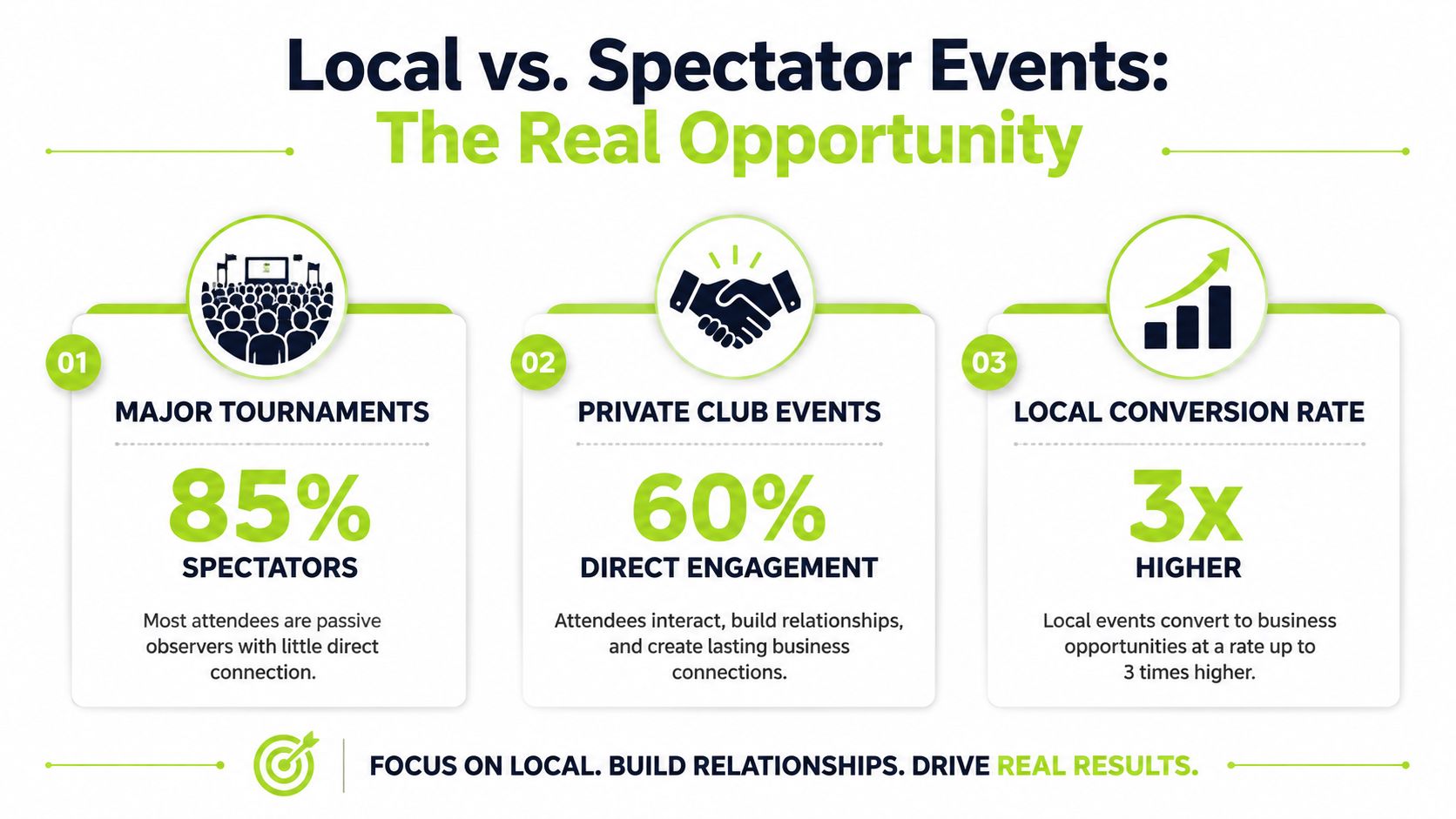
Major tournaments prove that UK golf audiences will attend premium golf experiences. The 2019 Open Championship at Royal Portrush attracted 223,250 spectators, while the 2017 Open at Royal Birkdale drew 235,000, according to the Hillier Hopkins Golf Clubs Report. Across the Open venues listed in the same satellite account from 2014 to 2019, course attendance reached 1,231,474, with 575,059 unique spectators and 16.2% from outside the UK. That audience is familiar with ticketed golf, hospitality and destination-led experiences.
Those figures shouldn't persuade a private club to imitate a major championship. A club doesn't have the broadcast reach, professional field or spectator infrastructure of The Open. The useful takeaway is narrower: golf already has an audience willing to travel, pay attention and engage around an experience. Smaller clubs should translate that appetite into accessible local formats where the path from attendance to relationship is shorter.
Participation creates a more qualified audience
Great Britain recorded its highest number of rounds since records began in 2005, with 2025 up 14% year on year and every region posting new best figures, as reported by Golf Today. The commercial opportunity isn't to announce that the club exists. It's to give active golfers a low-friction reason to visit a particular course, meet the team and understand whether membership fits their lives.
Open days, beginner-friendly tasters, society days and member-guest events can do that more effectively than distant spectator campaigns. They put the prospect close to the club's facilities, people and culture. They also create useful signals, such as playing ability, preferred times, group size, family needs and interest in membership options.
Local event design matters. A family event may need a different welcome and timetable from a corporate golf day. A first-time golfer may want reassurance and guidance, while an experienced visitor may care more about course access, practice facilities and competition structure.
First-time audiences need a credible invitation
Recent event data shows that major golf experiences can attract people who aren't regular spectators. LIV Golf UK reported that 32% of attendees were at a golf event for the first time, while 26% were under 35. The same source reported that The Open at Royal Portrush drew 278,000 spectators and sold out all practice days. (LIV Golf UK event update)
A private club shouldn't copy the presentation of a major tournament, but it can remove the same barriers. Explain what happens on arrival, make equipment expectations clear, welcome guests without insider language and provide an obvious next step. For clubs exploring how to create stronger experiences across sports and hospitality, guidance on how to transform sports gatherings with United We Transform offers useful context.
Building a Strategic Event Funnel
An event funnel starts with a commercial decision, not a poster. Before choosing a date, write down the outcome the club needs and the audience most likely to produce it. The format, message, registration form and follow-up should all support that decision.
Start with the outcome
A membership open day and a corporate golf day may share a venue, but they shouldn't share the same funnel. A membership event might focus on trial rounds and tours. A corporate event should capture company type, likely group size, preferred dates and whether the organiser is comparing venues.
Use a simple planning sequence:
Choose one primary outcome. Decide whether the event is intended to generate trial visits, membership conversations, society bookings, corporate proposals or repeat attendance. Secondary outcomes can be recorded, but one target keeps the campaign accountable.
Define the audience by need. Local golfers, lapsed members, business owners, families and visiting societies respond to different reasons to attend. Avoid broad wording such as “come and see our club” when the audience needs a more specific promise.
Match the format to the decision. A short taster can reduce uncertainty for a beginner. A guided course visit can help a prospective member assess the clubhouse and playing experience. A hosted corporate day can demonstrate how smoothly the club manages groups.
Create one clear registration route. The form should collect enough information to qualify the enquiry without turning registration into a tedious application. Ask only what staff will use in the next conversation, then connect the submission to the CRM.
Make promotion answer the next question
Every campaign asset should make attendance feel straightforward. Include the event purpose, who it suits, what the visitor will experience, what to bring and what happens after registration. Strong photography helps, but it can't compensate for vague details or an awkward booking process.
Paid advertising, email, social media, member referrals, local partnerships and venue listings can all contribute. The right mix depends on the audience and the club's existing reach. A member referral may bring trust, while local search can capture someone actively looking for a course or venue.
For clubs working with sponsors or local partners, it's sensible to review sponsor outreach best practices before promising exposure, deliverables or audience access. Partner activity should add qualified reach, not create extra administration without a clear outcome.
GolfRep's clubhouse event marketing strategy provides a useful internal reference for connecting the event proposition to the wider commercial plan. The important principle is simple: don't measure promotion separately from attendance and conversion. The campaign is one connected process.
Automating Lead Capture and CRM Workflows
Automation doesn't replace a welcoming club team. It makes sure the team gets the right information at the right time, instead of spending valuable hours searching through inboxes and manually sending routine messages.
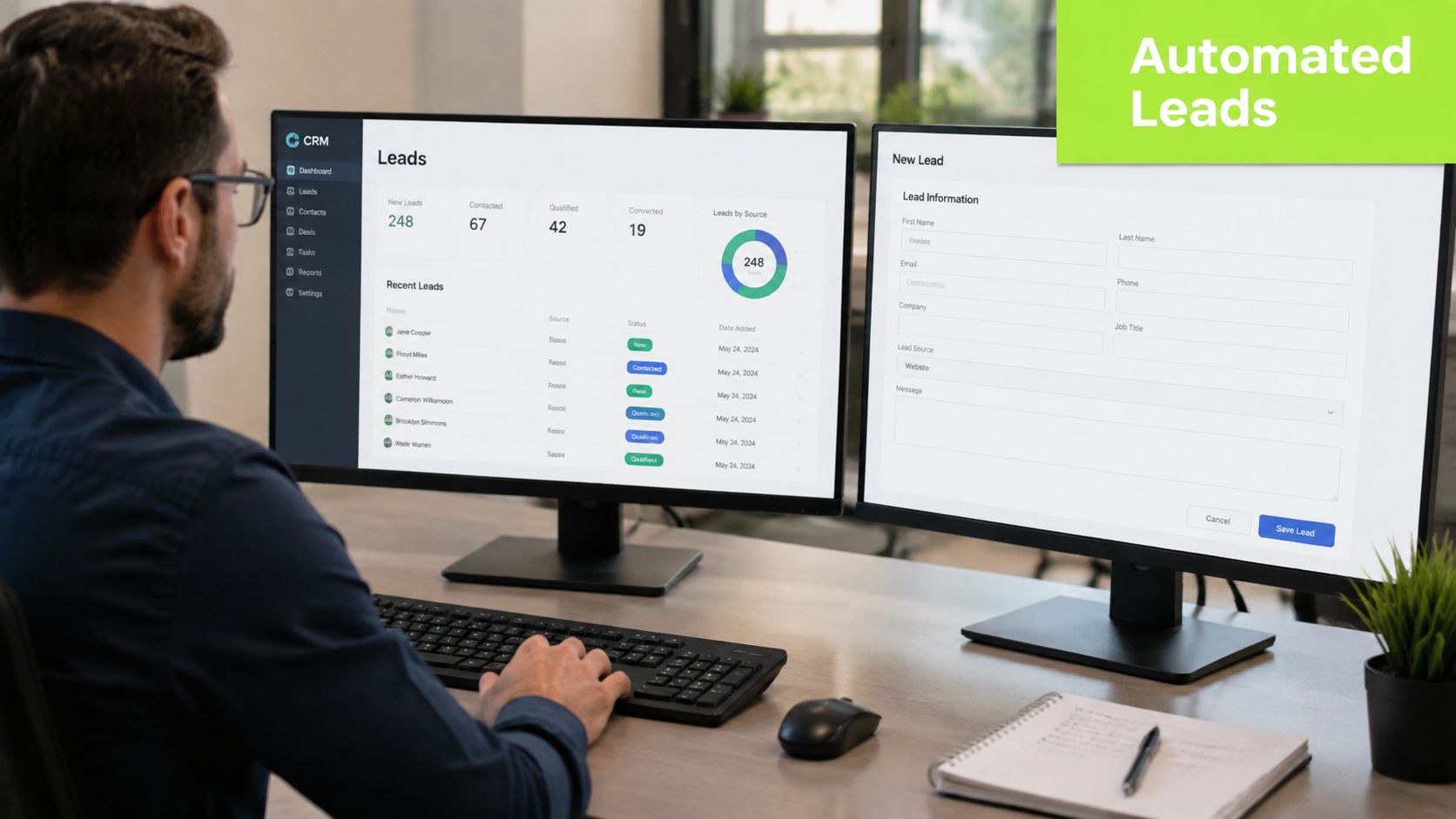
The basic workflow should begin the moment someone registers. The CRM should create a contact record, identify the event, store consent appropriately, assign an owner and trigger a confirmation message. The confirmation needs more than a receipt. It should state the date, arrival instructions, parking details, what to expect and how to ask a question.
Build the workflow around decisions
A practical event CRM workflow usually contains these stages:
- New registration: The system records the source, event and contact details, then alerts the relevant person when the enquiry needs a personal reply.
- Qualified opportunity: Staff record the visitor's reason for attending, current playing situation, group requirements or membership interest.
- Confirmed attendance: The CRM sends useful reminders and separates confirmed guests from people who haven't completed the booking.
- Attended: Staff record the conversations held, questions asked and agreed next action while the details are still fresh.
- No-show or unresponsive: The system sends a polite alternative invitation and creates a task for personal follow-up where appropriate.
- Next commercial step: The prospect moves towards a trial round, tour, membership meeting, proposal or booking.
Lead scoring can be practical rather than complicated. A visitor who requests a tour, provides a preferred date and confirms attendance should receive different priority from someone who only downloads general information. Staff should be able to see the reason for the score and change it when a conversation adds context.
Use nurture to support, not pressure
A pre-event sequence can answer common questions and build confidence. One message might introduce the club and event host. Another can explain the timetable and arrival process. A final reminder should make attendance easy, without creating a sales-heavy tone.
After the event, automation can send a relevant message based on behaviour. An attendee interested in membership should receive the agreed next step. A corporate organiser may need a proposal or planning call. Someone who couldn't attend should receive another suitable opportunity rather than being treated as a lost lead.
GolfRep's guide to golf club automated follow-up covers the operational logic behind these sequences. Other CRM platforms can support similar workflows, provided the club defines its stages, owners and required data before switching tools.
The system must also respect data protection obligations. Capture appropriate consent, explain how information will be used and give people a clear way to manage future communications. Automation should make communication more consistent, not less responsible.
Onsite Conversion Tactics and Follow-Up
The event itself is where marketing claims meet the club. Guests form opinions about the welcome, pace, staff knowledge and atmosphere before they consider the membership brochure. A polished registration process won't rescue an experience that feels confusing or overly sales-focused.
Give the team a shared briefing before guests arrive. Everyone should know the event purpose, the key talking points, who is responsible for tours and how to record follow-up actions. Staff don't need to deliver a script, but they do need to ask useful questions and pass information to the right person.
Create natural conversations
Avoid placing one desk between the guest and the experience. Use low-pressure points of contact, such as a welcome area, a course guide, a practice demonstration or a hosted refreshment space. Staff can ask what brought the visitor in, what they currently play and what they hoped to learn, then tailor the conversation.
A good onsite process records intent without making guests feel processed. Note whether someone wants a trial round, needs information for a partner, is considering a society booking, or wants to understand the club. Those distinctions determine the right follow-up.
Guests shouldn't have to ask the club what happens next. Give every attendee a clear next step before they leave.
The next step might be a course visit, a conversation with the membership lead, a proposal discussion or an invitation to another event. Make it easy to book while interest is current.
Follow up while the experience is fresh
Segment the post-event message by attendance and intent. Thank attendees for coming, refer to the part of the event they engaged with and confirm the agreed action. Contact no-shows differently, offering a practical alternative rather than sending the same generic message.
The club should also contact high-intent prospects personally. A personal call or customized email is appropriate when someone asked detailed questions, requested a tour or discussed joining with a staff member. The CRM should create those tasks automatically so the responsibility doesn't disappear after the event.
The golf club open day marketing guide is useful when planning the relationship between registration, the event experience and follow-up. The central discipline is to record every meaningful interaction and keep ownership visible until the prospect makes a decision.
Measuring Success and Iterating
An event report should explain what happened commercially, not just how many people attended. Track the source of each registration, response time, confirmation rate, attendance, no-shows, booked next steps and eventual outcomes. These measures show where the funnel works and where staff or systems lose momentum.
Use a simple event review:
- Response time: How quickly did the club acknowledge and handle each enquiry?
- Attendance quality: Which channels and messages produced engaged visitors rather than unqualified registrations?
- Event-to-visit conversion: How many attendees booked a trial round, tour or planning conversation?
- Membership or booking outcome: Which opportunities progressed, paused or closed?
- Acquisition cost: What did the club spend to create each meaningful commercial opportunity?
Hillier Hopkins positions its UK golf-club survey as a benchmarking document, giving clubs comparative trends across member and proprietary clubs rather than relying only on anecdote or committee opinion. (Hillier Hopkins club benchmarking report) Its survey data also shows why event activity needs measurement: events were reported by 27% of clubs in 2022, fell to 11% in 2023, then recovered to 14% in 2024/25. (Hillier Hopkins Golf Clubs Report)
Review the data after every event and change one operational variable at a time. Improve the form, clarify the invitation, adjust the reminder sequence or reassign follow-up ownership. Predictable growth comes from repeating what produces qualified conversations, not from running more events without learning from the last one.
GolfRep helps UK golf clubs connect event promotion with lead capture, structured follow-up and CRM visibility, so managers can see what happens after an enquiry arrives. If your club wants to turn open days, member-guest events or corporate golf activity into a more dependable pipeline, visit GolfRep to discuss the right growth system for your club.
Ready to tap into our proven growth system?