AI Lead Follow Up for Golf Clubs: A Practical Playbook
A Tuesday morning at a golf club rarely arrives in an orderly queue. A retired couple asks about flexible membership, a corporate organiser wants a society-day package, and a parent wants to know whether their junior can try the club before paying. All three enquiries matter, but they need different answers, different owners and different levels of judgement.
Without a clear system, the membership secretary handles the couple first, the society enquiry waits while someone checks catering and tee-sheet availability, and the junior question moves between the professional shop and the office. By lunchtime, the club may have replied to everyone, but not necessarily in the order that protects the most valuable commercial opportunity.
AI lead follow up for golf clubs should solve that triage problem. It should capture every enquiry, ask the questions a busy employee might miss, identify the appropriate next step and give staff a clear reason to intervene. Speed matters, but speed without prioritisation just creates a faster queue.
What AI Lead Follow Up Actually Changes at a Golf Club
A corporate organiser may represent a larger immediate opportunity than a flexible-membership enquiry. A parent asking about junior golf may need reassurance, clear safeguarding information and a human conversation rather than a sales sequence. The system should recognise those differences before assigning staff time.
Membership demand creates opportunities, but national growth will not fill every club's categories automatically. Local competition, pricing, available tee times and the club's offer still shape conversion. Broader research into how artificial intelligence affects employment does not establish membership performance, so clubs should judge their own pipeline from recorded enquiries and outcomes.
The commercial question goes beyond reply speed. Which prospect deserves human attention, and what evidence supports that decision?
The club's scarce resource is judgement
Automation handles repetitive continuity well. It can confirm receipt, collect a postcode, identify whether someone wants full or flexible membership, ask about playing frequency and offer appointment times. It can also recognise that a society organiser needs dates, catering and group-size information, rather than a membership brochure.
Staff should own conversations where context matters. That includes pricing exceptions, complaints, accessibility requirements, safeguarding concerns, unusual membership requests and prospects whose needs do not fit standard categories. Junior data deserves particular care, with the system collecting only what the club needs and routing sensitive matters to an appropriate person.
Practical rule: Use AI to identify who needs a person next, not to imply that every enquiry can be completed without one.
The automated sales follow up use case shows the wider operating principle: combine immediate acknowledgement with qualification and task routing. A golf club still has to adapt that logic to capacity, membership rules and the difference between a membership prospect, society buyer, visitor and lesson enquiry.
The right operating model is AI for continuity, humans for judgement. The system keeps contacts moving, while the club decides which signals justify a call, tour, trial round or longer nurture path. GolfRep's practical guide to AI for golf clubs sets out the broader application, but the implementation should begin with the club's commercial constraint.
What automation doesn't fix
AI will not compensate for unclear membership categories, inaccurate prices or disagreement about lead ownership. It can expose those weaknesses quickly, which makes the gaps easier to address but harder to ignore.
Define priority segments before configuring any scoring. A high-value family prospect, a society organiser with a fixed date and a local golfer returning after a long absence may require different treatment. The score should reflect likely long-term value, urgency, fit and the human effort required. A generic chatbot that sends identical messages to each person creates activity without necessarily improving revenue.
Capturing Every Enquiry and Acknowledging It in Five Minutes
At 09:14, a family membership form arrives while the receptionist is taking a call and the professional shop receives a direct message. The system should capture all three enquiries, check for existing records and assign clear ownership before any opportunity disappears into an inbox or notebook.
The first build task is to list every route a prospect can use, then make each route create or update one CRM record. Include the membership form, society and event forms, click-to-call buttons, third-party directories, social-media messages, walk-ins recorded by the professional shop and telephone notes.
A single channel outside the process weakens reporting on volume, ownership and conversion. It also forces staff to spend scarce sales time finding information instead of speaking with the prospects most likely to become valuable members, repeat visitors or society customers.
Build the capture checklist
Each record needs enough context for a colleague to act without searching across several systems.
- Contact details: Name, email address, phone number and preferred contact channel.
- Enquiry category: Membership, society, event, visitor golf, lesson, junior or another defined route.
- Source tag: Website, referral, paid campaign, directory, social media, shop, telephone or walk-in.
- Commercial context: Preferred membership type, intended start window, group size, desired date or lesson requirement.
- Ownership: Named staff member, site, next action and due time.
- Consent status: The wording shown, the response given and whether ongoing marketing is permitted.
- Duplicate check: Match email addresses, telephone numbers and known household contacts before creating a new record.
A telephone note is a proper enquiry, not a lower-quality version of a web form. Give the receptionist and professional a simple entry route with the same fields. A direct message also needs an owner and next action, rather than remaining in a social account accessible to only one employee.
Set the initial acknowledgement to arrive within five minutes, using the benchmark described in UK golf-club enquiry conversion guidance. Treat that as a testable operating standard, not a guaranteed commercial result. Track your own control group for a month before adopting it, and compare booked conversations, tours, applications and eventual conversions, not just the first reply.
Make the acknowledgement useful
An SMS can confirm receipt and provide reassurance. A branded email can explain what happens next and invite one or two useful answers. The message should reflect the enquiry category and the club's current capacity, rather than send identical copy to every contact.
At 09:17, the family enquiry should show its source, category, household details already supplied, consent status and a named membership manager's task. The prospect receives a message from the club, with a clear next step and a realistic expectation about response time.
An AI appointment booking system can offer a conversation or visit, but only from the club's real diary. It should not create appointments during unavailable periods or promise membership places that have not been confirmed. If the prospect replies, books or opts out, stop the acknowledgement sequence and record the outcome in the CRM. That protects staff time and keeps future contact within the prospect's permission.
Qualifying Leads by Segment Rather Than Speed Alone
Response time is a useful indicator of operational discipline. It isn't a commercial strategy by itself. A club can answer every enquiry quickly and still waste staff time on poor-fit prospects while high-value opportunities receive generic messages.
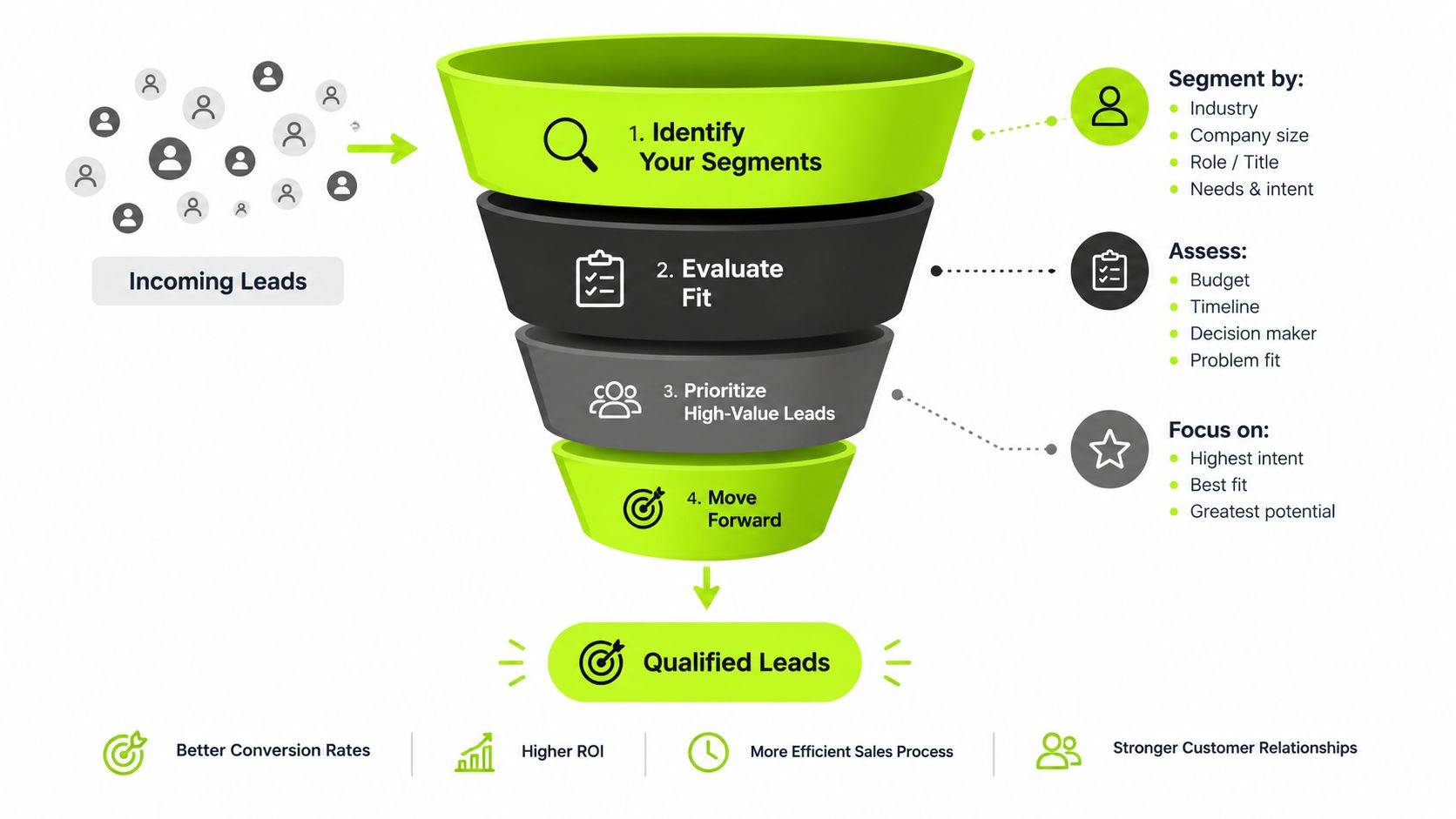
The scoring model should reflect the club's economics and capacity. A practical assistant can collect:
- Postcode and travel distance, including whether the prospect is local enough for regular play.
- Current playing frequency, such as occasional, weekly or several times a week.
- Handicap range, where relevant to the club's communication and playing proposition.
- Household composition, particularly families, juniors or partners considering membership together.
- Joining-fee tolerance, recorded carefully and never treated as a definitive measure of worth.
- Intended start window, so staff can distinguish an immediate decision from general research.
- Preferred playing times, which may align with underused capacity or create a capacity problem.
- Interest beyond golf, such as social facilities, coaching, food and beverage or junior activities.
The club should decide how these signals combine. A vendor can configure the workflow, but it shouldn't decide what the club considers a qualified opportunity.
Two illustrative scoring decisions
Consider a family enquiry from nearby. The parents play regularly, have weekday flexibility, want access for two juniors, and state a budget above the published joining fee. In an illustrative 8 out of 10 score, the system should route the record to a senior membership manager within 15 minutes, with a recommendation for a family conversation and a junior pathway explanation.
Now compare a browser located 90 miles away, with no stated playing frequency, no intended start window and only a general request for prices. An illustrative 3 out of 10 score could place that prospect into a longer educational sequence, while still offering a human conversation if the person provides more information.
These examples aren't universal values. A resort, a private members' club and an indoor facility will weigh location and playing frequency differently. A club with a waiting list may prioritise fit and patience over immediate availability, while a club with off-peak capacity may value weekday flexibility more heavily.
Send the right signal to the right owner
High scores shouldn't always trigger a sales call. A junior enquiry can require a safeguarding-aware response, a family invitation and a named staff contact. A society lead may need the events manager, not the membership secretary. A prospect who has already attended a trial round should move to a personal follow-up task rather than re-entering an introductory sequence.
Review scores against attended visits, applications and paid memberships. Adjust the thresholds when the data shows that the system is rewarding easy-to-answer enquiries rather than prospects who fit the club's long-term member mix.
Building a Multi Channel Follow Up Sequence That Feels Human
A multi-channel sequence works when every message has a job. It fails when the same reminder appears in several places without acknowledging what the prospect has already said.
Use the opening Tuesday examples to set the logic. The retired couple might receive a concise membership comparison and a call invitation. The corporate organiser should receive a date and package checklist. The junior parent should receive a careful answer about trial arrangements, age requirements and who will handle any safeguarding question.
A practical four-channel sequence
1. SMS within ten minutes. Confirm that the club has received the enquiry, name the category and offer one simple next action. For example: “Thanks for contacting [Club Name] about family membership. A membership manager is reviewing your requirements. Would you prefer a call or a visit?”
2. Email the same day. Recap the information supplied, answer routine questions from the approved library and explain what the staff member will do next. The email should be useful even if the prospect doesn't reply immediately.
3. Web chat or AI assistant after 72 hours. Re-engage only when there is a relevant reason. The assistant might ask whether the golfer still wants flexible membership, offer a society information pack or provide a route to book a conversation. It shouldn't restart the entire interrogation.
4. Human phone handoff. Create a task when the prospect has high intent, asks a complex question, requests a visit, indicates an imminent start or replies with uncertainty that needs empathy. The staff member should see the transcript, source, preferences and previous messages before calling.
The exact timing should fit the club's operating hours and playing calendar. Don't send a sales nudge during a major competition or repeatedly contact someone who has said evenings are unsuitable.
Use stop rules, not just send rules
The sequence pauses immediately when a prospect replies, books a visit, requests a call, becomes a member, opts out or is marked for human review. The CRM should display the pause reason and the owner responsible for the next action.
The assistant's decision logic can be simple:
- If the prospect replies, stop scheduled messages and assign the response.
- If the prospect books, stop sales prompts and send practical booking information.
- If the prospect asks about price, availability, eligibility or a complaint, use an approved answer or escalate.
- If the prospect doesn't respond, continue only with consent and within the agreed cadence.
- If contact details are duplicated, merge the record before sending anything else.
Duplicate reminders, ignored preferences and messages sent after a booking make automation feel careless. A short, relevant sequence with a visible human owner feels far more personal than a long series of polished messages.
Wiring Follow Up Into Your CRM and Membership Rules
The CRM should become the club's commercial record, not another inbox. Web forms, comparison sites, social messages and the BRS booking system need to feed a single contact history, with the source, owner and current stage visible to the team.
That doesn't mean every system needs to be replaced. It means the club must define which system owns each fact. The membership platform may own category availability, BRS may own booking details and the CRM may own enquiry history, consent, tasks and progression.
Define the stages clearly
A useful pipeline separates:
- New enquiry, captured but not yet assessed.
- Contacted, with an acknowledgement or staff response recorded.
- Qualified, with enough information to judge fit and intent.
- Tour booked, with a confirmed date and owner.
- Trial taken, where the prospect has experienced the club.
- Application submitted, pending the club's decision or payment process.
- Membership started, recorded only when the commercial outcome is complete.
Stage changes should be triggered by evidence, not optimism. A link click isn't a booked tour. A conversation isn't an application. A cancelled visit should create a rescheduling task, not leave the prospect sitting in the booked stage.
Waiting-list position, joining-fee tier and membership category must be synchronised before the AI answers questions about them. Stale pricing is especially damaging because a confident but incorrect answer creates a complaint that staff then have to repair.
A plain-English guide to intelligent CRM is useful for understanding the broader data principles, but a golf club still needs to map those principles to its own membership rules. The same applies to the practical CRM approach for golf clubs.
Avoid the common integration traps
A comparison-site lead may already exist from a previous website enquiry. A social-media contact may use a different email address from the one held in the membership system. A junior parent may be routed into an adult sequence because the form records only the parent's details.
Run a quarterly audit:
- Test every route: Submit or log a sample enquiry from each channel.
- Check duplicates: Confirm that matching contacts merge correctly.
- Review ownership: Make sure every open record has a named person and next action.
- Verify rules: Compare prices, categories, waiting-list status and booking availability with the current source system.
- Inspect exceptions: Review cancelled tours, opt-outs, complaints and junior records.
- Read messages: Remove anything that sounds inaccurate, overly familiar or inconsistent with the club's brand.
Handling Consent, Waiting Lists and Sensitive Enquiries
Faster follow-up isn't always better. A rapid message that ignores an opt-out, promises a place that doesn't exist or mishandles a junior enquiry can do more commercial harm than a slower response from a thoughtful staff member.
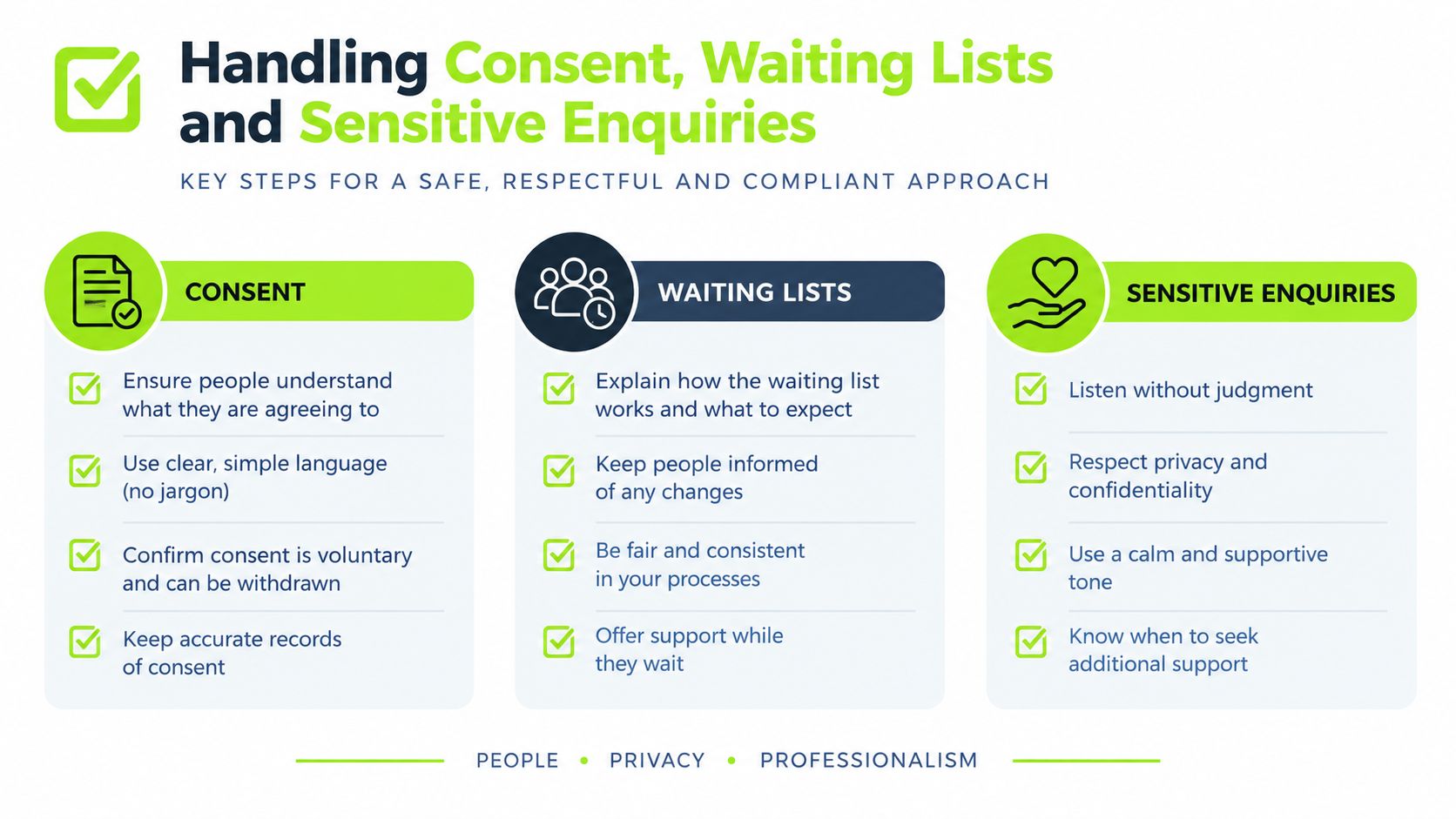
Consent needs to be captured at the point of enquiry in plain language. The form should distinguish between permission to respond to the specific request and permission to send ongoing marketing. Existing members may be contacted under a different lawful basis in some circumstances, but the club should document its reasoning rather than assume that every historical contact can receive every campaign.
Waiting lists need honesty
A prospect who is 43rd on a waiting list should receive a clear explanation of the current position, the rules for progressing and the limits of any estimated timeframe. The AI mustn't imply that membership will be available soon just because the prospect has shown enthusiasm.
Pause automated messages during committee decisions, eligibility reviews or changes to membership capacity. An unsuccessful applicant should receive a respectful human-approved message, with a clear explanation of whether the club can retain their details for future contact.
The 2025 Golfshake survey reported that 30% of golfers said their club had a waiting list, up from 27% in 2024, while junior participation recorded the largest gain at 10.5 percentage points and female membership continued to rise, as reported by Golfshake's UK membership coverage. Those developments make segmentation and respectful communication more important, not less.
Set an escalation boundary
The AI should route these cases to a named human:
- Junior data: Parent or guardian contact, age-related eligibility and safeguarding questions.
- Financial hardship: Requests for payment flexibility or difficulty meeting fees.
- Complaints: Existing-member dissatisfaction, disputes and reputational concerns.
- Health or accessibility: Medical information or adjustments to participation.
- Sensitive fit questions: Concerns about inclusion, behaviour or social experience.
- Opt-outs: Immediate suppression from the relevant sequence and confirmation of the change.
A one-page policy can state the purpose of automation, approved information, escalation triggers, consent wording, opt-out handling, data retention approach, waiting-list language and the staff member who can override the system. Review it whenever the club changes its membership rules.
The standard is simple: Automation should make the club more consistent without making it less considerate.
Measuring Pipeline Performance and Scaling Across Multiple Sites
A committee needs pipeline evidence that supports decisions. Report qualified conversations, attended visits, applications and paid memberships by source, segment and site. Message volume has little value if staff cannot see where prospects stall or which enquiries deserve human attention.
Start with stage-level reporting. Track the time from capture to first acknowledgement, then compare conversion by response window, lead quality and offer. GolfRep's own five-minute benchmark figures are a starting point, not a guarantee. Use a control group where possible, because faster contact can coincide with stronger campaigns, clearer offers or higher-intent prospects.
A separate UK-focused dataset reports an average lead-to-opportunity conversion rate of about 13%, approximately 84 days for a lead to become a genuine sales opportunity, and around 6% of those opportunities converting into a sale after a further average of 18 days. The source states that these figures are not golf-club-specific. Use them to prompt better pipeline discipline rather than copy them into a committee target. The lead-generation tracking guidance supports retaining the full history from first enquiry through membership.
Use a committee-ready dashboard
| KPI | Definition | Data source | Review cadence |
|---|---|---|---|
| Enquiry-to-first-touch time | Time from captured enquiry to first recorded acknowledgement or staff contact | CRM activity log and messaging platform | Weekly |
| Qualified-lead rate | Share of new enquiries meeting the club's agreed qualification criteria | CRM stage and scoring fields | Weekly |
| Cost per membership conversion | Attributed acquisition cost divided by memberships started | Campaign records and membership system | Monthly |
| Time-to-decision by segment | Time from enquiry to application, acceptance or closure, split by segment | CRM stage history | Monthly |
| Source attribution | Enquiries, visits, applications and memberships linked to web, social, referral or another source | CRM source tags and campaign data | Monthly |
A weekly single-site review should cover open ownership, stalled stages, upcoming visits and exceptions. A three-site group needs shared stage definitions and reporting fields, while preserving local context. One site may operate a waiting list, another may need off-peak members, and a third may focus on societies or hotel guests.
Scale the rules, not every message
Central teams should define CRM fields, consent standards, scoring rules and approved templates. Local managers should control factual details, including available categories, tour times, facilities and named contacts. This division keeps reporting comparable without making every club sound identical.
Common failures appear during handovers. A lead moves between sites while the original sequence continues. Managers apply different qualification thresholds. A local message changes, but the underlying CRM rule does not. The prospect receives conflicting information, and staff lose confidence in the record.
Use a formal handover:
- The original site records the transfer reason and receiving owner.
- The CRM changes site and pipeline ownership in one action.
- Outbound sequences pause at the original site.
- The receiving site receives the full history and next action.
- The new owner confirms responsibility and restarts only the relevant sequence.
- Management checks transferred leads for duplicate contact and unresolved tasks.
For operators reviewing multi-site golf club marketing, the commercial priority is shared visibility, clear ownership and sensible allocation of scarce human sales time. Automation should surface high-fit, high-intent prospects and protect staff capacity for conversations where long-term membership value justifies personal attention. At multi-site scale, shared visibility and disciplined ownership convert better than message volume.
GolfRep helps golf clubs and golf facilities map acquisition and sales pipelines, connect enquiry sources to CRM records, and build follow-up processes that qualify prospects while keeping staff in control of sensitive decisions. Visit GolfRep to discuss where automation, data quality or lead ownership currently limits your club's conversion.
Ready to tap into our proven growth system?