10 AI Powered Marketing Automation Tools for Golf Clubs

Which AI tool fits a club office with little spare time? The useful question isn't which platform has the longest feature list. It's which one a small team will run every week, what it'll cost once AI credits and contact tiers are included, and whether it can support the membership, visitor and society journeys the club already depends on.
This roundup compares ten AI-powered marketing automation tools against those realities. Some are accessible ways to organise email and follow-up; others offer predictive scoring and cross-channel personalisation but need better data, technical support or dedicated administration. The best choice isn't necessarily the most advanced one. It's the one the club can use consistently to move prospects from first contact to a visit, membership decision or rebooking.
For a broader small-business perspective on platform selection, see what iHatePosting recommends. The tools below are assessed through a golf-club lens, including how well they handle a limited office team, a distinct membership proposition and a busy calendar of visitor and society business.
1. Intuit Mailchimp
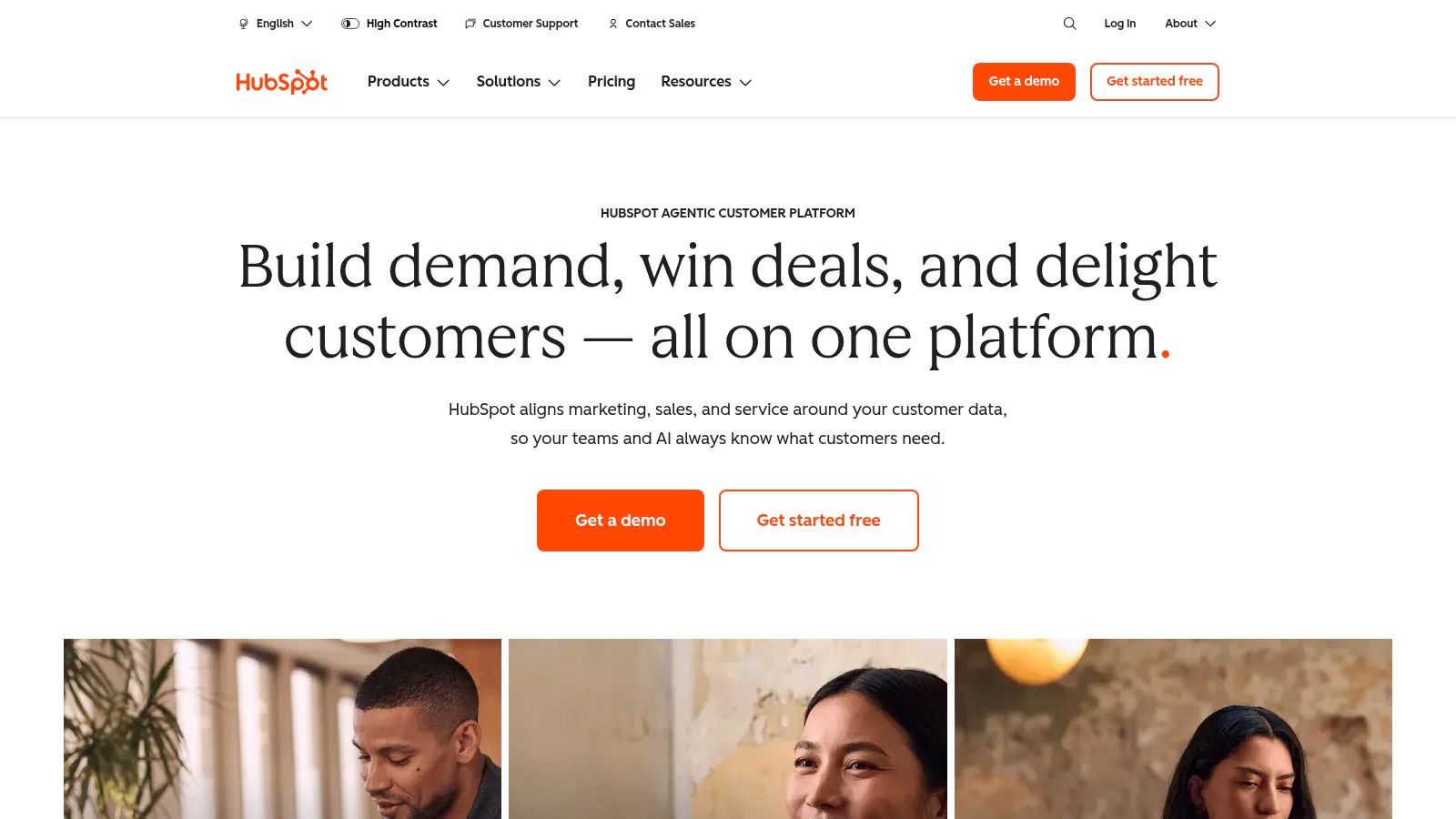
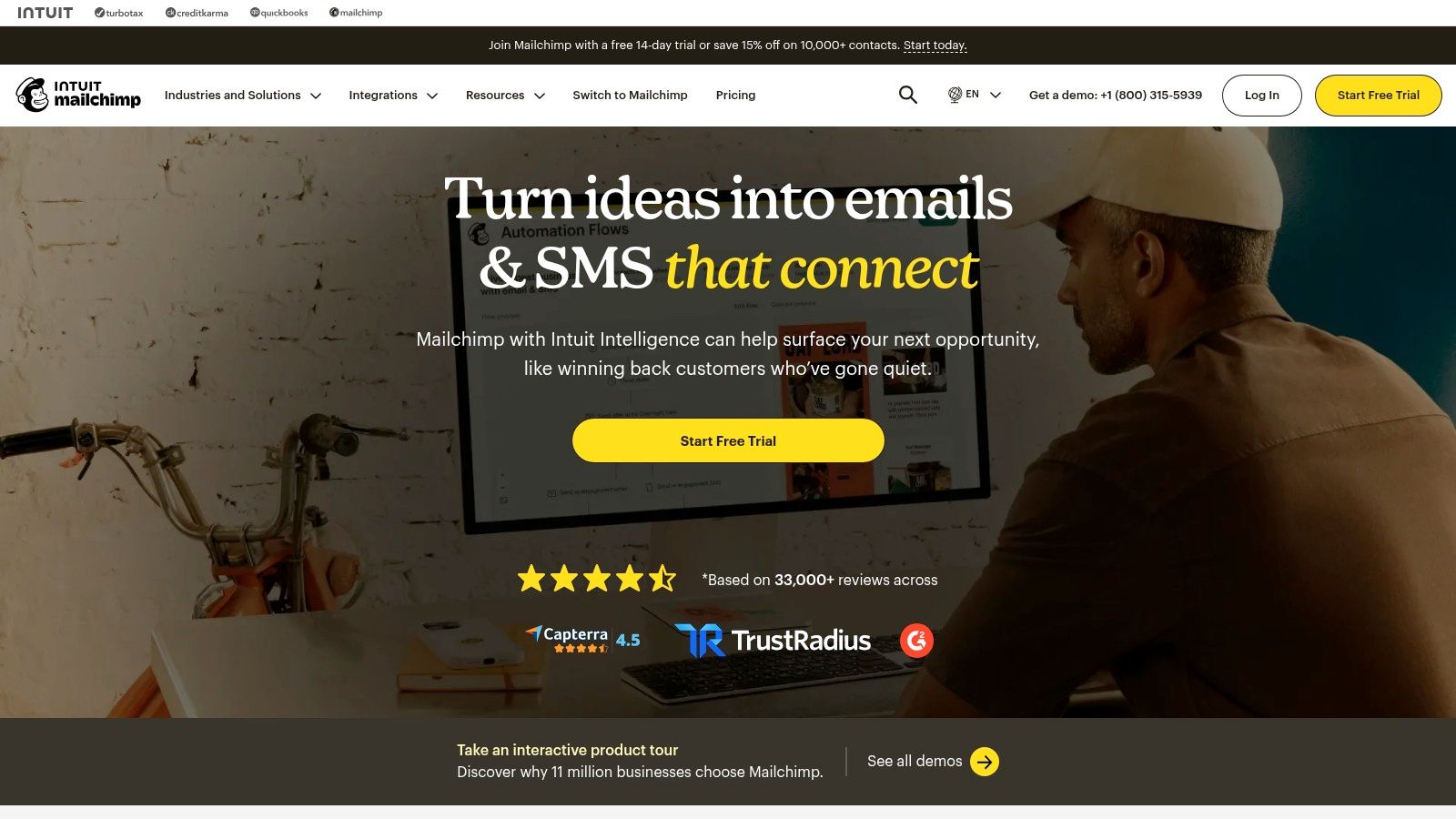
Mailchimp is a practical starting point when a club needs to organise email marketing without building a complicated CRM operation first. Its AI tools can help draft emails and subject lines, while conversational analytics, customer journeys and send-time optimisation offer support with campaign planning and reporting.
For a small office team, the appeal is familiarity and speed. A membership prospect could receive a relevant sequence after requesting information, while a visitor might receive follow-up about future playing opportunities. The platform's templates and education resources can help a manager get a first campaign running without extensive technical support.
Where it fits, and where it doesn't
Mailchimp is strongest when the club's immediate need is straightforward email or SMS nurture and accessible campaign reporting. Its UK pricing page uses pounds sterling, but the cost depends on the plan and audience size. A club should check how its bill changes as its contact list grows, rather than judging affordability from an entry-level offer alone.
The trade-off is depth. Its data model and automation options are lighter than those of mid-market platforms, and a narrowed free plan may not offer enough room for a growing programme. It's less suitable if the club needs detailed sales ownership, complex qualification or joined-up reporting across several customer journeys.
Practical rule: Start with one contact group and one clear outcome, such as getting a membership prospect to book a visit. Don't import every contact and automate every message before the club has agreed what each audience should receive.
For a more focused approach to campaigns and club communications, see GolfRep's guide to golf club email marketing.
2. ActiveCampaign
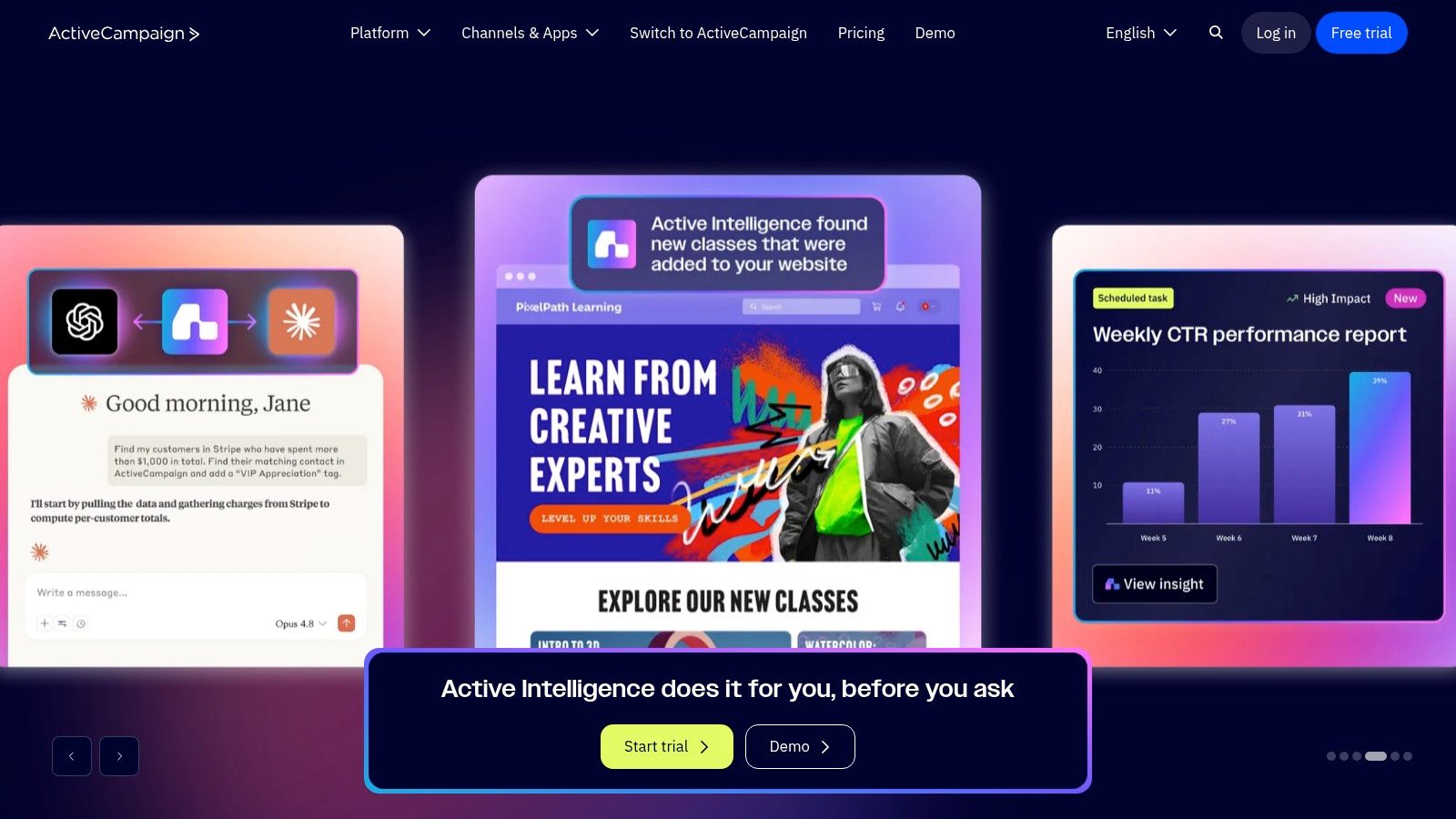
A club that wants email automation to connect more closely with sales follow-up should consider ActiveCampaign. Its visual automation builder, CRM integration and AI assistance are designed to help teams plan campaigns, nurture leads and hand prospects to staff at the right point.
That can suit a membership process with distinct stages. A prospect who asks about membership might receive useful information, while a staff member gets a task to make personal contact after the prospect signals interest. The system's one-to-one send-time optimisation can also help schedule communication around individual engagement, rather than relying only on one send time for an entire list.
The trade-off is control and complexity
Active Intelligence supports campaign and automation work, including autonomous optimisation. But the club still needs to decide what a qualified prospect looks like, who owns each handoff and when a person should step in. AI can help build a workflow; it can't supply a clear sales process where one hasn't been agreed.
Pricing is tiered by contact count, and AI credits or activities may add cost. The interface can also feel complex to a first-time user, so a club without a confident system owner should keep its first automation narrow. A well-maintained follow-up journey is more useful than a collection of advanced features that nobody checks.
ActiveCampaign suits clubs looking to develop a more structured sales pipeline, rather than send newsletters. GolfRep explains how to think about the process in its guide to AI-driven marketing automation.
3. HubSpot Marketing Hub
HubSpot Marketing Hub makes most sense when a club wants its CRM and marketing activity in one connected system. It supports campaign planning, content creation, segmentation and customer journeys, with CRM integration that can help tie marketing activity to the prospect's progress.
For a manager, the commercial value is visibility. The club can aim to connect an enquiry source with follow-up, a booked visit and the eventual joining decision, rather than treating an email click as the end result. AI-supported content and journey building can help create campaigns, while email generation and send-time optimisation assist with delivery.
Choose the system before the AI
HubSpot's unified view can reduce the need to join up separate tools, but that advantage depends on setting up contact records and lifecycle stages properly. If membership, visitors and societies are all treated as one undifferentiated audience, automation can send irrelevant messages with impressive efficiency.
Cost also needs careful review. It can vary with contact tiers, seats, hubs and AI credit usage, and many advanced AI features are available on Pro or Enterprise tiers. A committee should assess the whole package against the work the club will run, not just the appeal of a polished demonstration.
The platform is a stronger fit for clubs that want a joined-up view across advertising, CRM, nurture and reporting. It may be more system than a small team needs if the immediate job is a simple visitor campaign. For more detail on the platform category, GolfRep's guide to AI marketing automation software covers the practical considerations.
4. Klaviyo
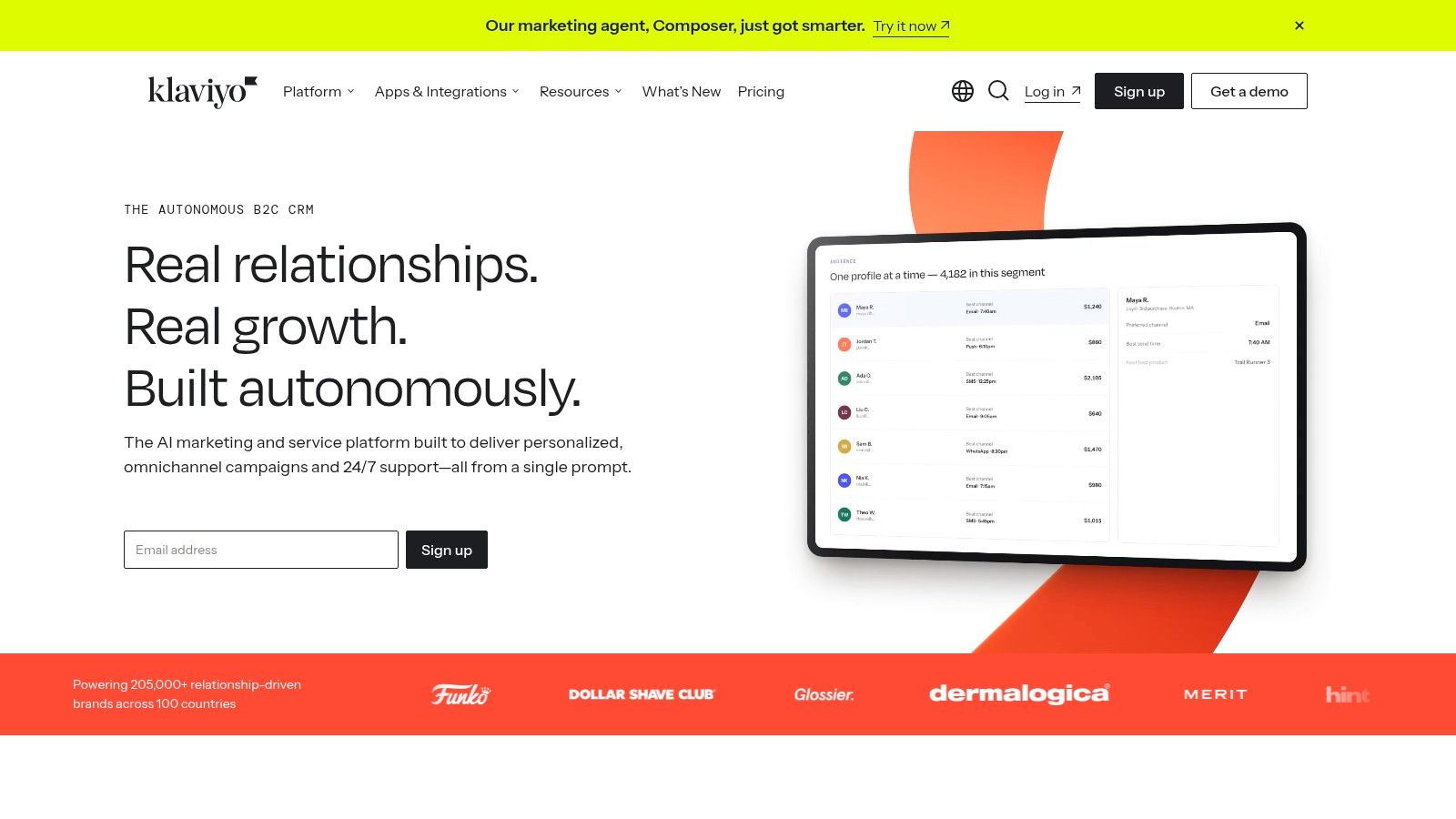
Klaviyo is built around customer data, segmentation and lifecycle marketing. Its predictive features include analytics for customer lifetime value, churn risk and send time, alongside AI content assistance, recommendations and revenue attribution.
That structure can be useful when a club has meaningful differences between audience groups. A visitor who has played several times should not automatically receive the same message as someone enquiring about membership or an organiser planning a society day. Klaviyo's segmentation can help a team make those distinctions, provided the underlying records contain reliable information.
Strong lifecycle tools, with a currency caveat
Klaviyo's revenue attribution and segmentation are attractive for a club trying to understand which campaigns contribute to repeat visits or customer engagement. It also offers email, SMS and WhatsApp capabilities. But much of its product thinking is shaped by ecommerce, where customer activity and transactions can be recorded continuously. Golf clubs may need to adapt the model to bookings, visits and membership stages.
There's also a budgeting consideration for UK clubs: customers are billed in US dollars, and costs can rise with profile and channel usage. The free tier may be useful for exploration, but the committee should evaluate likely contact growth and channel requirements before committing.
Klaviyo's AI capabilities may not all feel equally mature, so test the specific features that matter to the club. Don't assume predictive analytics will be useful before the club has consistent records of visits, enquiries and outcomes. This is a capable choice for lifecycle marketing, but not automatically the best first CRM for a small office.
5. Customer.io
When messaging needs to respond to specific customer actions, Customer.io offers a flexible, event-driven approach. Its workflows can use structured events to trigger communication, while its data model and developer tools allow organisations to build around the way they serve customers.
For a golf facility, those events might include a membership enquiry, a tour booking, a completed visit or a society organiser's repeat booking. The platform's AI Agent and LLM actions can assist with content, segments and workflow creation. APIs and other developer tools provide options for connecting data and messaging systems.
Flexibility has an operational price
Customer.io is most compelling when a club can define its customer events and keep those records consistent. If bookings live in one system, membership data in another and campaign contacts in a spreadsheet, the team may need help connecting them before the platform can deliver useful automation.
Its AI Agent includes execution skills and persistent memory, and LLM actions can sit within visual workflows. Those features create options, but they don't remove the need for sensible permissions, accurate information and human review. Published pricing tiers make it possible to examine the product's commercial structure, but the club should also account for onboarding and data work.
This is likely to suit a digitally mature operator, a multi-site group or a facility with technical support. A volunteer-run club with limited administrative capacity may find that simpler software produces better results because staff can maintain it. Customer.io rewards good data design, rather than fixing poor data automatically.
6. Iterable
Iterable is designed for cross-channel customer engagement, with support for email, SMS, push, WhatsApp and in-app messaging. Its journey-building tools and AI send-time decisioning can help coordinate communications across channels, while Nova Agent provides assistance with platform tasks and questions.
A multi-site golf operator might value the ability to coordinate messaging across different customer touchpoints without relying on one CRM. For example, a visitor campaign, a membership nurture journey and a digital facility's customer communications could be organised within a broader engagement programme. The club still needs clear audience definitions and a reliable source of customer activity.
Built for breadth, not a simple starting point
Iterable's strength is orchestration. It can coordinate journeys across several messaging channels, which is useful when customers engage through more than email. Its AI capabilities are practical additions to that operating model, rather than a substitute for having a clear campaign plan.
The central trade-off is scale. Pricing is enterprise-oriented and quote-based, and the strongest results depend on solid data and event pipelines. A single-club operation that mainly needs an email follow-up journey may be paying for breadth it won't use. A group with multiple facilities, digital touchpoints and staff responsible for coordinated campaigns may have a more compelling case.
Before considering it, map which system holds each customer record and which team owns each journey. If the answer is unclear, work on the data and ownership model first. A cross-channel platform can make a well-managed process consistent, but it can also make a fragmented process harder to untangle.
7. Braze with Sage AI
For organisations that need real-time engagement across mobile and messaging channels, Braze combines journey orchestration with Sage AI capabilities. Its tools support copy creation, quality assurance, personalisation, prediction and testing across channels, including email, SMS, WhatsApp, mobile push and in-app messaging.
That range is more relevant to a golf business with an active digital product, such as an indoor facility with an app, than to a traditional club sending occasional membership emails. If customers interact with a mobile service as well as the venue, Braze can help coordinate communications around that activity.
Consider the implementation burden
Braze's channel breadth is a clear strength for high-scale engagement programmes. It can support teams that need to manage mobile push and in-app messaging alongside more familiar email and SMS. Enterprise governance and data connectivity may also appeal to larger operators with a central technology function.
The limitation is the work required to reach that point. Pricing is quote-based, and implementation may need technical resources or a partner. For a simpler email-led membership campaign, this is likely to be more platform than the club needs. The club could end up spending significant effort connecting systems when its commercial priority is to improve a visitor journey.
Sage AI can assist with quality checks and personalisation, but staff should still review what customers receive. Messages about membership suitability, access requirements or complaints need appropriate human judgement. Braze is best assessed as an engagement platform for a complex digital operation, not as a shortcut to better club communication.
8. Adobe Marketo Engage
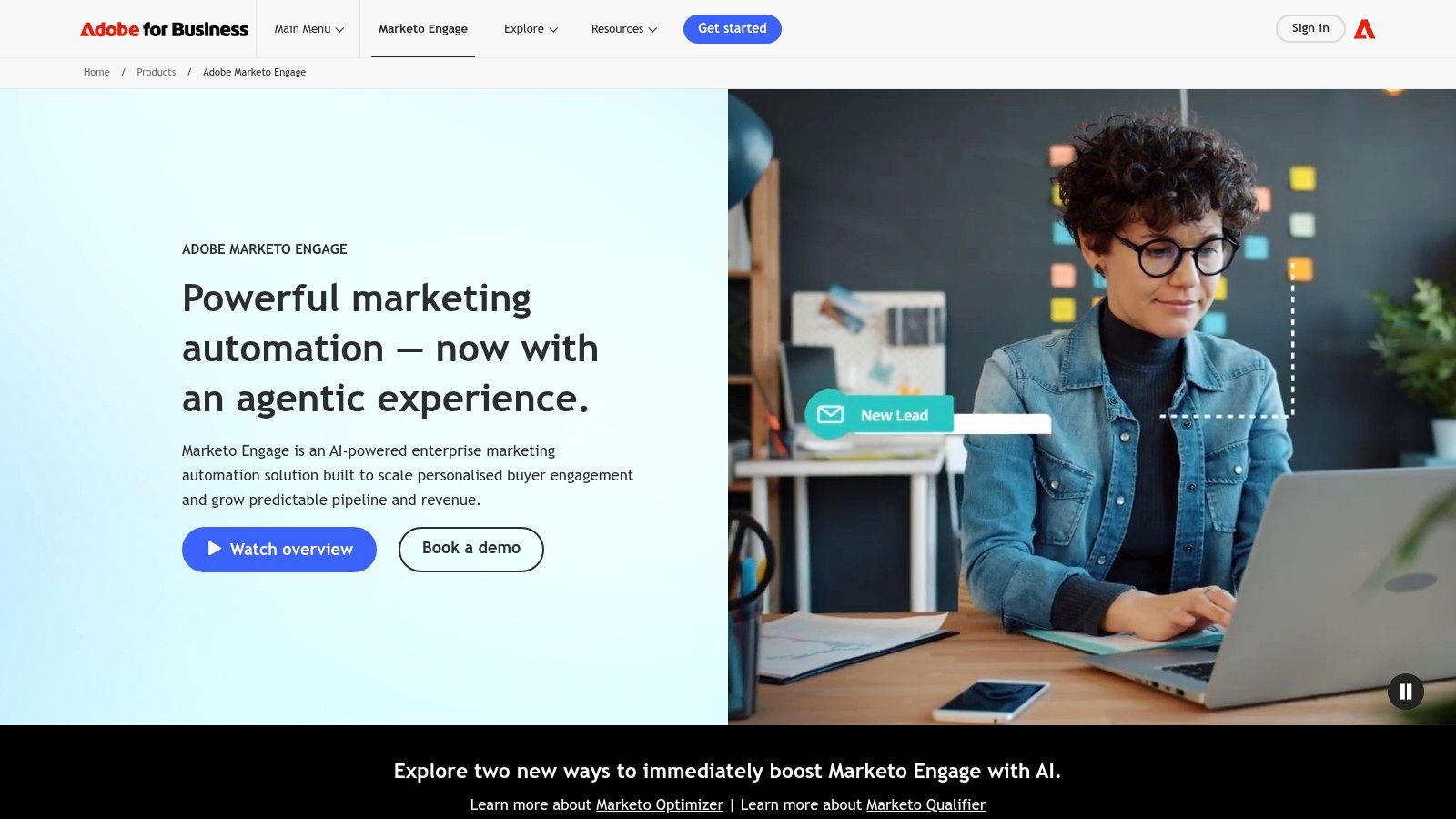
Adobe Marketo Engage supports lead management, account-based marketing, scoring and revenue attribution. Adobe Sensei capabilities include predictive audiences and content personalisation, which can help organise multi-touch journeys where prospects take time to make a decision.
That makes Marketo relevant to a golf resort group, a larger operator or a business with complex commercial journeys across membership, corporate golf and events. Lead scoring and lifecycle management can help teams distinguish a new contact from an active opportunity, while retargeting audience sync and attribution support broader campaign analysis.
Powerful lifecycle management needs an owner
Marketo's appeal is its ability to support complex journeys and connect marketing activity to revenue processes. For a club group with established sales stages and staff who maintain the system, that level of control may be useful. It can also integrate with Adobe Experience Cloud for organisations already using that environment.
The same depth creates a serious trade-off for smaller clubs. Pricing is quote-based and sold through bundles or editions, and the platform has a steeper learning curve and greater administration demands than tools aimed at smaller teams. Predictive audiences and content personalisation won't compensate for inconsistent contact records or unclear ownership.
A committee should ask who will maintain the platform after implementation, not only who will lead the purchase. If no one can own segmentation, campaign quality and reporting, a simpler tool is likely to serve the club better. Marketo is a platform for a developed marketing operation, not an easy first step into automation.
9. Salesforce Marketing Cloud Engagement with Einstein
Salesforce Marketing Cloud Engagement is a natural candidate when an organisation already uses Salesforce CRM or Data Cloud and needs enterprise-level customer journeys. Einstein features support send-time optimisation, engagement scoring and content personalisation within that wider Salesforce environment.
A golf resort group could use a connected Salesforce setup to organise communications across several facilities, provided that customer records and operating definitions are consistent. The platform's integration with Salesforce CRM can help teams connect customer activity with marketing workflows, while role-based controls support more formal governance.
A sensible choice when Salesforce is already central
Einstein's predictive and generative features are most valuable when they work with a reliable Salesforce data environment. A club that already holds useful customer information in the platform may be able to extend its existing investment, rather than adding another disconnected tool.
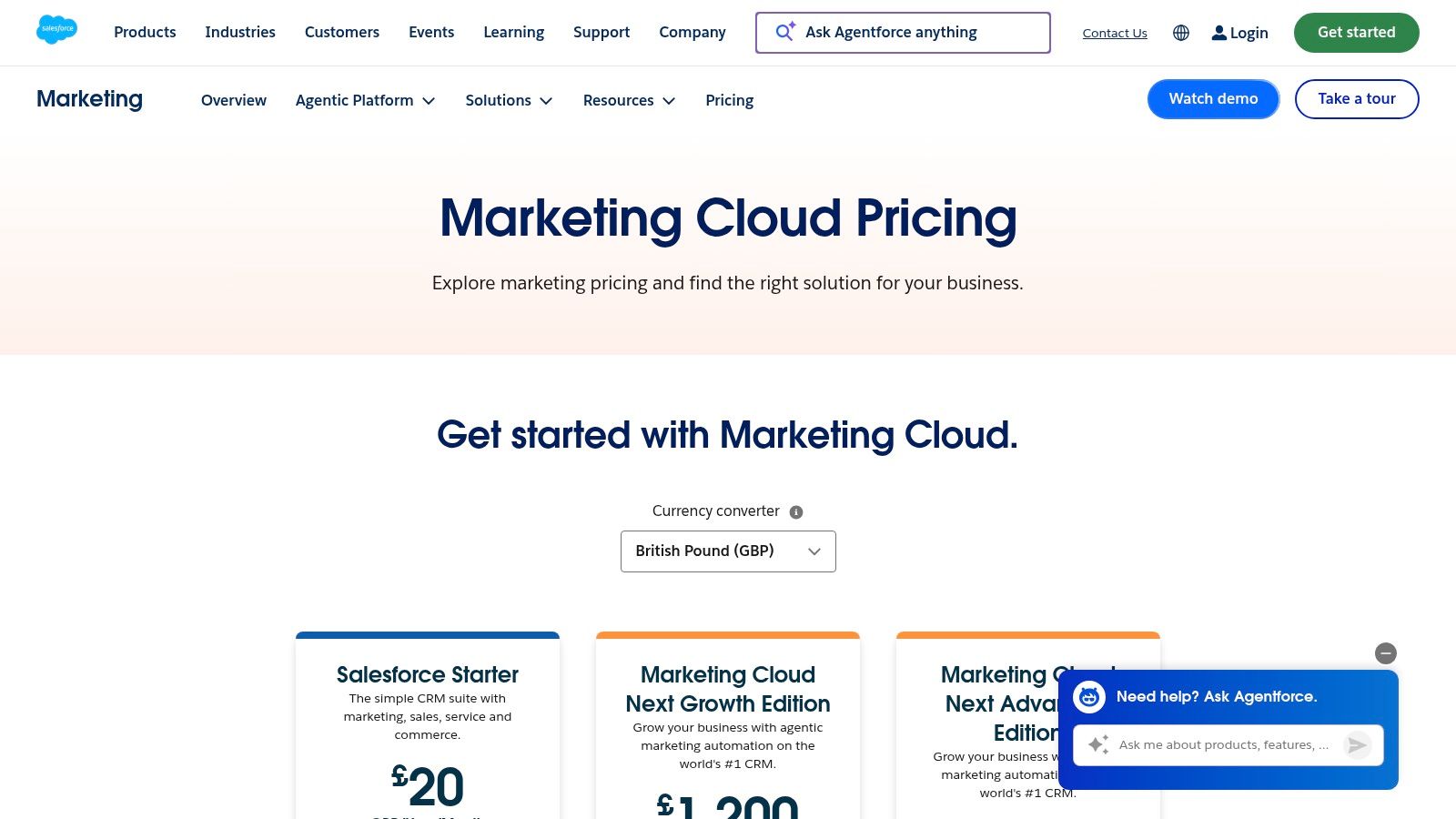
For a smaller operation, the administrative demand and bespoke pricing deserve close attention. Total cost can rise with add-ons or usage, and setup is more complex than with small-business-focused platforms. If a club mainly needs to improve membership follow-up, buying into a large enterprise system may not solve the practical problem.
Start by checking whether Salesforce is already the system of record, and whether the people responsible for member and visitor communications can work confidently in it. If not, the club should compare the cost of implementation and ongoing administration with a simpler platform. AI features matter only when staff can use the underlying system consistently.
10. Microsoft Dynamics 365 Customer Insights – Journeys
For clubs and operators already standardised on Microsoft, Dynamics 365 Customer Insights – Journeys offers journey orchestration integrated with Dynamics 365 and Microsoft 365. Copilot can assist with journey creation, content and segmentation, while AI agents and conversational journeys extend the platform's automation options.
That familiar environment may matter to an organisation with established Microsoft processes and procurement arrangements. A multi-site operator could use it to coordinate customer journeys while retaining enterprise governance. For an individual club, the fit depends on whether the Microsoft ecosystem is already part of daily operations.
Scope the licence before committing
The main advantage is alignment with an existing Microsoft environment. If the club or group already uses Dynamics 365 and has people who can administer it, the integration may support a joined-up approach to customer communications. Base and attach licensing options provide different ways to structure access, but the details need to be checked against the intended use.
Setup and data modelling can be heavier than with small-business tools. Pricing and entitlements depend on the tenant, capacity and add-ons, so a committee should ask for a clear view of what is included and what triggers additional cost. Don't approve a platform based on a broad AI demonstration without confirming which journeys the proposed licence can run.
This is a candidate for a Microsoft-centred organisation with governance needs and a defined system owner. A club without that foundation may be better served by a simpler platform that can be maintained by the people already responsible for membership and visitor sales.
Top 10 AI-Powered Marketing Automation Tools Compared
| Platform | Core Automation and AI | Best Fit | Potential Value for Golf Clubs | Key Consideration | Pricing |
|---|---|---|---|---|---|
| Intuit Mailchimp | Email and SMS journeys, AI content, send-time optimisation | Teams seeking simple, quick-to-launch campaigns | Accessible option for newsletters and basic enquiry nurture | Automation and data capabilities are lighter; audience-based costs can grow | Paid plans in GBP; varies by plan and audience size |
| ActiveCampaign | Email, SMS, visual automations, lead scoring, AI campaign support | Small businesses to mid-market teams needing nurture and sales handoffs | Supports follow-up sequences for enquiries and prospective members | Feature-rich interface may take time to learn; AI may incur extra costs | Tiered by contact count; AI credits may cost extra |
| HubSpot Marketing Hub | CRM-connected journeys, AI content and segmentation, attribution | Organisations wanting marketing, CRM and reporting in one system | Connects campaign activity with lead records and outcomes | Advanced AI features and broader capabilities can require higher tiers | Varies by contacts, seats, hubs and AI credits |
| Klaviyo | Email, SMS and WhatsApp, predictive analytics, segmentation | B2C and lifecycle marketing teams | Useful for personalised member communications and retention campaigns | Built primarily for ecommerce; UK billing is in USD and costs can rise | Free tier; paid pricing scales with profiles and channel use |
| Customer.io | Event-triggered workflows, APIs, AI actions and content support | Teams with structured customer data and custom workflows | Flexible journeys for clubs with suitable CRM and data setup | Requires solid data plumbing and may need onboarding support | Published tiers; plan dependent |
| Iterable | Cross-channel journeys, AI send-time decisions and Nova Agent | Enterprise teams running personalised campaigns across channels | Can coordinate communications across email, SMS, push and WhatsApp | Best results depend on strong data and event pipelines | Enterprise, quote-based |
| Braze (Sage AI) | Real-time personalisation, AI copy, testing and cross-channel messaging | Large organisations with complex mobile and messaging programmes | Supports high-volume, personalised member communications | Technical implementation may be excessive for simpler needs | Quote-based |
| Adobe Marketo Engage | Lead scoring, lifecycle management, predictive audiences and attribution | Organisations with sophisticated B2B or multi-touch journeys | Helps manage longer prospect journeys and campaign attribution | Steeper learning curve and greater administration needs | UK pricing is quote-based; bundles or editions |
| Salesforce Marketing Cloud Engagement (Einstein) | Cross-channel journeys, predictive scoring, personalisation | Enterprises using Salesforce CRM or Data Cloud | Connects engagement programmes with Salesforce customer data | Complex administration; add-ons and usage can increase total costs | Bespoke; editions and add-ons affect cost |
| Microsoft Dynamics 365 Customer Insights – Journeys | Copilot-assisted journeys, AI agents, Microsoft integrations | Organisations standardised on Microsoft | Fits clubs or operators already using Dynamics 365 and Microsoft tools | Setup, data modelling and licensing need careful scoping | Depends on licensing, capacity and add-ons |
Matching the Right Tool to Your Club's Next Step
Choose a workflow before choosing a platform. Identify the membership, visitor or society journey where the club currently loses the most visitors, then decide what the system needs to do: acknowledge an enquiry, qualify interest, prompt a visit, encourage a repeat booking or support a joining decision. That gives the committee a practical test for every feature on a sales proposal.
The simplest suitable tool is usually the strongest starting point. Mailchimp may be enough for a focused email nurture campaign; ActiveCampaign or HubSpot may be a better fit when the club needs CRM-connected sales stages and staff handoffs. Customer.io, Iterable, Braze, Marketo, Salesforce and Dynamics 365 make more sense when the organisation has the data, technical support and administration needed to use their wider capabilities.
Before approving a purchase, check the full annual cost. Include contact growth, AI credits, channel usage, implementation support and the staff time required to maintain the system. A low starting price can become less attractive when the audience expands, while an enterprise tool can create ongoing work the club hasn't accounted for.
The buying test: Ask who will own the records, review the journeys and act when a prospect becomes ready for a conversation. If nobody has time to do that, simplify the project before adding more automation.
Once the workflow is live, measure commercial outcomes rather than treating opens or clicks as the finish line. Track enquiry-to-visit and visit-to-join rates, alongside response time and repeat visitor or society bookings where those are the chosen priorities. Compare results across a full season before adding more features, so that a busy period or a quiet spell doesn't drive a hasty decision.
AI adoption remains uneven across UK businesses. The government's 2024 Business Data Survey reported that, among businesses handling digitised data, 2% used data for artificial intelligence or automated decision-making purposes. That figure is a useful baseline, not a reason to buy software for its own sake. For a golf club, a carefully managed workflow that staff can sustain is more valuable than a broad system that nobody has time to run.
If you want an outside view on where your club's commercial constraint sits, GolfRep can help map the pipeline before any software decision is made. For another perspective on selecting automation platforms, read this overview of top content automation tools for 2026.
GolfRep helps golf clubs improve customer acquisition, sales processes, CRM follow-up, conversion and retention through connected growth systems. If you're weighing up AI-powered automation for membership, visitor or society journeys, visit GolfRep to discuss where a practical, measurable starting point could be.
Ready to tap into our proven growth system?