10 AI Marketing Automation Tools for Golf Clubs
Could an AI system improve conversion while weakening the personal trust that makes someone choose a golf club? That's the question to ask before comparing platforms. Faster replies and custom messages can help, but membership decisions involve recurring costs, personal preferences and a relationship with the club. Automation has to support that relationship, not impersonate it.
The best AI marketing automation tools for a golf club aren't necessarily the ones with the longest feature lists. The right choice depends on the commercial constraint you're addressing, the CRM and data you already have, the volume and type of enquiries, and what your team can operate consistently. Start by deciding whether you need to qualify membership prospects, personalise member communications, re-engage dormant contacts, promote visitor golf, manage society leads or connect marketing activity to bookings and membership records.
That distinction matters in a UK market where AI is becoming more familiar to businesses, but adoption alone doesn't guarantee commercial results. The Department for Science, Innovation and Technology reported that 77% of businesses using or planning to use AI had not yet observed a change in revenue. For a club, a generated email isn't a result. A qualified prospect who books a visit, turns up and joins is much closer to one. The UK AI Adoption Research also highlights the importance of connecting tools to real business processes.
Here's a practical comparison of ten platforms, assessed for golf-specific needs: enquiry quality, membership conversion, visitor and society activity, member segmentation, CRM continuity and multi-site management. If you're exploring adjacent uses of AI in creative work, this guide to AI marketing for video creators offers a different perspective.
1. HubSpot Marketing Hub
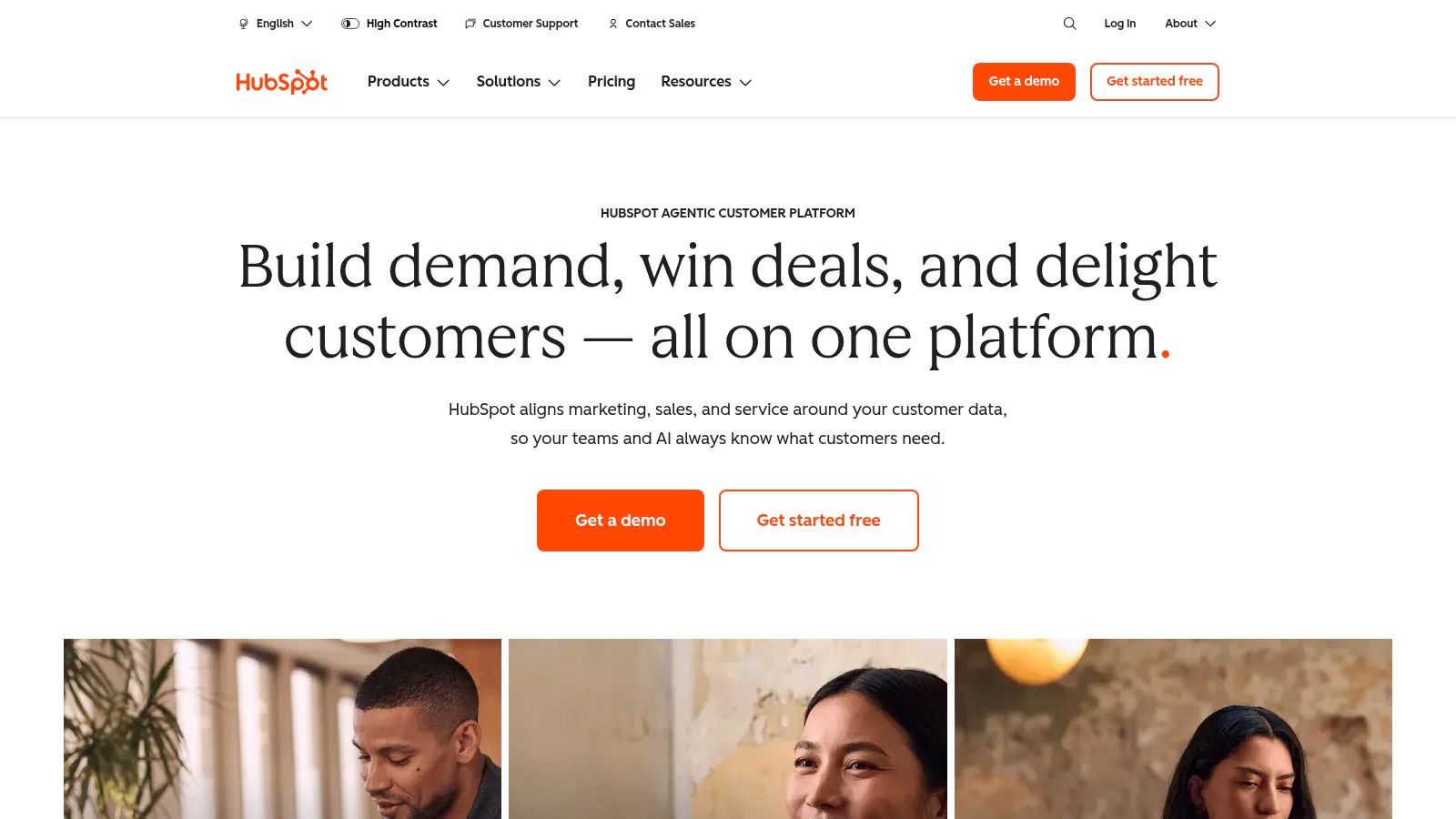
HubSpot Marketing Hub is the strongest starting point for a club or group that wants marketing activity, lead records and sales follow-up in one environment. HubSpot's AI and ChatSpot can assist with content, subject lines, messages and reports, while visual workflows can move a prospect from form submission to qualification, visit booking and staff follow-up.
That connection matters when a membership prospect has spoken to a PGA professional, submitted a web form and later attended an open day. If those interactions live in separate systems, staff can struggle to see what has happened and what should happen next. HubSpot's CRM alignment, forms, email, advertising and chat tools make it easier to organise that journey and track the pipeline.
Best fit: Clubs and multi-site operators that need a shared view of marketing leads and sales activity, rather than another isolated email tool.
What to check before committing
HubSpot's mature ecosystem, educational resources and UK partner network are advantages, particularly for teams that want support with implementation. Pricing and tiers can become complicated as contact volumes, seats and required features grow. Changes to its seats-and-credits model also mean managers should understand how usage will be governed before building workflows around AI.
For a club, the sensible first workflow is narrow: capture an enquiry, record its source and interest, send an acknowledgement, offer a visit-booking route, then assign a human owner. Build reporting around the stages that matter, not just email engagement.
If you're comparing the broader category of AI marketing automation software, HubSpot is most compelling when CRM continuity is a priority. It's less suitable if the club already has a well-run CRM and only needs basic email automation.
2. Salesforce Marketing Cloud Account Engagement
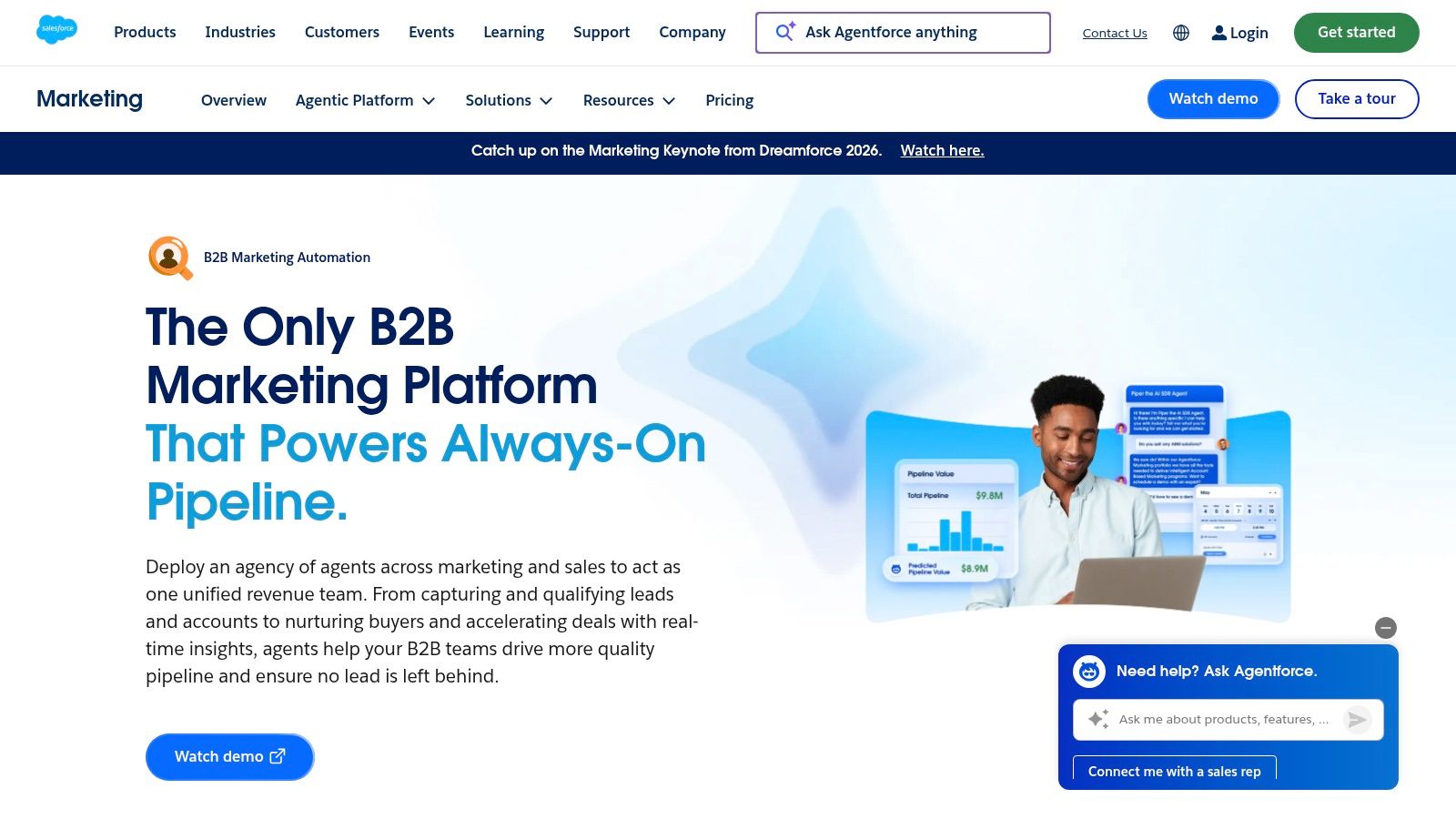
For a golf group already operating on Salesforce, Marketing Cloud Account Engagement offers a clear advantage: marketing activity can sit close to the CRM records and reporting used by sales and commercial teams. Salesforce also offers Marketing Cloud Next, with AI-assisted campaign and content creation through Agentforce and Einstein, alongside options for SMS and WhatsApp.
That setup can work well where several clubs, resorts or operating units need separate campaigns but central oversight. Business Units, sandboxes and enterprise controls help administrators manage access and standardise processes. Lead and account scoring and B2B Marketing Analytics can support a more structured view of which prospects are ready for direct staff contact.
The Salesforce condition
This is not the platform to choose because it has AI features. It makes most sense when Salesforce is already the organisation's operational centre and there's a clear owner for configuration, data quality and staff training. Implementation and change management can be complex, and newer AI and messaging features may involve credit-based pricing. WhatsApp, SMS and other options can also incur separate charges.
For a multi-site operator, define what should be standard across every property and what each club can control locally. A central team might own data rules and reporting, while individual clubs manage tone, membership propositions and event calendars. Without that agreement, enterprise controls can add friction rather than consistency.
3. Adobe Marketo Engage
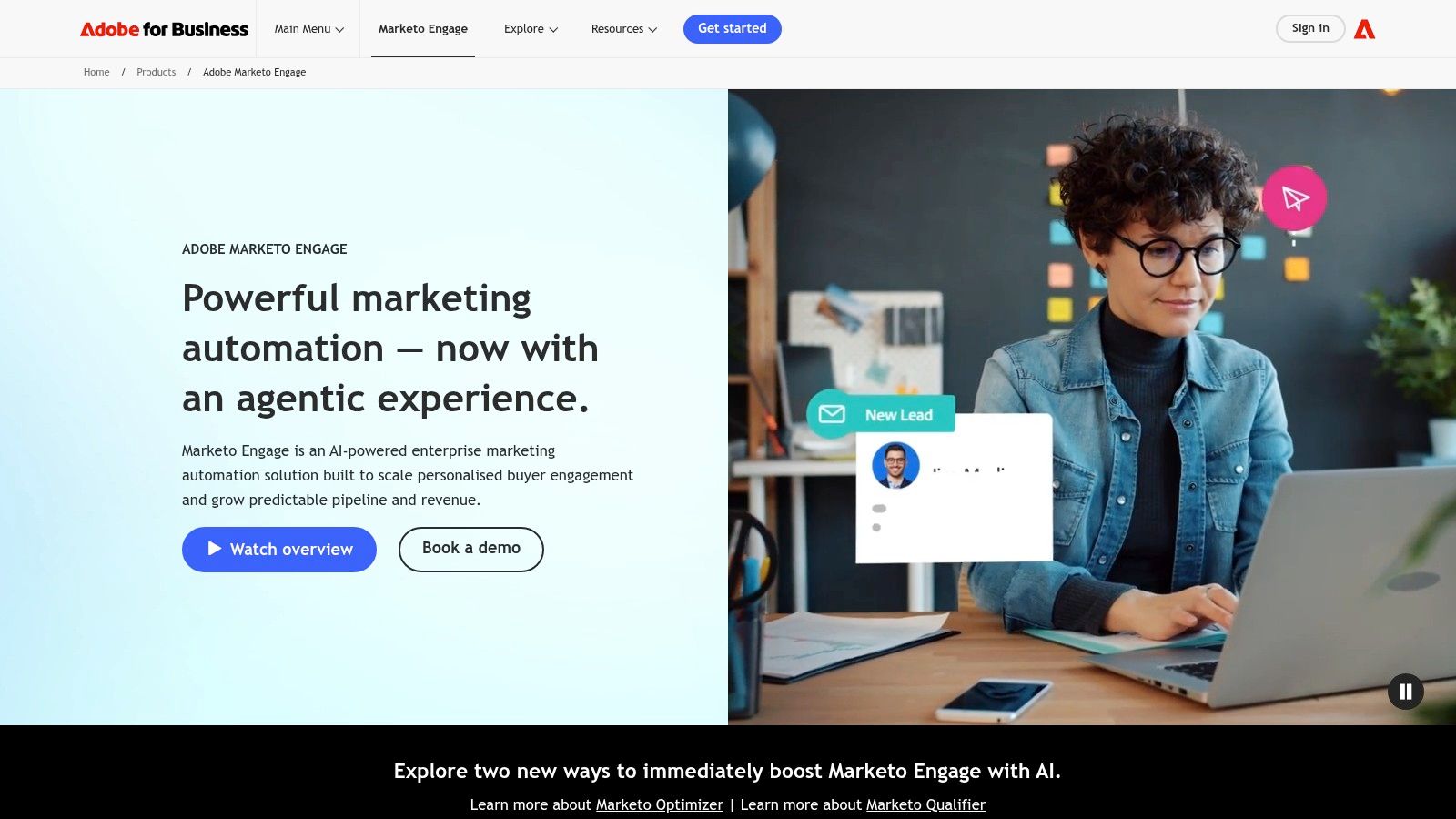
Adobe Marketo Engage is built for organisations with complex marketing programmes, long sales journeys and a need to align campaigns with sales activity. That points to larger golf groups and resort operators more than a single club running a straightforward membership open day.
Its lead management, scoring and programme analytics can help teams organise different audiences and track movement through longer journeys. AI-assisted workflows, content and chat experiences can support campaign operations, while account-based marketing and CRM integrations may suit operators managing several business entities or audiences across multiple locations.
When complexity is justified
Marketo's strength is its ability to accommodate detailed segmentation and attribution. A group could structure distinct journeys for membership, society organisers, corporate golf and event enquiries, then establish governance around who can alter each programme. That flexibility only pays off when staff have the time and expertise to keep the system accurate.
Pricing is quote-based, which can make total cost harder to assess at the outset. The learning curve is also steeper for non-specialists. If your team mainly needs a reliable way to send relevant follow-ups after a visitor booking or capture membership interest, Marketo is likely more platform than the job requires.
For operators evaluating AI-powered marketing automation tools, the key decision is whether your processes are complex enough to justify enterprise-grade administration. Buy for the workflow you can run, not the sophistication you might use one day.
4. Braze
Braze is a cross-channel customer engagement platform designed around real-time messaging across channels such as email, push and in-app communications. Its mobile-first emphasis makes it more naturally suited to a digital golf business, app-led membership experience or operator with active mobile engagement than to a club relying mainly on email and telephone.
Braze offers real-time segmentation and journey orchestration, mobile software development kits, data integrations and streaming architecture. AI features include content quality checks and experimentation capabilities. For an indoor golf facility with an app, or a multi-site group with a digital customer account, those tools could help coordinate communications around bookings, activity and lifecycle stages.
A platform built for real-time engagement still needs accurate booking and customer data. If those records don't connect, messages can be timely and wrong.
A specialised choice
Braze's enterprise focus, custom pricing and heavier implementation make it a poor default for a smaller club. The team needs to identify which customer actions should trigger a message, how consent is recorded, and when an interaction should be handed to staff. For example, a booking reminder is operationally different from a membership sales conversation and should be designed accordingly.
EU data-hosting options may be relevant to UK and EU data-residency requirements, but clubs should check the precise configuration and contractual terms with the provider. Braze is best considered when mobile engagement is already central to the customer experience and the organisation has the technical support to maintain integrations.
5. Iterable
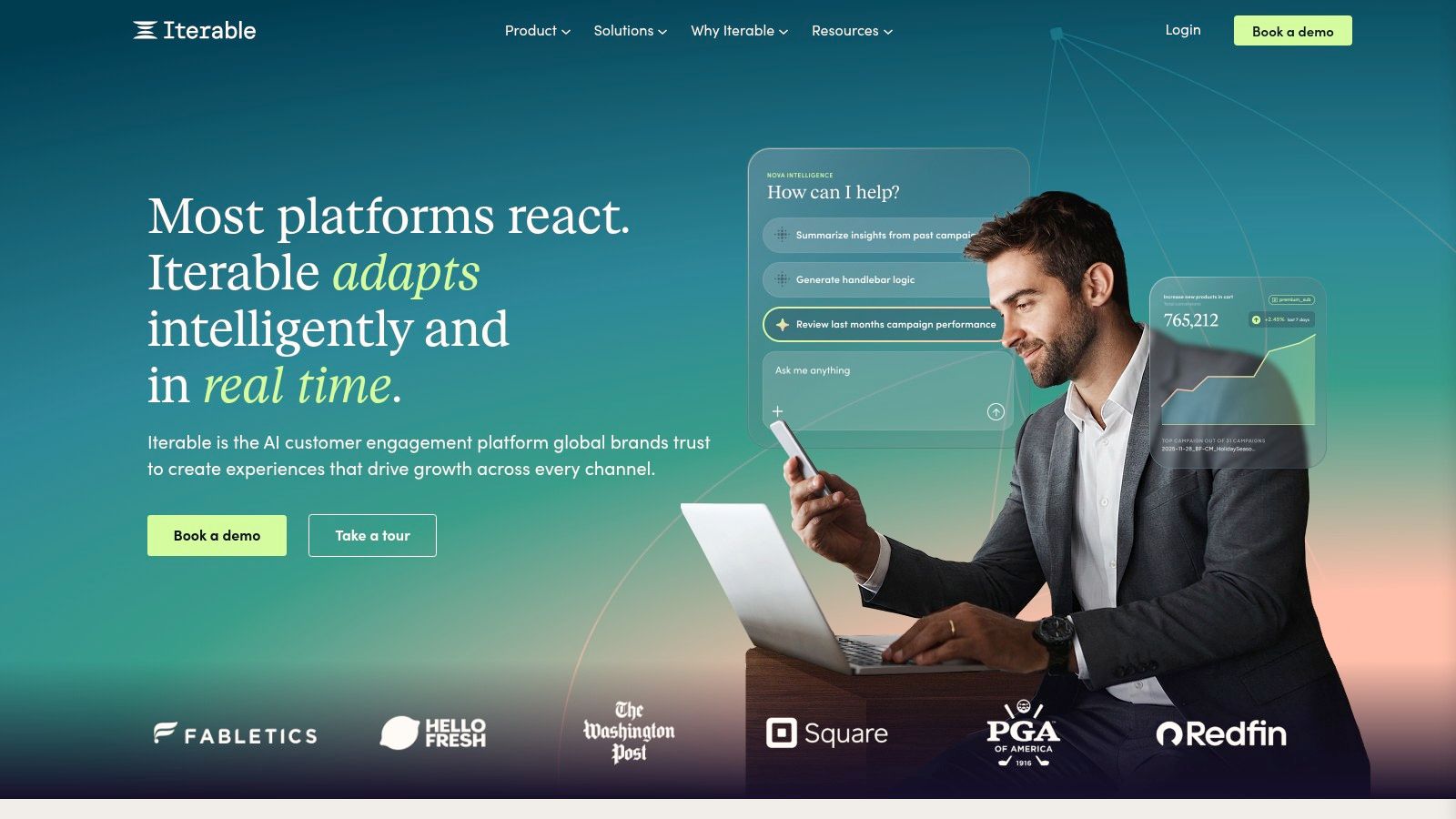
Iterable is designed for customer lifecycle marketing across channels. Its orchestration tools can be useful when a golf operator wants to manage different communications for members, visitors, junior golfers, event prospects and society organisers without treating every contact as part of one generic mailing list.
AI-powered send-time optimisation, experimentation and content suggestions support campaign operations. Journeys can span email, push, in-app messaging and SMS, with an EU Data Center option. Its flexible data model and segmentation capabilities can help teams reflect the differences between customer cohorts and their next likely action.
Make the data model useful
A club could distinguish a visitor who has booked a tee time from a society organiser who has requested a package, or a member whose engagement has changed. The practical value lies in recording those statuses consistently and using them to select relevant messages. Personalisation should reflect a real difference in customer needs, not insert a first name into a template.
Iterable's quote-based pricing and mid-market or enterprise orientation mean buyers should assess total implementation needs as well as the subscription. The platform also expects a degree of data and operational maturity. Before choosing it, map the customer records, booking signals and consent fields that will feed campaigns.
Iterable suits an operator with a defined lifecycle strategy and reliable data flow. It's not the quickest route to basic email reminders if the underlying CRM and booking information remain disconnected.
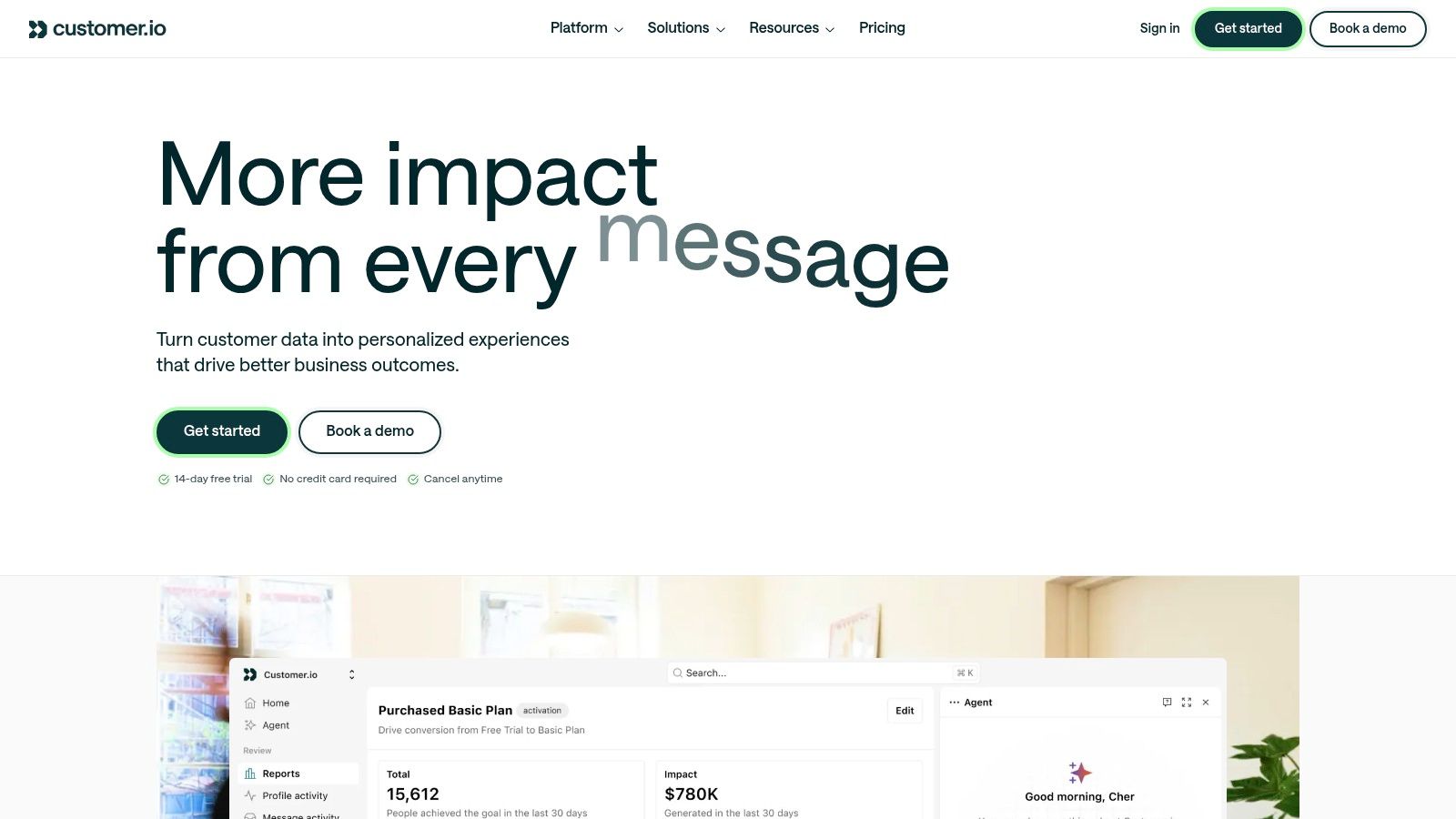
6. Customer.io Journeys
Choose Customer.io Journeys when booking, enquiry and membership events should drive each message. Its visual builder and AI Agent for task automation and message creation suit event-led journeys across enquiry status, booking activity and lifecycle changes, as long as the underlying data is accurate and consented.
The platform supports email, SMS, WhatsApp, push and in-app messaging, with US and EU data centres and ISO 27001 and SOC 2 noted in product material. Public plan information helps early budgeting: Essentials starts at $100 per month, Premium from $1,000 per month, and Enterprise is quote-based. Confirm current terms and usage charges before purchase.
Strong workflows, lighter sales CRM
The strengths are transparent plans, visual workflows and developer tooling, including an MCP server. A capable team can connect marketing activity to tee-sheet, CRM or venue systems: trigger a pre-round reminder after a booking, move a society organiser into a package nurture after staff qualify the enquiry, or suppress members who already renewed. If you are weighing event-driven platforms against combined suites, this overview of AI-driven marketing automation compares how tools handle triggered journeys.
The trade-off is a lighter out-of-the-box sales CRM. If membership staff need pipeline stages, task ownership and revenue reporting across one or several clubs, keep a dedicated CRM and make record ownership unambiguous.
Practical rule: Select the system that will own each customer record before you build automated messages around it.
Advanced AI Agent features sit behind higher tiers, so check plan limits rather than assuming every AI capability is included.
7. ActiveCampaign
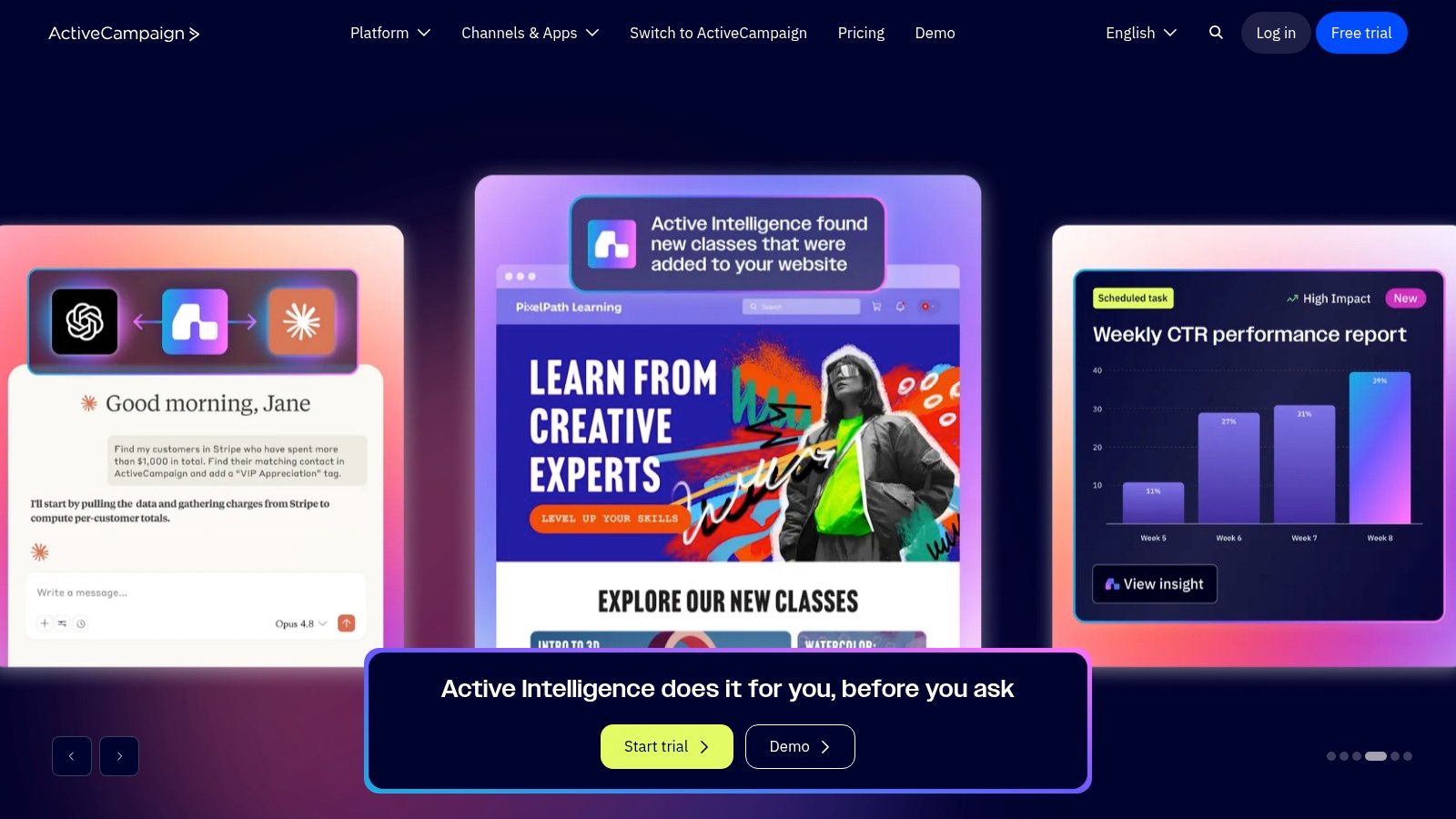
ActiveCampaign is a practical option for clubs that need more than basic email campaigns but don't want an enterprise platform. Its visual email and SMS automations, site tracking, CRM pipelines, AI-assisted content and predictive sending give a smaller commercial team tools to organise follow-up and connect marketing activity to sales tasks.
A membership team could use a pipeline to track prospects from initial interest through a visit and a decision, while automated messages provide relevant information between conversations. The club can also use lifecycle segments for visitor golf, societies or re-engagement, as long as each segment is based on useful and properly collected data.
Watch list growth and workflow ownership
ActiveCampaign offers EU and APAC data-centre options, along with integrations for ecommerce and forms. Pricing varies by contact count and plan, so a club should check current rates and model how costs change as its database grows. Advanced features and higher send volumes may require higher tiers.
The platform's automation capabilities are strong for the price, but a team can still build workflows that are difficult to maintain. Give each journey a named owner, write down the trigger and intended outcome, and review messages before they go live. Keep a human route for complex questions about joining fees, membership categories or complaints.
Choose ActiveCampaign when your team needs flexible automation and a CRM pipeline without Salesforce-level administration. For very simple communication needs, it may be more than the club can use effectively.
8. Klaviyo
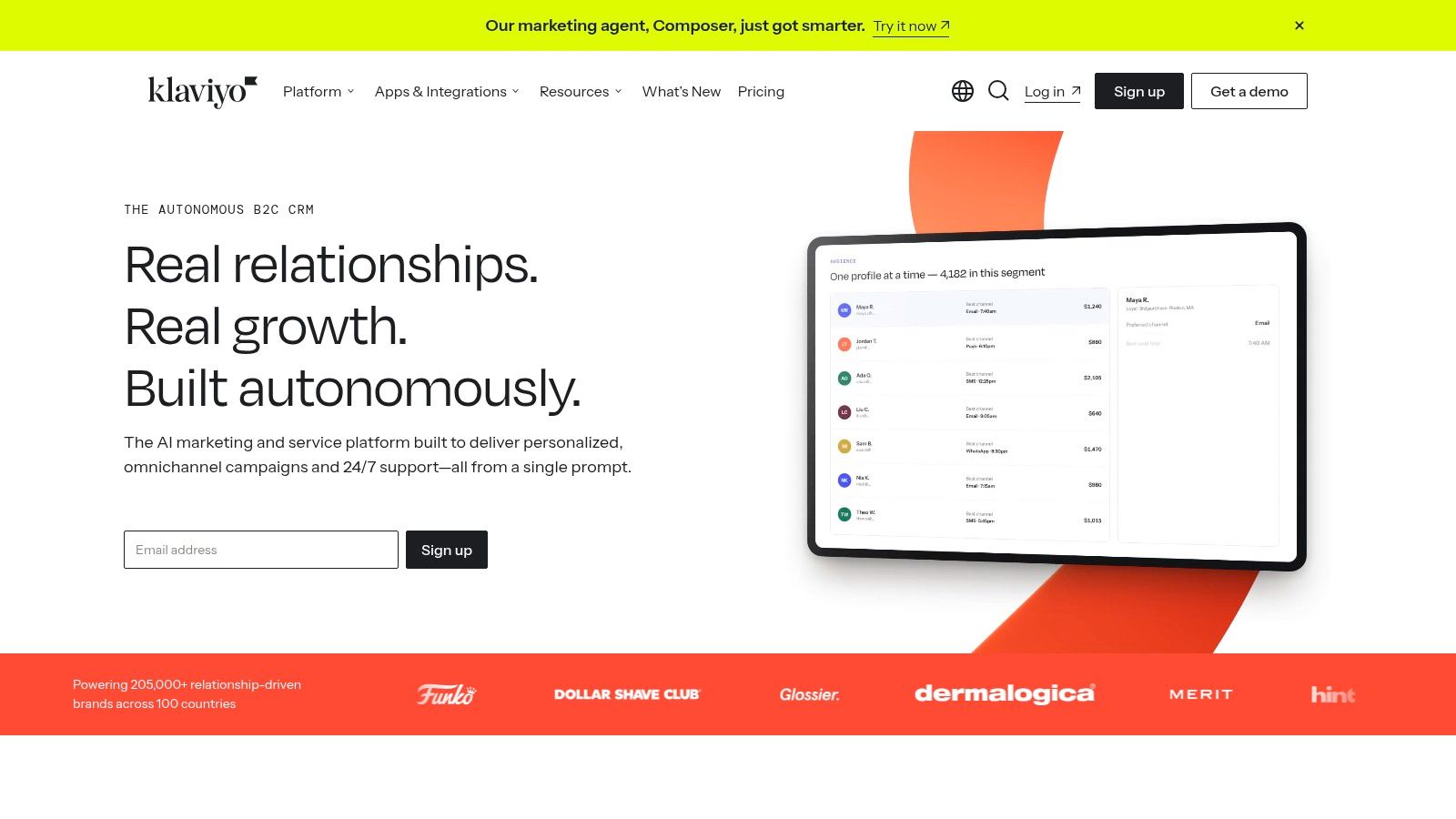
Klaviyo is best known in consumer commerce, but its lifecycle-marketing approach can also help membership organisations that want clear audience segments and timely communications. Its AI assistance for copy, segmentation and analytics sits alongside email, SMS, WhatsApp and push messaging.
For a club, the useful question is whether the data resembles a lifecycle programme. If the team can distinguish members, visitors, event guests and society organisers, it can build communications that reflect each relationship. A visitor campaign might encourage a repeat booking, while a member message could relate to an activity or service relevant to that group. The system's ecommerce integrations and flow library may also suit operators with retail or online booking activity.
Account for channel costs
Klaviyo offers EU and US data-residency choices, templates and revenue-focused reporting. However, costs scale with profile counts and mobile messaging usage, and advanced mobile features may carry region-specific fees. Review how the platform counts profiles and messages before importing the entire database.
Klaviyo is a good fit when the club values segmentation and customer lifecycle reporting, and when its data can support those functions. It's less compelling if the main need is a traditional sales pipeline with clear staff task ownership. In that case, pair it carefully with the club's CRM or choose a platform with stronger built-in sales management.
9. Intuit Mailchimp
Intuit Mailchimp remains a straightforward choice for clubs that need email marketing, templates and basic-to-intermediate customer journeys without first building a complex automation operation. Its AI writing and analytics assistance, customer journey builder and integration marketplace can help a small team organise regular communications and connect with booking, commerce or advertising platforms.
That simplicity can be useful for a volunteer-run club or a facility with limited marketing capacity. A manager can begin with clearly defined audiences, such as members, visitors and society organisers, then create a modest set of relevant communications. The objective is not to automate every conversation. It's to make routine communication dependable while leaving relationship-sensitive conversations to staff.
Know when you've outgrown it
Mailchimp's UK pricing view and accessible templates make it approachable, but contact and send limits on the free plan should be checked before relying on it. Costs tied to contacts also need monitoring as the database grows. More advanced requirements, such as detailed qualification, staff task management or complex lifecycle orchestration, may exceed what the platform is designed to handle.
Use Mailchimp when the club needs an accessible email and campaign tool and has a simple data structure. If a prospect must move between marketing and a membership sales pipeline, test that process in advance rather than assuming the email platform will manage the whole journey.
10. GoHighLevel
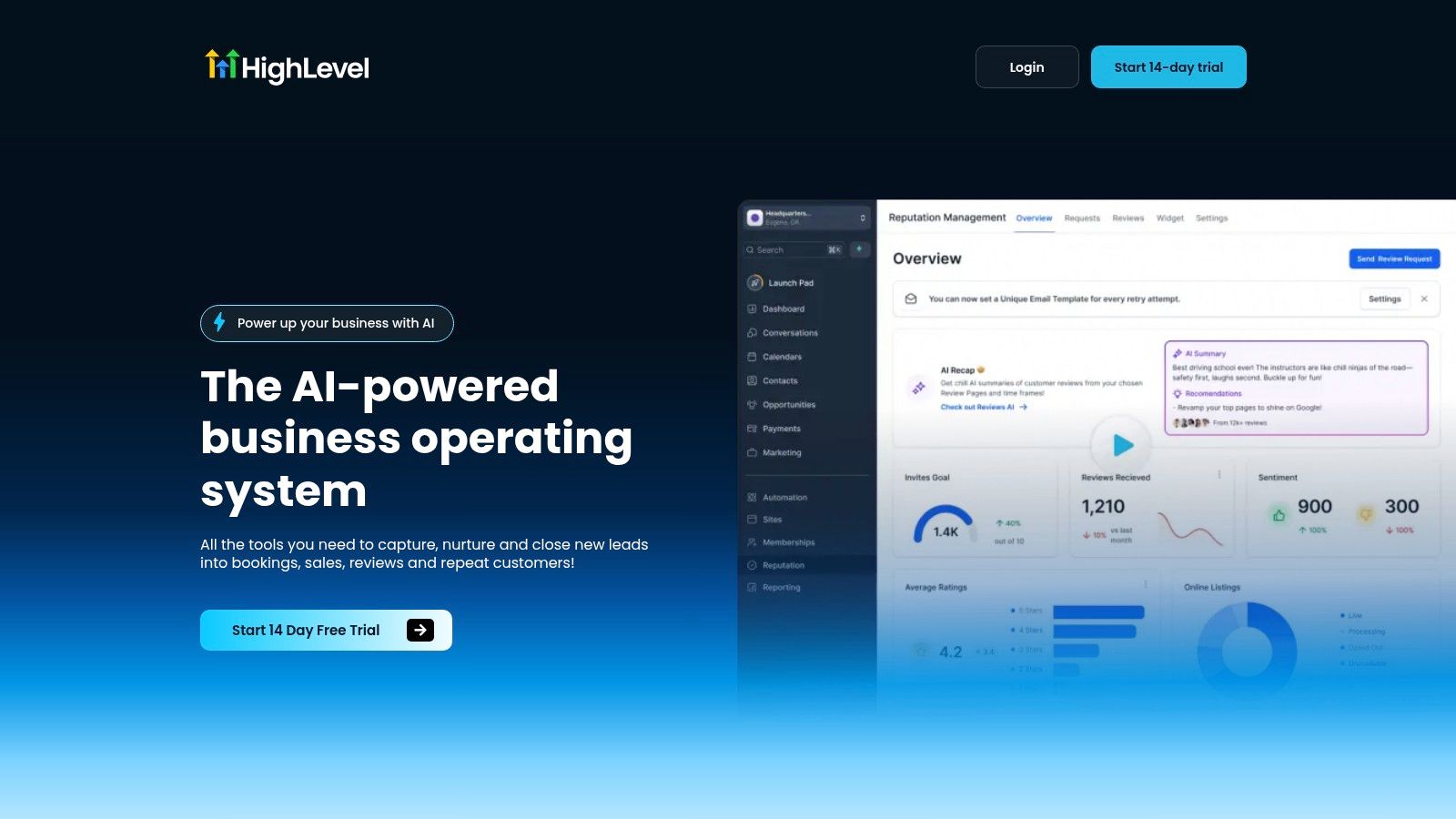
GoHighLevel is an all-in-one marketing CRM used heavily by agencies. It combines forms, funnels, email and messaging, calendars, reviews, pipelines and AI voice or chat assistants. Its multi-location management and reusable snapshots make it relevant to groups seeking to standardise campaigns and processes across several clubs.
For an operator with multiple sites, the attraction is consistency. A central team can create a reusable approach to capturing enquiries, assigning follow-up and arranging visits, then adapt local details for each property. Phone, SMS, WhatsApp and AI assistants provide several possible touchpoints, while automations can connect forms, funnels and pipelines.
Govern usage before scaling
Core plans include unlimited contacts and users, with usage rebilling, but subscription pricing is published in US dollars. UK buyers should account for exchange rates and VAT, and budget for variable messaging, AI and telephony usage. Those costs need active oversight, particularly if several sites are running high-volume campaigns.
GoHighLevel's agency-oriented tools, including reselling, markup and provisioning automation, may be less relevant to a golf club buying a standalone system. Its multi-site capability is the stronger reason for an operator to consider it. Before rollout, agree which data fields and workflows are common, which can vary by club, and who reviews the AI's responses.
Top 10 AI Marketing Automation Tools: Feature Comparison
| Platform | Core Capabilities | Best Fit | Standout Value | Pricing Considerations |
|---|---|---|---|---|
| HubSpot Marketing Hub | CRM, email, ads, forms, chat, and visual workflows | Clubs or groups wanting sales and marketing in one system | Strong CRM alignment, attribution, and partner ecosystem | GBP tiers; costs and seat/credit model can become complex |
| Salesforce Marketing Cloud Account Engagement | B2B automation, lead scoring, analytics, and business-unit controls | Multi-site operators using Salesforce CRM | Enterprise governance and revenue reporting | GBP pricing; AI and messaging may add costs |
| Adobe Marketo Engage | Lead management, scoring, nurture, ABM, and attribution | Large operators with complex campaigns | Deep segmentation and enterprise controls | Quote-based; potentially high total cost and learning curve |
| Braze | Real-time email, push, in-app journeys, and segmentation | Mobile-first brands with high-volume engagement needs | Strong mobile tooling and deliverability | Custom pricing; enterprise-level implementation |
| Iterable | Cross-channel journeys, personalization, and send-time optimization | Mid-market or enterprise teams with mature data operations | Flexible segmentation and EU data-centre option | Quote-based |
| Customer.io Journeys | Visual workflows across email, SMS, WhatsApp, push, and in-app | Lean teams needing flexible automation | Public pricing and EU hosting options | Essentials from $100/month; Premium from $1,000/month |
| ActiveCampaign | Email and SMS automation, CRM pipelines, and predictive sending | Clubs and growing businesses seeking capable automation | Strong automation for the price | GBP pricing varies by plan and contact volume |
| Klaviyo | Email, mobile messaging, AI tools, and lifecycle flows | Consumer-focused clubs or brands managing member journeys | Templates, deliverability, and revenue reporting | Free and paid plans; costs scale with profiles and messaging |
| Intuit Mailchimp | Email campaigns, AI assistance, and customer journeys | Smaller clubs seeking quick setup and simple campaigns | Easy onboarding, templates, and broad integrations | GBP plans; check free-plan limits and contact-based costs |
| GoHighLevel | CRM, funnels, calendars, messaging, and AI agents | Agencies or multi-site groups standardising campaigns | Reusable snapshots and multi-location management | USD plans; messaging and AI usage can add variable costs |
Turn the Right Platform Into a Commercial System
Choose the platform that fits the club's current bottleneck, data structure and operating capacity. Judge it by the commercial process it supports, not by the novelty of its AI features. A tool can draft persuasive copy and still fail commercially if the club can't tell which enquiry became a booked visit, which visitor returned, or which member segment responded.
For membership growth, test the complete route from enquiry qualification to appointment booking, follow-up and conversion reporting. For visitor golf, societies and events, check whether the platform can distinguish audiences, connect messages to booking activity and support repeat communication. For retention, prioritise usable member data, meaningful behavioural triggers and reporting that staff can act on.
Before launch, map the customer journey and decide which system owns each record. Test the links between web forms, booking software, CRM and messaging channels. Set response standards, decide when staff must take over, and review performance at agreed intervals. Track operational measures such as response time and qualification completion alongside commercial outcomes such as booked visits and membership conversion. Also monitor opt-outs and complaints: automation that damages trust is not a good trade.
Trust and privacy should shape the design. Recent UK consumer research found that 57% of consumers have little or no trust in brands using AI responsibly, 76% lack confidence in AI-related data privacy, and only 19% believe they receive enough value in return for their data. The report on the UK retail AI trust gap points to a practical standard for clubs: explain why someone is receiving a message, collect only the information needed, make marketing consent clear, offer an easy opt-out and provide a human hand-off for complex or high-value conversations.
GolfRep's view is that sustainable growth depends on the full ATTRACT → NURTURE → CONVERT → RETAIN journey. Advertising creates demand; automation can help qualify and nurture it; staff build the trust that supports decisions; and useful member communication helps maintain the relationship. The right system makes those steps visible and connected. For another broad platform comparison, see this review of 2026 platform leaders, then assess any shortlist against your club's own data, team and customer journey.
GolfRep helps golf clubs connect advertising, AI-supported lead qualification, CRM follow-up and reporting across membership, visitor golf, societies and events. If you want to identify the right automation workflow for your club and measure it against booked visits, conversion and retention, visit GolfRep to discuss your commercial priorities.
Ready to tap into our proven growth system?