How to Get More Golf Societies: The 2026 Club Playbook

Most clubs don't have a society shortage. They have a response problem. UK golf clubs reportedly take an average of 47 hours and 32 minutes to respond to membership enquiries, according to GolfRep's analysis of club enquiry handling. A society organiser making several enquiries won't wait two days for a reply. They'll book the club that answers clearly, quickly, and makes the next step easy.
That's why learning how to get more golf societies isn't mainly an advertising exercise. A campaign can create attention, but only a joined-up process turns attention into a booked round, a repeat date, or a valuable membership conversation. From GolfRep's perspective as a UK growth partner for golf clubs, the work starts by fixing the pipeline behind the promotion.
Why Golf Societies Go Unfilled
A club can advertise every society package in the area and still leave dates empty. The failure usually happens after the organiser makes contact, when the club cannot respond quickly, answer practical questions, or keep ownership of the enquiry clear.
Organisers need straightforward information: is the preferred date available, how many players can the course accommodate, and what does the package include? They may also need food, scoring, prizes, payment terms, and a clear booking process. A generic form followed by an unmonitored inbox creates doubt at the moment they are ready to choose a venue.
The leak sits inside the club
A campaign cannot compensate for poor lead handling. Society enquiries may arrive through email, Facebook, a website form, a telephone message, or a local referral. If each channel has its own inbox or informal process, staff lose track of who replied, what was promised, and which organiser needs a follow-up. The club may generate interest while losing bookings.
GolfRep's guide to golf club lead management describes a five-minute “golden window” as a useful operating standard for reducing early drop-off. The point is not to quote and confirm every society immediately. It is to acknowledge the enquiry, name the person handling it, and give the organiser a clear next step. Clubs should also examine how golf clubs lose enquiries between first contact and follow-up, because that gap often sits inside the process rather than in the advertising.
Practical rule: Do not increase lead volume until every enquiry receives a timely response and a recorded follow-up.
A full diary isn't the same as a healthy pipeline
A busy tee sheet proves that dates are occupied. It does not prove that the society was profitable, that catering and extras were included, or that the organiser has a reason to return. Unclear pricing, excessive staff time, and weak follow-up can leave a club with a full diary and a poor commercial result.
The question is simple: where does the society lead go after it arrives? If the answer depends on one busy secretary remembering to call back, the club has no repeatable growth system. It has a dependency, and the next missed enquiry is predictable.
Understanding the Local Golf Market
Before spending time or money on outreach, establish who can realistically become a society organiser near the club. England has 1,735 golf clubs and more than 730,000 golf-club members, with an average county containing 21,408 golfers, according to England Golf's national participation data. That points to a substantial installed base, but a society campaign still needs local precision.
The larger opportunity sits beyond existing membership. England has about 1.919 million adults playing golf at least once every four weeks and 4.327 million playing at least once a year, while golf-club membership is about 889,000, according to the R&A's Satellite Account for Golf in the UK. The figures describe a broad audience with golf intent, not a market that needs to be convinced that golf exists.
Separate players from organisers
A golfer isn't automatically a society lead. The useful prospect is someone who arranges groups, manages workplace activities, runs a social calendar, or regularly brings friends together. Your database and outreach should distinguish between:
- Frequent non-members, who already understand the game and may respond to a well-packaged group experience.
- Annual golfers, who may need a simpler, more welcoming format before committing to a formal society day.
- Workplace organisers, including office managers, team leaders, and people responsible for client entertainment.
- Existing society organisers, who may be comparing venues for a new date or looking for a more dependable booking process.
Generic messaging treats all four groups alike. That usually produces vague enquiries from people who aren't ready, while missing the organisers who need a specific reason to contact the club.
Use local evidence, not anecdotes
Map the club's actual trading area by travel time, business concentration, competing courses, available society dates, and the formats the venue can host comfortably. Then build separate lists for business partnerships, local golf professionals, event organisers, pubs, hospitality venues, and community groups.
Participation is also becoming more flexible. England Golf reported 5.75 million WHS scores in the first half of 2025, up 29% year on year, while iGolf grew 34% to 72,921 users and iPlay more than doubled to 12,562 users in 2025, as reported by The Golf Business. The commercial implication is clear: don't target only traditional club members. Create a route for independent and digitally engaged golfers to discover, enquire about, and repeat society play.
Designing Society Offers That Convert
A society package should answer the organiser's practical questions before they need to ask them. “Society golf available” is not an offer. It's an invitation to start a long exchange about dates, player numbers, catering, and price.
Start with the inventory you can sell reliably. Identify quieter playing periods, group sizes that work for your course, food and beverage capacity, car parking requirements, and the level of staff support available. Then package those conditions into clear options rather than presenting an open-ended menu.
Build around the organiser's job
A corporate team may value a fixed arrival process, reliable timings, food, and a simple invoice. A casual group may care more about an approachable format, straightforward booking, and a comfortable clubhouse. A recurring weekday group may want dependable dates and a consistent experience rather than a one-off headline discount.
Useful package components include:
- A defined playing format. State whether the day suits a small group, a larger field, or a recurring league. Explain any limits plainly.
- A clear date policy. Show which days or periods are available and how the club handles provisional holds.
- A transparent inclusions list. Spell out golf, food, prizes, buggy access, practice facilities, and any extras. If something costs more, say so.
- A named booking process. Give the organiser one contact route and confirm what information the club needs to prepare a proposal.
- A repeat-booking reason. Offer priority date discussions, a seasonal calendar, or a simple route to reserve the next event, without relying on unnecessary discounting.
The point isn't to make every group identical. It's to make the decision easy.
A club can also use a short qualification form to ask for the preferred date, estimated group size, format, catering requirement, and organiser contact details. That information lets staff respond with a relevant proposal instead of a generic brochure.
For more detail on turning facilities and services into clearer commercial options, see GolfRep's guide to creating golf club package deals.
Protect margin while improving convenience
Discounting often feels like the fastest way to win a society. It can also train organisers to wait for a cheaper date and leave the club with little room to cover staffing, catering, and administration. Convenience is often a stronger differentiator: one booking contact, quick confirmation, dependable food service, and a professional arrival experience.
Test packages against three questions:
- Can the club deliver the promise without disrupting members?
- Does the price reflect the total work involved?
- Does the organiser understand exactly what happens next?
If any answer is unclear, the offer isn't ready for promotion. Advertising an unclear package only sends more questions into an already weak process.
Outreach and Capture Systems
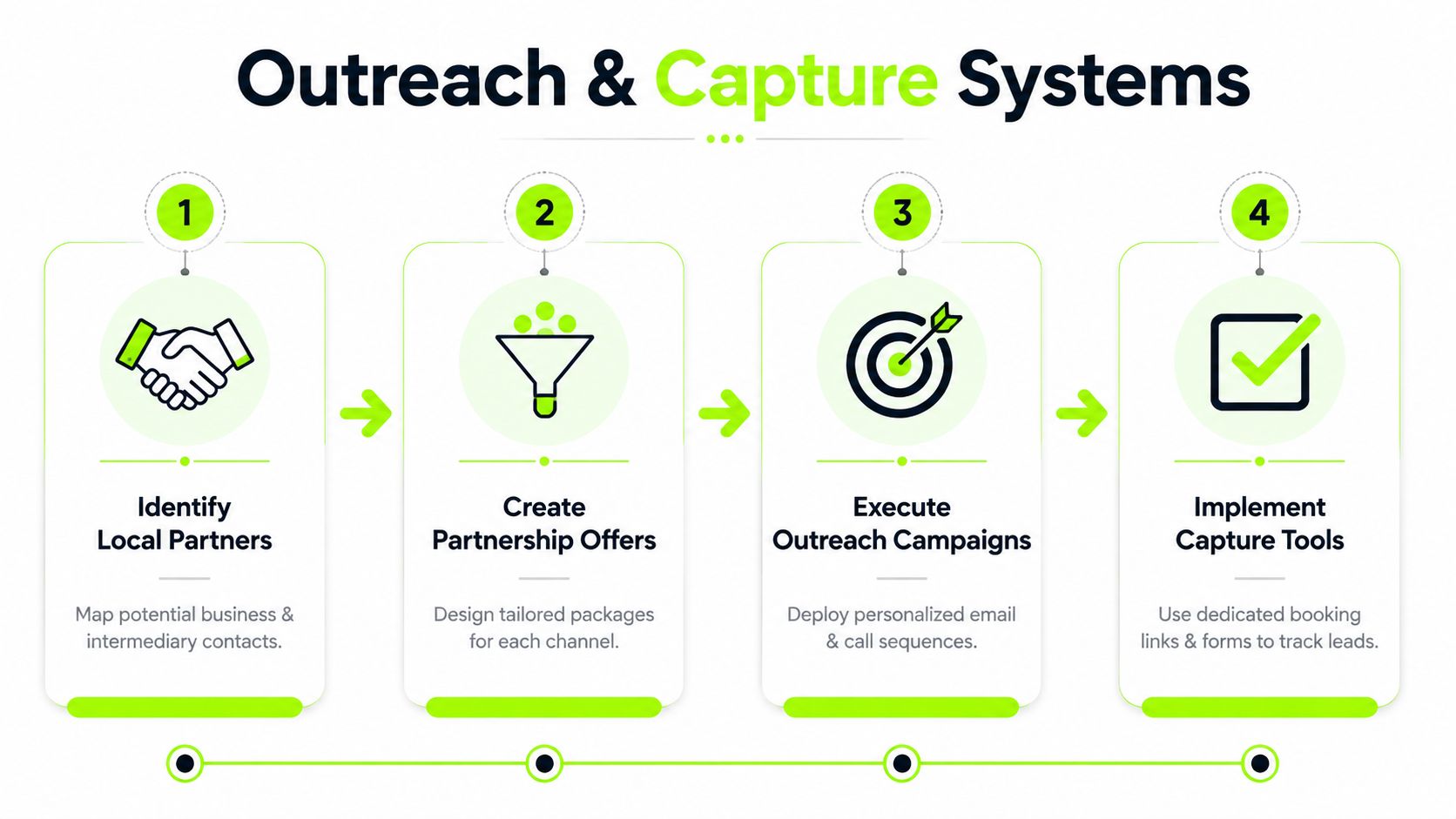
Society outreach works best when the club approaches people who already have access to groups. Local employers, hospitality venues, golf professionals, event organisers, and existing society networks can all provide useful routes, but each channel needs a specific proposition.
A pub might want a straightforward destination for a regular customer group. A business might need a polished client or team day. A golf intermediary may value dependable availability and a fast quotation process. Sending all of them the same PDF wastes the advantage of direct outreach.
Create a route from contact to captured lead
Use a named landing page, booking link, or form for each important channel. The club should know whether an enquiry came from a local business partnership, an event referral, an organic search, or a social post. Without source attribution, the team can't tell which relationships produce real bookings.
A capture system should collect enough information to support a useful reply, but not so much that it feels like an application form. Ask for:
- Organiser name and contact details.
- Preferred date or date range.
- Approximate player numbers.
- Group type, such as workplace, friends, charity, or recurring society.
- Catering and competition requirements.
- Preferred contact method.
A chatbot can answer basic questions and collect those details outside office hours. An instant booking widget can help when the offer is simple and availability is controlled. Neither replaces a human conversation for a complex event, but both reduce the delay between interest and usable information.
Use partnerships with discipline
Prepare a short outreach sequence for each partner type. The first message should explain why the partnership is relevant, what group the club can accommodate, and what action you want the recipient to take. Follow up with a practical package, a call, or an invitation to discuss suitable dates. Record every response in one pipeline.
Clubs that want ideas for reaching nearby hospitality audiences can also review this resource on how to drive footfall with pub creators. The principle transfers well to golf: choose partners whose audience already gathers socially, then give them a clear experience to share rather than asking for vague promotion.
GolfRep's golf society lead generation playbook reflects the same operating principle, capture the enquiry centrally, acknowledge it quickly, qualify the organiser, issue a relevant proposal, and secure the booking.
Make speed visible to the team
The club needs an owner for every new lead. A CRM pipeline should show the enquiry source, current status, next action, due date, quoted value, and booking outcome. Automated acknowledgements can confirm receipt immediately, while staff handle the commercial conversation.
The gap between interest and response matters because the market is competitive. GolfRep's UK guidance recommends treating the first few minutes as the key period for preventing drop-off. A process that sends an instant acknowledgement, alerts the right staff member, and schedules follow-up is more dependable than relying on memory.
Operational test: Ask a colleague to submit a society enquiry outside normal office hours. Then check who receives it, what the organiser sees, and whether a follow-up task exists by the next working period.
Onboarding and Experience Optimisation
Winning the booking is only the first commercial moment. The society day itself should make the organiser feel that choosing your club reduced effort rather than created it.
Send a clear confirmation after the booking. Include arrival instructions, parking information, timings, dress expectations, payment arrangements, catering details, competition format, and a named contact. If the group must provide player information or settle balances before arrival, explain the process in plain English.
Design the arrival deliberately
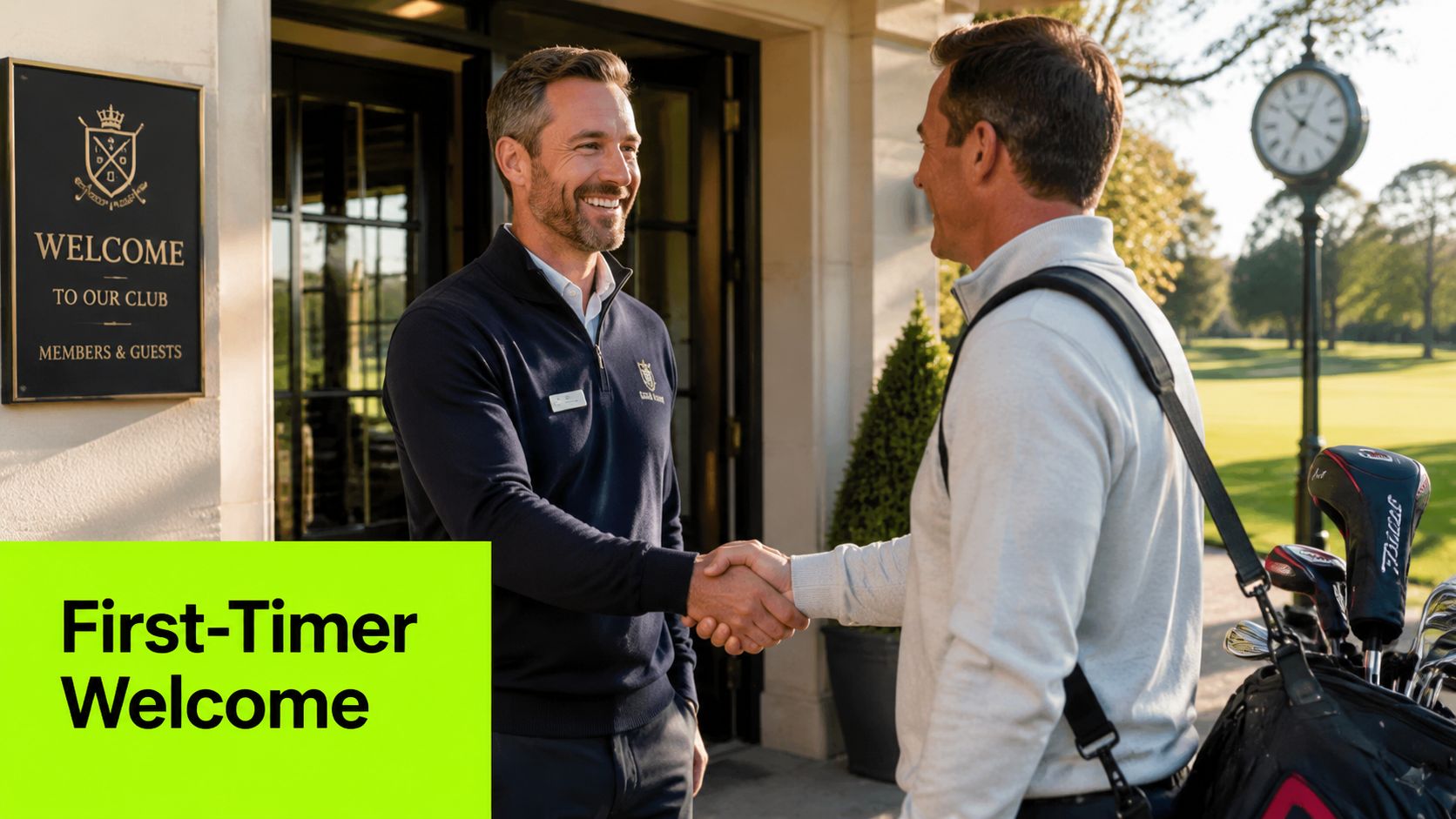
The first few minutes set the tone. A staff member should know the group is coming, greet the organiser, confirm the schedule, and explain where players need to go. A simple welcome is more valuable than an elaborate sales pitch because it reassures the person who has taken responsibility for everyone else's day.
During the event, assign ownership. The organiser shouldn't have to search for someone when a player changes, food timing slips, or a scoring question arises. Staff should also notice suitable moments to mention future dates, regular society arrangements, or membership options, without turning the day into an uncomfortable sales exercise.
Follow up while the experience is fresh
Contact the organiser within 24 hours of the round. Thank them, ask for useful feedback, confirm any outstanding administration, and offer a practical next step. That might be a provisional conversation about the next event, a recurring date discussion, or information about membership for players who showed interest.
Keep the follow-up specific. “Let us know if you need anything” puts all the work back on the organiser. A better message confirms what went well, identifies the next available action, and makes replying easy.
For repeat bookings, maintain a simple organiser record. Note preferred months, typical group size, catering choices, format, and any problems from the previous visit. The next conversation should feel informed, not like the organiser is starting again from zero.
The commercial objective: Turn a society day from a single transaction into a documented relationship with a clear next action.
This is also where clubs need to separate revenue types. A profitable society day may generate green fees, catering, and extras, but the longer-term value can come from repeat bookings and future members. Follow-up gives the club a chance to capture both without confusing the two.
Measuring Growth and Reporting
A society pipeline needs more than enquiry totals. A growing number of messages can hide poor response times, weak qualification, low booking rates, or dates that don't cover the operational effort.
Track the journey from source to outcome:
| Measure | What it tells the club |
|---|---|
| Source attribution | Which partners and channels create enquiries |
| Enquiry-to-visit rate | Whether the initial conversation produces a site visit or meaningful discussion |
| Visit-to-booking rate | Whether the offer and proposal work |
| Average days to close | How quickly organisers move from interest to commitment |
| Booked-round value | Whether the activity supports commercial priorities |
| Repeat booking rate | Whether the experience creates durable demand |
These measures align with UK-facing CRM guidance that recommends tracking source attribution, enquiry-to-tour rate, tour-to-member rate, average days to close, and 90-day retention, as outlined in GolfRep's golf membership sales guidance. The same discipline applies to societies, with the stages adapted to the booking journey.
A committee report should show what happened, what changed, and what the club will test next. Include the number of new enquiries, response performance, proposals issued, bookings secured, revenue by source, and follow-up status. Avoid presenting page views or social reach as the result. Those figures can support diagnosis, but they don't prove that the club filled profitable dates.
For a wider framework on judging channel performance and commercial outcomes, measuring marketing campaign effectiveness is a useful reference. The core principle is straightforward: connect activity to outcomes, then use the evidence to allocate attention.
GolfRep helps UK golf clubs build society pipelines that combine targeted lead generation, structured follow-up, CRM visibility, and revenue tracking. If your club is attracting interest but losing organisers through slow replies or scattered processes, visit GolfRep to see how a more predictable booking and membership system can be built around your existing operation.
Ready to tap into our proven growth system?